
Best Contract Management Solution for 2026 | Expert Guide
Want a more efficient way to manage your business contracts? CLM 365 brings contract creation, organization, approvals, and renewals together in a centralized, secure platform, helping you manage every stage of the contract lifecycle.

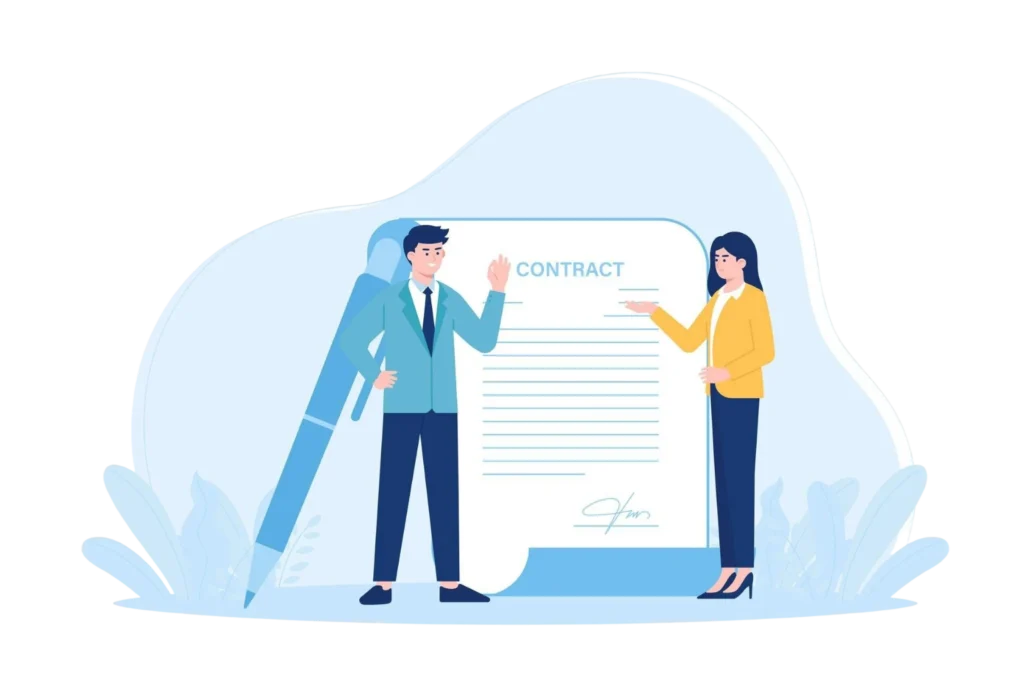
Contract management is an essential part of every business relationship. Whether you work with customers, vendors, employees, or partners, contracts establish the responsibilities, conditions, and expectations that guide each relationship.
However, managing contracts manually through emails and spreadsheets can lead to delays, mistakes, missed deadlines, and compliance challenges.
This is where a contract management solution becomes valuable. An effective solution enables businesses to create, organize, monitor, approve, and renew contracts efficiently from one centralized and secure platform.
According to research by WCC, ineffective contract management practices can cost organizations up to 9% of their annual revenue through missed savings opportunities.
What Is Contract Management Solution?
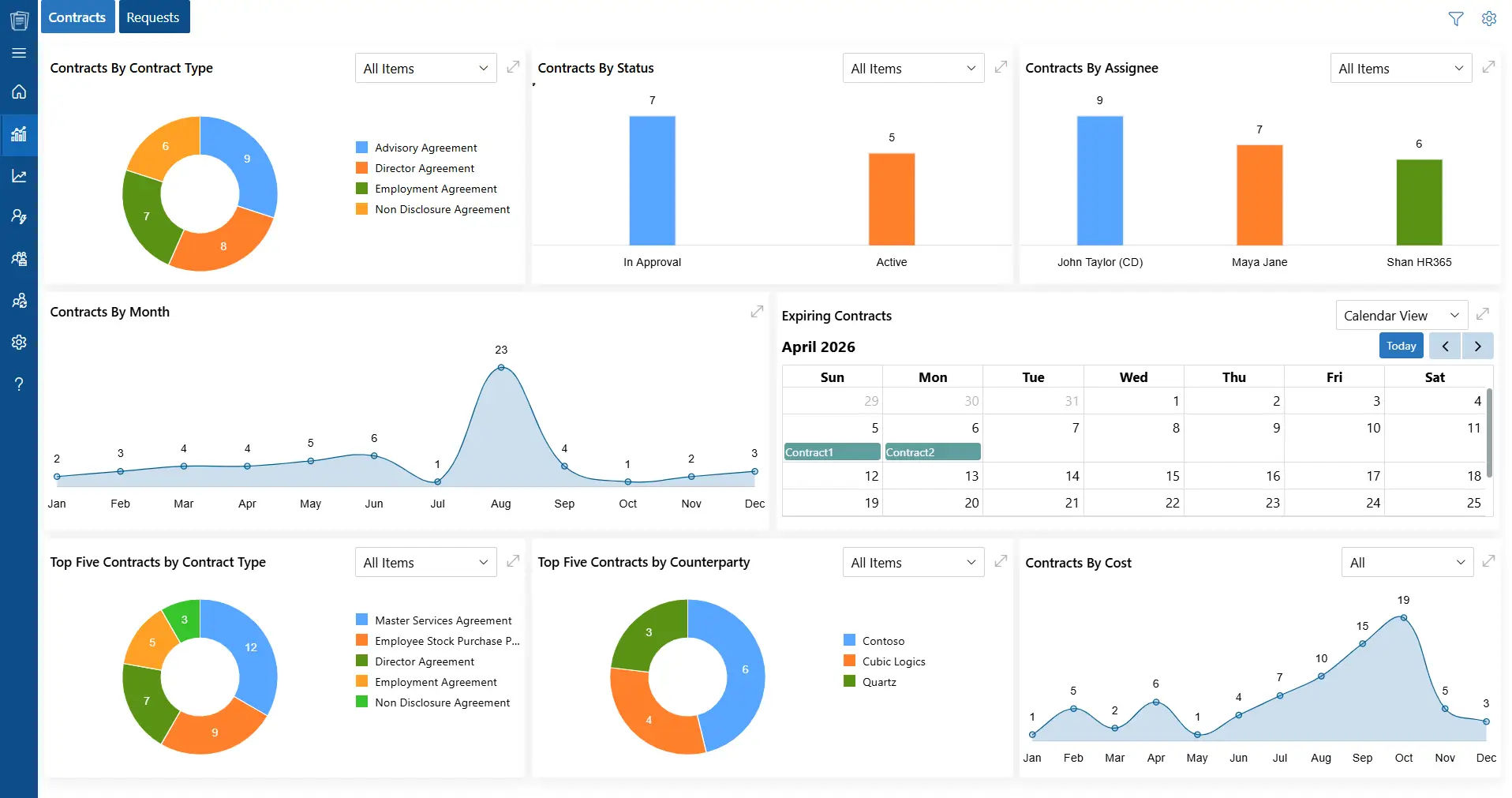
A contract management solution helps businesses create, approve, store, track, renew, and report on contracts throughout the entire contract lifecycle. A solution like CLM 365 centralizes contracts on one secure platform, making them easy to access and manage whenever needed. It helps businesses reduce manual work, stay ahead of deadlines, and improve overall efficiency and compliance.
Why Contract Management Solution Matters in 2026
Contracts are a vital part of every organization, but managing them manually can make it difficult to track, organize, and execute agreements on time. This is why businesses need contract management software to manage and control their agreements effectively.
One of the most time-intensive stages of the contract lifecycle is contract review, especially when handled manually. According to Superlegal, lawyers spent an average of 92 minutes reviewing contracts, whereas AI-powered contract management solutions completed the same task in just 26 seconds. With AI capabilities, a contract management solution can significantly reduce review time and make the process more efficient.
When contracts are scattered across emails, shared folders, and local storage, finding the right document when needed can become difficult. This can delay tasks and create confusion among teams. A contract management service brings agreements into one centralized platform, making it easier for businesses to find, manage contracts efficiently.
Manually monitoring contract deadlines can make it easy to overlook renewals, expirations, or important obligations. This can result in missed opportunities, service disruptions, or compliance concerns. A contract management service helps businesses stay ahead by providing clear visibility into contractual obligations.
Without an effective solution, businesses may lack a clear view of contract status, ownership, and progress. Teams may not know whether an agreement is being reviewed, awaiting approval, or requires action. A contract management solution improves transparency by giving teams complete contract visibility across every stage
Although many organizations understand the value of contract, they still struggle to turn contract data into useful insights. According to EY, 70% of organizations have a formal contracting technology strategy, while 99% lack the data and technology needed to improve their contracting processes. An effective contract management solution can provide real-time data and reporting, helping businesses make better-informed decisions.
Manual contract creation, approvals, and tracking require constant follow-ups and coordination between teams. This makes business operations slow and adds to administrative workload. A contract management solution automates and assists businesses to organize processes and work faster and more efficiently.
As organizations expand, their contract volumes often grow along with them. Handling a limited number of agreements manually may work initially, but maintaining control becomes increasingly difficult as operations scale. A reliable contract lmanagement provider gives businesses the framework, visibility, and efficiency needed to manage growing contract volumes effectively.
Find the right plan to manage contracts from creation to renewal.
Hidden Cost of Manual Contracting Process
| Aspect | Manual Contracting | Contract Management Solution |
| Contract Creation | Created manually using old files. Takes more time. | Create contracts quickly using ready templates. |
| Review and Approval | Shared through email. Hard to track versions and approvals. | Track versions and approvals in one system. |
| Storage and Search | Kept in different folders and inboxes. Takes time to locate. | Access all agreements from a central repository. |
| Security | Stored in different locations. Limited access control. | User permissions protect contract access. |
| Audit Trail | Change history spread across emails and files. | All actions recorded with complete history. |
How Contract Management Solutions Works
Contract lifecycle management software helps businesses manage agreements from creation to closure through one centralized platform for drafting, approval, signing, storage, and tracking.
Step 1: Contract Creation
A contract management solution allows teams to create agreements using standardized, pre-approved templates. These templates contain predefined terms, clauses, and formatting, helping users prepare contracts faster and with greater consistency.
Step 2: Review and Collaboration
Once a contract is drafted, it can be shared with relevant teams, such as Legal, Sales, or management, for review. Team members can examine the terms, suggest changes, and add comments directly within the platform, keeping the entire discussion connected to the contract.
Step 3: Approval Workflow
After the review is complete, the contract moves through the designated approval workflow based on predefined rules. The relevant approvers receive notifications when their action is required, allowing them to review and approve the contract without unnecessary delays.
Step 4: Contract Signing
Once all required approvals are received, the agreement can proceed to electronic signing. With electronic contract signing, internal and external stakeholders can sign agreements remotely, regardless of their physical location.
Step 5: Contract Storage
After signing, the finalized agreement is saved in a centralized contract repository. Authorized users can quickly search for and access documents whenever needed.
Step 6: Tracking and Monitoring
A contract management provider enables teams to monitor important details, including effective dates, and contractual obligations. Automated alerts and reminders notify users when action is required, helping them stay aware of critical deadlines.
Step 7: Renewal or Termination
When a contract reaches the end of its term, teams can assess its performance and determine whether to renew, modify, or terminate the agreement. The system maintains the contract history, giving businesses useful records that can support decisions when managing future agreements.
Step 8: Reporting and Insights
A contract lifecycle management solution provides dashboards and reports that give teams a clear view of overall contract. These insights help businesses evaluate contract performance, identify process bottlenecks, and improve contract management over time.
Key Features of the Best Contract Management Solution
Now that we have covered how contract management solutions work and how they support legal operations, let’s explore the key features that can make everyday contract processes more efficient. Here are some important capabilities to consider.
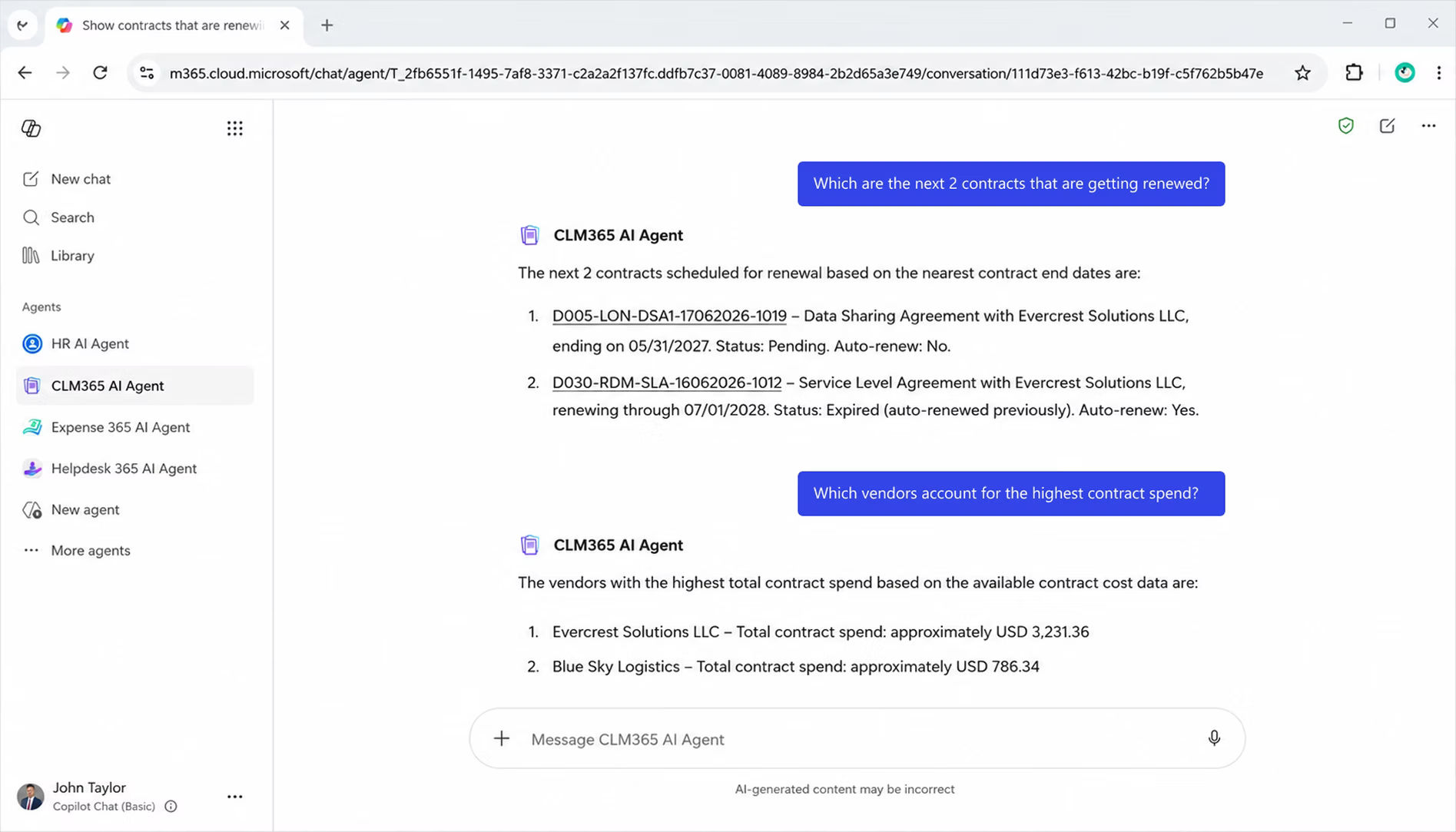
AI-powered contract management helps organizations create, review, and manage agreements with greater visibility and control. AI contract summarization makes it easier for users to understand key details, such as payment terms, contract duration, and obligations, without reading the entire document.
According to Thomson Reuters’ Future of Professionals report, 80% of respondents from law firms believe AI will significantly transform the way their organizations operate. This highlights the growing role of AI in modern legal workflows.
AI can also recommend alternative clauses based on organizational standards, helping teams select appropriate contract language. It can flag potential risks, surface important clauses, and monitor contractual obligations, giving legal and business teams greater awareness of critical commitments and deadlines.
A contract management service can integrate with Microsoft 365 applications already used by your organization, such as SharePoint, MS Teams, MS Word MS Copilot, Outlook, and other business tools.
This enables users to create, review, and manage contracts within the tools they already work with, reducing the need to switch between different platforms.
By connecting contract processes with existing systems and workflows, organizations can incorporate contract management into their everyday operations while keeping relevant information accessible and connected.
Collaborate and Manage Contracts With SharePoint CLM Software
Contract compliance management helps organizations monitor contractual requirements, internal policies, and applicable regulations.
According to PwC research, 85% of organizations say compliance requirements have become more complex.
This highlights the importance of having a contract management solutions that provides greater visibility into compliance requirements and helps teams manage them proactively.
A contract repository system provides a centralized location for managing an organization’s agreements. It keeps active, expired, draft, and archived contracts organized within one secure repository.
With contracts stored in one place, legal teams gain a clearer view of their agreements and can retrieve documents quickly without checking multiple folders or systems.
Users can also locate contracts using keywords, contract titles, dates, or information about the parties involved.
Automated approval workflows organize contract approvals according to your organization’s internal structure and requirements.
The contract management solution automatically sends contracts to the relevant approvers based on factors such as contract value, department, or agreement type.
Each approval action is recorded within the contract management solution, allowing legal teams to track progress and see who reviewed or approved the agreement.
Stop chasing approvals. Let automation handle it for you
Contract comparison allows users to examine multiple versions of a contract and quickly identify differences between them.
The contract management service highlights text that has been added, removed, or changed across each version.
Legal teams can use this feature to monitor revisions throughout drafting and negotiations, making it easier to understand how an agreement has evolved.
A secure contract negotiation workflow creates a controlled space for managing contract discussions.
Authorized users can access drafts, add comments, suggest changes, and collaborate within the platform.
The workflow can also support OTP-based authentication, requiring internal or external participants to verify their identity with a one-time password before accessing the agreement.
Collaborative contract redlining allows stakeholders to review and modify contract content directly in Microsoft Word.
Legal teams, business users, and external stakeholders can propose revisions, leave comments, and review changes within the document.
A contract management solution gives legal teams greater visibility into contract modifications and feedback shared by different stakeholders.
It allows users to make changes to existing agreements when business requirements evolve. Each contract amendment is recorded in the system and linked to the original contract.
Legal teams can review the complete amendment history, including modification dates and changes made to specific contract terms.
This creates a reliable record of contract updates and helps organizations track how agreement terms have changed throughout the contract lifecycle.
Contract signature can complete the signing process from virtually anywhere using secure authentication methods.
According to research, digital signatures can increase customer loyalty by up to 500% by making the signing experience faster and more convenient.
A contract management solution also maintains a digital record signed contracts easier to access and reference when needed.
ROI of Investing in Contract Management Solution
We’ve covered the key features and how a contract management solution works. Now, let’s explore the benefits it offers and how it can improve legal workflows while maintaining accuracy.
A contract lifecycle management solution helps legal teams handle contract reviews, approvals, and related tasks more efficiently.
Teams can access drafts, review clauses, and manage approvals from a centralized platform.
According to reported findings, lawyers took an average of 92 minutes to review contracts, while AI completed the same task in just 26 seconds. This demonstrates how technology can help accelerate contract review and management.
A contract management solution helps legal teams keep track of contractual terms, obligations, and key provisions throughout the agreement lifecycle.
By storing contracts in a centralized repository, the system makes it easier to review agreements and monitor important conditions in one place.
Legal teams can quickly identify critical details such as payment terms, contract renewal, and obligations
A contract management solution brings relevant contract information together, giving stakeholders access to a shared source of information.
Teams can review agreements throughout the contract lifecycle management process directly within the platform. This keeps everyone updated on the status and progress of each contract.
With centralized information and transparent records, teams can collaborate more effectively.
A contract management solution provider enables organizations to handle agreements digitally.
Legal teams can quickly search documents, review agreements, and manage approvals without relying on time-consuming manual tracking.
By simplifying contract-related tasks and administration, organizations can reduce operational expenses and use their resources more efficiently.
Legal teams can review each contract clause and track key milestones, including renewal and expiration dates.
This enables organizations to evaluate agreements and use relevant contract data to support informed business decisions.
With greater visibility and control over agreements, businesses can maximize the value they receive from their contracts.
A survey by ALM and Bloomberg Law found that contract tasks account for at least half a day of work for more than 4 out of 10 corporate counsel.
A contract management service helps legal teams handle these tasks more efficiently by providing quick access to templates, drafts, and contract records.
Teams can review, approve, and manage agreements within a centralized system, helping reduce unnecessary delays throughout the process.
Teams can check current status, pending approvals, and critical dates without moving between different systems.
It also keeps a record of previous contract versions, amendments, approval activity, and executed agreements. This gives teams quick access to relevant information whenever they need to verify an agreement.
By consolidating contract data and activity, organizations can gain better oversight of ongoing agreements while keeping their contract records organized and accessible.
Industries That Rely on Contract Management Solution
It support industries where contracts are central to business operations. Here are some key sectors that use them.
Legal teams need better control over large volumes of agreements, frequent revisions, and approval processes. A centralized system helps them work with approved templates and clauses, track document changes, manage approvals, and maintain a clear record of every agreement.
Manufacturers depend on suppliers, pricing agreements, delivery schedules, and service commitments. A contract solution helps procurement and production teams track supplier terms, monitor delivery obligations, and stay aware of important dates that could affect operations.
Supply chain teams need visibility into vendor commitments, service levels, pricing, and delivery obligations. Keeping these agreements in one place makes it easier to check responsibilities, follow key milestones, and identify issues before they affect supply chain operations.
Oil and gas companies manage agreements involving complex operational requirements, safety standards, regulatory obligations, and long project timelines. Businesses need a reliable way to track these requirements, approvals, deadlines, and responsibilities throughout each agreement.
Healthcare organizations handle agreements with suppliers contracts, service providers, partners, and other stakeholders while dealing with strict compliance requirements. Teams need to track approval status, contract terms, renewal dates, and compliance obligations from a central location.
Energy and utility businesses often work with energy contracts involving contractors, suppliers, and service providers. Organizations need visibility into pricing, responsibilities, performance requirements, renewal dates, and other milestones throughout the contract period.
Non-profit organizations manage grants, donor agreements, vendor relationships, and funding commitments. They need to keep track of funding timelines, reporting requirements, renewal dates, and compliance obligations while maintaining clear records for accountability.
Special Pricing Designed Exclusively for NPOs
Energy and utility companies handle long term contracts with the suppliers, contractors and service providers. Contract management solutions assists teams with monitoring the terms of the contract, its obligations and significant milestones.
Contract management solution is used by government institutions to manage public procurement contracts and service-level commitments. With the best contract management for government departments can track contract validity, tender timelines, renewal dates, budget approvals, and audit status.
Best Practices for Building an Smooth Contracting Process
An organized contracting process helps teams avoid unnecessary delays, reduce potential risks, and keep agreements moving smoothly.
Assign one responsible person to each contract and make them accountable for follow-ups and progress.
Establish who needs to review and approve the agreement before the process begins.
Gather all necessary business information before the contract drafting stage starts.
Use a consistent process for submitting contract requests across departments.
Capture key dates, including commencement, expiration, and renewal deadlines, at the beginning.
Keep agreements in a centralized repository where authorized teams can easily find them.
Check contract progress regularly to identify agreements waiting for review or approval.
Keep an organized history of revisions, approvals, and other changes made to each agreement.
Bring legal, finance, and relevant business teams into the process when their input is required.
Continue monitoring contractual responsibilities after signing and update their status as work is completed.
CLM 365: Best Contract Management Solution
CLM 365 brings contract lifecycle management into the Microsoft ecosystem, integrating with SharePoint, Teams, Outlook, Copilot, Power BI, and Power Automate. Teams can create, review, approve, track, and manage contracts within the Microsoft environment they already use.
With AI-powered workflows, CLM 365 supports contract compliance, obligation tracking, approvals, and governance while maintaining structured contract records and activity history for better visibility and audit readiness.
Built for SMBs and enterprises, CLM 365 combines a user-friendly interface with enterprise-grade security. It is SOC 2 compliant, Microsoft certified, and recognized as a Microsoft Solutions Partner.
CLM 365 applications are also available for Microsoft GCC and GCC High, supporting organizations with stringent government security and compliance requirements.
Hear from Our Delighted Clients
CLM 365 has made contract reviews faster and more efficient with AI-powered contract summaries. It helps teams quickly understand key terms, obligations, and potential risks, reducing manual review and enabling faster, more informed decision-making.
Conclusion
A dedicated contract management solution gives teams a centralized way to organize agreements, manage approvals, track important dates, and access contract information when needed.
This creates greater visibility across the contract lifecycle and helps teams work with agreements more efficiently.
Explore CLM 365 through a 14-day free trial and see how your organization can manage contracts directly within its existing Microsoft workspace.


Frequently Asked Questions
What will I actually be able to automate with a contract management solution?
A CLM solution can automate contract requests, template selection, approval routing, notifications, document workflows, renewal reminders, obligation tracking, and other repetitive contract activities.
We already use SharePoint. Why would we need a separate contract management solution?
SharePoint can store documents, but a CLM solution adds contract-specific capabilities such as approval workflows, lifecycle tracking, obligations, renewals, governance, and contract-related reporting.
Can we configure different approval workflows for different contract types?
Yes. the platform can support different approval paths based on factors such as contract type, department, value, risk, or internal approval policies.
How do we stop sensitive contracts from being visible to everyone?
Access controls and permissions can restrict contracts and related information to authorized users, departments, or roles.
Can a contract management solution compare different versions of a contract?
Yes. It allows teams to compare contract versions, identify changes, and track revisions made during drafting and negotiations before approval or signing.
Where is my contract data stored?
Your contract data is stored within your organization’s Microsoft 365 and SharePoint environment, allowing you to leverage your existing Microsoft security, permissions, and access controls.
Try It Free, No Obligation










Schedule a free personalized 1:1 demo
By proceeding, you accept Cubic Logics’s terms and conditions and privacy policy





Please provide your contact details, we will connect with you soon!
Please provide your contact details, we will connect with you soon!
By proceeding, you accept Cubic Logics Terms and Conditions and Privacy Policy
Schedule a free personalized 1:1 demo
By proceeding, you accept Cubic Logics’s terms and conditions and privacy policy







