
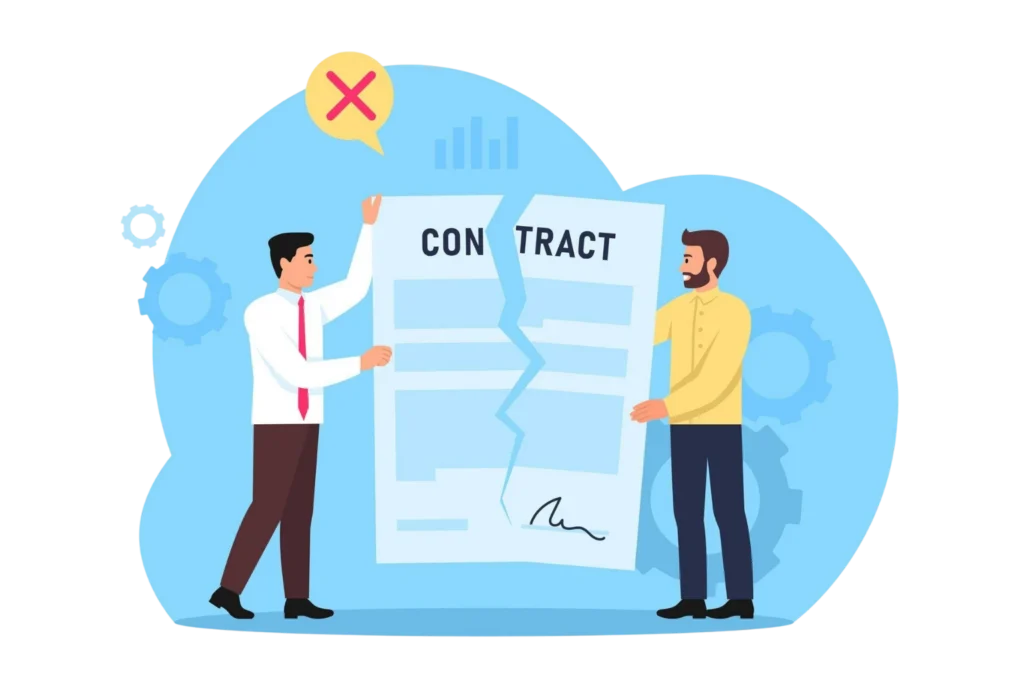
Contract Termination: The Complete Guide to Ending Agreements

Every business agreement ends at some point. Some contracts reach their planned end date. Others end early because business needs change or one party fails to perform.
- Contract termination is a structured legal and operational process, not a single action.
- The agreement should clearly state the grounds, notice period, cure period, and exit obligations.
- As per WCC average of $9.2 million in annual losses from contract disputes and mismanaged exits.
- A poorly executed agreement termination can trigger liability claims, damage supplier or customer relationships, and invite regulatory scrutiny.
A clear contract termination process helps organizations protect their rights, control costs, meet notice requirements, and preserve important business relationships.
This guide covers everything definitions, legal grounds, notice requirements, real scenarios with real numbers, and the operational mistakes that turn a routine contract expiration.
What Is Contract Termination?
Contract termination is the formal ending of a legally binding agreement. It may end the entire agreement or only a defined part of it.
Termination usually stops future duties from the effective date. However, some responsibilities may continue. These can include unpaid invoices, confidentiality duties, indemnities, data-return requirements, and other clauses that survive the agreement.
The termination of a contract may be:
- Mutual: Both parties agree in writing to end the agreement and settle remaining duties.
- Unilateral: One party uses a contractual or legal right to end the agreement.
- Automatic: A stated event, such as insolvency or loss of a required license, triggers the end of the agreement.
- For cause: One party ends the agreement because the other party committed a serious breach.
- For convenience: A party ends the agreement without alleging breach, when the contract allows it.
Vendor agreements, SaaS subscriptions, employment contracts, leases, construction agreements, and service contracts may all include termination rights. The correct process depends on the contract type, governing law, and wording of the clause.
Cost of Ineffective Contract Termination Process
An ineffective contract termination process can create costs long after the business relationship should have ended. Problems often begin with a missed notice date, unclear ownership, or incomplete records.
- As per a study by, World Economic Forum, Businesses spend over $870 billion annually resolving contract disputes, highlighting the massive financial impact of poor contract governance.
- Delayed contract termination processes often lead to unnecessary vendor payments and budget leakage.
- Manual tracking of renewal and termination dates increases the risk of missed deadlines and compliance issues.
- Poor visibility into termination obligations can expose businesses to legal penalties and operational disruptions.
- More than 40,000 federal contracts were terminated through the US Government Accountability Office in 2024 alone.
- Inefficient contract closure processes create bottlenecks between legal, finance, and procurement teams.
- Lack of centralized contract records makes audits, dispute resolution, and termination documentation harder to manage.
Anatomy of a Contract Termination Clause
A clear contract termination clause explains when a party may end the agreement and what happens next. It should reduce uncertainty rather than create new questions. A complete clause should address the following points.
- Grounds for termination: Specify whether either party can terminate for cause, for convenience, or both.
- Notice requirements: Define the notice period (30, 60, or 90 days), the form of notice (written, email, certified mail), and who must receive it (contract administrator, legal counsel, C-suite).
- Cure period: Specify whether the breaching party has the right to fix the issue before termination takes effect (typically 15–30 days for commercial contracts).
- Consequences of termination: Address payment for work completed, return of materials, license revocation, data deletion timelines, and survival of specific clauses (confidentiality, IP ownership, indemnification).
- Dispute resolution: Define how termination-related disputes are handled: mediation, arbitration, or litigation, and in which jurisdiction.
Example of a Weak vs. Strong Termination Clause:
Weak: “Either party may terminate this agreement with reasonable notice.”
This clause tells you nothing. What is reasonable? Two weeks? Six months? Courts have interpreted “reasonable” anywhere from 14 days to 12 months in similar commercial disputes, costing companies hundreds of thousands in legal fees to resolve.
Strong: “Either party may terminate this agreement without cause by giving 60 days’ prior written notice to the designated contract administrator. If a party commits a material breach, the non-breaching party may give written notice describing it. The agreement may be terminated if the breach is not cured within 15 days. On termination, the parties must pay all undisputed amounts due. They must also return or destroy confidential materials within 30 days, subject to any retention rules.”
This clause sets clear expectations, removes ambiguity, and dramatically reduces the risk of dispute.
Step-by-Step: How to Execute a Contract Termination Properly
A good exit depends on both legal grounds and careful execution. Use the following steps to organize the process.
Step 1: Review the Contract Before Taking Any Action
Upload the agreement, review contracts, and any side letters. Identify the termination clause, notice requirements, and any specific conditions that must be met.
Step 2: Document the Grounds for Termination
If you are terminating for cause (e.g., material breach), build a paper trail before issuing notice. Document the breach with dates, amounts, delivery failures, or compliance. Save email threads. If the matter escalates, this documentation is your defense.
Step 3: Issue Formal Written Notice
Draft a termination notice letter that:
- States the specific grounds for termination
- References the contract clause being invoked
- States the effective date of termination (accounting for the notice period)
- Outlines outstanding obligations on both sides
- Is signed by an authorized representative
Send via the method specified in the contract (certified mail, email with read receipt, etc.). Keep proof of delivery.
Step 4: Manage the Wind-Down Period
The period between notice and effective termination is operationally critical. Use it to:
- Transfer data, assets, or intellectual property
- Complete or formally hand off in-progress deliverables
- Notify relevant internal teams (finance, operations, IT)
- Begin vendor replacement or alternative sourcing if needed
Step 5: Settle Outstanding Financial Obligations
Issue or request final invoices. Reconcile any advance payments, deposits, or prepaid amounts. Release performance bonds or letters of credit if applicable.
Step 6: Confirm Termination in Writing
Once all contractual obligations are settled, both parties should sign a termination confirmation or mutual release letter. This formally closes the relationship and prevents future claims.
Real-World Contract Termination Scenarios: What the Numbers Look Like
Consider a financial-services company that pays $180,000 each year for a compliance-reporting platform. The agreement promises 99.9% uptime and gives the vendor 15 days to cure a material service failure.
Over several months, the vendor misses the service level and causes reporting delays. The customer documents each outage, confirms the clause, and sends a written breach notice. The vendor does not correct the problem during the cure period.
The customer then ends the agreement and requests the refund allowed by the contract. It uses the transition period to export its data. Because responsibilities and dates were clear, the company can move to a replacement platform with less disruption.
This is an illustrative example, not a report of a specific customer matter. Actual remedies and outcomes depend on the contract and governing law.
Manage Every Contract Termination Date, Clause & Monitor in One Place
How Agreement Termination Differs Across Contract Types?
The exit process changes with the agreement. Teams should review the risks that matter most for each contract type.
1. Vendor & Supplier Contracts
Termination for cause and termination for convenience clauses are both common. Focus on payment for completed deliverables, return of materials, and transition contractual obligations.
2. SaaS & Software Agreements
Pay close attention to data portability, data deletion timelines, API access, and license revocation. Many SaaS contracts include survival clauses that keep confidentiality and IP ownership provisions active post-termination.
3. Employment Contracts
Notice periods, pay-in-lieu provisions, and non-solicitation clauses are the critical elements. Agreement termination in an employment context is also governed by labour law, which overrides contract terms in most jurisdictions.
4. Real Estate & Lease Agreements
Lease termination often requires landlord consent, involves security deposit recovery, and may trigger early exit penalties calculated as a multiple of remaining monthly rent.
5. Government Contracts
Subject to strict regulatory frameworks. Termination for convenience is common and governs the contractor’s right to compensation for work completed and reasonable profit.
How to Build a Proactive Contract Termination Management Process?
A good contract termination handling it as an emergency when a crisis hits is how organizations end up paying for mistakes. A proactive process looks different.
1. Centralize Your Contract Repository
Every active agreement should be stored in a centralized and searchable contract repository rather than scattered email inboxes, shared folders, local desktops, or paper files.
A fragmented contract storage system makes it difficult for legal, procurement, and finance teams to quickly access termination clauses.
Centralizing contracts improves visibility, strengthens governance, and ensures teams can respond to termination requirements.
2. Extract and Tag Termination
The best time to capture termination-related information is immediately after the contract is executed.
Important details such as notice periods, auto-renewal conditions, governing jurisdiction, termination rights, penalty clauses, and exit obligations.
Capturing contract metadata early creates long-term operational clarity and reduces the risk of overlooking critical obligations during renewals, disputes, or vendor exits.
3. Set Automated Alerts for Critical Dates
Manual tracking of termination deadlines often leads to missed notice windows and unwanted contract renewals.
Organizations should implement automated alerts for important milestones such as termination notice periods, renewal deadlines and review cycles.
Notifications sent at 90, 60, and 30-day intervals give stakeholders enough time to evaluate performance, negotiate terms, or make informed renewal decisions.
4. Create a Clear Termination Decision Workflow
A structured termination workflow helps organizations avoid confusion during critical contract decisions.
When a contract reaches a termination trigger or renewal milestone, there should be a clearly defined process outlining who is responsible for reviewing the agreement.
Defined ownership and agreement approval workflows improve accountability, reduce communication gaps, and ensure termination.
5. Audit Your Active Contract Portfolio Regularly
Organizations should review their active contracts periodically to identify upcoming termination windows and changing business requirements.
Regular contract audits help teams evaluate whether agreements still align with operational goals and regulatory requirements.
=Proactive reviews also provide opportunities to renegotiate unfavourable terms or terminate contracts.
6. Maintain Complete Documentation
Every contract termination process should include a well-documented record of approvals, notices, stakeholder communication, and supporting documents.
Maintaining a clear audit trail helps organizations defend against legal disputes, simplify compliance reviews, and ensure transparency throughout the contract lifecycle.
Centralized documentation also improves collaboration between legal, procurement, finance, and business teams during termination activities.
7. Use Contract Management Automation
Automating contract termination workflows can significantly reduce manual errors and administrative burden.
Modern contract lifecycle management system help businesses automate reminders, approval routing, document tracking and reporting.
Automation improves visibility into termination obligations, shortens response times, and allows organizations to manage contract.
Efficient Contract Termination Starts with CLM 365
CLM 365 is designed to work natively within the Microsoft environment, enabling smooth integration with tools like SharePoint, Microsoft Teams, Outlook, Microsoft Copilot, Power BI, and Power Automate.
Automate approvals, track obligations, and maintain compliance with AI-powered workflows that reduce manual effort and operational risk.
Its AI Native capabilities can help users review contracts, extract obligations, and review important contract details faster. Legal, procurement, finance, and business teams can work from shared information while keeping ownership and access controls clear.
Built with enterprise-grade security and an intuitive interface, the platform supports both growing businesses and large enterprises with streamlined contract management.
Backed by SOC 2 compliance, Microsoft certification, and Microsoft Solutions Partner status, it helps organizations manage the entire contract lifecycle with greater visibility and control.
Conclusion
An effective contract termination process helps organizations reduce risk, avoid costly renewals, maintain compliance, and improve visibility across every agreement. With the right contract management system, businesses can streamline termination workflows, automate critical alerts, and manage the entire contract lifecycle with greater control and efficiency.
Start optimizing your contract termination process with CLM 365 and experience smarter contract management with a 14-day free trial.
Frequently Asked Questions
What is the difference between contract termination and contract cancellation?
In legal usage, these terms are often interchangeable, but there is a nuance: cancellation typically refers to voiding a contract as if it never existed (usually due to fraud, misrepresentation, or lack of capacity), while termination ends a valid contract going forward without erasing past obligations.
Can a contract be terminated without a termination clause?
Yes. Even without an explicit clause, contracts can be terminated on legal grounds material breach, frustration, or mutual consent under common law or statutory provisions. However, the absence of a clause makes the process more complex and increases dispute risk.
What happens to ongoing payments after contract termination?
This depends on the agreement. Typically, payments for completed work become due immediately upon termination. Future payment obligations cease. Any prepaid amounts may be refundable, depending on the contract’s refund provisions.
What are the five ways a contract can be terminated?
- Both parties agree to end the contract
- One party breaks the contract terms
- The contract work is fully completed
- The agreement reaches its expiry date
- One party chooses to end it as allowed in the contract


_JiluXJRGNl.svg)























