
Contract Lifecycle ManagementSystem: A Complete Guide
Contract lifecycle management system is a software solution that helps businesses manage contracts from start to finish. It covers every stage, including contract creation, review, approval, signing, storage, tracking, and renewal.


What Is Contract Lifecycle Management System?
A contract lifecycle management system is software that is used to handle the entire life cycle of a contract from a contract request is made until it is executed, monitored, renewed, or expired.
- Manage contracts within one centralized platform
- Get a clear understanding of contract terms and obligations
- Ensure improved organization throughout the contract lifecycle
- Create, edit, sign, archive and track contracts on a centralized system
How Does a Contract Lifecycle Management System Work?
A contract lifecycle management system functions by developing a systematic procedure around every phase of the life of a contract. The following is a simplified picture of how that usually works out:
Step 1: The request to make a contract is placed by a team member on the platform, which initiates a specific intake workflow.
Step 2: A first draft is created using templates and clause libraries which saves a lot of time taken in making routine agreements.
Step 3: The draft is automatically approved, and it is sent to the appropriate stakeholders depending on the type of contract, its value or risk level.
Step 4: Negotiation and redlining occur right inside the platform, and all changes are automatically tracked, and version history is kept.
Step 5: The contract is then electronically signed and placed in a centralized repository once it is finalized.
Step 6: After the execution, the contract lifecycle management system tracks the important dates, obligations, and compliance milestones and alerts before anything slips through the cracks.
Step 7: At the renewal time, the platform brings the contract to the fore with sufficient lead time to make a thoughtful decision
Step 8: The result is a process that is predictable, transparent, and far easier to manage at scale.
Challenges Faced in Modern Business While Managing Contracts
It is useful to see what managing contracts without a contract lifecycle management system would look like in practice before delving into what it can do. These are some of the challenges that most organizations are grappling with.
1. Contracts Scattered Across Too Many Places
When contracts are stored in a common drive, personal inboxes and physical filing cabinets at the same time. Also searching for any particular contract when you need it fast becomes a time-consuming process. Teams spend hours searching contracts that can be found in a few minutes. This complicates the process of teams accessing key agreements in cases where they need to make decisions on short notice.
2. Manual Processes That Slow Everyone Down
When the approval of contracts is conditional on email correspondence and manual follow-ups, deadlines are extended to an extent. The approvals that ought to be made in a day take a week and the ones that ought to be made in a week may take a month. This means that business opportunities and partnerships might be delayed proceeding.
3. Keeping Up With Compliance Requirements
The regulatory environments are becoming increasingly complex each year. It is literally hard to monitor all the contract clauses, certification requirements and jurisdiction-specific obligation of dozens or hundreds of active contracts. Organizations tend to seek improved means of keeping an eye on these requirements.
4. Renewal Dates That Arrive Without Enough Warning
A contract that auto-renews on unfavourable terms, or one that lapses because no one noticed the expiration date, represents a real business cost. In the absence of proactive alerts and the ability to see your portfolio of contracts, such a scenario occurs more frequently than most organizations. Having better visibility into contract timelines helps organizations plan.
5. Collaboration Challenges Across Teams
Legal reviews one version, procurement edits another, and the sales team is working from a third copy sent. In cases where the teams are multiple and there is no common working space, the overhead of coordination is high and the chance of operating with old information is high. A common system can assist teams to remain in line with the contract process.
Core Features of a Contract Lifecycle Management System
Not every contract lifecycle management system is created in the same manner, but there is a list of features that a mature and capable system should provide. Here is what to look for.
1. AI-Powered CLM
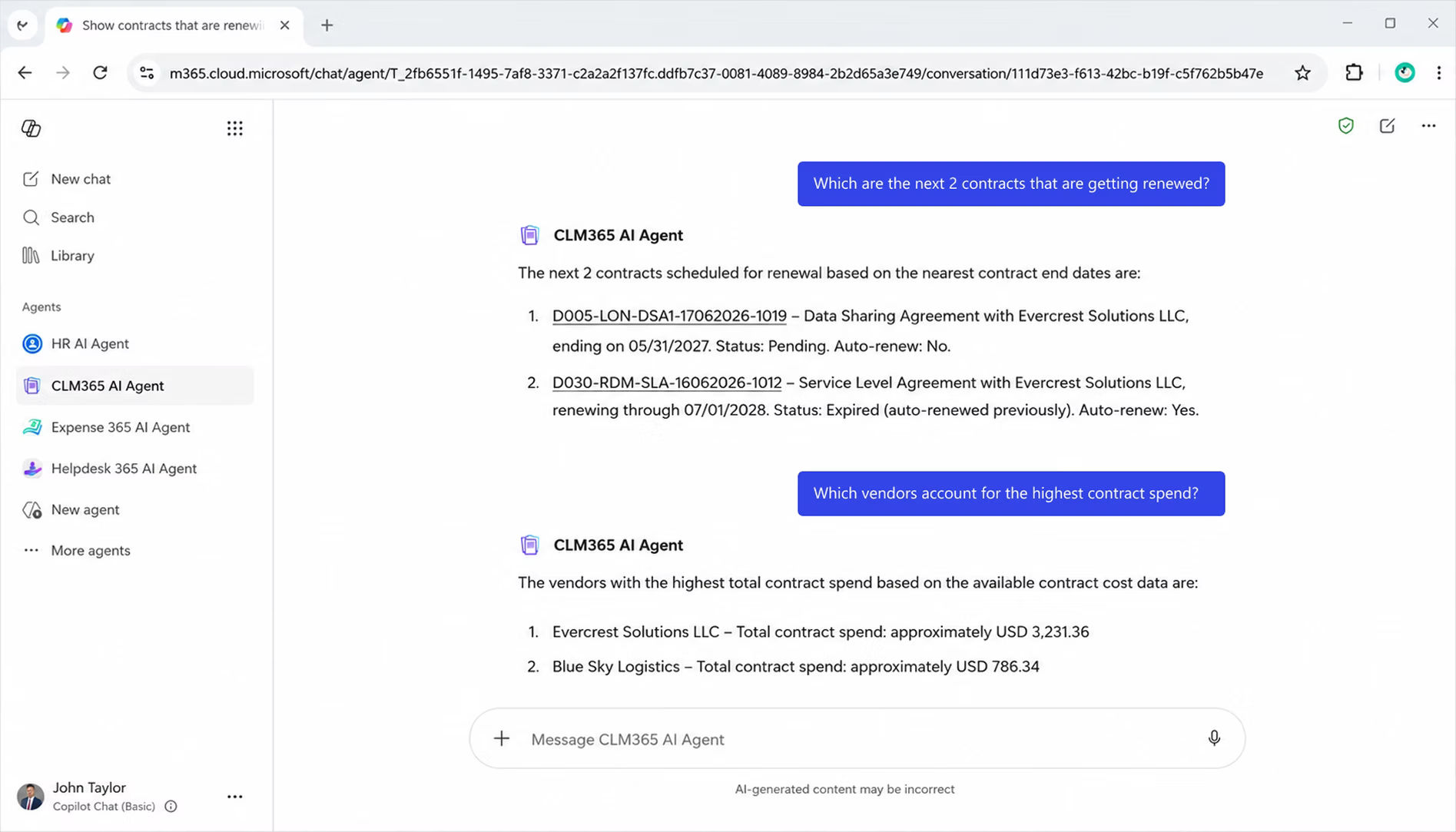
AI is no longer a differentiator it is becoming the baseline. According to McKinsey, 88% of organizations now report regular AI use in at least one business function, up from 78% just a year ago.
The AI capabilities in CLM are converted into quicker contract review, automatic risk identification, smart suggestions of clauses, and metadata extraction.
Legal AI based contract management system helps teams process higher volumes of agreements without proportionally increasing headcount, while also improving consistency in how contracts are reviewed and classified.
2. Contract Repository
According to research by EY, 90% of contracting professionals find it difficult to locate contracts efficiently, A situation that is removed when contracts are systematized, labeled, and can be accessed at a single repository.
A great repository enables you to search by contract type, counterparty, status, date, or any other custom metadata that your organization defines.
Contract lifecycle management system also has a detailed audit trail, thus you will always know who accessed or changed an agreement and at what time.
3. Compliance Management
Contracting compliance is not just about keeping up with the regulations; it’s about building a structured, reliable process that reduces risk
It ensure that the correct clauses are there, that obligations are being fulfilled in time, and that the standard terms of your organization are being used in all agreements.
Contract lifecycle management system identifies deviations, enforces compliance between jurisdictions and provides transparent contract visibility.
4. Automated Approval Workflows
A Gartner study found that 66% of legal leaders already intend to accelerate their investment in legal technology and automated workflows are often the primary driver.
Rather than manually routing contracts to be reviewed and pursued through approvals, contract lifecycle management system allow you to set rules that activate the appropriate contract workflow automatically.
Contract lifecycle management system implies that everybody receives the appropriate amount of monitoring and nothing is left.
5. Clause Library
A clause library is a managed set of pre-approved contract language sorted by type and application.
In creating a new agreement, team members will be able to draw on this library instead of having to write up clauses by hand or search through previous contracts.
Contract lifecycle management system will create uniformity, minimize the time spent on legal review and it becomes extremely difficult to get non-standard language.
6. Contract Redlining
One of the most time-consuming aspects of the negotiation process is contract redlining, which is the procedure of marking up a contract with the suggested changes.
Contract lifecycle management system introduces this process to an organized setting whereby all edits are monitored, can be seen by all parties, and linked to the right contract version.
This eliminates the usual issue of conflicting edits occurring on different copies and provides both parties with a clear common picture of what has been changed.
Make every edit count with better contract redlining
7. Draft Comparison
In case a counterparty sends back an amended contract, it is important to know what has been changed.
Draft comparison tools automatically show the differences between versions and provide your team with an immediate, precise perspective of all the changes.
Contract lifecycle management system is especially useful in the case of complex and lengthy agreements where a minor shift in wording can lead to major commercial or legal consequences.
8. Negotiate With Ease
A study conducted by WeShare found that 70 to 80% of business activities are governed by contracts.
It implies that the quality and efficiency of your negotiation process directly affect business results in almost all functions.
The contract lifecycle management system assist in improving contract negotiation workflow by storing all communication, redlines, and version history on a single platform.
9. E-Signature
Electronic signatures have become the standard for commercial agreements across virtually every industry.
Beyond the obvious time savings, research shows that electronic signatures can increase customer loyalty by as much as 500%, because a fast, frictionless signing experience leaves a positive impression.
Contract lifecycle management system that include e-signing features eliminate the distance between final approval and execution.
10. Contract Amendment
Business relationships develop. Scopes are renegotiated, terms renegotiated, and addenda must be added.
A contract lifecycle management system manages amendments by connecting them to the original agreement and retaining a comprehensive and interconnected history of the way a contract has evolved throughout its life.
This is more so when it comes to audits or disagreements, where a documented account of all the contracts is modified.
11. Version Control
Version control guarantees that all people working on a contract are always working on the right version that is the most up to date.
Each change is dated and credited, thus there is always a clear picture of what the document used to look like at a certain moment during its history.
Contract lifecycle management system eliminates a major cause of risk in contract management, the accidental use of an old draft and provides legal teams an assurance.
12. Reporting & Analytics
Contract lifecycle management system allow you to monitor the time taken in your contract cycles, find the points of congestion in your approval process, and keep an eye on the compliance
This will help monitor the status of your portfolio and produce the insights you need to make an informed decision about how to streamline your contracting operations.
In the case of leadership teams, this implies actual transparency of contract performance. In the case of legal and procurement.
Benefits of Using a Contract Lifecycle Management System
The case for CLM is not just operational it is strategic. Here are seven meaningful benefits that organizations consistently report after implementing a CLM platform:
1. Significantly Faster Contract Cycles
Contracts are processed quicker at each stage when drafting, approval, negotiation, and execution take place within a single connected platform. What used to take weeks can be done in days, and your revenue can be recognized faster and your team will spend less time handling individual deals.
2. Reclaim High-Value Legal Hours
According to Thomson Reuters, lawyers spend between 40% and 60% of their billable hours on repetitive contract drafting and review work. Contract lifecycle management system, especially those with AI-assisted drafting and built-in library of pre-approved clauses. This recover that time, and your legal department will spend it on more valuable advisory and strategic tasks, rather than document processing.
3. Reduced Commercial and Legal Risk
All these automated obligation tracking, compliance alerts, and standardized templates. This to minimize the chances of missed deadlines, non-compliant language, or unfavourable auto-renewals. Risk is not eliminated; it is only tamed and brought to light instead of hiding in a common drive.
4. Better Cross-Team Collaboration
The contracts are touched by legal, procurement, sales, and finance teams at various moments in time, usually the same contract. A contract lifecycle management system provides all the stakeholders with the context they require without asking them to request files or wait until they are updated. This helps real time contract collaboration.
5. Actionable Data to Drive Continuous Improvement
While most organizations (70%) have a formal contracting technology strategy, 99% still lack the data and tools needed to genuinely improve their contracting process. A good contract lifecycle management system transforms that equation by capturing structured data at each step providing you with the visibility to see what is working, what is not and where your next improvement opportunity resides.
6. Stronger Vendor and Client Relationships
A contract process is a professional process that is well managed. When the counterparties undergo structured, timely and transparent negotiations, it leaves a positive impression that is not limited to the deal. Stronger and more enduring vendor contract management are established based on effective, respectful contracting procedures.
7. Scalable Contracting Operations
The larger your business, the larger and more complex are your contracts. A contract management software can scale in a manner that is not possible by manual processes. The same system is in place whether you are handling 100 contracts or 10,000 contracts and the same system is in place in terms of organization, visibility and control.
Teams Involved During the Contracting Process
Management of contracts is not usually the work of a single team. The first step to selecting and applying a CLM solution that will be effective to all parties is to understand who is involved and what they require.
Legal
The legal department own the possessions. They assess contracts on the risk basis, consent to amendments in the clauses and make sure that agreements are following the policies of the organization and the relevant regulations. The most valuable features of legal contract management software are clause libraries, redlining, version control, and automated workflows that present the appropriate contracts.
Procurement
Procurement deals with supplier relations and vendor contracts. They are concerned with pricing conditions, delivery agreements, SLAs, and renewal dates. Procurement contract management software provides with a view of all active vendor contracts, automated renewal notifications, and spend information that is useful in future negotiations.
Sales
Sales teams desire to make sales fast. Prolonged contracting periods are a direct impediment to revenue. A contract lifecycle management system allows sales to start contract requests, monitor progress of deals in real time and eliminate the delays. Standard agreement templates that are self-service imply that sales teams do not have to rush through legal review.
Finance
Finance must be aware of what the organization has promised, and when such promises are converted into cash flow. Contract lifecycle management system provides finance teams with visibility of the payment terms. The contract values and the renewal obligations the information required to make accurate forecasts and financial plans.
Operations
They are often operations teams that fulfill the promises that were made in a contract, delivery schedules, service levels, staffing requirements. Contract lifecycle management system assists operations in that the contract obligations are made clear. It is accessible and trackable such that nothing is overlooked in execution.
Things to Consider While Managing Agreements
The introduction of a CLM system is a valuable investment. The following are seven areas that should be given a keen consideration before and during that process:
Standardize contract templates by auditing frequently used agreements, removing inconsistencies, and establishing approved language with legal teams.
Build a reliable clause library using current, legally reviewed language rather than outdated or unverified legacy clauses.
Define approval workflows clearly by mapping existing processes, setting approval rules, and creating escalation paths for exceptions.
Involve all stakeholder teams in workflow design to ensure the CLM process reflects the needs of legal, sales, procurement, finance, and other relevant teams.
Plan contract data migration carefully by identifying which contracts and metadata need to be migrated, cleaning the data, and validating it before import.
Invest in cross-functional training with team-specific sessions that focus on how each department will use the CLM system.
Create internal support and documentation by identifying departmental power users and providing simple guides for common tasks.
Establish governance and ownership by assigning a CLM administrator, conducting regular audits, and introducing a change management process for templates, clauses, and workflows.
Why Choose CLM 365 to Manage Your Agreements
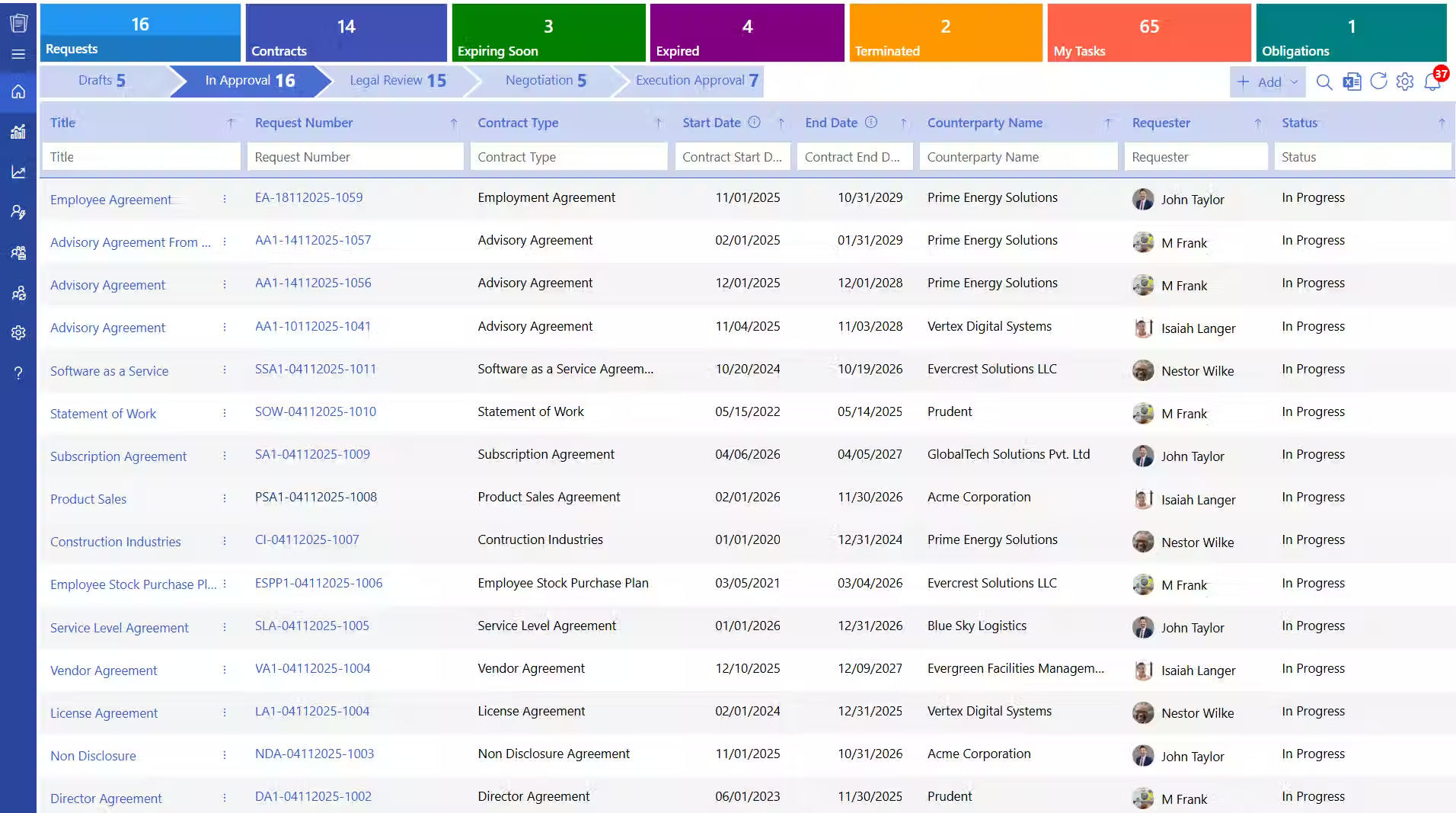
CLM 365 is built in the Microsoft ecosystem, which can be easily integrated with such tools as SharePoint, Microsoft Teams, Outlook, Microsoft Copilot, Power BI, and Power Automate. This allows the teams to manage contracts on the platforms that they use daily.
The SharePoint contract management streamlines contract operations by automating approvals, tracking obligations and compliance using smart, AI driven processes. This saves on manual work, risks are minimized and efficiency is enhanced.
The platform is developed with robust enterprise level security and yet simple to use interface which makes it appropriate to both the growing businesses and the large organizations.
Backed by SOC 2 compliance, Microsoft certification, and Microsoft Solutions Partner status giving you a trusted and secure contract management system.
It is also compatible with GCC and GCC High environments and offers high-level data protection and fulfils the high security requirements of government and regulated industries.
What is unique about CLM 365: CLM 365 is a zero-trust security solution that integrates AI-based automation and a user-friendly design, so that all the data in the contracts remain safely in your own SharePoint environment.
Conclusion
Contracts are not administrative overhead. They are the formal expression of every significant business relationship your organization maintains. How well you manage them directly affects your risk exposure, your operational efficiency, and your ability to grow.
CLM 365 is built to help you do exactly that. If you are ready to take a closer look at how it fits your organization, reach out to our team for a personalized walkthrough.
Start your 14-day free trial with CLM 365. Experience the smartest and most efficient way to manage your contracts seamlessly.
Frequently Asked Questions
How does a contract lifecycle management system help during renewals?
A contract lifecycle management system sends automated alerts before expiry, ensuring timely action on renewals.
How does a contract lifecycle management system manage contract versions?
A contract lifecycle management system tracks all edits and maintains a full version history.
Can a contract lifecycle management system support multi-level approvals?
Yes, a contract lifecycle management system allows layered approvals based on contract value or risk.
Can a contract lifecycle management system ensure legally binding signatures?
Yes, a contract lifecycle management system supports compliant digital signatures through integrations like DocuSign.
What does a contract lifecycle management system actually automate?
A contract lifecycle management system automates drafting, approvals, reminders, renewals, and storage to reduce manual work.
Try It Free, No Obligation










Schedule a free personalized 1:1 demo
By proceeding, you accept Cubic Logics’s terms and conditions and privacy policy





Please provide your contact details, we will connect with you soon!
Please provide your contact details, we will connect with you soon!
By proceeding, you accept Cubic Logics Terms and Conditions and Privacy Policy
Schedule a free personalized 1:1 demo
By proceeding, you accept Cubic Logics’s terms and conditions and privacy policy







