
Contract Initiation: Complete Guide to Request Contracts the Right Way

If you have ever waited weeks for a simple deal to get papered, you already know the pain of a broken contract initiation process.
- Contract initiation is the first stage of the contract lifecycle, where a business need turns into a formal ask for paperwork.
- Poor practices around contracts cost companies an average of 8.6% to 9% of annual revenue every year, according to World Commerce & Contracting (WorldCC).
- A weak intake step is the top reason deals stall before they ever reach legal review.
- Fixing the front end of this process early prevents most of the delays that show up later, during drafting and approval.
One person sends a quick message. Another person forgets to reply. A third person asks for a detail that nobody collected in the first place.
By the time a draft finally shows up, the deal has lost momentum, and everyone involved has spent hours chasing information that should have been there from day one.
This guide breaks down what starting a contract really involves, why so many teams get it wrong, and how a better setup for handling a contract request.
What Does Contract Initiation Actually Mean?
Contract initiation is the starting point of the whole contract lifecycle. It is the moment someone in the business decides they need paperwork and turns that need into a formal ask.
Maybe a sales rep needs a sales contract. Maybe a manager wants to bring on a new vendor. Maybe an HR lead needs an offer letter checked before it goes out.
- Gather all the essential details, including the parties involved, the scope of the agreement, the contract value, the timeline, and any special business terms.
- Providing complete and accurate information upfront helps legal and procurement teams review the contract more efficiently.
- Missing or incorrect details create unnecessary back-and-forth, slowing down the contract approval process.
- A well-prepared contract request sets the stage for a faster and smoother contract creation process.
Why Contract Initiation Deserves More Attention?
Most companies put their energy into the middle of the process like negotiation, redlines, and getting signatures. Few teams look closely at how paperwork gets started in the first place. That’s a mistake, because this contract solicitation sets the tone for everything that follows. Here’s why it matters so much:
- It sets the foundation. A clear initiation process gives everyone a better understanding of why the contract is needed, what it should cover, and who needs to be involved.
- It reduces unnecessary back-and-forth. When the right information is captured upfront, legal and business teams spend less time chasing missing details.
- It improves collaboration. Clearly defined roles and responsibilities help business, legal, procurement, and other stakeholders work from the same starting point.
- It helps maintain consistency. A structured process makes it easier to follow the same steps across different contracts, teams, and departments.
- It creates better visibility. Knowing where a contract request starts and who owns the next step makes the overall lifecycle easier to track.
The contract initiation stage may be short, but it lays the groundwork for everything that follows—from drafting and negotiation to approval, signing, and renewal.
Ready to make contract initiation easier?
CLM 365 helps you manage contract requests, capture the right details, route them to the right people, and move contracts into drafting in one place.
Difference Between Contract Initiation, Request, and Authoring
Businesses often use “initiation,” “request,” and “authoring” like they mean the same thing. They don’t. Each one is a separate stage and mixing them up is one reason teams build the wrong fixes for the wrong problem.
Stage | What Happens | Who’s Involved | What Comes Out of It |
Initiation | A business need gets identified and turned into a formal ask | The requester, the business team | A completed intake form |
Request | Details get submitted through a form, email, or ticket | The requester, the legal or contracts team | An approved or rejected ask |
Authoring | The actual document gets written | Legal, contracts staff, sometimes templates | A draft ready for review |
The first term covers the front end from the initial request to the first draft. Knowing the difference helps identify where the process breaks down.
How Does Contract Initiation Process Works?
A working setup for starting contracts usually follows these steps.
Step 1: Identify the Business Need
Someone identifies the need for a contract, such as a vendor agreement, NDA, client contract, or lease renewal.
Step 2: Submit the Request
The requester provides key details, including the parties involved, contract type, value, dates, and known risks.
Step 3: Assign an Owner
The request is routed to the right person or team based on factors such as contract type, value, or department.
Step 4: Complete Missing Information
Any missing details are collected from the requester before drafting begins.
Step 5: Start Drafting
Once the request is complete, the team creates the contract using an approved template or existing document.
Step 6: Conduct Internal Review
The draft is reviewed by relevant teams such as finance, security, procurement, or management.
Step 7: Move to Approval and Signature
After internal review, the contract moves through the required approval and signature process.
Where Does Contract Initiation Usually Get Stuck?
Drafting a contract sounds simple, but there are often several small hurdles between identifying the need and getting the first draft ready. Here are some of the common challenges teams run into.
A contract request may come in with only a brief description. The legal or contract team then has to go back and collect details such as the parties involved, contract value, key dates, scope, and specific contract deliverables before work can begin.
A request can move between sales, procurement, finance, and legal without a clear owner. When contract deadlines aren’t defined, requests can sit in an inbox or shared queue while everyone assumes someone else is handling them.
When information is collected through emails and messages, every missing detail creates another round of questions. A simple contract request can quickly turn into multiple emails and follow-ups before drafting even starts.
Without approved contract templates, teams may spend unnecessary time creating routine contracts from scratch. For frequently used agreements, starting with an approved template can provide a consistent foundation and reduce repetitive work.
When requests are spread across inboxes, spreadsheets, and shared folders, teams have limited visibility into the overall workload. It becomes harder to see which requests are new, waiting for information, being drafted, or ready for review.
Not every contract has the same level of complexity or risk. Applying the same process to every request can add unnecessary steps to simple agreements while taking attention away from contracts that need deeper review.
How Good Contract Initiation Supports the Entire Contract Lifecycle?
A contract lifecycle is only as strong as the process that starts it. When the right information, people, and approvals are in place from the beginning, each stage that follows becomes easier to manage.
A complete contract request gives the drafting team a clear understanding of what needs to be created.
Information such as the parties involved, contract type, scope, and specific terms gives the team a solid starting point.
Instead of spending time figuring out what the requester needs, the drafting team can focus on creating the right document from the beginning.
The quality of the initial request can influence the quality of the first draft.
When business requirements are clearly captured upfront, the draft is more likely to reflect what the business actually needs.
This can reduce unnecessary contract changes later and give both internal teams and external parties a clearer document to work.
A good initiation process identifies who needs to be involved before the contract reaches the review stage.
Depending on the agreement, this could include legal, finance, procurement, security, management, or other stakeholders.
When the right people govern the contract, the contract is less likely to be delayed.
Contracts often involve multiple departments, and each team may have a different responsibility.
A structured initiation process gives everyone a shared understanding of the request, its purpose, and what needs to happen next.
This creates a clearer handoff between business teams and other stakeholders .
Missing or incorrect information at the beginning can create problems later.
A wrong party name, missing date, unclear scope, or overlooked requirement may lead to additional revisions and reviews.
Capturing important information during initiation gives teams an opportunity to identify these issues.
When every request follows a defined contract lifecycle process, teams have a consistent way to start different types of contracts.
Required information, routing rules, templates, and review steps can be established based on the type and requirements of the agreement.
This helps create a more predictable experience for both the people requesting contracts.
A contract’s lifecycle doesn’t end with a signature. Renewals, amendments, obligations, and other follow-up activities may come later.
When the contract starts with organized information and clear records, teams have a better foundation for managing future activities.
Best Practices for Managing Contract Initiation
A structured initiation process helps teams collect the right information, assign ownership, and move requests forward without unnecessary delays.
- Use a standard intake form. Capture key details such as contract type, parties, value, dates, and requirements upfront.
- Make key fields mandatory. Collect essential information before the request moves to the next stage.
- Assign clear ownership. Make sure every request has someone responsible for moving it forward.
- Set routing rules. Route requests based on contract type, department, value, or risk.
- Use approved templates. Give teams the right starting point for common contract types.
- Keep requests in one place. Centralize requests so teams can easily track their status and progress.
- Set priorities and timelines. Give requests clear deadlines based on urgency and business needs.
- Involve stakeholders early. Bring the right teams into the process before drafting or review begins.
Request, route, review, and approve contracts in one place
CLM 365 helps teams request contracts, route them to the right department, collect key details, and manage drafting, review in one place.
Role of CLM 365 in Managing the Contract Lifecycle
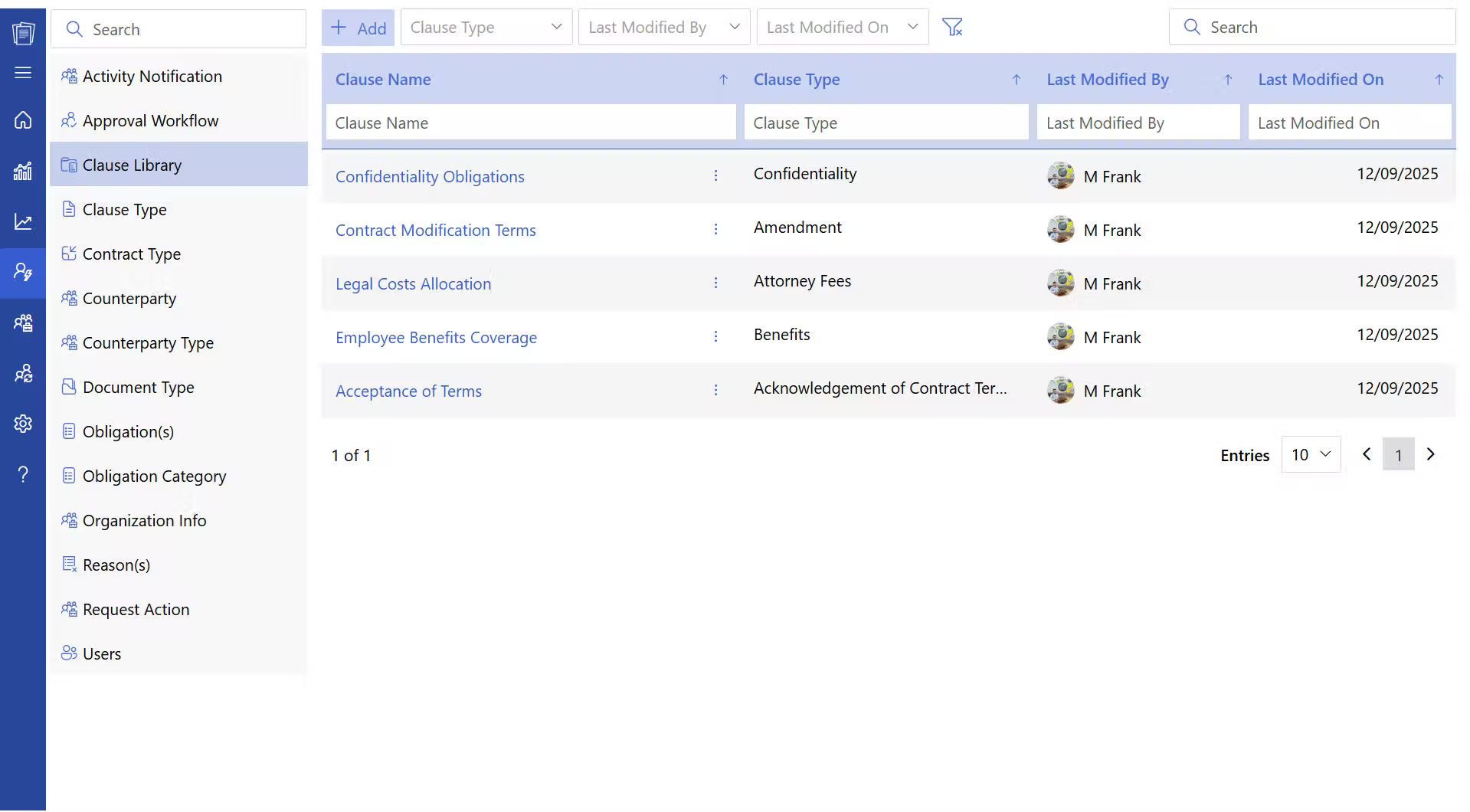
CLM 365 brings contract management into the Microsoft 365 environment, integrating with apps such as SharePoint, Teams, and Outlook that teams already use. Contract data and documents are stored within the organization’s Microsoft 365 tenant, helping teams work within their existing environment.
From the initial request, teams can submit contract requirements, collect the necessary details, and route requests to the right department for review.
Contracts can then be created using approved templates, reviewed with AI assistance, and sent for digital signatures.
Once contracts are signed, CLM 365 helps teams keep track of important dates and receive renewal reminders, supporting the contract throughout its lifecycle.
Conclusion
Contract initiation sets the foundation for the entire contract lifecycle. A clear process helps teams capture the right information, involve the right people, and move contracts from request to drafting, review, approval, and signing with fewer delays.
With CLM 365, teams can bring structure to the way contracts are request to renewal process.
Ready to make contract management easier from the very first step? See how CLM 365 can help.
Frequently Asked Questions
Who can initiate a contract?
Typically, employees from departments such as sales, procurement, finance, HR, or operations can initiate a contract when there is a business need.
What information is needed to initiate a contract?
Common information includes the parties involved, contract type, purpose, scope, value, effective date, renewal date, and any specific business requirements.
How do I submit a contract request?
You can submit a contract request using an intake form that captures the key business and contract details needed to get started.
Can I create a contract from a template?
Yes. Using approved templates can help teams create commonly used agreements more consistently and reduce repetitive drafting work.
How is a contract sent for review?
Once a draft is ready, it can be routed to the relevant reviewers through the organization’s contract workflow.


_JiluXJRGNl.svg)























