

A missed auto-renewal clause can result in unwanted contract extensions, unexpected costs, and missed opportunities to renegotiate terms.
- A structured review ensures key areas such as payment terms, liability, confidentiality, termination, and renewal clauses are properly evaluated.
- Effective contract review creates greater visibility into contractual commitments, helping teams make informed decisions and manage agreements.
- Involving the right stakeholders at the right stage helps improve accuracy and avoid delays during the contract lifecycle.
- AI-powered contract review can help teams analyze agreements faster, identify potential risks, and improve consistency while keeping human oversight in the process.
This is why contract review is more than a documentation exercise it is an important part of managing contractual risk.
Almost 90% of business users find contracts ‘difficult or impossible to understand’. Recent research has revealed the pervasive nature of contracts, with an average 25% of the workforces.
In this blog, you’ll learn what contract review actually means, how the process works step by step.
What Exactly Is Contract Review?
Contract review is the process of reading, analysing, and evaluating a contract’s language before anyone signs it.
The goal is simple: confirm the document says what your business agreed to, and flag anything that creates risk.
That sounds basic until you’ve watched a sales rep forward a “standard” vendor agreement that quietly shifts liability, or a procurement manager sign a renewal with a 90-day notice window nobody tracked.
A good review checks three things at once:
- Accuracy: Do the commercial terms match what was negotiated?
- Compliance: Does the language meet internal policy, industry regulation, and jurisdictional requirements?
- Risk: Does any clause expose the company to liability, cost, or obligations it can’t meet?
Contract review isn’t only a legal function anymore either. Procurement, sales operations, compliance, and finance teams all touch contracts long before and often without legal teams.
How Does Contract Review Actually Work?
With AI-native contract review, AI is integrated into these steps to help teams analyze agreements, identify deviations, and surface issues while keeping reviewers in control.
Step 1: Contract intake and assessment
The contract enters the review process from legal, sales, procurement, or another business team. AI can identify the contract type, key parties, and important details to help determine the appropriate review approach.
Step 2: Initial review
The agreement is reviewed to understand its overall structure, including the scope, term, payment terms, responsibilities, and other key provisions. AI can quickly surface relevant information across the document.
Step 3: Clause-by-clause analysis
Each contract clause is assessed against internal policies, approved templates, playbooks, and predefined standards. AI can identify deviations, missing provisions, and terms that may require further attention.
Step 4: Risk identification and redlining
Potential risks are flagged for the reviewer. AI can also suggest alternative language or recommended changes based on established review standards, which the reviewer can accept, modify, or reject.
Step 5: Internal review and escalation
Clauses requiring legal, financial, compliance, or business input are routed to the appropriate stakeholders. AI helps surface the areas that need attention, while final decisions remain with the relevant reviewers.
Step 6: Negotiation and revision
Comments and proposed changes are shared with the counterparty. As revisions come in, AI can help compare versions, track changes, and identify whether previously flagged issues have been addressed.
Step 7: Final approval and signature
Once the agreement meets the required standards, it moves through final approval and signature. Key terms and obligations can then be captured for ongoing contract management.
With AI-native review, AI is not simply added as a separate tool. It is built into the review workflow, helping teams move from document intake to analysis.
What Should You Look for During Contract Review?
Every contract is different, but experienced reviewers check for the same recurring risk points every time. Miss one of these, and you’re the person explaining it to your CFO later.
- Parties and signing authority: Confirm the legal entity name is correct and the signatory actually has the authority to bind the company.
- Payment terms: Check amounts, currency, due dates, late fees, and whether pricing can change mid-term.
- Termination and renewal: Look for auto-renewal clauses, notice periods, and what happens to fees or data on exit.
- Liability and indemnification: Understand who pays if something goes wrong, and whether liability is capped.
- Confidentiality and data handling: Especially critical if the contract involves customer or employee data.
- Intellectual property ownership: Who owns work product, code, or content created under the agreement.
- Dispute resolution and governing law: Arbitration vs. litigation, and which jurisdiction’s laws apply.
- Compliance obligations: Industry-specific requirements like HIPAA, GDPR, or SOC 2 commitments buried in an exhibit.
A reviewer who checks these eight areas consistently, every time, is the difference between a review process and a rubber stamp. Miss even one, and the gap doesn’t show up right away
Why Is a Strong Contract Review Process Important?
A contract review process isn’t a formality you build once and forget. It’s the operational backbone that determines whether your legal team is a bottleneck or a growth enabler. Here’s what’s at stake when that process is weak.
It Protects Revenue, Not Just Risk
A thorough review helps identify unfavorable pricing, contract terms, renewal conditions, and other provisions that could affect revenue. It gives teams an opportunity to address these issues before the contract is finalized.
It Speeds Up Deal Cycles
A structured contract review software makes it easier to identify what needs attention, route contracts to the right reviewers, and reduce unnecessary back-and-forth between teams.
It Builds Consistency Across Reviewers
Using shared review standards and approved playbooks helps different reviewers evaluate contracts against the same expectations, reducing inconsistencies in how terms are assessed.
It Reduces Dependence on Outside Counsel
Clear review guidelines allow in-house teams to handle routine contract terms more efficiently and involve outside counsel when specialized legal expertise is required.
It Helps Prevent Future Disputes
Reviewing ambiguous language, responsibilities, obligations, and termination conditions before signing can reduce misunderstandings and potential contract disputes later in the contract lifecycle.
Does reviewing legal clauses take too much time?
CLM 365 uses AI to turn complex clauses into simple language, helping non-legal teams understand what they’re signing.
What Are the Common Challenges in Contract Review?
Even legal teams with a solid process run into the same friction points repeatedly. Recognizing them is the first step toward fixing them most aren’t a people problem, they’re a workflow problem.
More Work Than Your Team Can Handle
As contract volumes grow, legal teams often have to manage more agreements without a proportional increase in resources. This can create backlogs, increase review pressure, and make it harder to give each contract the attention it requires.
Inconsistent Standards Between Reviewers
Without a shared playbook or clear contract review checklist, different reviewers may interpret the same clause differently. This can lead to inconsistent decisions, repeated discussions, and uncertainty about which terms are acceptable.
Manual, Repetitive Clause-Checking
Reviewers often spend significant time checking recurring clauses such as indemnification, liability, confidentiality, payment, and contract termination. While these checks are important, performing them manually across every contract can consume valuable time.
Poor Visibility Into Contract Obligations
Review challenges can continue after the contract is signed. Without a centralized way to track renewal dates and other commitments, important contractual responsibilities can be difficult to monitor. This can lead to missed deadlines, renewals, or key obligations.
Slow Handoffs Between Business and Legal
Contracts often move between sales, procurement, legal, finance, and business teams during review. When these handoffs depend heavily on emails and manual follow-ups, approvals can take longer and reviewers may lack visibility. This can create delays and make it harder for teams to know what needs their attention.
How Can AI Make Contract Review Easier?
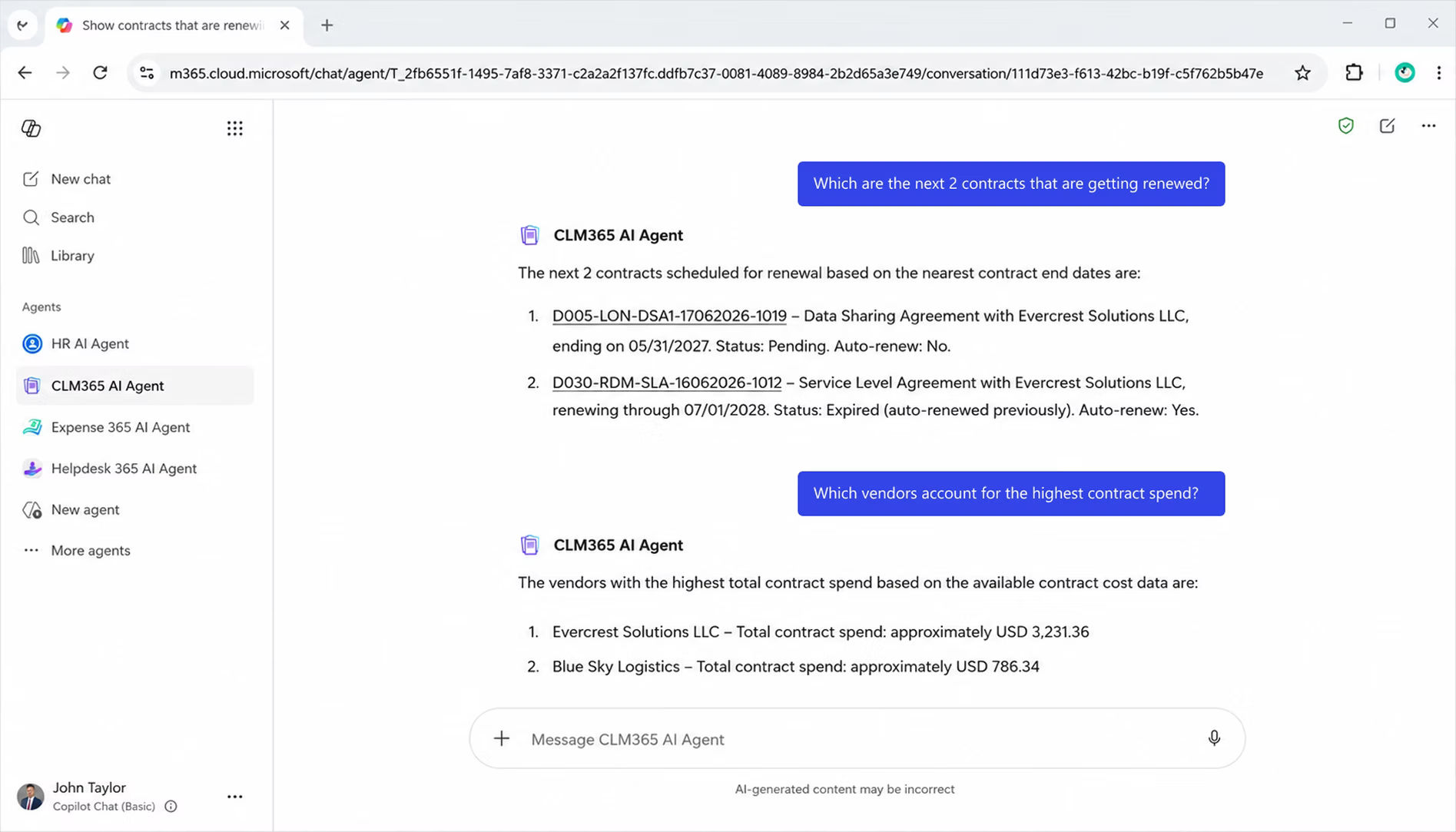
Contract review can become time-consuming as contract volumes and complexity increase. Here is how AI during the process.
First-Pass Review in Minutes
AI can summarize an agreement quickly and identify key clauses, unusual language, missing provisions, and deviations from predefined standards.
Instead of starting with a blank page, reviewers get an initial view of the areas that may require attention.
This is particularly useful for lengthy agreements where manually locating every relevant provision can take considerable time.
Consistent Application of Playbook Standards
AI for legal contracts against the same playbook, approved language, templates, and internal policies each time.
This helps reduce inconsistencies between reviewers and makes it easier to maintain a common standard language.
Reviewers can still assess whether a deviation is appropriate based on the specific deal and business context.
Faster Clause Extraction and Comparison
AI can identify and organize important provisions such as payment terms, termination rights, renewal clauses, liability caps, indemnification, and data protection requirements.
It compare contracts with previous versions, approved templates, or preferred language, making changes and deviations easier to spot.
Plain-Language Risk Explanations
AI can go beyond highlighting a potentially problematic clause by explaining what the language means and why it may need attention.
For example, it can summarize how a broad indemnity provision could affect.
This makes contract discussions easier for non-legal stakeholders while giving reviewers additional context.
Reduced Reliance on Outside Counsel
AI can help in-house legal teams handle routine and repeatable review tasks internally.
By identifying standard issues and deviations early, teams can reserve outside counsel.
This can make the use of external legal support more targeted and efficient.
Better Tracking of Obligations Post-Signature
Contract review should not stop when an agreement is signed.
AI can extract important obligations, renewal dates, notice periods, reporting requirements, and other commitments from the final agreement.
When connected to contract management workflows, these details can help teams keep track of responsibilities.
Freeing Lawyers for Judgment-Based Work
The value of AI is not simply in completing reviews faster.
By handling repetitive tasks such as clause identification, comparison, and initial risk flagging, AI can give legal professionals more time to focus on work that requires judgment.
Lawyers can spend more time on contract negotiation strategy, business context, complex risk assessment, and decisions that cannot be reduced to a standard rule.
Basic AI Tools vs. AI-Native Contract Review: What's the Difference?
Not all “AI contract review” is built the same way. A generic AI chatbot bolted onto a document tool is not the same as a platform purpose-built for the contract lifecycle.
Aspects | Basic AI Tools | AI-Native Contract Review |
Design intent | General-purpose AI adapted for legal use | Built specifically for contract workflows from the ground up |
Playbook integration | Limited or manual; standards applied inconsistently | Playbooks embedded directly into every review, applied automatically |
Context awareness | Reviews one document in isolation | Understands prior versions, related contracts, and negotiation history |
Accuracy on legal clauses | Prone to generic or off-target suggestions | Trained specifically on contract language and clause libraries |
Workflow integration | Standalone tool requiring copy-paste | Embedded in Word, email, or CLM systems where contracts already live |
Post-signature tracking | None — review ends at signature | Ongoing obligation and renewal tracking built in |
Auditability | Little to no record of what was checked or why | Full audit trail of every flag, redline, and decision |
The gap isn’t about which tool sounds smarter in a demo. It’s about whether the tool understands contracts as a lifecycle, not a one-time document scan.
Ensuring Security In the Era of AI
Contracts contain sensitive legal, financial, and business information, so security matters just as much as the quality of the AI analysis. Before using AI for contract review, businesses need to know where their data is stored, who can access it, and how it is handled.
With CLM 365, contract analysis works within your existing Microsoft 365 environment. Your contract data stays within your organization’s Microsoft tenant, so you can continue using the security and access controls already in place.
This also means your existing permissions, compliance policies, audit trails, and governance controls can remain part of the contract review process.
CLM 365 does not send your contract data to public AI services such as ChatGPT unless you specifically configure and approve an AI provider.
Your contract content is not used to train public AI models. When AI is used for tasks such as summarizing a contract, explaining a clause, or identifying potential risks, the content is processed to provide the requested result.
A LegalOn industry survey found that concerns about data privacy and confidentiality are cited by 59% of legal teams as a top obstacle to AI adoption — which means security isn’t a minor checkbox, it’s often the deciding factor in whether a tool gets approved at all.
Secure every step of your contract review
CLM 365 helps you protect sensitive contract data, control access, and keep reviews organized from start to finish.
Where Does Human Intervention Is Needed?
AI can be highly effective at pattern-matching contract language against a playbook, while human expertise remains essential for understanding relationship context, business strategy, and novel or complex risks.
Human review still matters most for:
- High-value or high-risk contracts: Anything above a defined dollar threshold should always get a human final check.
- Novel clauses with no precedent: If AI hasn’t seen the pattern before, a person needs to evaluate it from scratch.
- Negotiation strategy: Deciding what to push back on, and how hard, is a business judgment call, not a pattern match.
- Final sign-off and accountability: Someone with legal authority needs to own the decision, regardless of how the first-pass review was done.
- Ambiguous or conflicting terms: Where a clause could reasonably be read two ways, that interpretation call belongs to a person.
Thomson Reuters data backs this up directly. 68% of legal professionals report always reviewing AI contract output before acting on it, and another 24% review selectively based on contract value. Only a small minority skip human review entirely, which tells you where the industry’s comfort level sits.
Why Use CLM 365 for Contract Review?
CLM 365 works within the Microsoft 365 ecosystem, allowing teams to manage and review contracts using the tools they already rely on. It connects with Microsoft 365 apps such as SharePoint, Teams, Outlook, Power Automate, Power BI, and Microsoft Copilot, helping contract review fit naturally into existing workflows.
Its AI-native capabilities help teams summarize contracts, extract key clauses, identify important terms, and surface potential risks. This makes it easier for legal, procurement, and business teams to review lengthy agreements and focus on the areas that need their attention.
Security and data control are also built into the experience. CLM 365 is SOC 2 compliant and Microsoft certified, while your contract data remains within your organization’s Microsoft tenant.
This allows teams to use AI for contract analysis while keeping their contract data within their existing Microsoft 365 environment and security framework.
Conclusion
Contract review will always require human judgment, but the process does not have to be slow or repetitive. A clear playbook, AI-assisted review, and the right human oversight can help teams review contracts faster, identify risks earlier, and make more informed decisions.
CLM 365 brings these capabilities together within Microsoft 365, helping teams streamline contract review while keeping their existing workflows and security controls in place.
Ready to simplify contract review? Explore CLM 365 and see how AI-native contract management can help your team review, manage, and track contracts more efficiently.
Frequently Asked Questions
How long does a typical contract review take?
It depends on the contract type, complexity, risk level, and number of stakeholders involved. A standardized review process can reduce unnecessary delays by routing contracts and issues to the right people.
How do we prioritize contracts waiting for review?
Organizations can prioritize based on factors such as contract value, business impact, risk, deadlines, contract type, and required approval level.
Can different teams have different approval requirements?
Yes. Approval workflows can be based on factors such as contract type, value, risk level, department, or specific clauses.
Can AI identify potential risks in a contract?
Yes. AI can flag provisions that deviate from defined standards or contain terms that may require closer attention. The reviewer can then assess the issue in the context of the specific agreement.
How can we track contract changes during negotiation?
The system maintains version history and lets reviewers compare successive drafts, making it easy to see what changed, track who made the changes, and identify which issues are still unresolved.
What is a contract review date?
A contract review date is the scheduled date when the contract’s terms and conditions are reviewed and evaluated again.


_JiluXJRGNl.svg)























