


- HR software centralizes hiring, onboarding, leave, and performance tracking into one platform.
- Every modern HR system should cover a core set of must-have features — we list them below.
- The right choice depends on your team size and your existing tech stack, not just the feature count.
- We include picks for startups, small businesses, mid-sized teams, and large enterprises.
Managing HR gets harder as a company grows. Manual processes, spreadsheets, and disconnected tools slow down hiring and onboarding. They also make leave management and performance tracking harder to keep accurate.
The best HR software fixes this by centralizing everything in one platform. It helps HR teams work faster and make better-informed decisions. In this guide, we compare the 10 best HR software solutions of 2026. We rank each one by features, pricing, and real-world use cases to help you choose faster.
What Is HR Software?
HR software is a digital platform for managing everyday HR work in one place. Instead of juggling spreadsheets, emails, and paper records, HR teams can organize employee data and automate routine tasks. They can also pull real-time reports whenever they need them.
Modern HR software covers the full employee lifecycle — recruitment, onboarding, leave, performance, and attendance. Many also include self-service tools. That means employees can update their own details, request leave, and pull HR documents without waiting on the HR team.
According to Gartner, 48% of HR leaders plan to increase their HR technology budget, making HR technology their top investment priority.
The right HR software does more than simplify admin work, though. It gives managers real visibility into their teams through dashboards and automated workflows.
Why Businesses Are Investing in HR Software
Growth creates new HR problems. As teams get bigger, manual processes get harder to manage. That raises the risk of delays, inconsistent records, and missed approvals.
The right software fixes this by giving HR a more organized way to manage people. It also frees up time for strategic work instead of repetitive admin tasks. Here’s what that looks like in practice:
1. Centralized employee information
Store employee profiles, documents, and job details in one secure place. That makes accurate information easy to find whenever you need it.
2. Faster onboarding
Automate onboarding checklists, document collection, and task assignments. New hires finish the joining process with far fewer manual steps.
3. Better leave and attendance tracking
Replace email-based leave requests with automated approval workflows. Real-time leave balances remove the guesswork for both employees and managers.
4. Stronger performance reviews
Track goals, collect feedback, and schedule review cycles in one structured process. That makes it easier to monitor employee development over time.
5. Simpler recruitment
Manage job postings, candidate applications, and interview stages inside a single workflow. Fewer tools means fewer things falling through the cracks.
6. Better reporting
Generate reports on hiring, attendance, leave, and performance in a few clicks. Accurate data helps HR leaders make informed decisions faster.
7. More employee self-service
Let employees update their own details, request leave, and complete assigned tasks. Less dependency on HR means faster resolution for everyone.
10 Best HR Software at a Glance: Comparison Table
Compare the best HR software solutions to find the right platform for your business needs.
HR Software | Best For | Pricing | AI & Automation | Microsoft 365 Integration | G2 Rating |
HR365 HRMS | SMBs & Microsoft 365 organizations | ✓ | Native | ||
BambooHR | Small & mid-sized businesses | From $10/user/month | ✓ | ✓ | 4.4/5 |
Rippling | HR and IT management | Custom pricing | ✓ | ✓ | 4.8/5 |
HiBob | Mid-sized organizations | Custom pricing | ✓ | ✓ | 4.5/5 |
Deel | Global teams | From $49/contractor/month | ✓ | ✓ | 4.8/5 |
Factorial | Small & mid-sized businesses | Custom pricing | ✓ | ✓ | 4.4/5 |
Zoho People | Flexible HR management | From $1.25/user/month | ✓ | ✓ | 4.4/5 |
Connecteam | Frontline teams | From $29/month | ✓ | ✓ | 4.8/5 |
Workday | Large enterprises | Custom pricing | ✓ | ✓ | 4.2/5 |
SAP SuccessFactors | Global enterprises | Custom pricing | ✓ | ✓ | 4.2/5 |
Pricing Note
Pricing can vary based on the plan, number of users, selected features, billing cycle, and region. Some HR software providers also use custom pricing, so listed starting prices may not represent the final cost for every organization.
Top 10 HR Software for 2026: Detailed Comparison and Review
1. HR365 HRMS
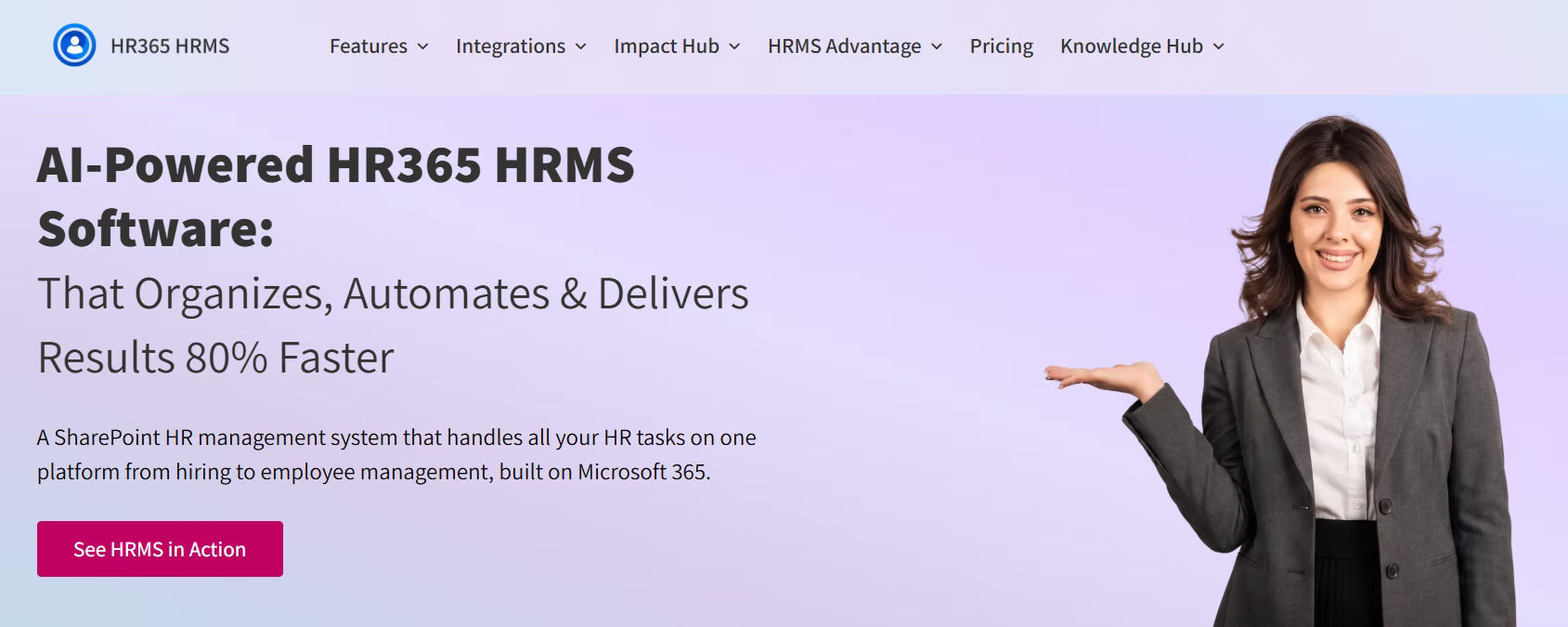
HR365 HRMS is built for teams already running on Microsoft 365, SharePoint, and Microsoft Teams. It centralizes core HR functions into one platform. Configurable workflows, AI-powered automation, and self-service tools support every stage of the employee lifecycle.
What makes it stand out
- Built specifically for Microsoft 365, SharePoint, and Teams environments.
- Centralized employee directory with customizable profiles and org charts.
- AI-powered assistant for faster answers and routine task automation.
- Flexible onboarding workflows for different departments and roles.
- Recruitment tools that cover job posting through candidate onboarding.
- Performance management with goals, reviews, and feedback tracking.
- Configurable leave management with custom approval workflows.
- Timesheet tracking for attendance and work hours.
- Learning modules to support ongoing skill development.
- Expense management with built-in approval workflows.
2. BambooHR
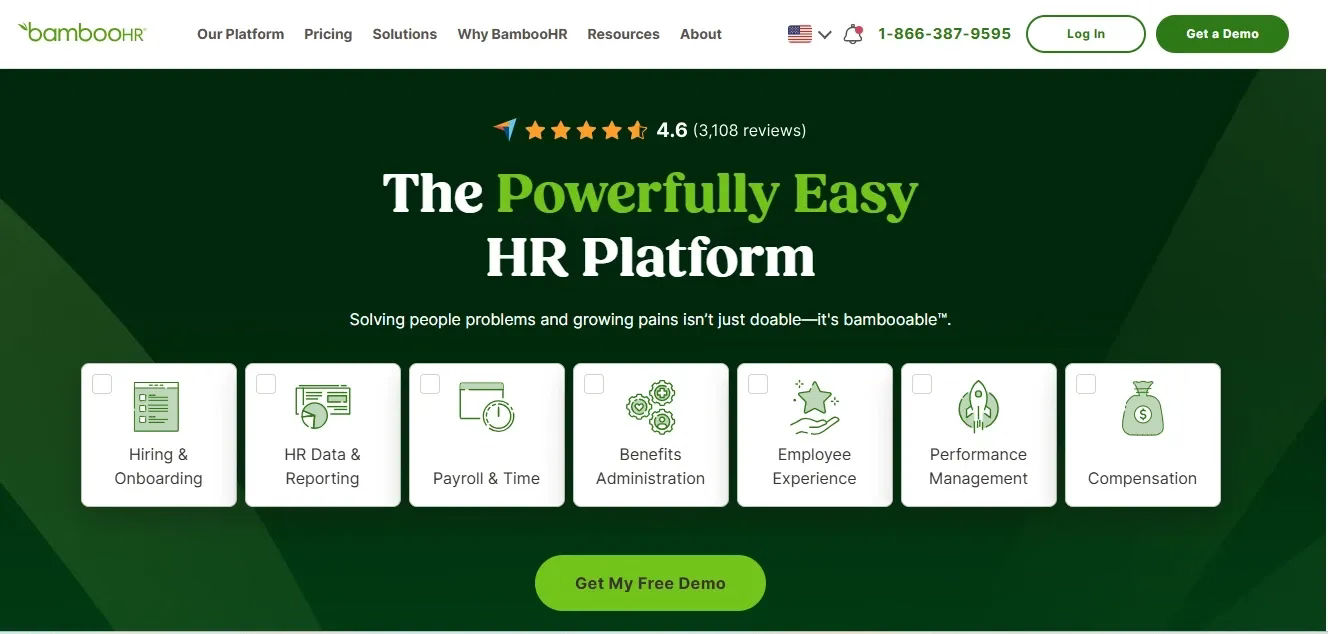
BambooHR is a cloud-based platform built for small and mid-sized businesses. It handles employee records, onboarding, leave, performance, and reporting through a simple interface. That makes it a popular first step for teams moving off manual HR processes.
What makes it stand out
- Clean interface built for fast adoption.
- Centralized employee records with secure document storage.
- Digital onboarding with customizable checklists.
- Built-in e-signatures for HR documents and forms.
- Self-service portal for updating info and requesting time off.
- Structured performance review cycles.
- Custom reports with filtering and export.
- Mobile app for HR access on the go.
- Employee satisfaction surveys.
- Automated reminders for key HR dates.
3. HiBob
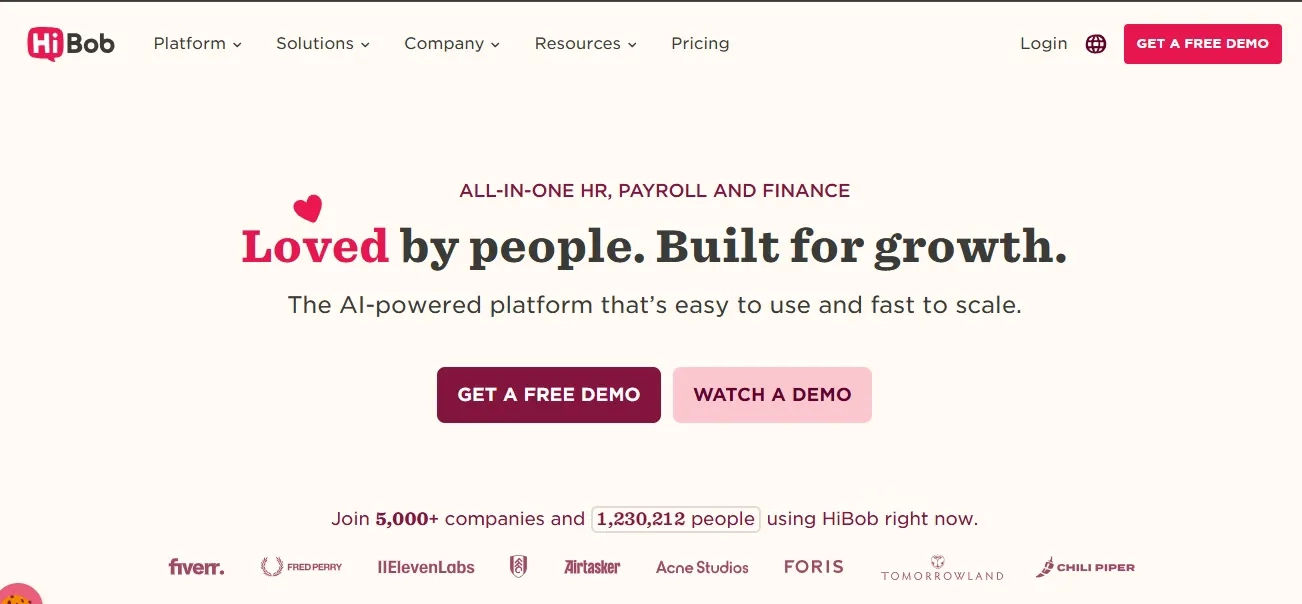
HiBob is built for mid-sized and growing companies, especially hybrid teams. It combines employee records, onboarding, performance, and engagement tools in one platform. Flexible workflows and reporting make it a strong fit for distributed teams.
What makes it stand out
- Modern interface built for hybrid workplaces.
- Customizable workflows for different departments.
- Engagement surveys with real-time feedback.
- Visual org charts showing reporting lines.
- Configurable onboarding journeys by location and role.
- People analytics for workforce planning.
- Peer recognition tools.
- Continuous feedback and flexible review cycles.
- Custom fields for evolving business needs.
- Global HR support across multiple countries.
4. Rippling
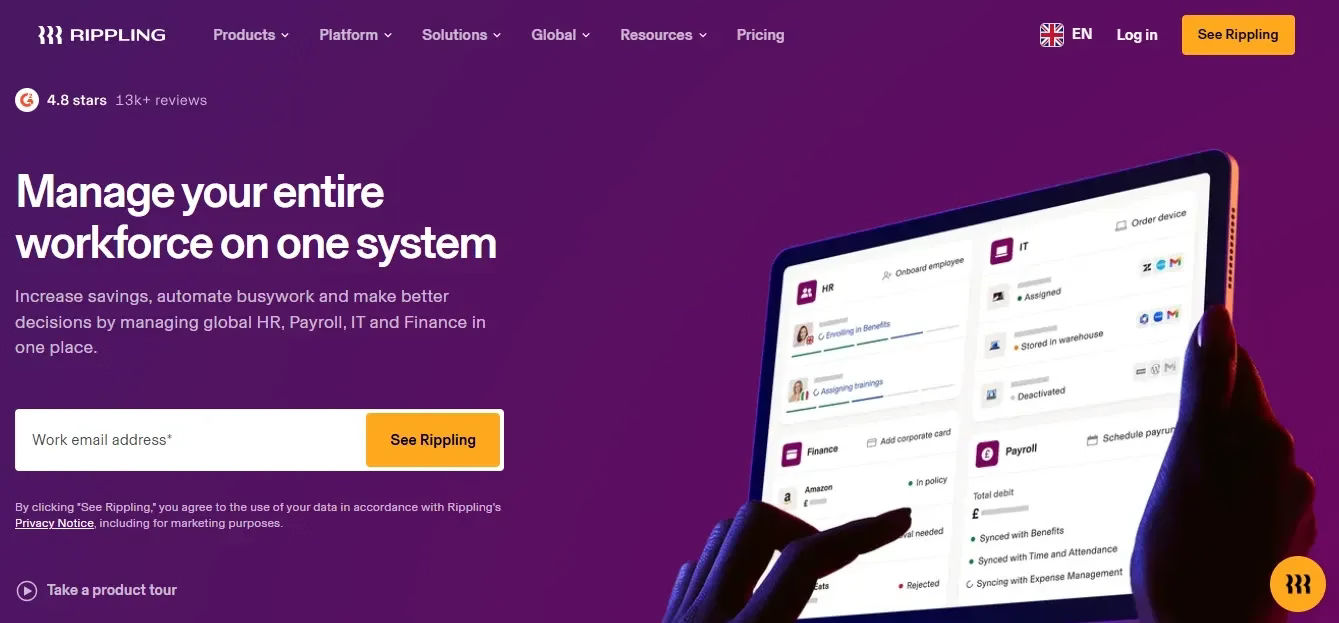
Rippling combines HR, IT, and business operations in one platform. It automates onboarding, software access, and device management. That makes it a strong fit for growing companies with distributed teams.
What makes it stand out
- Combines HR management with IT device administration.
- Automated software provisioning during onboarding and offboarding.
- Device inventory tracking alongside HR data.
- Workflow automation across HR, finance, and IT.
- Large marketplace of third-party integrations.
- Global employee management across locations.
- Custom approval workflows.
- Advanced reporting across HR and operations.
- One platform for records and app access.
- Automation that cuts repetitive admin work.
5. Deel
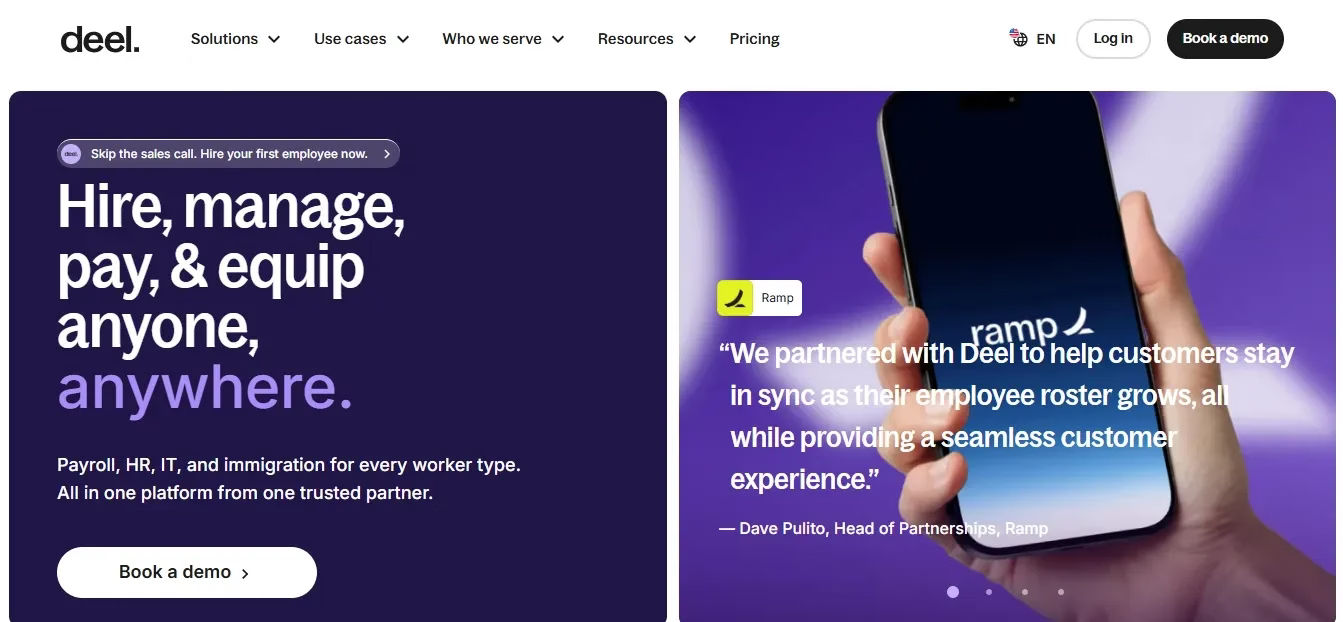
Deel is built for hiring and managing international teams. It centralizes employee data, documents, and workflows in one place. That makes it a popular choice for companies expanding across borders.
What makes it stand out
- Purpose-built for globally distributed teams and international hiring.
- Manages both employees and contractors in one platform.
- Country-specific onboarding workflows.
- Digital document management across the employee lifecycle.
- Global workforce reporting.
- Automated onboarding for international expansion.
- Self-service portal for globally distributed staff.
- Multi-country HR administration.
- Automated workflows for global hiring.
- Scales with international growth.
6. Factorial HR
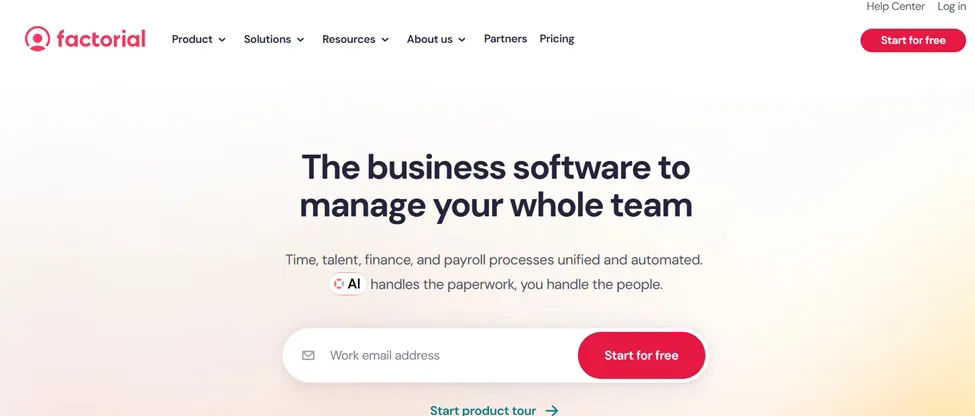
Factorial HR is a cloud platform built for small and mid-sized businesses. It combines employee records, attendance, leave, onboarding, and performance in one easy-to-use system. Automation handles the routine HR tasks so teams don’t have to.
What makes it stand out
- Affordable pricing built for growing SMBs.
- Automated leave management with custom approval rules.
- Digital document storage in one central place.
- Attendance tracking built into employee records.
- Performance review templates for structured evaluations.
- Automation for repetitive HR admin work.
- Self-service portal with mobile access.
- Real-time dashboard reporting.
- Modular platform that grows with you.
- Fast, low-technical-effort implementation.
7. Zoho People
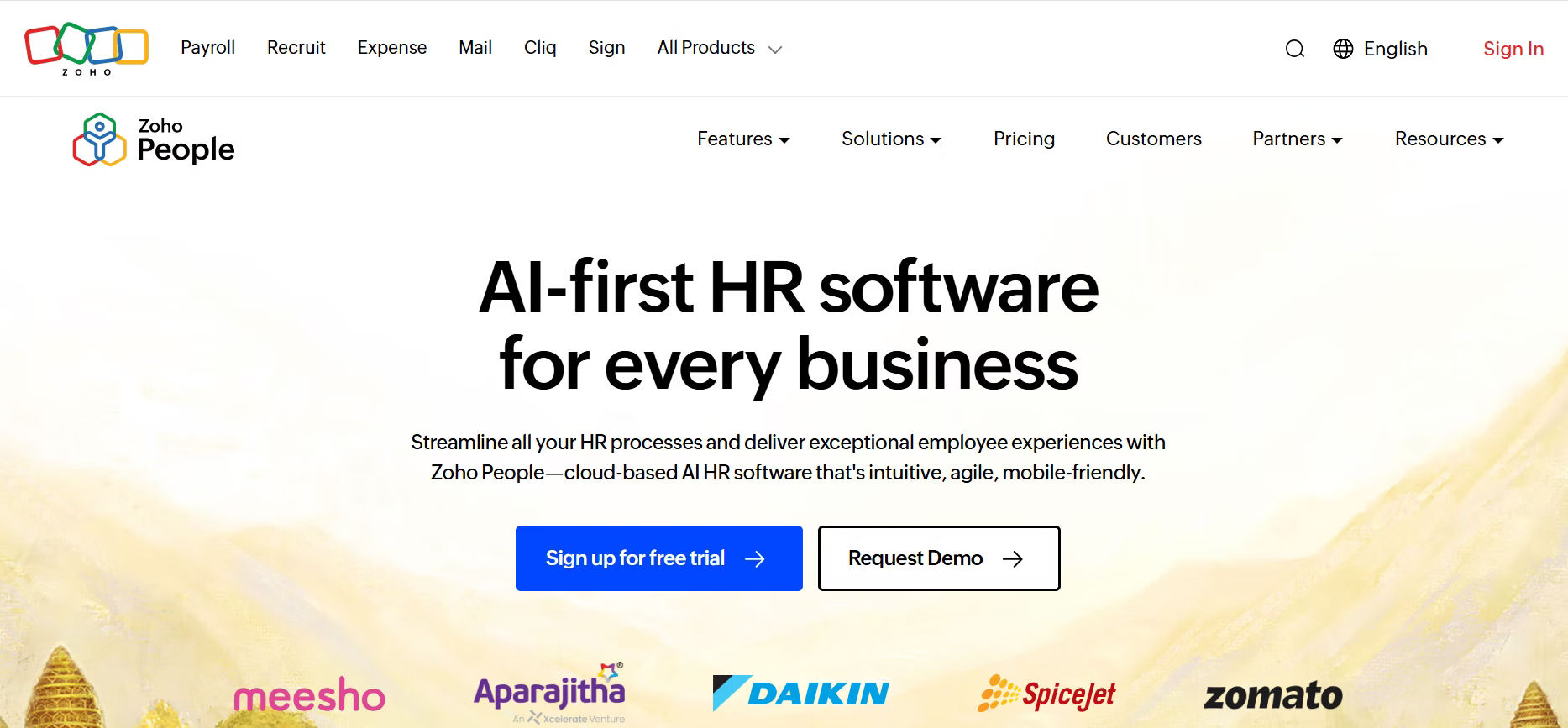
Zoho People is a cloud-based platform built for flexible, cost-effective HR management. It covers employee records, onboarding, attendance, leave, and performance. It also integrates tightly with the rest of the Zoho suite.
What makes it stand out
- Integrates smoothly with the full Zoho ecosystem.
- Highly customizable HR forms.
- Shift scheduling for multiple work patterns.
- Attendance tracking via web, mobile, and biometric options.
- Case management for internal HR requests.
- Performance management with goals and continuous feedback.
- Automated workflows for approvals and notifications.
- Mobile app for managers and employees.
- Built-in learning management for internal training.
8. Connecteam
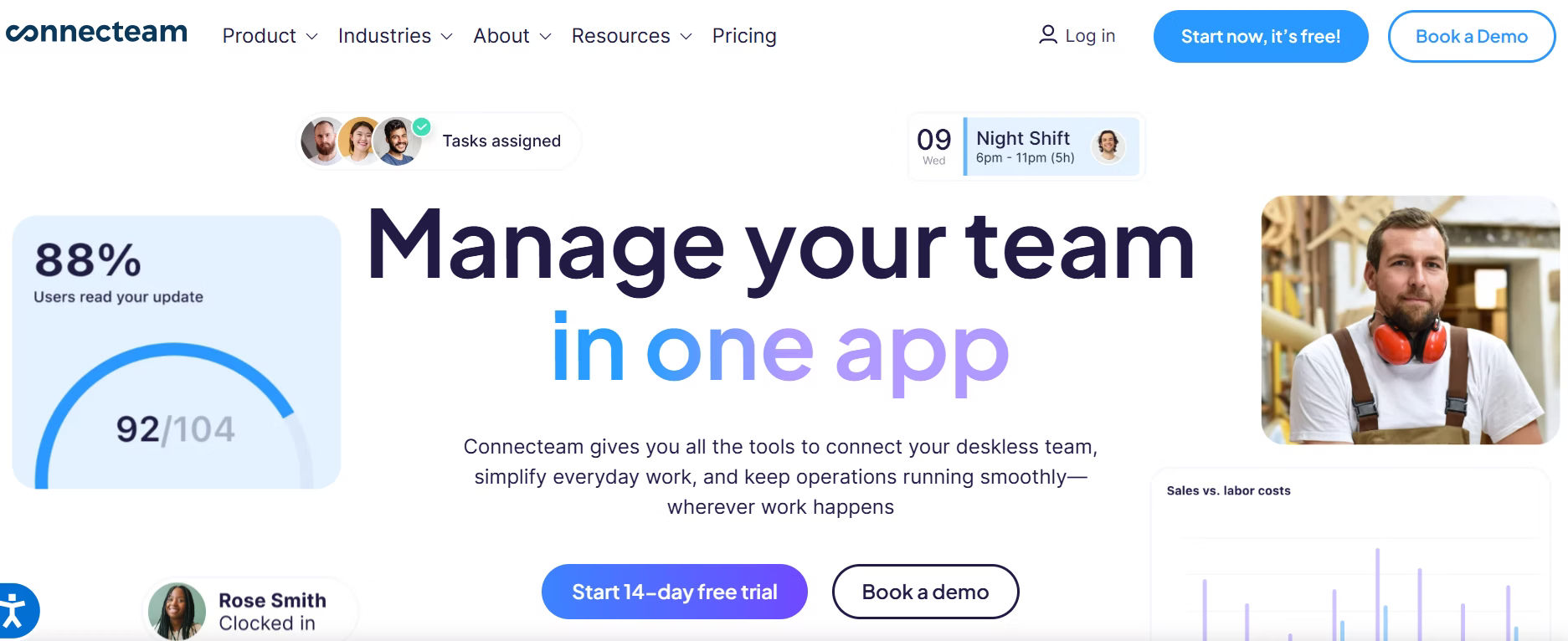
Connecteam is a mobile-first platform built for deskless and frontline teams. It combines communication, scheduling, onboarding, and time tracking in one app. That makes it a strong fit for retail, healthcare, hospitality, and logistics.
What makes it stand out
- Mobile-first design for deskless workforces.
- Built-in team chat and announcements.
- Shift planning and schedule distribution.
- GPS-enabled time clock for accurate attendance.
- Digital forms that replace paper checklists.
- Task management with progress tracking.
- Mobile onboarding across multiple locations.
- Internal knowledge base for policies and docs.
- Recognition tools for team achievements.
9. Workday HCM
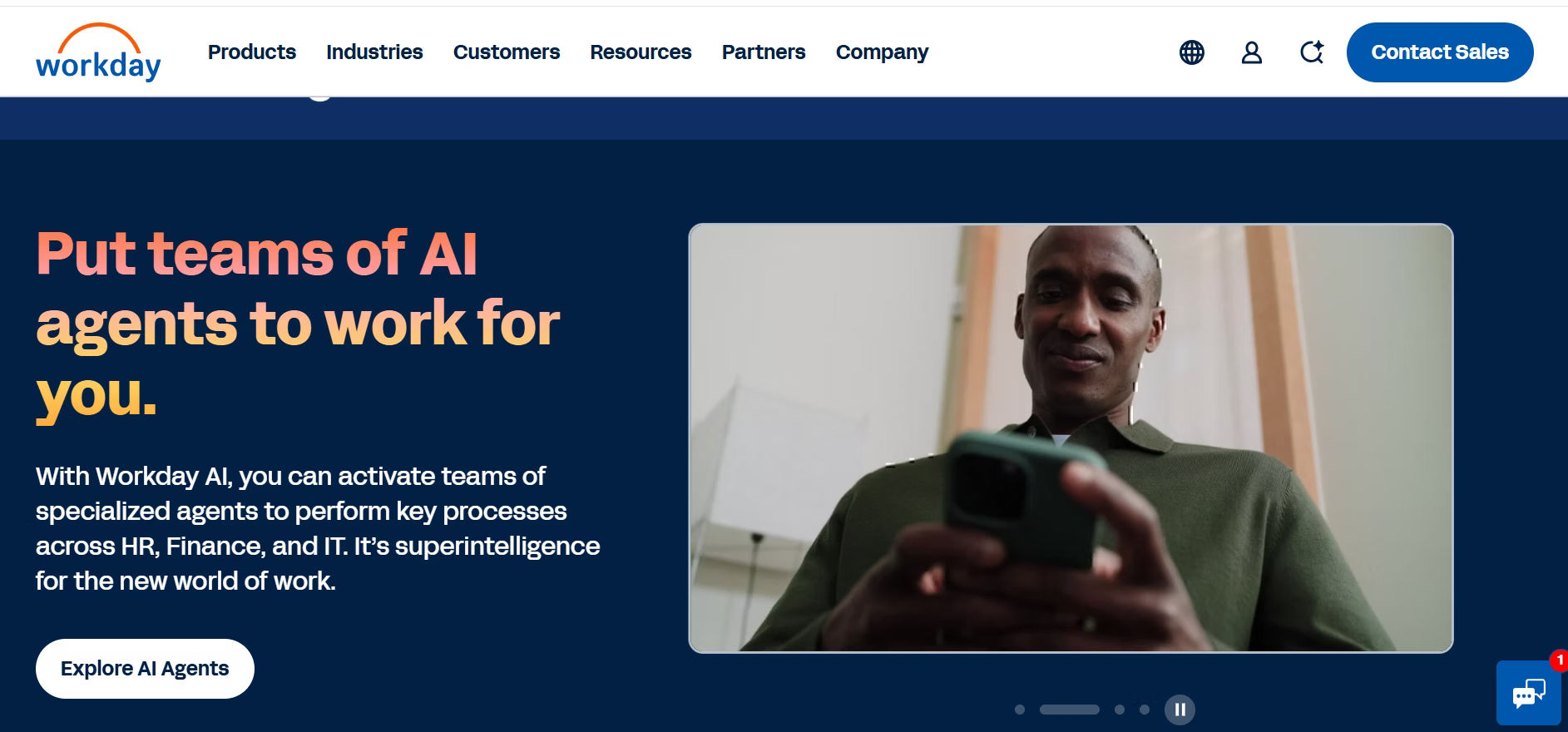
Workday HCM is an enterprise platform for large organizations with complex HR needs. Many multinationals choose it for its scale — it supports thousands of users and multiple business units through configurable processes.
What makes it stand out
- Enterprise-grade platform for large, global organizations.
- Advanced workforce planning from centralized people data.
- Talent management covering development and succession planning.
- Executive-level analytics and reporting.
- Configurable processes for complex org structures.
- Learning management tied to employee development.
- Org-wide dashboards for HR metrics.
- Global employee management across countries.
- Deep integration with enterprise business systems.
10. SAP SuccessFactors
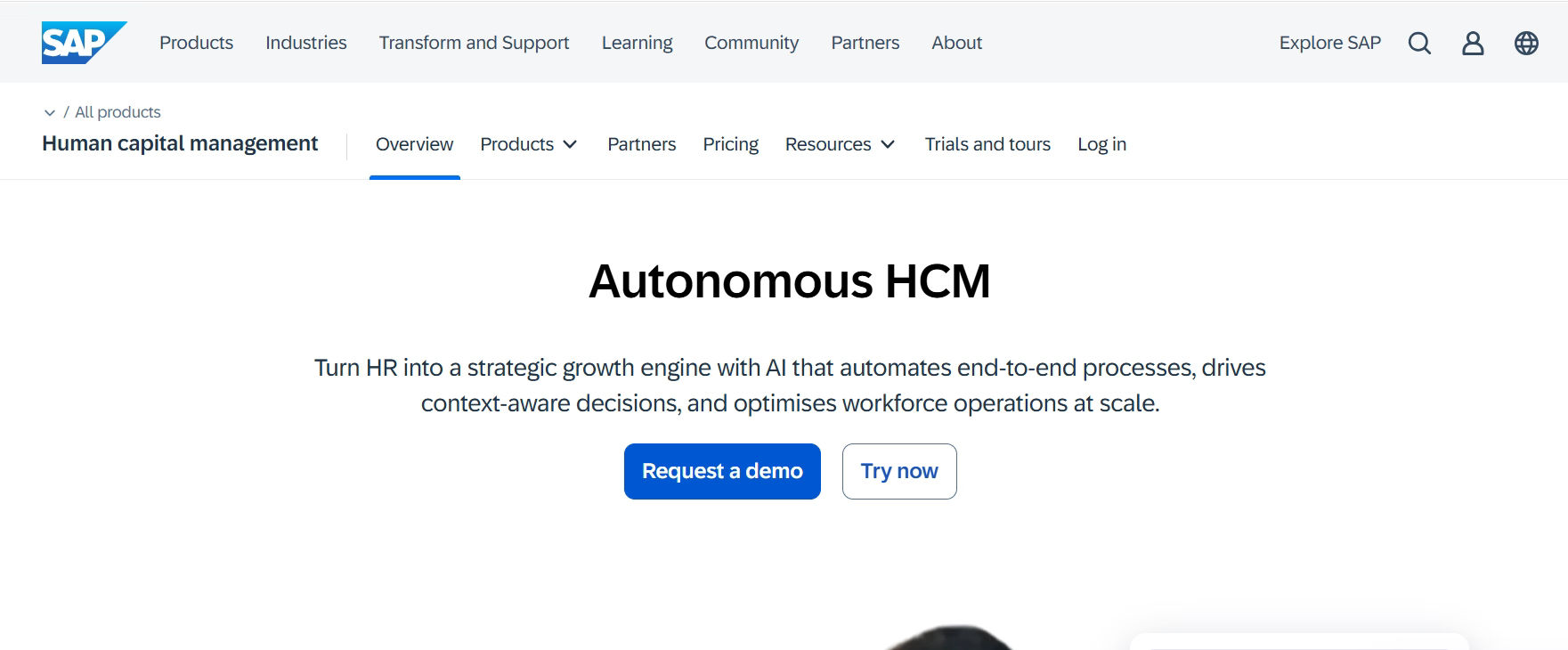
SAP SuccessFactors is a cloud HCM platform for organizations that need comprehensive HR capabilities. It covers recruitment, onboarding, learning, performance, and succession planning. Large enterprises use it when they need configurable processes and global workforce management.
What makes it stand out
- Talent management from recruitment through career development.
- Succession planning for leadership continuity.
- Structured learning management programs.
- Global HR capabilities for multinational operations.
- Workforce analytics for organizational insight.
- Configurable workflows for complex approval chains.
- Employee experience tools across the lifecycle.
- Scalable cloud architecture for large orgs.
- Integration with the broader SAP ecosystem.
- Flexible reporting for strategic planning.
What Are the Must-Have Features of HR Software?
Not every platform offers the same depth. Some only handle employee records. Others manage the full journey from hiring to performance reviews and learning. Here’s what to look for:
1. Centralized employee records: One database for personal info, employment history, and documents — no more scattered spreadsheets.
2. Recruitment management: Tools to handle job postings, applications, and interview scheduling from one place.
3. Employee onboarding: A structured process that gets new hires productive faster.
4. Leave management: Simple leave requests, with clear visibility into team availability for managers.
5. Attendance and timesheets: Accurate hour tracking that supports project planning and resourcing.
6. Performance management: Support for continuous development, not just an annual review.
7. Learning and training: Tools to deliver courses, assign programs, and track skill progress.
8. Dashboards and analytics: Quick visibility into HR activity without building manual reports.
What Mistakes Should You Avoid When Selecting HR Software?
Choosing HR software is a long-term commitment. Price and features matter, but a few other factors decide whether the platform still fits your team a year from now.
- The cheapest option isn’t always the best value. Weigh functionality, scalability, and support alongside the price tag.
- A platform built for 30 people may not hold up at 300. Pick software that can scale without forcing a full replacement later.
- Think past your current pain point. Check whether the platform supports future recruitment, learning, and reporting needs too.
- Managers use this software daily for approvals and reviews. Their feedback during evaluation is worth more than it seems.
- Complicated systems get low adoption. Look for an interface your whole team can learn quickly.
- Your HR software should connect with tools you already use. Microsoft 365 organizations, in particular, benefit from a platform built for SharePoint and Teams.
- Reporting is how HR leaders spot trends and make decisions. Check the dashboards and export options before you commit.
- Implementation is just the start. Check the quality of onboarding help, documentation, and ongoing support before deciding.
Why Should You Choose HR365 HRMS?
If your organization already runs on Microsoft 365, SharePoint, or Teams, HR365 HRMS is worth a closer look:
✓ Centralized employee directory with secure document and profile management.
✓ AI-powered assistant for faster HR answers and task automation.
✓ Recruitment management from job posting through onboarding.
✓ Configurable onboarding workflows by team and role.
✓ Leave management with customizable approval rules.
✓ Timesheet tracking for attendance and work hours.
✓ Performance management with goals, reviews, and feedback.
✓ Learning and training modules for continuous development.
✓ Expense management with structured approvals.
✓ Task management for HR-related activities.
✓ Real-time dashboards for operational visibility.
✓ Native integration with Microsoft 365, SharePoint, and Teams.
For businesses already invested in Microsoft technologies, HR365 HRMS provides a practical approach to modern HR management while supporting future growth and changing organizational needs.
Conclusion
The best HR software isn’t the one with the longest feature list. It’s the one that fits your team size, your goals, and your existing tools. Usability, automation, reporting, and integrations all matter more than a checklist of features you’ll never use.
Each platform in this guide brings a different strength to the table. If your organization runs on Microsoft 365, SharePoint, or Teams, HR365 HRMS brings recruitment, onboarding, leave, performance, learning, and reporting together in one place — worth evaluating alongside the others above.
Ready to Find the Best HR Software for Your Business?
See how HR365 HRMS can support your business with a personalized demo tailored to your HR needs.
Frequently Asked Questions
What is HR software?
HR software is a digital solution that helps organizations manage employee records, recruitment, onboarding, leave, attendance, performance, learning, reporting, and other HR activities from a centralized platform.
Which is the best HR software in 2026?
The best HR software depends on your organization’s size, business goals, and technology environment. HR365 HRMS, BambooHR, HiBob, Rippling, Workday HCM, and SAP SuccessFactors are among the leading options available in 2026.
What are the benefits of HR software?
HR software centralizes employee information, reduces manual work, automates routine processes, improves reporting, supports better decision-making, and creates a more consistent HR experience.
Can HR software integrate with Microsoft 365?
Some HR solutions provide native integration with Microsoft 365. HR365 HRMS is specifically built for Microsoft 365, SharePoint, and Microsoft Teams, making it a strong choice for organizations using Microsoft’s business ecosystem.
Why should organizations use HR365 HRMS?
HR365 HRMS combines recruitment, onboarding, employee directory, leave management, attendance, performance, learning, expense management, task management, dashboards, and AI-powered automation in one platform while integrating with Microsoft 365, SharePoint, and Microsoft Teams.


_JiluXJRGNl.svg)























