

Managing employee performance no longer needs to be complicated. With the right software, it becomes easier to track progress, give feedback, and support employee growth.
Only 2 out of 10 employees feel truly supported by how their performance is managed showing just how many are missing the motivation they need to grow. This highlights a clear need for better tools and processes in today’s evolving work environment. Traditional reviews are not enough anymore. Modern businesses need performance review software that enables ongoing feedback, goal alignment, and real-time insights.
In this blog, we explore the Top 10 Employee Performance Review Software Online to help you choose the best fit for your team.
Employee performance review software helps organizations replace manual reviews with a more efficient process for goal tracking, continuous feedback, and performance evaluation. These platforms make it easier for managers and employees to stay aligned, monitor progress, and support professional growth whether teams work in the office, remotely, or in a hybrid environment.
This guide explores the top employee performance review software solutions, key features to consider, and how to choose the right platform for your business. By investing in the right tool, organizations can improve employee engagement, streamline review cycles, and build a stronger performance-driven culture.
What Is Employee Performance Review Software Online?
Employee performance review software is a tool that helps managers check progress set goals and give feedback. It comes with templates and ratings to make reviews easier. It saves time and removes paperwork so managers can focus on helping their teams grow. Being online means it works well for both office and remote teams.
Also Read:- 7 Steps of Create an Effective Online Performance Review
Why Your Company Needs It Now
You do not have to wait for things to go wrong before making a change supporting your team early can turn good performance into great progress. Even high-performing teams benefit from structured, ongoing feedback. In today’s work environment where speed, transparency, and accountability matter performance review software is no longer optional; it is essential
Here’s Why More Companies Are Making the Switch
- People want feedback that matters. Around 67% of employees say regular check-ins help them do better at work.
- Teams get more done. Companies using review tools report up to 74% better productivity thanks to clearer goals and timely feedback.
- HR is going digital. Nearly 9 in 10 HR leaders have moved away from paper-based reviews in Favor of easier, software-driven processes.
- Less time lost on admin. Automated reviews mean fewer delays and quicker evaluations for both managers and staff.
- Clarity leads to action. Employees can now see what’s expected of them and where they’re headed no confusion, no guesswork.
- It keeps people around. When feedback becomes a regular habit, employees feel supported and are less likely to leave.
- Works wherever your team works. Whether in-office or remote, cloud-based platforms make sure everyone stays connected and on track.
Manual review processes are not just outdated they can hold your team back. A modern workforce needs modern tools that support continuous growth and communication. Investing in performance review software today can help you build stronger teams for tomorrow.
What to Look For in Review Software
Before jumping into any tool, take a step back. What does your team actually need from performance review software? It should help not just replace a stack of forms with a digital version. The best tools make it easier to have meaningful conversations, track progress that matters, and give feedback people can act on
Here are a few things to watch for:
- Is it easy to use? If the dashboard feels confusing or takes too long to figure out, most people won’t use it.
- Can you make it your own? Teams have different rhythms. Being able to adjust templates and review formats makes a big difference.
- Can feedback happen anytime? Waiting for a yearly review is outdated. Look for tools that support ongoing feedback.
- Are goals built in? The tool should help managers and employees set clear goals and actually track them.
- What does reporting look like? It should be simple to see how someone is doing and where support might be needed.
- Will it work with what you already use? If it connects with your HR system or calendar, that’s a win.
- Can people use it on the go? Mobile access is a must especially with hybrid and remote teams.
- Is your data safe? Make sure the platform protects sensitive info and follows privacy rules.
In the end, the best tool is the one that fits how your team works not the one with the longest feature list.
Top 10 Employee Performance Review Software Online
Modern teams need more than yearly reviews. The right software helps build trust clear goals and regular feedback. Below are ten tools that are easy to use and built for today’s work needs.
1. Performance 365
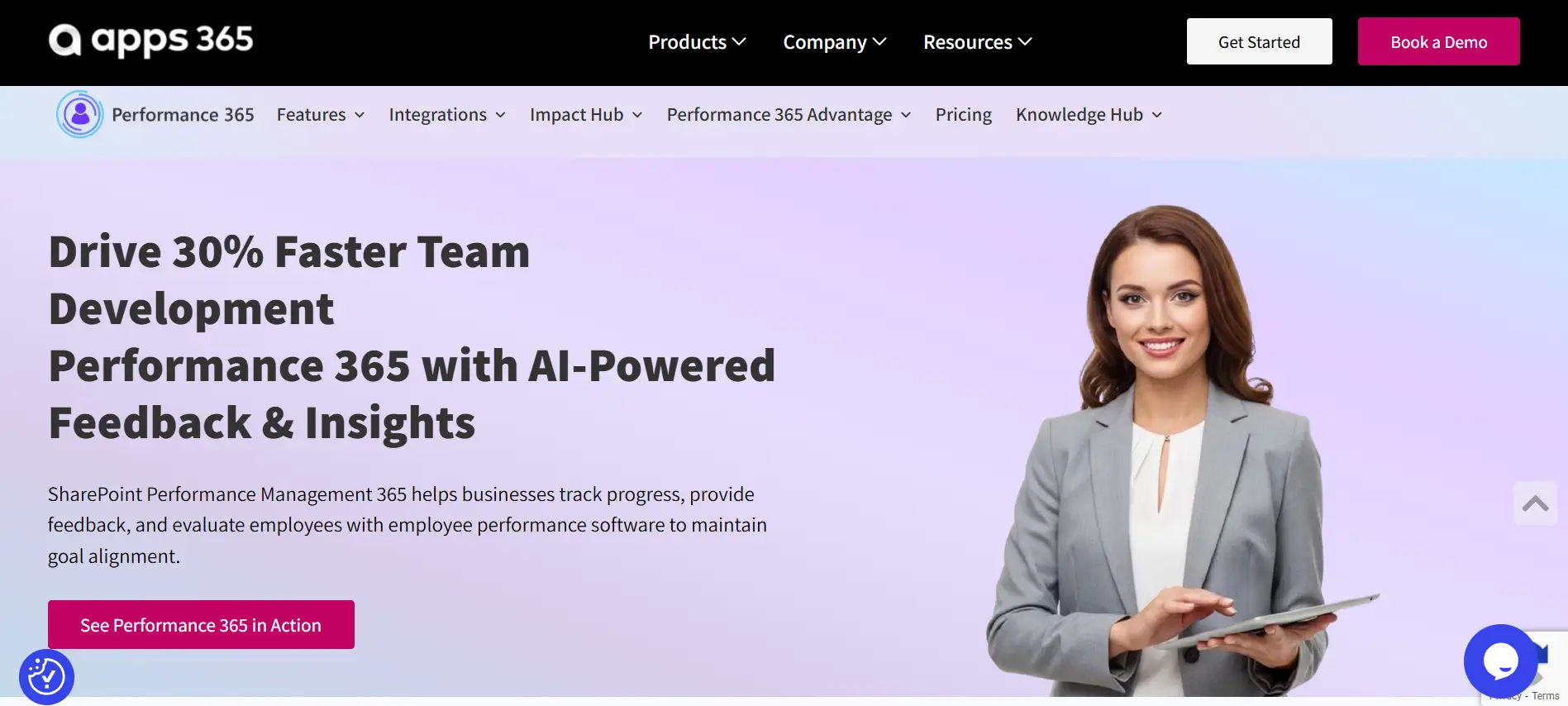
Best for – Teams using Microsoft 365
Top feature – Native Microsoft 365 integration
Performance 365 is designed for organizations that want to manage employee performance within their existing Microsoft 365 environment. Instead of requiring employees to learn and switch between multiple systems, the platform brings performance management closer to the tools teams already use every day.
With Performance365, organizations can set goals, conduct performance reviews, collect feedback, and track employee progress from a centralized platform that aligns with Microsoft 365 workflows. This helps reduce administrative effort while making performance conversations more consistent and transparent across the organization.
Key Features:
- Native Microsoft 365 integration
- Goal setting and progress tracking
- Continuous feedback and employee check-ins
- Performance reviews and appraisals
- 360-degree feedback capabilities
- Custom review workflows and templates
- Performance analytics and reporting
- Microsoft Teams and SharePoint connectivity
Pros:
- Seamlessly fits into existing Microsoft 365 environments
- Reduces the need to switch between multiple applications
- Familiar user experience for employees and managers
- Supports continuous performance management practices
- Enterprise-grade security and compliance through Microsoft technologies
Cons:
- Best suited for organizations already using Microsoft 365
- Some advanced capabilities may require process configuration during setup
Performance365 is an excellent choice for businesses that want to align performance management with their Microsoft 365 ecosystem. Its native integration approach helps organizations manage goals, feedback, and reviews more efficiently while keeping employees engaged within familiar workplace tools.
2. Lattice
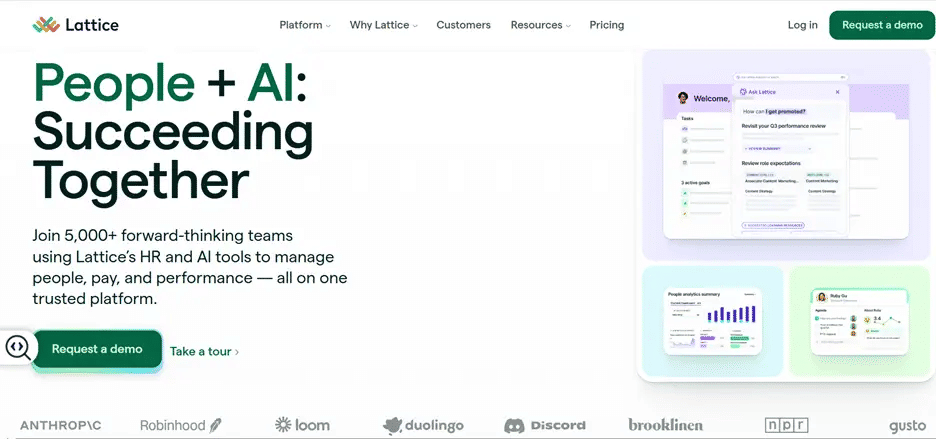
Best for – Mid-sized teams
Top feature – One-on-one meetings and career growth tracking
Lattice is designed to help growing organizations build stronger employee performance and development programs. The platform combines performance management, employee engagement, and career development tools in a single solution, making it easier for managers to support employee growth over time.
One of Lattice’s standout capabilities is its focus on structured one-on-one meetings and career growth tracking. Managers can document discussions, track action items, and create development plans that help employees understand their progress and future career opportunities within the organization.
Key Features:
One-on-one meeting management
Career growth and development planning
Goal setting and OKR tracking
Continuous feedback and recognition
Performance reviews and appraisals
Employee engagement surveys
360-degree feedback
Analytics and performance insights
Pros:
Strong focus on employee development and career progression
Makes one-on-one meetings more structured and actionable
Combines performance and engagement tools in one platform
User-friendly interface for managers and employees
Supports continuous feedback and coaching conversations
Cons:
Can be expensive for smaller organizations
Some advanced features may require higher-tier plans
Lattice is a strong choice for mid-sized organizations that want to move beyond annual reviews and create a culture of continuous feedback, career development, and employee growth. Its focus on one-on-one conversations and development planning makes it particularly valuable for companies looking to improve employee engagement and retention.
3. 15Five
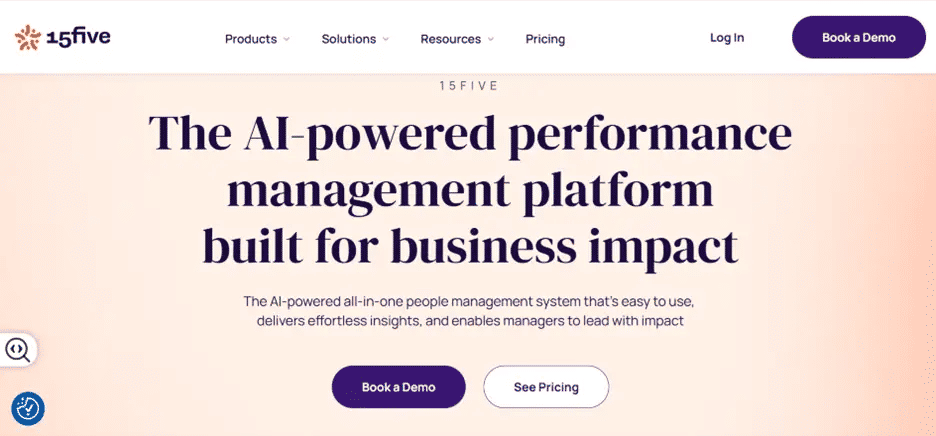
Best for – Teams that value regular communication and weekly updates
Top feature – Pulse surveys and team check-ins
15Five is built to help organizations maintain strong communication between employees and managers through regular check-ins, feedback, and performance conversations. Rather than relying solely on annual reviews, the platform encourages ongoing dialogue that helps teams stay aligned and engaged.
Its standout feature is the combination of pulse surveys and team check-ins, which allows managers to gather employee feedback, monitor engagement levels, and identify potential concerns before they become larger issues. Weekly updates help teams share progress, discuss challenges, and maintain visibility across the organization.
Key Features:
- Weekly employee check-ins
- Pulse surveys and engagement measurement
- Goal and OKR tracking
- Continuous feedback and recognition
- One-on-one meeting agendas
- Performance reviews
- Employee development tools
- Reporting and workforce insights
Pros:
- Encourages regular communication between managers and employees
- Strong employee engagement and feedback capabilities
- Easy-to-use weekly check-in process
- Helps identify workplace issues early
- Combines performance and engagement management in one platform
Cons:
- Goal management features may be less advanced than specialized OKR platforms
- Best value comes when teams consistently participate in check-ins
15Five is a strong choice for organizations that prioritize employee engagement, continuous feedback, and regular manager-employee communication. Its pulse surveys and weekly check-ins help teams stay connected, aligned, and focused on both performance and employee well-being.
4. PerformYard
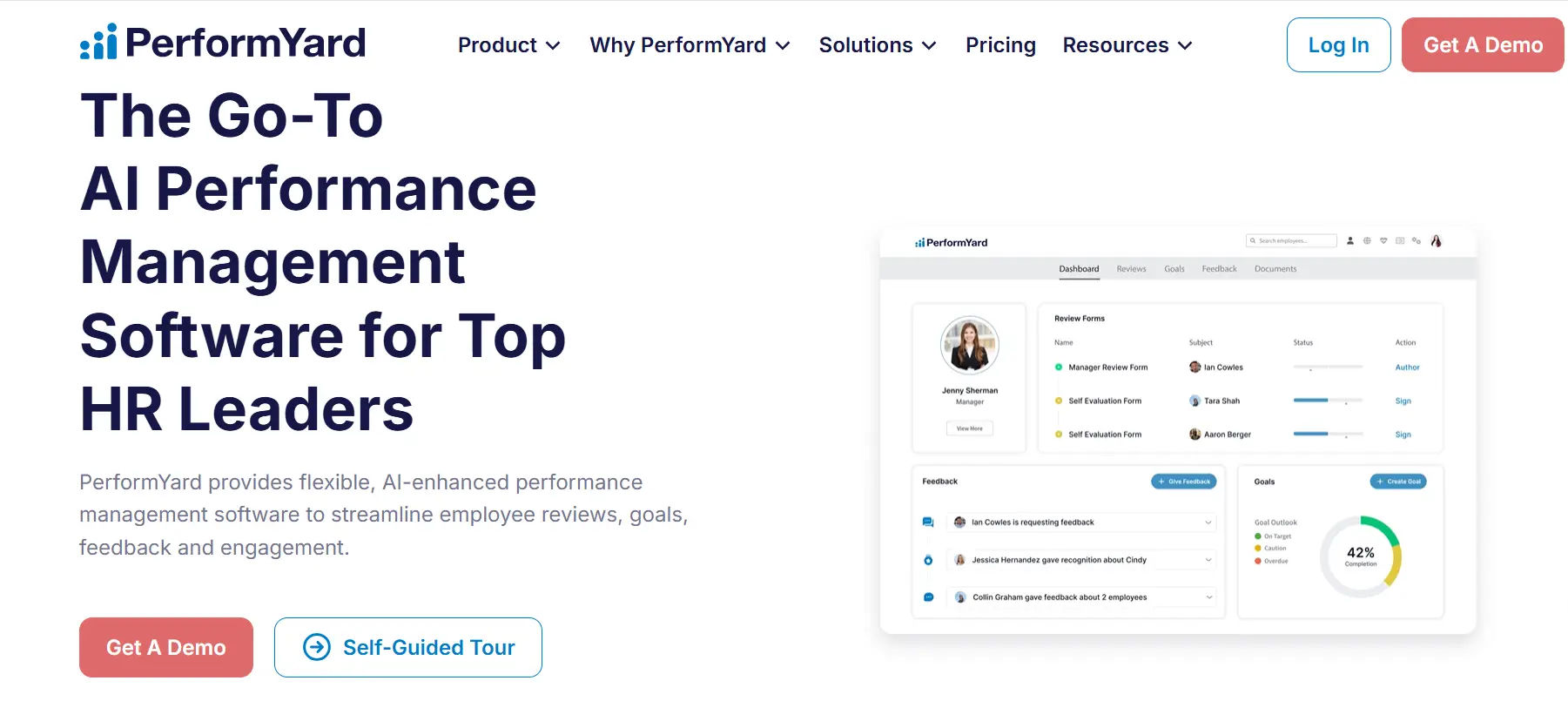
Best for – Teams with custom review needs
Top feature – Customizable performance review workflows
PerformYard is designed for organizations that want more control over how performance reviews are conducted. Instead of forcing teams into a fixed review process, the platform allows businesses to build review workflows that match their existing performance management practices.
Its standout feature is the ability to customize review steps, timelines, and feedback processes. Organizations can create review cycles that fit their needs, whether they conduct annual reviews, quarterly evaluations, 360-degree feedback assessments, or manager-led performance discussions.
Key Features:
Customizable performance review workflows
Flexible review cycles and timelines
Continuous feedback tools
360-degree feedback
Goal tracking and performance management
Employee self-assessments
Manager evaluations and review forms
Performance reporting and analytics
Pros:
Highly flexible review configuration options
Supports a wide range of performance management processes
Easy to tailor workflows to organizational needs
Combines reviews, feedback, and goal tracking in one platform
Suitable for companies with unique performance review requirements
Cons:
Initial setup may require more configuration than simpler platforms
Some advanced customizations may take time to implement effectively
PerformYard is a strong choice for organizations that want a performance management platform built around their processes rather than adapting to a predefined system. Its flexible review workflows make it particularly valuable for teams with unique evaluation structures and evolving performance management needs.
5. BambooHR
Best for – Small to mid-sized teams
Top feature – Simple goal tracking
BambooHR is a user-friendly HR platform that helps growing organizations manage employee performance without unnecessary complexity. It combines performance management tools with core HR features, making it a practical option for teams that want an easy-to-use solution for employee reviews and development.
Its standout feature is simple goal tracking, which allows managers and employees to set objectives, monitor progress, and keep performance discussions focused on measurable outcomes. The platform’s straightforward design makes it easy for teams to adopt and use consistently.
Key Features:
- Simple goal setting and tracking
- Employee performance reviews
- Custom review forms and templates
- Employee self-assessments
- Manager feedback and evaluations
- Automated review reminders
- HR and employee record management
- Reporting and performance insights
Pros:
- Easy to use and implement
- Clean and intuitive interface
- Combines HR and performance management in one platform
- Suitable for growing businesses with limited HR resources
- Simplifies review and goal-tracking processes
Cons:
- Performance management features may be less advanced than specialized platforms
- Limited customization compared to enterprise-focused solutions
BambooHR is a strong choice for small and mid-sized organizations that want a straightforward way to manage goals, performance reviews, and employee development. Its simplicity and ease of use make it particularly valuable for growing teams looking for an effective performance management solution without a steep learning curve.
6. Leapsome
Best for – Learning-focused teams
Top feature – Performance management combined with learning and development
Leapsome is designed for organizations that want to connect employee performance with continuous learning and career development. Instead of treating performance reviews and employee training as separate processes, the platform brings them together in a single system to support long-term employee growth.
Its standout feature is the ability to combine performance reviews, goal tracking, feedback, and learning tools in one place. This helps organizations identify skill gaps, create development plans, and support employees with relevant learning opportunities that align with their performance goals.
Key Features:
- Performance reviews and appraisals
- Learning and development management
- Goal setting and OKR tracking
- Continuous feedback and recognition
- Employee engagement surveys
- Competency and skill assessments
- Career development planning
- Analytics and performance insights
Pros:
- Connects employee development with performance management
- Strong learning and growth-focused capabilities
- Supports continuous feedback and coaching
- Helps organizations build structured development plans
- Combines multiple people-management functions in one platform
Cons:
- Learning-focused features may be more than some organizations require
- Advanced functionality can take time to fully implement
Leapsome is a strong choice for organizations that view employee development as a key part of performance management. By combining goals, feedback, reviews, and learning tools in a single platform, it helps teams build skills, improve performance, and support long-term career growth.
7. Culture Amp
Best for – Teams that care about fairness and employee experience
Top feature – Research-backed review templates and feedback frameworks
Culture Amp is designed to help organizations create more consistent, transparent, and fair performance review processes. The platform combines performance management with employee experience insights, giving managers the tools and data they need to support meaningful performance conversations.
Its standout feature is its research-backed review templates and feedback frameworks. Built using people science and workplace research, these templates help organizations conduct structured evaluations that reduce bias, improve consistency, and encourage more effective feedback across teams.
Key Features:
Research-backed performance review templates
Continuous feedback and coaching tools
Goal setting and performance tracking
360-degree feedback
Employee engagement surveys
Performance calibration support
People analytics and reporting
Employee development planning
Pros:
Strong focus on fairness and consistency in reviews
Uses workplace research to guide performance conversations
Combines performance management with employee experience insights
Helps organizations gather meaningful employee feedback
Robust analytics and reporting capabilities
Cons:
May be more comprehensive than smaller teams require
Some advanced analytics features can have a learning curve
Culture Amp is a strong choice for organizations that want to build a fair, data-informed performance management process. By combining research-backed review frameworks with employee feedback and analytics, it helps managers deliver more consistent evaluations while creating a better employee experience.
8. Effy.ai
Best for – Startups and fast-moving teams
Top feature – AI-powered review questions and feedback prompts
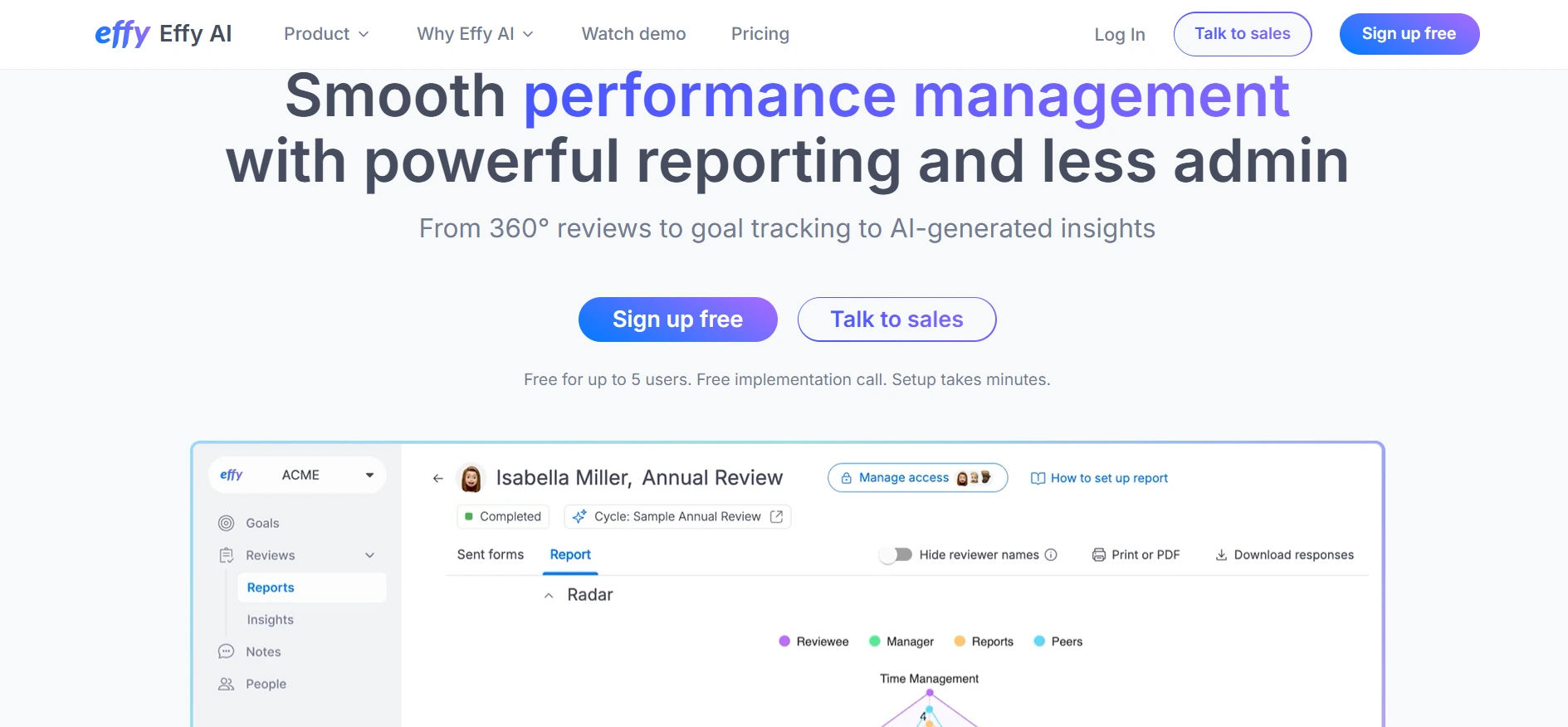
Effy AI is designed for growing teams that want a simple and efficient way to manage performance reviews. The platform focuses on reducing the time and effort required to run reviews by using AI-powered tools that help managers and employees provide meaningful feedback without starting from scratch.
Its standout feature is AI-generated review questions and feedback prompts. These tools help teams conduct structured performance reviews faster while encouraging more thoughtful and relevant feedback. This makes the platform particularly useful for startups and small businesses that need an easy-to-implement performance management solution.
Key Features:
AI-powered review questions and feedback prompts
Performance review management
360-degree feedback
Employee self-assessments
Goal tracking and progress monitoring
Automated review workflows
Performance insights and reporting
User-friendly setup and administration
Pros:
Quick and easy to implement
AI tools help improve feedback quality
Reduces time spent creating review forms
Suitable for startups and growing businesses
Simple and intuitive user experience
Cons:
Less comprehensive than enterprise performance management platforms
Advanced customization options may be limited
Effy AI is a strong choice for startups and fast-growing teams that want to run performance reviews with minimal administrative effort. Its AI-powered prompts and ready-to-use review tools help organizations collect better feedback, support employee growth, and maintain an effective review process without adding complexity.
9. PeopleGoal
Best for – Teams that need custom forms and workflows
Top feature – Drag-and-drop review builder
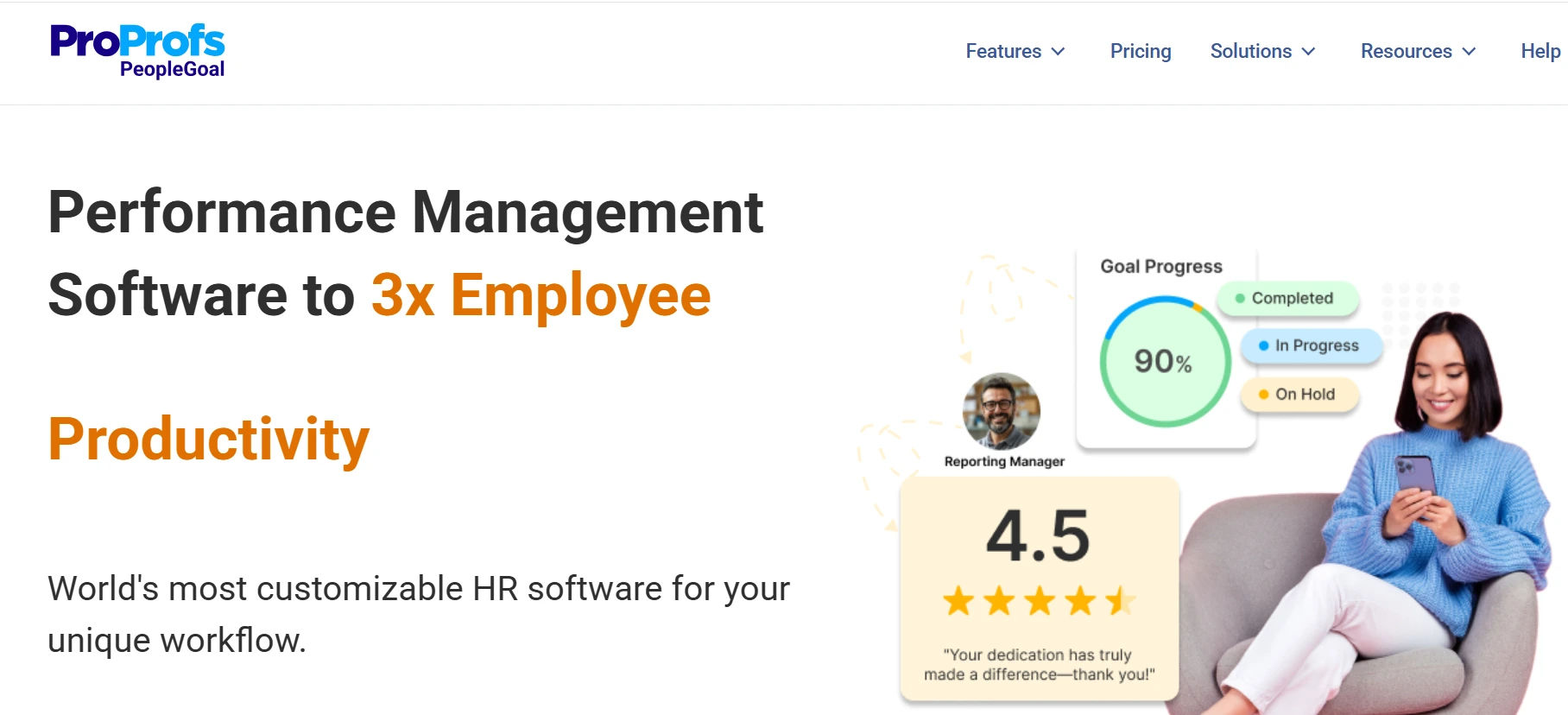
PeopleGoal is designed for organizations that want complete flexibility in how they manage performance reviews and employee processes. Rather than relying on predefined templates, the platform allows teams to create custom review forms, workflows, and performance programs that match their specific requirements.
Its standout feature is the drag-and-drop review builder, which enables HR teams and managers to design review forms and workflows without coding. This makes it easy to adapt performance management processes as business needs evolve while maintaining a user-friendly experience.
Key Features:
Drag-and-drop review form builder
Custom performance review workflows
No-code workflow automation
Goal setting and progress tracking
Continuous feedback tools
360-degree feedback
Employee development planning
Reporting and analytics
Pros:
Highly customizable without requiring technical expertise
Easy to create and modify review forms
Supports unique performance management processes
Flexible workflow automation capabilities
Suitable for organizations with changing requirements
Cons:
Extensive customization options may require additional setup time
Interface can feel more process-focused than some employee-centric platforms
PeopleGoal is a strong choice for organizations that need flexibility in their performance management approach. Its drag-and-drop builder and no-code customization tools make it easy to create review processes, feedback programs, and employee workflows that align with the way teams actually work.
10. Trakstar
Best for – Teams that want to automate performance reviews
Top feature – Automated review reminders and performance dashboards
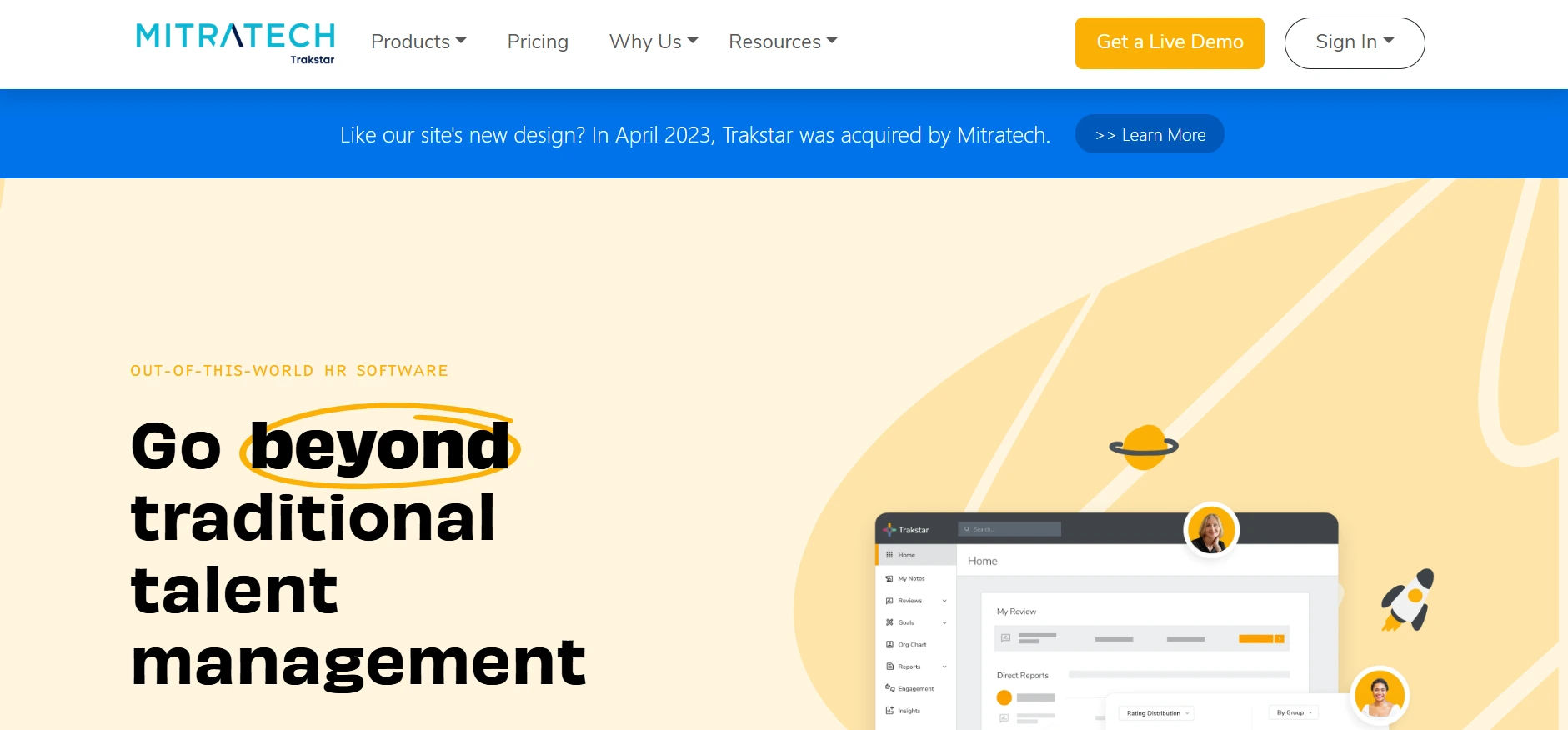
Trakstar is designed to help organizations simplify and automate performance management processes. The platform reduces manual follow-up by keeping review cycles on track through automated notifications, scheduled workflows, and centralized performance tracking.
Its standout feature is automated review reminders and performance dashboards. Managers and employees receive timely alerts for upcoming reviews, feedback requests, and performance tasks, while dashboards provide a clear view of review progress, completion rates, and employee performance data.
Key Features:
Automated review reminders and notifications
Performance review management
Goal setting and progress tracking
Continuous feedback tools
360-degree feedback
Employee self-assessments
Performance dashboards and reporting
Workflow automation and scheduling
Pros:
Helps keep review cycles on schedule
Reduces manual administrative work
Easy-to-understand dashboards and reports
Supports ongoing feedback and performance tracking
Improves visibility into review completion and progress
Cons:
User interface may feel less modern than some newer platforms
Advanced customization options may require additional setup
Trakstar is a strong choice for organizations that want to automate performance management tasks and reduce the burden of managing review cycles manually. Its automated reminders, structured workflows, and performance dashboards help teams stay organized, improve review completion rates, and maintain a consistent performance management process.
Who Should Use This Software
Performance review software is for more than just big companies. Any team that wants to grow improve and build trust can use it. These tools bring structure into your work. They help people stay focused and aware of how they are doing.
This software works well for:
- HR Managers
HR teams often get stuck in manual tasks. This tool saves time and helps them focus on goals and people instead of paperwork.
- People Leaders
Leaders need to know how each team member is doing. They can use this tool to set goals share 360 feedback and plan better.
- CEOs and Founders
Business heads want to see progress. This tool shows who is growing who needs support and how the team is moving forward.
- Remote Teams
Remote teams face gaps in communication. This tool keeps everyone connected with clear goals feedback and updates in one place.
- Small Business Owners
Even a team of five can use this software. It adds structure that helps people work better and feel more valued.
If you want your team to grow perform better and stay clear about what matters most this software is for you.
Benefits of Employee Performance Review Software
A good performance tool shows results fast. It removes delays brings clarity and helps people work with focus. The right tool can turn small steps into long term gains
Key benefits include:
- Fewer Errors
Manual reviews can easily lead to missed deadlines, incomplete feedback, and inconsistent evaluations. Performance review software keeps the process organized by automating tasks, sending reminders, and tracking progress, helping teams complete reviews accurately and on time.
- More Trust
Clear and consistent feedback helps employees understand where they stand and how they can improve. When people feel heard, recognized, and treated fairly, it builds trust between employees and managers and creates a more positive workplace culture.
- Time Saved
Performance review software automates reminders, workflows, and record keeping, reducing the time spent on administrative tasks. This gives managers more time to focus on meaningful conversations, employee development, and strategic planning.
planning.
- Better Planning
Performance review software provides clear insights into employee performance, strengths, and development needs. This helps organizations identify high performers, spot skill gaps, and plan training programs more effectively.
- More Engagement
Regular feedback and progress updates help employees stay connected to their goals and responsibilities. When people can see their growth and understand their impact, they are more likely to stay engaged and motivated.
- Simple Goal Setting
Performance review software makes it easy to create clear, measurable goals that align with team and business objectives. Employees and managers can track progress throughout the review cycle and stay focused on priorities. - Better Growth Tracking
Performance review software makes it easy to create clear, measurable goals that align with team and business objectives. Employees and managers can track progress throughout the review cycle and stay focused on priorities.
Better Growth Tracking
Managers can monitor employee progress, achievements, and development over time from a single place. This helps identify growth opportunities, provide timely support, and create more effective development plans.
This is not just a tool. It is a step toward building better teams and a healthy work culture.
Key Features Comparison Table
Choosing the right software starts with knowing what each one offers. This table helps you compare and pick the tool that matches your team needs.
Software | Best For | Top Feature |
Performance Management 365 | Goal setting and workflows | |
Lattice | Mid size teams | One on one meetings |
15Five | Engagement | Weekly surveys |
PerformYard | Custom cycles | Cycle builder |
BambooHR | SMBs | Easy goal tracking |
Leapsome | Growth culture | Learning and reviews |
Culture Amp | Culture insight | Research templates |
Effy.ai | AI automation | Smart reviews |
PeopleGoal | Custom workflows | Drag and drop forms |
ClearCompany | Full HR suite | Talent alignment |
Trakstar | Automation | Cycle reminders |
This view helps you make a smart and clear choice based on what your team needs most.
How to Choose the Best Employee Online Review Software
There are many tools out there. The right one should match how your team works. It should be easy to use simple to set up and helpful in daily tasks.
Ask these questions before you decide:
- What size is your team
Big teams may need deep features. Small teams may want something quick and simple.
- Do you have remote employees
Pick a tool that helps your team stay updated from any location.
- How often do you run reviews
Some teams check in every week. Others do it once a year. Make sure the tool fits your timing.
- What is your budget
Pay only for what you need. Do not go for extra features that you may never use.
- Do you need integrations
Check if the tool works with Microsoft 365 or other apps you use daily.
When you answer these questions, you will know what to look for. Then you can choose a tool that fits well supports your people and makes your work easier.
Conclusion
Every team wants to grow. But growth needs support. A good review tool gives you that support every day.
You can track progress give feedback and help people reach their best. It saves time clears confusion and helps your team stay strong.
Pick a tool that fits how you work. Not just to check tasks but to help your team move forward with purpose.
Curious how it could work for your team?
Book a free demo with us today and see Performance Management 365 in action no pressure, just possibilities.
Join Our Creative Community
Frequently Asked Questions
What is employee performance review software, and how does it work?
Employee performance review software is a digital tool that helps managers and HR teams evaluate employee performance, set goals, give feedback, and track progress. It automates the review cycle and provides real-time insights, reducing paperwork and improving consistency.
Is performance review software only for large organizations?
No. These tools are useful for businesses of all sizes. Whether you are a startup or a growing mid-sized team, performance software brings structure, transparency, and better communication to your review process.
Can this software support remote or hybrid teams?
Yes. Most modern platforms are cloud-based, allowing managers and employees to collaborate, review, and share feedback from anywhere. Features like mobile access, automated reminders, and real-time tracking are especially valuable for distributed teams.
How secure is employee performance data on these platforms?
Leading performance review tools offer enterprise-level security, including data encryption, access controls, and compliance with global privacy regulations. Always look for software that prioritizes data protection as a core feature.
What should I consider before buying performance review software?
Think about your team’s size, your review process, and your goals. Choose a tool that saves time, fits your workflow, and actually helps people grow.
How to automate employee reviews for your organization?
To automate employee reviews, use performance management software that schedules review cycles, sends reminders, collects self-evaluations, gathers manager feedback, tracks goals, and generates reports automatically. This helps reduce manual work and improves consistency.


_JiluXJRGNl.svg)























