
HR Dashboard Software: A Complete Guide for Modern Businesses

- An HR dashboard brings important HR information into one centralized view.
- Real-time metrics help managers make faster and more informed decisions.
- Modern HR dashboards combine leave, attendance, recruitment, performance, learning, and more in a single platform.
- Choosing dashboard software with Microsoft 365 integration can improve collaboration and daily HR operations.
HR teams manage a wide range of responsibilities every day, from tracking leave requests and monitoring attendance to managing recruitment, performance, learning, and internal communication. When this information is spread across multiple systems or spreadsheets, it becomes difficult to get a complete picture of daily HR activities. An HR dashboard brings all of these functions together in one place, helping HR professionals and managers access the information they need without switching between different applications.
Modern HR dashboard software goes beyond reporting. It provides a central workspace where organizations can monitor important HR metrics, manage approvals, view workforce updates, and take action from a single interface. Whether you’re running a growing business or a large enterprise, the right HR dashboard helps save time, improve visibility, and support better decision-making across the organization.
What Is an HR Dashboard?
An HR dashboard is a centralized interface that displays important HR information, activities, and key metrics in one place. Instead of reviewing multiple reports or switching between different systems, HR teams and managers can monitor workforce data, track ongoing tasks, and access essential HR functions from a single screen. A well-designed HR dashboard provides real-time visibility into daily operations, making it easier to stay organized and respond quickly to changing business needs.
According to Deloitte’s Global Human Capital Trends, 73% of organizations are increasing their investment in digital workplace technologies, reflecting the growing need for modern HR tools that provide better visibility and faster access to business information.
An effective HR dashboard typically combines operational activities with performance insights, helping organizations monitor HR processes while supporting day-to-day decision-making.
Some of the information commonly available on an HR dashboard includes:
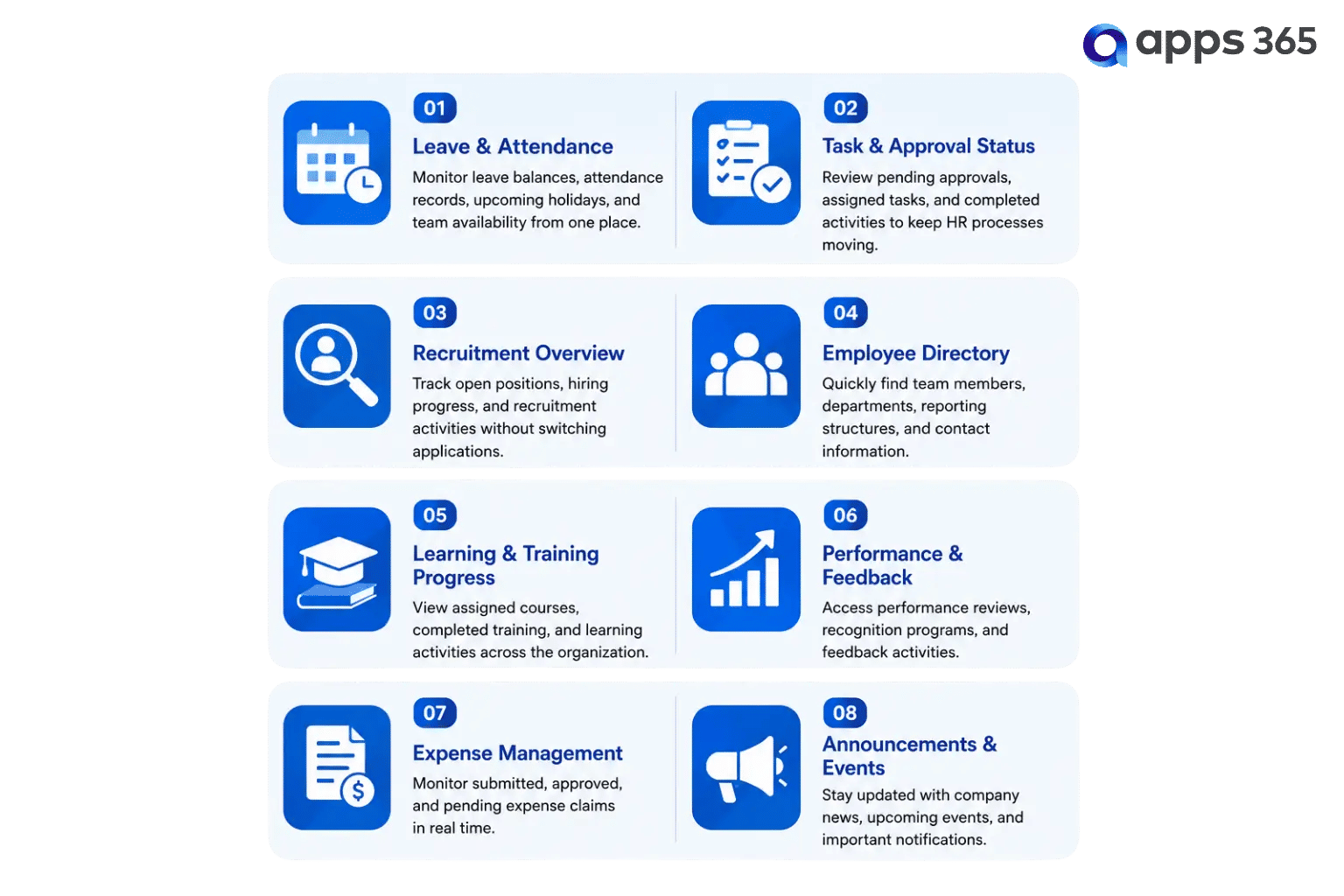
A modern HR dashboard is more than a reporting tool—it serves as the central workspace for HR teams and managers to monitor daily activities, access critical information, and make informed decisions. When designed effectively, it reduces the need to navigate multiple systems while providing a clear overview of the organization’s HR operations.
Why Do Businesses Need an HR Dashboard?
As organizations grow, managing HR activities across different tools, spreadsheets, and emails becomes increasingly difficult. An HR dashboard brings essential information together in one place, giving HR teams and managers a clear view of ongoing activities, pending actions, and workforce trends. Instead of spending time searching for information, businesses can focus on making informed decisions and responding quickly to everyday HR needs.
Businesses rely on HR dashboards for several important reasons:
- Centralize HR Information: View leave requests, attendance records, recruitment updates, learning progress, performance activities, and employee information from a single dashboard instead of multiple applications.
- Support Faster Decision-Making: Access real-time HR data and key metrics that help managers respond quickly to approvals, staffing needs, and operational changes.
- Track Daily HR Activities: Monitor pending tasks, approvals, upcoming holidays, events, and ongoing HR processes without manually reviewing different systems.
- Improve Team Visibility: Understand team availability, department updates, reporting structures, and organizational changes through a centralized view.
- Reduce Manual Administrative Work: Automate routine updates and eliminate repetitive tracking, allowing HR professionals to spend more time on strategic initiatives.
- Monitor Recruitment Progress: Keep track of open positions, candidate pipelines, interview stages, and hiring activities to support efficient recruitment.
- Strengthen Internal Communication: Share announcements, company updates, events, and important notifications directly through the dashboard, helping everyone stay informed.
- Access HR Information Anytime: Give managers and authorized users quick access to the information they need without waiting for reports or manually collecting data.
According to Forbes, 47% of HR leaders name employee experience analytics their top strategic focus, utilizing real-time feedback loops to align culture, engagement, and retention with day-to-day operations.
An HR dashboard is more than a reporting interface—it becomes the central hub for everyday HR operations. By providing a clear overview of key activities and actionable information, businesses can improve productivity, enhance collaboration, and manage HR processes more effectively.
How Does HR Dashboard Software Benefit Your Organization?
HR dashboard software gives organizations a centralized view of their HR activities while making everyday processes easier to monitor and manage. From tracking leave requests and recruitment progress to monitoring learning, expenses, and performance, a well-designed dashboard helps teams stay organized and act on information without unnecessary delays.
Here are some of the key benefits organizations can expect from HR dashboard software:
1. Provides a Single Source of HR Information
Bring employee records, attendance, leave, recruitment, learning, expenses, and other HR activities together in one dashboard for quick access.
2. Improves Operational Visibility
Give HR teams and managers a real-time overview of ongoing activities, helping them identify priorities and respond faster to business needs.
3. Speeds Up Approvals
Monitor pending requests, assigned tasks, and approval workflows from one place, reducing delays and keeping HR processes moving.
4. Supports Better Workforce Planning
Use dashboard insights to understand team availability, hiring progress, leave trends, and organizational changes when planning future resources.
5. Encourages Data-Driven Decisions
Instead of relying on assumptions, managers can use live HR metrics and reports to make informed decisions based on current information.
6. Enhances Team Collaboration
Keep departments aligned with shared access to announcements, calendars, tasks, organizational updates, and important HR activities.
7. Saves Time on Routine HR Activities
Reduce the time spent searching for information or compiling reports by displaying essential HR data in an easy-to-read dashboard.
8. Scales with Business Growth
As organizations expand, HR dashboard software makes it easier to manage growing teams, additional departments, and increasing HR activities without adding complexity.
An HR dashboard is valuable because it transforms scattered information into meaningful insights that support daily operations. By providing greater visibility, improving efficiency, and helping managers act quickly, HR dashboard software becomes an essential tool for organizations looking to manage their HR processes more effectively.
Which Key Features Should Every HR Dashboard Include?
An effective HR dashboard does more than display data—it helps HR teams and managers monitor daily activities, access important information, and take action from a single interface. The best HR dashboard software combines multiple HR functions into one centralized workspace, making it easier to manage operations and stay informed without moving between different applications.
Below are the essential features every modern HR dashboard should include.
Dashboard Overview
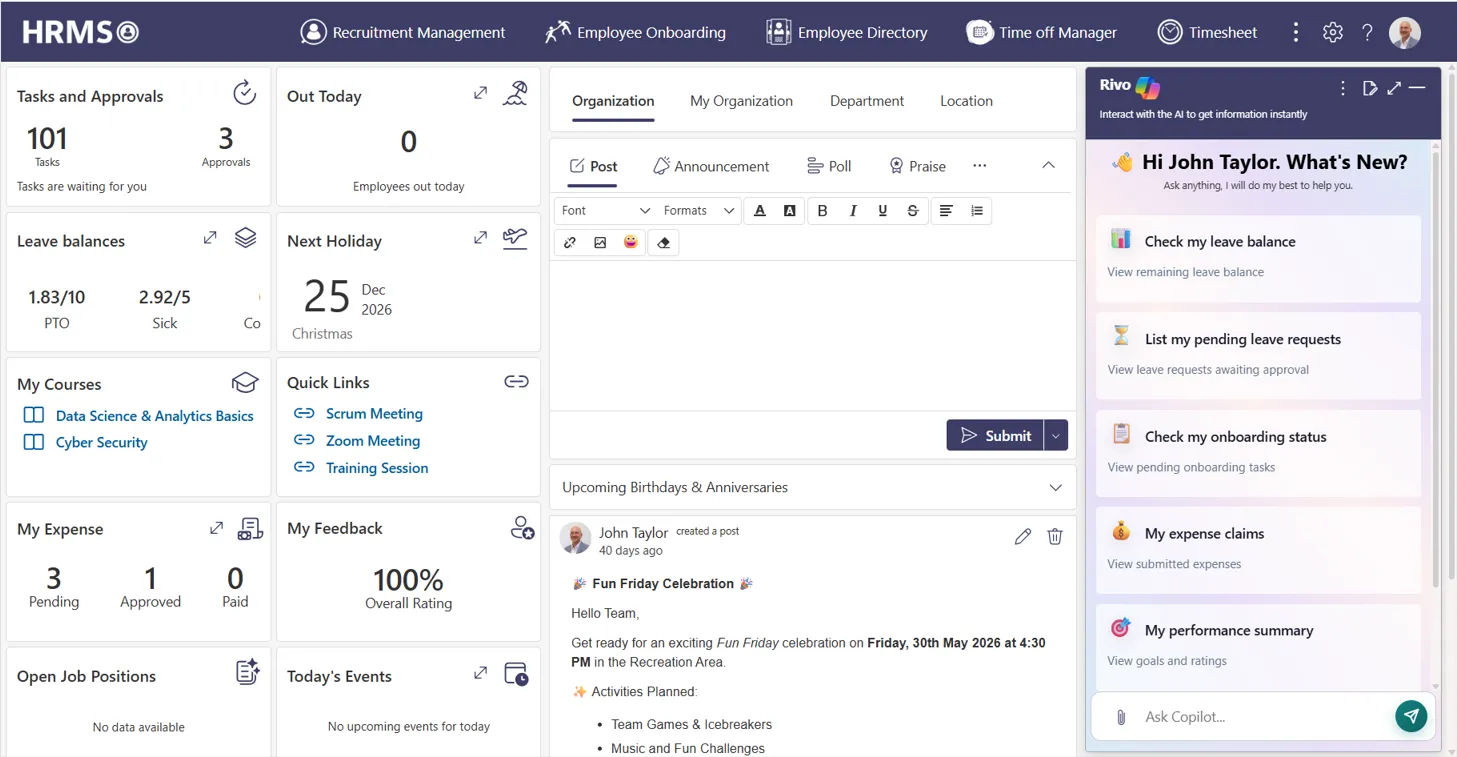
A dashboard overview gives users an instant snapshot of important HR activities. It highlights pending tasks, recent updates, upcoming events, and key workforce information, allowing managers to quickly understand what’s happening across the organization.
AI & Automation
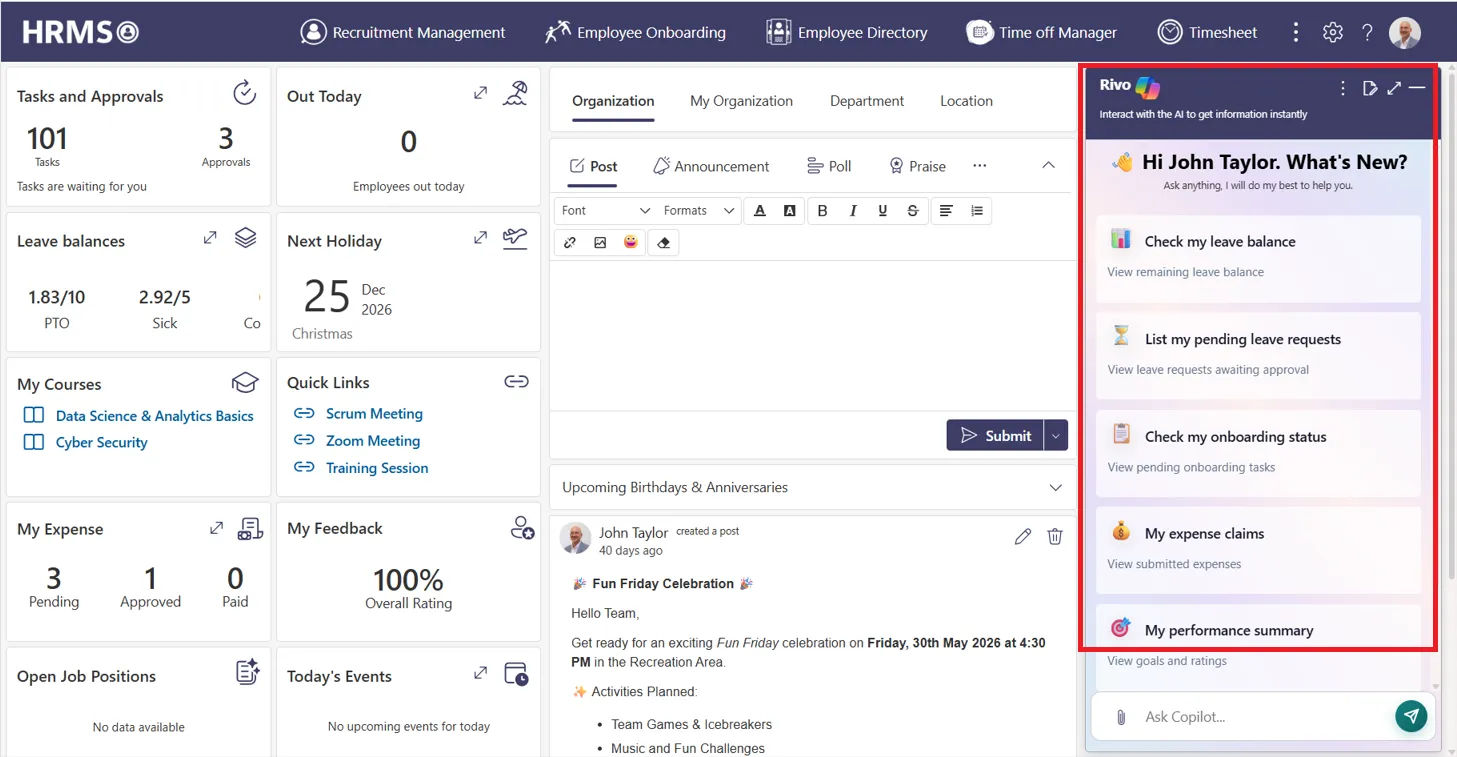
Modern HR dashboards increasingly include AI-powered capabilities that automate routine HR activities, surface important insights, and reduce repetitive administrative work. Automation helps HR teams respond faster while maintaining consistency across everyday processes.
Leave Management
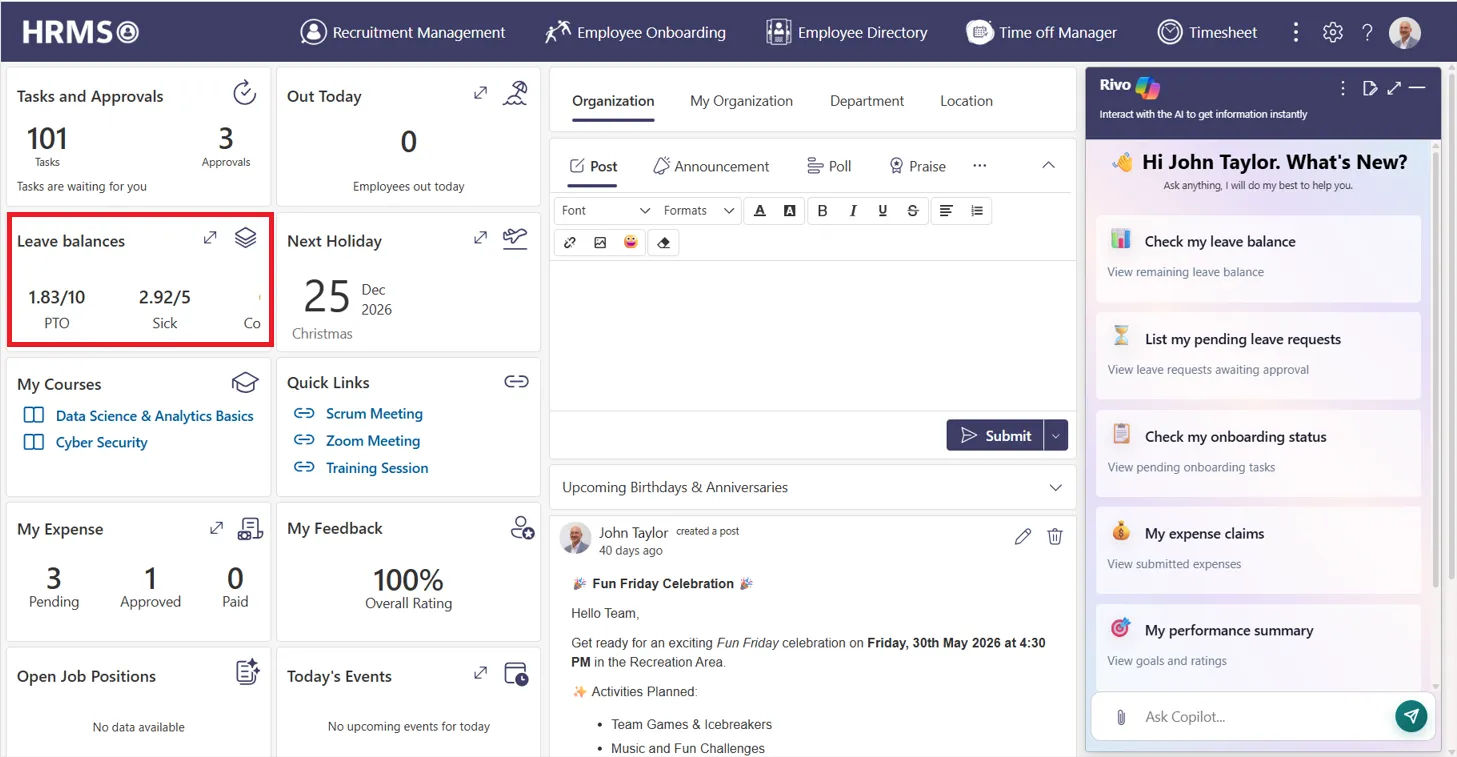
Leave management provides a clear view of leave balances, pending requests, upcoming holidays, and team availability. Having this information readily available helps HR teams manage time-off requests efficiently while reducing scheduling conflicts.
Attendance & Out Today Overview
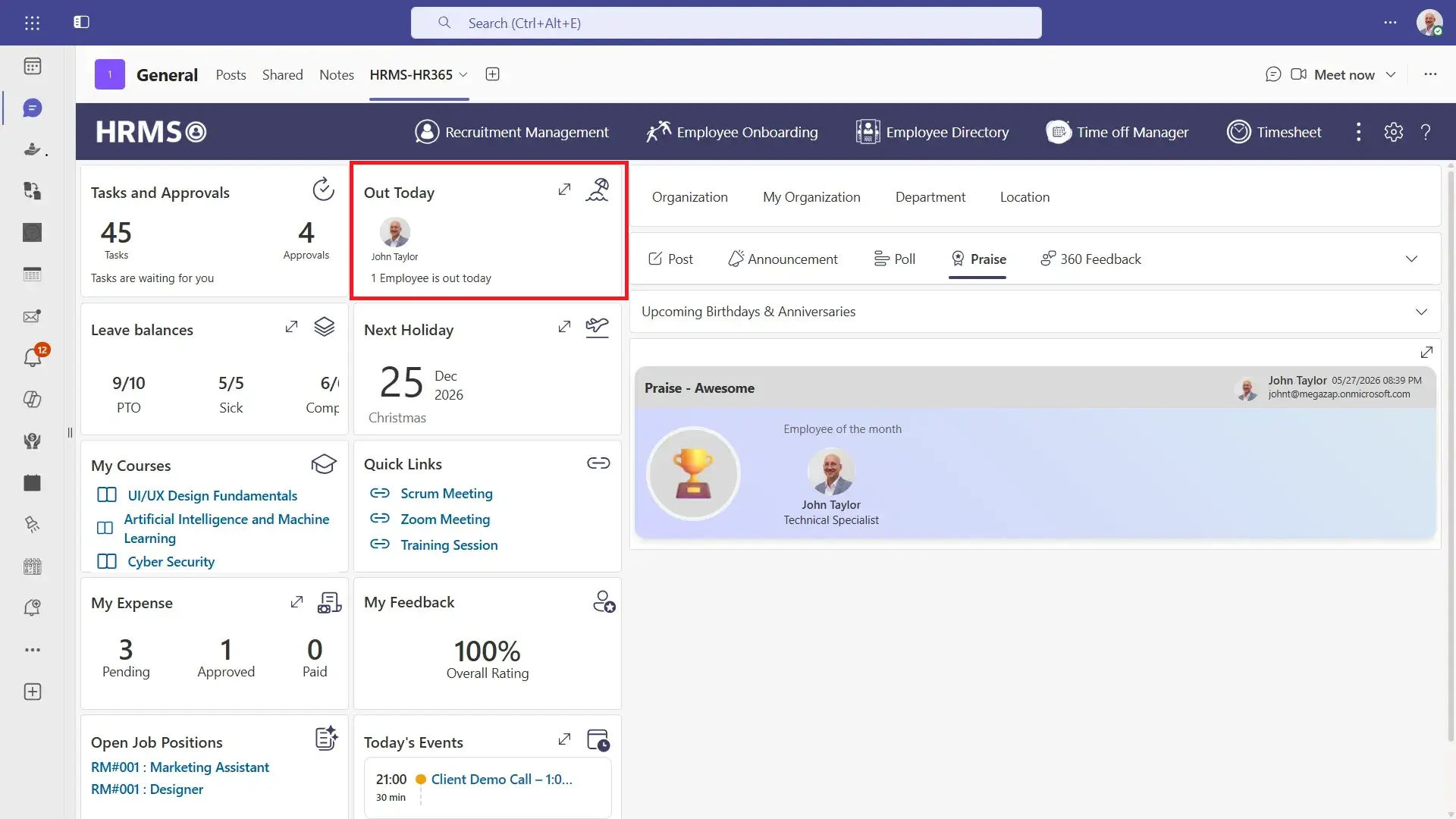
Attendance and timesheet tracking gives organizations a real-time view of daily attendance, out-today status, work hours, remote work, and overall team availability. This helps managers monitor attendance trends, record work hours accurately, and make informed staffing decisions throughout the day.
Task & Approval Management
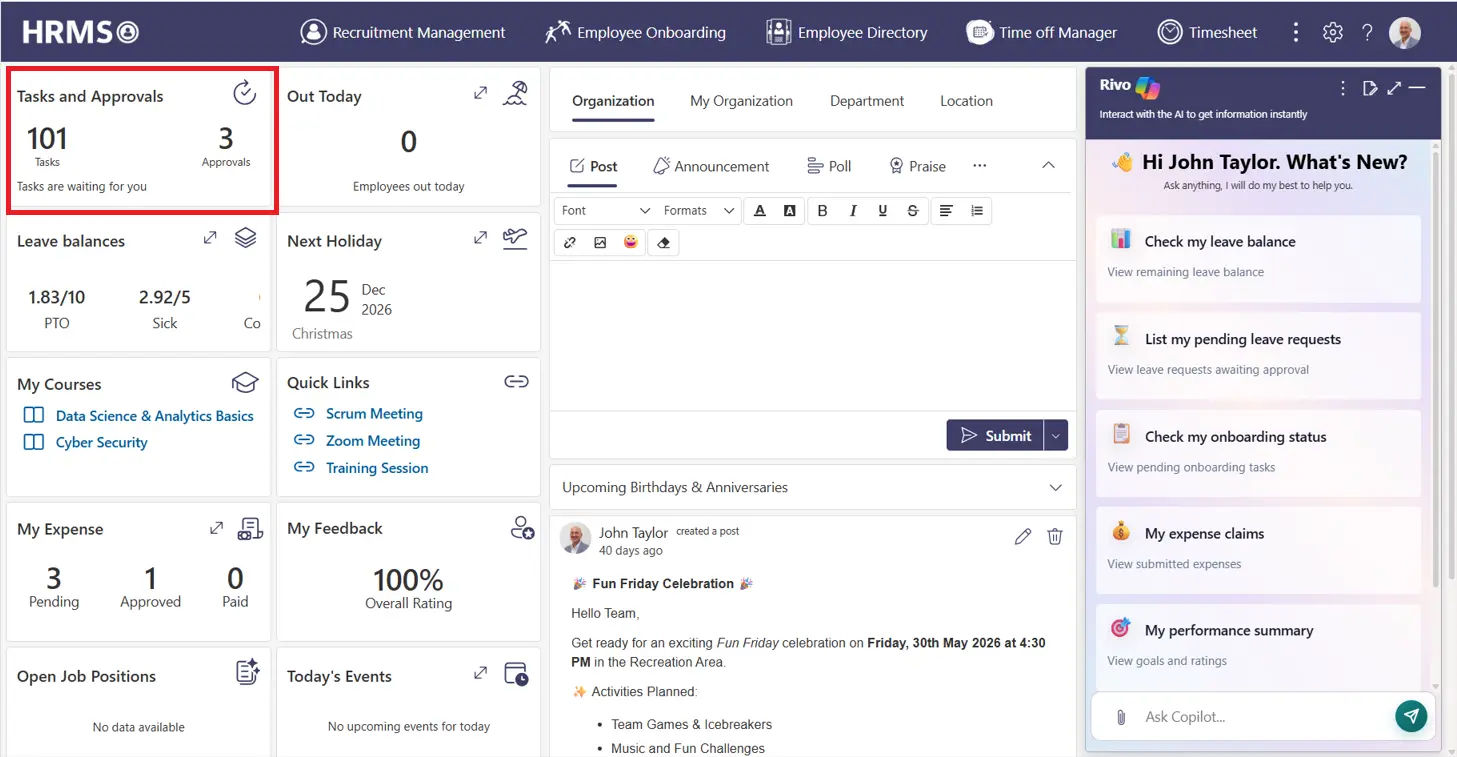
An HR dashboard should display pending approvals, assign tasks, and complete activities in one place. This helps managers prioritize actions, reduce approval delays, and keep HR processes moving smoothly.
Recruitment
.webp)
Recruitment features provide visibility into open positions, hiring progress, interview stages, and candidate pipelines. This enables HR teams to monitor recruitment activities without relying on separate hiring tools.
Performance Management & Recognition
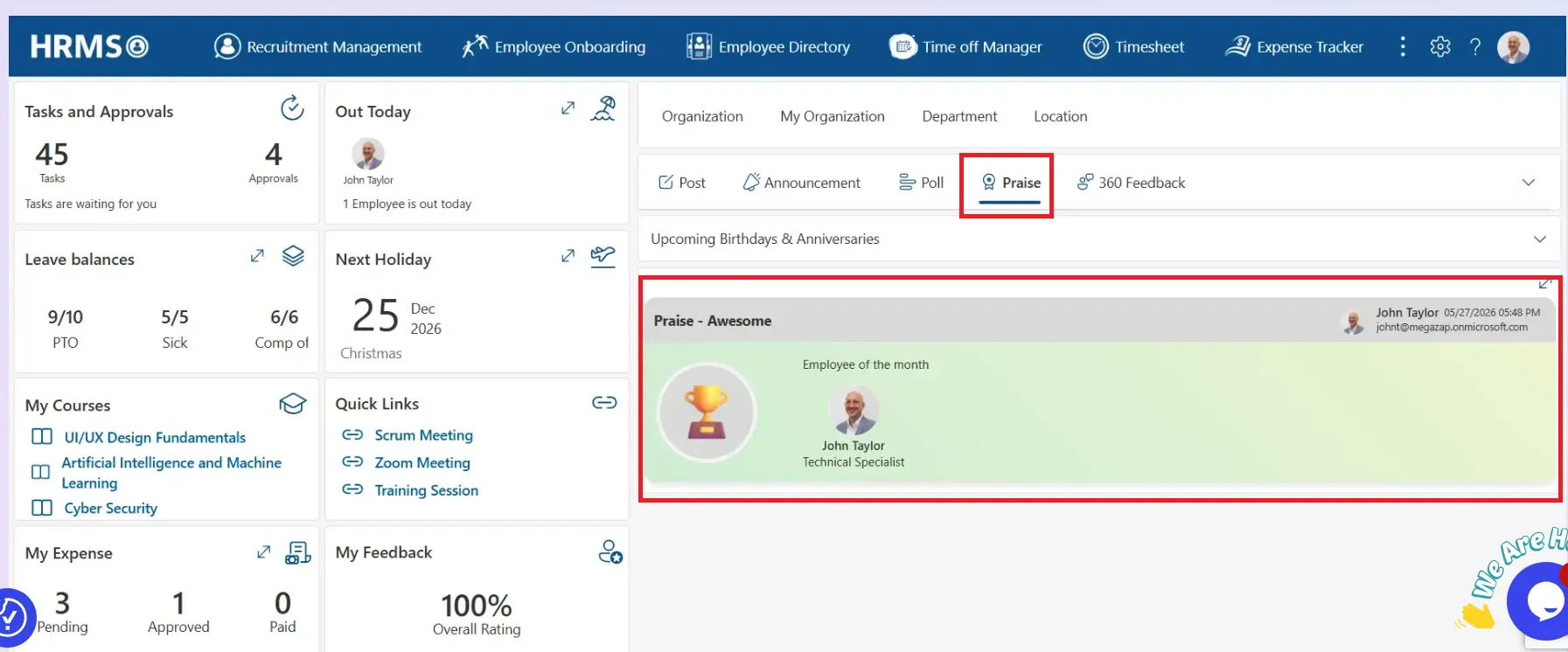
Performance management features help managers monitor review cycles, goal progress, 360-degree feedback, Praise, and Employee of the Month recognition from a centralized dashboard. Bringing performance information and recognition activities together supports continuous development, acknowledges outstanding contributions, and encourages regular performance discussions.
Learning & Training
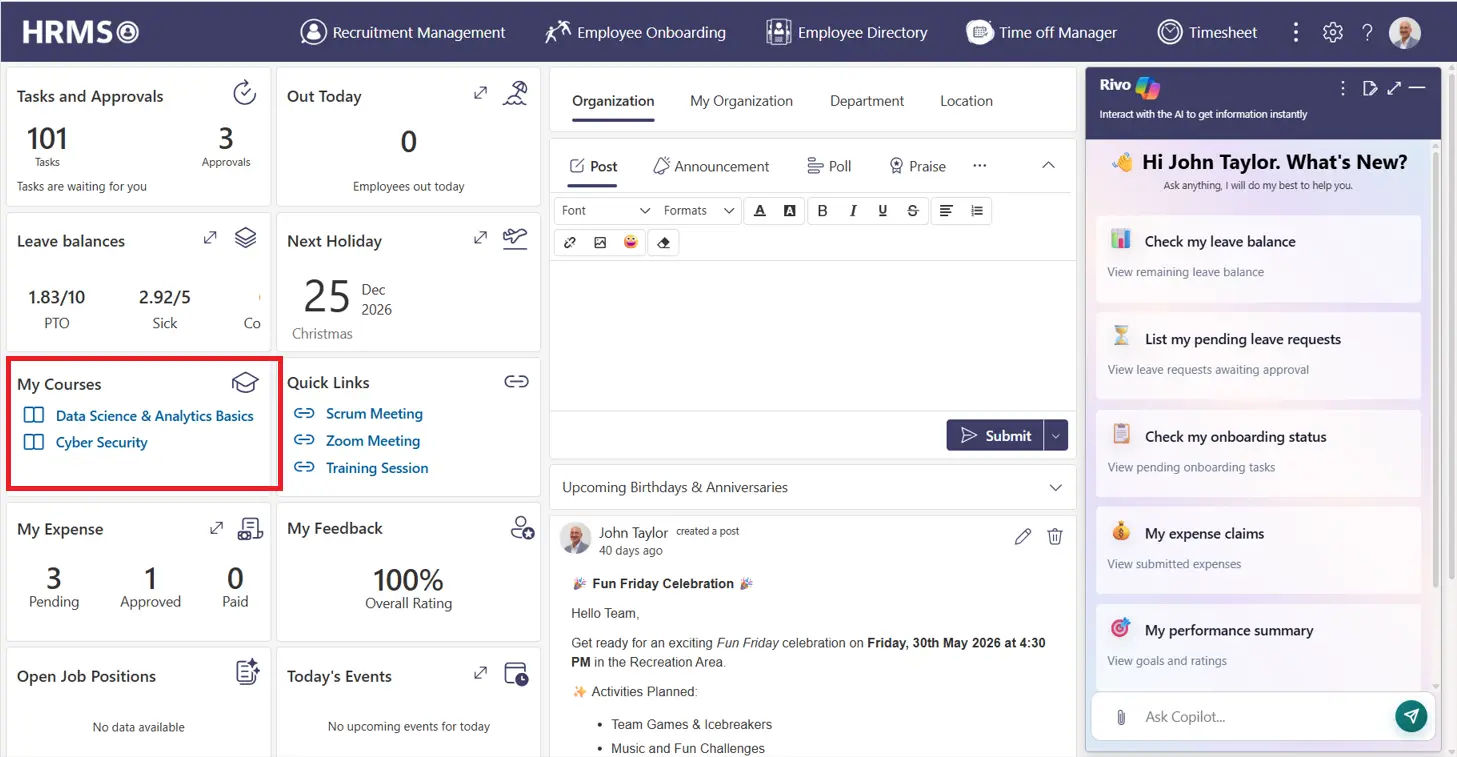
Learning and training dashboards track assigned courses, completed programs, certifications, and ongoing learning activities. This helps organizations monitor skill development while encouraging continuous learning.
Expense Management
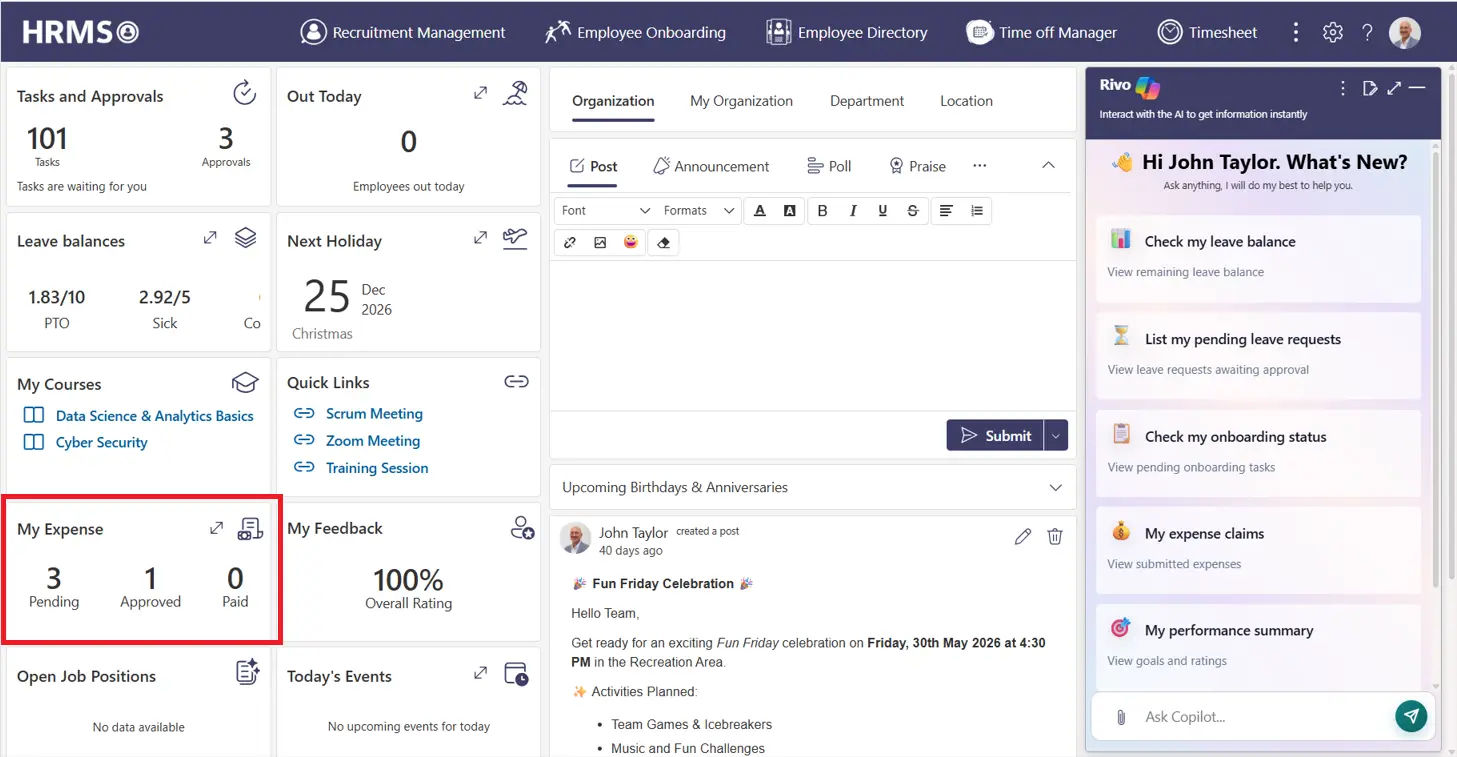
Expense management provides visibility into submitted, approved, pending, and reimbursed expense claims. HR and finance teams can review expense status without manually tracking individual requests.
Company Announcements & Events
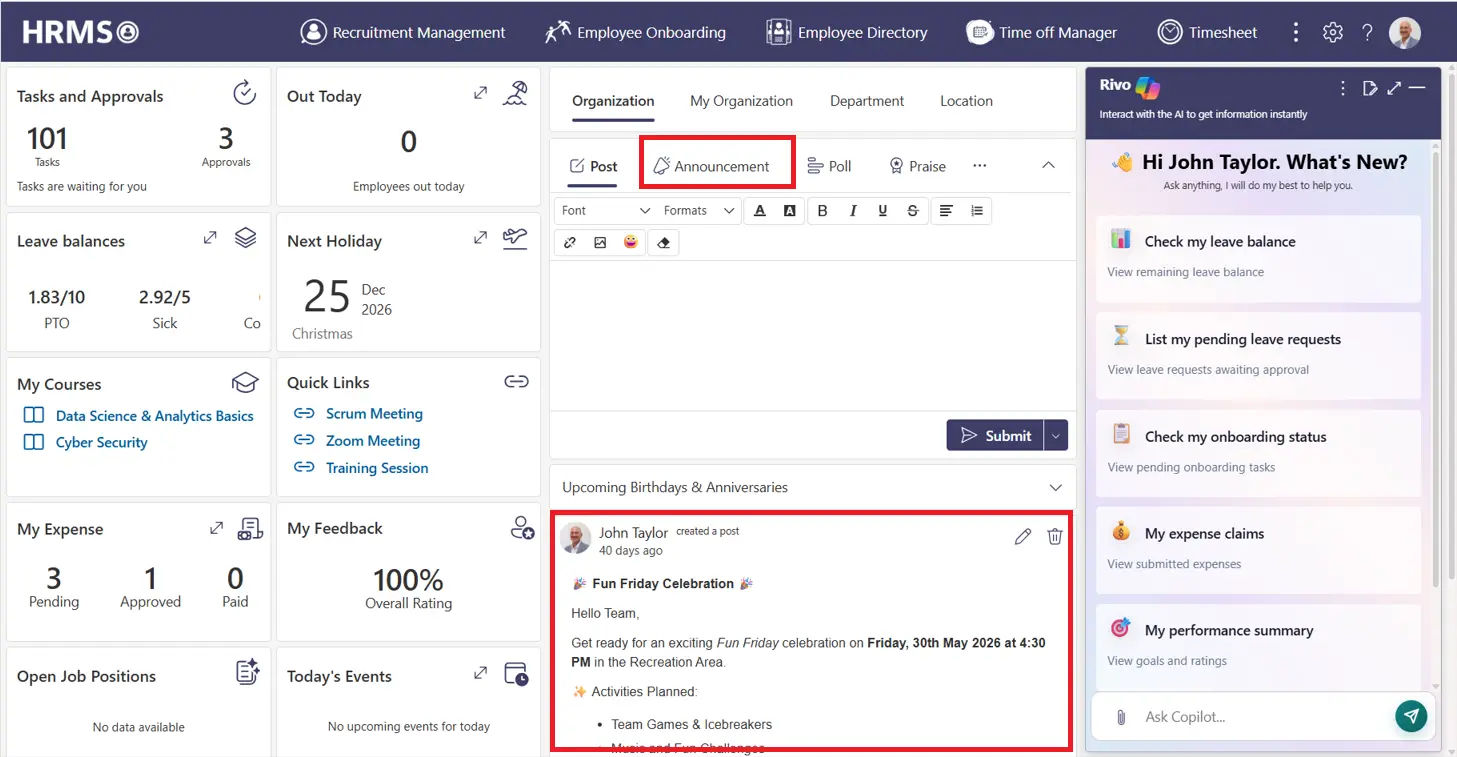
A centralized space for announcements, events, company news, and important updates helps keep everyone informed. Displaying this information directly on the dashboard improves communication and encourages greater participation across the organization.
Research from Sapient Insights Group shows that organizations using automated HR dashboards reduce manual reporting time by up to 67%, allowing HR teams to shift focus from administrative tasks to strategic workforce planning.
A well-designed HR dashboard brings together the features organizations use every day, creating a central hub for HR operations instead of a collection of disconnected tools. Choosing dashboard software with comprehensive capabilities helps businesses improve visibility, simplify daily processes, and support better decision-making across every stage of the employee lifecycle.
What Metrics Should Every HR Dashboard Track?
An HR dashboard becomes more valuable when it tracks the right metrics instead of displaying large amounts of data. The goal is to provide meaningful insights that help HR teams and managers understand workforce trends, monitor daily activities, and make informed decisions. Selecting relevant HR metrics also helps organizations identify opportunities for improvement while keeping important HR processes on track.
Headcount Overview
Headcount is one of the most fundamental HR metrics. It provides a clear view of the total number of team members across departments, locations, and business units. Monitoring headcount helps organizations understand workforce distribution and plan future hiring needs.
Leave Utilization
Tracking leave utilization helps HR teams monitor approved leave, pending requests, leave balances, and leave trends. These insights support better workforce planning and help managers maintain adequate team coverage throughout the year.
Attendance Trends
Attendance metrics provide visibility into daily attendance, absenteeism, work hours, remote work, and overall team availability. Monitoring these trends helps organizations identify attendance patterns and improve resource planning.
Recruitment Performance
Recruitment metrics measure hiring activities by tracking open positions, candidate pipelines, interview progress, and completed hires. These insights help HR teams evaluate recruitment efficiency and identify opportunities to improve the hiring process.
Performance Progress
Performance metrics provide an overview of completed reviews, pending evaluations, goal progress, and feedback activities. Keeping performance data visible encourages regular check-ins and supports continuous professional development.
Learning & Training Completion
Learning metrics monitor assigned courses, completed training programs, certifications, and participation rates. These indicators help organizations understand how learning initiatives contribute to skill development and business growth.
Expense Status
Expense metrics display submitted, approved, pending, and reimbursed expense claims. A clear overview of expense activities helps HR and finance teams monitor requests while improving processing efficiency.
Task & Approval Status
Tracking pending approvals, assigned tasks, and completed actions helps managers identify outstanding work and prioritize important HR activities. This metric supports smoother workflows by ensuring requests are reviewed without unnecessary delays.
Employee Engagement Activities
Engagement metrics can include participation in company announcements, recognition programs, feedback activities, surveys, and internal events. Monitoring engagement helps organizations understand how actively team members are participating in workplace initiatives.
HR Requests & Resolution Status
Tracking HR requests and their resolution status provides visibility into ongoing support activities. Reviewing response times and request volumes helps HR teams improve service quality and identify areas that require additional attention.
The most effective HR dashboards focus on metrics that support business goals rather than displaying every available data point. By tracking the right mix of operational, workforce, recruitment, learning, and engagement metrics, organizations can gain meaningful insights that improve decision-making and strengthen everyday HR management.
What Are the Most Common HR Dashboard Mistakes to Avoid?
An HR dashboard should make HR processes easier to manage, not more complicated. However, many organizations overload their dashboards with unnecessary information or overlook features that support daily operations. Avoiding these common mistakes helps create a dashboard that is practical, user-friendly, and valuable for both HR teams and managers.
- Displaying Too Much Information
Trying to show every HR metric on one screen makes the dashboard difficult to navigate. Focus on the most relevant information that supports daily decisions.
- Ignoring Real-Time Data
Dashboards that rely on outdated information can lead to inaccurate decisions. Real-time updates provide a more reliable view of current HR activities.
- Tracking the Wrong Metrics
Measuring too many low-value metrics can distract from what matters. Prioritize metrics that align with your organization’s HR goals and business objectives.
- Using a Complex Dashboard Layout
A cluttered interface makes it harder for users to find important information. Keep the layout simple, organized, and easy to navigate.
- Not Customizing Dashboards for Different Roles
HR professionals, managers, and executives often need different information. Role-based dashboards help each user access the insights most relevant to their responsibilities.
- Overlooking Mobile Accessibility
Many managers and team leaders need to review HR information while away from their desks. A responsive dashboard provides convenient access across different devices.
- Working with Disconnected HR Systems
When leave management, recruitment, attendance, performance, and learning operate in separate applications, valuable information becomes fragmented. An integrated dashboard provides a unified view of HR operations.
- Failing to ReviewDashboard Performance
Business priorities change over time, and dashboards should evolve with them. Regularly reviewing dashboard content ensures it continues to display meaningful information that supports organizational goals.
Avoiding these mistakes helps organizations build an HR dashboard that delivers clear insights, supports informed decision-making, and provides a better experience for everyone who relies on it. A well-designed dashboard should present the right information at the right time, helping HR teams stay focused on what matters most.
Why Choose HR365 HRMS for Your HR Dashboard?
Choosing the right HR dashboard software is about more than viewing reports—it’s about having a single platform that helps manage daily HR operations efficiently. HR365 HRMS is built for organizations using Microsoft 365, bringing together essential HR functions in one interactive dashboard. From leave management and recruitment to learning, performance, expenses, and approvals, HR365 HRMS provides a complete view of your HR activities without relying on multiple disconnected systems.
Here are some of the reasons organizations choose HR365 HRMS for their HR dashboard:
- Comprehensive HR Dashboard– Access leave requests, attendance, recruitment, learning, expenses, tasks, approvals, announcements, and employee information from a centralized dashboard.
- Built for Microsoft 365– HR365 HRMS works within the Microsoft ecosystem, helping organizations manage HR activities using familiar Microsoft 365 applications and services.
- Native SharePoint Integration– Built on SharePoint Online, HR365 HRMS stores HR data securely while taking advantage of your existing Microsoft 365 environment.
- Microsoft Teams Integration– HR teams and managers can access HR features directly within Microsoft Teams, reducing the need to switch between applications.
- AI-Powered Automation– Automate repetitive HR activities, accelerate approvals, and surface actionable insights that help HR teams focus on higher-value work.
- Complete Leave & Attendance Management– Track leave balances, manage leave requests, monitor attendance, and record work hours through integrated timesheets.
- Recruitment & Onboarding– Manage job openings, hiring activities, candidate tracking, and onboarding from a single HR platform.
- Employee Directory & Organization View– Quickly find team members, departments, reporting structures, job roles, and contact information through a searchable employee directory.
- Performance Management– Conduct performance reviews, monitor goals, collect feedback, and recognize achievements using integrated performance tools.
- Learning & Training Management– Assign courses, monitor training progress, and track learning completion to support continuous development across the organization.
- Expense Management– Submit, review, approve, and monitor expense claims without relying on separate systems.
- Interactive Reports & Dashboards – Gain real-time visibility into workforce metrics, approvals, recruitment, attendance, leave, and other HR activities through configurable dashboards.
HR365 HRMS combines the capabilities organizations expect from modern HR dashboard software with the familiarity of the Microsoft ecosystem. By bringing essential HR functions together in one platform, it helps businesses improve visibility, simplify daily operations, and make informed decisions through a centralized HR dashboard.
Conclusion
An HR dashboard is no longer just a reporting tool—it has become the central hub for managing everyday HR activities. By bringing together leave management, attendance, recruitment, performance, learning, expenses, approvals, and workforce insights in one place, organizations can work more efficiently and make better-informed decisions based on real-time information.
If you’re looking for HR dashboard software that fits naturally into your Microsoft 365 environment, HR365 HRMS offers a complete solution. With powerful dashboard capabilities, AI-powered automation, and seamless integration with SharePoint and Microsoft Teams, it helps organizations manage their HR operations from a single, easy-to-use platform.
Ready to Modernize Your HR Operations?
Discover how HR365 HRMS helps organizations simplify HR management with one powerful, easy-to-use platform.
Frequently Asked Questions
What is an HR dashboard?
An HR dashboard is a centralized interface that displays important HR data, activities, and metrics in one place. It helps HR teams and managers monitor leave, attendance, recruitment, performance, learning, expenses, and other HR processes without switching between multiple systems.
What are the main benefits of using HR dashboard software?
HR dashboard software provides better visibility into HR operations, supports faster decision-making, reduces manual administrative work, tracks key HR metrics in real time, and helps organizations manage multiple HR functions from a single platform.
Which features should a modern HR dashboard include?
A modern HR dashboard should include leave management, attendance and timesheets, employee directory, recruitment, performance management, learning and training, expense management, task and approval tracking, reports, analytics, and AI-powered automation.
What metrics should an HR dashboard track?
An HR dashboard should track metrics such as headcount, attendance, leave utilization, recruitment progress, performance reviews, training completion, expense status, pending approvals, and employee engagement to support informed business decisions.
How does an HR dashboard improve decision-making?
An HR dashboard provides real-time access to HR data, helping managers identify trends, monitor ongoing activities, review workforce metrics, and make informed decisions without waiting for manual reports.


_JiluXJRGNl.svg)























