


As your organization grows, your HR software should keep up with changing business needs. While Keka offers a range of HR features, it may not be the right fit for every business due to pricing, feature limitations, integration needs, or scalability requirements. Exploring other HR software options gives you the opportunity to compare capabilities and find a platform that better aligns with your organization’s goals.
According to the 2025 ISG HR Tech Survey, 69% of global HR systems now run on SaaS or hybrid cloud platforms, while 52% of organizations report measurable returns from their HR technology investments, showing the growing value of centralized HR systems.
- Compare the top Keka alternatives based on features, pricing, and business needs.
- Discover HR platforms designed for small businesses, mid-sized companies, and enterprises.
- Learn the key factors to consider before choosing a Keka alternative.
- See how HR365 HRMS provides a complete HR solution for organizations using Microsoft 365 and SharePoint.
In this guide, we’ll explore the best Keka alternatives, comparing their key features, strengths, pricing, and ideal use cases. Whether you’re a small business, a growing company, or a large enterprise, this comparison will help you choose an HR solution that supports your HR operations today and can grow with your business in the future.
Keka: A Quick Overview
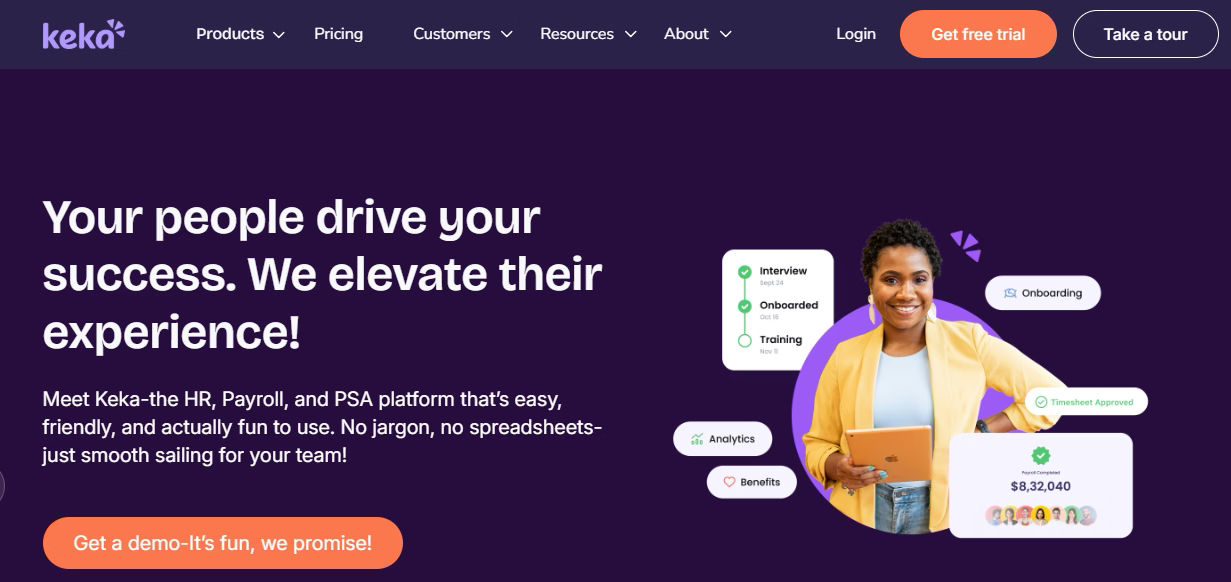
Keka is a people management platform designed to support organizations throughout the employee lifecycle, from hiring and onboarding to development and retention. The platform focuses on creating a modern workplace experience by bringing together HR processes, employee interactions, and management activities within a unified system. Its user-friendly interface, employee-centric approach, and focus on workplace productivity have made it a popular choice among small and mid-sized businesses seeking a digital solution for managing their teams and organizational growth.
Key Features of Keka
- Centralizes employee records and HR information in one accessible platform.
- Organizes onboarding tasks, documentation, and checklists for new hires.
- Supports goal setting, performance reviews, feedback, and development planning.
- Encourages engagement through recognition, surveys, and feedback tools.
- Manages job postings, candidates, interviews, and hiring workflows.
- Supports training programs, skill development, and career growth initiatives.
- Tracks attendance, work hours, shifts, leave requests, and overtime.
- Enables team members to manage personal information and HR requests independently.
- Provides dashboards and reports to monitor HR metrics and workforce trends.
- Automates approvals, notifications, onboarding, and routine HR processes.
Keka is an all-in-one HR software that helps businesses manage key HR processes from a single platform. While it works well for many growing organizations, some companies look for alternatives that offer greater flexibility, better customization, stronger integrations, improved scalability, or a better fit for their HR needs and long-term goals.
Why Companies Look for Keka Alternatives?
While Keka is a popular HR platform, it may not be the right fit for every organization. As businesses grow and their HR requirements become more complex, many begin evaluating alternatives that better align with their operational needs, budget, technology ecosystem, and long-term goals.
Common reasons companies look for Keka alternatives include:
- Need for a broader HR solution: Some organizations prefer a platform that combines HR management, performance management, recruitment, learning, expense management, task management, and employee records in a more unified experience.
- Preference for Microsoft 365 integration: Businesses that rely heavily on Microsoft tools often look for HR software that integrates more deeply with Microsoft Teams, SharePoint, Outlook, and other Microsoft applications.
- Greater flexibility and customization: Every organization has unique HR processes. Companies may seek solutions that offer more configurable workflows, forms, dashboards, and approval structures.
- Simplified user experience: HR teams and managers often look for platforms that are easier to adopt across departments and require less training for day-to-day use.
- Stronger performance management capabilities: Businesses focused on employee development may want more advanced goal tracking, feedback cycles, appraisal processes, and performance reporting.
- Better onboarding and employee experience: Organizations frequently compare alternatives that provide a more structured onboarding experience and easier access to HR resources for new hires.
- Integrated task management: Some companies prefer HR platforms that connect HR activities with task assignments and progress tracking, helping managers stay organized and accountable.
- Scalability for growing organizations: As headcount increases, businesses often reassess whether their HR software can continue supporting additional teams, departments, locations, and evolving requirements.
- Improved reporting and visibility: Leadership teams may require more detailed dashboards and reporting tools to monitor HR activities, performance trends, hiring progress, and workforce data.
- Better overall value: Organizations regularly compare software options to ensure they are getting the right combination of features, usability, support, and scalability for their investment.
Choosing an HR platform is a long-term decision, and the best solution depends on each organization’s priorities. Comparing Keka with leading alternatives helps businesses identify the platform that offers the right balance of features, flexibility, usability, and value for their specific requirements.
Top 5 Keka Alternatives and Competitors
Organizations evaluating Leapsome often compare multiple platforms before making a decision. While some alternatives focus primarily on performance management and employee engagement, others combine these capabilities with broader HR management functions. The following solutions are among the most popular Leapsome alternatives for businesses looking to improve performance, development, and HR operations.
HR365 HRMS
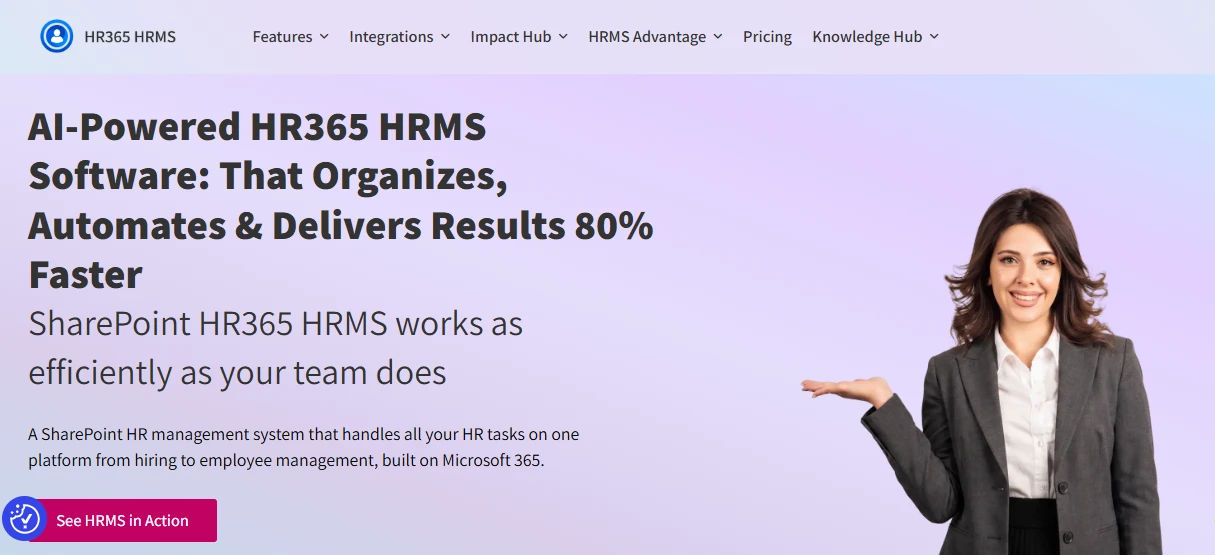
HR365 HRMS is a comprehensive human resource management platform designed to help organizations manage people, processes, and day-to-day HR activities from a centralized system. The platform supports organizations in handling core HR operations, improving visibility into workforce data, and maintaining consistency across HR processes.
Key Features
- Centralizes employee information, contact details, and organizational records in one system.
- Automates onboarding tasks, document collection, and new hire checklists.
- Supports goal setting, performance reviews, feedback, and development planning.
- Simplifies leave requests, approvals, and leave balance tracking.
- Supports training programs, learning progress, and skill development initiatives.
- Helps teams assign, monitor, and track HR-related tasks efficiently.
- Automates routine HR activities, approvals, notifications, and repetitive tasks.
- Provides a centralized dashboard for key HR metrics and pending actions.
- Integrates with Microsoft 365 to enhance collaboration and data accessibility.
- Delivers reports and insights on HR activities, performance, attendance, and hiring trends.
HR365 HRMS is a strong alternative to Keka for organizations looking for a solution that can support both current requirements and future growth. Its combination of flexibility, scalability, and ease of use helps businesses create a more efficient HR environment while providing the foundation needed to adapt as organizational needs evolve.
Rippling
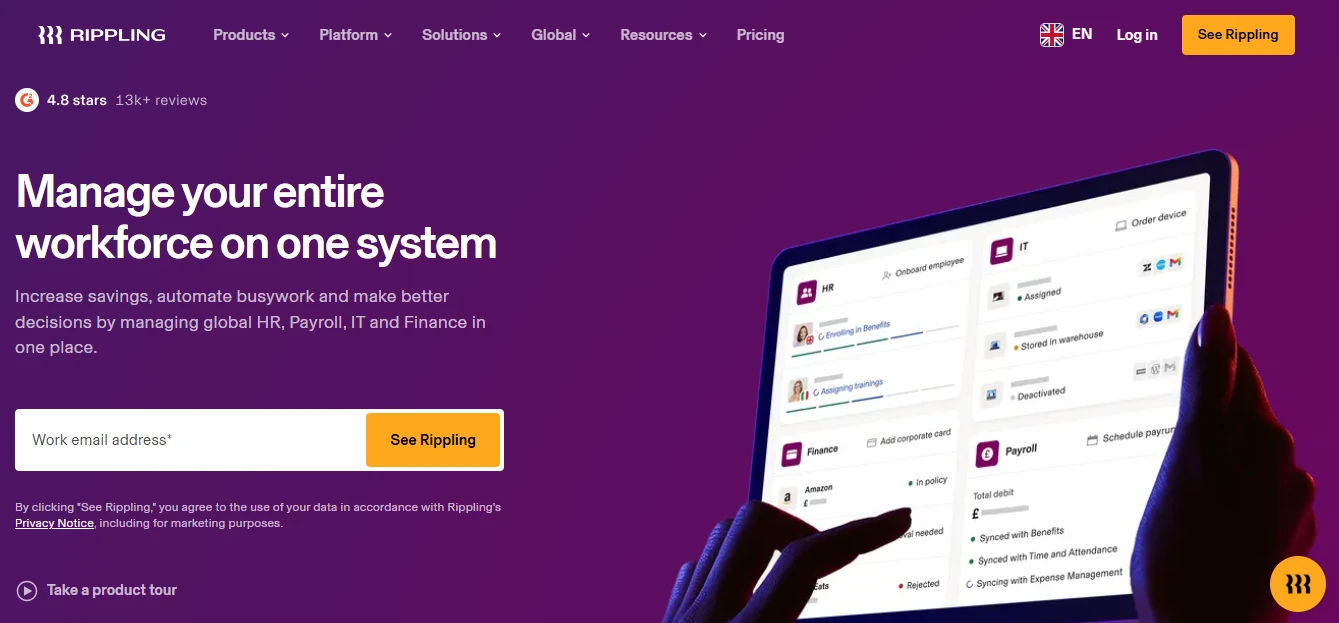
Rippling is a workforce management platform that combines HR, IT, and workforce administration into a single system. The platform helps organizations manage employee data, onboarding, device management, access permissions, and HR processes from a centralized environment, making it a popular choice for businesses seeking operational efficiency across multiple departments.
Key Features
- Centralizes employee records and organizational information in one accessible system.
- Automates onboarding tasks and new hire setup for a smooth, structured experience.
- Tracks work hours, attendance, schedules, and leave requests in one place.
- Manages job openings, candidates, interviews, and hiring workflows efficiently.
- Supports goal setting, performance reviews, feedback, and employee development.
- Manages employee devices, software access, and business applications centrally.
- Automates user permissions based on employee roles and responsibilities.
- Simplifies approvals, notifications, and routine HR processes through automation.
- Delivers insights into HR data, workforce trends, and operational performance.
- Connects with business applications to keep data synchronized across systems.
Rippling is a strong option for organizations looking to combine HR and IT management within a single platform. Its broad functionality can help businesses centralize operations and improve administrative efficiency across multiple areas of the organization.
BambooHR
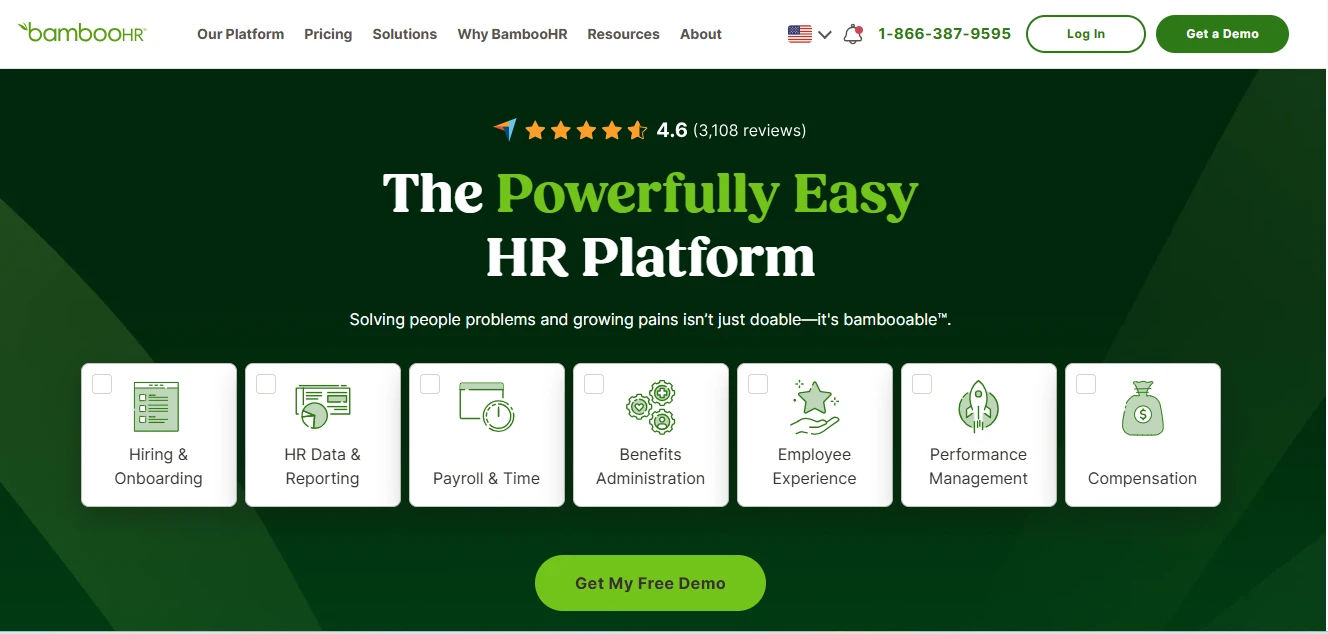
BambooHR is a cloud-based HR software platform designed primarily for small and mid-sized businesses. The platform focuses on simplifying employee management, improving HR efficiency, and providing organizations with a centralized system for managing people-related processes.
Key Features
- Centralizes employee records and organizational information in one accessible system.
- Automates onboarding tasks and new hire setup for a smooth and structured experience.
- Tracks work hours, attendance, schedules, and leave requests in one place.
- Manages job openings, candidates, interviews, and hiring workflows efficiently.
- Supports goal setting, performance reviews, feedback, and employee development.
- Manages employee devices, software access, and business applications from one platform.
- Automates user permissions based on employee roles and responsibilities.
- Simplifies approvals, notifications, and routine HR processes through automation.
- Delivers insights into HR data, workforce trends, and operational performance.
- Connects with business applications to keep data synchronized across systems.
BambooHR is a popular alternative for organizations seeking an easy-to-use HR platform with a strong focus on employee management and HR administration. Its user-friendly approach makes it particularly appealing to growing businesses.
HiBob
HiBob is a modern HR platform designed to help organizations manage employee experiences, engagement, performance, and people operations. The platform is widely used by growing and mid-sized companies looking to create a more connected and people-focused workplace.
Key Features
- Centralizes employee information, organizational structures, and HR records in one platform.
- Creates personalized onboarding experiences for new hires with guided workflows.
- Supports goal setting, performance reviews, feedback, and development discussions.
- Encourages engagement through recognition, communication, and workplace initiatives.
- Collects employee feedback through surveys and employee voice programs.
- Supports compensation planning and reward management strategies.
- Helps organizations plan team structures and future hiring needs.
- Delivers workforce insights, engagement metrics, and people analytics.
- Enables team members to access information and complete HR tasks independently.
- Connects with business applications to create a unified employee experience.
HiBob is a strong alternative for organizations that place a high priority on employee experience, engagement, and people development. Its modern interface and focus on workplace culture make it a popular choice among growing businesses.
Workday HCM
Workday HCM is an enterprise human capital management platform designed for medium and large organizations. The platform helps businesses manage global HR operations, talent strategies, workforce planning, and people-related processes through a comprehensive cloud-based system.
Key Features
- Centralizes employee information, organizational structures, and workforce data in one system.
- Supports goal management, performance reviews, career planning, and talent development.
- Manages candidate pipelines, interviews, and hiring activities efficiently.
- Supports employee training, skill development, and continuous learning programs.
- Assists with compensation planning, salary reviews, and reward strategies.
- Delivers workforce insights to support planning and future talent needs.
- Supports succession planning and leadership development initiatives.
- Provides personalized experiences for team members to manage HR activities.
- Supports global organizations with tools for distributed and multi-location teams.
- Connects with enterprise applications to improve data consistency and operational efficiency.
Workday HCM is a strong alternative for larger organizations that require advanced HR capabilities, workforce planning tools, and enterprise-level scalability. Its extensive functionality makes it well-suited for businesses managing complex people operations across multiple teams and locations.
HR365 HRMS Vs Keka
HR365 HRMS and Keka both help organizations manage HR operations, employee development, and people-related processes. However, each platform offers a different approach to supporting business needs. The comparison below highlights the key differences between HR365 HRMS and Keka.
Criteria | HR365 HRMS | Keka |
Best For | Organizations using Microsoft 365 that want HR operations, performance management, onboarding, recruitment, learning, and employee management in one platform | Small and mid-sized businesses looking for a cloud-based HR and people management solution |
Deployment | Built on Microsoft 365, SharePoint, Teams, Outlook, and Azure ecosystem | Cloud-based HR platform |
Employee Directory | ✓ Centralized employee directory with organization structure and profiles | ✓ Employee records and employee database |
Employee Onboarding | ✓ Dedicated onboarding management with tasks, documents, and workflows | ✓ New hire onboarding and employee lifecycle management |
Performance Management | ✓ Goal tracking, reviews, feedback, 1:1 meetings, performance summaries, AI-powered insights | ✓ Performance reviews, goals, feedback, and employee development |
Recruitment Management | ✓ Built-in recruitment management with candidate tracking and hiring workflows | ✓ Applicant tracking and hiring management |
Learning & Training | ✓ Integrated learning management and employee development tools | ✓ Learning and development capabilities |
Leave Management | ✓ Automated leave requests, approvals, and balance tracking | ✓ Leave and attendance management |
Task Management | ✓ Native task assignment and tracking capabilities | Limited focus compared to dedicated task management functionality |
Expense Management | ✓ Expense claims, approvals, and reimbursements available | ✓ Expense management available |
AI Capabilities | ✓ AI onboarding, AI recruitment, AI leave requests, AI performance summaries, AI employee insights | AI-powered HR assistance and automation capabilities |
Microsoft 365 Integration | ✓ Native integration with Teams, SharePoint, Outlook, Azure, and Microsoft ecosystem | Integration available, but not built natively on Microsoft 365 |
Workflow Automation | ✓ HR workflows, approvals, notifications, and HR process automation | ✓ Workflow automation available |
Analytics & Reporting | ✓ HR dashboards, workforce analytics, attendance, hiring, and performance insights | ✓ HR analytics and reporting |
Mobile Accessibility | ✓ Accessible through Microsoft ecosystem and web applications | ✓ Mobile app available |
Scalability | Suitable for SMBs and enterprises, with enterprise pricing available for 50+ users | Suitable for SMB and mid-market organizations |
Security & Infrastructure | Microsoft Azure infrastructure and Microsoft-certified application | Cloud-based enterprise-grade security |
Free Trial | ✓ Available (14 days) | ✓ Available |
Pricing | Starts from $49.99/month for HR modules; enterprise pricing available | Custom pricing based on organization size and requirements |
G2 Rating | 4.7/5 |
Both platforms offer valuable HR capabilities, but HR365 HRMS stands out for organizations seeking a scalable solution with strong Microsoft 365 integration and comprehensive HR management functionality. Evaluating your business requirements can help determine which platform is the best fit for your long-term goals.
What Should You Consider When Choosing a Keka Alternative?
Selecting a Keka alternative requires more than comparing feature lists. The right platform should support your HR processes, improve the employee experience, and scale alongside your business. Consider the following factors when evaluating different solutions.
Employee Engagement
Engaged teams contribute to stronger business outcomes. Consider solutions that offer surveys, recognition programs, feedback tools, and other features that help organizations measure and improve employee satisfaction.
Recruitment and Hiring Support
If talent acquisition is a priority, consider platforms that include recruitment features such as candidate tracking, interview management, and hiring workflows.
Onboarding Experience
A structured onboarding process can help new hires become productive faster. Evaluate whether the platform supports onboarding workflows, task management, document collection, and new hire tracking.
Performance Management
Look for a platform that supports goal setting, performance reviews, continuous feedback, and development planning. Flexible review cycles and customizable evaluation processes can help organizations adapt the system to their unique requirements.
Learning and Development
Organizations focused on professional growth should consider platforms that support training programs, skill development, learning initiatives, and career progression opportunities.
Ease of Use
A user-friendly platform can improve adoption across HR teams, managers, and employees. Simple navigation and intuitive workflows reduce training time and encourage consistent usage.
Integration Options
The ability to connect with existing business applications can improve efficiency and reduce manual work. Review the platform’s integration capabilities to ensure it fits within your technology ecosystem.
Reporting and Analytics
Access to meaningful insights helps organizations make informed decisions. Look for solutions that provide reporting tools for performance, engagement, attendance, hiring, and other HR metrics.
Scalability
As businesses expand, HR requirements often become more complex. Choose a platform that can accommodate growing teams, additional locations, and evolving organizational needs.
Pricing and Overall Value
Compare pricing alongside the features, support, implementation requirements, and long-term benefits offered by each platform. The best solution should deliver value both today and as your organization grows.
The ideal Keka alternative should support your current HR priorities while providing the flexibility and functionality needed for future growth. Taking the time to evaluate these factors can help you select a platform that aligns with your long-term business objectives.
Why HR365 HRMS Is a Strong Alternative to Keka
HR365 HRMS offers a complete HR management platform that brings together Employee management, performance development, engagement, recruitment and day-to-day HR operations in a single solution. For organizations looking beyond Keka, HR365 HRMS provides the flexibility, visibility, and functionality needed to support both current requirements and future growth.
- Manage employee records, organizational information, and HR activities through a centralized platform that keeps data organized and accessible.
- Create structured onboarding experiences while giving team members self-service access to documents, requests, personal information, and HR resources.
- Support performance reviews, goal tracking, feedback discussions, learning programs, and development initiatives that encourage continuous growth.
- Manage recruitment activities from candidate applications to hiring and onboarding, helping teams maintain a more organized hiring process.
- Improve employee engagement through feedback, recognition, communication, and collaboration tools that help strengthen workplace culture.
- Track attendance, manage leave requests, monitor timesheets, and organize tasks through a single HR management platform.
- Reduce administrative effort with automated workflows while gaining access to reporting and analytics that support informed decision-making.
- Connect HR processes with Microsoft 365 tools to improve collaboration, productivity, and information sharing across the organization.
Conclusion
Keka offers a broad set of HR capabilities and remains a popular choice for organizations looking to manage employee information, onboarding, performance, engagement, and other HR activities. However, businesses seeking greater flexibility, stronger Microsoft 365 integration, comprehensive HR functionality, and a platform that can support long-term growth often find that alternative solutions better match their evolving requirements.
HR365 HRMS stands out as one of the strongest Keka alternatives by bringing employee management, onboarding, performance management, recruitment, learning, engagement, attendance tracking, task management, and reporting together in a single platform. With its comprehensive feature set, user-friendly experience, and ability to support growing organizations, HR365 HRMS provides businesses with everything they need to manage people, improve productivity, and build a more connected workplace from one centralized solution.
Ready to Transform Your HR Operations with HR365 HRMS?
Discover how HR365 HRMS helps organizations manage people, automate daily HR tasks, and bring essential HR processes into one centralized platform.
Frequently Asked Questions
Why do companies look for Keka alternatives?
Organizations often explore Keka alternatives when they need different pricing options, stronger Microsoft 365 integration, greater flexibility, enhanced reporting capabilities, or a platform that better aligns with their HR processes and future growth plans.
Which Keka alternative is best for small and growing businesses?
HR365 HRMS, BambooHR, and HiBob are popular alternatives for small and growing businesses. These platforms offer a combination of employee management, onboarding, performance management, recruitment, learning, and HR administration tools that can support organizations as they scale and adapt to changing business needs.
What features should I look for in a Keka alternative?
When evaluating Keka alternatives, consider features such as employee management, onboarding, performance management, recruitment, learning and training, attendance tracking, leave management, reporting, integrations, employee engagement, and scalability.
Does HR365 HRMS support recruitment and onboarding?
Yes. HR365 HRMS includes recruitment and onboarding capabilities that help organizations manage hiring activities, candidate tracking, onboarding workflows, document management, and new hire experiences from a centralized platform.
Does HR365 HRMS include learning and training management?
Yes. HR365 HRMS provides learning and training tools that help organizations manage training programs, support skill development, track learning progress, and encourage continuous professional growth.
How do I choose the right Keka alternative?
Start by evaluating your organization’s HR requirements, business objectives, budget, integration needs, and future growth plans. Comparing features, usability, scalability, and overall value can help identify the best solution for your needs.
Is HR365 HRMS a good alternative to Keka?
Yes. HR365 HRMS is one of the strongest Keka alternatives for organizations seeking a complete HR platform. It combines employee management, onboarding, performance management, recruitment, learning, engagement, attendance tracking, task management, and reporting in a single solution, helping businesses manage their HR operations more effectively.
What makes HR365 HRMS different from Keka?
HR365 HRMS goes beyond core HR processes by providing a unified platform for employee management, recruitment, learning, performance management, task management, and Microsoft 365 integration. This allows organizations to manage multiple HR activities from one centralized system.


_JiluXJRGNl.svg)























