Contract Operations: Stages, Challenges, and Best Practices

A missed contract renewal can cost a business more than expected. Delayed approvals, lost documents, and unclear responsibilities can also affect revenue and business relationships.
- Contract operations cover the activities involved in creating, reviewing, approving, tracking, and closing business agreements.
- A well-defined contract process helps businesses reduce delays, control costs, improve teamwork, and meet business commitments.
- Common challenges include scattered documents, manual approvals, missed deadlines, poor visibility, and communication gaps between departments.
- A reliable system helps teams manage agreements in one place, automate routine work, track renewals, and improve business decisions.
According to World Commerce & Contracting, poor contract management causes an average value loss equal to almost 9% of annual revenue. This shows how small gaps in managing agreements can lead to major financial problems.
It help businesses manage every agreement from the first request to final closure. A clear system gives legal, sales, finance, and purchasing teams better control over documents, deadlines, and daily tasks.
In this blog, we will explain what contracting operations are, why they matter, their different stages, common challenges, best practices, and how businesses can improve the process.
What are Contract Operations?
Contract operations refer to the daily activities, teams, and systems involved in managing business agreements throughout their lifecycle.
These activities begin when a company requests a new agreement and continue through document creation, review, approval, signing, monitoring, and closure.
For example, when a company hires a new service provider, several departments may need to review the agreement. The purchasing team checks pricing, the legal team examines the contract language, and finance confirms the payment details.
Contract lifecycle management processes Connects these activities through a common workflow, allowing everyone to understand what needs to happen next.
Why Smooth Contract Operations Important for Businesses?
Poor management can create payment issues, missed opportunities, and unnecessary delays. Effective contracting operations help organizations handle these relationships while keeping business activities on track.
When businesses overlook pricing changes, payment schedules, or renewal conditions, they may face unexpected costs. A structured approach helps finance and purchasing teams review financial details, monitor spending, and identify concerns before they affect the budget.
Employees often waste time searching for different folders, emails, and shared drives for the latest document. A central record gives contract visibility to authorized teams access to contract information, status, and upcoming activities without repeated requests.
Legal, sales, finance, and purchasing departments have different responsibilities during contract operations. Clear communication helps each team complete its part without waiting for repeated updates or working with outdated information.
Missing important dates or accepting unclear conditions can expose organizations to financial and legal problems. Regular reviews help teams identify concerns early and take action before they become expensive.
Contract information can reveal future expenses, expected income, supplier performance, and upcoming renewals. Managers can use these details to plan contracts, review business relationships, and make informed decisions.
What are the Different Stages of Contract Operations?
It include several connected stages. Each stage has its own activities, but all contribute to managing an agreement from beginning to end.
Contract Request and Planning
The first stage begins when a department identifies the need for a new business agreement. The requesting team collects details about the business purpose, expected work, pricing, and involved parties.
Contract Drafting
After collecting the required information, the assigned team prepares the first version of the agreement. Businesses often use approved templates to maintain consistent language and reduce repeated writing. The contract draft outlines the business arrangement and explains what each party has agreed to provide.
Contract Review and Negotiation
During this stage, both parties examine the document and discuss any requested changes. The legal team may review possible risks, while finance checks costs and the business team confirms the planned work. Contract negotiation workflow continue until the parties reach an acceptable arrangement.
Contract Approval
Once the review is complete, the document moves to the people responsible for final authorization. Depending on company policy, approval may involve department managers, legal advisors, finance leaders, or senior executives. A defined approval path prevents documents from moving forward without the required checks.
Contract Signing and Storage
After approval, authorized representatives sign the agreement. Businesses then store the completed document in an accessible and secure location. Electronic signatures can reduce paperwork, especially when the parties work from different locations.
Contract Monitoring and Performance Tracking
Signing does not end the contract process. Businesses must continue tracking agreed activities throughout the working relationship. Teams monitor payments, service quality, project progress, and upcoming milestones.
Contract Renewal or Closure
As an agreement approaches its end date, businesses must decide whether to continue, update, or close the relationship. Reviewing performance and current business needs helps managers make the appropriate choice.
Cut Costs, Save Time, and Make Better Decisions
CLM 365 helps manage your entire contract operations with secure workflows, all within your Microsoft 365 tenant.
What are the Common Challenges in Contract Operations?
According to World Commerce & Contracting, contract-related information is spread across an average of 24 different systems. This makes it harder for businesses to access information and act on it quickly. Below are some common challenges that affect operations.
Storing agreements across emails, local folders, and different applications makes it difficult for employees to find the right documents. They may also use outdated contract versions without realizing that changes have already been made.
Manual approval requests often pass through several people without clear ownership. When reviewers miss emails or delay their responses, agreements remain pending and affect business activities.
Without proper contract reminders, organizations may overlook expiration dates and automatic renewal clauses. This can result in unwanted payments, service interruptions, or missed opportunities to renegotiate existing terms.
Managers may struggle to identify how many agreements are active, awaiting approval, or approaching renewal. Without access to accurate information, they cannot easily monitor progress, identify agreements that need attention or store contracts.
Different teams may prepare similar agreements using different templates or outdated documents. This creates inconsistencies during reviews and increases the risk of overlooking important business terms.
When departments work independently, important contract updates may not reach everyone involved. Employees often spend additional time requesting information, following up on changes, and checking document status.
Some organizations focus primarily on getting agreements signed but pay less attention to their ongoing performance. Without regular monitoring, they may overlook missed milestones, service issues, obligations, or unexpected expenses.
8 Best Practices for Effective Contract Operations?
Businesses can improve how they manage agreements by adopting practical methods that support better communication, accuracy, and accountability. The following practices can help legal firms and businesses improve how they handle contract-related activities.
Start by understanding how agreements currently move through your organization. Examine how contracts are initiated, who prepares the first draft, which departments review the terms, and who has the authority to approve the final agreement.
For example, if procurement agreements regularly wait several days for finance approval, investigate whether the delay comes from unclear approval authority, incomplete financial information, or competing priorities.
Define which departments and individuals must participate in each type of contract review.
For example:
- Legal teams review contractual language, liability, indemnification, and termination provisions.
- Finance teams examine payment conditions, pricing, and financial commitments.
- Procurement teams review supplier terms and purchasing requirements.
- Department heads confirm whether the agreement meets operational requirements.
Set approval limits based on contract value, risk, and business impact. A routine service agreement should not necessarily follow the same approval process as a high-value strategic partnership.
Not every agreement carries the same level of risk. Applying an identical contract review process to every contract can consume valuable legal resources. Classify agreements based on factors such as financial exposure, contractual obligations, liability, data protection requirements, and business importance.
Create clear guidelines for preparing agreements and handling changes requested by the other party. This gives legal teams a consistent basis for reviewing agreements and helps prevent employees from accepting terms that fall outside the organization’s approved position.
The responsibility should not end when all parties sign the agreement. Assign an owner to each contract who is responsible for monitoring important obligations, coordinating with relevant departments, and escalating issues when necessary.
Identify the commitments each party has made and determine how the organization will monitor them.
These may include:
- Payment schedules and financial commitments.
- Service delivery requirements.
- Reporting and documentation obligations.
- Insurance and compliance requirements.
- Performance milestones.
- Renewal and termination deadlines.
Convert important obligations into assigned responsibilities with specific due dates.
Contract amendments should follow a defined process rather than being handled through informal email conversations. Whenever a change is proposed, record what needs to change, why the change is necessary, and which parties must approve it.
Review active agreements at regular intervals to determine whether both parties are meeting their commitments. Compare actual performance against agreed service levels, delivery schedules, payment conditions, and other contractual requirements.
How Can Businesses Improve Their Contract Operations?
According to World Commerce & Contracting, only 39% of commercial practitioners believe their contracts effectively deliver the intended outcomes. This highlights the need to focus on business results rather than only completing administrative tasks.
Identify Existing Workflow Problems
Start by reviewing how agreements currently move through the organization. Look for repeated work, long approval periods, missing information, and activities that depend heavily on individual employees.
Understanding these issues helps managers decide what needs attention first.
Automate Repetitive Contract Tasks
Businesses can use contract automation software to handle approval routing, status updates, and deadline notifications. For example, when a manager approves a document, the system can automatically notify the next reviewer. This helps teams spend more time on business decisions instead of routine follow-ups.
Use AI for Reviewing Clauses
AI tools can help employees review large documents, summarize key information, and highlight language that may need attention. These capabilities are useful when teams manage a high volume of agreements.
However, legal professionals should still examine important findings before making final decisions.
Connect It With Business Tools
Integrating the system with workplace applications allows employees to access information within familiar systems.
For example, organizations using Microsoft 365 can connect contract activities with SharePoint, Teams, and Outlook.
This makes it easier for departments to communicate and complete assigned work.
Measure Results and Make Improvements
After introducing changes, businesses should review whether the new approach is producing better outcomes. Compare approval times, missed deadlines, employee workload, and other useful measurements.
Regular feedback helps companies adjust workflows as their needs change.
Manage Contract Operations More Effectively with CLM 365
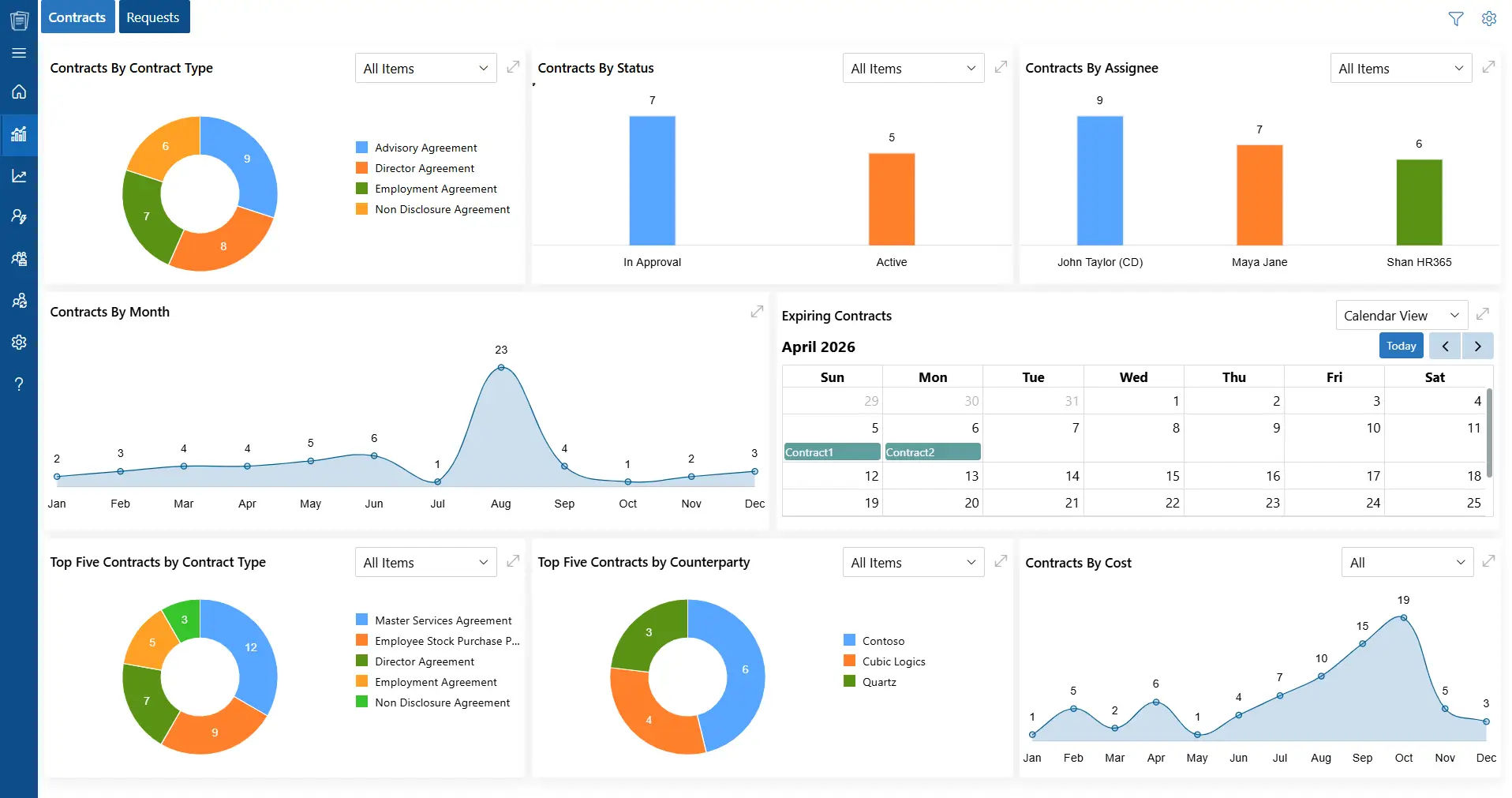
CLM 365 is an SharePoint contract management built within the Microsoft 365 environment. It helps businesses manage agreements through SharePoint while working with Microsoft Teams, Outlook, and other familiar applications.
It supports contract operations from document creation to review, approval, signing, monitoring, and renewal.
Key capabilities of CLM 365 include:
- Central contract repository: Store agreements in SharePoint with controlled access and organized records.
- AI-powered contract review: Analyze document language, highlight possible risks, and summarize important information.
- Automated approval workflows: Route documents to assigned reviewers and monitor pending decisions.
- Contract drafting tools: Create agreements using reusable templates and approved language.
- Renewal reminders: Receive notifications about upcoming expiration dates and planned contract activities.
- Contract tracking: Monitor responsibilities, progress, and important actions throughout the agreement lifecycle.
- Microsoft 365 integration: Work with contracts through SharePoint, Teams, Outlook, and Word.
By bringing contract information and daily activities into one connected system, CLM 365 helps legal, sales, finance, and purchasing teams improve coordination and reduce administrative work.
Conclusion
Effective contract operations help businesses manage agreements with better control, clear communication, and fewer delays. A well-organized process helps teams track responsibilities, monitor deadlines, and protect business interests.
With CLM 365, organizations can manage contract documents, approvals, and activities within Microsoft 365, reducing manual work and improving coordination.
Frequently Asked Questions
Who is responsible for contracting operations in a business?
Responsibility may involve legal, sales, finance, purchasing, and operations teams. Some organizations also have dedicated contract managers who coordinate activities and monitor progress.
How does automation improve the contract process?
Automation helps businesses route approvals, send reminders, update document status, and reduce repetitive administrative tasks. It allows employees to focus on reviews and important decisions.
How can small businesses improve the operations?
Small businesses can start with standard templates, central document storage, clear task ownership, and deadline reminders. As agreement volume increases, a software can help handle additional work.
What are the key metrics used to measure contract operations?
Common metrics include contract cycle time, approval turnaround time, renewal completion rate, pending contract requests, and the number of agreements requiring attention.
How can businesses measure contract approval efficiency?
Measure the time between submission and final approval, both overall and at individual review stages. Comparing these figures across departments can reveal where agreements spend the most time waiting.
Table of Contents

Trusted by the Best