

Contracts should protect revenue, relationships, and delivery, yet many businesses still manage contracts them through inboxes, folders, spreadsheets, and memory.
That works until a renewal slips through, an obligation is missed, or nobody can explain which version was approved.
- CLM technology gives businesses one controlled process to create, review, approve, sign, store, track, renew, and report on contracts.
- Its biggest value comes after signature, helping teams manage obligations, renewals, pricing, risk, and performance.
- Effective CLM combines technology with clear ownership, workflows, templates, governance, and contract data.
- CLM 365 brings contract management into Microsoft 365 with SharePoint, Teams, Outlook, Copilot, automation, reporting, obligation tracking, and AI-assisted review.
The scale of the problem is bigger than most teams expect. World Commerce & Contracting has reported that about 29% of the workforce is involved in contract management or performance.
That is why CLM Technology matters. Contracting is not only a legal task; it is a business process that affects sales, procurement, finance, operations, compliance, and leadership.
What Is CLM Technology?
CLM Technology is software designed to manage contracts from the first request through drafting, negotiation, approval, signature, performance, renewal, amendment, and expiry. CLM stands for contract lifecycle management.
The important word is “lifecycle.” A contract is not finished when it gets signed. That signature starts a long period in which pricing, service levels, milestones, deliverables, notice periods, renewal rights, compliance duties, and commercial promises must be managed.
That matters because contract problems are rarely caused by one dramatic mistake. More often, value disappears through small failures: a rebate is never claimed, a price increase is accepted without review, a notice window passes, a liability change is missed, or an obligation has no clear owner.
How CLM Technology Works?
CLM technology creates a controlled contract lifecycle process for managing contracts from the initial request through renewal and reporting.
Step 1: Contract Request
The process starts with a contract request. Users provide key details such as contract type, counterparty, value, business owner, department, dates, and risk level. These inputs can determine the appropriate template, reviewers, and approval path.
Step 2: Drafting
Approved templates and clause libraries help teams create contracts using consistent, pre-approved language. This reduces manual work and helps minimize unnecessary legal risk.
Step 3: Review & Collaboration
Contracts are routed to the right stakeholders, such as legal, finance, procurement, or security. Teams can review documents, compare versions, add comments, and track changes in one place.
Step 4: Approval & Signature
Once the required reviews are complete, the contract moves through the appropriate approval workflow and is sent for electronic signature.
Step 5: Contract Storage
After signing, the final agreement is stored in a centralized repository with structured metadata, making contracts easier to search, access, and manage.
Step 6: Post-Signature Management
CLM continues working after contract signature by tracking obligations, renewal dates, notice periods, milestones, amendments, pricing changes, and other important events.
Step 7: Reporting
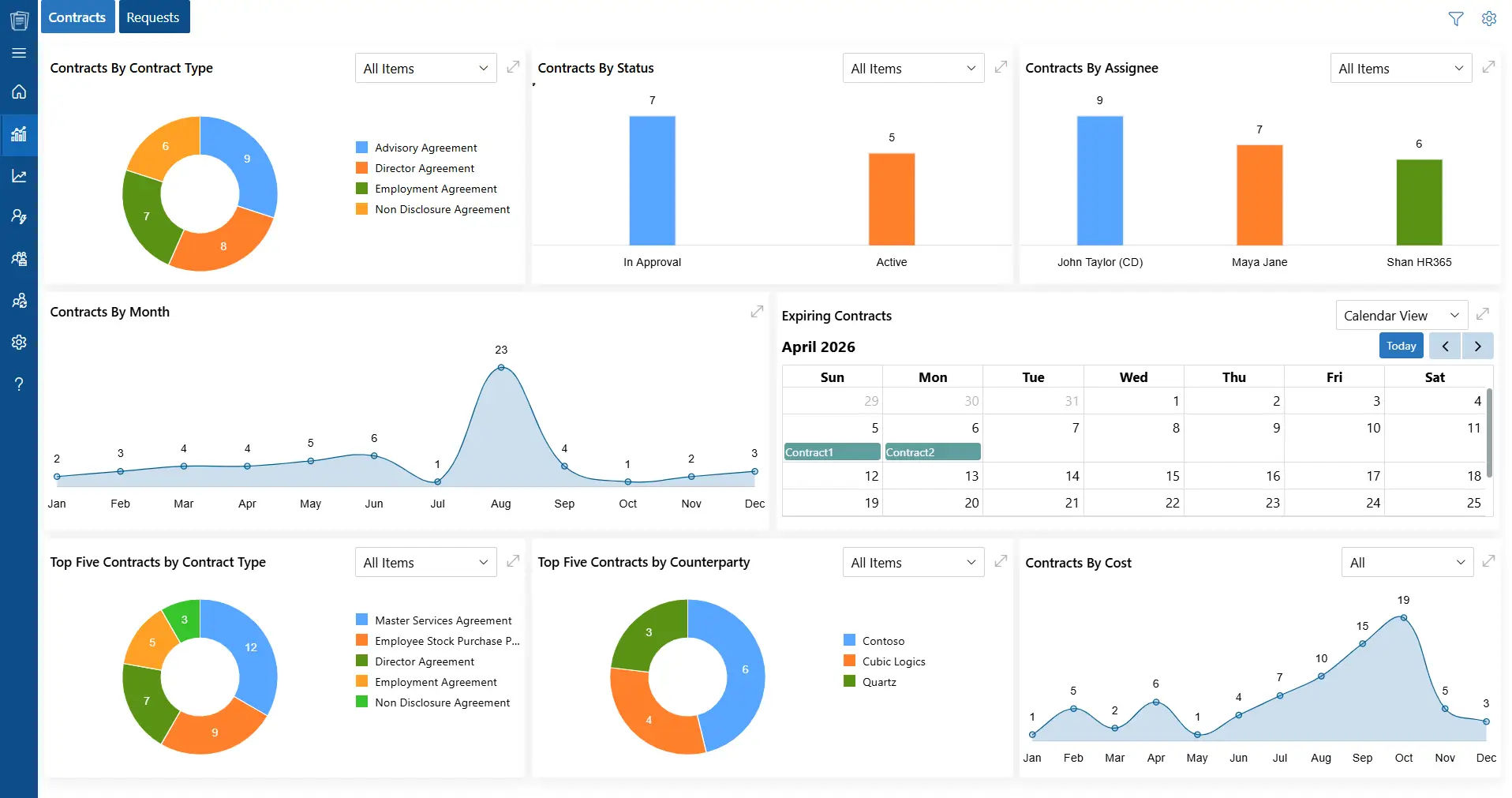
Dashboards and reports provide visibility into contract volumes, upcoming renewals, obligations, risks, and performance, helping teams identify what needs attention and make better decisions.
Step 7: Reporting
Dashboards and reports provide visibility into contract volumes, upcoming renewals, obligations, risks, and performance, helping teams identify what needs attention and make better decisions.
Why CLM Technology Matters
CLM technology matters because it helps businesses move beyond simply storing contracts to actively managing the obligations, risks, deadlines, and value tied to them.
- Most companies do not have a contract shortage. They have a control shortage.
- Poor contract management can lead to missed renewal dates, overlooked obligations, unclear ownership, and unnecessary costs.
- As contract volumes grow, managing agreements through spreadsheets, emails, and disconnected systems becomes difficult and error-prone.
- WorldCC research highlights significant gaps in contract ownership and accountability across organizations.
- The overall cost of contracting can fall in the range of 2%-11% of the contract’s total revenue.
- CLM technology helps close these gaps by making contract data, ownership, responsibilities, status, and deadlines visible and manageable.
A well-managed contract sets the stage for a better vendor relationship
If your contracts are still sitting across local folders and spreadsheets, it may be time to move to AI-native CLM system that keeps everything connected, visible, and easier to manage.
Difference Between Manual Contracting vs. CLM Technology
The shift from manual contracting to CLM technology is about more than automation. It is about making contracts easier to manage, track, and act on.
Aspects | Manual Contracting | CLM Technology |
Contract requests | Emails, chats, informal forms | Standard request forms and routing |
Drafting | Old files copied and edited | Controlled templates and approved clauses |
Review | Attachments move between inboxes | Central comments, versions, and redlines |
Approvals | People chase decision-makers | Rules route approvals to the right owners |
Storage | Shared drives and scattered folders | Searchable central repository |
Deadlines | Calendars and spreadsheets | Automated reminders and milestone tracking |
Obligations | Read manually after signing | Structured obligations with owners and dates |
Reporting | Manual status updates | Dashboards and portfolio-level analytics |
Audit history | Hard to reconstruct | Recorded actions, approvals, and versions |
Renewal control | Reactive and inconsistent | Planned alerts and renewal workflows |
Manual contracting may work at a small scale, but as volume and complexity grow, teams face delays, missed commitments, billing issues, and poor contract visibility.
Key Features of CLM Technology
CLM technology combines the tools teams need to manage contracts efficiently, from initial requests and drafting to approvals, execution, and post-signature management.
AI-Native Contract Review
Wolters Kluwer Future Ready Lawyer Report says that, 62% of respondents save 6–20% of their weekly time due to AI.
AI can help users work through large amounts of contract language faster.
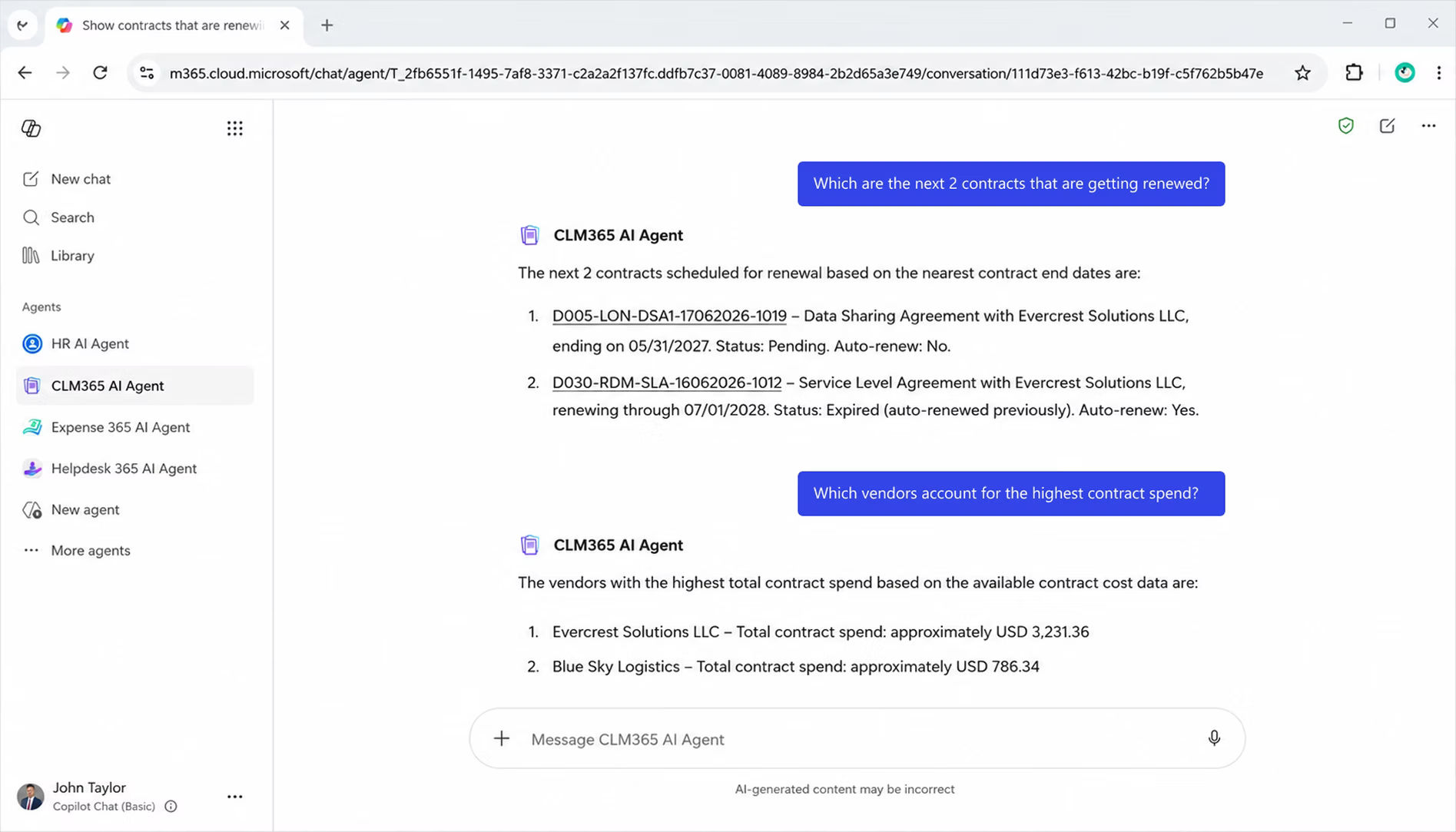
Useful capabilities include contract abstraction, clause identification, obligation extraction, risk flags, semantic search, and questions about stored agreements. The goal is not to remove legal judgment.
It is to reduce the time spent locating and organizing information before a professional makes a decision.
Central Contract Repository
A central contract repository system gives authorized users one place to find current agreements, amendments, supporting files, and contract data.
The practical value becomes obvious during an audit, renewal review, dispute, acquisition, or supplier issue.
Permission controls, version history, and naming rules also matter. Moving messy folders into new software does not fix poor information management.
Template and Clause Management
Templates and clause libraries help teams avoid rebuilding contracts from scratch.
Approved language gives business users a safer starting point, while fallback clauses help negotiators respond when a counterparty rejects preferred terms. Legal can update contract clauses centrally when policy, regulation, or risk appetite changes.
Central governance matters. If teams keep personal copies of old templates, inconsistency returns.
Automated Approval Automation
Approval delays often happen because nobody knows who needs to approve what.
CLM technology can route contracts according to rules. An NDA may need one approval. A data-processing agreement may require legal, security, privacy, finance, and executive review.
Rules should reflect real risk; otherwise, contract automation simply digitizes delay.
Version Control and Negotiation
Business contract negotiation becomes risky when several files circulate with names such as “final,” “final2,” and “final_revised.”
Version control records each change and keeps teams on the right document. Comparison and redlining tools reveal changes between drafts and preserve negotiation history.
This feature protects both speed and institutional memory.
Renewal, and Milestone Tracking
This is where system earns much of its post-signature value.
The system can record obligations, sends contract reminder for renewal, pricing reviews, deliverables, and service commitments.
Every critical alert still needs an accountable owner and action path.
Reporting and Audit Trails
Executives need more than a contract count.
Useful contract analytics can show by value, type, business unit, risk, counterparty, renewal window, approval status, cycle time, obligation status, and exception rate.
These insights answer practical questions about renewals, approval delays, heavily negotiated clauses, overdue obligations, and recurring exceptions.
Give your contracts the visibility they deserve with CLM 365
CLM 365 brings contracts, key dates, responsibilities, and post-signature actions into one connected process.
ROI on Investing in CLM Technology
A strong CLM investment can deliver value across the entire contract lifecycle, helping businesses work faster, improve visibility, strengthen control, and get more value from every agreement.
Reduced Contracting Costs
CLM technology can reduce the administrative effort involved in managing contracts. Instead of spending hours searching through folders, checking document versions, sending follow-ups, and preparing status reports. This reduces repetitive work, improves efficiency, and allows employees to spend more time on higher-value activities.
Faster Contract Cycles
Contract delays often happen when documents move between multiple people, teams, and systems. CLM technology helps standardize contract drafting, review, approval, and signature workflows so contracts move forward with fewer bottlenecks. Faster cycle times can help sales teams close deals sooner, procurement teams onboard suppliers faster, and legal teams focus on agreements that require deeper attention.
Lower Revenue Leakage
Contracts often contain financial terms that require ongoing attention, including renewal pricing, rebates, credits, discounts, payment terms, and price adjustments. CLM technology makes these terms easier to track and act on. By improving visibility into commercial commitments, businesses can capture more of the value already negotiated into their agreements.
Better Obligation Management
Signing a contract is only the beginning of the relationship. Both parties may have ongoing commitments around deliverables, service levels, milestones, reporting, payments, or compliance. CLM technology helps teams manage obligations and important dates in one place.
Stronger Risk Control
A centralized contract process gives organizations better visibility into potential risks. Teams can identify missing approvals, expired documents, policy exceptions, unfavorable terms, and contracts without clear ownership. This supports a more proactive approach to contract risk and helps organizations maintain stronger contract governance volumes.
Improved Team Productivity
Contract management involves multiple departments, including legal, sales, procurement, finance, and operations. It gives these teams access to relevant contract information and structured workflows without relying heavily on manual follow-ups. Reducing repetitive administrative work creates more capacity for strategic activities and other business priorities.
Greater Contract Visibility
CLM technology creates a centralized view of the organization’s contracts and their key information. Teams can quickly find agreements, review contract status, identify upcoming renewals, monitor obligations, and understand ownership. The contract dashboard gives leadership a clearer picture of contract activity, helping them make informed decisions and identify areas for improvement.
Common Mistakes Businesses Make While Managing Contracts
Even with contract management processes in place, businesses can create unnecessary risk and inefficiency. These are some of the most common mistakes to avoid.
- Treating signature as the finish line can leave important obligations, renewals, and commitments unmonitored after the contract is signed.
- Unclear ownership can create accountability gaps, especially when legal, finance, procurement, and business teams are all involved.
- Relying too heavily on spreadsheets can make it difficult to keep contract dates, owners, updates, and portfolio information accurate as volumes grow.
- Automating an inefficient process can simply make a poor workflow digital. Approval processes should be designed around contract type, value, and risk.
- Overlooking user adoption can limit the value of CLM when employees continue relying on email, local folders, and outdated templates.
- Collecting excessive metadata can make workflows harder to use and result in incomplete or unreliable contract data.
- Expecting AI to make final legal or commercial decisions can create unnecessary risk.
Best Practices for CLM Technology
Effective CLM starts with more than choosing the right technology. It requires clear processes, ownership, governance, and adoption to ensure system delivers benefits of contract lifecycle.
- Start with your highest-cost problems: Choose two or three measurable issues such as slow approvals, missed renewals, poor visibility, or weak obligation tracking. Configure around those first.
- Define ownership clearly: Assign a business owner, process owner, and obligation owner where needed. An alert without accountability is only noise.
- Segment contracts by risk: Give simple agreements shorter paths and reserve deeper review for high-value, unusual, regulated, or strategically important deals.
- Clean data before migration: Remove duplicates, confirm active agreements, standardize names, and identify missing documents. Do not import years of disorder without review.
- Keep intake simple: Ask only for information that changes routing, risk, reporting, or downstream action. Long forms drive users back to email.
- Track outcomes, not activity: Measure cycle time, renewal capture, obligation completion, exception rates, search time, and value recovered instead of counting logins alone.
- Review the operating model quarterly: As regulations, business units, products, and risk priorities change, update templates, rules, clauses, permissions, and reports.
Why Choose CLM 365 for Your Contracting Needs?
CLM 365 is designed for organizations that want contract management inside the Microsoft 365 environment they already use.
It supports the contract lifecycle from drafting and approvals through signing, renewals, obligations, and reporting, with SharePoint-based storage and integrations across Microsoft Teams, Outlook, Power Automate, Power BI, and Copilot.
That matters for adoption. Employees do not need to treat contract management as a completely separate workspace. Teams can work with familiar Microsoft tools while CLM 365 adds contract-specific controls, workflows, metadata, alerts, reporting, and governance.
Built with enterprise-grade security and a user-friendly interface, CLM 365 makes contract management simple and accessible for both growing businesses and large enterprises.
Trusted through SOC 2 compliance, Microsoft certification, and Microsoft Solutions Partner status, providing a secure and reliable environment for managing critical contract data.
Designed to support GCC and GCC High environments, CLM 365 offers advanced security and data protection for government organizations and highly regulated industries.
Hear from Our Delighted Clients
CLM 365 has made contract reviews faster and more efficient with AI-powered contract summaries. It helps teams quickly understand key terms, obligations, and potential risks, reducing manual review and enabling faster, more informed decision-making.
Conclusion
CLM technology turns contracts from static documents into managed business assets. By connecting contracts, owners, obligations, deadlines, and key data, it helps teams improve visibility, reduce risk, and capture more value after signature.
CLM 365 brings the entire contract lifecycle into one connected platform, helping your team manage agreements with greater control and confidence.
Ready to move beyond manual contract management? Book your CLM 365 demo.
Frequently Asked Questions
Do we need CLM Technology if we already store contracts in SharePoint?
SharePoint handles document storage and collaboration well, but CLM adds structured workflows for intake, approvals, renewals, obligations, and reporting. CLM 365 builds on SharePoint and Microsoft 365, adding contract-specific controls without replacing your existing environment.
Will CLM Technology replace our legal team?
No. It will reduce repetitive administration, not replace legal judgment. The software can organize requests, route approvals, compare versions, track deadlines, extract information, and flag areas for review.
How long before a business sees ROI from CLM Technology?
ROI depends on contract volume, process maturity, and implementation scope. Businesses can see value quickly by reducing missed renewals, saving time, and improving contract visibility. Track measurable gains such as time saved, faster approvals, renewal outcomes, and value protected.
Does AI train on our contracts?
No. Your contract data remains under your organization’s control and is not used to train public AI models. AI processes the content only to support tasks such as summaries, clause analysis, and risk identification.
Can we control who can view specific contracts?
Yes. CLM Technology can use role-based permissions to control access to contracts based on users, teams, departments, contract types, or other business rules. This helps keep sensitive agreements visible only to authorized users while allowing the right teams to access the information they need.


_JiluXJRGNl.svg)























