
12 Benefits of Contract Lifecycle Management : What Does it to your Business

- Contract Lifecycle Management gives teams better visibility across the entire contract journey.
- CLM can reduce approval delays, improve accountability, and make obligation tracking easier.
- Centralized contract management can support stronger compliance and reduce revenue leakage.
- Better contract data helps legal, procurement, finance, sales, and leadership make more informed decisions.
As contract volumes grow, renewal dates become harder to track, approvals take longer, and important contract information becomes more difficult to find. These problems can slow operations, increase risk, and affect financial performance.
As businesses grow, contract volumes increase. Renewal dates become harder to track, approvals take longer, and locating contract information becomes a challenge. These issues can affect operational efficiency, financial performance, and business relationships.
This is where Contract Lifecycle Management (CLM) becomes valuable.
In this guide, we will explain the major benefits of contract lifecycle management, show how the CLM process works, and share practical ways to improve contract management across your business.
What is Contract Lifecycle Management Process?
Contract lifecycle management is the process of managing contracts throughout their entire lifecycle, from the initial request and creation to renewal or expiration. It helps organizations maintain better control over contracts, improve visibility, and track important obligations.
Key aspects of contract lifecycle management include;
- Managing every stage of a contract, including drafting, review, approval, execution, renewal, and termination.
- Creating consistent contract processes through standardized templates, workflows, and approval procedures.
- Monitoring deadlines, obligations, and compliance requirements to help businesses get more value from their agreements.
How Does Contract Lifecycle Management Process Works?
To understand the benefits of contract lifecycle management, it helps to first look at the different stages a contract goes through. While the details may vary between organizations, most contracts move through the following seven stages.
1. Contract Request
Every contract begins with a business need. At this stage, teams identify why the agreement is needed, who is involved, and what the contract should achieve. A clear request gives stakeholders the information they need before drafting begins. It also reduces confusion later in the contract process.
2. Contract Creation
Once the requirements are clear, the contract is drafted. Information collected during the contract draft stage is turned into a formal agreement. The document should clearly define rights, responsibilities, timelines, pricing, deliverables, and other agreed terms.
3. Contract Negotiation
After the first draft is shared, both parties review the agreement and suggest changes.
The contract negotiation workflow may include comments, revisions, and discussions about clauses, pricing, responsibilities, or timelines.
The goal is to reach terms that both parties understand and accept.
4. Contract Approval
Once negotiations are complete, the contract moves through the contract approval process.
Legal teams, department heads, procurement, finance, or senior leaders may need to review it.
Each reviewer checks the agreement against business, legal, financial, and operational requirements.
5. Contract Execution
After approval, the required parties sign the contract. Once executed, the agreement becomes active.
Products may then be delivered, services may begin, or project work may start according to the agreed terms.
6. Contract Monitoring
Contract management does not end after signature.
During the active period, teams need to track obligations, deadlines, service levels, milestones, and performance.
Ongoing monitoring helps organizations spot issues early and confirm that the agreement is delivering the expected value.
7. Contract Reporting and Analysis
The data collected throughout the contract lifecycle can provide useful business insights.
Teams can review contract data to understand approval times, renewal schedules, contract values, performance trends, and compliance status.
These insights make it easier to identify bottlenecks and improve future decisions.
8. Contract Renewal or Termination
As the contract approaches its end date, organizations must decide what happens next. it is renewing the contract.
Typically, there are three possible outcomes:
- Renew the contract and continue the existing agreement.
- Update the contract by modifying certain terms before entering a new agreement.
- End the contract and conclude the business relationship.
The decision is often based on insights gathered during the monitoring stage, including performance, business needs, and overall contract outcomes.
Understanding these seven stages provides a clear picture of how contracts move through their lifecycle and why effective contract management is important for maintaining visibility, accountability, and long-term business value.
From the first request to the final renewal
Manage every contract on one platform. Less searching, more getting things done.
12 Benefits of Contract Lifecycle Management
From improving contract visibility to protecting revenue and supporting better business decisions. Here are 12 important benefits of contract lifecycle management that organizations can achieve.
1. Improved Contract Visibility
One of the biggest benefits of contract lifecycle management is better visibility across the entire contract lifecycle.
Instead of searching through emails, shared drives, or filing cabinets, teams can access agreements from a centralized repository.
According to EY research, 90% of contracting professionals find it challenging to locate contracts efficiently.
A CLM repository makes contract retrieval faster. Teams can quickly access key terms, obligations, dates, and supporting documents.
2. Clear Ownership and Accountability
Contracts often involve several stakeholders. Without clear ownership, teams may not know who is responsible for an approval, obligation, deadline, or follow-up action.
According to World Commerce & Contracting, 40% of organizations operate without clear visibility into who owns specific contract responsibilities.
Understanding benefits if ontract lifecycle management helps assign owners, track tasks, and maintain accountability throughout the contract lifecycle.
3. Faster Contract Creation
Creating contracts manually can consume significant time, especially when teams repeatedly draft similar agreements.
It provide standardized templates, approved clauses, and automated contract generation capabilities that help organizations create contracts more efficiently.
Faster contract creation allows teams to spend more time on strategic activities rather than repetitive administrative work.
4. Better Contract Review Processes
Contract review is important for identifying risks, checking terms, and keeping agreements consistent.
Gartner predicts that by 2027, 50% of organizations will support supplier contract reviews with AI-enabled contract risk analysis and editing tools.
Contract review software can help legal and procurement teams identify unusual terms, missing clauses, and policy deviations more quickly.
5. Improved Compliance Management
Organizations must comply with internal policies, industry regulations, and contractual obligations.
A good benefits of contract lifecycle management is that it provides audit trails, approval histories, version tracking, that make contract compliance activities easier to manage.
Greater visibility into compliance activities helps organizations maintain consistent contract governance.
6. Better Obligation Tracking
Once contracts are signed, the real work begins.
Contract lifecycle management helps organizations track deliverables, milestones, service-level commitments and other obligations throughout the contract period.
Better obligation tracking helps organizations maximize the value of every agreement while strengthening business relationships.
7. Reduced Revenue Leakage
One of the key benefits of contract lifecycle management is its ability to help organizations reduce revenue leakage and gain better control over contract-related financial activities.
Research shows that businesses lose an average of 9.2% of annual revenue due to contract mismanagement.
A contract lifecycle management solution provides greater visibility into contract terms, renewal dates, pricing agreements, and key commitments.
8. Faster Approval Cycles
Another important benefit of contract lifecycle management is the ability to accelerate contract approvals.
Delays during the approval stage can slow business operations, postpone projects, and impact business opportunities.
Contract lifecycle management introduces structured contract approval workflows that automatically route contracts to the appropriate stakeholders based on predefined rules and approval hierarchies.
9. Better Contract Reporting and Analytics
One of the most valuable benefits of contract lifecycle management is access to contract data that can support better business decisions.
Contracts contain information related to vendor performance, approval timelines, renewal schedules, contract values, and business commitments
By analysing contract data, organizations can identify trends, uncover opportunities, and make better decisions.
10. Improved Risk Visibility
Every contract introduces legal, financial, operational, or regulatory risks that require ongoing attention.
One of the key benefits of contract lifecycle management is improved visibility into potential risks throughout the contract lifecycle.
Having access to this information allows stakeholders to address potential concerns before they impact business operations.
11. Stronger Vendor and Customer Relationships
Strong business relationships are often built on clear expectations and consistent contract management.
Among the practical benefits of contract lifecycle management is the ability to maintain visibility into obligations, deadlines, service levels, and contractual commitments.
When contracts are actively managed, communication improves and expectations remain clear for all parties involved.
12. Better Strategic Decision-Making
One of the long-term benefits of contract lifecycle management is the ability to turn contract information into meaningful business insights.
Among the strategic benefits of contract lifecycle management, better decision-making is especially important.
Reliable contract data can help leaders evaluate suppliers, plan renewals, understand risk, and improve future negotiations.
Among the strategic benefits of contract lifecycle management, improved decision-making helps and achieve better business outcomes.
Ready to Unlock the Benefits of Contract Lifecycle Management?
CLM 365 helps you improve contract visibility, track obligations, and manage contracts directly within Microsoft 365.
Best Practices to Manage the Contract Lifecycle Management Process
Many organizations focus heavily on creating and signing contracts but overlook the activities that happen before and after execution. Here are eight best practices that can help improve contract management outcomes.
1. Define Contract Ownership Early
One of the most common problems is unclear ownership. Every contract should have a designated owner responsible for tracking obligations, deadlines, and key milestones throughout the contract lifecycle.
2. Involve Stakeholders Before Drafting Begins
A common myth is that contracts are solely a legal responsibility. Procurement, finance, operations, sales, and business teams often have requirements that should be captured before drafting starts. Early collaboration can prevent delays later in the process.
3. Maintain a Central Source of Truth
Many teams still store contracts across email inboxes, local drives, and shared folders. Keeping all contract-related documents, amendments, and communications in one location makes information easier to find.
4. Standardize Frequently Used Clauses
Not every contract needs to start from scratch. Creating approved language for commonly used terms can improve consistency and reduce review time while helping teams maintain alignment with company policies.
5. Monitor Contracts After They Are Signed
One of the biggest misconceptions is that contract management ends after execution. The reality is that much of the value and risk associated with a contract appears during its active period. Regularly reviewing obligations, milestones, and performance helps organizations get more value from their agreements.
6. Track Key Dates and Milestones
Missed renewal dates, notice periods, and payment deadlines are among the most common contract management issues. Maintaining visibility into important contract dates allows teams to act before opportunities or obligations are missed.
7. Conduct Regular Contract Reviews
Business requirements, regulations, and market conditions can change over time. Periodic contract reviews help identify clauses that may no longer align with current business objectives.
8. Use Contract Data to Improve Future Agreements
Many organizations collect contract data but never analyse it. Reviewing metrics such as approval times, renewal rates, contract values, disputes, and performance outcomes can reveal patterns. This can help teams negotiate stronger agreements and improve contract processes over time.
Simplify your Entire Contract Workflows with CLM 365
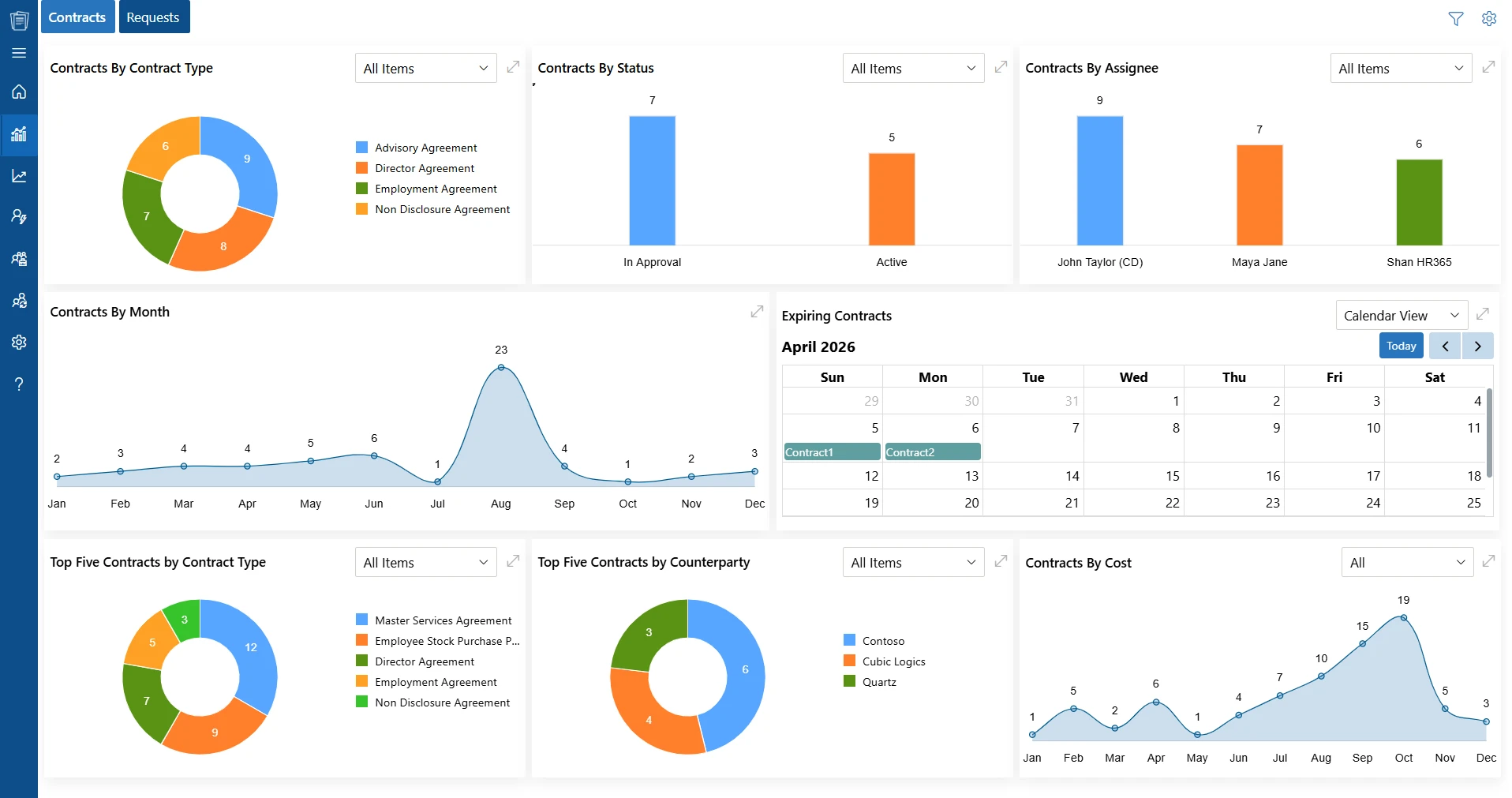
CLM 365 is a contract lifecycle management solution built directly within the Microsoft ecosystem. It works with familiar Microsoft tools such as SharePoint, MS Teams, Outlook, Microsoft Copilot, Power BI, and Power Automate, allowing teams to manage contracts without switching between multiple platforms.
The platform helps businesses handle contract approvals, monitor obligations, and maintain compliance through AI-powered contract workflows. By reducing manual tasks, teams can spend more time focusing on contract performance and business priorities.
CLM 365 is designed for both growing businesses and large enterprises, offering a simple user experience combined with enterprise-level security. It is backed by SOC 2 compliance, Microsoft certification, and Microsoft Solutions Partner recognition.
For organizations operating in highly regulated industries, CLM 365 also supports GCC and GCC High environments, providing advanced security and data protection requirements.
Best For: SMBs, enterprises, and organizations looking to manage contracts within their Microsoft 365 environment.
What Makes CLM 365 Different?
CLM 365 stands out by keeping contract data within your own SharePoint environment rather than storing it in a separate external repository. Combined with its Zero Trust security approach, AI-powered capabilities, and Microsoft-native architecture, it offers organizations greater control over their contract data while working within tools they already use every day.
Conclusion
The benefits of contract lifecycle management go beyond simply managing contracts. It helps organizations gain better visibility into agreements, improve accountability, track obligations, reduce risk, and make more informed business decisions.
Whether you are managing a handful of contracts or thousands across multiple departments, understanding and applying the benefits of contract lifecycle management can help create a more organized.
See how CLM 365 can help your organization improve contract visibility and control.
Frequently Asked Questions
Can contract lifecycle management help prevent missed renewals?
Yes, one of the key benefits of contract lifecycle management is maintaining visibility into renewal dates, notice periods, and contract expiration timelines. This helps organizations act before important deadlines are missed and make informed decisions.
Non-legal teams struggle to understand contract language. What can help?
Many contracts contain legal terminology that can be difficult for business users to interpret. AI-powered contract analysis tools can help by summarizing contracts, highlighting key clauses, explaining obligations in simple language, and identifying important risks
How can we stop contracts from getting lost across local folders, emails, and shared drives?
A common challenge is having contracts stored in multiple locations, making them difficult to find when needed. Maintaining a centralized contract repository helps keep agreements, amendments, and supporting documents in one place.
How can organizations identify the right reviewers and approvers during the contract approval process?
This usually happens when approval responsibilities are not clearly defined. Creating a standardized approval matrix that outlines who reviews contracts based on contract type, value, department, or risk level.
What are the hidden costs of manual contract management?
The costs of manual contract management often go beyond the time spent handling paperwork. Organizations may experience lost productivity, missed renewal opportunities, delayed approvals, contract disputes, compliance challenges, and revenue leakage.

Trusted by the Best

_JiluXJRGNl.svg)























