

Contract Obligation Management: The Complete Guide for 2026

- Contract obligation management is the practice of tracking, assigning, and completing every duty written into a contract, from payments to renewals to reporting.
- Between 55% and 70% of firms lack efficient contract management systems, which means most companies are tracking obligations through spreadsheets, email, or memory.
- Clear ownership, deadline tracking, and regular reviews are the three habits that separate companies that meet their contract duties from those that don’t.
- AI-powered CLM 365 can analyse contracts, flag key dates, and alert the right person before a deadline passes.
Every contract carries promises. Someone must deliver on time. Someone has to pay on time. Teams has to renew, report, or notify the other side before a set date.
When no one owns these promises, they get missed. That’s the real reason behind contract obligation management and it’s a bigger problem than most teams admit.
As per the World Commerce and Contracting Association, in 40% of organizations, it’s a guessing game of who’s in charge of which contract responsibility.
Read that again. Four out of ten companies don’t have a clear answer to a basic question: who owns this task? That gap costs money, damages trust between partners and puts deals at risk.
This guide walks through what contract obligation management means, why it matters, who should own it, and how to build a system that works.
What Is Contract Obligation Management?
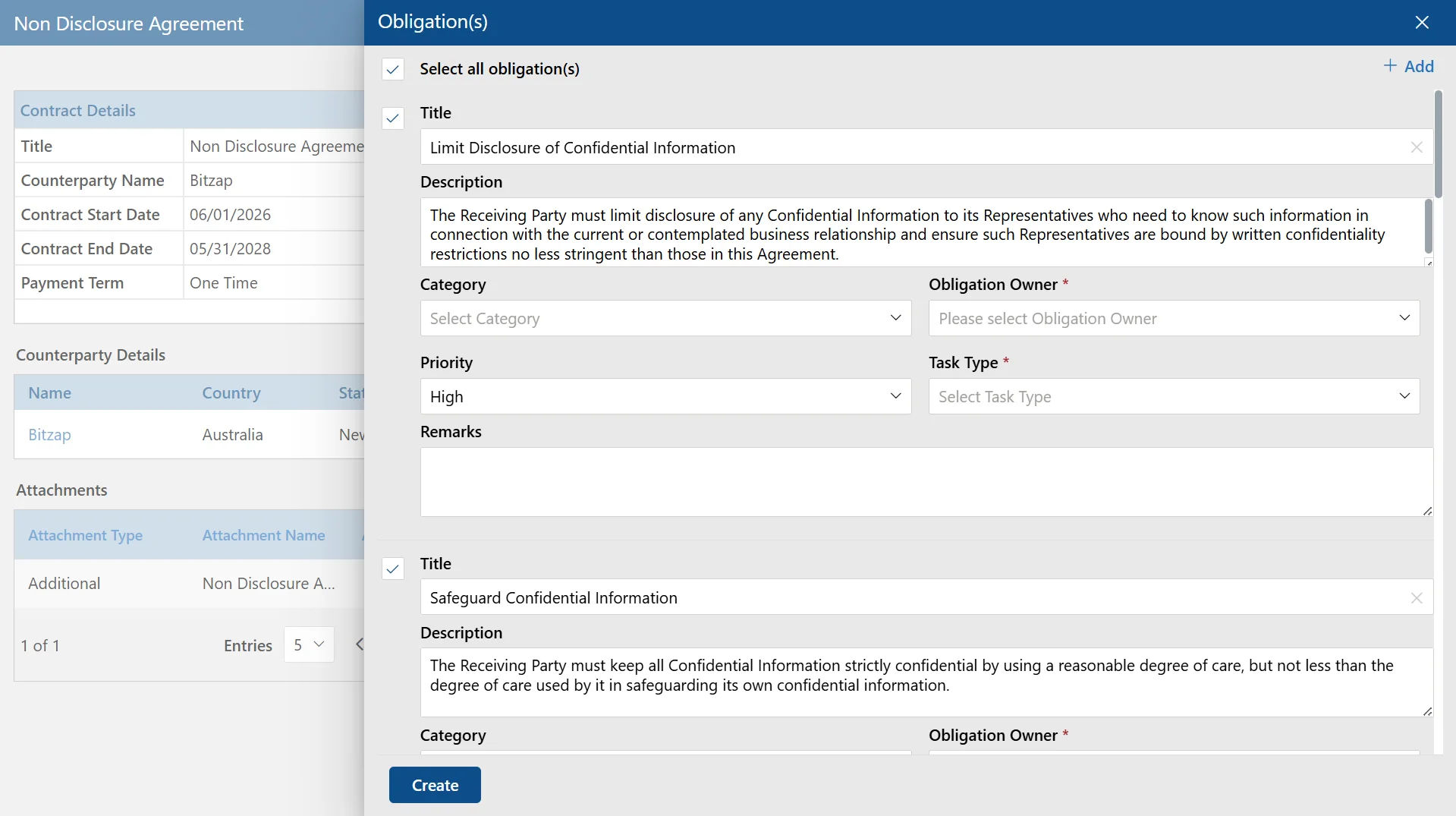
Contract obligation management is the process of identifying every duty inside a contract and making sure each one gets done on time.
A contract isn’t just a signed document that sits in a folder. It’s a list of promises. One party might promise to deliver goods by a certain date. The other might promise to pay within 30 days. There could be duties around data privacy, insurance coverage, quality standards, or renewal notices.
The goal of obligations management is simple to state but hard to do well, turn the fine print into a working plan, assign each task to a real person, and track it until it’s done. Without this step, a signed contract is just a piece of paper with good intentions.
Purpose of Managing Contract Obligation
An average of 9.2% of annual revenue is lost due to contract mismanagement. For a mid-size company making $50 million a year, that’s over $4.5 million walking out the door because no one tracked a rebate clause, missed a renewal window, or forgot a service level requirement.
Good obligation management serves a few clear purposes.
- It protects income by making sure billing, discounts, and renewal terms are followed correctly.
- It reduces legal exposure by keeping compliance duties, such as data protection or safety standards, on schedule.
- It builds trust with vendors, clients, and partners because promises get kept without needing constant reminders.
- It gives leadership real visibility into which contracts carry risk and which ones are running smoothly.
Your contracts deserve secure place to store
Keep every agreement in one secure, searchable repository, so your team spends less time searching and more time getting work done.
Key Elements of Contractual Obligations
Every contract obligation, no matter the industry, shares a few common parts. Knowing these parts helps a team build a system that catches everything.
- Obligation: A clear description of what must be completed, such as delivering 500 units, submitting a quarterly report, or renewing insurance coverage.
- Owner: Every obligation should have a designated individual or team responsible for completing it. Without clear accountability, important commitments can easily be overlooked.
- Deadline or Trigger: Some obligations are due on a specific date, while others are activated by an event, such as “within 10 days of delivery” or “upon client request.”
- Proof of Completion: Completing an obligation requires supporting evidence, not just verbal confirmation. Documentation such as signed delivery receipts, payment confirmations, approval records, or submitted reports provides a verifiable audit trail.
- Consequences of Non-Compliance: Missed obligations can lead to financial penalties, contract disputes, service disruptions, or even termination rights. Understanding potential consequences helps teams prioritize critical commitments.
When any of these five elements are missing or poorly defined, obligations become difficult to track and manage. An effective contract obligation management process captures each component as soon as an agreement is executed, creating clear accountability and reducing compliance risks.
“AI is not replacing business applications but making them more intelligent. The future is about embedding intelligence directly into business workflows and simplify work to make better decisions.”
— Manoj Kumar, Founder & CEO, Cubic Logics (Apps 365)
Process of Contract Obligation Management
Contract obligation management follows a structured process to identify, track, and fulfill contractual commitments while reducing compliance risks. It typically involves six key steps.
Step1: Extract the obligations
Read through the signed contract and pull out every duty, deadline, and condition. This can be done manually or with software that scans the document.
Step 2: Assign ownership
Match each obligation to a specific person or department. Payment terms might go to finance. Delivery terms might go to operations.
Step 3: Set reminders
Build a calendar or automated alert system for every deadline, with enough lead time to act before the date arrives.
Step 4: Track progress
Keep a live record of which obligations are open, in progress, or complete.
Step 5: Review regularly
Hold monthly or quarterly check-ins to look at open items and catch anything falling behind.
Step 6: Report and improve
Use the data from past contracts to spot patterns, such as which obligation types are missed most often, and fix the root cause.
This process works the same whether a company manages five contracts or five thousand. The difference at scale is the tool used to run it. A spreadsheet might work for a small business.
Different Types of Contract Obligations
Contract obligations fall into a few broad categories. Knowing the type helps decide how closely it needs to be watched.
Payment obligations
These define financial responsibilities, including invoicing schedules, payment terms, late payment penalties, taxes, and eligible discounts. Since they’re tied to specific amounts and due dates, they’re often easier to monitor than other types of obligations.
Delivery obligations
These require a party to deliver products, complete services, or achieve project milestones within agreed timelines. Delays or incomplete deliveries can lead to penalties, disputes, or customer dissatisfaction.
Compliance obligations
These ensure both parties adhere to applicable laws, industry regulations, contractual compliance, and security standards. Depending on the agreement, this may include requirements related to data privacy, workplace safety, environmental regulations, or standards such as GDPR, HIPAA, or ISO certifications.
Reporting obligations
Many contracts require periodic reports, performance updates, financial statements, audit documentation, or compliance records. Submitting accurate reports on time helps maintain transparency and demonstrates contractual compliance.
Renewal and termination obligations
These govern renewal dates, notice periods, and contract exit requirements. Missing a renewal deadline or failing to provide timely notice can automatically extend an agreement or result in unexpected financial commitments.
Confidentiality obligations
These require both parties to protect sensitive business, financial, technical, or customer information from unauthorized disclosure. In many agreements, confidentiality requirements remain in effect even after the contract has expired or been terminated.
Service level obligations
Common in IT, SaaS, and managed service contracts, these establish measurable performance expectations such as uptime, response times, issue resolution targets, and service availability. Continuous monitoring helps ensure service commitments are consistently met.
Each type carries a different risk level. Payment obligations hit the budget directly. Compliance obligations can bring legal trouble. Renewal obligations, if missed, can trap a company in unwanted terms for months.
Who Manages Contract Obligation?
Ownership of contract obligation management varies by company size and structure. In smaller businesses, this job often falls to whoever signed the contract, such as a department head or a business owner. That works fine until the number of contracts grows past a handful.
In mid-size and large companies, a few roles typically share the work:
Legal teams often own compliance-heavy obligations, such as data privacy terms or regulatory reporting.
Procurement or vendor management teams usually track supplier-side obligations, like delivery schedules and quality standards.
Finance teams manage payment obligations, invoicing schedules, and any financial penalties tied to the contract.
Contract managers oversee the full picture, making sure nothing falls between departments. This role has grown quickly, and some companies now have a “Contract Obligations Management” function with its own team lead, reporting on performance across every active agreement.
The best setup gives one person or team a full view of every obligation across the company, even if the actual task is carried out by someone else. Without that central view, no one can answer a simple question, are we on track with our commitments?
Hidden Business Impact of Unmanaged Contract Obligations
89% of organizations feel that their contract process is not that effective. That statistic points to a problem most leaders’ sense but can’t always name. When obligations go untracked, a business faces a few hidden costs.
Lost revenue
Missed rebates, unclaimed discounts, delayed invoices, and unbilled services quietly reduce profitability. Without a system to track financial obligations, these revenue leaks often go unnoticed until they’re discovered during audits or financial reviews. Over time, even small oversights can add up to significant financial losses across multiple contracts.
Legal exposure
Missing a compliance deadline or failing to meet a contractual requirement can result in penalties, legal disputes, regulatory fines, or breach-of-contract claims. For organizations in regulated industries such as healthcare, finance, or government, the challenges can be even more severe.
Damaged business relationships
Vendors, customers, and partners expect contractual commitments to be fulfilled consistently. Missed delivery dates, delayed reports, or unmet service commitments gradually erode trust, making contract renewals and future business opportunities less likely.
Lost negotiation opportunities
Organizations that fail to monitor renewal dates and notice periods often find contracts automatically renewed under outdated pricing or unfavourable contract terms. Missing these windows eliminates valuable opportunities to renegotiate costs, service levels, or contract conditions. It can lead to unnecessary costs and missed savings opportunities.
Lower operational efficiency
Teams spend valuable time searching through lengthy contracts to locate deadlines, responsibilities, and key terms. Without centralized visibility into contractual obligations, employees rely on emails, spreadsheets or manual follow-ups.
That’s exactly why they go unnoticed for so long, and why so many companies underestimate how much unmanaged obligations cost them.
Keep every commitment visible with proactive alerts and centralized tracking
Best Practices to Manage Contract Obligation Effectively
A few best practices separate companies that stay on top of their contract duties from those that don’t.
- Centralize every contract in a single location instead of storing agreements across email inboxes, shared folders, or personal drives.
- Extract every contractual obligation as soon as an agreement is signed. Identifying owners, deadlines, milestones, and compliance requirements.
- Assign a specific individual to every obligation rather than using broad labels like “operations” or “the team.” Clear ownership improves accountability, reduces confusion, and ensures someone is responsible for following each commitment through to completion.
- Set reminders well before contractual deadlines instead of relying on last-minute notifications. Early alerts provide enough time to gather approvals, resolve dependencies, and complete obligations without unnecessary pressure.
- Review active contracts on a consistent schedule, such as monthly or quarterly. Regular reviews help identify upcoming obligations, monitor progress, and address potential issues earlier.
- Use a standardized tracking format across every contract. Recording consistent information such as obligation details, owner, due date, status, priority, and proof of completion.
- Make obligation management part of employee onboarding and ongoing training. When everyone understands the tracking process, organizations maintain consistency even as responsibilities change.
- Document every missed obligation and analyse why it happened. Reviewing recurring issues helps organizations identify process gaps and improve internal controls.
Managing Contractual Commitments for Global Clients
Obligations carry more weight when a client sits in another country. Time zones, local laws, and currency terms all add extra steps that a domestic contract doesn’t need. Here’s how to manage these commitments well.
- Map local law requirements first: Before tracking any obligation, check which country’s law governs the contract and what local rules apply, such as tax reporting or labor standards.
- Adjust deadlines for time zones: A “24-hour notice” clause means something different in Tokyo than it does in New York. Convert every deadline into the reader’s local time to avoid missing a window by a few hours.
- Track currency and payment terms closely: Exchange rates shift daily. Set a clear rule for which rate applies to a payment obligation and note it in the contract record.
- Assign a local point of contact: A team member familiar with the client’s country, language, and business customs should own communication for that account.
- Watch for regulatory differences: Data privacy laws, import and export rules, and industry standards vary widely across borders. Build a checklist specific to each region a company operates in.
- Build in extra lead time for approvals: Global contracts often need sign-off from multiple offices. Add buffer days to any internal deadline so the final obligation still gets met on time.
- Keep one obligations record across regions: Even with local owners, a company needs a single master record so leadership can see every global commitment in one view.
Even a strong system misses an obligation occasionally. What matters is how fast and how well a company responds.
- Check the contract terms to confirm the deadline actually passed and what the exact requirement was.
- Tell the obligation owner, their manager, and legal or procurement if the miss carries financial or legal weight.
- In many cases, a quick, honest notice to the client or vendor limits damage far more than staying quiet.
- Some agreements include a cure period, which gives extra time to fix the issue before it counts as a breach.
- Write down the obligation, the deadline, and the reason it was missed. This record matters if the issue ever goes to a legal review.
- Was the deadline unclear? Was the owner unaware of the task? Update the process so the same type of miss doesn’t happen again.
- Share the incident with leadership, along with the fix, so the same gap doesn’t repeat across other contracts.
Key Outcomes of Efficient Contract Obligations
When a company manages its contract duties well, the results show up across the business. Here are some benefits of effective contract management.
Steady revenue
Tracking payment schedules, rebates, discounts, and invoicing obligations helps prevent revenue leakage. Every financial commitment is completed on time. This improves cash flow and creates more predictable financial performance.
Lower legal and compliance risk
Meeting contractual obligations on time reduces the risk of penalties, disputes, and compliance issues. Teams have clear visibility into every contract process. This helps organizations stay audit-ready and maintain strong governance.
Stronger business relationships
Consistently meeting contractual commitments builds trust with customers, suppliers, and partners. Deliverables, reports, and service commitments are completed as agreed. Stronger relationships often lead to long-term partnerships and repeat business.
Better contract renewals
Tracking contract renewal dates and notice periods gives teams time to review contracts before they expire. This creates opportunities to negotiate better pricing and terms. Access to accurate, real-time information helps organizations prioritize resources, reduce operational risks, and make faster, more informed business decisions.
Higher team productivity
Employees no longer spend hours searching through contracts for important information. Responsibilities, deadlines, and milestones are easy to find in one place. Teams can focus more on strategic work and less on administrative tasks.
Better business decisions
Centralized obligation data provides a clear view of upcoming deadlines, completed tasks, and potential risks. Leaders can identify issues before they affect business operations. When audits or compliance reviews occur, organizations can quickly reduce preparation time.
Still spending hours identifying contract obligations?
Let AI automatically extract obligation metadata including owners, due dates, milestones, and notice periods, so your team can start managing commitments immediately.
How CLM 365 Helps Manage Contract Obligations?
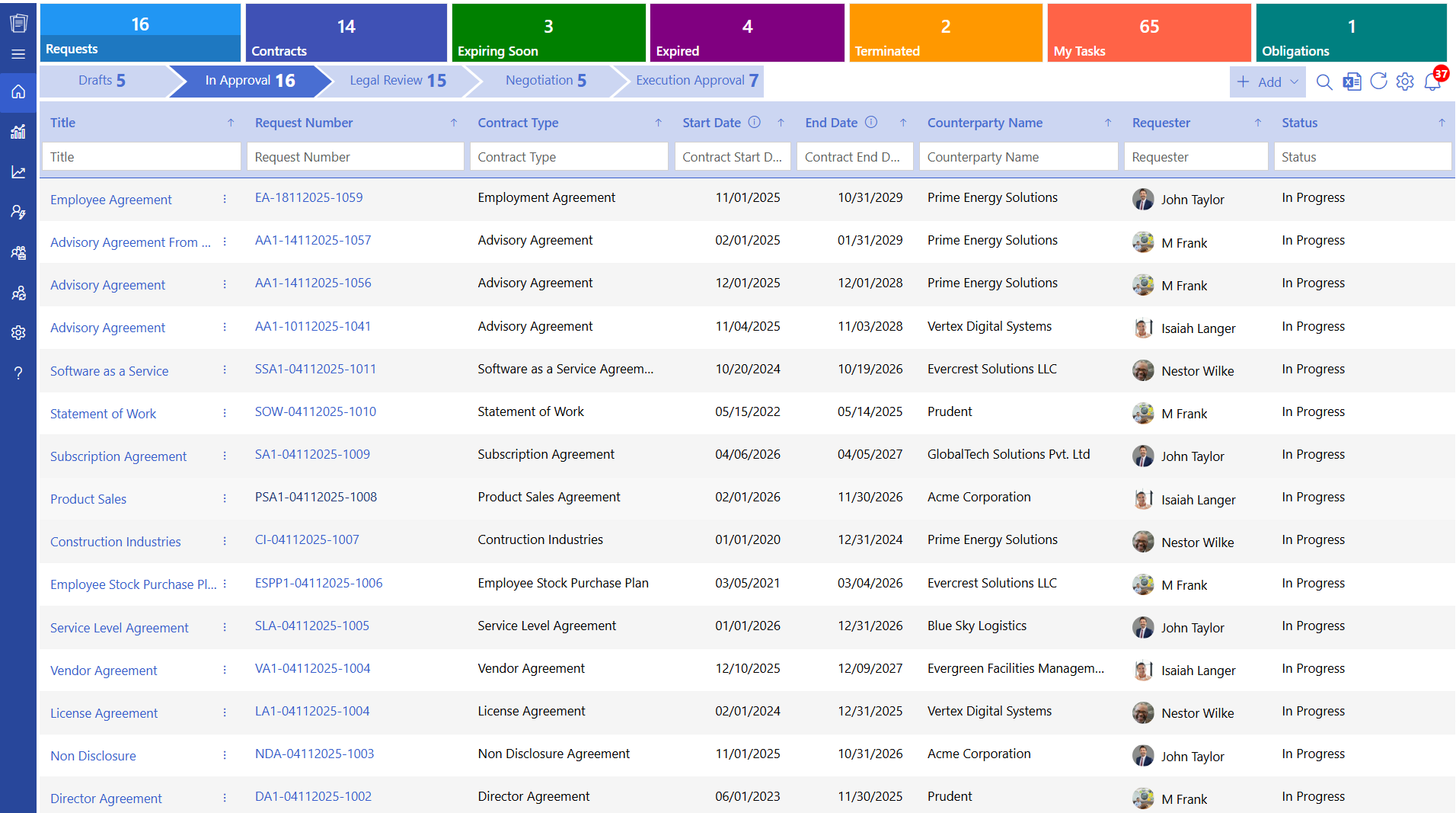
CLM 365 enables organizations to manage contract obligations from a single platform without disrupting existing business processes. CLM 365 integrates with SharePoint, MS Teams, Outlook, Microsoft Copilot, Power BI, and Power Automate, teams can track commitments, collaborate on contracts, and stay on top of deadlines using the tools they already work with every day.
Intelligent automation helps capture obligations, assign ownership, trigger reminders, and route approvals through configurable workflows. A CLM system with AI agents reduces manual effort, improves accountability, and helps ensure contractual commitments are completed on time.
Designed for organizations of all sizes, CLM 365 combines an intuitive user experience with enterprise-grade security. Teams can confidently manage contracts, monitor obligations, and maintain compliance without adding unnecessary complexity.
CLM 365 is backed by SOC 2 compliance, Microsoft certification, and Microsoft Solutions Partner status, providing a trusted foundation for secure and reliable contract lifecycle management.
For organizations with strict security and compliance requirements, CLM 365 fully supports GCC and GCC High environments. This enables government agencies and highly regulated industries to manage contracts while meeting advanced security and data protection standards.
By moving obligation tracking out of spreadsheets and inboxes, CLM 365 gives teams a clear, current view of every open duty, no matter how many contracts are active at once.
AI has changed what’s possible in contract obligation management over the past few years.
Here’s where AI adds real value.
- Automatically extracts obligations from contracts, including due dates, milestones, responsible parties, renewal terms, and payment commitments, eliminating manual data entry.
- Summarizes contractual obligations into clear, easy-to-understand action items, giving stakeholders a quick overview of their responsibilities.
- Analyzes contract clauses to identify ambiguous language, missing provisions, conflicting terms, and obligations that may increase business risk.
- Detects potential risks early by flagging missed deadlines, non-compliant clauses, unusual terms, and obligations that require immediate attention.
- Suggests industry-relevant clause alternatives by recommending standardized language and best-practice clauses based on the contract type and business context.
- Explains complex legal terminology in plain language, making contracts easier for legal and non-legal teams to understand.
Conclusion
Contract obligation management isn’t a side task. It’s the stage where a signed deal either delivers what both sides expected or quietly breaks down. The numbers make the stakes clear: nearly half of companies aren’t sure who owns which duty and most lack a better system.
Companies that get contract obligations management right protect their revenue, keep legal risk low, and build Strong relationships with vendors.
Ready to stay ahead of every contract obligation? Start your 14-day free trial of CLM 365 and see how AI-powered obligation tracking can improve obligation management and never miss a critical commitment.
Frequently Asked Questions
Can I search for obligations across all contracts?
Yes. Instead of opening contracts individually, you can search obligations by keyword, owner, customer, vendor, due date, or contract type.
Can multiple departments manage obligations together?
Yes. Legal, procurement, finance, sales, and operations teams can collaborate while maintaining role-based permissions.
What if an obligation changes after the contract is signed?
Contract amendments automatically update the related obligations while preserving a complete audit trail. This ensures every stakeholder works with the latest obligation details without losing the history of previous versions.
How do I know who is responsible for each obligation?
Every obligation is displayed in a centralized dashboard with its assigned owner, due date, status, and priority. This gives teams complete visibility into responsibilities and makes it easy to track ownership across all active contracts.
How long does AI take to extract obligations from a contract?
AI extracts obligation details within seconds, even from contracts containing hundreds of obligations. This significantly reduces manual review time and helps teams start tracking commitments almost instantly.


_JiluXJRGNl.svg)























