

Every business relies on contracts to manage its daily operations. From agreements with suppliers and customers to employee records, companies handle many contracts throughout the year.
Keep all your contracts organized in one system.
Store every agreement in one place and access it when needed.
Find platforms that simplify contract storage, tracking, and management.
We’ve shortlisted the top tools to save you time and effort.
Contract repository tools help businesses store all their contracts in one secure place. These tools also help businesses control who can view archive contracts, edit terms, and protect sensitive information.
In this blog, we will explain what contract storage tools are, why businesses need them, how they work, which features to look for, and five of the best tools to consider for your business.
What are Contract Repository Tools?
Contract repository tools are digital systems that help businesses store, organize, and manage all their contracts in one secure location. Instead of saving documents across different folders, email accounts, or departments, teams can access them through a centralized contract repository.
Think of it as an online library for business agreements. Each contract is organized so employees can find the right document by searching for its name, date, company, or contract type.
Why Businesses Need Contract Repository Tools?
Studies indicate that companies are losing an average of 9.2% of their annual turnover due to ineffective contract management. That is why a lot of organizations prefer to use a contract retrieval system to deal with their agreements in a proper manner.
One Place for All Contracts
Store all agreements in one secure system. Employees can find the documents they need without searching through emails, folders, or paper files.
Better Cost Control
Missed renewals, payment terms, and discounts can increase business costs. Contract repository tools help teams track these details and avoid unnecessary expenses.
Improved Compliance and Lower Risk
Contracts contain important contract terms, deadlines, and legal obligations. These tools help teams track key dates and review contract requirements to reduce the risk of missed obligations.
Better Visibility Across Teams
Legal, finance, HR, sales, and procurement teams can access the contracts they need. This reduces duplicate files and confusion caused by outdated documents.
Supports Business Growth
As a company grows, the number of contracts increases. Contract storage tools help businesses manage more agreements without relying on manual filing systems.
How Does the Contract Repository Process Work?
A contract repository tool helps businesses store, organize, and track agreements through a simple process.
Step 1: Upload or Create Contracts
Add existing contracts to the system or create new contracts using the available tools.
Step 2: Capture Key Details
Record important information such as party names, contract value, start date, and end date.
Step 3: Organize Contracts
Group agreements by type, such as supplier contracts, customer, employee, or lease contracts.
Step 4: Store Contracts Securely
Save documents in a central location and set access permissions for authorized users.
Step 5: Search and Find Documents
Use names, dates, or keywords to locate the required contract quickly.
Step 6: Receive Date Reminders
Get alerts about upcoming renewals, expiry dates, and important contract deliverables.
Step 7: Track Contract Activity
Review records of contract uploads, edits, and approvals to see what changes have been made.
This process helps businesses manage their contracts in an organized way, find documents faster, and track important contract activities.
5 Best Contract Repository Tools
Choosing the right tool helps businesses store agreements, find documents quickly, and track important contract details. Here are five alternatives to consider.
Products | Integration | Free Trial | G2 Ratings |
CLM 365 | SharePoint, MS Teams, Outlook, MS Copilot, MS Word, Power BI and Power Automate | 14-day | |
Ironclad | HubSpot, Google Drive, Slack and Coupa | 14-day | 4.4/5 |
Zoho Contracts | Integrates well with Zoho Apps | 15-day | 4.6/5 |
Juro | Salesforce, Google Drive and HubSpot | Connect with Sales Team | 4.5/5 |
Icertis | SAP, Salesforce and Workday | Connect with Sales Team | 4.2/5 |
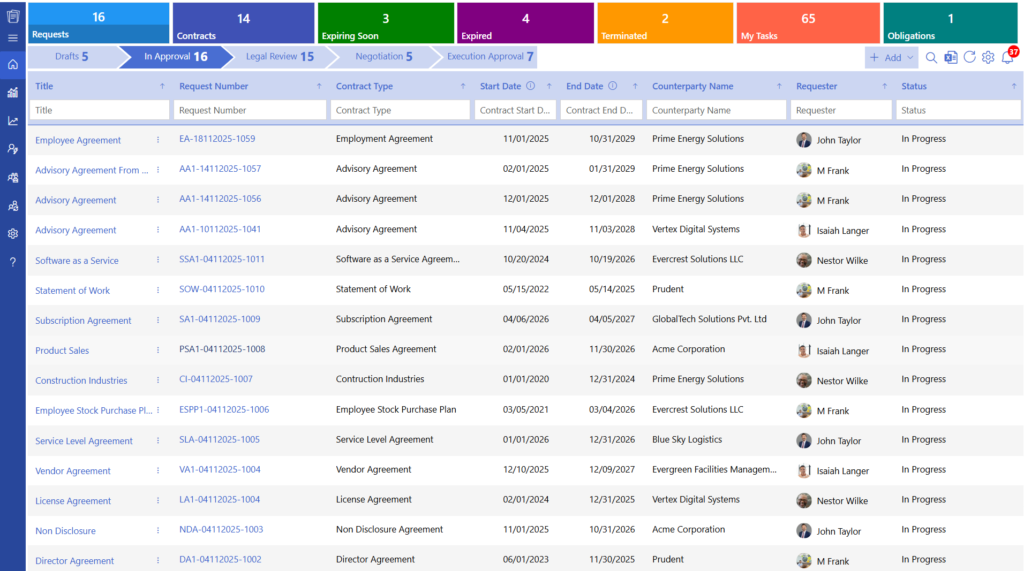
CLM 365 is a contract lifecycle management solution built for businesses that use Microsoft 365. It uses SharePoint to store and organize contract documents, allowing legal, finance, procurement, and sales teams to access agreements within their existing Microsoft environment.
The platform combines centralized contract storage with AI-native contract analysis, document comparison, approval workflows, and contract tracking. Businesses can manage contract documents and control access based on user roles without relying on separate storage systems.
Key Features
- Centralized SharePoint contract repository
- AI-powered contract analysis
- Microsoft Word redlining
- Automated contract approval workflows
- Role-based access permissions
- Contract clause library
- Version history and draft comparison
- Contract renewal reminders
- Digital signature support
- Contract reporting and analytics
Best Known For: SharePoint-based contract storage, Microsoft 365 integration, and AI-supported contract management.
Who Should Choose It? Businesses that already use Microsoft 365 and want a contract repository connected to their existing tools and document storage environment.
Already leaning toward a Microsoft 365-native option?
CLM 365 works inside your SharePoint tenant — no new logins, no data leaving your Microsoft environment. See exactly what it can do for your team.
Ironclad is a contract lifecycle management platform that helps legal and business teams manage agreements from creation to execution and ongoing tracking. It combines contract reminder with automated workflows, allowing teams to access agreement records and follow the progress of contracts through different approval stages.
Its search, reporting, and contract version control capabilities help businesses retrieve important information and gain visibility into their contract operations.
Key Features
- Centralized contract storage
- Advanced contract search
- Drag-and-drop contract creation
- Automated approval workflows
- Contract data extraction
- Contract lifecycle tracking
- Compliance monitoring
- Obligation and deadline tracking
- Contract performance analytics
- Integration with business applications
Best Known For: Connecting contract storage with approval workflows, contract data management, and lifecycle tracking.
Who Should Choose It? Organizations that want to connect their repository with structured approval processes and agreement management.
Zoho Contracts is a reliable contract repository tool that helps businesses prepare, store, review, and track contracts. It offers templates, approval workflows, deadline reminders, and advanced features within one system.
The platform is particularly useful for businesses already using Zoho applications. Its available integrations help teams connect contract lifecycle process with other business processes and manage agreements through a more organized workflow.
Key Features
- Centralized repository
- Custom contract templates
- Contract drafting and editing
- Structured approval workflows
- Contract deadline reminders
- Zoho CRM integration
- Electronic signature support
- Contract version tracking
- Secure document access
- Contract lifecycle reporting
Best Known For: Agreement templates, approval management, and integration with the Zoho business software ecosystem.
Who Should Choose It? Small and medium-sized businesses looking for contract management capabilities that fit their existing Zoho environment.
Juro is a browser-based contract repository tool designed to help teams create, review, negotiate, and sign agreements. It provides a shared workspace where legal and business teams can work on contracts without depending entirely on separate document editors and email exchanges.
Juro combines contract storage with collaborative editing, reusable contract templates, automated workflow, and AI-assisted capabilities. This approach helps teams manage agreements while allowing multiple stakeholders to participate in the contract process.
Key Features
- Browser-based contract creation and editing
- Live collaboration
- Complete audit history
- AI-assisted drafting
- Conversational forms
- Structured approval workflows
- Conditional logic
- Internal comments
- Renewal reminders
- Single sign-on access
Best Known For: Browser-based contract creation, collaborative editing, and connected contract workflows.
Who Should Choose It? Businesses that want legal and business teams to collaborate on agreements within a shared online workspace.
Icertis is an platform designed for organizations managing large and complex contract portfolios. It helps businesses organize agreements, analyse contract metadata, monitor obligations, and manage compliance requirements across departments and regions.
Beyond document storage, Icertis focuses on extracting useful business information from contracts and connecting obligations with wider enterprise operations. Its capabilities are suited to organizations that require detailed oversight of contracts across multiple business units.
Key Features
- Enterprise repository
- AI-powered contract intelligence
- Automated obligation tracking
- Contract risk analysis
- Compliance monitoring
- Global contract management
- Enterprise system integrations
- Advanced contract search
- Portfolio-level reporting
- Contract performance insights
Best Known For: Enterprise-scale contract intelligence, obligation management, and visibility across complex contract portfolios.
Who Should Choose It? Large organizations that manage high volumes of agreements across different regions, departments, and business units.
Benefits of Implementing Contract Repository Tools
When contracts sit across emails, desktops, and shared drives, businesses lose oversight fast. Here’s what changes once a proper tool is in place.
Contract repository tools store all agreements in one central location, giving teams a clear view of their contract records. Employees can check which contracts are active, expired, or approaching renewal without contacting multiple departments. This helps managers understand the status of agreements and make informed business decisions.
Finding a specific agreement can take time when contracts are scattered across emails, shared drives, and folders. A contract repository makes it easier to search for documents using names, dates, keywords, or categories. Quick access saves time during contract negotiations, internal reviews, and contract audits.
Contract repository tools help businesses organize agreements by contract type, department, supplier, customer, or other relevant categories. Teams can locate the required files and review important details without sorting through unrelated documents. A well-organized database also supports accurate record-keeping as the number of contracts grows.
Business contracts often contain confidential details, including pricing terms, payment conditions, employee information, and supplier agreements. Access permissions allow administrators to decide who can view, redline contract, approve, or download specific documents. This reduces unauthorized access while allowing employees to work with the contracts relevant to their roles.
Contract repository tools can record activities such as document uploads, edits, and approvals. Contract audit trial help teams understand when changes occurred and who performed specific actions. Having a clear record makes it easier to review past decisions, resolve questions, and maintain accountability throughout the contract lifecycle.
Missing a renewal or expiry date can lead to unwanted contract extensions, additional costs, or interruptions to business operations. It track important dates and send reminders before key deadlines. This gives teams time to review existing terms, discuss contract changes with business partners, and decide whether to renew, renegotiate, or terminate an agreement.
Businesses often need to produce contract documents during financial checks, compliance reviews, and internal or external audits. A centralized digital archive makes it easier to retrieve the required agreements and review their terms. Organized records also help teams verify contract details, check approval histories, and respond to audit requests more efficiently.
How to Choose the Right Contract Repository Tool?
Choosing the right contract storage tool depends on your business needs, contract volume, and budget. Consider these factors before deciding.
Step 1: Company Size and Contract Volume
Choose a tool that can handle your current number of contracts and support future growth.
Step 2: Ease of Use
Look for a simple interface that helps employees upload, search, and manage contracts with minimal training.
Step 3: Integration Capabilities
Check whether the tool connects with your existing CRM, ERP, email, and other business applications.
Step 4: Security and Compliance
Look for encryption, access controls, activity logs, and security standards that protect sensitive contract data.
Step 5: Cost and Long-Term Value
Compare subscription fees, setup costs, and storage charges against the features your business needs.
Step 6: Customer Support and Training
Choose a provider that offers helpful documentation, onboarding assistance, and responsive customer support.
Step 7: Scalability
Select a platform that can support more contracts, users, storage, and complex workflows as your business grows.
Conclusion
Choosing the right contract repository tool depends on your contract volume, team requirements, security needs, and existing business systems.
Before deciding, compare the available tools, review their key features, and check how well they fit your current workflows.
The right solution should make it easier to find agreements, track important dates, control document access, and manage contracts as your business grows.
Frequently Asked Questions
Can a centralized contract accessibility support organizations managing hundreds of agreements across different entities?
Yes, depending on its architecture and search capabilities. Buyers should verify how the platform handles large contract volumes, entity-specific records, duplicate documents, complex permissions, and bulk reporting.
What is a contract repository?
It is a digital system used to store, organize, and manage contracts. Every agreement sits in one organized place instead of being spread across emails, folders, or paper files.
What types of contracts can I store?
The digital agreement storage can hold a wide range of agreements in one secure place, including sales contracts, vendor contracts, employment contracts, NDAs, lease agreements, service contracts, and partnership contracts.
How can a company move files from shared drives without losing important document relationships?
Move files while preserving folder structures, metadata, ownership details, amendments, and signed versions. Identify duplicates, define metadata rules, and test a sample migration before transferring all files.
How does specialized agreement management differ from basic file storage?
It offers contract-specific features such as metadata tracking, renewal alerts, clause search, access controls, and audit trails beyond basic file storage.