

A contract does not lose its value when it expires. Historical agreements can support contract version control, audits, dispute resolution, and future negotiations.
- Contract archiving means moving finished contracts into a safe, searchable place with clear labels and keep-or-delete rules.
- Archiving is not the same as storage. It adds retention rules, access limits, and long-term record keeping.
- Simple processes like naming rules, tags, and yearly reviews keep your contract archive easy to use.
- A proper system can keep records in one place, track key dates, and make audits less issues.
According to an EY study, nearly 90% of contracting professionals face difficulties when trying to find contracts at the right time. That is a big problem, because contracts hold your prices, dates, duties, and rights. If you cannot find them, you cannot use them.
This is where contract archiving helps. It gives every finished agreement a safe home, a clear label, and a rule for how long to keep it.
In this blog, you will learn what contract archive is, how it works, and how it differs from basic storage, why it matters, which habits work best and how CLM 365 can help you build a tidy contract archive.
What Is Contract Archiving?
Contract archiving is the process of saving signed, expired, or closed contracts in a secure place where you can find them later. The goal is not simply to keep old files. A reliable software organizes contracts so authorized users can locate and review them later.
Here are some contracts that often belong in a contract archive:
- Sales and customer agreements
- Vendor and supplier contracts
- Non-disclosure agreements (NDAs)
- Employment and contractor agreements
- Leases and property deals
- Amendments, renewals, and side letters
A good contract archive holds more than the signed file. It also keeps version history, approval emails, amendments, and key dates. That way, the full story behind a deal stays in one place.
How Does Contract Archiving Work?
The steps differ from company to company, but most digital contract recordkeeping follows the same path.
Step 1: Collects completed contracts
The process starts by gathering contracts from email, shared drives, cloud storage, local folders, and physical files. This creates a complete record of agreements that need to be archived.
Step 2: Defines contract information
Each contract is organized using relevant metadata, such as contract type, parties involved, effective dates, expiration dates, contract value, and owner. This information makes archived contracts easier to search and identify.
Step 3: Sets retention rules
Businesses define how long different types of contracts should be retained based on legal, regulatory, and internal requirements. Retention periods can vary depending on the contract type and business needs.
Step 4: Archive inactive contracts
Once a contract expires, terminates, or is no longer actively managed, it moves into the archive. The archived version should remain protected from unauthorized changes to preserve its historical record and version history.
Step 5: Controls contract access
Access permissions determine who can view, download, or manage archived agreements. Sensitive information can be restricted to authorized legal, procurement, finance, or business teams.
Step 6: Reviews archived records
Archived contracts are reviewed periodically to confirm that they remain accessible, secure, and within their retention period.
Archive contracts without losing their history
CLM 365 helps preserve completed agreements and their versions while making them easy to access.
Contract Storage vs. Contract Archiving: What's the Difference?
To understand contract archiving better, it helps to first distinguish it from contract storage. Both involve storing contracts in a repository, but they differ in when they are used and what happens to the contracts afterward.
Aspects | Contract Storage | Contract Archiving |
Purpose | Stores contracts that teams need for ongoing work, review, approvals, or reference. | Preserves completed or inactive contracts for long-term reference and recordkeeping. |
Contract status | Usually includes contracts that are active, in draft, under review, or awaiting approval. | Usually includes contracts that are expired, terminated, completed, or no longer actively managed. |
Edits | Contracts can usually be edited, updated, or replaced as part of the contract lifecycle. | Archived contracts are typically locked or made read-only to preserve the historical record. |
Access | Access is generally available to teams involved in creating, reviewing, and managing contracts. | Access is usually more controlled and limited based on roles, and data sensitivity. |
Search & retrieval | Designed for quick access to contracts that teams are actively working with. | Designed to help users locate historical contracts when needed for audits, or references. |
Main goal | Supports speed, collaboration, and ongoing contract management. | Supports record preservation, security, compliance, and historical reference. |
A simple way to remember it, storage is your desk, and archiving is your filing room. You keep what you need today on your desk. You move finished work to the filing room, where it stays neat and safe.
Why Is Contract Archiving Important?
Digital contract recordkeeping helps businesses preserve important agreements, protect contract records, meet retention requirements, and access historical contracts when needed.
Find contracts faster
A centralized archive makes it easier to locate agreements, contract clauses, dates, and contract history. Searchable metadata reduces the time spent looking through email inboxes, shared drives, and scattered folders.
Reduce legal risk
Keeping signed agreements and historical versions provides reliable evidence when contract terms are questioned. Legal teams can verify what was agreed upon, identify the correct version, and access the complete contract history when resolving contract disputes.
Prevent financial losses
Archived contracts provide valuable visibility into previous pricing, renewal terms, discounts, obligations, and service conditions. Reviewing this information can help businesses identify missed savings, avoid unnecessary renewals, and make more informed financial decisions.
Simplify audits
Audits often require businesses to produce specific contracts and supporting records within a short timeframe. A structured archive makes these documents easier to retrieve, helping teams respond faster and maintain accurate records.
Preserve business knowledge
Important contract knowledge should remain with the organization, even when employees change roles or leave. A centralized archive preserves agreements, negotiation history, and key business decisions for future teams.
Support better negotiations
Historical contracts give procurement, sales, and legal teams useful information before negotiating renewals or new agreements. Reviewing contract terms, service levels, and obligations can help teams enter negotiations with better context.
Protect sensitive information
Contracts may contain confidential pricing, personal information, financial details, and proprietary business terms. Smart access contract control helps protect archived records while ensuring authorized teams can access them when required.
Best Practices for Archiving Business Contracts
A strong contract archive should preserve the right version, protect contract history, and make records easy to retrieve when needed.
Archive the final executed version: Store the signed agreement with amendments, schedules, exhibits, and addenda.
Preserve version history: Keep a clear record of contract changes from draft to final execution.
Keep related records together: Store renewal notices, termination letters, and material amendments with the contract.
Make archived contracts read-only: Prevent changes to historical records while allowing new documents to be added when needed.
Define retention rules early: Set retention periods by contract type and establish when records should be reviewed or deleted.
Distinguish inactive from disposable: An expired contract may still be needed for audits, disputes, or future reference.
Make contracts easy to find: Use metadata such as vendor, contract type, dates, owner, business unit, and contract value.
Control access by role: Restrict sensitive contracts while ensuring authorized teams can retrieve them when needed.
Preserve renewal and termination history: Keep important notices and amendments visible alongside the original agreement.
- Review the archive regularly: Check for missing contracts, incorrect metadata, duplicates, and records past their retention period.
How Does Contract Archiving Support Compliance and Retention?
Contract archive helps businesses retain required records, control access, maintain audit trails, and dispose of contracts according to defined retention policies.
Sets clear retention periods: Define how long different contract types must be retained based on legal, regulatory, and business requirements.
Maintains an audit trail: Preserve records of contract creation, changes, approvals, execution, and archiving to support audits and reviews.
Protects contract integrity: Keep executed agreements and historical versions unchanged to provide a reliable record of what was agreed.
Controls access: Restrict sensitive contracts based on user roles, departments, and business responsibilities.
Supports faster audits: Centralized, searchable records make it easier to retrieve contracts and supporting documents when auditors request them.
Manages contract disposal: Identify records that have reached the end of their retention period and dispose of them according to approved policies.
- Preserves supporting records: Keep amendments, termination notices, renewal records, and related documents with the main agreement to maintain a complete history.
How CLM 365 Helps You Archive and Manage Contracts?
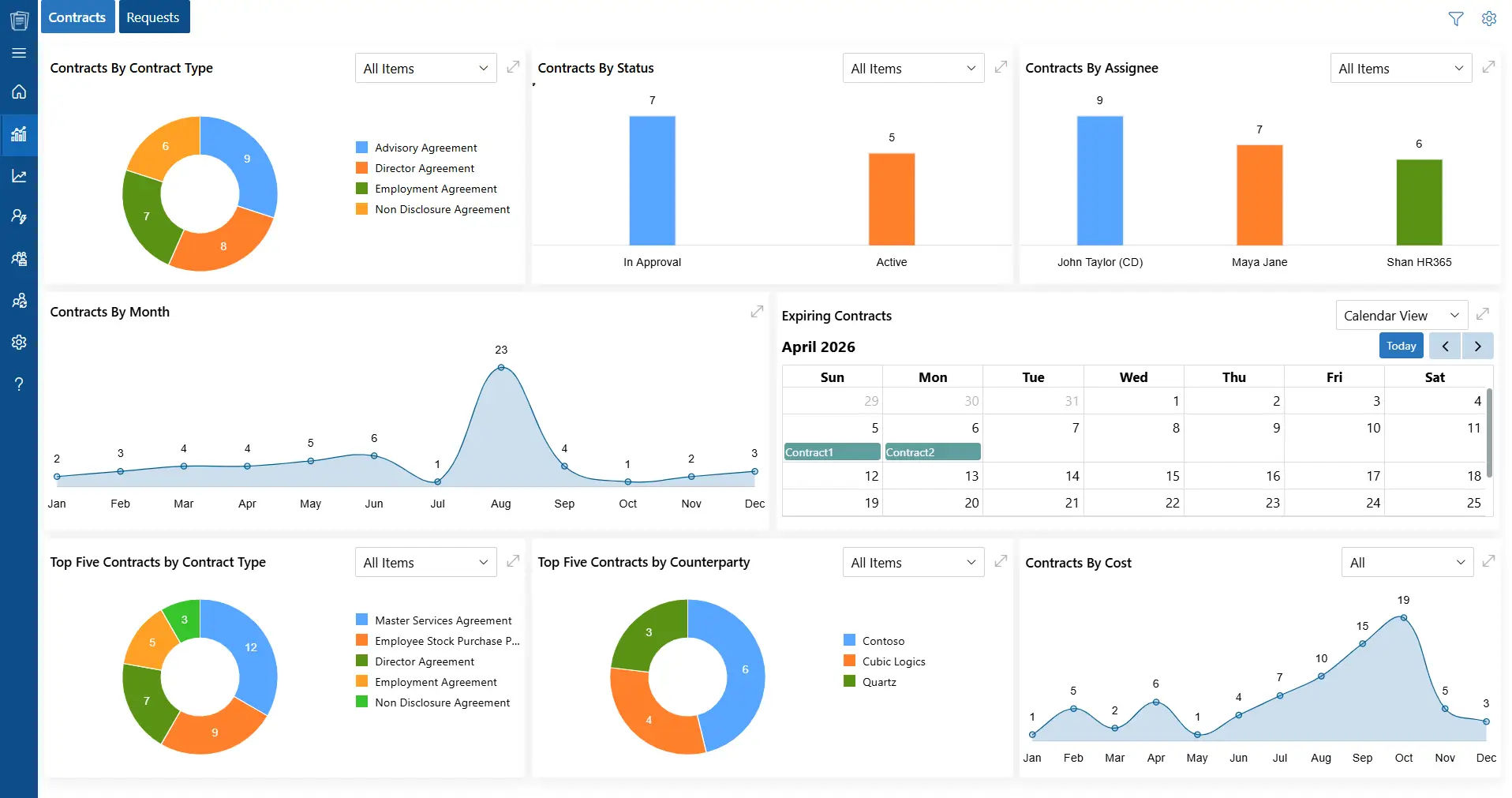
CLM 365 provides a centralized environment for managing contracts across their lifecycle, from creation and review to execution and archiving. Built within the Microsoft ecosystem, it helps teams keep agreements organized, searchable, and accessible.
Centralizes contract records: Store agreements in a structured repository instead of scattered folders, inboxes, and local drives.
Preserves contract versions: Maintain version history so teams can identify changes and access the correct version of an agreement.
Organizes contracts with metadata: Capture details such as contract type, parties, dates, owner, and status to make agreements easier to search and manage.
Manages completed agreements: Move expired or completed contracts into an organized archive while preserving their historical records.
Controls contract access: Apply permissions to help ensure sensitive agreements are available only to authorized users.
Connects with Microsoft 365: Work with contracts across familiar tools such as SharePoint, Outlook, Teams, Word, and Power Automate, without moving contract processes into a disconnected environment.
Supports contract retrieval: Quickly locate historical agreements, amendments, and previous versions when legal, procurement, finance, or other teams need them.
- Maintains a complete contract history: Keep the agreement and its changes together, giving teams better visibility into how a contract evolved throughout its lifecycle.
Conclusion
Contracts contain critical business information, and losing track of them can cost time, money, and negotiating power. A structured contract archive keeps agreements secure, organized, searchable, and accessible when needed.
Start by centralizing contracts, applying consistent metadata, setting retention rules, and protecting access. CLM 365 helps bring these processes together within the Microsoft 365 ecosystem, making it easier to store, manage, and retrieve contracts throughout their lifecycle.
Ready to simplify contract archiving? Explore CLM 365 and see how it can help your team manage contracts more efficiently.
Frequently Asked Questions
What types of contracts should be archived?
Businesses can archive expired, terminated, completed, and otherwise inactive contracts, including vendor agreements, sales contracts, NDAs, employment agreements, and procurement contracts.
When should a contract be archived?
A contract is generally archived when it expires, is terminated, or no longer requires active management. The exact timing should follow the organization’s retention policy.
How does contract archiving support audits?
It gives auditors and internal teams faster access to executed agreements, amendments, and supporting records required during an audit.
What information should be stored with an archived contract?
An archive should include the executed contract, amendments, addenda, relevant notices, version history, contract dates, parties, owner, and other records needed to understand the agreement.
Does an expired contract need to be archived or deleted?
Expired contracts should generally be archived first and retained according to the organization’s retention requirements. Expiration does not automatically mean the record can be deleted.


























