
A business deal may start with a simple conversation, but what happens when both parties remember the agreed terms differently?
- Express contracts can be written or verbal, but both parties must clearly communicate and accept the terms.
- A valid agreement generally needs an offer, acceptance, consideration, legal capacity, and a lawful purpose.
- Clear terms help businesses manage payments, responsibilities, delivery dates, and legal risks while reducing misunderstandings.
- Using standard templates, proper reviews, approval steps, and tools helps businesses maintain better control over agreements.
Without clear conditions, even a small misunderstanding can lead to payment disputes, delayed work, or legal trouble.
An express contract helps prevent these problems by stating the agreed contract terms through spoken words or written documents.
In this blog, we will explain how these contracts work, their legal elements, key benefits, common mistakes, and practical steps for writing agreements that protect business interests.
What Is an Express Contract?
An express contract is a legally binding agreement in which two or more parties clearly state their terms through written or spoken words. Each party communicates what they agree to do, and both accept the conditions before moving forward.
Unlike agreements based mainly on behavior, explicit contracts involve direct communication between the people or businesses involved.
How Does an Express Contract Work?
An contract promise begins when one party makes an offer with specific terms. The other party reviews those conditions and accepts them.
Once the contract deliverables are met, the agreement creates duties that each party must follow.
This agreement creates clear expectations:
- The consultant must provide the agreed services.
- The company must make payments based on the stated schedule.
- Both parties must follow the conditions they accepted.
- If either party fails to meet its duties, the other may have legal remedies.
The main purpose is to make each party’s commitments clear from the beginning.
Example of an Express Contract: Manufacturing Agreement
An automotive manufacturer enters into an agreement with a component supplier to manufacture 5,000 steel brackets at $10 per unit, for a total contract value of $50,000. The agreement specifies the technical requirements, quality standards, a delivery deadline of 30 days, and payment terms of 30% upfront and the remaining 70% after delivery and inspection. Both parties review and sign the agreement before production begins.
This is an explicit contract because both parties explicitly agree to the product specifications, pricing, delivery schedule, and payment conditions.
Difference Between Express and Implied Contracts
Both express and implied contracts can create legally binding obligations. The main difference lies in how the parties communicate their agreement.
Aspect | Express Contract | Implied Contract |
Meaning | Parties clearly communicate their agreed terms. | Parties show their agreement through actions or behavior. |
Formation | Created through spoken or written communication. | Usually formed through conduct or surrounding circumstances. |
Acceptance | Communicated directly through words. | May be shown by actions. |
Terms | Clearly stated by the parties. | Inferred from behavior and the situation. |
Evidence | Emails, signed documents, or spoken statements. | Business practices, actions, and transaction history. |
Business example | A vendor signs a supply agreement with a buyer. | A customer orders and accepts a service under circumstances showing an agreement to pay. |
Legal status | Can be enforceable when legal requirements are met. | Can also be enforceable when the law recognizes an implied-in-fact agreement. |
Main challenge | Unclear wording or missing conditions. | Proving what the parties intended. |
Important distinction: An implied-in-fact contract arises from the parties’ conduct, while a quasi-contract is imposed by courts to prevent unjust enrichment without an actual agreement.
Elements of an Express Contract
An agreed contract must meet certain legal requirements before courts can treat it as a binding agreement. These elements help show that the parties knowingly entered into a valid business arrangement.
The main elements include:
- Offer: One party proposes specific terms to another. For example, a supplier offers to deliver 500 products for $8,000. The proposal should clearly identify the goods, price, and important conditions.
- Acceptance: The receiving party agrees to the offer. Acceptance must generally match the proposed terms, although special rules may apply to commercial contracts.
- Consideration: Each party exchanges something of contract value. This may involve money, products, services, or a promise to take or avoid a particular action.
- Legal capacity: The parties must have the legal ability to enter into an agreement. Age, mental capacity, and other legal restrictions can affect whether a contract is enforceable.
- Lawful purpose: The agreement must involve activities permitted by law. Courts generally will not enforce arrangements that require illegal conduct.
- Mutual assent: Both parties must show that they agree to the same essential terms. Courts generally assess this through outward words and actions rather than unspoken intentions.
- Sufficiently clear terms: The conditions must provide enough detail for the parties and, when necessary, a court to identify their duties.
Ready for a better way to handle agreements?
CLM 365 helps you manage express contracts, coordinate reviews, and track approvals through a platform built natively for Microsoft 365.
Purpose and Advantages of Express Contracts
The main purpose of an contractual consert is to establish clear responsibilities between parties before work, payment, or delivery begins. Businesses use these agreements to define expectations and create a reliable record of their commitments.
Express contracts specify each party’s duties, deadlines, contract deliverables, and payment obligations. This clarity helps everyone understand what is expected throughout the business relationship.
For example, a consulting agreement may require the consultant to submit monthly reports while the client provides feedback within five business days.
Business disagreements often arise when parties interpret promises or conditions differently. An express agreement provides a common reference for resolving questions about pricing, deadlines, and scope of work.
Express contracts define payment amounts, billing methods, contract duration, and penalties for late payments. These terms help businesses plan expenses, manage cash flow, and understand their financial commitments.
For instance, a supplier may require a 30% advance payment before production begins, reducing uncertainty about payment arrangements.
Explicit contracts document the obligations accepted by each party and may support legal claims when one party fails to meet them. The agreement helps establish whether a breach of contract occurred and what remedies may be available under applicable law.
For example, a signed service agreement can serve as evidence if a contractor fails to complete the promised work.
Clearly defined contractual terms help customers, suppliers, and business partners understand their commitments. This shared understanding supports better vendor contract management, especially when companies collaborate across multiple projects or extend their agreements over time.
Common Mistakes and Misunderstandings About Express Contracts
Even when parties communicate their intentions directly, overlooked details can create disputes. Understanding common mistakes helps businesses establish clearer agreements and manage contractual obligations effectively.
- Assuming Every Express Contract Must Be Written
Express agreements can be verbal or written. However, verbal agreements may be harder to prove, and certain transactions legally require written documentation. - Using Vague Language
Terms such as “pay soon” or “complete quickly” can lead to different interpretations. Specify exact deadlines, payment periods, and deliverables to avoid confusion. - Leaving Out Important Responsibilities
Failing to define who provides materials, approves work, or covers additional costs can cause disagreements. Clearly assign each party’s duties before executing the contract. - Assuming a Signature Makes Every Term Valid
A signed contract does not make illegal or unenforceable terms valid. Review complex agreements carefully to identify potential legal issues. - Failing to Document Contract Changes
Informal changes to pricing, services, or delivery schedules can create confusion. Record approved changes in written amendments to clarify the updated terms. - Ignoring Renewal and Termination Clauses
Overlooking automatic renewals or notice periods can lead to unwanted expenses or missed contract termination Track these dates to take timely action. - Overlooking Payment and Penalty Terms
Unclear payment schedules, late fees, or additional charges can create financial disputes. Specify payment deadlines and applicable penalties in the agreement.
- Skipping Legal Review
Businesses may overlook risks when accepting standard templates without review. Examine important terms and seek legal advice for high-value or complex agreements.
How Clear Contract Language Prevents Business Misunderstandings?
Clear contract language defines each party’s obligations and reduces misunderstandings.
A 2025 report by World Commerce & Contracting found that nearly 90% of business users consider contracts difficult or impossible to understand, highlighting the need for clearer agreements.
Clear Language Prevents Misunderstandings
Vague phrases such as “within a reasonable period” can create different expectations. Stating “within 14 calendar days after written approval” gives both parties a shared understanding of the expected timeline.
Simple Wording Helps Teams Understand Their Duties
Sales, finance, procurement, and project teams rely on agreements to guide their work. Plain language helps employees understand their responsibilities and follow the required procedures.
Precise Statements Help Settle Disputes
Clearly documented commitments provide a reference when disagreements arise. Recording important promises in the final agreement also reduces dependence on informal conversations.
Specific Conditions Support Business Planning
An agreement should explain what each party must do, when an activity should occur, and how it will be completed.
Describe the Work or Services
Specify the products or services included, expected results, and any exclusions. This helps prevent confusion about what each party has agreed to provide.
Set Out Payment Details
State the total cost, payment method, billing schedule, and any additional charges. For example, a consulting agreement may divide payments across project stages.
State the Duration and Exit Conditions
Explain when the agreement starts and ends, how contract renewal process works, and when either party can terminate it. Include any required notice period and outstanding payment obligations.
Include Relevant Legal Clauses
Add suitable provisions for confidentiality, intellectual property, contractual liability, warranties, and dispute resolution based on the transaction’s needs.
Review the Agreement Before Signing
Check that all responsibilities, prices, and dates are correct. Replace vague wording with clear instructions and seek legal advice for complex transactions.
Obtain Approval and Store the Agreement
Collect the required signatures or other legally valid approvals. Store the completed document securely so authorized employees can access it when needed.
Best Practices for Writing an Express Contract
Writing an express contract involves defining obligations, setting clear payment terms, and addressing potential risks to prevent misunderstandings between both parties.
1. Identify the parties and confirm signing authority
Use the correct legal names and business details of both parties. Verify that the people signing the contract have the authority to enter into the agreement on their behalf.
2. Define the agreement clearly
Describe what each party must deliver, the expected outcomes, and the deadlines. If either party needs to change the agreed scope, specify how the change will be reviewed and approved.
3. Set clear payment terms
State the total fee, currency, invoice requirements, payment deadlines, and applicable taxes. If payments depend on milestones, explain what must happen before each payment becomes due.
4. Record mutually agreed terms
Include terms both parties have accepted rather than relying on verbal discussions or unapproved proposals. If negotiations change a condition, update the contract and obtain approval before signing.
5. Plan for potential disputes
Consider what happens if a party misses a deadline, fails to pay, or does not meet its obligations. Define the remedies, notice periods, and contract termination conditions that apply if problems arise.
6. Review clauses together
Check that payment, delivery, renewal, termination, and liability clauses work together. Look for conflicting dates, unclear terms, or references to missing attachments that could cause disagreements later.
7. Verify the final contract before signing
Compare the final version with the terms approved by both parties. Check signatures, attachments, and applicable legal requirements, including electronic signatures or registration where relevant. Store the signed copy where authorized teams can access it when needed.
Manage Entire Contract Lifecycle with Reliable Systems
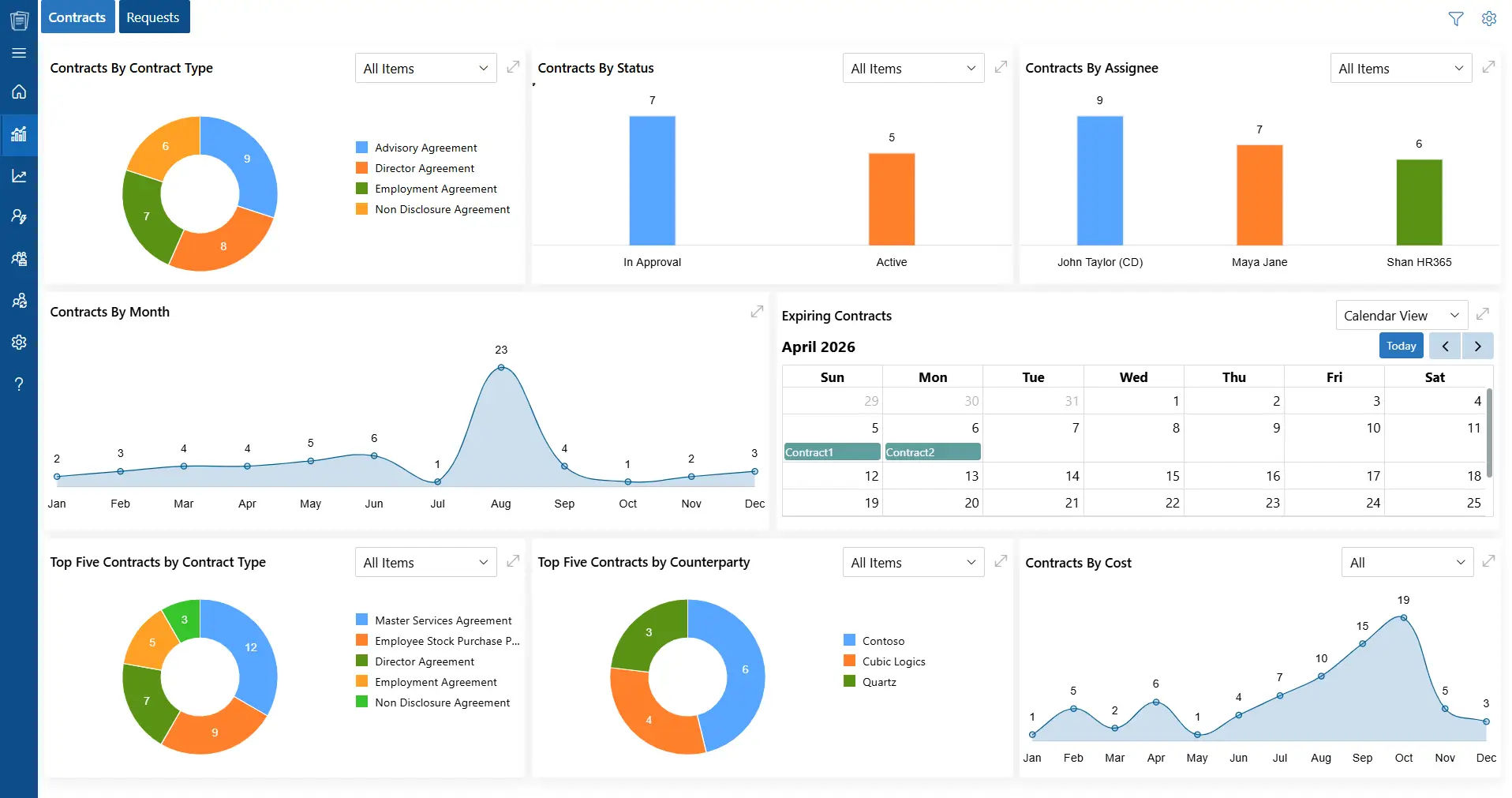
Express contracts rely on clearly stated promises, making accurate documentation and easy access to agreed conditions essential.
CLM 365 integrates with Microsoft 365 apps to help businesses draft these agreements using a clause library, coordinate reviews through automated workflows, and organize approved documents.
AI-powered capabilities can assist contract-related tasks, while centralized records help teams refer to agreed responsibilities, payment arrangements, and other important provisions throughout the business relationship.
Ready to manage contracts with confidence? Explore CLM 365’s features with no credit card details required.
Frequently Asked Questions
Can an express contract be changed after signing?
Yes. Parties can generally change an agreement when they mutually accept the new conditions and meet any applicable legal or contractual requirements.
What happens if someone breaks an express contract?
When a party breaches a valid agreement, the affected party may seek legal remedies. Depending on the circumstances, these may include financial damages, cancellation, or a court order requiring performance.
Are explicit agreements always enforceable in court?
No. Explicit agreements must satisfy legal requirements such as mutual assent, consideration, legal capacity, and lawful purpose.
How can a clause library help draft express contracts?
A clause library helps drafting teams select approved wording instead of starting from scratch.
Why should an express contract define the scope of work?
A defined scope reduces confusion about expected work and helps parties identify requests that fall outside the original arrangement.