
Contract Duration: How to Define, Manage, and Track Contract Terms

A contract does more than record an agreement between two parties. It sets expectations, defines contract deliverables, and establishes how long a business relationship will last.
- Define clear contract terms: Set the start date, end date, renewal rules, and termination conditions before signing an agreement.
- Choose the right duration: Consider business goals, costs, risks, and project timelines when deciding how long a contract should last.
- Track important deadlines: Record expiration dates, set advance reminders, and assign owners to manage renewals and avoid missed deadlines.
- Leverage a system: It helps centralize agreements, track key dates, and manage renewals more effectively.
When teams overlook key dates, they may face unexpected renewals, missed deadlines, service gaps, or extra costs.
Understanding contract duration helps businesses plan their commitments, review agreements on time, and make better decisions about renewals
This guide explains how contract duration works, what to include in a duration clause, how to set up and track them.
What Is Contract Duration?
It is the period during which a contract remains in effect, based on the terms agreed upon by the parties. It usually covers the time between the contract’s effective date and its contract expiration date, unless the agreement ends earlier under its termination terms.
For example, a company signs a software subscription agreement on January 1, 2027, for a period of 12 months. If the agreement takes effect on that date and contains no early termination or automatic renewal provisions, its initial term will generally end on December 31, 2027.
However, not every agreement follows the same timeline. Some contracts last for a few weeks, while others continue for several years or renew automatically unless one party gives notice.
Contract Duration vs Contract Term: What's the Difference?
Contract duration and contract term are often used interchangeably, but their meanings can vary depending on the agreement. Understanding the difference helps clarify how long a contract lasts and the conditions that govern it.
Aspects | Contract Duration | Contract Term |
Meaning | The period a contract remains active. | The conditions and rules stated in a contract. |
Focus | How long the agreement lasts. | What the parties agree to do. |
Examples | A contract lasts for three years. | Payment terms, delivery duties, renewal rules, and confidentiality. |
Purpose | Defines the contract’s time period. | Defines the rights, duties, and conditions of the parties. |
The wording can vary by contract and jurisdiction, so businesses should read the agreement’s definitions rather than rely on the labels alone.
What Determines the Duration of a Contract?
The right duration depends on the work, risks, and contractual obligation involved. Businesses should consider the following factors before agreeing to a contract period.
- Business goals: Short terms suit temporary projects, while longer terms support ongoing services.
- Legal requirements: Industry rules may affect contract length, renewal, and termination.
- Costs and commitments: Longer contracts may offer better rates, while shorter ones provide more flexibility.
- Project timelines: Set the duration based on project deadlines and delivery needs.
- Negotiating power: Customers may prefer shorter commitments, while suppliers may want longer agreements.
- Risk exposure: Consider changes in prices, market conditions, and business needs.
Example: A company may choose a one-year supplier contract to review prices regularly, while a custom equipment project may require a longer term for installation and maintenance.
What are the Different Types of Contract Duration?
Contracts can follow different timelines based on the business relationship and the parties’ needs.
Fixed-term contracts
A fixed-term contract has a defined start and end date. Both parties know when the initial period begins and when it is scheduled to end. The agreement ends on the stated date unless the parties extend it or another clause changes the outcome.
Indefinite-duration contracts
An indefinite-duration contract has no set expiration date. It continues until a party ends it under the agreement’s termination rules or another event brings it to an end.
Automatically renewing contracts
An automatically renewing contract extends for another period unless one party gives notice within the required time.
Contracts with extension options
Some contracts give one or both parties the right to extend the initial period. The agreement should state who can request an extension, how much notice they must give, and whether the price or other terms will change.
Perpetual agreements
A perpetual agreement may grant rights or set duties that do not have a fixed end date. For example, some intellectual property licenses may grant ongoing rights, subject to the agreement’s conditions.
Take control of every contract deadline.
CLM 365 helps your team track contract duration, monitor renewal dates, and manage extensions, so important deadlines never go unnoticed.
How Is Contract Duration Established in an Agreement?
Agreement duration is set through the agreement between the parties. They should agree on the key dates, the initial period, renewal rules, and conditions that could end or extend the relationship.
Step 1: Set the effective date. State when the agreement becomes legally effective. This date may be the signing date or another date chosen by the parties.
Step 2: Define the start of performance. The date when work or services begin may differ from the effective date.
Step 3: Set the initial period. State whether the agreement lasts for a fixed number of days, months, or years. Use clear dates where practical.
Step 4: Define renewal rules. Explain whether the contract renews automatically, requires a contract approval workflow, or allows an extension at one party’s option.
Step 5: Set notice deadlines. State how much advance notice a party must give to stop renewal or end the agreement. Make the notice method clear.
Step 6: Connect the duration to termination rights. Explain whether either party can end the contract early and what conditions apply.
Step 7: Review the final wording. Legal and business teams should check that the dates and related clauses do not conflict with one another.
These steps help reduce confusion when the agreement reaches a renewal or expiration date.
What Should You Include in a Contract Duration Clause?
A contract duration clause explains how long the agreement lasts and what happens when the period ends. Key elements include.
- Effective date: The date the agreement takes effect.
- Initial duration: The length of the first contract period.
- Expiration date: The date the initial term ends, where applicable.
- Renewal conditions: Whether the parties must approve an extension or the agreement renews automatically.
- Notice period: The deadline for giving notice of non-renewal or termination.
- Extension options: Any right to extend the agreement and the steps required to use that right.
- Early termination: The events that allow a party to end the agreement before its scheduled expiration.
- Surviving obligations: Duties that continue after expiration or termination, such as certain confidentiality, payment, or recordkeeping obligations.
How Do You Determine the Right Duration for a Contract?
The ideal contract duration depends on the agreement’s purpose, cost, and risk. Shorter terms suit temporary projects or trial services, while longer terms work well for ongoing services. Before deciding, ask these questions.
- How long will the product, service, or project be needed?
- Will the price or business need change over time?
- Does either party need to invest money before receiving value?
- Can the agreement be ended early if circumstances change?
- How much notice will the team need to review the contract?
- Are there legal or industry rules that affect the term?
For example, a business testing a new service may start with a three-month agreement. After reviewing contract performance and cost, it can decide whether to renew or negotiate a longer commitment.
7 Practical Tips to Set Up and Manage Contract Duration
Managing agreement duration means tracking key dates, reviewing renewal terms, and making timely decisions. These tips help avoid missed deadlines and unwanted renewals.
1. Work Backward From the Renewal Deadline
Start reviewing contracts well before the notice deadline. If a contract requires 60 days’ notice, begin the review at least 90 days before renewal to allow time for a decision.
2. Know What Happens If You Do Nothing
Check whether the contract expires or renews automatically. Review the renewal clause to avoid unwanted extensions and unexpected costs.
3. Choose a Duration That Fits Your Needs
Consider your budget, business goals, and flexibility before agreeing to a term. Long-term contracts may suit stable needs, while shorter terms offer more flexibility.
4. Track Expiration and Notice Dates Separately
Record both dates, as the cancellation deadline may fall well before the contract ends. Assign an owner to monitor each deadline.
5. Review Performance Before Renewing
Check service quality, costs, usage, and unresolved issues before extending a contract. Use these findings to renew, renegotiate, or exit.
6. Update Records After Every Contract Change
After signing an contract amendment or extension to the contract, update the contract dates and link the latest document to the original agreement.
7. Address Missing Dates and Unclear Renewal Terms
Flag contracts with missing dates, unclear renewal clauses, or no assigned owner. Review these gaps with the relevant legal or procurement team before the next deadline.
Manage Contract Duration Effectively
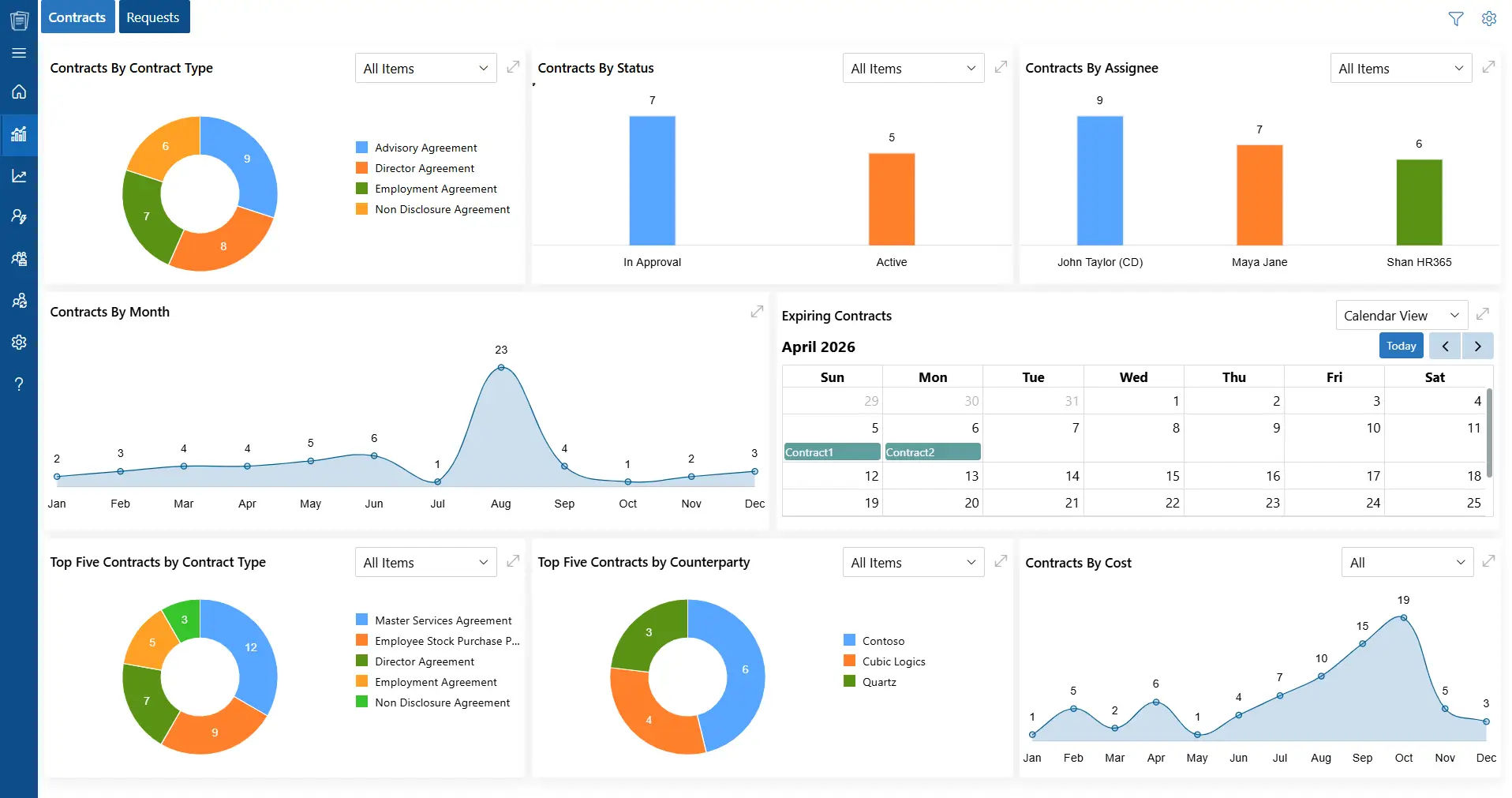
CLM 365 helps manage entire contract lifecycle and it integrates with Microsoft 365 apps to help teams track contract dates, monitor renewal deadlines, and manage contract duration more effectively.
- Central contract repository: Teams can access approved agreements and related records from one place, based on their access rights.
- Date tracking and reminders: Systems can record effective dates, expiration dates, and renewal deadlines, then alert the right people before action is due.
- Searchable contract data: Teams can search for agreements by supplier, customer, contract type, owner, or date, depending on the system’s features and data quality.
- Renewal workflows: A system can help route agreements for review and approval before a renewal or extension.
- Amendment history: Teams can link changes to the original agreement and review earlier versions when needed.
- Reporting and visibility: Reports can show upcoming renewals, expired agreements, and contracts that need attention.
These features can help teams move from manual date tracking to a more consistent review process. However, the results depend on accurate contract data, well-defined contract management workflows, and people who act on alerts.
Conclusion
Contract duration affects more than the start and end of an agreement. It can shape spending, supplier relationships, service continuity, and the decisions teams make about future commitments.
As contract volumes grow, The right software can support this work through searchable records, date tracking, reminders, and renewal workflows.
The key is to pair the right tools with clear responsibilities and accurate contract data.
Frequently Asked Questions
What is the difference between contract duration and contract expiration?
Contract duration refers to the period a contract remains in effect. Contract expiration is the point when the agreed term ends, unless renewal or another provision changes the outcome.
Can contract duration be changed after signing?
Yes. The parties can often change the duration through a written amendment or extension, subject to the agreement’s terms and applicable law. Both parties should follow the required approval and signing process.
How far in advance should a contract renewal be reviewed?
The review should begin early enough to meet the notice deadline and allow time for negotiation and approval. For example, a contract with a 60-day non-renewal notice period should be reviewed well before those 60 days begin to run out.
Who is responsible for tracking contract expiration dates?
Responsibility depends on the company. A contract owner, legal team, procurement team, or business operations team may manage the process.
How can businesses track contract duration across many agreements?
Businesses can maintain a central contract register or use contract software to record key dates, assign owners, set reminders, and monitor renewals. The accuracy of the records and the team’s response to alerts remain important.


























