Commercial Contract: Types, Key Clauses, Risks, and Practical Tips

Every year, companies spend significant budget sending employees to meetings, conferences, client visits, and project sites.
- Choose the right contract type: Sales, service, supply, licensing, and partnership agreements serve different needs.
- Define clear terms: Specify payments, deadlines, liability, termination, and dispute resolution.
- Address risks early: Prevent missed deadlines, unexpected costs, compliance issues, and disputes.
- Manage contracts after signing: Centralize documents, automate reminders, track obligations, and review agreements regularly.
From unclear contract terms to missed renewal dates, small contract mistakes can lead to financial losses, legal disputes, and damaged business relationships.
According to research by World Commerce & Contracting, poor contract management can cost organizations an average of 9% of their annual revenue. This shows why businesses need to pay attention to how they create, review, and manage their agreements.
In this blog, we’ll explore the different types of commercial contracts, important clauses, common risks, and practical ways to manage agreements throughout their lifecycle.
What are Commercial Contracts?
A commercial contract is a legally binding agreement between two or more parties that defines the terms of a business relationship or transaction. It outlines the rights, responsibilities, payments, and obligations that each party agrees to follow.
Businesses use these agreements when buying products, selling goods, hiring service providers, licensing technology, or managing vendor agreements.
For example, a manufacturing company may sign a contract with a supplier to purchase raw materials every month. The agreement may specify the quantity, price, delivery schedule, quality standards, and payment terms.
Commercial Contracts vs. Business Contracts. What's the Difference?
Commercial and business contracts overlap, but commercial contracts typically focus on transactions, while business contracts have a broader scope.
Aspect | Commercial Contracts | Business Contracts |
Scope | Generally focuses on external commercial transactions and relationships. | Broader category covering various agreements used in business. |
Primary purpose | Governs transactions involving goods, services, partnerships, licensing, or trade. | Defines rights, responsibilities, and terms across different business activities. |
Common examples | Sales, service, supply, licensing, distribution, and partnership agreements. | Employment agreements, sales contracts, supplier agreements, service agreements, and internal business arrangements. |
Focus | Commercial transactions and relationships with external parties. | Broader business operations, relationships, and transactions. |
Overlap | Can be considered a type of business contract. | May include commercial contracts as one category. |
Looking for a better way to manage your commercial agreements?
CLM 365 helps you securely store, organize, track, and manage all your contracts in one centralized platform
What are the Different Types of Commercial Agreements ?
Businesses enter into different agreements based on what they buy, sell, deliver, or share. Understanding the main types helps companies select the right terms for each transaction.
- Joint venture agreements define how two or more parties collaborate on a business venture.
- Shareholders’ agreements establish the rights, responsibilities, and obligations of shareholders.
- Business purchase agreements outline the terms for acquiring a business or its assets.
- Purchase and supply agreements define terms for buying and supplying goods or materials.
- Sale and distribution agreements govern the sale and distribution of products.
- Franchise agreements set the terms for operating a business under another company’s brand.
- Non-disclosure agreements protect confidential business information from unauthorized disclosure.
- Employment contracts define the terms, responsibilities, and conditions of employment.
- Intellectual property agreements govern the licensing or assignment of intellectual property rights.
- Partnership agreements establish how partners share responsibilities, profits, and liabilities.
- Loan and finance agreements define the terms and conditions of business financing.
Why are Commercial Agreements Important for Businesses?
A business deal may begin with a conversation, but a contract creates a documented record of the agreement. It helps both parties understand their contractual obligation and provides a reference when questions arise.
- Contracting party details: Legal names, registered addresses, contact information, and authorized signatories.
- Scope of work or products: Clearly define the goods, services, scope of work, specifications, quantities, and quality standards.
- Pricing and payment terms: Specify contract value, payment schedule, taxes, payment methods, late fees, and price adjustments.
- Contract duration: State the start and end dates, renewal terms, and termination notice requirements.
- Roles and responsibilities: Clearly outline each party’s obligations, dependencies, and responsibilities.
- Performance and delivery requirements: Define delivery dates, quality standards, contract milestones, service levels, and acceptance criteria.
- Approval and signatures: Identify authorized approvers and signatories, signature dates, supporting documents, and valid e-signature methods.
Common Clauses in Commercial Contracts
While the main contract terms describe the business deal, clauses explain how specific situations should be handled. The right clauses depend on the transaction, the industry, and the laws that apply.
Contract clause | What it covers |
Confidentiality | Protects private business information shared between parties. |
Indemnification | Defines when one party must cover certain losses or claims involving another party. |
Limitation of liability | Sets limits on certain financial claims or damages. |
Termination | Explains when and how either party can end the agreement. |
Dispute resolution | Describes how disagreements will be handled through negotiation, mediation, arbitration, or courts. |
Force majeure | Addresses certain events outside a party’s control that affect contract performance. |
Which Clauses Deserve Extra Attention?
Not all contract clauses carry the same risk. Focus on terms such as termination, liability, payment, intellectual property, warranties, data protection, and dispute resolution, depending on the agreement. Always review clauses in the context of the specific business relationship.
Still reviewing contract clauses manually? It’s time-consuming.
See how AI helps identify key clauses, highlight potential risks, and speed up reviews while keeping your contract data secure.
What are the Risks of Poor Commercial Contract Management?
According to World Commerce & Contracting’s 2025 research, only 39% of commercial practitioners believe their contracts deliver the desired outcomes. This highlights the gap between signing an agreement and receiving the value businesses expect.
Missed Contract Renewals
Contracts often contain renewal dates and notice periods that require action before expiration.
If a business misses the cancellation deadline, it may remain tied to a service it no longer needs.
For example, a company may continue paying for unused software because it failed to cancel before automatic renewal.
Financial Losses
Poor contract tracking can lead to incorrect payments, missed discounts, unexpected charges, and lost revenue.
A business may continue paying an outdated supplier rate even after the agreement allows a lower price.
Without regular reviews, these costs can continue for months.
Unfulfilled Contract Obligations
Every agreement creates responsibilities for the parties involved.
When businesses fail to track those responsibilities, they may miss deliveries, reports, service commitments, or payment deadlines.
These failures can lead to customer complaints, penalties, or contract disputes.
Legal and Compliance Problems
Businesses may face legal issues when contracts contain outdated terms or fail to reflect current rules.
For example, a vendor agreement may not include required data protection duties.
Failing to follow contractual or legal requirements can result in claims, fines, or other business costs.
Poor Supplier Performance
Without performance tracking, businesses may not notice repeated delivery delays or service problems.
A supplier may consistently miss agreed deadlines while the purchasing team continues renewing the contract.
Reviewing contract performance helps businesses decide whether to renegotiate terms.
7 Effective Steps for Managing Commercial Contracts
Managing trade contracts effectively requires more than storing signed agreements, it means having a clear process throughout the contract lifecycle.
Step 1: Keep every contract in one place
After years of managing contracts, I’ve learned that scattered documents create unnecessary work. Store signed agreements, amendments, drafts, and supporting documents in one central repository.
Step 2: Start with proven contract templates
Don’t draft routine contracts from scratch every time. Use approved templates for common agreements such as NDAs, sales contracts, and service contracts.
Step 3: Make approval responsibilities clear
A contract shouldn’t sit in someone’s inbox simply because no one knows who needs to review it. Define approval workflows based on contract value, department, risk level, and specific terms.
Step 4: Track obligations, not just expiration dates
An agreement can create dozens of responsibilities long before it expires. Track payment deadlines, renewal dates, delivery milestones, reporting requirements, notice periods, and other obligations.
Step 5: Review contract performance before renewal
Before renewing an agreement, look at how well both sides performed. Check delivery timelines, service levels, payment history, costs, and contract compliance with the agreed terms.
Step 6: Maintain a clear history of contract changes
Business transaction contracts rarely stay unchanged. Prices, scope, timelines, and obligations can change through amendments.
Step 7: Automate repetitive contract tasks
Manual tracking works for a small contract portfolio, but it becomes difficult as volumes grow. Contract management software can automate reminders, approvals, obligation tracking, document storage, and reporting.
Smarter Way to Manage Commercial Contracts
Managing commercial agreements across emails, spreadsheets, and separate folders can make everyday contract work difficult.
CLM 365 is built within the Microsoft 365 environment. It helps businesses manage agreements from creation and review to approval, signing, obligation tracking, and renewal.
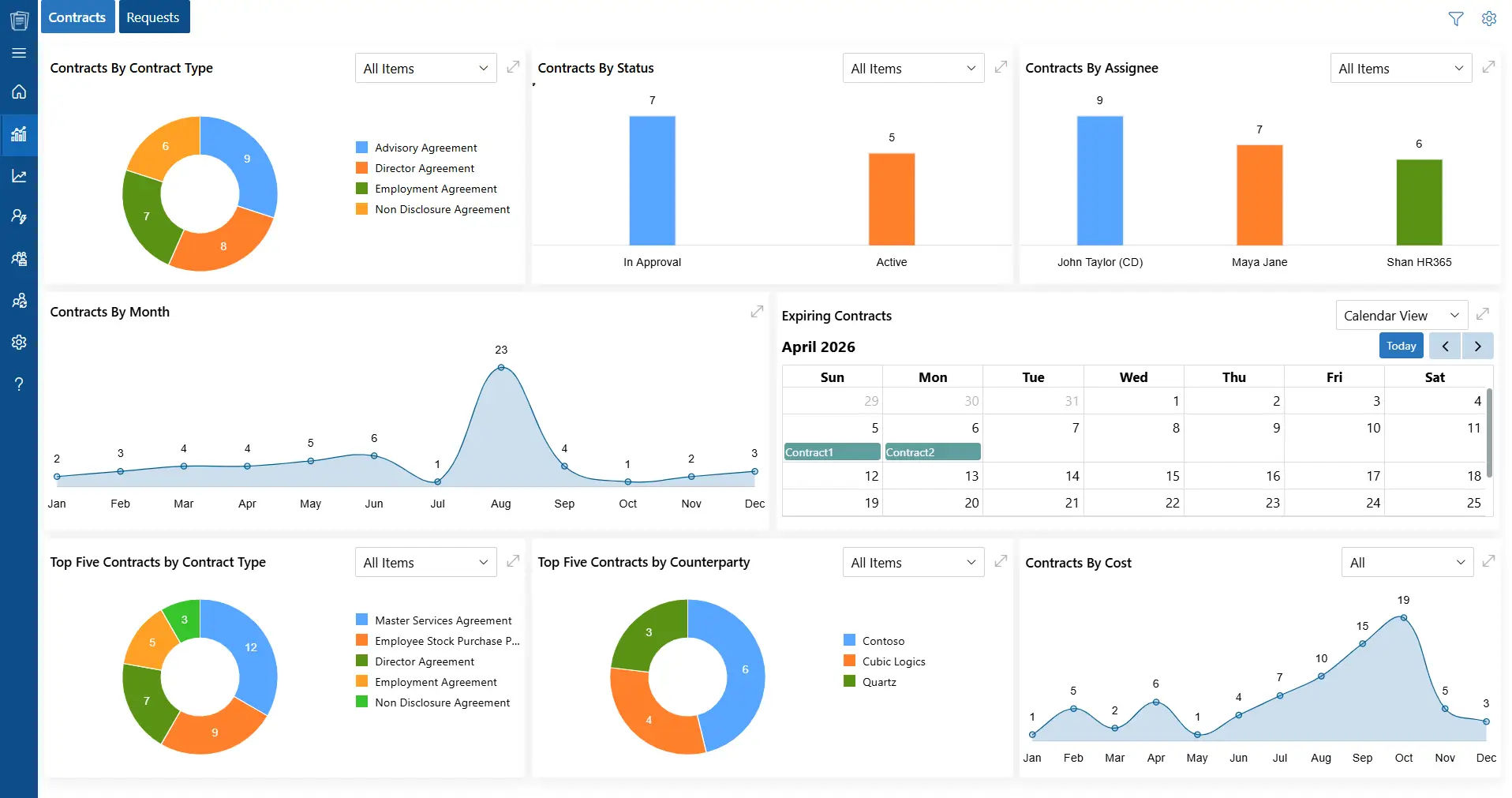
- Centralized contract repository: Store and quickly find contracts, amendments, and related documents in SharePoint.
- AI-powered contract review: Summarize agreements, identify key clauses, and flag potential risks.
- Automated approval workflows: Route contracts to legal, finance, procurement, or management based on approval rules.
- Obligation tracking: Assign responsibilities and monitor contractual tasks and deadlines.
- Renewal reminders: Get alerts for renewals, expirations, and notice periods.
- Contract dashboards: Track contract status, approvals, renewals, and key activities in one view.
- Microsoft 365 integration: Manage contracts across SharePoint, Teams, Outlook, and Word.
Instead of treating a signed agreement as a document that sits in storage, businesses can use CLM 365 to follow its progress and manage responsibilities throughout the contract lifecycle.
Conclusion
A commercial contract plays an important role in every business relationship. It defines what each party agrees to deliver, how payments work, and what happens when problems arise.
However, writing clear terms is only the beginning. Businesses must also track deadlines, review performance, manage changes, and follow contractual obligations.
With organized processes, regular reviews, and tools like SharePoint contract management, companies can reduce contract-related risks, avoid unnecessary costs, and make better decisions across their business relationships.
Frequently Asked Questions
What are the key elements of a commercial contract?
A commercial contract typically covers the parties, obligations, pricing, payment terms, delivery requirements, duration, liability, confidentiality, termination, dispute resolution, and signatures.
What should payment terms include?
Payment terms should specify the amount, payment schedule, due dates, payment method, applicable taxes, late fees, and conditions that may affect payment.
How do you draft a business transaction contracts?
Define the parties, purpose, scope, and obligations.
Structure the agreement with clear, precise language.
Include key terms such as payment, liability, confidentiality, and termination.
Identify potential risks and address them appropriately.
Have the contract legally reviewed, finalized, and signed by authorized parties.
What is an indemnity clause in a commercial contract?
An indemnity clause determines when one party must compensate the other for specified losses, claims, damages, or liabilities arising from particular events.
What should businesses consider before signing a trade contract?
Businesses should review the scope, obligations, pricing, liability, termination rights, renewal terms, compliance requirements, and potential risks before signing.