

Contract Administration Software: Complete Guide for Modern Businesses

Contracts determine how companies deal with their suppliers, partners, employees, and customers. In every contract, there are terms, obligations, deadlines, payment terms, and legal terms.
Lack of approvals and missed deadlines as well as poor visibility of contract details are common in many organizations. These problems may influence revenue, compliance and operational efficiency.
- Brings contracts, amendments, approvals, key terms, and supporting documents into one centralized system.
- Automates routine tasks such as reviews, approvals, signatures, reminders, and renewals to reduce manual work.
- CLM 365 uses AI to summarize agreements, identify key clauses, and surface risks without sending contract data to public AI services such as ChatGPT, unless explicitly configured.
- Helps teams track obligations, deadlines, service commitments, and renewal dates throughout the contract lifecycle.
This is where contract administration software becomes valuable. Rather than handling the agreements with a set of tools, businesses can operate on one platform to create, review, approve, sign, and track contracts across their lifecycle.
Modern contract admin software helps teams organize agreements, monitor obligations, and access contract data in seconds. It supports collaboration between legal teams, procurement, finance, and leadership without relying on manual tracking.
What Is Contract Administration Software?
.avif)
Contract administration software is a technology platform that is used to handle entire contract lifecycle. This involves drafting, negotiation, review, approval, execution, storage and post-signature monitoring.
It is not just a simple document storage tool as opposed to the simple document storage tools. It connects people, processes, and documents in one place so nothing gets missed and no one is left waiting for information.
The term “contract administration” specifically refers to the work that happens after a contract is signed tracking obligations, managing contract compliance, managing amendments, and making sure all parties deliver on their commitments. A strong contract admin software platform handles both the pre-signature and post-signature phases with equal depth.
How Does Contract Administration Software Work?
Contract administration software streamlines the contract lifecycle by bringing documents, workflows, approvals, obligations, and renewals into one connected process.
Step 1 — Contract Request & Initiation
A user submits a contract request on the platform. They fill in key details such as contract type, parties involved, key dates, and business unit. This will establish a formal record since the beginning and will automatically initiate the right workflow.
Step 2 — Drafting
Once the request is the system pulls from a pre-approved template library to generate the first draft. This eliminates the necessity of having to draft contracts manually and the chances of omitting standard clauses. Existing documents can also be imported into teams to be edited.
Step 3 — Collaboration & Redlining
The document is reviewed and edited by both internal and external stakeholders. Real-time tracking of changes is done. Contract redlining features such as MS Word integration allow parties to propose changes, react to changes, and have a complete history of revision without cross platform switching.
Step 4 — Approval Workflow
Once the draft is ready, the contracts administration software moves through a defined contract approval chain. It routes the contract to the appropriate reviewers according to rules that you establish like the value of the contract, the type of contract, or the department. Approvers get automatic notifications and may act anywhere.
Step 5 — E-Signature & Execution
After all approvals are complete, the contract is sent for electronic signature. Signatories receive a link, the contract is signed digitally, and the executed version is automatically saved to the central repository.
Step 6 — Storage & Tracking
The signed contract lives in a searchable, secure repository. The system tracks key dates, milestones, and obligations. Automated alerts notify relevant people before deadlines or renewals so nothing slips through the cracks.
Step 7 — Reporting & Renewal
Throughout the contract’s life, teams can run reports, monitor performance, and flag any issues. When a contract nears its end date, the software notifies teams for a contract renewal review so the decision is made deliberately — not by default.
Why Organizations Need Contract Administration Software?
Only 11% of organizations consider their end-to-end contracting process to be ‘very effective.’ — World Commerce & Contracting (WCC). That number tells a clear story. Most organizations know their contract processes are broken. They just have not yet made the move to fix them. Here are five reasons why contract administration software is no longer optional it is essential.
1. Contracts Are Getting More Complex
The number of active contracts in modern organizations is dozens or even hundreds every day. Both have their terms, parties, deadlines, and obligations. Vendor contracts, customer contracts, NDAs, employment contracts, SaaS subscriptions the sheer number of them is a management challenge. The volume increases with the growth of businesses. A manual process that had been successful in 20 contracts a year will not support 200.
2. Missed Deadlines Cost Real Expenditures
Auto-renewal clauses are among the most expensive oversights in contract management. When no one is actively monitoring contract expiration dates, contracts renew automatically sometimes locking organizations into terms that are no longer favorable. Penalty clauses kick in unnoticed. Contract admin software tracks every key date and sends proactive alerts.
3. Compliance Requirements Are Increasing
A study by PwC shows that 85% of organizations believe compliance requirements have become more complex. The regulatory demands are increasing in all industries. It can be the data privacy regulations or industry-specific regulations, but in any case, the organizations should prove that their contracts are compliant. The level of assurance cannot be offered by manual tracking. Contract administration software incorporates compliance checks into the contract workflow.
4. Slow Approvals Delay Revenue
Contracts waiting in email inboxes are deals that have not closed yet. When approval processes are unclear or inconsistent, contracts sit idle while revenue waits. Partners lose confidence. Automated approval workflows give every contract a clear path from draft to signature. Everyone knows what they need to do, and when. The whole process moves faster without anyone having to follow up manually.
5. Visibility Gaps Lead to Poor Decisions
When contract data is spread across email threads, local drives, and paper files, leadership cannot see what is happening. How many contracts are active? What are the total commitments? Which suppliers are underperforming on their obligations? Contracts administration software consolidates all of this into one view. Real-time dashboards and reporting tools give decision-makers the information they need to manage risk, plan budgets, and negotiate better terms.
Core Features of Contract Administration Software
Not all contract admin software platforms are built the same. Here are the features that matter most and why each one earns its place in a serious contract management solution.
1. AI-Powered CLM
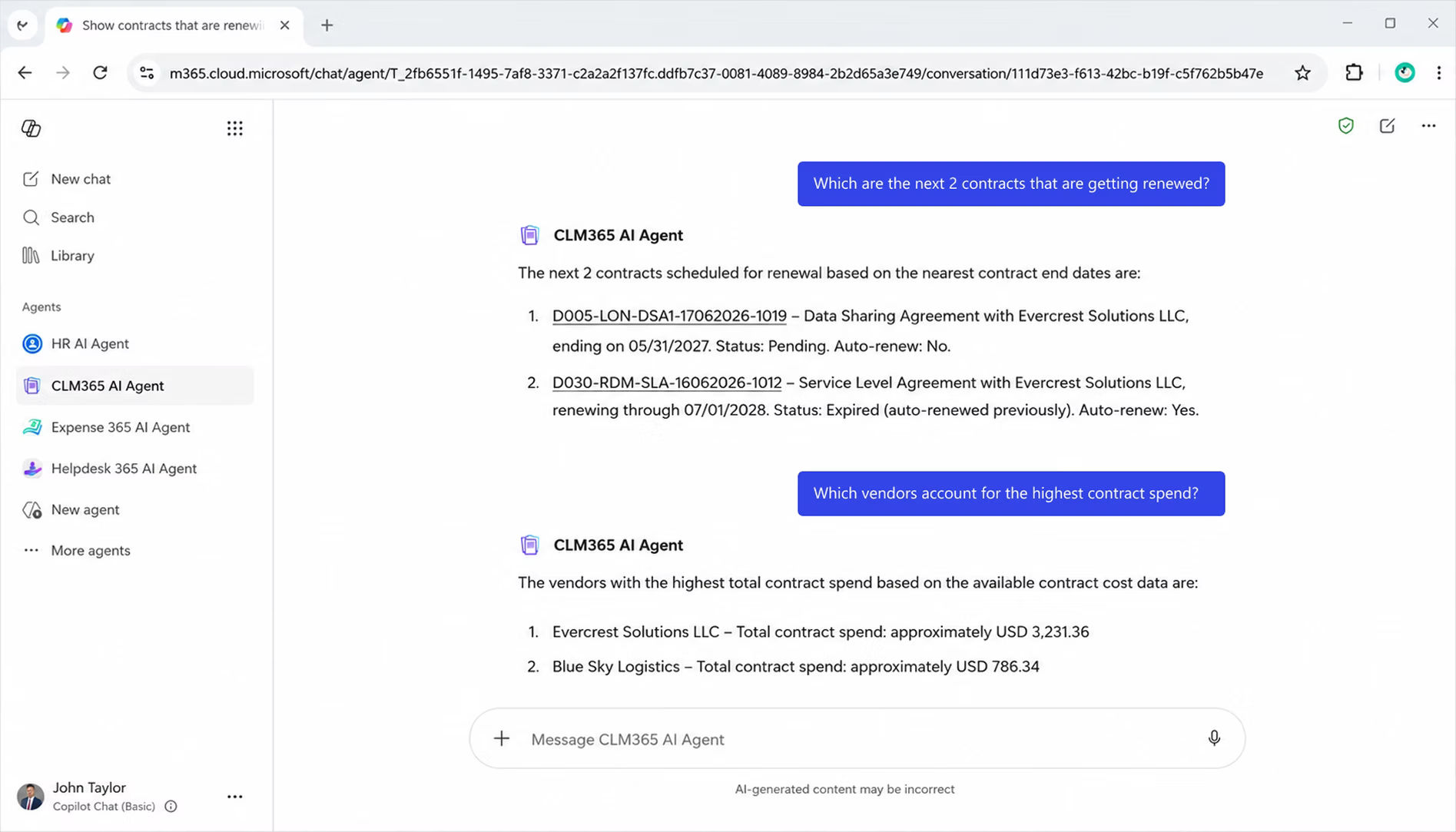
According to Thomson Reuters, 53% of organizations say they are already experiencing at least one benefit from adopting AI in their legal workflows. Artificial intelligence is changing what contract software can do. AI-powered contract management software can review contract language, flag non-standard clauses, extract key data points automatically, and surface risk insights that would take a human hours to identify manually.
2. Automated Approval Workflows
According to Gartner, lawyers in corporate departments spend nearly 25%–40% of their time on activities such as drafting, approvals, or monitoring deadlines. That is a significant portion of highly skilled, expensive time going toward administrative work. Contract automation eliminate the manual coordination that consumes so much of that time. You define the rules once based on contract type, or any other criteria and the system routes contracts to the right approvers automatically.
3. Draft Comparison
When contracts go through multiple rounds of editing especially with external parties it becomes hard to track exactly what changed between versions. Draft comparison tools put two versions of a document side by side and highlight every difference, down to a single word. This feature is especially valuable during negotiations.
4. Compliance Management
Every contract your organization signs carries compliance obligations. Data handling terms, payment conditions, reporting requirements, regulatory clauses these need to be tracked, not just signed and filed. Compliance management features in contract admin software monitor contractual obligations throughout the contract lifecycle, send alerts when action is required.
5. Redlining in MS Word
Most legal and procurement professionals work in Microsoft Word. Contract administration software that integrates directly with Word lets users redline, comment, and negotiate without switching tools. Changes made in Word sync back to the contract platform automatically. This means you get the familiarity of a tool your team already knows.
6. Central Repository to Store Contracts
A central contract repository is simply what the name implies; one location where all the contracts are stored safely. Signed agreements, drafts, amendments, supporting documents are all searchable, and are all available to the correct individuals. A contract repository tool addresses one of the most typical contract management issues, the documents are distributed in email folders. Having a central repository, it is possible to locate any contract in seconds rather than in hours.
7. E-Signature
Electronic signatures allow the signing of contracts anywhere, on any device, without the need to print a single page. They are legally enforceable in most jurisdictions and save a lot of time between final approval and executed agreement. Contract administration software with e-signature tools ensures that the whole process is contained within a single platform.
8. Version Control
Any amendment of a contract must be recorded. A contract lifecycle management solutions records all edits, the person who made them, and a full history of the first draft all the way to the final signed version. This is significant due to two reasons accountability and recovery. If a question arises about what was agreed and when, version history gives you a clear answer. And if a change is made in error, you can always look back at a previous version.
9. Role-Based Security
All the contracts do not have to be accessible to all the people within your organization. Sensitive agreements like executive compensation contracts, M&A documents, or high-value supplier deals should only be visible to people with a legitimate need to see them. Role-based security allows administrators to specify the specific people who are allowed to view, edit, approve or sign any type of contract.
10. Reporting & Analytics
Lack of governance can reduce up to 40% of a contract’s value. World Commerce & Contracting Contracts represent commitments. When your organization cannot see and measure the way those commitments are being fulfilled, you are losing value without even realizing it. Contract administration software provides reporting and analytics tools that enable you to have a real-time picture of your contract portfolio.
Benefits of Contract Administration Software
Organizations manage many agreements across vendors, clients, and teams. Contract administration software helps organize, track, and manage these contracts more effectively.
1. Shorter Contract Cycles
Contract administration software helps organizations complete agreements faster by reducing delays during approvals and negotiations. 40% of delays in closed deals are linked to poor contract management processes. Each day a contract remains un-signed, is a day revenue lost. The software reduces the cycle time by automating approvals, which allows real-time contract collaboration. Deals are recognized sooner and this is because they are closed faster.
2. Reduced Legal and Financial Risk
The unapproved language in the contracts, omission of clauses, and non-conformity of terms pose actual exposure. Contract admin software implements playbooks, needs approval of deviations, and has a full audit trail. Risk does not go away but it becomes apparent and controllable. Contracts administration software assists organizations in being more cautious with contract terms and approvals.
3. Lower Administrative Overhead
The time your legal, procurement and operations teams take to draft the contract tasks manually, in spreadsheets, add up very fast. Automation can do the repetitive tasks, so your legal teams can concentrate on more valuable tasks. The contract management software open source saves time that teams would have spent on repetitive contract related tasks.
4. Better Supplier and Partner Relationships
Delays and unsystematic contract procedures annoy the other party of a deal. Vendor lose confidence when it takes weeks to execute contracts and it is hard to track changes. A professional contract process that is smooth is a good indication of the fact that your organization is a good partner to do business with and that is important in long-term relationships. Contract administration system software supports smoother contract interactions with vendors and partners.
5. Full Contract Visibility Across the Organization
There is no sure method of the leadership teams to view what the organization has pledged by its contracts. Contract administration software open source offers dashboards and reports that enable executives to have a complete visibility over contracts. Everyone is working with the same information.
6. Stronger Compliance and Audit Readiness
When regulators or auditors ask for documentation, organizations with mature contract management can respond quickly and completely. All the contracts, a versions, approvals and signatures are recorded and available. Contracts administration software assists organizations to keep a clean record of compliance and contract audit.
7. Improved Renewal and Obligation Management
Most organizations find out about renewal of contracts only when they are already in existence. At this point, it is too late to renegotiate. Contract admin software sends proactive alerts before renewals and tracks ongoing obligations. It assists the organizations in monitoring renewals and responsibilities in progress.
Best Practices to Implement While Managing Contracts
Good contract management depends on having the right process in place, not just the right software. These practices help teams keep contracts organized, obligations visible, and decisions timely.
- Start with a complete contract inventory: Know what contracts you have, where they are stored, when they expire, and who owns them before moving them into a centralized system.
- Build workflows around real decisions: Route contracts to the right people based on factors such as contract value, risk, department, or required approvals instead of creating unnecessary approval steps.
- Keep one centralized repository: Store executed agreements, amendments, rate schedules, and supporting documents together so teams can quickly find the information they need.
- Assign obligations at signature: Identify key deliverables, payment milestones, service levels, and other commitments as soon as the contract is signed and assign clear owners.
- Set reminders for important dates: Track renewals, notice periods, reviews, rate resets, and other deadlines so important actions do not depend on memory.
- Keep contract changes documented: Maintain a clear record of amendments, revisions, approvals, and the latest agreed version to avoid confusion over which terms apply.
- Use contract data in negotiations: Review historical agreements, pricing, contract terms, and past concessions before negotiating new terms to make better-informed decisions.
- Review your contract portfolio regularly: Look for expiring agreements, missed obligations, unfavorable terms, performance issues, and opportunities to reduce costs or improve commercial terms.
CLM 365: A Best Choice for Managing Contracts
CLM 365 is a contract lifecycle management platform that is built to support organizations that is looking for secure and efficient way to manage deals. It is integrated with Microsoft 365 apps such as SharePoint, Word, Teams, SharePoint, Outlook and MS Copilot such that your teams do not need to learn a completely new interface but rather work within the tools they already know. On platforms such as G2, CLM 365 has been described as easy to use and powerful by many users.
Here is what makes CLM 365 stand out for organizations evaluating contract administration software:
- Native Microsoft 365 Integration: Contracts are created and edited in Word. Approvals occur within Teams. SharePoint is used to store contracts. No individual login, no data export, no context switching.
- AI-Powered Contract Review: CLM 365 uses AI-powered system that finds the most important data, identifies non-standard clauses, and reveals risk insights automatically. Your team has quicker reviews and does not lose accuracy.
- Automated Workflows Built for Real Processes: Approval chains, notifications and deadline alerts can be configured to reflect how your organization works in real life.
- Centralized Repository with Strong Security: All the contracts are stored in a single searchable location with role-based access controls. What they need can be found by the right people. The wrong people cannot.
- Built-In Compliance and Audit Trail: Each action, each change, each approval is recorded. In case of compliance questions, the paperwork is already available.
CLM 365 is well-suited for mid-to-large enterprises, legal departments, and procurement teams that want the power of dedicated contract management software without the friction of deploying a standalone contract management platform outside their existing technology stack.
Hear what our client says about us
“CLM 365 helped us transition from a folder-based document repository to a structured contract management system. Contracts are now easier to organize, search, and manage, while standardized processes have significantly improved consistency across our organization.”
IT Specialist, Arianna 2001 S.p.A
Italy
Conclusion
Contracts are too important to manage manually. The risk is real, the cost is measurable, and the tools to fix the problem are available right now.
Contract administration software gives organizations control over a process that, for most, has long operated on trust and habit rather than systems and oversight.
CLM 365 helps organizations manage contracts from drafting to signing and tracking. Start your 14-day free trial today. No credit card details required.
Join Our Creative Community
Frequently Asked Questions
What types of contracts can be managed using contract administration software?
Contract administration software can be used by organizations to manage vendor agreements, sales contracts, NDAs, service agreements, employment contracts, licensing agreements, and procurement contracts.
How does contract administration software improve contract visibility?
It provides dashboards and searchable databases that allow stakeholders to quickly locate contracts and review important terms.
How long does it typically take to implement contract administration software?
With help of contract administration software like CLM 365 it can be set up in minutes by uploading contracts and configuring basic workflows
How does AI help in contract administration software?
AI tools can extract key contract data, identify clauses, and highlight unusual terms during contract review.
How does contract administration software help with audits?
The software records contract versions, approval histories, and contract obligations. These records provide a detailed activity trail that auditors can review when evaluating contract compliance.
Table of Contents

Trusted by the Best

_JiluXJRGNl.svg)























