

12 Common Vendor Management Challenges and How to Solve Them in 2027

Vendor management challenges are the everyday problems that appear when you work with outside suppliers. Late deliveries, unclear tasks, surprise price increases and invoices nobody approves are typical examples. Most trace back to three causes: no clear owner, no standard process and records scattered across inboxes.
A 20-person company with 40 vendors feels this fast. Finance chases invoices. Operations chases deliveries. Poor coordination raises costs, strains relationships and slows payments and vendors notice.
This guide covers 12 common vendor management problems, what each one costs your business and how to fix it. You’ll also see where expense management software fits and where it doesn’t.
- Vendor management challenges usually come from unclear ownership, slow approvals, scattered records and uneven supplier performance
- Each problem hits cost, compliance, or cash flow, so early fixes save money
- Clear selection criteria, named owners, set standards and regular reviews solve most issues
- Expense management software covers the financial side: approvals, policies, records and reports
What Are Vendor Management Challenges?
Vendor management challenges are the problems businesses face when they select, coordinate, monitor and pay outside suppliers. They include poor communication, missed deadlines, price changes, compliance gaps and billing errors. Any business that buys goods or services from others deals with them, from a five-person agency to a global manufacturer.
Most vendor management problems point to one thing: something between your team and a supplier broke down. The cause is usually process, not people.
For example: a marketing team hires a freelancer by email. Finance never sees the contract and the invoice arrives with no purchase order. The freelancer did nothing wrong. The process simply had no step for this case.
Why Is Vendor Management Important for Businesses?
Good vendor management keeps your business running, your costs predictable and your suppliers accountable. When it works, you spot problems early. When it doesn’t, you find them on an invoice or in a missed delivery.
- Business continuity: a supplier delay shouldn’t stop your own work
- Supplier accountability: clear terms mean clear consequences when a vendor misses them
- Cost control: you see what you pay, to whom and why
- Risk reduction: you catch compliance gaps and financial trouble before they spread
- Long-term vendor relationships: reliable suppliers offer better terms to buyers who treat them fairly
Take a 30-person company that relies on one logistics vendor. A missed pickup delays 12 customer orders. Finance pays a $400 rush fee and the account manager loses two days on calls. The same vendor had already missed a pickup the quarter before, but nobody tracked it.
What Are the 12 Most Common Vendor Management Challenges?
The 12 most common challenges are poor communication, hard vendor selection, unclear responsibilities, slow onboarding, uneven performance, price changes, compliance risk, invoice delays, cross-department confusion, billing disputes, single-vendor dependence and missing policies. Read them as a checklist. Mark the ones you recognize, then start with the one that costs you the most time or money. Each one below follows the same pattern: the problem, what it costs and how to fix it.
Problem: Requests go out by email, chat and phone, so details get lost.
Impact: A vendor builds the wrong thing, or a delivery date slips and nobody notices until it’s late.
Solution: Name one contact per vendor, confirm every request in writing, and agree on response times upfront.
Problem: Every supplier claims to be reliable and a sales call can’t prove it.
Impact: A poor pick means rework, delays and an expensive switch later.
Solution: Score vendors on the same criteria: price, quality, delivery record, financial stability and references. Ask for proof, such as contacts at past clients.
Problem: Nobody’s sure who owns which supplier task or who approves what.
Impact: Work stalls while people wait on each other and vendors get conflicting instructions.
Solution: Keep a simple ownership sheet listing each vendor, its internal owner and what that owner can approve.
Problem:Tax forms, bank details and approvals bounce between inboxes.
Impact: A new vendor waits two weeks to start, or starts without being verified.
Solution: Use one onboarding checklist and one intake form and set a target, such as five working days.
Problem: A vendor delivers well in March and misses deadlines in April.
Impact: Your own customers feel the delay and you can’t predict your schedule.
Solution: Track on-time delivery and error rates monthly, share the results with the vendor and agree on fixes before the next review.
Problem: A supplier raises rates mid-year or adds fees you didn’t expect.
Impact: Budgets break. A 10% rise on a $50,000 annual contract adds $5,000 nobody planned for.
Solution: Lock prices for a set term in the contract, require written notice of changes and compare spend against budget every month.
Problem: Tax forms go missing, insurance certificates expire, or a vendor breaks your policy.
Impact: Fines, audit findings and held payments.
Solution: Keep a document checklist for each vendor with expiry dates and review it every quarter.
Problem: Invoices sit in an inbox while the approver travels or forgets.
Impact: Late payments strain vendor goodwill and can trigger late fees.
Solution: Set approval deadlines, name a backup approver and send automatic reminders. Our guide to invoice processing shows a full workflow.
Problem: Finance, procurement and operations each keep their own vendor list.
Impact: Duplicate vendors, mismatched data and no view of total spend.
Solution: Keep one shared vendor record and hold a short monthly review across the teams involved.
Problem: Wrong amounts, duplicate charges, or disputed hours.
Impact: Cash sits in limbo and the relationship sours.
Solution: Match every invoice to the purchase order and delivery record before paying and log each dispute with a date and an owner. How to check an invoice before paying
Problem: One supplier handles a critical service, such as payroll software or a key material.
Impact: If it fails or raises prices, you have no fallback.
Solution: Qualify a backup vendor for critical items and read the contract’s exit terms before you sign.
Problem: Each team handles vendors its own way.
Impact: Uneven treatment, weak accountability and gaps that auditors find.
Solution: Write a short vendor policy covering selection, approvals, spending limits and reviews. One or two pages is enough.
How Can Businesses Overcome Vendor Management Challenges?
Start with clear rules, then add tracking. Define how you pick vendors, who owns each relationship and how you measure performance. Then standardize approvals and keep records in one place. These vendor management solutions work at any company size and none of them needs special software to start.
- Establish clear vendor selection criteria: score every candidate on price, quality, references and financial health and keep the scorecard on file
- Define responsibilities for each vendor relationship, including who approves what
- Set measurable vendor performance standards, such as 95% on-time delivery, reviewed monthly
- Create consistent communication practices: one contact, written confirmations, monthly check-ins
- Standardize invoice and expense approval policies, with limits and deadlines, so every approver follows the same rules
- Review vendor risks regularly, at least once a quarter and log each finding with an owner and a due date
- Use digital systems to maintain vendor-related financial records: one shared record beats a separate spreadsheet in each department
Don’t try all seven at once. Start with steps 2 and 5, because ownership and approvals fix the most problems per hour spent. A team of 10 can do both in a week.
How Does Expense Management Software Support Vendor Management?
Expense management software covers the money side of vendor management. It collects vendor-related expense records, routes approvals, enforces spending rules and produces reports. It doesn’t manage contracts or vendor scorecards, so treat it as a financial control layer, not a full vendor relationship platform.
Vendor tools track the relationship. Expense software tracks the money that flows through it. Expense 365 is built for that financial layer. It’s native to Microsoft 365, so your team works in tools they already know. Here’s what it covers:
- Centralized expense documentation: receipts and vendor-related claims stay in one place instead of scattered inboxes
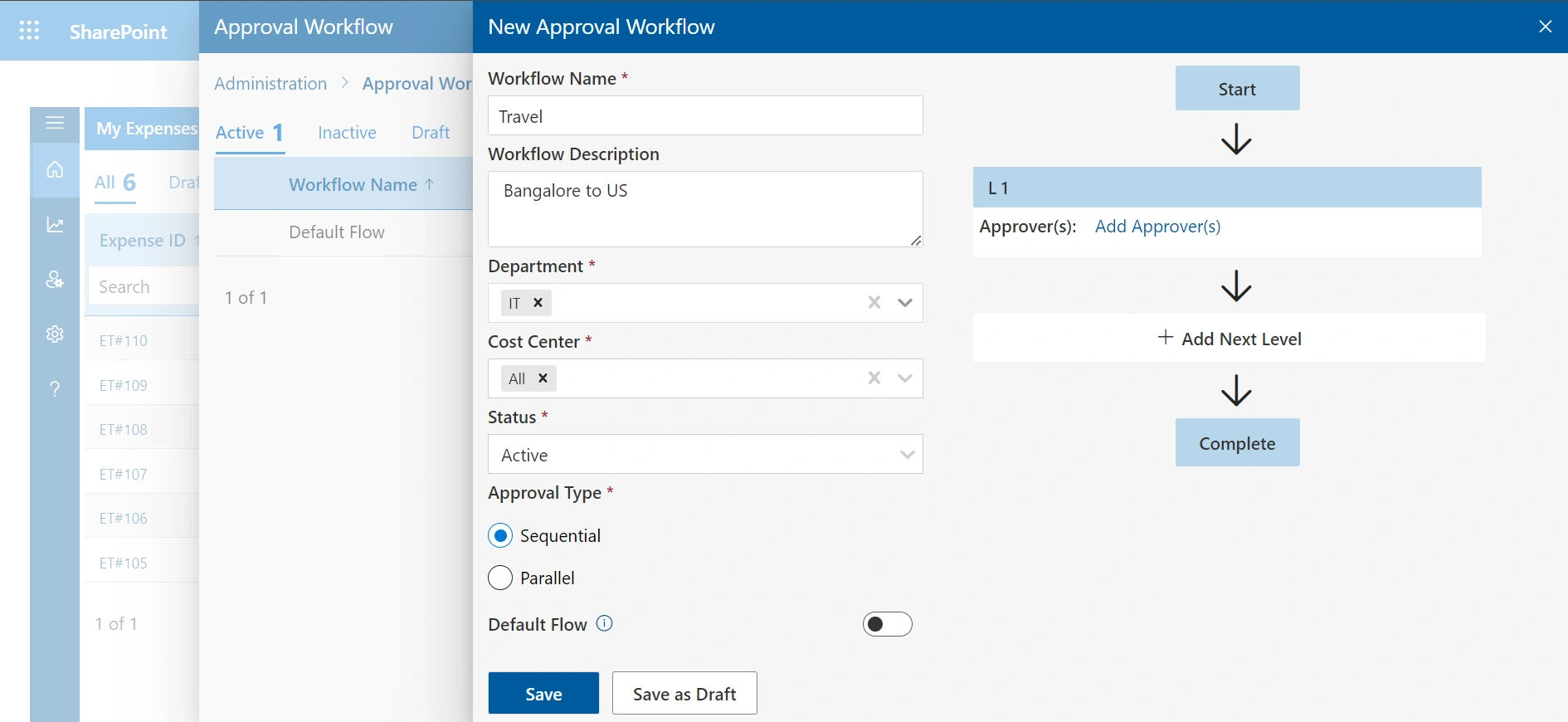
- Digital approval workflows: each request goes to the right approver with a clear status
- Expense policy controls: set limits and rules so out-of-policy spend gets flagged
- Vendor-related expense categorization: tag spend by category to see what each vendor relationship costs
- Budget monitoring: compare actual spend with budgets as it happens
- Financial reporting and audit records: every approval and change leaves a trail
What Are the Best Practices for Effective Vendor Management?
Vendor management best practices come down to accurate records, clear expectations, regular reviews and close teamwork between finance and procurement. Do these consistently and most problems get caught early.
- Maintain accurate vendor information: contacts, tax details, bank details and contract dates
- Define clear expectations and responsibilities in writing
- Conduct regular supplier performance reviews, monthly for critical vendors and yearly for the rest
- Monitor vendor management risks, including late payments, sudden price changes and supplier financial trouble
- Improve collaboration between finance and procurement with a shared vendor list and a monthly check-in
- Review vendor relationships periodically and replace vendors that keep missing standards
| Practice | How often | Who owns it |
| Update vendor records | Quarterly | Procurement |
| Review critical vendors | Monthly | Vendor owner |
| Review other vendors | Yearly | Vendor owner |
| Check risk and compliance | Quarterly | Finance and procurement |
| Review contracts and relationships | Yearly | Department head |
Conclusion
Vendor management challenges are manageable once you have named owners, written standards and one place for records. Pick the two problems from this list that hurt most, assign an owner to each and set a 30-day target. Then add monthly reviews and a shared vendor list. If you want a starting point this week, list your current vendors in one sheet and add the owner and approver for each.
For the money side, Expense 365 keeps vendor-related expenses approved, categorized and auditable inside Microsoft 365. It works alongside your contract and performance tracking, not in place of it. Finance and procurement then work from the same spend picture.
Take better control of vendor-related business expenses with Expense 365
Frequently Asked Questions
What are the biggest challenges in vendor management?
The biggest challenges are poor communication, unclear ownership, inconsistent vendor performance and slow invoice approvals. Small teams also struggle with scattered records. Larger companies add compliance and multi-department coordination. If you can fix only one thing first, name who manages each vendor and who approves each invoice. Most other problems get easier from there, because someone is now responsible for noticing them.
What causes poor vendor management?
Poor vendor management usually comes from missing process, not bad intent. Nobody sets out to lose track of a supplier. Common causes include no vendor policy, records spread across email and spreadsheets, too few people handling too many suppliers and no regular reviews. Growth makes it worse, because informal habits that worked with 10 vendors break at 50.
How can businesses improve vendor relationships?
Pay on time, communicate clearly and give honest feedback. A vendor who hears about a problem early can usually fix it cheaply. Share forecasts when you can, so vendors can plan. Hold short, regular reviews instead of raising issues only when something breaks. Vendors tend to prioritize customers who are predictable and fair and that often shows up as better service and more flexible terms.
What are the common financial risks in vendor management?
The main financial risks are duplicate payments, billing errors, unexpected price increases, late-payment penalties and fraud, such as fake invoices or changed bank details. Vendor payment challenges also include weak records at audit time. Matching invoices to purchase orders and requiring approval for bank detail changes reduces most of these. Confirm any bank detail change by phone, using a number you already have on file.
How do businesses manage multiple vendors effectively?
Keep one shared vendor list, assign an owner to each vendor and sort vendors by importance. Review critical vendors monthly and others yearly. Use common templates for onboarding and reviews. Track spend by vendor and category so you can see where money goes. Digital tools help once spreadsheets stop keeping up.
Can expense management software help with vendor management?
Yes, for the financial side. It centralizes expense records, routes approvals, applies spending policies and reports on spend by category. It doesn’t replace contract management or vendor scorecards. Many businesses pair it with a separate system for contracts and performance, or use simple spreadsheets for those. The two setups work well together when vendor names and categories match across both.


























