CPG Contract Management: Process, Features & Benefits (2027)

Consumer packaged goods (CPG) companies rely on suppliers, manufacturers, and retailers to bring products to market. Managing multiple retail contracts can lead to missed deadlines, pricing errors, and supply delays.
- Handle supplier, manufacturing, distribution, retail, and logistics contracts based on each business relationship.
- Define safety standards, inspection rules, delivery schedules, and corrective actions before working with partners.
- Track supplier performance, pricing changes, and contract deadlines to prevent costly interruptions.
- Use centralized records, automated reminders, and performance reports to manage agreements across multiple business locations.
According to World Commerce & Contracting (WorldCC), its 2026 research puts average post-signature procurement contract-value leakage at 11%. This highlights how businesses can lose financial value even after signing an agreement.
CPG contract management helps businesses control these risks by keeping agreements organized, tracking supplier performance, and monitoring important commitments.
In this blog, we will explore the types of CPG contracts, key clauses, industry challenges, supplier selection methods, and how contract lifecycle management software supports daily operations.
What Is CPG Contract Management?
CPG contract management is the process of creating, reviewing, signing, storing, and monitoring agreements between consumer goods companies and their business partners.
Consumer packaged goods contracts covers commercial relationships involving food, beverages, personal care products, household supplies, and other everyday items.
For example, a beverage company may sign an agreement with a packaging supplier that specifies bottle sizes, monthly order quantities, quality standards, and delivery dates.
What Types of Contracts Do Consumer Goods Companies Manage?
Consumer goods businesses use different agreements depending on their products, production methods, and distribution networks. Here are the major types of contracts used across the industry.
Contract Type | Purpose |
Supplier Agreements | Define raw material purchases, pricing, quantities, and delivery conditions. |
Manufacturing Agreements | Set production requirements when a third-party factory makes products for a brand. |
Distribution Agreements | Establish how distributors purchase, store, transport, and resell finished goods. |
Retail Agreements | Cover product listings, wholesale prices, promotional offers, and store supply arrangements. |
Private Label Agreements | Define production and branding requirements for goods sold under a retailer’s name. |
Logistics Agreements | Cover transportation, warehousing, handling, and shipment schedules. |
Packaging Agreements | Specify packaging materials, labeling requirements, design specifications, and supply quantities. |
Licensing Agreements | Allow businesses to use approved brands, trademarks, or product designs under agreed conditions. |
Each agreement serves a different business purpose.
For example, a food manufacturer may need strict storage and temperature requirements in its transportation contract. Meanwhile, a cosmetics company may focus more on ingredient specifications and packaging standards.
How Do CPG Companies Manage Business Agreements?
Different businesses within the consumer goods industry manage agreements based on their daily activities and business relationships.
They manage manufacturing contracts involving raw material suppliers, packaging companies, production partners, and transportation providers. They monitor material availability, manufacturing capacity, production schedules, and inspection results.
For example, a snack manufacturer may require its ingredient supplier to deliver a fixed quantity of flour every week. The agreement can also describe what happens when the materials fail quality checks.
Fast-moving consumer goods (FMCG) brands handle agreements with distributors, marketing agencies, retail chains, and third-party manufacturers. They focus on product availability, promotional spending, regional sales arrangements, and wholesale pricing.
Retailers work with consumer goods brands and wholesalers to purchase products for resale. Their agreements commonly cover purchase prices, promotional discounts, delivery schedules, returns, and payment arrangements.
Supermarkets manage contracts across many product categories, including fresh food, beverages, cleaning products, and personal care items. They often work with hundreds of vendors and must monitor shelf availability, product expiration dates, promotional pricing, and replacement arrangements.
Your CPG Contracts Deserve Better Than Spreadsheets.
Replace scattered agreements and manual follow-ups with a centralized system. Manage approvals, track deadlines, and gain visibility into every business agreement.
What Key Clauses Should Businesses Review Before Signing Consumer Goods Contracts?
Before signing a consumer packaged goods contracts, companies should review the clauses that affect product quality, financial performance, and supply reliability. The following provisions deserve particular attention.
Product Specifications
Clearly describe the materials, ingredients, packaging, dimensions, and technical standards that the supplier must follow.
Pricing and Payment
Identify unit costs, discount structures, payment dates, and conditions for future price adjustments.
Order Quantities
Define minimum purchase contractual obligations, expected volumes, and how businesses can change their orders when market demand shifts.
Delivery Requirements
State shipment dates, delivery locations, transportation arrangements, and consequences for late arrivals.
Quality Inspection
Explain how products will be tested, who will conduct inspections, and what happens when goods fail the agreed standards.
Product Recall Responsibilities
Identify which party must notify customers, arrange product withdrawals, and cover recall-related expenses when applicable.
Termination Conditions
Explain when either party may end the business relationship, contract terms and conditions, including repeated supply failures or serious quality problems.
Reviewing these provisions before signing helps businesses identify unclear expectations and reduce future disagreements.
How Does the CPG Contract Management Process Work?
The FMCG contract management involves several steps, from identifying business requirements to managing agreements after they are signed.
Identify Contract Requirements: Determine the business need, whether it involves sourcing raw materials, hiring a manufacturer, working with a supplier, or entering into a consumer packaged goods contracts.
Draft the Contract: Prepare the agreement with details such as pricing, product specifications, delivery schedules, payment terms, quality standards, and responsibilities.
Review and Negotiate Terms: Both parties review the agreement, discuss changes, and negotiate terms before moving forward.
Get Internal Approvals: Send the contract to the relevant teams, such as legal, procurement, finance, and operations, for review and approval.
Sign and Execute the Agreement: Once both parties agree on the terms, they sign the contract and begin working according to the agreed conditions.
Store Agreements: Save signed agreements in a centralized repository so authorized teams can access the latest documents whenever needed.
Monitor Performance: Track supplier commitments, delivery schedules, product quality requirements, payment terms, and other commitments.
Manage Changes and Renewals: Update CPG contract management when business requirements change and review contracts before their expiration dates to decide whether to renew or renegotiate them.
How Do Contracts Govern Product Quality and Regulatory Compliance?
Companies must meet product safety rules while maintaining consistent quality across manufacturing and distribution. Contracts help businesses communicate these requirements to suppliers and production partners. Businesses can use agreements to address several important areas.
Companies can specify ingredient quality, product composition, packaging conditions, and acceptable manufacturing tolerances. Suppliers must understand the required standards before production begins.
Agreements can identify applicable food safety, labeling, environmental, and consumer protection rules. They can also require suppliers to provide supporting certificates, inspection records, or testing reports.
Businesses may include provisions allowing inspections of production facilities, manufacturing records, or finished goods. These checks help identify problems before products reach customers.
Businesses needs to follow applicable laws and verify that their partners meet the required standards.
What Happens When a Supplier Fails to Meet Obligations?
Supplier failures can affect production schedules, retail availability, and customer relationships. The response depends on the vendor contract management and the seriousness of the problem. Businesses may take the following actions.
- Report the Failure: Document missed shipments, defective products, or other problems and notify the supplier through the agreed communication channel.
- Request Corrective Action: Ask the supplier to replace damaged goods, resolve quality issues, or complete outstanding shipments within a specified period.
- Apply Contractual Remedies: Seek agreed service credits, extend the contract, refunds, compensation, or other available remedies when the contract permits.
- Arrange Alternative Supply: Purchase materials from another approved vendor when necessary and permitted by the agreement.
- End the Agreement: Consider ending the contract if repeated failures or serious breaches occur, in line with the terms and conditions agreed upon.
What are the Common Contracting Challenges in the Consumer Goods Industry?
According to PwC study, 52% of consumer-facing operations and supply-chain executives viewed supply-chain disruption as a major operating risk. This insights highlights why businesses need stronger control over supplier relationships and purchasing commitments. Here are five common challenges.
Frequent Supplier and Pricing Changes: Ingredient costs, packaging prices, and transportation expenses can change unexpectedly. Businesses may struggle to update purchasing agreements quickly while keeping spending under control.
Managing High Contract Volumes: Large CPG brands often work with multiple manufacturers, wholesalers, and retail partners. When records are stored across emails, spreadsheets, and separate folders, finding the latest signed version becomes difficult.
Product Quality and Safety Risks: Different production facilities may follow varying quality practices. Poorly defined inspection requirements can lead to rejected shipments, product recalls, and customer complaints.
Complex Distribution Networks: Consumer goods move through factories, warehouses, distributors, and retail stores. Coordinating delivery commitments across these partners becomes difficult when teams cannot access current contract information.
Short Product Life Cycles: Seasonal products, promotional campaigns, and changing customer preferences require frequent updates to contracts. Delays in revising agreements may cause excess inventory or missed sales opportunities.
Addressing these challenges in FMCG contract management requires clear supplier expectations, timely reviews, and better access to contract records.
How Can Businesses Evaluate and Select Reliable Suppliers?
Choosing the right supplier helps consumer goods companies maintain product availability, control expenses, and protect brand reputation. Businesses should evaluate potential partners before entering a long-term commercial relationship.
Step 1: Define Product Requirements
Start by identifying the materials, quantities, packaging needs, and quality standards required for production. Clear specifications help businesses compare suppliers using the same criteria.
Step 2: Review Supplier Experience
Examine the supplier’s industry experience, production capabilities, customer references, and previous business performance.
For example, a frozen food company should assess whether a logistics provider has experience transporting temperature-sensitive products.
Step 3: Verify Certifications and Compliance
Check relevant licenses, safety certifications, testing records, and applicable regulatory registrations. The required documents will depend on the product category and operating location.
Step 4: Evaluate Delivery Reliability
Review historical shipment performance, production capacity, lead times, and contract deliverables. A supplier offering lower prices may still create additional costs if deliveries frequently arrive late.
Step 5: Compare Total Purchasing Costs
Consider transportation expenses, storage charges, minimum order quantities, payment conditions, and potential quality-related losses. The lowest quoted price does not always provide the best long-term value.
Step 6: Conduct Supplier Risk Assessments
Review financial stability, geographic risks, dependence on single production sites, and past service interruptions. Businesses can also ask suppliers about their plans for handling unexpected shortages.
Step 7: Set Measurable Performance Standards
Once a supplier is selected, include measurable expectations in the agreement.
These may cover on-time delivery rates, defect limits, order accuracy, and response times for reported problems.
Regular contract tracking businesses identify whether suppliers continue meeting expectations.
Benefits of Using CPG Contract Management
Deloitte and WorldCC estimate that the combined cost of contracting and related value loss equals approximately 2%–4% of revenue. This finding shows why businesses should pay attention not only to contract creation but also to what happens after agreements are signed. Here are the major benefits.
Businesses can monitor agreed prices, discount commitments, payment schedules, and purchasing conditions. This helps teams identify unexpected charges and compare actual spending against negotiated amounts in FMCG contract management.
Clear performance standards make it easier to evaluate whether vendors meet delivery and quality expectations. Teams can use recorded results to support supplier reviews and future purchasing decisions.
Tracking important dates, supply commitments, and contract changes helps businesses identify potential problems earlier. For example, purchasing teams can review contracts before its expiration and prepare alternative arrangements when necessary.
Documented inspection requirements and manufacturing standards help businesses maintain consistent expectations across production partners. They also provide a reference when investigating defective products or rejected shipments in CPG contract management.
A central repository allows authorized employees to locate agreements without searching through multiple email conversations or shared folders. This is particularly useful for companies managing several brands, factories, and retail locations.
Contract records provide useful information about supplier capacity, purchasing commitments, renewal dates, and expected expenses. Managers can use these details when planning contracts, launching products, or negotiating future agreements.
Role of CLM 365 in Managing CPG Contracts
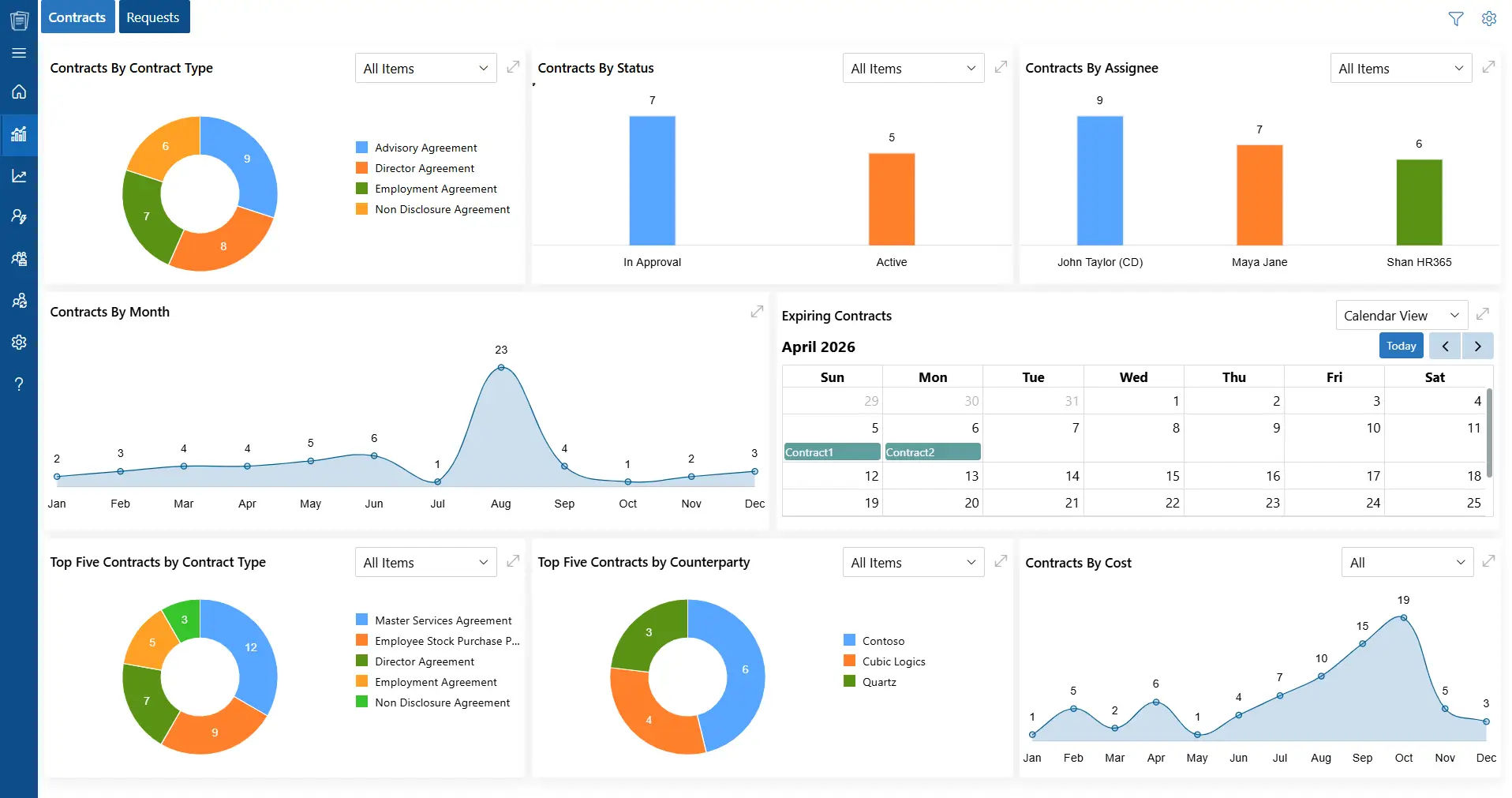
CLM 365 is a SharePoint-based contract management built within the Microsoft 365 environment. It integrates with familiar applications such as SharePoint, Microsoft Teams, Outlook, Microsoft Copilot, Azure, and Microsoft Word, allowing consumer goods companies to manage their entire contract lifecycle within their existing Microsoft ecosystem.
From contract creation and review to approvals, execution, monitoring, and renewal, it helps businesses manage supplier, vendor, manufacturer, distributor, and retailer agreements.
Here are key features that support contract management in the consumer goods industry:
- Review Pricing and Quality Clauses Faster: Connect AI summaries and contract review to ingredient costs, packaging, and inspection standards.
- Manage All Supplier Agreements in One Place: Explain the SharePoint repository, version control, and access permissions.
- Contract Compliance Management: Keep track of important contract terms, deadlines, and obligations so teams know what needs attention and when.
- Contract Audit Trail: See who made changes, reviewed documents, or approved contracts. This gives businesses a clear record of contract activities.
- Version Control: When contracts go through multiple revisions, it can be difficult to identify the latest version. CLM 365 helps teams track changes and access previous versions.
- Automated Approval Workflows: Set up approval workflows based on contract types, departments, and internal requirements. This helps teams send contracts to the right people for review and approval.
- Manage Contract Changes Across Departments: Discuss amendments, approval routing, and audit history.
- Role-Based Security and Reporting: Give employees access to contracts based on their roles and responsibilities. Use reports to check contract status, monitor activities, and identify upcoming deadlines.

Conclusion
CPG contract management helps consumer goods companies maintain control over supplier agreements, purchasing costs, product standards, and important deadlines. With clear records and regular monitoring, businesses can identify supply problems earlier and make better purchasing decisions.
CLM 365 helps manufacturers, FMCG brands, and retailers manage agreements within Microsoft 365 through centralized storage, automated reminders, AI-powered reviews, and approval workflows.
Start your free 14-day trial of CLM 365 and manage your CPG contracts in one place. No credit card required.
Frequently Asked Questions
Why do CPG companies need written agreements with suppliers?
Written agreements define pricing, delivery schedules, product specifications, payment terms, and quality expectations. They help prevent misunderstandings and resolve disputes.
What should businesses check before signing a supplier deal?
They should review pricing, product specifications, delivery commitments, payment conditions, quality standards, penalties, and termination clauses. Legal and procurement teams should approve the final terms.
How can businesses handle disputes over supplier payments?
Businesses should compare invoices against agreed prices, payment schedules, and additional charges. The relevant agreement can help identify discrepancies and resolve payment disputes.
How can companies handle production delays by third-party manufacturers?
They can review production timelines, delivery commitments, and delay-related clauses in CPG contracts. Regular performance reviews can help identify recurring manufacturing problems.
How can CPG companies maintain quality standards with external manufacturers?
They can define quality specifications, inspection procedures, testing requirements, and rejection conditions in manufacturing agreements. Regular audits help verify compliance.