Contract Terms and Conditions: Meaning, Types & Importance

A business contract may look complete when both parties sign it, but unclear contract terms and conditions can create confusion around contract liability, payment delays, unexpected costs, and disagreements.
According to a Study World Commerce & Contracting (WorldCC), only 16% of practitioners believe contract negotiations focus on the right topics.
- Clearly state what each party must provide, how much they will pay, and when the work should be completed.
- Identify which provisions make an agreement enforceable, and which offer added protection against business risks.
- Use specific language, realistic deadlines, and clear instructions to prevent confusion and disagreements.
- Utilize AI to review documents, identify missing information, and track important commitments.
When businesses spend more time discussing minor details than setting clear expectations, they may overlook important commitments. This can affect how teams work together, make payments, and handle changes after signing.
In this blog, we’ll explain the meaning of contract conditions, their types, common examples, legal requirements, and how businesses can write and manage them effectively.
What Do Contract Terms and Conditions Mean?
Contract terms and conditions are the agreed rules that explain what two or more parties must do, what they can expect from each other, and how their business relationship will work.
In simple words, they answer questions such as:
- What is each party expected to do?
- When should the work be completed?
- How and when will payments be made?
- What happens if someone fails to meet their commitments?
- How can the business relationship be changed or ended?
For example, a company hires a software provider for a one-year service. The document states that the company must pay $2,000 each month, while the provider must offer technical support and maintain the agreed service levels.
Importance of Having Clear Contract Conditions in Business
Research from WorldCC has reported that almost 90% of business users find contracts difficult or impossible to understand. This highlights why companies need simpler contract terms and conditions Here’s why clarity matters.
When agreements describe contractual obligations in simple language, both parties can understand what they have accepted. This reduces the chance of different interpretations during business relationships.
Written contract terms and conditions explain how companies can respond when a supplier misses a deadline, a customer fails to pay, or a service does not meet expectations.
Clear contract condition help legal, sales, and finance teams review agreements without asking for repeated explanations.
As per EY survey, 57% of business-development professionals said contracting inefficiencies delayed revenue recognition.
Although several factors can cause these delays, clearer documents can help teams identify issues earlier and move agreements forward.
Businesses can plan spending and income more accurately when payment schedules, pricing changes, and renewal costs are clearly stated.
When everyone understands their commitments from the beginning, companies can work together with fewer unexpected issues. This also creates stronger business relationships and makes it easier to resolve disagreements when they arise.
What are the Different Types of Contract Terms?
Businesses use different types of contractual terms and conditions based on the purpose of an agreement and the legal requirements involved. Some of the main types include.
- Express Terms: Express contracts clearly stated in writing or spoken and accepted by the parties. For example, a customer agrees to pay $5,000 for a consulting project.
- Implied Terms: Implied contracts are not directly written or spoken but may become part of the agreement through law, business practices, or the parties’ conduct.
- Conditions: These make a duty or legal consequence depend on a particular event. For example, a company may release payment after completing an agreed inspection.
- Warranties: These are promises about the quality, performance, or condition of a product or service. The legal effect of breaking a warranty depends on the governing law.
- Innominate Terms: Under some legal systems, these provisions are classified based on how serious the consequences of a contract breach are, rather than being treated as fixed conditions or warranties.
- Standard Terms: These are commonly used provisions that businesses include in similar transactions, such as billing instructions or notice requirements.
- Special Terms: These are custom provisions added to address the needs of a particular transaction, customer, or project.
Understanding these categories helps businesses decide which provisions need special attention during drafting and negotiation.
What Conditions Commonly Appear in Business Contracts?
Most business agreements contain several standard contractual terms and conditions that explain how the relationship will operate. Here are common examples.
- Payment Conditions: Explain the total price, billing schedule, accepted payment methods, and consequences of late payments.
- Confidentiality: Prevent parties from sharing private business information without permission, subject to stated exceptions.
- Termination: Describe when and how either party can end the vendor relationship.
- Liability Limitations: Set boundaries on the amount or type of compensation a party may owe when something goes wrong.
- Indemnification: Explain when one party must cover certain losses or claims faced by another.
- Intellectual Property: Identify who owns work, designs, software, or other materials created or used during the project.
- Force Majeure: Address events beyond a party’s reasonable control that may prevent performance, depending on the wording.
- Governing Law: Identify which jurisdiction’s laws apply to the agreement.
- Conflict Resolution: Explain how parties will handle disagreements through negotiation, mediation, arbitration, or court proceedings.
- Renewal: Describe whether the relationship continues automatically or requires further consent.
Not every business needs every provision. Companies should select the ones that match the nature, value, and risks of their transactions.
Ready to simplify your contract lifecycle?
CLM 365 brings contract creation, approval workflows, document storage, version control, and renewal tracking into one place, built natively for Microsoft 365.
Do All Contracts Need Terms and Conditions to Be Legally Valid?
No. A contract does not always need a formal written list of terms and conditions to be legally valid. Depending on the applicable law, agreements may be written, verbal, or formed through conduct.
However, enforceability generally depends on requirements such as offer, acceptance, consideration where required, legal capacity, lawful purpose, and sufficiently definite commitments.
Certain transactions must also meet special writing or signing requirements. Clear documentation makes it easier to prove what the parties agreed to if a disagreement arises.
What are the Essential Terms Every Contract Should Cover?
Every business agreement should address the contract terms and conditions needed to make the transaction clear, practical, and legally sound. While the exact requirements vary by industry, the following elements provide a useful starting point.
Include the legal names, business addresses, and relevant contact information of everyone entering the agreement. For companies, identify the correct registered entity rather than using only a brand name. This helps prevent confusion when businesses operate through multiple subsidiaries.
Clearly specify the products the manufacturer must produce and the quantity, specifications, materials, and quality standards they must meet.
For example, a manufacturing contract might define the number of units to be produced, raw materials to be used, product dimensions, packaging requirements, and delivery quantities.
Avoid vague descriptions such as “manufacture products as agreed” without defining the exact specifications and production requirements.
State the total cost, payment frequency, invoice requirements, and any additional charges.
For example, a consulting agreement might require a $3,000 initial payment followed by two installments of $1,500 each.
Also explain whether taxes, travel expenses, or third-party costs are included.
Specify when the business initiates the contract, how long it continues, and whether it can be extended. If the agreement renews automatically, explain the notice period required to prevent another billing cycle.
Explain the contract management KPIs will be measured. For instance, an IT support provider may agree to respond to critical service requests within two hours. Using measurable targets makes it easier to check whether the agreed service has been provided.
Explain how either party can request contract editing after signing.
Businesses should identify who can authorize changes, how revised pricing will be handled, and whether written confirmation is required.
This prevents informal conversations from creating unexpected commitments.
Describe what happens when the business relationship ends.
Include final payment arrangements, the return of company property, access removal, and the handling of confidential information.
These details help both parties complete the relationship in an organized way.
Address important contract risks, including losses, data handling, third-party claims, and failures to meet agreed standards. The level of protection should match the transaction rather than copying the same language into every document.
Are Contract Terms and Conditions the Same as Those Shown on Websites?
Not exactly. Both establish rules between parties, but business contracts usually contractual terms and conditions to cover a specific transaction, while website terms of service explain how visitors or customers may use an online platform. Here is how they differ.
Comparison | Business Contract | Website Terms and Conditions |
Purpose | Explains a business deal between specific parties | Sets rules for using a website or online service |
Who it applies to | Named companies, customers, or individuals | Website visitors, registered users, or buyers |
Content | Covers pricing, work requirements, payments, and business commitments | Covers account use, acceptable behavior, purchases, and platform policies |
Customization | Often adjusted through discussions between the parties | Usually presented in a standard format for all users |
Acceptance | Commonly accepted through signatures or other clear agreement | Often accepted by clicking a checkbox or button |
Changes | Usually follow the agreed method for making updates | May be updated under the site’s stated policy and applicable law |
Example | A company signs an agreement with a software vendor | A user accepts an online service’s rules when creating an account |
Both can create legally binding agreements when the required legal standards are met.
However, simply displaying website rules does not automatically make every provision enforceable. Businesses should give users reasonable notice and obtain valid acceptance when required.
How Can You Draft Clear and Effective Contract Conditions?
Writing effective contractual terms and conditions requires more than copying standard legal language. Businesses need to understand the transaction, identify possible risks, and explain expectations in a way that both parties can follow. Here are three practical steps.
- Identify Business Requirements: Understand the purpose of the agreement, products or services involved, payment terms, deadlines, and potential business risks by consulting sales, finance, legal, and operations teams.
- Define Each Party’s Responsibilities: Clearly outline what each party must deliver, the services they must provide, and the obligations they must fulfil under the agreement.
- Write Clear and Specific Provisions: Use simple, direct language to explain each obligation. Replace vague statements with specific quantities, deadlines, locations, and expectations.
- Include Payment and Delivery Terms: Document agreed pricing, payment schedules, billing methods, delivery timelines, quality standards, and inspection requirements.
- Review for Consistency and Accuracy: Check all sections for missing information, conflicting terms, unclear instructions, and unexpected financial risks.
- Obtain Legal and Business Approval: Ask legal teams to verify compliance with applicable laws and company policies. Have commercial teams confirm that the terms match the agreed business requirements.
- Finalize and Store the Agreement: Get approval from both parties, complete the signing process, once contracts are finalized, store them in final document in a central location.
How Can Businesses Avoid Common Mistakes When Setting Contract Terms?
Businesses can reduce drafting errors and prevent disagreements by following these practices:
- Use Clear and Specific Language: Replace vague words such as “reasonable” or “promptly” with measurable expectations, specific deadlines, and defined responsibilities.
- Leverage Templates: Review existing templates regularly and modify outdated clauses to match current business requirements and applicable laws.
- Include All Essential Details: Clearly document payment dates, service descriptions, delivery expectations, contract acceptance criteria, and other important obligations.
- Maintain Consistency Across Sections: Review the entire document to identify conflicting instructions, overlapping responsibilities, or differences in payment and delivery terms.
- Define Exit Arrangements: Include clear termination conditions, notice periods, final payment obligations, and procedures for handling unfinished work or returned materials.
- Review Legal Requirements: Evaluate liability limits, warranties, compensation terms, and industry-specific regulations before accepting the agreement.
- Track and Monitor Commitments: Maintain version records, assign responsibility for important obligations, and track deadlines, contract performance targets, and renewal dates after signing.
Role of CLM 365 in Handling Contract Conditions
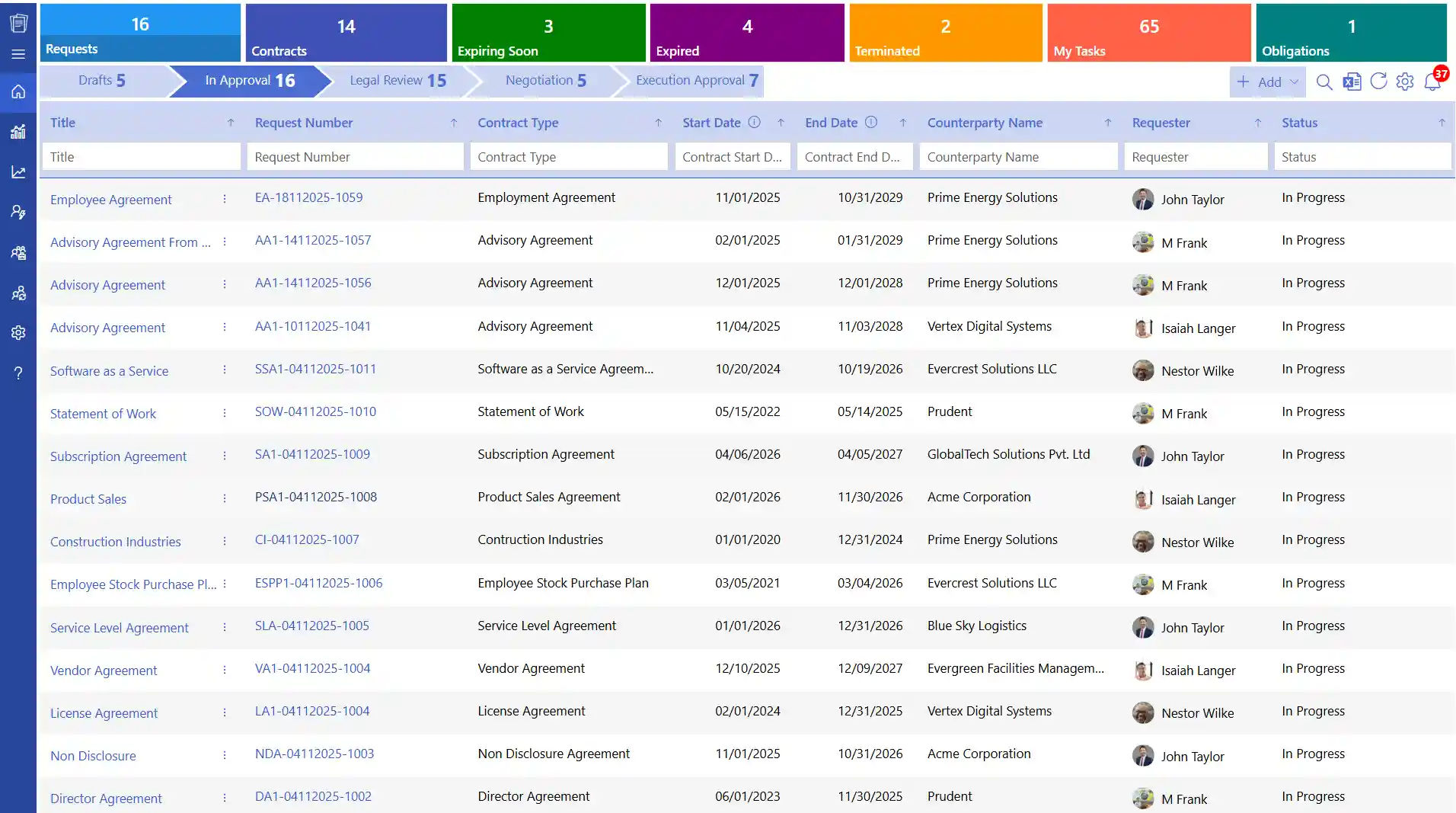
Managing contract terms and conditions becomes challenging when businesses handle hundreds of agreements across different departments.
A system like CLM 365 can help businesses organize these activities in one place. Here’s how businesses can use software to manage their agreements.
- Centralized Contract Storage: Instead of keeping documents across emails, shared folders, and individual computers, teams can maintain a common repository.
- Standardized Contract Templates: Businesses can use approved templates for common transactions, including vendor agreements, service contracts, and nondisclosure agreements.
- Contract Review and Collaboration: Legal, sales, and finance departments can coordinate document reviews and address requested changes before signing all with help of Microsoft Teams and Outlook integration.
- Renewal and Deadline Tracking: Companies can use automated reminders to monitor expiration dates, payment milestones, and upcoming renewals.
- Better Visibility Into Business Commitments: A reliable platform can help teams identify active agreements, monitor assigned tasks, and locate important provisions when questions arise.
How Can AI Help Businesses Review Contract Terms and Conditions?
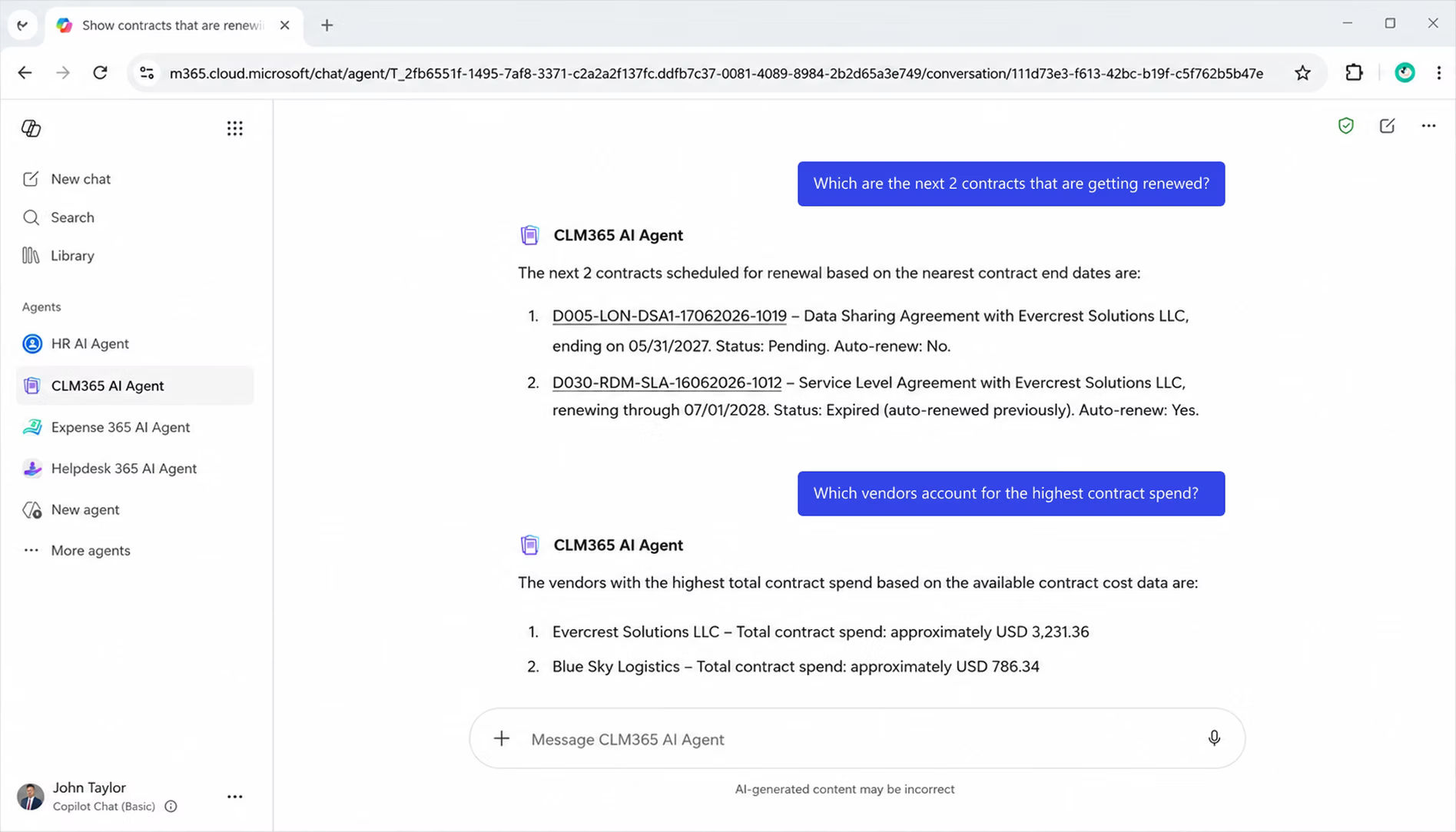
AI can help legal and business teams examine lengthy agreements, identify important information, and spot possible issues before signing. Here are some practical applications.
- Identify Missing Provisions: AI can compare drafts against company checklists and highlight missing details, such as late payment charges or termination conditions.
- Highlight Unusual Language: It can flag unfamiliar clauses, unexpected price changes, or terms that differ from approved company standards.
- Extract Important Information: AI can identify payment amounts, expiry dates, notice periods, and service obligations without manual data entry.
- Compare Contract Versions: It can highlight added, removed, or modified terms, helping reviewers focus on important changes.
Simplify Legal Language: AI can explain lengthy or complex clauses in plain English, making them easier for business teams to understand.
Prioritize Risks: It can flag clauses that need closer attention based on company policies, helping legal teams focus on higher-risk agreements.

Hear from Our Delighted Clients
CLM 365 has made contract reviews faster and more efficient with AI-powered contract summaries. It helps teams quickly understand key terms, obligations, and potential risks, reducing manual review and enabling faster, more informed decision-making.
Conclusion
Clear contractual terms and conditions help businesses set expectations, manage risks, and build stronger business relationships. Using simple language, covering essential details, and reviewing every provision can make agreements easier to understand and manage.
With CLM 365, businesses can organize contracts, coordinate reviews, track important deadlines, and use AI-powered features to simplify contract management.
Discover how SharePoint contract management can help your team manage agreements with greater clarity and control.
Frequently Asked Questions
How do businesses decide which terms to include in a contract?
Businesses should consider the transaction type, commercial expectations, responsibilities, payment arrangements, potential risks, and applicable legal requirements before selecting terms.
Why should businesses define deliverables in contract conditions?
Clearly defined deliverables help both parties understand what must be provided, when it must be completed, and how the receiving party will evaluate the results.
What happens when a business contract does not specify payment deadlines?
Unclear payment deadlines can lead to disagreements over when invoices become due, delayed collections, and difficulties enforcing payment obligations.
How can businesses maintain consistency across contract terms and conditions?
Businesses can maintain consistency by reviewing all sections together, using clear and uniform definitions, aligning payment and delivery conditions, and ensuring every provision supports the agreed terms.