


Contracts shape how businesses work with vendors, partners, and customers. But as companies grow, managing agreements across emails, folders, and spreadsheets becomes harder to track.
- Helps you understand each stage of the contract lifecycle and what happens at each step
- Identifies common gaps and challenges in manual contract management processes
- Shows how better contract management can improve visibility, compliance, collaboration, and control
- Guides you on the key features to consider when choosing a CLM system
A CLM system changes this process. It gives businesses a structured way to create contracts, review, store, and track contracts from start to finish.
Research shows that 40% of a contract’s value can be lost because of poor contract management practices. WorldCC also estimates that contract value leakage costs businesses up to 9% of their annual turnover.
In this blog, we will learn how contracts move through each stage, the challenges of manual contract management, the benefits of a structured process.
What is CLM System?
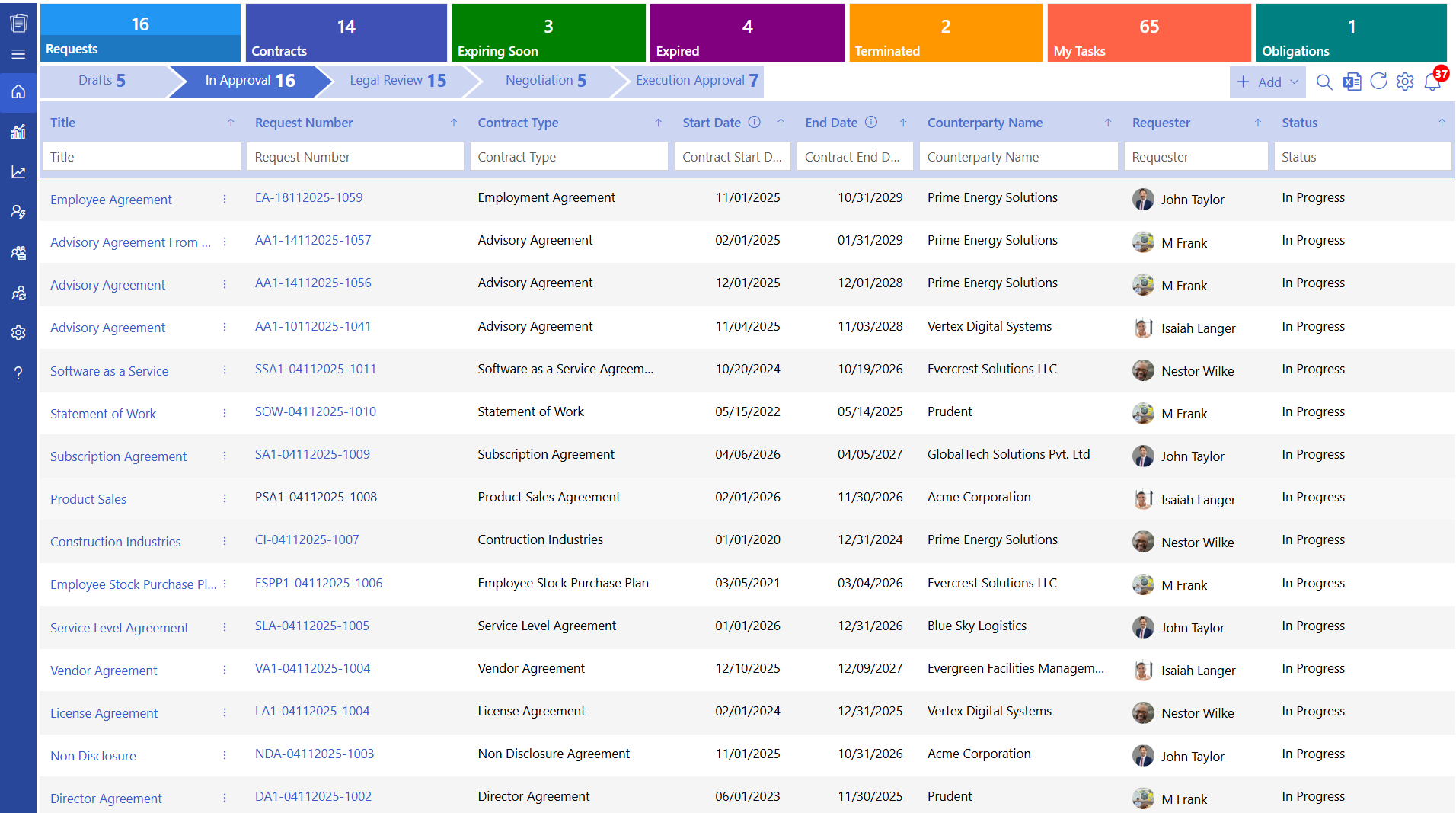
A CLM system stands for contract lifecycle management system. It is a digital platform that helps businesses manage contracts from creation to renewal or closure.
Contracts often pass through many stages. A legal team drafts the document. Managers review it. Finance checks pricing terms. Leaders approve it. After signing, teams must track deadlines and obligations.
When handled manually, these steps can take weeks.
A CLM software organizes the entire contract lifecycle in one place.
The CLM 365 allows teams to
- Create contracts using approved templates
- Send documents for review and approval
- Track contract versions
- Sign documents electronically
- Store contracts in a searchable repository
- Monitor obligations and renewal dates
How Does CLM Systems Work?
A contrct management system manages the entire contract lifecycle process, from the initial request and drafting to approval, signing, tracking, and renewal.
Step 1: Contract Request
The process begins when a department submits a request for a new contract. The contract management system captures key details such as the contract type, parties involved, and business requirements.
Step 2: Contract Drafting
Once the request is approved, teams create the contract using pre-approved templates and clause libraries. This helps teams prepare consistent contracts without starting from scratch.
Step 3: Internal Review
The draft is reviewed by relevant teams such as legal, finance, procurement, or management. Each team checks the terms related to their responsibilities before the contract moves forward.
Step 4: Approval
After review, the contract follows the required approval workflow. Approvals can be routed based on factors such as contract value, risk, department, or business requirements.
Step 5: Negotiation
The contract is shared with the external party for review and negotiation. Changes, comments, and revisions are tracked so teams can maintain a clear version history.
Step 6: Signing
Once both parties agree on the terms, the contract is sent for signing. Electronic signatures can be used to complete the process digitally, and the signed agreement is stored in the system.
Step 7: Tracking & Management
After signing, the system continues to track the contract throughout its active period. Teams can monitor renewal dates, expiry dates, payments, obligations, and other important milestones.
Step 8: Renewal or Closure
As the contract approaches its end date, teams can review its terms and performance. Based on the outcome, the agreement can be renewed, renegotiated, or closed.
Give your legal team less contract management. More time for decisions
Put every contract, approval, obligation, and renewal in one reliable system. Let CLM 365 handle the process while your team focuses on the work that needs their expertise.
Difference Between Manual and Automated CLM System
Many organizations still rely on spreadsheets and document folders to manage contracts. An system changes the process significantly.
| Aspect | Manual Contract Management | Automated CLM System |
| Contract Creation | Contracts are written manually each time | Templates and clause libraries create contracts faster |
| Approval Process | Approvals happen through emails or physical signatures | Approval workflows route contracts to the right people automatically |
| Contract Storage | Documents stored in folders or shared drives | Central repository with search options |
| Tracking Deadlines | Teams track dates manually in spreadsheets | Alerts and reminders track milestones automatically |
| Version Control | Multiple versions saved separately which makes comparison difficult | Version history shows changes and maintains a single contract record |
Core Features of CLM System
Contract management software includes many features that support contract creation, tracking, and analysis. Below are some of the capabilities that organizations use regularly.
Artificial intelligence is becoming an important part of modern contract management platforms. Recent studies show rapid adoption of AI across business operations, according to a McKinsey report, with 88% of organizations now using AI in at least one business function. In a CLM system, AI helps with tasks such as contract analysis, clause identification, risk detection, and contract search.
AI features can analyse long contracts and identify clauses related to payment terms, obligations, or penalties. This allows legal teams to review agreements faster, especially when they handle many contracts each week.
Hear from Our Delighted Clients
CLM 365 has made contract reviews faster and more efficient with AI-powered contract summaries. It helps teams quickly understand key terms, obligations, and potential risks, reducing manual review and enabling faster, more informed decision-making.
Contracts often require approval from several stakeholders before they can be finalized. Without a contract management system, documents may remain in email inboxes for several days.
Studies also show that up to 40% of a contract’s value can be lost because of inefficient contract management practices.
For example, contracts below a certain value may require approval from one manager, while high-value agreements may require approval from senior leadership.
Compliance is an important concern for organizations that operate in regulated industries. Research shows that 43% of professionals consider compliance and regulatory requirements a major challenge in contract management.
A contract management system helps organizations manage contract compliance by maintaining approved clause libraries, recording approval history, and storing contracts in a secure digital repository.
These records help organizations demonstrate that their contracts follow legal and regulatory standards.
During negotiation, contracts often go through multiple revisions before the final version is approved.
Contract comparison tools allow users to compare two versions of a contract and review the exact changes made between them.
The contract management system highlights added text, removed text, and modified clauses. This allows legal teams to quickly review modifications without manually checking each section of the document.
Contract templates provide pre-approved legal language that teams can use while drafting contracts. Legal departments usually create a library of commonly used clauses that can be inserted into agreements. These clauses may include payment terms, confidentiality clauses, liability limitations, and termination conditions.
Electronic signatures allow contracts to be signed digitally without printing physical documents. It allows parties to review and sign agreements from different locations using secure digital signatures. This approach reduces the time required to complete the signing process and keeps signed documents stored within the contract management platform.
Business relationships often change over time, which may require updates to existing agreements. A contract amendment feature allows organizations to modify contract terms while keeping the original agreement stored in the system. It records every amendment and keeps a history of the changes made to the contract.
Version control helps organizations maintain a record of every revision made to a contract. When multiple team members review or edit a document, the system saves each version and identifies the most recent one. This helps teams work with the correct version of the contract and maintain a record of earlier revisions.
Contract data can provide useful insights for business decisions. Reporting tools in a CLM system allow organizations to analyse contract activity and performance.
For example, reports may show contract value by department, vendor contract volume, upcoming contract renewals, and the average time taken to complete a contract cycle. These insights help business leaders evaluate operations and improve their contract management strategy.
How Does Business Benefit from a CLM System?
A contract management system provides several advantages for organizations that handle many contracts. Below are seven benefits businesses experience after adopting a structured contract management platform.
A contract management system provides templates and clause libraries that help teams create contracts quickly. Instead of drafting every document from the beginning, legal teams can use pre-approved templates to prepare agreements. This reduces the time required to prepare contracts and allows businesses to complete agreements faster.
When contracts are stored in a central contract repository, they become easier to locate and review. Users can search agreements using filters such as vendor name, contract value, department, or contract date. This is important because studies show that 90 percent of contracting professionals report difficulty finding contracts quickly.
Approval workflows within a system help move contracts through the review process more quickly. Instead of sending documents through multiple email threads, the system routes the contract to the appropriate manager based on predefined approval rules. Managers can review and approve agreements directly within the platform.
Contract management practices can affect business revenue. Research shows that contract value leakage may cost businesses up to 9% of their annual turnover. A reliable system helps organizations track obligations, payment milestones, and contract deadlines. This helps businesses monitor agreements more closely and protect contract value.
Organizations must follow various legal and regulatory requirements when managing contracts. A contract management system stores approved compliance clauses and maintains records of approvals and contract decisions.
Reporting tools within a system provide data that helps organizations understand contract performance. Businesses can review vendor contract terms, analyze renewal patterns, and evaluate contract cycle times. This information helps teams make more informed decisions during contract negotiations.
A contract management system brings every stage of the contract lifecycle into a single platform. Teams can manage contract drafting, internal reviews, approvals, signing, and ongoing tracking within the same system. This structured approach helps organizations manage large volumes of contracts in a more organized way.
How CLM 365 Helps Businesses?
CLM 365 is built on the Microsoft ecosystem and connects easily with tools teams already use, including SharePoint, Microsoft Teams, Microsoft Outlook, Microsoft Copilot, Microsoft Power BI, and Microsoft Power Automate. This allows teams to handle contracts directly within their daily work tools.
The platform helps automate approvals, track obligations, and monitor important contract activities using AI-supported workflows. This reduces manual follow-ups and helps teams stay on top of compliance.
CLM 365 also offers enterprise-level security with a simple interface, making it suitable for both growing businesses and large organizations. It is backed by SOC 2 compliance, Microsoft certification, and support for GCC and GCC High environments.
Best for: SMBs and enterprises that want to improve and organize their contract management process.
Conclusion
Contracts form the foundation of many business relationships. They define obligations, pricing terms, and service expectations.
With the growing use of AI and digital workflows many organizations are adopting contract lifecycle management platforms to improve operational efficiency.
Solutions like CLM 365 support businesses by providing contract creation tools, automated workflows, secure storage, and reporting capabilities.
Manage hundreds of agreements with greater control using a SharePoint contract management system built for efficient contract management.
Frequently Asked Questions
Where is my contract data stored?
Your contract data stays in your organization’s Microsoft 365 and SharePoint environment. You can continue using the security, permissions, and access controls already set up in your Microsoft environment without moving your contract data to a separate storage system.
Can a CLM system handle contracts for multiple departments?
Yes. the system supports contracts across legal, sales, procurement, HR, finance, and other departments, with workflows and access permissions configured according to each team’s requirements and tracking agreements.
Can we control who can view confidential contracts?
Yes. Role-based permissions can restrict access to specific contracts, folders, departments, or information so users only see the agreements relevant to their role.
Does the system automatically route contracts to the right approver?
Yes. The CLM system can automatically route contracts to the right approver based on rules such as department, contract type, contract value, or risk level, reducing manual follow-ups and approval delays.
How does a CLM system help during audits?
A CLM system can provide centralized contract records, approval histories, version histories, permissions, and audit trails, making it easier to retrieve evidence about how contracts were managed.
What happens when a contract is about to expire?
The system sends a renewal reminder to your inbox before the contract expires, giving you time to review the agreement and decide whether to renew, renegotiate, or close it.

Trusted by the Best

_JiluXJRGNl.svg)























