

Best Contract Management Software for Legal Teams: CLM 365
Contract management software uses AI and automation to handle every stage of a contract, from drafting and negotiation to signing, storage, and renewal. Automated workflows reduce repetitive manual work and move contracts through each step faster.


What is Contract Management Software?
The contract management software uses AI and automation to help businesses create, review, approve, store, and track contracts while improving overall efficiency. It supports different stages of the contract lifecycle such as drafting, reviewing, approving, signing, storing, and renewing agreements.
These tools help legal and business teams manage contracts without spending too much time on repetitive manual tasks. Many steps in the contract process can run automatically, which helps teams move agreements forward more quickly.
Why Business Needs a Software to Manage Contracts?
Here is why many businesses use contract management software to manage agreements better and avoid delays, missed obligations, and limited contract visibility.
1. Contracts Spread Across Systems
In many businesses, contracts are stored across emails, shared drives, personal folders, and different document platforms. When agreements are scattered in multiple locations, teams often spend extra time searching for the latest version or confirming the correct document. A contract lifecycle management solutions helps businesses store and organize all agreements in one place so teams can easily access and manage them.
2. Slow Contract Approvals
Contract approvals can take days or even weeks when documents must pass through several stakeholders without a structured workflow. Teams often rely on emails or manual follow-ups to move the process forward, which delays important business decisions. According to World Commerce and Contracting, organizations lose up to 9% of their annual revenue due to missed obligations and poor contract visibility.
3. Missed Deadlines and Renewals
Contracts include important dates such as renewal timelines, payment milestones, and expiration periods. When these dates are tracked manually, businesses may overlook critical deadlines. Using a contract tracking software allows teams to monitor key contract dates and receive alerts before renewals or deadlines approach.
4. Limited Contract Visibility
When contracts are stored in different systems, it becomes difficult to understand the status of an agreement or locate specific documents quickly. According to research by Ernst & Young, 90% of contracting professionals struggle to locate contracts efficiently. A contract management application gives businesses a clear view of all agreements in one dashboard.
5. Time-Consuming Contract Reviews
Reviewing contracts manually can take significant time, especially when teams must check multiple clauses, compliance terms, and obligations. Legal teams often review lengthy agreements line by line, which slows the contract cycle and delays project timelines. With AI contract management software, businesses can review agreements faster by identifying key clauses, obligations, and potential risks.
6. Risk of Missing Obligations
Contracts often include commitments such as payment terms, service delivery timelines, and compliance requirements. When these obligations are not tracked properly, businesses may overlook important responsibilities. A contract management software helps track these responsibilities and keep teams informed about upcoming tasks.
7. Lack of Proper Team Collaboration
Contracts typically involve multiple departments including legal, finance, procurement, and operations. Without a shared system, teams may work in isolation, leading to delays, duplicate versions, or unclear communication. A CLM solution allows teams to review, comment, and approve agreements in one shared workspace.
How Does Contract Management Software Works in Business
We have looked at the common challenges businesses face with contracts. Now let’s see how contract management software works step by step.
1) Contract Request and Initiation
The process begins when a team needs a new contract. This may happen when working with a new vendor, forming a partnership, or bringing a new employee into the company. Departments such as legal, procurement, human resources, or finance usually raise the request.
The contract software management records important information such as the type of agreements, the parties involved, key terms, and other details related to the agreement.
2) Contract Creation and Drafting
After the request is created, the software provides ready-made templates for different types of agreements such as vendor contracts, employee agreements, or non-disclosure agreements.
Users can edit these templates and add details based on the business requirement.
Many contract systems also suggest contract clauses that match the contract type, helping users include important terms without missing key points.
3) Internal Review and Collaboration
Once the contract draft is ready, it goes through an internal contract review process. Teams from different departments review the document to check legal, financial, and operational terms.
The contract software allows teams to review the document together, add comments, and suggest edits. Version tracking records every change made to the contract so earlier versions can be viewed if needed.
4) Approval Workflow
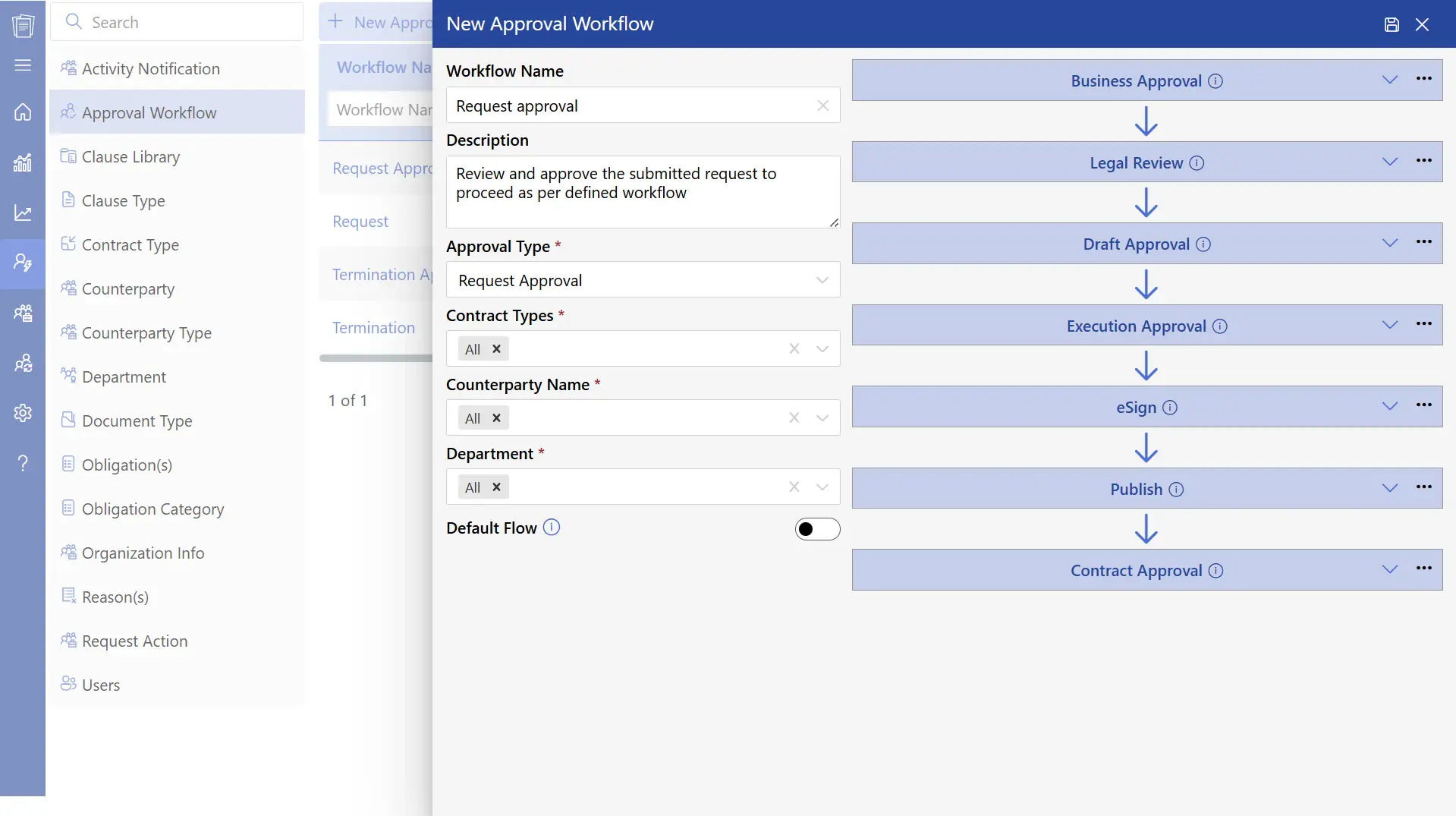
After the review process is completed, the contract moves to the approval stage. The system sends the document to the right people who need to review and approve it.
The contract management software notifies each person when it is their turn to approve the contract. It also shows who has approved the contract and who still needs to review it, helping teams move the process forward.
5) Contract Execution and Signing
Once all approvals are completed, the contract is ready to be signed. Many contract mgmt software work with digital signature tools so parties can sign the agreement online.
Digital signing removes the need for printing and scanning documents and helps complete the contract process faster.
6) Centralized Storage and Secure Access
After signing, the contract is stored in a secure digital repository within the software. All agreements are organized in one contract repository so they can be easily searched and accessed whenever needed.
Access controls allow only authorized users to view or manage specific contracts.
7) Tracking and Reminders for Key Dates
The system tracks important contract dates such as renewal periods, expiry dates, and review milestones.
It sends alerts to the responsible team members before important deadlines so businesses can act at the right time.
This helps businesses avoid missed renewals, reduce risks, and maintain full control over contract timelines.
8) Renewal and Amendments
As contract renewal dates approach, the software sends reminders to the relevant teams. This helps businesses review agreements before they expire.
If any updates or changes are needed, the system records the modifications and keeps a clear history of the contract updates so both parties can review the latest version.
This ensures better decision-making and prevents last-minute risks during renewals.
Core Features of Contract Management Software
We have looked at how the contract process works. Now let’s explore the key features that make contract management software useful for businesses handling many agreements.
1. AI-Powered Contract Management
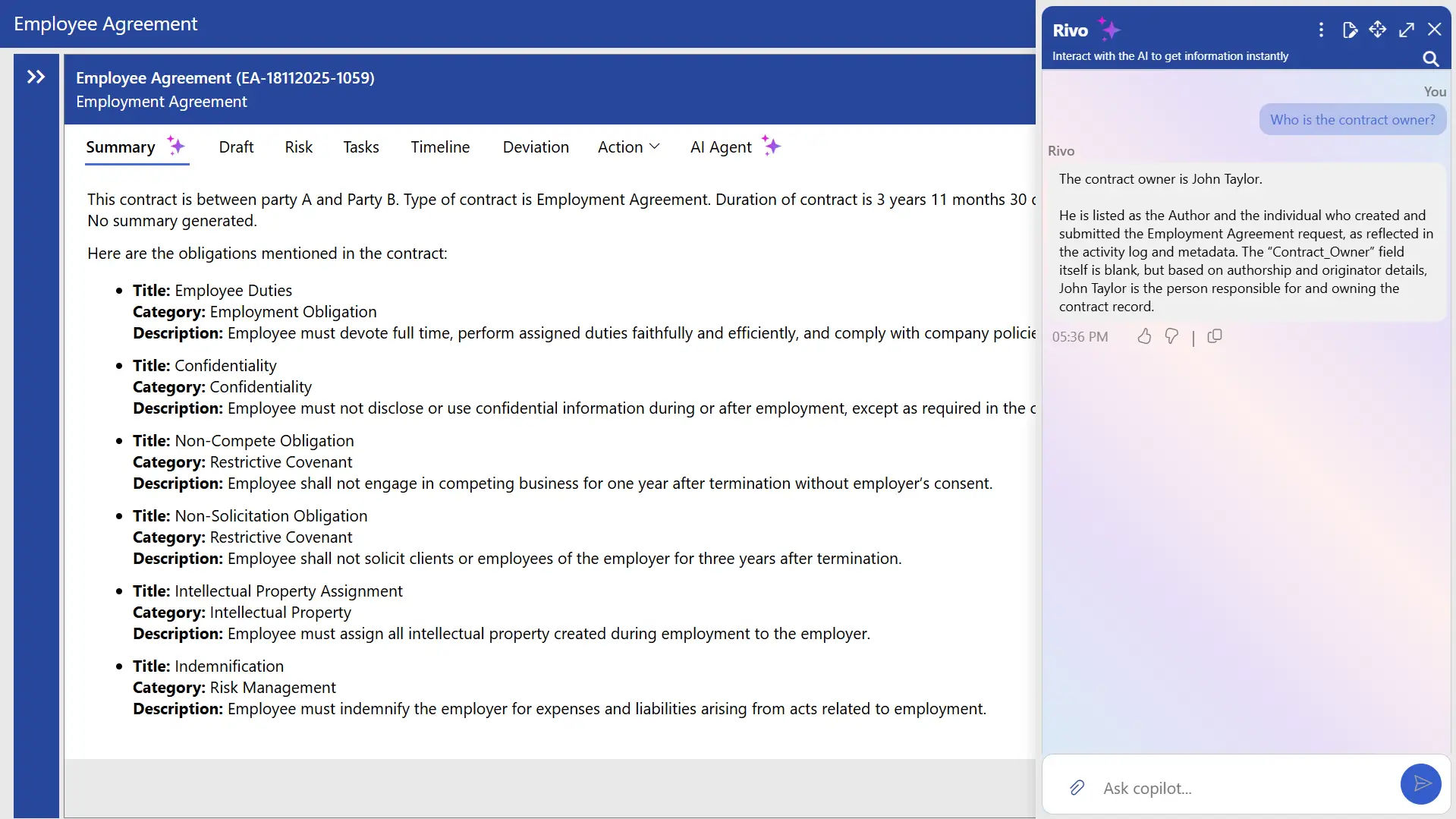
Modern contract management software uses AI to analyze contracts and identify important clauses, risks, and obligations. Instead of reading long documents line by line, teams can quickly locate key terms such as payment conditions, renewal clauses, or liability sections. AI tools can also highlight missing clauses or unusual language in a contract. According to McKinsey & Company, 88% of organizations report regular AI use in at least one business function, compared with 78% a year earlier. This growth shows how AI is becoming a common part of many business tools, including contract management.
2. Compliance Management
Contracts often contain compliance and egal requirements that companies must follow. Contract management software helps businesses track these compliance terms and keep a record of contract obligations. This helps legal and compliance teams review contracts and verify whether business activities follow the agreed terms. Research from PwC shows that 85% of executives believe compliance requirements have become more complex in the last three years. Using software helps businesses stay aware of these obligations and keep important contract information organized.
3. Automated Approval Workflows
Most contracts require approvals from multiple departments such as legal, finance, procurement, and management. Without a defined approval system, contracts may remain in email inboxes or shared folders while teams wait for responses. Contract management automation allows businesses to create approval workflows so contracts move through the correct review stages. Each stakeholder receives notifications when it is their turn to review the document. Nearly 70% of organizations have a formal contracting technology strategy, but 99% still lack the data and technology needed to improve their contracting process. Co
4. Contract Repository
A contract repository is a central place where all agreements are stored and organized. With contract management software, contracts are saved in a digital repository where users can search for documents using keywords, contract names, or parties involved. The contract repository tools makes it easier to locate agreements during audits, negotiations, or business reviews. Instead of searching through multiple folders or systems, teams can find the required contract within a few seconds.
5. Clause Library
A clause library stores commonly used legal clauses that businesses include in contracts. Legal teams often reuse certain clauses such as confidentiality agreements, payment terms, liability conditions, or termination rules. Contract management software allows teams to store these clauses in a shared library so they can easily add them to new contracts. This helps maintain consistency across agreements and reduces the time required to draft contracts from the beginning.
6. Draft Comparison
Contracts often go through several revisions before reaching the final version. Different stakeholders may suggest edits during the review process. Contract management software provides a draft comparison feature that highlights differences between document versions. Users can quickly see which sections were added, removed, or modified. This helps legal teams review contract changes more easily and understand how the document has evolved.
7. Contract Negotiation
Negotiation is an important step in most agreements. During this phase, both parties review the contract and suggest changes to certain terms. Contract negotiation software allows teams to manage negotiation discussions while tracking document updates and comments. The system keeps a clear record of edits and discussions so teams can follow the progress of negotiations and maintain a history of changes.
8. Contract Amendment
Business needs often change after a contract is signed. In such cases, companies may need to modify certain terms such as pricing, service scope, or timelines. Contract management software allows businesses to record amendments and maintain a clear history of updates made to a contract. This helps teams track how an agreement has changed over time and review the latest contract version when required.
9. E-Signature
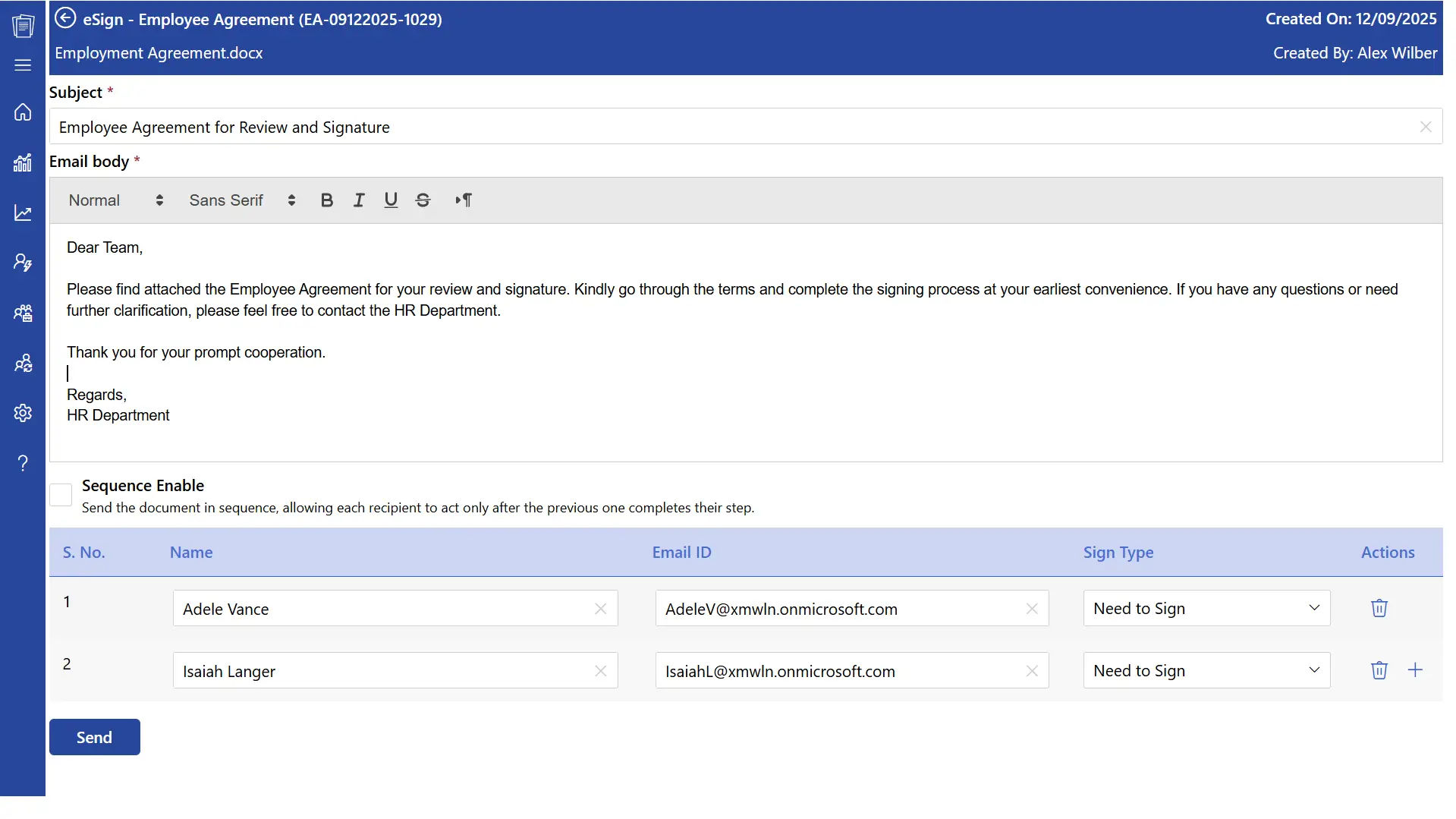
Electronic signatures allow contracts to be signed digitally without the need for printing or scanning documents. Contract management software often integrates with digital signature tools so agreements can be signed online. This speeds up the contract signing process and allows remote teams to sign from different locations. Research shows that electronic signatures can increase customer loyalty by up to 500% because they make the signing process faster and more convenient.
10. Role-Based Security
Contracts often contain sensitive business information such as pricing details, intellectual property terms, and partnership agreements. Contract management software allows businesses to assign role-based permissions so only authorized users can view or edit certain contracts. For example, legal teams may have full access to contract documents while other departments may only view selected sections.
What are the Benefits of Contract Management Software?
Contract management software helps businesses handle agreements in a more organized way. It improves team collaboration, supports compliance, reduces risks, and keeps contracts easy to access. It also provides useful data that helps businesses make better decisions.
1. Improved Collaboration Across Teams
A good contract management software provides a shared space where teams can work on contracts together. Legal teams, finance departments, procurement teams, and business managers can all access the same contract in one system.
Contracts can be uploaded, reviewed, and edited within the platform. Changes made to the document appear instantly, so everyone working on the contract can see the latest version. Team members can also leave comments and suggestions directly within the contract.
When contract management integrates with Microsoft Teams it helps internal and external departments stay aligned when reviewing agreements.
2. Reduced Legal and Operational Risks
Contracts contain important obligations, deadlines, and legal terms that businesses must follow. Contract management software helps track these details so teams stay aware of key responsibilities.
The system monitors deadlines, contractual obligations, and important milestones. This allows businesses to take action before issues arise. When contracts are properly tracked, companies can avoid penalties, disputes, or missed responsibilities.
Having a clear record of contract activities also helps organizations manage legal and operational responsibilities more effectively.
3. Better Visibility and Business Insights
Many contract management software platforms provide dashboards and reports that show useful contract data. These reports help teams understand contract performance and track important details such as renewal timelines, contract value, and agreement status.
With access to real-time information, businesses can monitor contract activity and identify areas that need attention. Instead of relying on manual tracking, companies can use data to guide business decisions.
This level of visibility helps organizations stay aware of contract deadlines, obligations, and performance across the entire contract portfolio.
4. Higher Efficiency and Cost Savings
Automation features in contract management software help businesses handle contracts more efficiently. Tasks such as approvals, reminders, and document tracking can run automatically within the system.
When contract processes move faster, teams can close agreements sooner and maintain better relationships with vendors and partners. Businesses can also reduce expenses related to missed deadlines, disputes, or delayed approvals.
By keeping contract information organized in one system, teams spend less time searching for documents and more time focusing on important business activities.
5. Strong Data Protection and Compliance
Contracts often include sensitive information such as pricing terms, intellectual property details, and partnership agreements. Contract management software protects this information through security features like encryption, user permissions, and audit logs.
Access controls allow organizations to decide who can view or edit specific contracts. This helps protect sensitive business information from unauthorized access.
Audit records also provide a detailed history of contract activities, which helps businesses maintain compliance with internal policies and external regulations.
6. Faster Legal Review
Legal teams often spend significant time reviewing contracts and verifying whether terms meet company policies. Contract management software helps legal teams locate contracts quickly and review key clauses more easily.
The system can track edits, show document history, and highlight updates made to the contract. Alerts and monitoring tools help legal teams identify potential issues earlier.
Detailed audit logs also record every change, approval, and modification, which helps organizations maintain proper legal documentation.
7. Centralized Contract Storage and Renewal Tracking
One of the most useful benefits of contract management software is centralized contract storage. All agreements are stored in one digital repository where they can be searched and accessed easily.
Procurement teams and business managers can review supplier contracts, track contract performance, and check important agreement details at any time.
This allows businesses to review agreements early, negotiate better terms, and avoid missing important renewal opportunities.
Who Benefits from Contract Software Management?
Contract management software supports many teams across a business, not just legal departments. HR, procurement, finance, and compliance teams can use it to manage agreements, track obligations, and access contracts easily. Let’s see how different departments benefit from using contract management tools.
1. Legal Teams
Legal departments handle large numbers of contracts such as vendor agreements, partnership contracts, and compliance documents. Contract management software helps legal departments create, review, and store these agreements in one place. It also allows lawyers to track contract versions, review clauses, and monitor obligations written in the contract. This helps legal teams review agreements faster and maintain proper documentation for audits or disputes.
2. Sales Teams
Sales teams often work with customer agreements, service contracts, and pricing terms. Contract management software helps sales teams create contracts quickly using approved templates. They can track the status of agreements, monitor approval progress, and access signed contracts when needed. This helps sales teams close deals faster and keep clear records of customer agreements.
3. Procurement Teams
Procurement teams manage supplier agreements, purchase contracts, and vendor terms. Procurement contract management software helps procurement teams track supplier contracts, monitor renewal dates, and review contract terms with vendors. By keeping supplier contracts organized in one system, procurement teams can review agreements easily and maintain strong vendor relationships.
4. Finance Teams
Finance teams depend on contracts for payment terms, pricing details, and financial obligations. Contract management software allows finance teams to review contract values, payment schedules, and billing terms. It also helps them track financial commitments written in agreements, which supports budgeting, forecasting, and financial reporting.
5. Human Resources (HR)
HR departments manage employment contracts, confidentiality agreements, and policy documents. Contract management software allows HR teams to create and store employee agreements while tracking important dates such as contract renewals or probation periods. This helps HR teams maintain proper employee records and manage workforce agreements more easily.
6. Supply Chain Teams
Supply chain teams manage contracts related to product sourcing, manufacturing, and supplier partnerships. Contract management software helps them track supplier commitments, delivery conditions, and service agreements. With all supply chain contracts stored in one system, teams can review agreements and monitor supplier responsibilities more easily.
7. Logistics Teams
Logistics teams handle transportation agreements, warehouse contracts, and service provider terms. Contract management software helps these teams track delivery contracts, monitor service conditions, and review agreements with logistics partners. Having all logistics contracts organized in one platform helps teams manage transportation agreements and maintain better control over operational contracts.
Why Choose CLM 365 for Managing Contracts?
Contracts shouldn’t slow down your business. CLM 365 helps organizations accelerate approvals, reduce compliance risks, eliminate missed renewals, and manage every stage of the contract lifecycle from request and drafting to negotiation, approval, execution, renewal, and archival in one secure, centralized platform built on Microsoft 365.
Unlike standalone contract management systems, CLM 365 works within the Microsoft ecosystem your teams already use every day. Native integration with SharePoint, Microsoft Teams, Outlook, Microsoft Copilot, Power BI, and Power Automate enables legal, procurement, finance, and business users to collaborate, approve, track, and analyse contracts without switching between multiple applications.
Why organizations choose CLM 365
- Automate the entire contract lifecycle with AI-powered clause review, automated approvals, renewal reminders, track obligations, and reduce manual follow-ups helping contracts move faster while minimizing business risk.
- Keep contract data secure and under your control. CLM 365 stores contracts within your organization’s own SharePoint environment, supporting a Zero Trust Security Model and giving you complete ownership of your data instead of relying on external repositories.
- Strengthen compliance and reduce risk with centralized contract records, complete audit trails, automated notifications, and standardized approval workflows that help teams stay aligned with internal policies and regulatory requirements.
- Empower every stakeholder with an intuitive, user-friendly experience that enables legal, procurement, finance, sales, and business teams to work together efficiently with minimal training and faster user adoption.
- Trust an enterprise-ready platform backed by SOC 2 compliance, Microsoft certification, Microsoft Solutions Partner status, and support for GCC and GCC High environments providing the security, governance, and reliability required for highly regulated industries.
Best for: SMBs and enterprise organizations looking to modernize contract management, automate manual processes.
What Makes CLM 365 Unique?
CLM 365 combines AI-powered automation, native Microsoft 365 integration, and enterprise-grade security to deliver a smarter way to manage contracts. While many contract lifecycle management platforms require organizations to move sensitive contract data into third-party systems, CLM 365 keeps everything securely within your own Microsoft 365 and SharePoint environment. This approach simplifies governance, strengthens compliance, preserves data ownership, and enables organizations to manage contracts with greater confidence.
Best Practices to Get Real Value from Contract Management Software
Whether you run a startup or a large company, using the right practices can help you get better results from your contract management software. Below are ten practical steps that help businesses manage contracts in a more organized and effective way.
1) Store All Contracts in One Central Location
When contracts are saved in different places like emails, personal drives, or desktops, it becomes hard to track them. A central location makes it easier for teams to find and manage documents. Contract management software allows businesses to store every agreement in one secure system, helping teams work with the latest document versions.
How to apply this practice
- Keep all contracts in a single secure platform
- Use folders, tags, and labels to organize documents
- Maintain version tracking so older copies are not used
2) Set Role-Based Access for Users
Not every employee needs full access to all contract details. Setting role-based permissions helps protect sensitive information while allowing the right people to view or edit documents. With contract management software, companies can control who can view, edit, or approve contracts.
Best ways to implement this
- Assign roles based on department or job responsibility
- Allow editing rights only for selected users
- Review access permissions regularly
3) Use Automated Renewal Alerts
Missing contract renewal dates can lead to penalties or service disruptions. Automated reminders help businesses stay aware of important contract milestones. Most contract management software platforms include alert systems that notify teams before renewal deadlines.
Ways to apply renewal tracking
- Set reminders for renewal and expiration dates
- Notify key stakeholders ahead of time
- Plan renewal discussions early to avoid delays
4) Control Access to Sensitive Contract Data
Protecting confidential contract information is very important for any organization. Access control limits visibility to only those who need it. This contract data management protects agreements and supports privacy regulations such as GDPR.
Steps to follow
- Assign permissions based on role and responsibility
- Allow only selected users to make document changes
- Review user permissions whenever team roles change
5) Track Contract Performance
Contracts are not only legal documents. They also represent business commitments. Monitoring contract performance helps businesses understand how agreements support company goals. Using contract management software, companies can track performance indicators such as cost savings, vendor delivery, and compliance levels.
How to measure contract success
- Set clear goals for each contract
- Monitor performance metrics regularly
- Use insights to improve future agreements
6) Maintain Legal and Regulatory Compliance
Contracts must follow legal rules and industry regulations. Missing compliance requirements can lead to legal problems or financial penalties. Many contract management software platforms include features that help businesses track legal requirements during contract creation and review.
Ways to support compliance
- Add compliance checks within contract workflows
- Update contracts when laws or regulations change
- Use software reports to review compliance status
7) Improve Team Collaboration
Contract creation and review often involve multiple teams such as legal, finance, and sales. Good collaboration helps contracts move forward without delays. Contract management software allows different teams to review documents, add comments, and track updates in one shared platform.
Ways to support teamwork
- Allow teams to review and comment on contracts
- Share documents in a central system
- Maintain clear communication between departments
Conclusion
Using SharePoint contract lifecycle management software helps businesses manage agreements in a more organized way. It provides a complete system that supports every stage of the contract process, from creating agreements to tracking renewals.
With features such as AI support, automated workflows, secure storage, and real-time tracking, contract management software helps teams handle contracts more effectively while meeting legal and policy requirements.
Looking to improve your contract management process? Schedule a free demo today. Our demo specialist will guide you through the platform and answer your questions.
Frequently Asked Questions
How long does it usually take to implement contract management software?
CLM 365 can be deployed in under 10 minutes within your Microsoft 365 environment, with workflows and settings customized as needed.
Can multiple people edit the same contract without creating duplicate versions?
Yes. Most modern platforms include version control, check-in/check-out capabilities, and audit history so teams can collaborate without losing previous revisions.
How long does it usually take to implement contract management software?
Implementation depends on your organization’s size and requirements. Standard deployments can often be completed within days or weeks, while larger implementations involving custom workflows, integrations, and data migration may take longer.
How do I find a specific contract when we have hundreds of them?
It includes advanced search capabilities that let you find contracts using keywords, vendor names, contract owners, departments, renewal dates, contract values, statuses, or custom metadata making retrieval much faster than browsing folders.
Can I customize approval workflows for different contract types?
Yes. it allow you to create approval workflows based on contract type, value, department, region, vendor, or other business rules. This ensures every agreement follows the appropriate review and approval process.
Try It Free, No Obligation










Schedule a free personalized 1:1 demo
By proceeding, you accept Cubic Logics’s terms and conditions and privacy policy





Please provide your contact details, we will connect with you soon!
Please provide your contact details, we will connect with you soon!
By proceeding, you accept Cubic Logics Terms and Conditions and Privacy Policy
Schedule a free personalized 1:1 demo
By proceeding, you accept Cubic Logics’s terms and conditions and privacy policy







