

Business Fleet Fuel Cards: How They Work and How to Track Expenses

Business fleet fuel cards are charge cards that companies give drivers to buy fuel for work vehicles. Drivers enter a PIN and an odometer reading at the pump. The business gets itemized receipts on every fill-up, so nobody has to chase paper receipts.
This guide explains how business fleet fuel cards work and what to check before you choose one. You’ll also learn how to track fuel card expenses and work out fuel cost per mile for each vehicle.
That is not just frustrating. It costs real money.
- Business fleet fuel cards tie each fill-up to a driver, a vehicle, and an odometer reading
- Spending limits and purchase rules stop personal use before it happens
- Tracking works best when card data, receipts, and mileage live in one system
- Divide fuel spend by miles driven to find the fuel cost per mile for each vehicle
What Are Business Fleet Fuel Cards?
Business fleet fuel cards are payment cards that companies issue to drivers for buying fuel for work vehicles. Unlike a standard credit card, they limit what drivers can buy. They record gallons and odometer readings and they report every sale to the company. Many also cover tolls, repairs, and car washes.
You’ll also see them called fleet fuel cards or business fuel cards. A plumbing company with six vans can use them as easily as a freight carrier with 600 trucks.
How Do Business Fleet Fuel Cards Work?
Fleet fuel cards work like charge cards with extra checks. The driver swipes the card, then enters a PIN and the odometer reading. The card network checks the purchase against your rules and approves or declines it. Approved sales appear in your online account.
Here’s the usual sequence:
- Set your rules: spending limits, fuel-only purchases, time windows, and allowed locations
- Issue each driver or vehicle a card and a unique PIN
- The driver swipes the card and enters the PIN and odometer reading
- The network approves or declines the sale based on your rules
- The transaction posts to your account for review
Each sale creates a record with the date, location, gallons, price per gallon, and driver ID. The provider bills you on a set cycle, and many require the full balance each time. Fuel card statement reconciliation then means matching every line to a receipt and a trip.
What Are the Different Types of Business Fleet Fuel Cards?
The main types of fleet fuel cards are closed-loop, open-loop, and hybrid. Closed-loop cards work at one brand’s stations. Open-loop cards, often called universal cards, work at most stations. Hybrid cards pair a branded network with wider acceptance. The right fit depends on where your drivers fill up.
Card type | Where it works | Best for |
Closed-loop (branded) | One fuel brand or network | Fleets on fixed routes |
Open-loop (universal) | Most stations | Drivers who travel widely |
Hybrid (dual-network) | A branded network plus other stations | Mixed local and long-distance routes |
Cards also differ by scope. Fuel-only cards block everything else. Fleet cards can add maintenance, tolls and parking.
What Are the Benefits of Business Fleet Fuel Cards?
The benefits of business fleet fuel cards come down to control, data, and time. Fleet fuel card benefits start with rules you set before drivers buy fuel. You also see each transaction as it posts and stop collecting paper receipts. Some programs offer discounts at partner stations. Savings vary by provider, so compare offers before you commit.
- Spending controls: gallon caps, fuel-only limits, and time windows
- Driver accountability: PIN and odometer entry tie each sale to a person
- Cleaner records: itemized data replaces handwritten logs
- Fewer reimbursements: drivers stop paying out of pocket
- Possible discounts: these depend on the provider and network
A 20-person team that submits 150 fuel receipts a month no longer has 150 receipts to chase. Finance reads the same data straight from the card account.
What Information Can Businesses Track Using Fleet Fuel Cards?
Fleet fuel card transactions show who bought fuel, for which vehicle, when, where and how much. That supports fleet fuel card reporting by driver, vehicle, route or department. Most programs capture the data points below, and each one answers a different question.
| Data point | What it tells you |
| Driver ID | Who made the purchase |
| Odometer reading | Miles driven between fills |
| Gallons and price per gallon | The true cost of each fill |
| Date, time, and location | Fills outside routes or work hours |
| Product code | Whether the sale was fuel or something else |
How Can Businesses Track Fleet Fuel Card Expenses?
To track fuel card expenses, bring card transactions, receipts, and mileage into one place, then reconcile every week. Check each transaction against its receipt and odometer reading. Flag anything unusual, and post approved costs to the right vehicle. A weekly rhythm catches problems while the details are fresh.
Here is how to track fuel card expenses in six steps:
- Write a fuel policy that says who can use the card, for what, and when
- Review card transactions every week instead of once a month
- Ask drivers to photograph each pump receipt on the spot
- Match every receipt to its transaction and vehicle
- Investigate flags such as weekend fills, odd locations and two fills in one day
- Reconcile the statement, then approve and post the costs
Spreadsheets cope with a handful of vehicles. After that, most teams adopt fuel expense management software. It often sits inside an expense management platform that keeps receipts, card data, and approvals together.
Divide a vehicle’s total fuel spend by the miles it drove in the same period. The result is the fleet fuel cost per mile. Take spend and gallons from card data, and miles from odometer readings or a mileage log.
A delivery van bought 420 gallons in one month at an average of $4.10 a gallon, so fuel spend was $1,722. It drove 6,300 miles. That’s $1,722 ÷ 6,300, or about $0.27 per mile. The same data gives 15 miles per gallon (6,300 ÷ 420).
Run this for every van each month. A van at $0.35 per mile needs a closer look at its routes, tires, and driver habits. Regular vehicle fuel expense tracking makes those gaps easy to see.
What Are the Common Challenges of Tracking Fleet Fuel Expenses?
Four problems come up most: personal use, missing receipts, wrong odometer entries and slow reconciliation. Shared PINs make all four worse. Each one makes fuel costs harder to trust. Clear rules, unique PINs and a weekly review make fleet fuel expense management far easier.
- Personal use: drivers may fill family cars when nobody checks, so review weekend and after-hours fills
- Missing receipts: the IRS says taxpayers who claim actual vehicle expenses should keep receipts and invoices, plus a mileage log to show business use
- Wrong odometer entries: drivers often type a quick guess, so compare entries with trip logs
- Slow reconciliation: monthly statements can hide errors for weeks
How Does Expense 365 Support Fuel Expense Tracking?
Expense 365 brings fuel receipts, card transactions, mileage and approvals into one workspace inside Microsoft 365. Drivers scan receipts on their phones and finance teams match them to card spending. Managers approve claims and every step leaves an audit trail.
- AI receipt scanning: drivers photograph the pump receipt and the details fill in
- Corporate card management: card transactions sit beside receipts, so missing proof is easy to spot
- Mileage tracking: business miles feed fuel cost per mile and personal use checks
- Approval workflows: fuel claims go to the right manager
- Policy checks: out-of-policy spend gets flagged
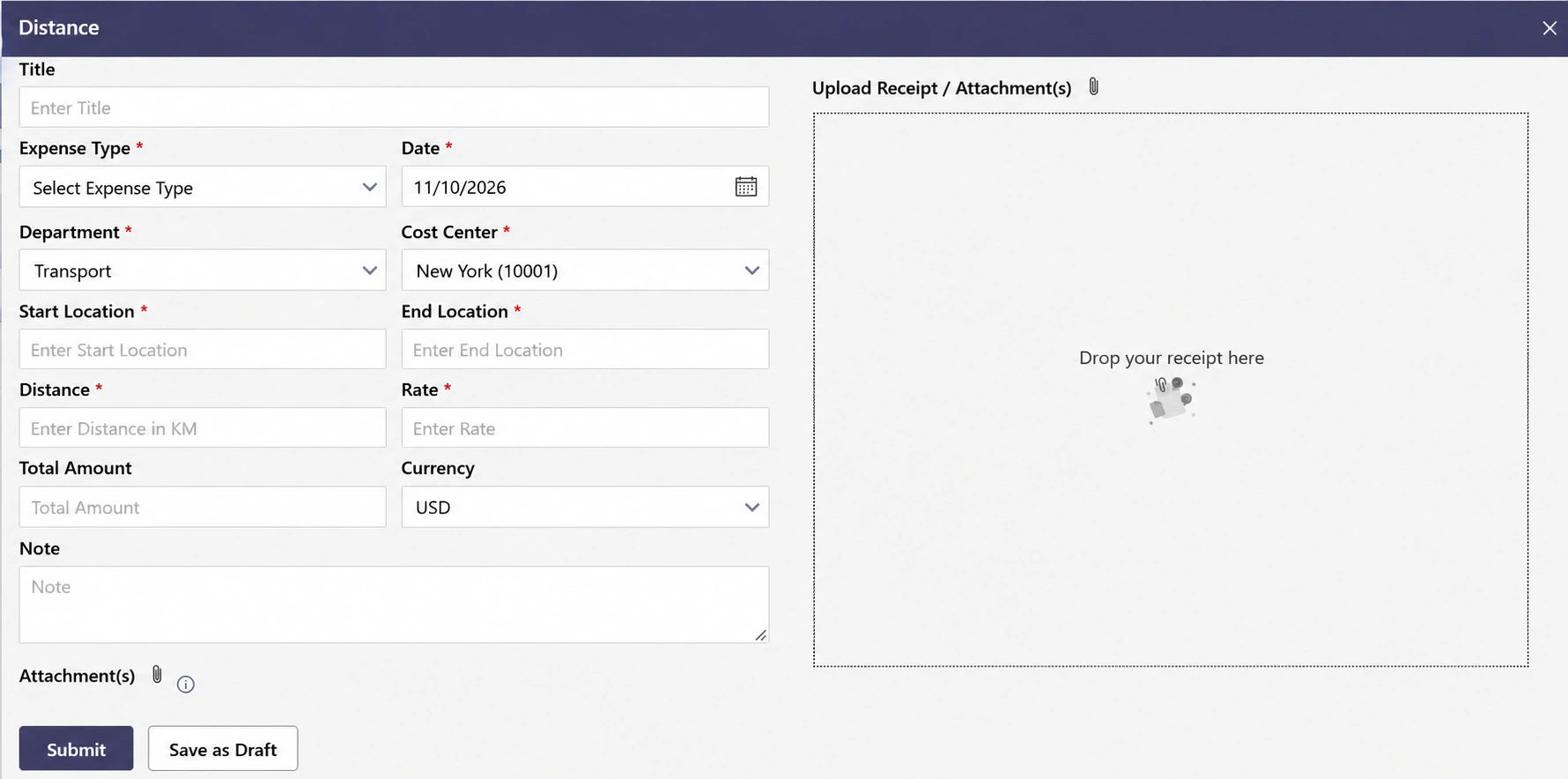
This setup suits fuel card expense tracking for business fleet fuel cards, especially for teams that already work in Teams, SharePoint, and Outlook. Explore the best expense tracking software or see pricing.
What Should Businesses Consider Before Choosing a Fleet Fuel Card?
Compare network acceptance, fees, spending controls, reporting, and how card data reaches your accounting system. Business fuel cards differ widely on these points. A card that works at the stations your drivers use beats a bigger discount they can’t claim. Ask providers for details in writing.
- Acceptance: confirm that stations on your real routes take the card
- Fees: ask for a full list of fleet fuel card fees, including annual, monthly, late, and transaction charges
- Spending limits: check that fuel card spending limits work per driver, per day, and per gallon
- Reporting: look for exports that open in your accounting or expense tool
- Credit terms: ask about credit checks, deposits, and payment cycles
Conclusion
Business fleet fuel cards give you control at the pump and clean data afterward. Pick a card that fits your routes, set clear spending limits, and give every driver a unique PIN. Then match each fill-up to a receipt and a mileage entry every week. That keeps fuel cost per mile tied to real numbers.
Still tracking fleet fuel expenses manually?
Expense 365 helps you track fuel expenses, manage receipts and monitor business spending in Microsoft 365 – all in one place.
Frequently Asked Questions
Are fuel cards worth it for small businesses?
yes. Even a few vehicles benefit from itemized records, driver PINs, and spending limits, and some programs add fuel discounts. The answer depends on fuel volume, fees, and whether stations on your routes accept the card. Compare the fee schedule with your expected savings before you sign up.
What is the difference between a fleet fuel card and a business credit card?
A fleet fuel card is built for vehicle costs. It asks for a PIN and odometer reading, limits purchases to fuel and related items, and reports detailed line items. A business credit card works almost anywhere, but it usually offers fewer pump-level controls and less fuel data.
How do you handle personal charges on a company fuel card?
Start with a written policy that bans personal fills, and give each driver a unique PIN. Review weekend and after-hours transactions. If personal use is allowed, log business and personal miles, and have the employee repay the personal share. Without a mileage record, any split is a guess.
Is a fuel card better than mileage reimbursement?
It depends on who owns the vehicle. Fuel cards suit company-owned vehicles, because the business pays for fuel directly and controls the data. Mileage reimbursement suits employees who drive their own cars, since it pays for business miles only. Some firms use both for different roles.
Do fleet fuel cards need a credit check?
Many do, but rules vary by provider. Some review your business credit, some also review the owner’s personal credit, and others ask for a deposit. Ask each provider what it requires, how it sets your credit limit, and what happens when you go over it.
How long should you keep fuel card receipts and records?
The IRS generally points to three years from the date you file the return that uses the records. Some cases need longer. Keep receipts, statements, and mileage logs together for that period. Confirm your own retention rule with a tax adviser.


























