

Best HR Software for Employee Management: Top Tools for the Entire Employee Lifecycle

As your organization grows, managing employee records, onboarding, leave, attendance, performance, and daily HR requests becomes more challenging. The right HR software brings these activities into one place, helping HR teams stay organized, save time, and support managers with better visibility.
- Choose HR software that matches your business size, HR goals, and future growth plans.
- Compare features, integrations, ease of use, and scalability before making a decision.
- Businesses using digital HR tools can reduce manual work and improve day-to-day HR operations.
- HR365 HRMS offers a complete employee management solution for organizations using Microsoft 365.
According to Gallup, only 21% of employees worldwide are engaged at work, highlighting the growing need for better employee management practices and the right HR software to support teams and managers effectively.
In this guide, we’ll compare the 15 best HR software for employee management in 2026, their key features, strengths, limitations, and how to choose the right solution for your business.
What Is HR Software for Employee Management?
HR software for employee management is a digital platform designed to centralize and automate a company’s employee data and daily HR processes. Instead of juggling scattered spreadsheets and paper files, a business uses this software to track everything from basic contact information and employment history to time-off requests, attendance, receipt management and performance reviews. It acts as a single, secure source of truth for all worker-related data.
Beyond storing employee records, these platforms manage the entire employee lifecycle from onboarding new hires to offboarding team members. Many HR software solutions include employee self-service portals, allowing team members to independently update their personal details, view pay stubs, and request vacation time. By automating these repetitive administrative tasks, the software reduces human error, ensures regulatory compliance, and frees HR teams to focus on strategic initiatives like company culture and employee retention.
Why Modern Businesses Need HR Software for Employee Management?
Employee management is no longer limited to storing personal records or approving leave requests. As businesses grow, HR teams handle many daily responsibilities, and managing them with spreadsheets, emails, and paper documents often leads to delays, missing information, and unnecessary manual work.
Here are some common challenges businesses face without HR software:
- Employee information is stored across multiple files and folders.
- Managers spend too much time following up on leave requests and approvals.
- New hire onboarding takes longer because documents and tasks are handled manually.
- Performance reviews become inconsistent or are delayed.
- Training records are difficult to track across departments.
- HR teams answer the same employee questions repeatedly.
- Important documents become harder to locate when they are needed.
These small problems quickly add up. Missed deadlines, slow approvals, and scattered information can affect productivity, employee satisfaction, and the overall experience for both HR teams and managers.
What Features Should You Look for in HR Software for Employee Management?
Not every HR platform offers the same value. Some tools focus only on attendance, while others specialize in recruitment or performance reviews. Before comparing products, it’s important to understand which features will support your business today and continue to meet your needs as your organization grows.
Here are the key features to look for:
1. Employee Directory
A centralized employee directory keeps contact details, job information, reporting managers, documents, and organizational structure in one secure location. HR teams can quickly find accurate information without searching through multiple files.
2. Digital Onboarding
New hires should be able to complete forms, review company policies, upload documents, and receive onboarding tasks before or on their first day. A structured onboarding process creates a better first impression and helps new team members become productive sooner.
3. Leave Management
Leave requests, approvals, and leave balances should be easy for both employees and managers to access. Automated notifications help avoid missed requests and reduce manual follow-ups.
4. Attendance and Timesheet Tracking
Look for software that records attendance and work hours accurately. Managers should be able to review submitted timesheets, monitor work patterns, and maintain clear records for projects and daily activities.
5. Performance Management
Regular goal setting, feedback, and performance reviews help managers support team development. A built-in performance module keeps review cycles organized and makes it easier to track progress over time.
6. Recruitment and Hiring
Hiring tools should help HR teams manage job openings, candidate applications, interview schedules, and hiring progress from one dashboard. This creates a more organized recruitment process.
7. Learning and Training
Training records, learning materials, and course completion should be easy to manage. This helps organizations build skills while giving managers visibility into learning progress.
8. Task and Workflow Management
HR activities often involve multiple departments. Task management features help assign responsibilities, monitor progress, and ensure important activities are completed on time.
9. Expense Management
Business expenses can quickly become difficult to manage when handled through emails or spreadsheets. An integrated expense module helps personnel submit claims, upload receipts, and track approval status from one place.
10. Dashboard
A dashboard gives HR teams and managers a real-time view of important HR information from one screen. A clear dashboard helps teams make faster decisions and stay updated on daily HR operations.
Top 12 HR Software for Employee Management
1. HR365 HRMS
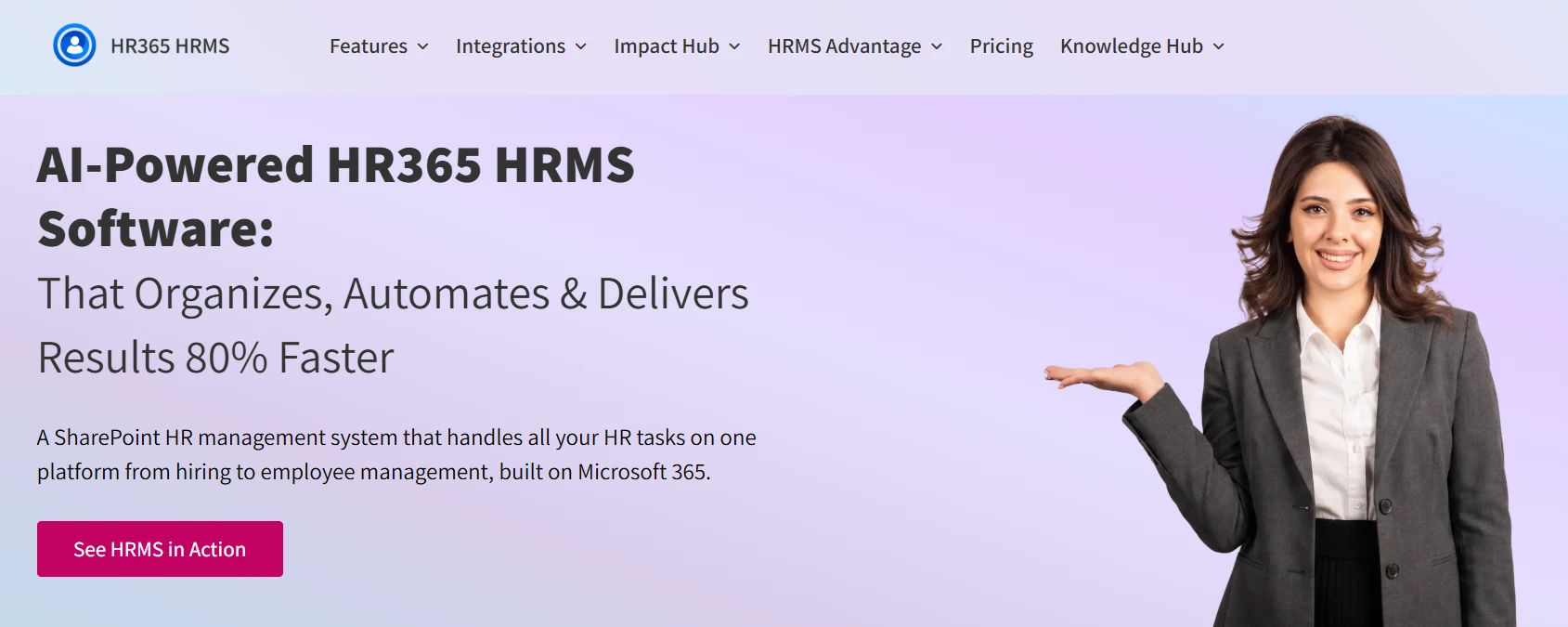
HR365 HRMS is a cloud-based HR software for employee management built for organizations using Microsoft 365. It works natively with SharePoint and Microsoft Teams, helping businesses manage HR operations from a familiar workspace.
Key Features
- Employee directory management
- Digital employee onboarding
- Leave management system
- Attendance and timesheets
- Performance management tools
- Recruitment and hiring
- Learning and training
- Expense claim management
- Interactive HR dashboard
- AI-powered HR automation
- Microsoft Teams integration
Ideal For: SMBs and organizations looking to manage HR within the Microsoft 365 and SharePoint ecosystem.
Pricing: Starts $7.99/User/month (14-day Free Trail)
G2 Rating: 4.8/5
2. BambooHR
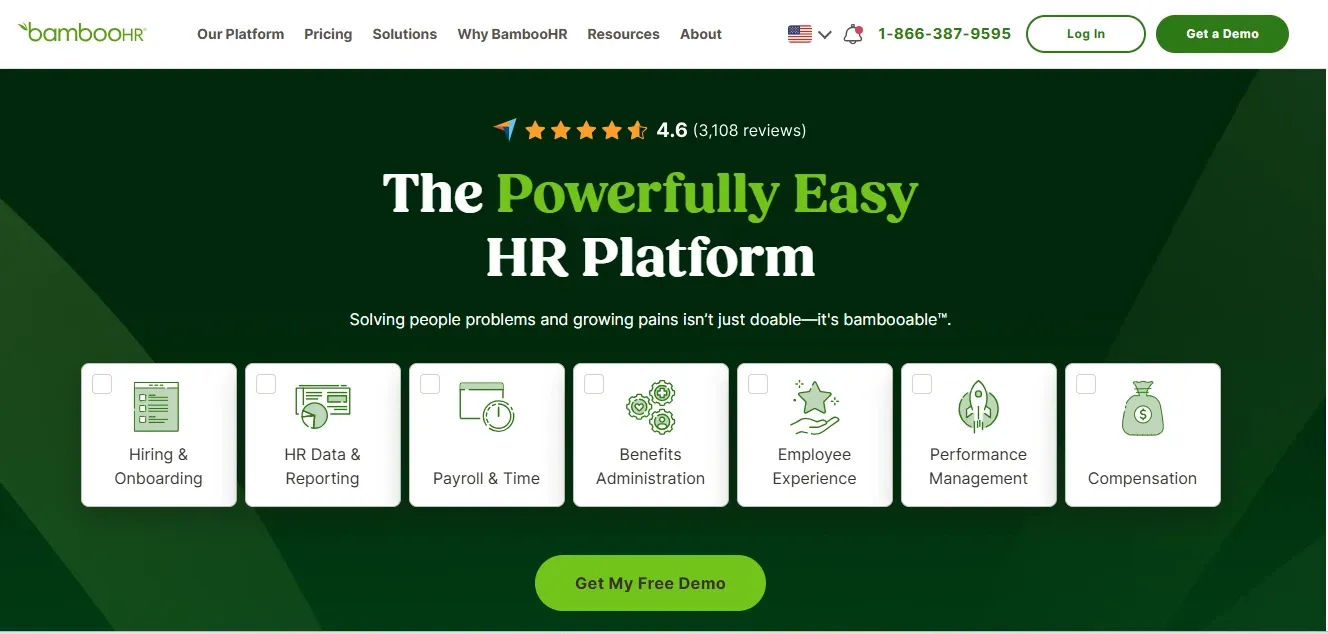
BambooHR is a cloud-based HR platform designed primarily for small and medium-sized businesses. It brings core HR processes together in one system, making it easier to manage employee information, hiring, onboarding, time off, and performance. Its clean interface and quick setup make it a popular choice for organizations looking for an easy-to-use HR solution.
Key Features
- Centralized employee records
- Digital onboarding workflows
- Time-off request management
- Employee self-service portal
- Performance review tools
- Custom workflow automation
- HR reporting dashboards
- Electronic document storage
- Mobile application access
- Employee satisfaction surveys
Ideal For: Small and medium-sized businesses looking for an easy-to-use HR platform.
Pricing: Starts at $10/user/month
G2 Rating: 4.4/5
3. HiBob
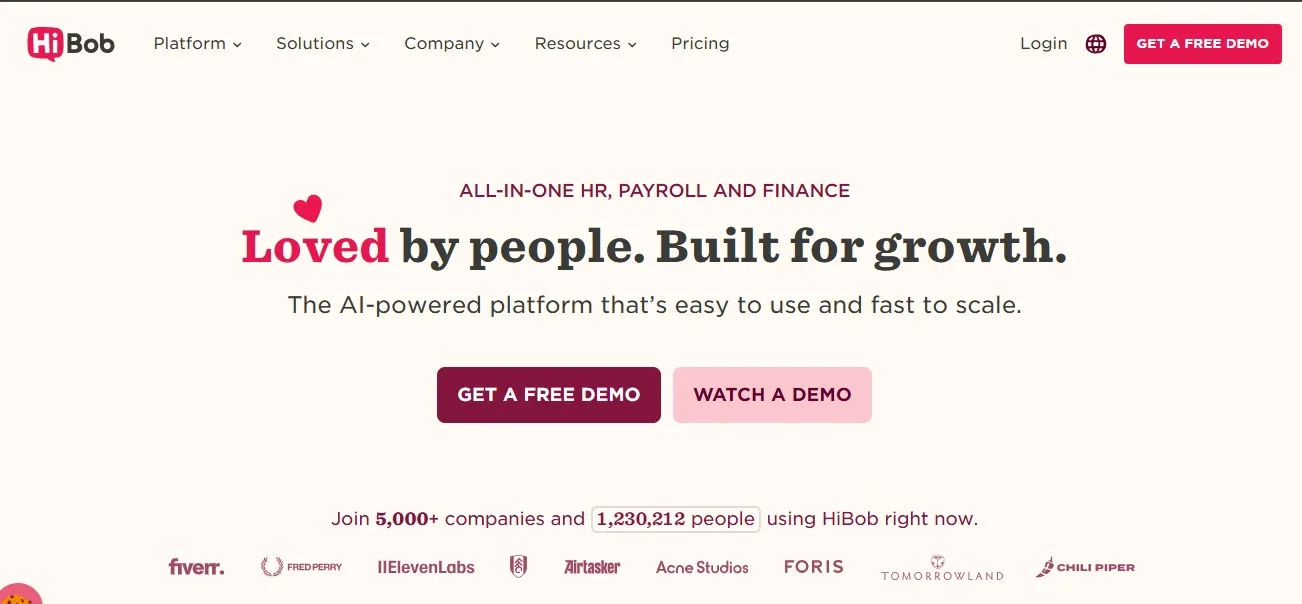
HiBob is a modern HR platform built for growing and mid-sized organizations that want to improve employee management and engagement. It combines core HR functions with performance management, surveys, workflows, and people analytics in one platform. The software is especially popular among businesses with hybrid and distributed teams.
Key Features
- Centralized employee database
- Performance review management
- Employee engagement surveys
- Custom approval workflows
- Goal tracking tools
- Time-off management
- People analytics dashboard
- Organizational chart visualization
- Employee self-service portal
- HR workflow automation
Ideal For: Growing businesses with hybrid or distributed teams.
Pricing: Custom pricing
G2 Rating: 4.5/5
4. Workday
Workday is an enterprise HR platform designed for large organizations with complex HR requirements. It combines human capital management, talent development, workforce planning, and advanced analytics into a single cloud-based solution. Its powerful reporting and scalability make it a preferred choice for global enterprises managing large teams.
Key Features
- Core human resources management
- Talent acquisition tools
- Performance management system
- Workforce planning capabilities
- Advanced people analytics
- Learning management platform
- Compensation planning tools
- Employee self-service portal
- Global workforce support
- Configurable business workflows
Ideal For: Large enterprises with complex HR operations and global teams.
Pricing: Custom pricing
G2 Rating: 4.1/5
5. Rippling
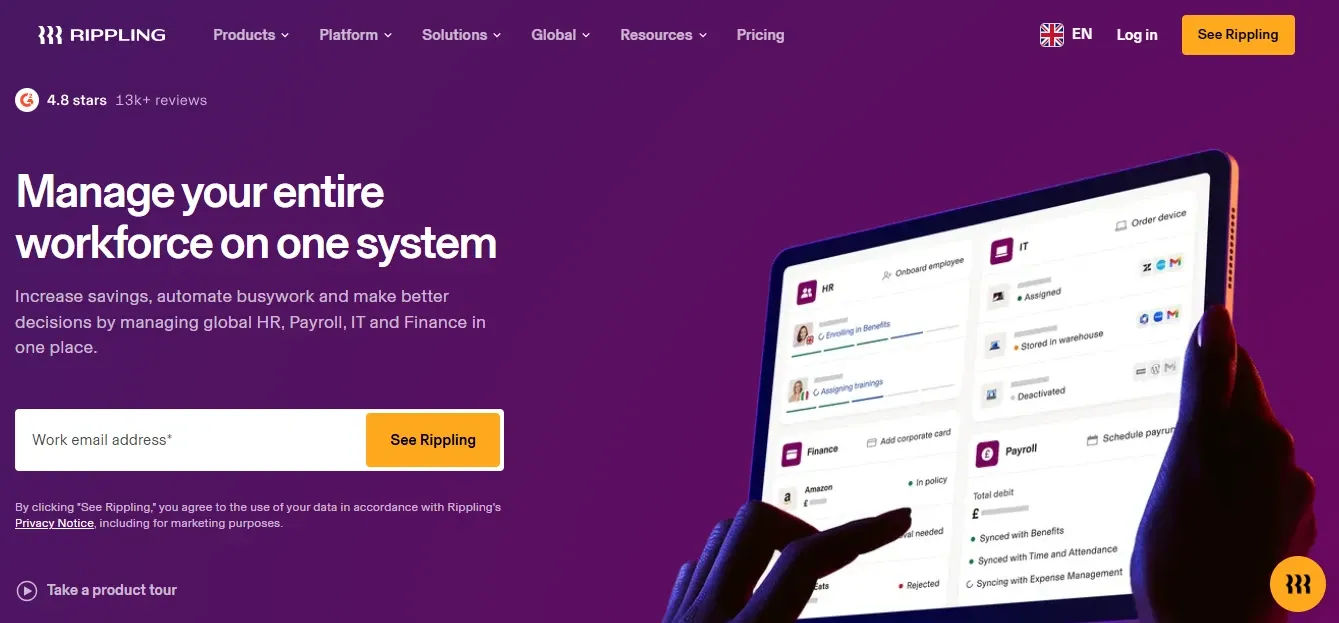
Rippling is a unified platform that combines HR, IT, and finance management in one system. It helps businesses manage employee onboarding & data, device access, and software permissions from a single dashboard. Its automation capabilities make it a strong choice for organizations that want to reduce manual administrative work across departments.
Key Features
- Employee records management
- Automated employee onboarding
- App access management
- Device lifecycle management
- Time and attendance tracking
- Workflow automation tools
- Custom approval workflows
- Employee self-service portal
- HR reporting dashboard
- Third-party app integrations
Ideal For: Growing businesses that want to manage HR and IT from one platform.
Pricing: Custom pricing
G2 Rating: 4.8/5
6. Gusto
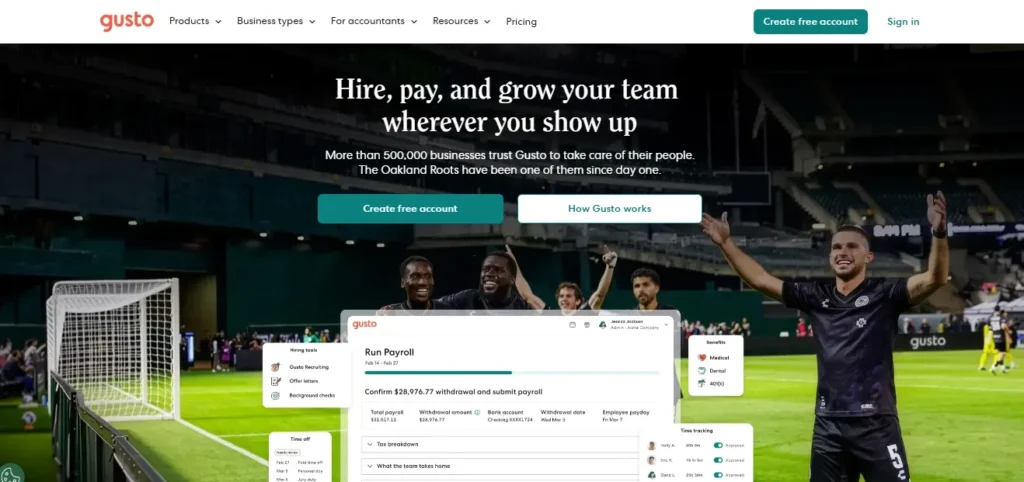
Gusto is a cloud-based HR platform built for small businesses that want a simple way to manage employee information, hiring, onboarding, time tracking, and team management. Its clean interface and straightforward setup make it a popular choice for organizations with limited HR resources. The platform focuses on making everyday HR tasks easier for both managers and team members.
Key Features
- Employee profile management
- Digital onboarding process
- Time and attendance tracking
- Employee self-service portal
- Document management system
- Performance feedback tools
- Team directory access
- HR reporting dashboard
- Workflow automation features
- Mobile-friendly platform
Ideal For: Small businesses looking for an easy-to-use HR management solution.
Pricing: Starts at $49/month + $6/user/month
G2 Rating: 4.5/5
7. Zoho People
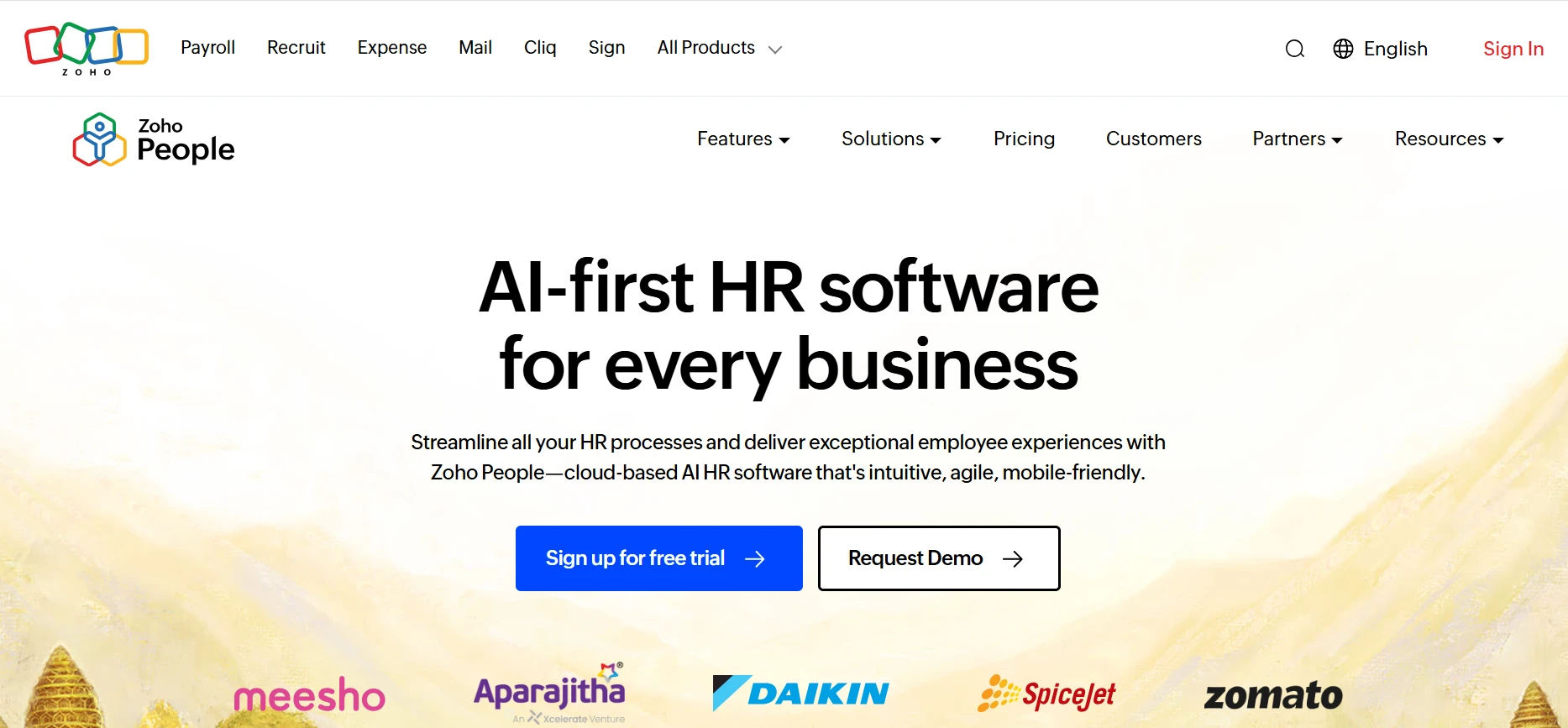
Zoho People is a cloud-based HR platform designed for small and growing businesses that want an affordable way to manage everyday HR activities. It combines employee records, attendance, leave, performance, and workflows into a single application. Businesses already using the Zoho ecosystem can easily connect it with other Zoho products.
Key Features
- Employee database management
- Attendance tracking system
- Leave management portal
- Performance appraisal tools
- Employee self-service access
- Shift scheduling management
- HR workflow automation
- Custom HR forms
- Reports and analytics
- Mobile application support
Ideal For: Small and growing businesses, especially those using the Zoho ecosystem.
Pricing: Starts at $1.50/user/month (30-Day Free Trial)
G2 Rating: 4.4/5
8. Factorial
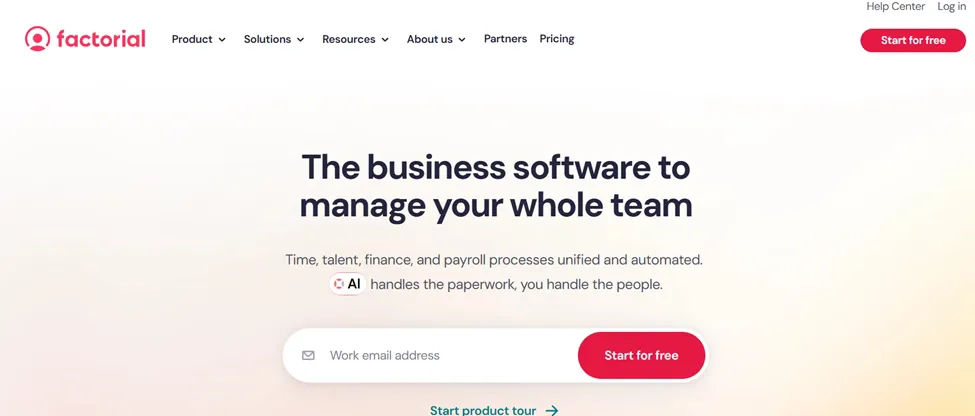
Factorial is an all-in-one HR platform built for small and medium-sized businesses looking to replace manual HR processes. It helps manage employee records, time tracking, recruitment, performance, and document storage from one centralized workspace. Its simple interface and practical features make it easy for HR teams to get started quickly.
Key Features
- Employee information management
- Time tracking system
- Leave management tools
- Recruitment tracking platform
- Performance review management
- Document storage center
- Employee self-service portal
- HR workflow automation
- Reports and analytics
- Mobile application access
Ideal For: Small and medium-sized businesses seeking an all-in-one HR solution.
Pricing: Custom pricing
G2 Rating: 4.5/5
9. Connecteam
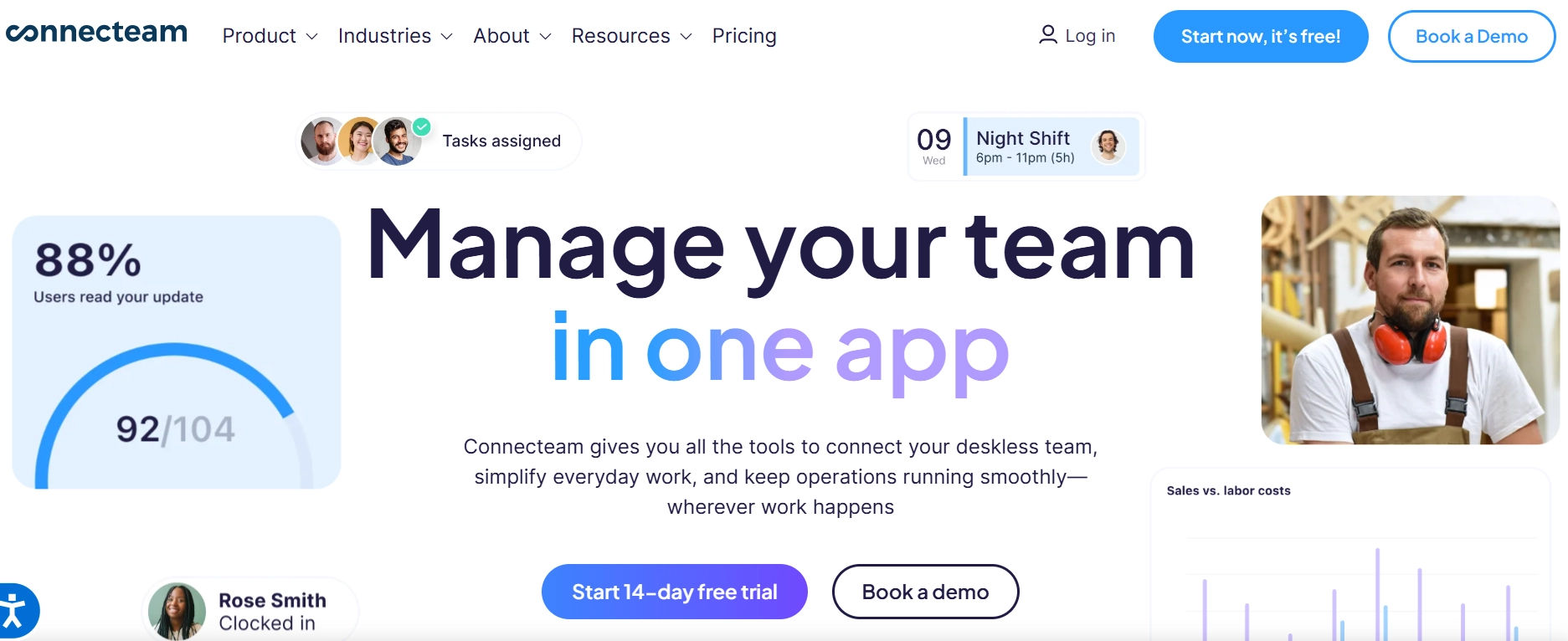
Connecteam is a mobile-first HR platform built for businesses with frontline, field, and deskless teams. It combines employee communication, scheduling, task management, time tracking, and HR tools in one application. The platform is widely used in industries such as retail, construction, hospitality, healthcare, and logistics.
Key Features
- Employee communication tools
- Work schedule management
- Time clock tracking
- Digital task management
- Employee onboarding process
- Leave request management
- Training and knowledge base
- Employee recognition tools
- Mobile-first workforce access
- Forms and checklists
Ideal For: Businesses with frontline, field, and deskless teams.
Pricing: Starts at $29/month (14-Day Free Trial)
G2 Rating: 4.7/5
10. SAP SuccessFactors
SAP SuccessFactors is a cloud-based human capital management platform built for large organizations with complex HR operations. It offers tools for employee management, recruitment, learning, performance, and workforce planning within a single enterprise solution. Its scalability and global capabilities make it a preferred choice for multinational organizations.
Key Features
- Core HR management
- Talent acquisition tools
- Performance management system
- Learning management platform
- Workforce planning capabilities
- Employee experience tools
- Succession planning features
- Advanced HR analytics
- Goal and competency tracking
- Global workforce support
Ideal For: Large enterprises managing global teams and complex HR processes.
Pricing: Starts at $6.30/user/month
G2 Rating: 3.9/5
11. ADP Workforce Now
ADP Workforce Now is a comprehensive HR platform designed for mid-sized and large businesses. It combines employee management, time tracking, talent management, benefits administration, and reporting in one cloud-based solution. Its long-standing presence in the HR industry makes it a trusted option for organizations looking for a reliable HR system.
Key Features
- Employee records management
- Time and attendance tracking
- Talent management tools
- Benefits administration
- Recruitment management
- Performance review system
- Employee self-service portal
- Workforce analytics dashboard
- Compliance reporting tools
- Mobile application access
Ideal For: Mid-sized and large businesses looking for a comprehensive HR platform.
Pricing: Custom pricing
G2 Rating: 4.2/5
12. UKG Pro
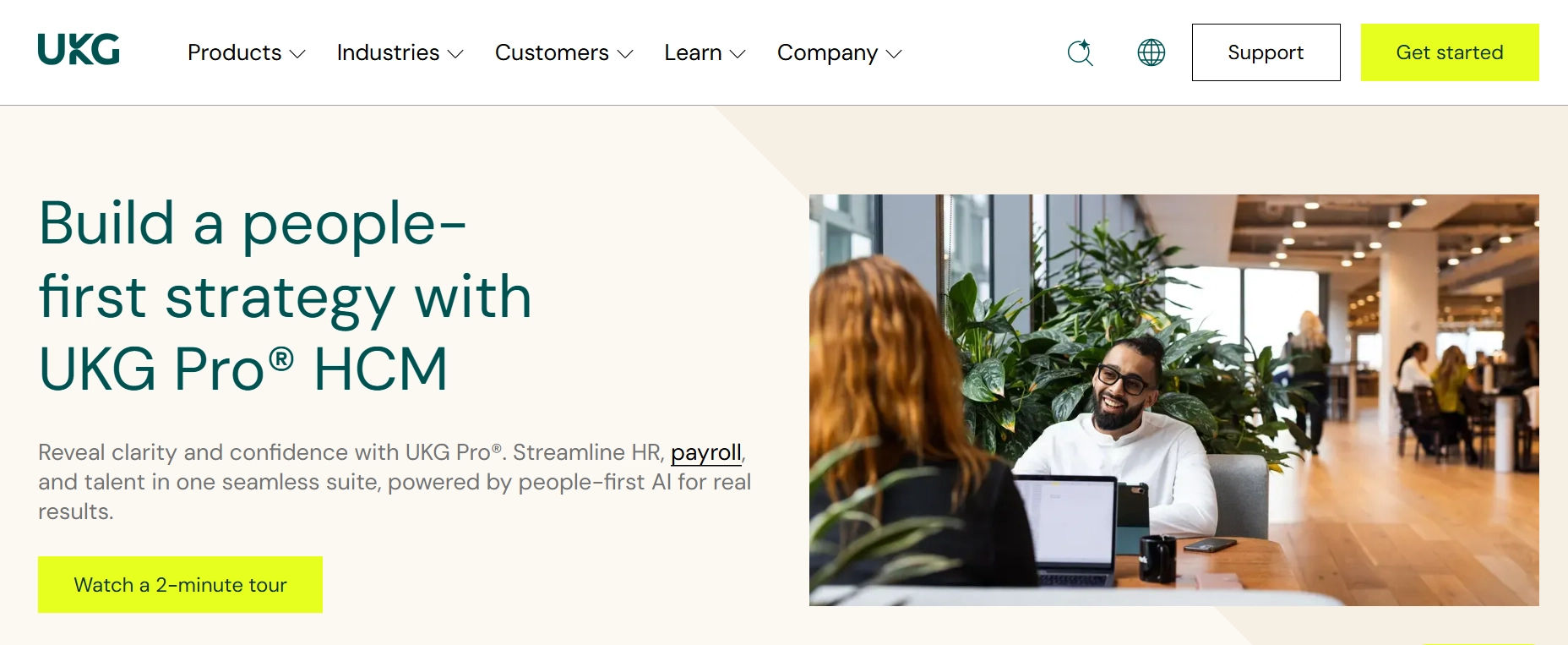
UKG Pro is a cloud-based HR platform designed for mid-sized and large organizations that need advanced employee management and talent development tools. It brings together employee records, performance management, learning, and workforce analytics in one system. The platform is well suited for businesses looking to support long-term employee growth while gaining deeper insights into HR data.
Key Features
- Employee records management
- Talent development tools
- Performance review management
- Workforce analytics dashboard
- Learning management platform
- Employee self-service portal
- Time and attendance tracking
- Goal tracking system
- HR reporting tools
- Mobile workforce access
Ideal For: Mid-sized and large organizations focused on talent development and workforce insights.
Pricing: Custom pricing
G2 Rating: 4.2/5
What Are the Benefits of Using HR Software for Employee Management?
The right platform helps businesses build consistent HR processes, save time, improve collaboration, and create a better experience for managers and team members. As organizations grow, these benefits become even more valuable because HR activities become more frequent and complex.
1. Saves Time on Daily HR Tasks
Manual work such as updating employee records, approving leave requests, or sharing HR documents can take hours every week. HR software automates routine activities, helping HR teams focus on hiring, employee development, and business priorities.
2. Keeps Employee Information Organized
Instead of storing data across emails, spreadsheets, and paper files, all employee records remain in one secure location. This makes information easier to find and reduces the risk of outdated or duplicate records.
3. Improves the Employee Experience
A self-service portal gives team members quick access to leave balances, company documents, personal information, and HR requests. This reduces dependency on HR while making everyday tasks faster and more convenient.
4. Supports Better Decision-Making
Interactive dashboards and reports provide real-time visibility into important HR metrics such as attendance trends, hiring progress, onboarding status, and performance reviews. Managers can make informed decisions using accurate and up-to-date information.
5. Creates Consistent HR Processes
Standardized workflows help ensure onboarding, approvals, performance reviews, and other HR activities follow the same process across every department. This reduces delays and improves overall efficiency.
6. Grows with Your Business
As your organization expands, HR responsibilities increase. The best HR software for employee management can support more users, additional departments, and new HR processes without requiring a complete system replacement. This makes it a long-term investment that continues to deliver value as your business evolves.
How Do You Choose the Right HR Software for Your Business?
With so many HR platforms available, selecting the right one can feel overwhelming. The best HR software for employee management is not necessarily the one with the most features—it is the one that fits your business goals, supports your HR processes, and grows with your organization. Before deciding, evaluate each solution based on your current needs.
Understand Your Business Requirements
Start by identifying the HR challenges you want to solve. Whether your priority is onboarding, attendance tracking, performance management, recruitment, or employee records, your software should address those needs without adding unnecessary complexity.
Consider Ease of Use
A simple and intuitive interface encourages faster adoption across the organization. HR teams, managers, and employees should be able to complete everyday tasks with minimal training.
Look for Essential HR Features
Choose a platform that includes the features your business needs today while giving you room to expand later. A complete HR solution should support employee records, onboarding, leave management, attendance, performance, recruitment, learning, expense management, dashboards, and automation from one place.
Check Integration Capabilities
Your HR software should work well with the tools your organization already uses. If your business relies on Microsoft 365, selecting a solution that integrates with SharePoint and Microsoft Teams can reduce manual work and improve user adoption.
Think About Future Growth
Your HR needs will change as your business grows. Select software that can support additional users, departments, locations, and new HR processes without requiring a major system change.
Evaluate Customer Support and Training
Reliable customer support, onboarding assistance, and product documentation can make implementation much smoother. A responsive support team also helps resolve issues quickly when your HR team needs assistance.
Compare Pricing and Value
Don’t focus only on the lowest price. Compare the features, scalability, support, and long-term value offered by each platform. A solution that meets your business needs today and continues to support future growth often delivers a better return on investment.
By carefully comparing features, usability, integrations, and scalability, you can confidently choose an HR Software that supports both your HR team and your organization’s long-term success.
Why Is HR365 HRMS a Strong Choice for Your Business?
- Reduce manual work using AI-powered automation and configurable workflows.
- Monitor HR activities through interactive dashboards and real-time reports.
- Built for Microsoft 365 with native integration to SharePoint and Microsoft Teams.
- Manage the complete employee lifecycle from recruitment to performance management.
- Centralize employee information with a secure Employee Directory.
- Speed up onboarding using digital forms, task assignments, and document collection.
- Simplify leave management with automated requests and approval workflows.
- Track attendance and timesheets from a single dashboard.
- Support continuous growth with Performance Management and Learning & Training modules.
- Manage expense claims with an organized approval process.
- Scale as your business grows without switching to another HR platform.
Whether you’re a small business or a growing enterprise, HR365 HRMS provides a practical and connected HR solution that helps organizations manage people more efficiently while making the most of their Microsoft 365 investment.
Conclusion
Finding the best HR software for employee management starts with understanding your organization’s needs, growth plans, and daily HR challenges. The right solution should help your HR team work more efficiently, support managers with better visibility, and create a better experience for every team member. By comparing usability, integrations, scalability, and overall value, you can confidently choose a platform that supports your business for years to come.
For organizations using Microsoft 365, HR365 HRMS offers a connected HR experience within the tools your teams already use every day. Instead of managing multiple systems, you can bring your HR processes together in one platform, helping your organization stay organized, save time, and support future growth.
Manage Every HR Process from One Platform
Book a Demo to see how HR365 HRMS helps you manage every HR process in one centralized solution built for Microsoft 365.
Frequently Asked Questions
What is the best HR software for employee management?
The best HR software for employee management depends on your business size, budget, and requirements. Solutions like HR365 HRMS, BambooHR, HiBob, Workday, and Rippling are popular choices, each offering different features for employee records, onboarding, performance management, leave tracking, and recruitment.
What features should HR software include?
A good HR platform should include employee records, onboarding, leave management, attendance and timesheets, performance management, recruitment, learning and training, dashboards, reporting, and workflow automation. Integration with your existing business tools is also an important factor.
Is HR software suitable for small businesses?
Yes. Many HR software solutions are designed specifically for small businesses. They help organize employee information, automate routine HR tasks, reduce paperwork, and support business growth without increasing administrative work.
How does HR software improve employee management?
HR software centralizes employee information, automates repetitive tasks, speeds up approvals, improves communication, and gives managers better visibility into HR activities. This creates a more organized and consistent employee management process.
Can HR software integrate with Microsoft 365?
Yes. Some HR platforms, including HR365 HRMS, integrate with Microsoft 365, SharePoint, and Microsoft Teams. This allows organizations to manage HR activities within the Microsoft environment they already use every day.
How do I choose the right HR software for my business?
Start by identifying your business needs, required features, budget, and future growth plans. Compare usability, integrations, scalability, customer support, and reporting capabilities before making a final decision.


_JiluXJRGNl.svg)























