

360 Degree Feedback Tools: Compare the Best Software for Employee Feedback

Choosing the right 360-degree feedback tool helps organizations collect structured feedback from managers, peers, direct reports, and other relevant stakeholders. Unlike traditional performance reviews that rely mainly on a manager’s assessment, 360-degree feedback provides multiple perspectives on an employee’s leadership, communication, collaboration, and overall performance.
The best 360-degree feedback software makes it easier to create customized surveys, collect confidential responses, analyze feedback, and turn evaluation results into employee development plans. However, tools differ in their feedback workflows, reporting capabilities, performance management features, and integrations.
In this guide, we’ll compare 11 of the best 360-degree feedback tools in 2026, explore their key features, and explain what to consider when choosing software for your organization. We’ll also look at Performance 365, a SharePoint performance management solution for organizations using Microsoft 365.
- 360-degree feedback tools collect performance insights from managers, peers, direct reports, and other stakeholders.
- The best software supports customizable feedback surveys, confidential responses, automated review cycles, and performance reporting.
- Different tools serve different needs, from dedicated employee feedback to complete performance management.
- Integration with Microsoft 365, HR systems, and collaboration platforms can simplify feedback workflows.
- Before choosing a tool, compare its feedback features, reporting capabilities, integrations, scalability, and pricing.
- Performance 365 is an option for organizations looking to manage employee performance within the Microsoft 365 ecosystem.
According to report, employees who receive regular feedback are 14.9% more likely to be engaged, boosting productivity. Harvard Business Review also highlights that 360-degree feedback fosters a culture of continuous improvement, enabling managers to refine their approach using real-time data.
Let’s delve into the importance of 360-degree feedback tools, how they work, and the key benefits they offer.
What is a 360 Degree Feedback Tool?
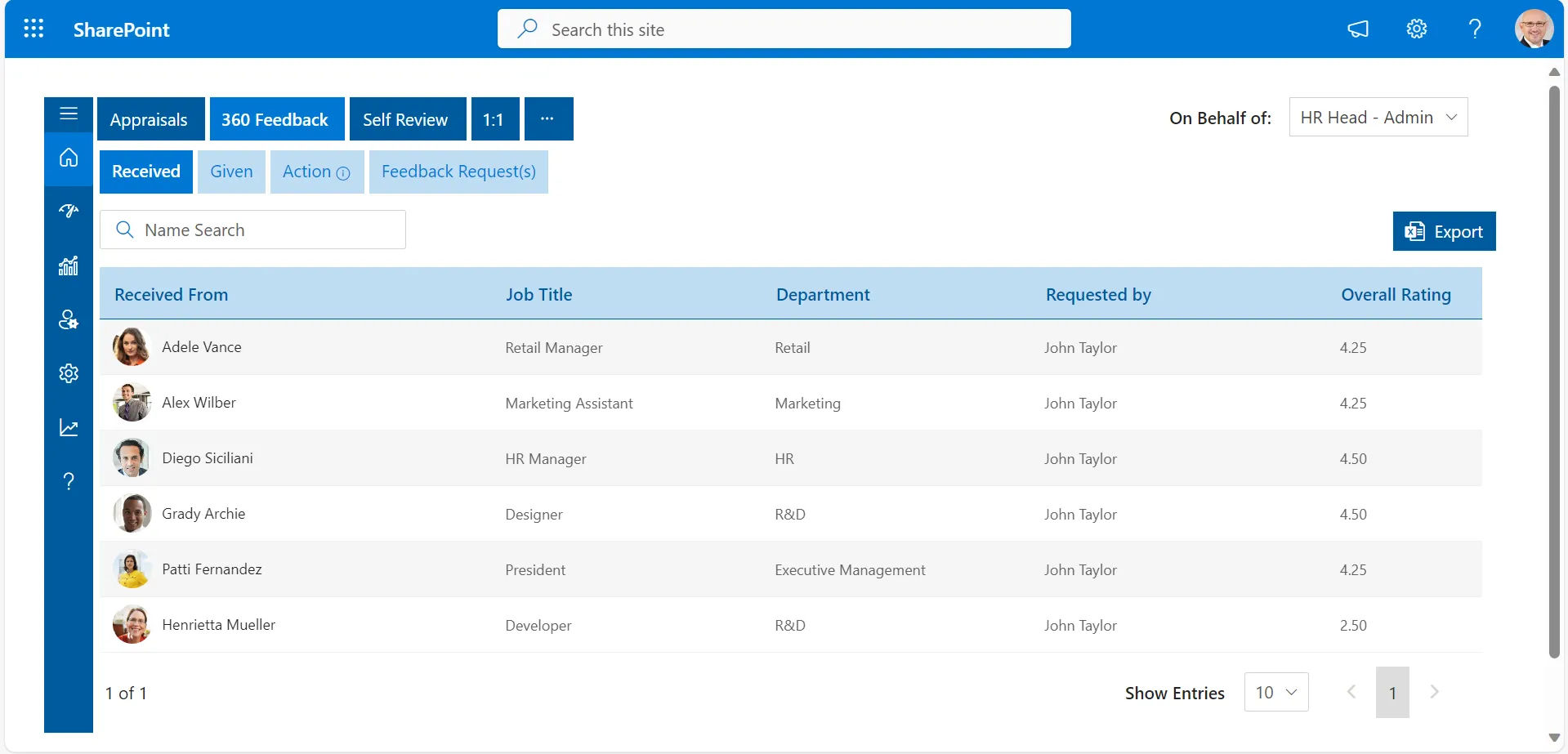
A 360-degree feedback tool is a performance appraisal system used to gather feedback on an employee’s performance from a variety of sources. These sources typically include peers, subordinates, supervisors, and sometimes even customers. This method gives managers a comprehensive understanding of their strengths and areas for growth.
Unlike traditional performance reviews that rely only on feedback from a manager, 360-degree feedback gathers insights from a variety of perspectives, including peers and team members. The aim is to help managers see how their actions impact others and to foster self-awareness, ultimately improving leadership effectiveness.
Why 360 Degree Feedback Tools are Essential for Organization?
360-degree feedback tools improve leadership and team performance. Here’s why they matter for manager development:
1. Promotes Self-Awareness:
360-degree feedback helps managers understand how others perceive them, improving their leadership style and personal growth.
- Improves communication based on feedback.
- Builds empathy and responsiveness to team needs.
2. Improves Leadership Skills:
360-degree feedback helps managers strengthen decision-making, emotional intelligence, and conflict resolution skills.
- Develops key leadership skills through targeted feedback.
- Builds stronger relationships and team trust.
3. Boosts Accountability:
360-degree feedback helps managers identify strengths, address weaknesses, and take ownership of their growth.
- Encourages proactive improvement based on feedback.
- Builds accountability and team trust.
4. Enhances Team Engagement:
360-degree feedback makes employees feel valued, improving team engagement and communication.
- Encourages open feedback and employee involvement.
Boosts team morale and productivity.
5. Supports Continuous Improvement:
360-degree feedback helps managers track progress, improve leadership skills, and support ongoing development.
- Encourages continuous leadership improvement.
Helps track performance trends over time.
Top 11 Best 360 Degree Feedback Tools
Explore the top 11 360-degree feedback tools in 2026 that improve leadership, team performance, and employee development.
#1. Performance 365
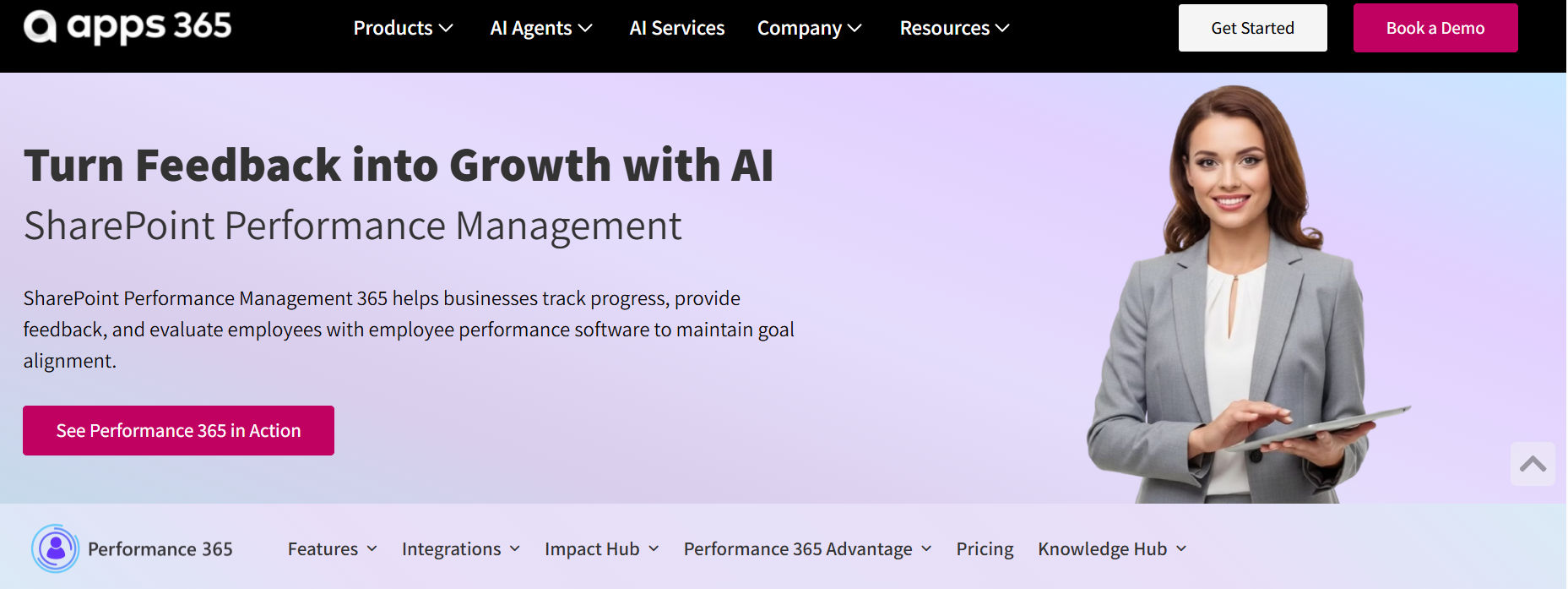
Performance 365 takes the top spot with its comprehensive and user-friendly 360-degree feedback features. This tool allows businesses to gather feedback from multiple sources, track progress over time, and align manager development with organizational goals.
Key Features:
- 360-Degree Feedback: Gather feedback from peers, managers, and direct reports to offer a holistic view of employee performance.
- Goal Tracking: Align individual goals with organizational objectives and track progress over time.
- Real-Time Feedback: Provide immediate feedback to encourage continuous development.
- Employee Development Insights: Identify strengths and areas for growth through actionable insights.
Why it’s Great for Employee Success:
- Easy integration with Microsoft 365 for organizations already using Microsoft tools.
- Comprehensive, actionable feedback to help managers grow effectively.
#2. Leapsome

Leapsome is a versatile performance management platform that prioritizes employee growth and offers extensive customization to meet your team’s unique needs. It offers a seamless 360-degree feedback system that integrates easily with various other HR tools.
Key Features:
- Customizable feedback templates tailored to your business.
- Continuous feedback to foster real-time development.
- Learning and development integration to support career growth.
#3. 15Five

15Five is a performance management and employee engagement tool that focuses on weekly check-ins and continuous feedback, helping managers stay aligned with team goals.
Key Features:
- Weekly check-ins to track progress.
- 360-degree feedback from multiple organizational levels.
- Recognition features to promote a positive work environment.
#4. Teamflect
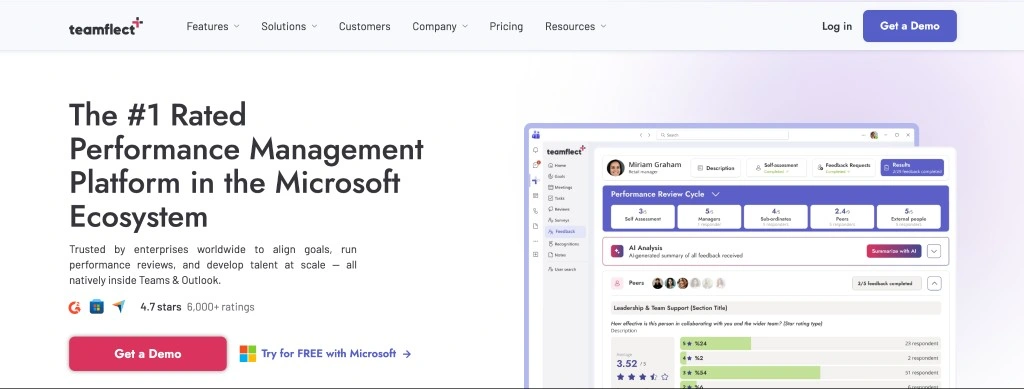
Teamflect is employee feedback software for Microsoft Teams that grows into full performance management – bringing OKRs, performance reviews, and recognition directly into Teams and Outlook without a separate login.
Key Features:
- 360-Degree Feedback: Collect input from peers, managers, and direct reports, including instant, anonymous, and external feedback, right inside Microsoft Teams.
- Goal Tracking: Cascade OKRs across departments and teams, with check-ins and progress tracking built in.
- Native Microsoft 365 Integration: Operates entirely within Teams and Outlook – no extra tool, tab, or login required.
#5. Lattice
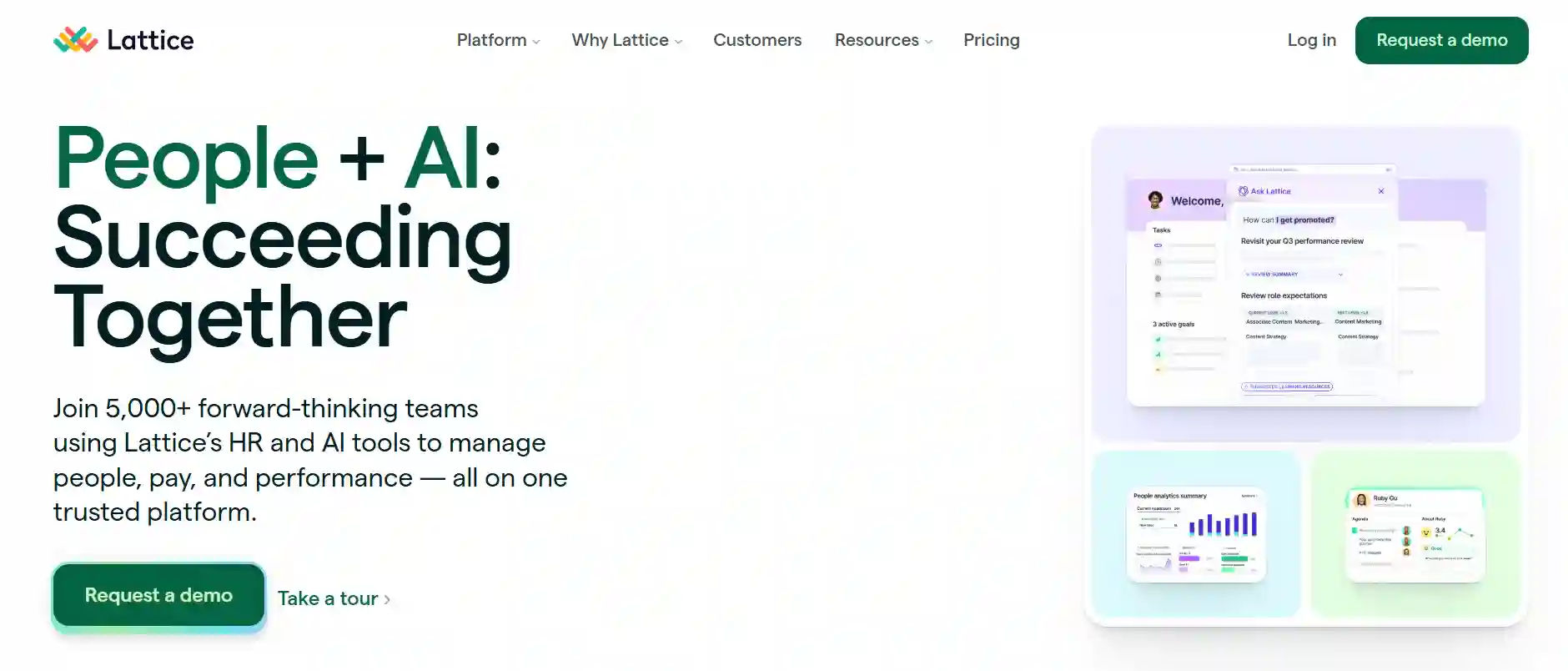
Lattice is an all-in-one people management platform designed to drive performance and engagement. It is popular for providing a customizable approach to performance reviews, goal management, and real-time feedback to empower both managers and employees.
Key Features:
360-degree feedback, performance reviews, and employee recognition.
OKRs and goal tracking to ensure alignment with organizational objectives.
Continuous feedback loops to maintain employee growth.
Deep analytics to measure performance trends and employee sentiment.
#6. PeopleGoal

PeopleGoal offers a dedicated 360-degree feedback tool for performance and employee engagement management. It streamlines performance evaluations and goal setting while tracking manager development.
Key Features:
- 360-degree feedback from managers, peers, and direct reports.
- Customizable surveys and goal tracking.
- Clear insights into employee strengths and areas for growth.
#7. Zoho People

Zoho People is a comprehensive HR management system that includes performance management features, such as 360-degree feedback, to help organizations monitor employee growth and engagement. It integrates seamlessly with HR processes, making it easier to track and manage performance in real-time.
Key Features:
360-degree feedback for comprehensive performance evaluations.
Customizable performance appraisals and review cycles.
Goal setting, tracking, and alignment with organizational objectives.
Real-time feedback for continuous improvement.
Integration with HRIS for better workflow management.
#8. Trakstar
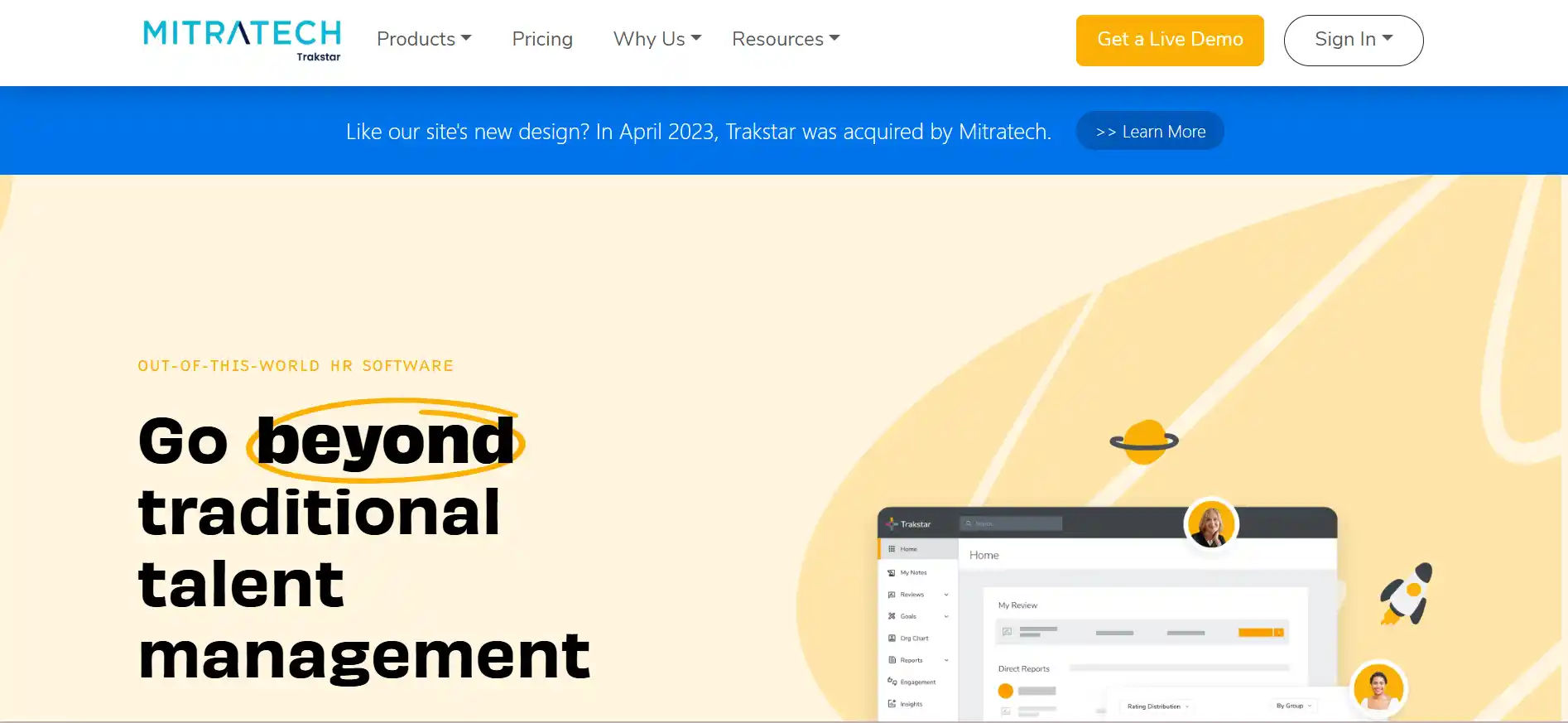
Trakstar offers a suite of performance management tools, including 360-degree feedback, for improving employee performance and tracking development.
Key Features:
- 360-degree feedback from peers, managers, and subordinates.
- Customizable reviews and goal-setting features.
- Performance tracking to measure progress over time.
#9. Reflektive

Reflektive combines 360-degree feedback with goal management tools, fostering a feedback-driven culture within organizations.
Key Features:
- 360-degree feedback from peers and supervisors.
- Continuous feedback loops for real-time performance improvement.
- Goal management tools to track development.
#10.Peoplebox AI
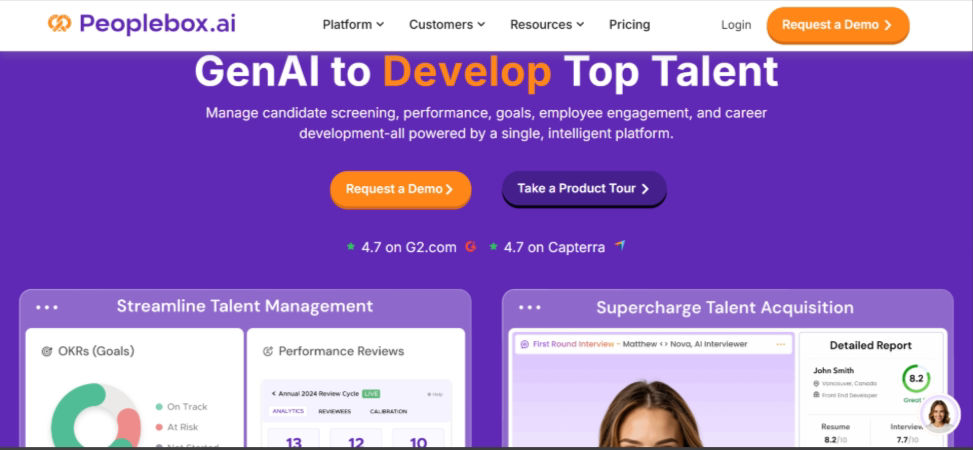
Peoplebox AI combines performance management, OKR tracking, and 360-degree feedback into a unified platform designed to help organizations align goals and improve employee performance using data-driven insights.
Key Features:
- 360-degree feedback integrated with OKR and performance tracking.
- AI-driven insights for performance improvement and goal alignment.
- Continuous feedback and real-time performance analytics.
#11. Clear Company

Clear Company offers a suite of talent management tools, including 360-degree feedback, designed to help organizations enhance employee development.
Key Features:
- 360-degree feedback from multiple sources.
- Goal alignment tools to ensure focus on organizational objectives.
- Development resources to foster continuous growth.
Top Features of Effective 360 Degree Feedback Tools
When selecting a 360-degree feedback tool, it’s essential to choose one with features that support effective manager development. Here are the top features to look for:
1. Customizable Feedback Surveys:
A good tool allows you to tailor the feedback survey to suit your organization’s needs. Customization ensures that the questions align with the key competencies required for effective management.
- Focus on leadership-specific questions like communication, delegation, and conflict management.
- Modify the surveys based on the development goals of each manager.
2. Anonymous Feedback Collection:
Anonymity encourages honest and open feedback. When employees know their responses are anonymous, they’re more likely to provide constructive and truthful insights, which are crucial for manager growth.
- Encourages candid feedback without fear of repercussions.
- Builds trust between managers and their teams.
3. Real-Time Analytics and Reports:
Modern 360-degree feedback tools provide real-time analytics that allow managers to view and interpret feedback instantly. This feature enables quicker decision-making and faster improvements.
- Managers can act on feedback without waiting weeks for reports.
- Immediate access to insights helps identify patterns and trends in performance.
4. Actionable Insights:
Feedback should not be generic but should provide clear, actionable recommendations. Effective tools break down feedback into manageable steps, helping managers focus on areas that will drive improvement.
- Tools should give suggestions on how to improve leadership qualities.
- Actionable insights allow managers to set goals and track progress.
5. Integration with Other Tools:
A 360-degree feedback tool that integrates with performance management software, HR tools, and learning management systems can streamline the development process. Integration provides a comprehensive view of performance across various platforms.
- Integrates seamlessly with existing tools used in the organization.
- Provides a unified platform for tracking employee and manager development.
How 360 Degree Feedback Tools Benefit Organizations
Using 360-degree feedback tools provides significant advantages not only for individual managers but for organizations as a whole. Here are some of the benefits:
1. Personal Growth:
Managers get a chance to identify their strengths and weaknesses through multiple perspectives. This self-awareness is the first step toward personal and professional growth.
- Managers become better leaders as they understand their impact on others.
- Feedback helps them become more adaptable and self-reflective.
2. Improved Decision Making:
With 360-degree feedback, managers get a comprehensive view of their decision-making processes. Feedback helps them make more informed decisions and align their strategies with organizational goals.
- Managers can learn from past mistakes and avoid making similar errors.
- More informed decisions lead to better business outcomes.
3. Better Communication:
360-degree feedback tools encourage open communication between managers and their teams. This transparency helps in building trust and collaboration.
- Managers learn how to communicate more effectively with their teams.
- Open communication fosters a positive work environment.
4. Higher Retention Rates:
When managers actively develop their leadership skills, they contribute to higher employee satisfaction and retention. Teams are more likely to stay when they feel supported and valued by their managers.
- Better leadership leads to better employee experiences.
- Employees are more likely to stay with managers who foster their growth.
5. Increased Organizational Alignment:
Managers who receive regular feedback can align their efforts with organizational goals. This alignment drives better performance and contributes to the overall success of the company.
- Managers work towards goals that directly impact the company’s mission.
- Alignment ensures that all teams are working towards the same objectives.
360 Degree Feedback Tool Best Practices
To get the most from 360-degree feedback tools, managers should follow best practices for collecting feedback, taking action, and improving performance. Here are the key practices:
- Use Tailored Feedback Surveys: Customize surveys to assess role-specific leadership skills and competencies.
- Ensure Confidentiality and Anonymity: Keep responses anonymous to encourage honest and constructive feedback.
- Encourage Constructive Feedback: Focus on specific, actionable suggestions rather than general comments.
- Provide Regular Feedback: Conduct frequent check-ins to support continuous improvement beyond annual reviews.
- Create Action Plans: Turn feedback into clear development goals and improvement strategies.
Incorporate Self-Assessment: Help managers compare their self-evaluations with feedback from others. - Foster a Culture of Openness: Encourage honest communication and view feedback as an opportunity for growth.
- Act on Feedback: Take action on feedback to build trust, improve engagement, and support continuous growth.
Conclusion
360-degree feedback tools help organizations evaluate leadership and employee performance through feedback from multiple perspectives. They give managers a clearer understanding of their strengths, identify areas for improvement, and support continuous professional development.
When choosing a solution, consider its feedback collection process, reporting capabilities, confidentiality controls, integrations, and performance management features.
For organizations using Microsoft 365, Performance 365 offers a way to manage employee performance reviews, feedback, and development within the Microsoft ecosystem.
Explore Performance 365 to see how it can support your organization’s performance management process.
Ready to improve your employee performance reviews? Book a free demo of Performance 365.
Join Our Creative Community
Frequently Asked Questions
What is a 360-degree feedback tool?
A 360-degree feedback tool collects feedback from multiple sources, such as peers, subordinates, and managers, to provide a well-rounded evaluation of an employee’s performance.
How often should a manager receive 360-degree feedback?
Ideally, managers should receive feedback quarterly or annually to ensure they are making consistent progress in their leadership development.
Why is 360-degree feedback important for managers?
It helps managers understand their strengths and weaknesses from different perspectives, promoting personal growth, better decision-making, and improved communication.
Can 360-degree feedback tools improve employee engagement?
Yes, when managers use feedback tools effectively, it boosts employee engagement by fostering open communication, trust, and a commitment to growth.
How do I choose the best 360-degree feedback tool?
Look for tools that offer customizable surveys, real-time analytics, and integration with other performance management systems to ensure they align with your organizational needs.

























