

Contract Novation: Purpose, Process & Checklist for 2027

A business may sell a division, bring in a new service provider, or transfer a project to another company. But what happens to the contracts already signed with customers, suppliers, and business partners?
Contract novation replaces an existing contractual relationship with a new one, transferring agreed rights and obligations to an incoming party.
All parties involved must agree to the substitution for the novation to take legal effect.
Unlike assignment, novation involves the transfer of both contractual rights and obligations, subject to the terms of the agreement.
A valid novation requires a clear agreement defining the parties, transferred obligations, consent, and terms governing the new contractual relationship.
An existing agreement cannot always move to another party without approval. The incoming company must accept the contract terms and rules, while the outgoing party needs a clear release from its commitments.
Contract novation offers a legal way to transfer a contractual relationship with the consent of everyone involved.
In this blog, we explain how novation works, when businesses need it, its legal requirements, and how to manage the process without losing control of important agreements.
What Does Contract Novation Actually Mean?
Contract novation is a legal process in which parties agree to end an existing contractual relationship and establish a new one. It may involve transferring the duties and benefits of an agreement to another party or establishing a new agreement between the existing parties.
Unlike a simple transfer of contractual benefits, novation of a contract can release the outgoing party from future responsibilities and place them with the incoming party.
For example, Company A signs a three-year maintenance agreement with Company B. After one year, Company A sells its maintenance business to Company C. All three companies agree that Company C will take over the service commitments, and Company A will no longer be responsible for future work.
Why Would a Business Need to Novate a Contract?
Businesses often enter long-term agreements, but their operations may develop in ways that make the original arrangement unsuitable. Contract substitution helps companies continue business activities while assigning responsibilities to the appropriate party. Here are common reasons businesses use it.
Business acquisitions: When one company purchases another company’s operations through an asset purchase agreement, it may need to take over existing customer and supplier contracts. It allows the buyer to assume the contractual rights and obligations with the consent of the other parties.
Corporate restructuring: A company may move a business unit into a separate legal entity. Existing agreements may need to follow that unit so the new entity can manage its activities independently.
Service provider transitions: A company may appoint another provider to complete ongoing work. It allows the new provider to accept the agreed commitments while the original provider exits.
Business mergers: When two organizations combine, some agreements may require formal consent before the new business entity can take responsibility. Whether novation is necessary depends on the merger structure and applicable law.
Project transfers: Construction, technology, and consulting companies sometimes transfer ongoing projects to another organization. Novation helps establish which business will complete the remaining work.
In each situation, the goal is to maintain business continuity while making accountability clear.
How Does a Contract Move from One Party to Another?
A successful contract supersession requires more than asking another company to take over an agreement. Each participant must understand the proposed arrangement and accept its legal effect.
Step 1: Review the Agreement
Review the contract for transfer restrictions, consent requirements, pending payments, and unfinished obligations. Confirm whether it is legally permitted.
Step 2: Identify the Incoming Party
Verify the incoming party’s legal identity, financial position, and ability to fulfill existing contractual commitments.
Step 3: Discuss the Proposed Transfer
Discuss the reason for the change, effective date, outstanding obligations, liabilities, and responsibilities with all parties.
Step 4: Obtain Consent From Everyone
Get clear approval from all three parties and document their consent in writing.
Step 5: Prepare and Sign the Novation Agreement
Draft the agreement with details of all parties, transferred rights and obligations, effective date, and release of the outgoing party. Obtain authorized signatures.
Step 6: Complete the Handover
Transfer relevant records, payment details, project documents, and customer information to the incoming party. Update internal contract records.
Step 7: Monitor the New Arrangement
Track the incoming party’s contract performance, pending obligations, payments, and communications to confirm the transition is complete.
What are the Different Ways to Novate a Contract?
Businesses may use different forms of novation depending on whether they need to transfer into a contractual relationship or establish a new commitment between existing parties.
1. Standard Novation
It involves three participants. The outgoing party leaves the agreement, the incoming party accepts the agreed responsibilities, and the continuing party approves the arrangement.
2. Expromissio
Expromissio occurs when a new debtor takes over an existing debt with the creditor’s agreement, releasing the original debtor. The precise legal requirements depend on the jurisdiction.
3. Delegation-Based Novation
In this arrangement, a debtor proposes another party to accept its payment responsibility. When the creditor agrees to release the original debtor and accept the new one, the parties may create a novation. Simply asking another person to pay does not automatically release the original debtor.
4. Novation Between Existing Parties
It does not always require a third party. Two existing parties may agree to discharge their agreement and enter into a new contractual relationship. The parties must clearly intend to discharge the earlier contract, rather than merely adjust its performance.
Contract Novation vs. Assignment: What's the Difference?
Contract novation and assignment both transfer contractual interests but differ legally. Novation transfers rights and obligations while releasing the outgoing party, whereas assignment generally transfers benefits without releasing existing responsibilities.
Point of comparison | Contract novation | Contract assignment |
What does it do? | Creates a new contractual relationship | Transfers contractual benefits |
Who must agree? | All affected parties | Consent depends on the agreement and law |
What happens to the outgoing party? | Receives an agreed release | Usually remains responsible for its duties |
Can duties move? | Yes, through the agreed arrangement | Not through assignment alone |
What happens to the original agreement? | It is discharged as agreed | It generally continues |
When is it useful? | When another company must take over the relationship | When transferring payment claims or other benefits |
For example, if Company A assigns its payment rights to Company C, it may still remain responsible for delivering services. However, with an agreed substitution, Company C can assume the contractual responsibilities, releasing Company A as stated in the agreement. This makes clear consent essential for contract substitution.
What Does It Take to Make a Novation Agreement Legally Valid?
A novation agreement must meet the legal requirements of the jurisdiction governing the contract. The following factors are commonly important.
Mutual Consent
Every affected party must clearly agree to the proposed novation of a contract. A business cannot simply name another company as its successor and assume that the continuing party has accepted it.
Clear Intent to Release
The document should state that the parties intend to discharge the earlier contractual relationship. It should also identify the extent to which the outgoing company will be released from contractual liability.
Valid New Commitments
The incoming party must accept the responsibilities assigned to it. The arrangement should also meet applicable rules concerning consideration or other requirements for a binding agreement.
Legal Capacity and Authority
Each participant must have the legal ability to enter the agreement. Company representatives should possess the authority to sign on behalf of their organizations.
Compliance With Applicable Law
Some industries require additional approvals, notices, or supporting documents.
For example, under the US Federal Acquisition Regulation (FAR) 42.1203, contracting offices are asked to submit comments or objections within 30 days after receiving notice of a proposed transfer. This is a federal procurement procedure, not a general deadline for private business agreements.
Proper Documentation
A signed written agreement provides strong evidence of consent, even where local law may recognize other forms.
The legal team should keep the original contract, the document, and all relevant approvals together for future reference.
What Should You Include in a Contract Novation Agreement?
A well-drafted document should explain the legal relationship and protect each participant from confusion over unfinished commitments. The following clauses deserve careful attention.
- Identification of Parties: State the legal names, registered addresses, and roles of the outgoing, incoming, and continuing parties.
- Reference to Original Contract: Identify the existing agreement using its title, execution date, and reference number.
- Novation and Assumption Clause: Confirm that the incoming party accepts the agreed contractual responsibilities and benefits from the effective date.
- Release of Outgoing Party: Explain when the outgoing business is discharged and whether it remains liable for any earlier events.
- Effective Date: Specify when the new contractual relationship begins and which company handles work performed around that date.
- Outstanding Liabilities: Explain who will handle unpaid invoices, existing claims, unfinished services, and other commitments from the earlier relationship.
- Representations and Warranties: Record statements about each company’s authority, legal standing, and ability to fulfill the agreement.
- Confidentiality and Data Protection: Explain how sensitive business information and customer records will be handled during the handover.
- Governing Law and Jurisdiction: Identify the applicable law and the courts or other forum that will handle legal disagreements.
- Execution Clause: Provide signature sections for authorized representatives of all participants.
These clauses should reflect the actual business arrangement rather than follow a generic template without legal review.
What Makes Contract Substitution Beneficial for Businesses?
It offers practical advantages when a company needs another organization to take over an existing business relationship.
The signed agreement identifies who is the owner of the contract. Customers and suppliers know whom to contact for service requests, payments, and project updates.
A clear release helps the outgoing party understand its remaining exposure. The incoming business also receives written confirmation of the commitments it has accepted. This reduces the risk of confusion over which company is responsible for future performance.
Contract supersession can help organizations maintain customer relationships during acquisitions, restructuring, or service provider transitions. Instead of leaving business partners uncertain about the next steps, the parties agree on a defined handover.
The agreement can identify outstanding invoices, unpaid balances, and future payment responsibilities.
Requesting consent gives the continuing party an opportunity to evaluate the incoming company’s experience and ability to perform. Open communication can help preserve trust during a major business transition.
A Contract substitution provides evidence of the parties’ decisions, signatures, and agreed responsibilities. Legal, finance, and procurement teams can use these records when reviewing payments, preparing audits, or answering questions about the business relationship.
Checklist for Getting Consent From All Parties
Before asking anyone to sign, a contract manager should help the legal team complete these seven checks.
- Find the correct agreement: Review the signed contract and confirm whether the proposed transfer requires approval.
- Verify the incoming company: Check its legal registration, financial strength, and ability to complete the work.
- Identify the decision-makers: Confirm who has signing authority at all three organizations.
- Explain the business reason: Tell the continuing party why the transfer is needed and how its interests will be protected.
- Settle pending matters: Agree on unpaid amounts, earlier claims, and unfinished activities before seeking final approval.
- Get written consent: Use a document that clearly records each participant’s acceptance and the intended release.
- Verify signatures and store the records: Confirm that everyone has signed, share the completed document, and update the contract register.
Practical advice: Never treat verbal approval as a completed handover. Wait until the required legal steps are finished before telling operational teams that the incoming company has formally taken over.
Are There Situations Where Novation Isn't the Best Option?
Novation of a contract isn’t necessary for every contractual change. Depending on the situation, assignment or another legal arrangement may be more suitable.
Scenario 1: Only Payment Rights Need to Move
If a consulting company transfers its payment entitlement but continues providing services, assignment may be more suitable than novation.
Scenario 2: The Other Party Refuses Consent
If a customer rejects a proposed replacement contractor, the required consent is missing. The original contractor may need to continue performing its obligations or negotiate another arrangement.
Scenario 3: The Contracting Entity Remains the Same
When a company changes ownership through a stock purchase but retains the same legal identity, novation may be necessary. For example, FAR 42.1204(b) recognizes this distinction for qualifying federal contracts.
Businesses should review the transaction structure and applicable legal requirements before choosing contract novation.
Role of Secure Systems in Managing Contract Novation
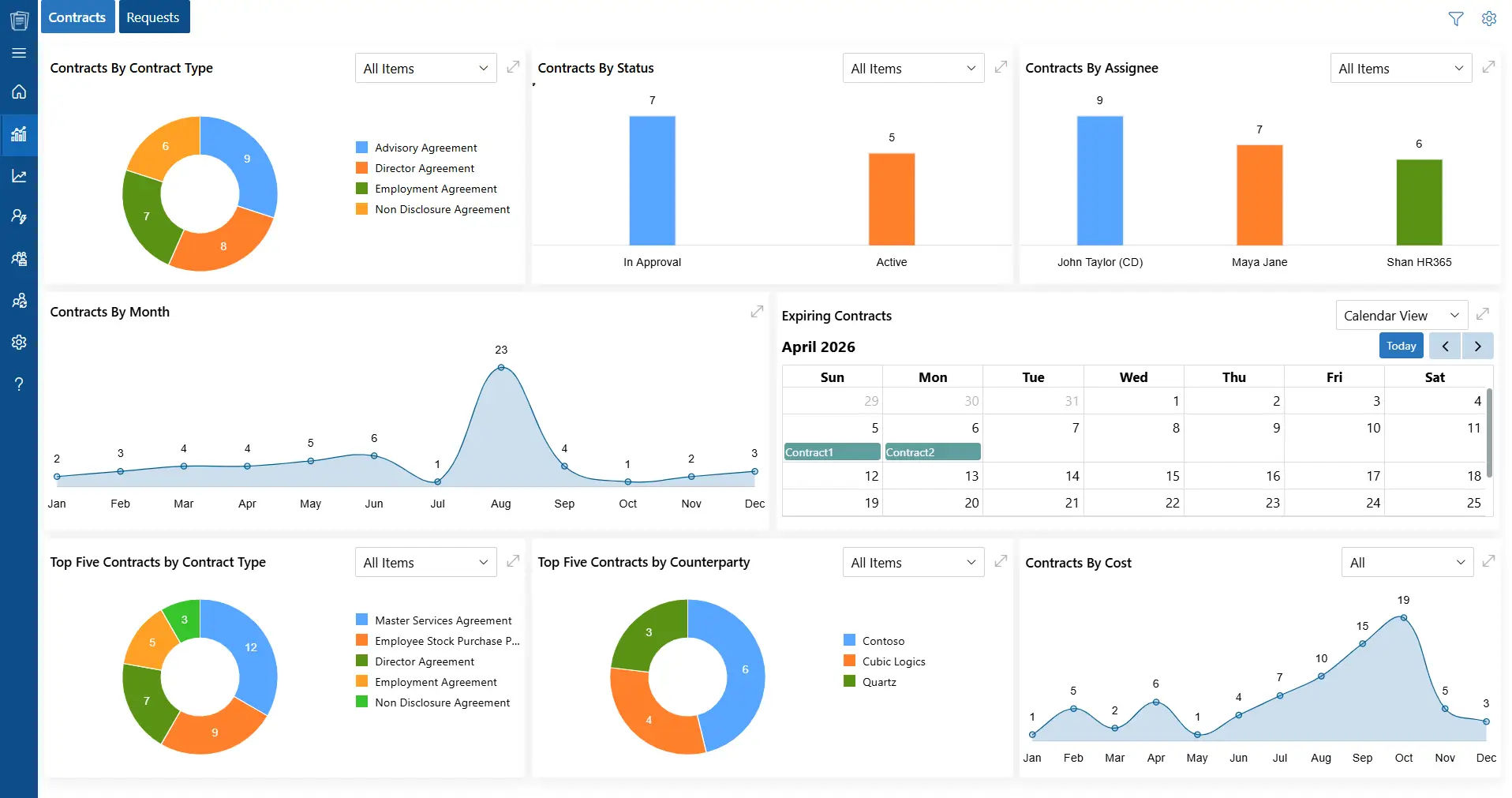
Managing contract novation through emails and scattered documents can make it difficult to track approvals, signatures, and incoming party responsibilities.
CLM 365 helps legal and business teams manage agreements in a central contract repository, where they can access the original document and related records.
Its contract workflows help teams route novation requests to the appropriate reviewers and monitor approval progress.
Version control helps users identify the latest document, while role-based access supports the protection of sensitive business information.
Automated reminders help teams stay informed about important dates, and reporting features provide visibility into pending contract activities.
Ready to take control of your contract novation process? Explore SharePoint contract management and discover how your team can manage approvals, documents, and contractual handovers with greater confidence.
Frequently Asked Questions
Does novation affect rights that have already accrued?
Not automatically. Rights, payment claims, and liabilities that arose before the effective date may remain enforceable unless the agreement specifically addresses how they will be handled.
Does novation automatically transfer intellectual property rights?
No. Intellectual property rights should be specifically addressed in the agreement. Separate assignments, licences, or permissions may be required.
What happens to confidential information during contract novation?
The parties should establish who can access confidential information, how contract substitution will be handled, and whether existing confidentiality obligations continue after the transition.
Who prepares the novation agreement: the buyer or the seller?
Either party may prepare the initial draft. However, all affected parties should review the document and agree to its terms before signing.
What happens to warranties provided by the outgoing party?
Warranties do not automatically transfer. The novation agreement should clarify whether the incoming party assumes existing warranty obligations or whether separate arrangements are required.


























