
Complete Guide to Pharma Contract Management
Pharma contract management involves creating, managing, and monitoring agreements across the pharmaceutical industry. It helps ensure smooth collaboration between manufacturers, suppliers, distributors, research organizations, and healthcare providers.

The pharmaceutical industry runs on agreements supplier deals, clinical trial agreements, licensing contracts, distribution terms, and more.
Yet for most pharma companies, managing all these contracts is still a slow, fragmented, and risky process.
As per a study by GlobeNewswire, the global pharmaceutical market is projected to grow from USD 1,772.65 billion in 2025 to approximately USD 3,033.21 billion by 2034, expanding at a CAGR of 6.15%, the volume and complexity of pharma contracts will only increase.
More deals. More partners. More regulatory requirements. More chances for something to slip through the cracks.
That is why pharma contract management has become a critical focus area for legal, procurement, and compliance teams across the industry.
How Does the Pharma Contract Process Work?
Pharma contract management is not just about signing documents. It is an end-to-end contract process that involves multiple teams, approval layers, and compliance checkpoints. Here is how a typical contract moves through the lifecycle:
Step 1: Contract Request
A department legal, procurement, R&D, or operations identifies the need for a new contract. This could be a new vendor or a licensing deal.
Step 2: Drafting
The legal team creates a contract draft using approved templates. Key clauses are inserted based on the contract type and regulatory requirements applicable in that jurisdiction.
Step 3: Internal Review
The draft goes through an internal review cycle involving legal, finance, and compliance. Each team checks for accuracy, risk, and regulatory alignment.
Step 4: Negotiation with the Counterparty
The draft is shared externally for negotiation. Changes are proposed, tracked, and debated. In pharma, this stage can be lengthy due to complex regulatory clauses.
Step 5: Approval Workflow
Before signing, the contract goes through a structured approval process. Depending on the value and type, it may require sign-off from multiple levels of authority.
Step 6: Execution (Signing)
Once approved, the contract is signed either physically or via e-signature by authorised representatives from both sides.
Step 7: Storage and Obligation Tracking
The signed contract is stored in a central repository. Key dates, obligations, and milestones are tracked to ensure compliance throughout the contract term.
Step 8: Renewal or Expiry
As the contract nears its end date, teams review whether to renew, renegotiate, or terminate. Missing this window is one of the most common and costly mistakes in pharma contract management.
Types of Pharma Contracts
Pharmaceutical companies deal with a wide variety of contract types. Understanding them is the first step towards managing them effectively.
- Clinical Trial Agreements: These contracts support research and testing activities by outlining how pharmaceutical companies collaborate with research organizations, hospitals, and study partners.
- Manufacturing Agreements: When pharmaceutical companies partner with external manufacturers, these agreements establish expectations around production quality, delivery schedules, operational standards, and intellectual property protection.
- Research Partnership Agreements: These contracts govern collaborations with external research and development providers. They define project scope, deliverables, timelines, and the responsibilities of each party involved in advancing scientific and product development initiatives.
- Licensing and Commercial Rights Agreements: Used when companies share or acquire rights to technologies, products, or innovations. These agreements clarify ownership rights, commercial usage terms, milestone achievements, and revenue-sharing arrangements.
- Distribution and Supply Agreements: These contracts manage how products are supplied and delivered across markets. They outline important business terms such as pricing, supply commitments, delivery expectations, and market access rights.
- Regulatory and Compliance Service Agreements: Pharmaceutical companies often work with specialized partners to navigate complex regulatory requirements. These agreements define the support provided for approvals, documentation, compliance monitoring, and regulatory submissions.
Material and Resource Sharing Agreements: These agreements facilitate the secure exchange of research materials, scientific resources, or development assets between organizations while establishing clear usage guidelines and ownership rights.
Manage all pharma contracts in one centralized platform.
Challenges Faced in Pharma Contract Management
Despite the critical importance of contracts in pharma, most organisations still face the same recurring problems. Here are the five most common challenges and why they matter.
1. Keeping Up with Changing Regulations
The pharmaceutical industry is one of the most heavily regulated in the world. FDA guidelines, EMA requirements, GDPR, and country-specific regulations all affect contract language and obligations.
When regulations change and they do, frequently contracts need to be reviewed and updated to stay compliant.
This is where purpose-built pharma contract management software becomes critical.
2. Too Much Manual Work
In most pharma companies, contract management still relies heavily on manual work, emails, shared drives, spreadsheets, and disconnected word documents.
As per Thomson Reuters, lawyers spend between 40% and 60% of their billable hours on repetitive contract drafting and review work. That is time that could be spent on higher-value legal work, not copy-pasting clauses.
The manual nature of traditional pharma contract management creates unnecessary delays, increases the chance of errors, and stretches already-thin legal team resources
Is your team spending too much time on manual contract tasks?
CLM 365 automates drafting, approvals, and reminders so your legal and procurement teams can focus on what matters.
3. Difficulty Finding Contract Information
Ask a legal professional where a specific contract terms is stored and you might get five different answers shared drive, someone’s email, a local desktop folder, or a physical filing cabinet.
In pharma, where contracts span multiple departments, geographies, and third parties, scattered storage is a major operational risk.
When an audit happens or a dispute arises, teams scramble to locate the right version of the right document.
4. Missing Important Deadlines
Pharma contracts are full of time-sensitive obligations renewal timeline, payment milestones, regulatory filing deadlines, and performance review dates.
Research shows that an average of 9.2% of annual revenue is lost due to contract mismanagement.
A significant portion of that loss comes from missed deadlines contracts that auto renewed on unfavourable terms, or opportunities to renegotiate that simply passed unnoticed.
5. Lack of Visibility Across Teams
As per World Commerce and Contracting Association, in 40% of organisations, it is a guessing game of who oversees which contract responsibility.
Pharma contract management involves legal, procurement, R&D, compliance, finance, and operations often across different locations and time zones.
- Who owns this contract?
- What stage is it in?
- Has the counterparty signed?
- Has compliance reviewed the latest version?
- These simple questions often take days to answer.
This lack of contract visibility creates duplication of effort, miscommunication, and accountability gaps all of which put compliance and business continuity at risk.

How CLM 365 Features Help Overcome These Challenges?
CLM 365 is a contract lifecycle management software built on Microsoft 365 and SharePoint. Here is how it helps pharma organizations
AI-Powered Contract Review
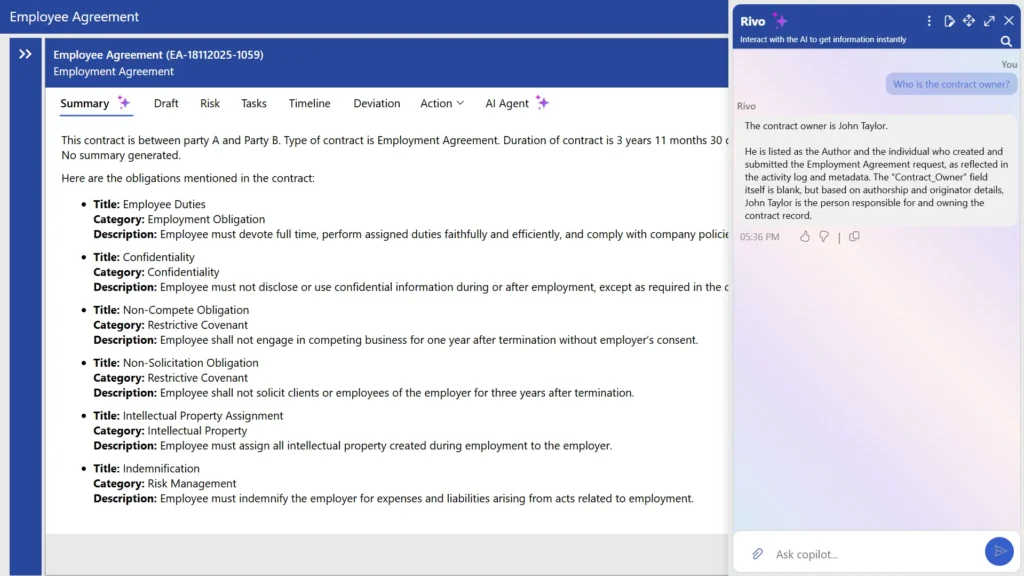
AI-powered contract review can cut a 92-minute manual review down to just 26 seconds.
CLM 365 uses AI to summarize contracts instantly. It flags missing clauses, unusual terms, and compliance risks without a lawyer having to scan every line manually.
For pharma legal teams dealing with high contract volumes, this is transformative. Review cycles that used to take days can now be completed in minutes. The AI highlights what needs human attention, so legal professionals can focus their expertise where it matters.
Compliance Management
CLM 365 has dedicated compliance management features that help pharma teams stay aligned with regulatory requirements across the contract lifecycle.
You can define compliance checklists, map regulatory obligations to specific contract types, and get alerts when a contract is due for a compliance review. This connects directly to the broader importance of contract compliance management a topic we have covered in depth.
For pharma companies managing contracts across multiple regulatory environments — FDA, EMA, MHRA, and others this structured approach to compliance tracking reduces audit risk significantly.
Contract Repository
Almost 90% of business users find contracts ‘difficult or impossible to understand. Research reveals that on average 25% of the workforce is directly involved in contract-related activities.
CLM 365 gives every contract a permanent home a single, searchable repository where the latest version of every document is always accessible to the right people.
When a large portion of your workforce is regularly involved in contract activities, having a well-structured contract repository system is not optional, it is foundational.
Automated Approval and Renewal Reminders
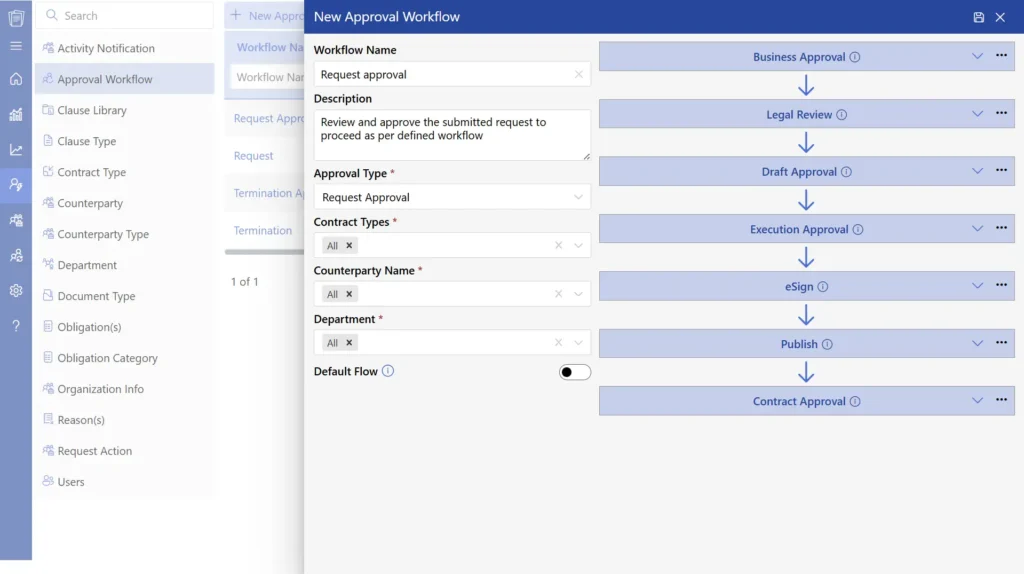
CLM 365 eliminates manual follow-ups by automating the entire approval workflow. When a contract is submitted, the system routes contracts to the right approvers automatically, based on contract type, value, and business rules you configure.
Automated renewal reminders alert the relevant stakeholders 30, 60, or 90 days before a contract expiry.
This gives teams enough time to review, renegotiate, or terminate before automatic renewal clauses kick in.
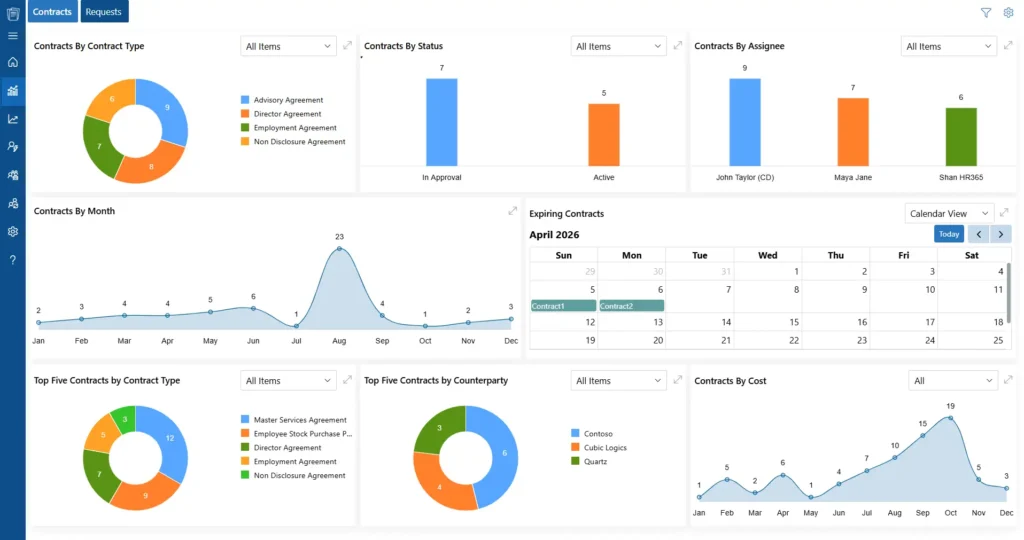
Contract Dashboard
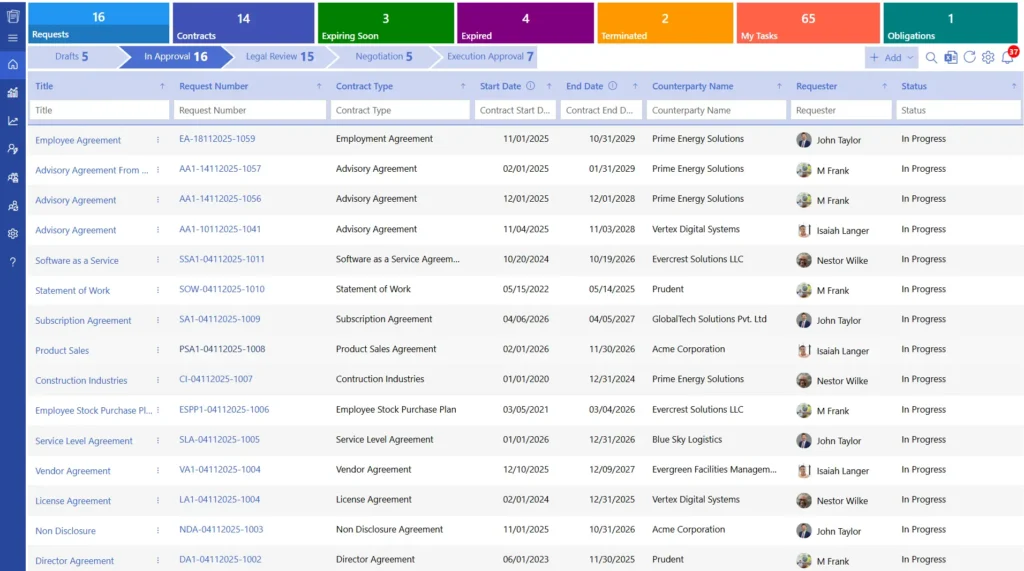
The CLM 365 contract dashboard gives leadership and legal teams a live view of the entire contract portfolio.
- How many are in review?
- How many contracts are active?
- What is due for renewal and where the bottlenecks are?
For pharma procurement and legal heads, this visibility is invaluable.
Instead of asking teams for status updates, managers can see the full picture immediately and act proactively on risks before they become problems.
Role-Based Security
In pharma, not everyone should have access to every contract. Clinical trial agreements, licensing deals, and pricing contracts contain highly sensitive information.
CLM 365 uses role-based security to control who can view, edit, approve, or export each contract.
Access is defined by the user’s role and department, so confidential data stays protected while collaboration remains possible across teams.
MS Word Redlining
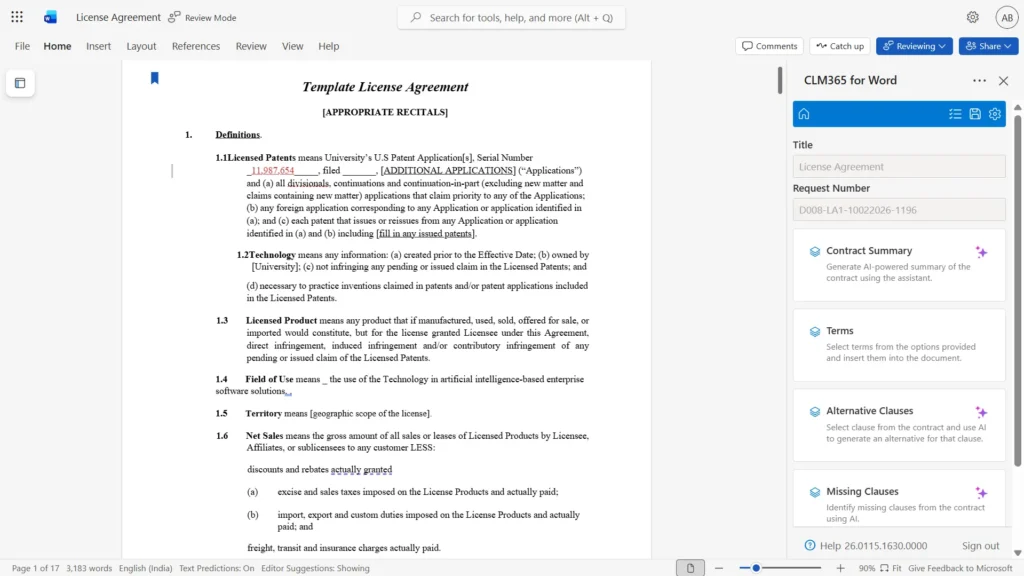
Contract negotiation in pharma often involves multiple rounds of revisions with counterparties CROs, CMOs, distributors, and licensing partners.
CLM 365 supports native MS Word redlining, which means negotiators can work in the tool they already know, with all tracked changes recorded and visible in the system.
This removes the need to manage redlined documents in email and ensures that every change who made it, when, and what version it was in.
Reporting and Analysis
The contract analytics provides detailed reporting on contract performance, cycle times, compliance status, and financial obligations.
You can build custom reports to analyse how long contracts take to move from draft to execution, where approvals are getting delayed, and how much value is tied up in contracts at each stage.
For pharma executives and procurement directors, this data provides the foundation for process improvement.
Importance of Pharma Contract Management Software
Why does pharma contract management need dedicated software? Here are seven reasons the industry has moved decisively in that direction.
1. Regulatory Compliance Becomes Manageable
Pharma operates under some of the strictest regulatory environments in any industry. Contracting software that tracks regulatory obligations, flags compliance gaps, and maintains an audit trail makes it possible to demonstrate compliance. It also helps teams stay up to date with changing regulations and reduces the risk of costly penalties.
2. Contract Risks Are Reduced Before They Become a Problem
An average of 9.2% of annual revenue is lost due to contract mismanagement. In the pharmaceutical industry, even a small oversight can lead to compliance issues, missed obligations, payment disputes, or financial losses. Purpose-built pharma contract management software helps identify contracts risks during the drafting and review stages, before contracts are signed.
3. Legal Teams Work on Higher-Value Tasks
Legal teams often spend a significant portion of their time reviewing routine agreements and managing contract administration. Studies suggest that lawyers can spend 40–60% of their time on repetitive drafting and review activities. By automating these processes, legal professionals can focus on more strategic work that truly requires their expertise.
4. Faster Contract Cycles Support Business Speed
According to Forrester Research, Contract Lifecycle Management (CLM) solutions can reduce contract drafting and review time by up to 80%. In the pharmaceutical industry, where speed can directly impact product development and market opportunities. It accelerate research collaborations, finalize manufacturing and distribution agreements without unnecessary delays.
5. Better Partner and Vendor Relationships
Strong business relationships are built on clear communication and reliable processes. When contracts are managed effectively, organizations can ensure timely renewals, accurate and greater transparency across all agreements. As a result, trust improves and future vendor deal become more efficient.
6. Centralized Knowledge and Institutional Memory
When a contract manager or key employee leaves the organization, valuable knowledge should not leave with them. A centralized contract repository preserves the complete history of every agreement, including negotiated terms and key decisions. This gives teams easy access to critical information, helps new employees get up to speed faster, and ensures important business knowledge remains available.
7. Audit-Readiness Always
Regulatory audits and inspections are a routine part of the pharmaceutical industry and often occur with little notice. Contract management software keeps contracts, approval records, compliance documents, and obligation histories organized in a single location. With all information searchable and readily available, teams can respond to contract audits confidently.
Best Practices to Manage Pharma Contracts
Having the right software is only part of the solution. These eight practices will help your team get the most out of your pharma contract management programme:
- Build and maintain a pharma-specific clause library. Pre-approved clauses for regulatory requirements, IP protections, indemnification, and data privacy save time on every new contract and reduce the risk of non-standard language slipping through.
- Assign a contract owner for every agreement. Every contract should have a named owner responsible for its obligations, renewals, and compliance checkpoints. Shared ownership often means no ownership.
- Set renewal alerts well in advance. Configure reminders at 90, 60, and 30 days before expiry for all key contracts — especially those with auto-renewal clauses or exclusive terms.
- Use standardised templates by contract type. Maintain separate, up-to-date templates for CTAs, CMO agreements, CRO agreements, NDAs, and distribution contracts. Templates reduce drafting time and improve consistency.
- Conduct periodic contract audits. Review active contracts quarterly or semi-annually to check for upcoming obligations, compliance drift, or changed business circumstances that may require amendments.
- Maintain full version history for every contract. Track every draft, redline, and approved version so there is a complete audit trail of how the final contract evolved critical for dispute resolution and regulatory inspections.
- Train cross-functional teams on contract processes. Legal, procurement, finance, and R&D teams all touch contracts at different stages. Shared training on the contract management process and the tools in use reduces miscommunication.
For pharma companies that have already implemented healthcare contract management practices, these best practices can further improve performance and reduce risk. Read our guide on healthcare contracts to see what applies across both healthcare and pharma settings.
CLM 365: Simplify the way contracts are handled
CLM 365 is designed to work natively across the Microsoft ecosystem, enabling organizations to manage contracts within the tools they already use every day, including SharePoint, MS Teams, Outlook, Microsoft Copilot, Power BI, and Power Automate.
The contract approvals, automate routine tasks, monitor key obligations, and strengthen compliance through intelligent workflows that reduce manual effort and improve operational efficiency.
The platform combines enterprise-level security with an intuitive user experience, helping both growing organizations and large enterprises gain greater control and visibility over their contract lifecycle.
Supported by SOC 2 compliance, Microsoft Certification, and Microsoft Solutions Partner recognition, CLM 365 delivers a secure and reliable foundation for managing business-critical agreements.
For organizations operating in highly regulated environments, CLM 365 fully supports GCC and GCC High deployments, providing enhanced security controls, strict compliance capabilities, and advanced data protection standards.
Conclusion
Pharma contract management is no longer just an administrative function. It plays a critical role in compliance, risk management, operational efficiency, and business growth.
CLM 365 is built to meet these challenges, bringing AI-powered reviews, automated workflows, compliance tracking, and complete contract visibility into one Microsoft 365-based platform.
Ready to streamline your pharma contracts? Book a demo and see CLM 365 in action.
Frequently Asked Questions
What happens if a pharma company misses a contract renewal date?
Missed renewals can lead to service disruptions, unexpected costs, pricing changes, or the loss of critical business relationships. The system sends automated reminders to admins.
Why is version control important in pharma contract management?
Multiple teams often edit the same agreement. Without version control, organizations risk approving outdated or incorrect contract versions.
Can AI identify risky clauses in healthcare contracts?
Yes, AI can highlight non-standard language, missing clauses, unusual obligations, and potential compliance concerns during review.
How do we know which contracts are expiring in the next 90 days?
Contract management software provides dashboards, automated alerts, and reports that identify upcoming renewals
How do companies manage confidential information during contract negotiations?
Through non-disclosure agreements, controlled document access, permission settings, and secure collaboration platforms.






















