


If you’re reading this, you’re probably already using Workable — or you’ve demoed it — and something isn’t quite fitting your hiring workflow anymore. Maybe it’s the per-job pricing that climbs the moment your hiring volume increases. Maybe it’s the reporting depth. Maybe you just want to see what else is out there before you sign another annual contract. Whatever brought you here, this guide walks through the best workable alternatives available in 2026, what each one does well, where it falls short, and how to pick the right one for your team’s actual hiring needs — not just the one with the flashiest homepage.
If Workable no longer fits your hiring needs, there are several strong alternatives available in 2026. RM365 is the best option for Microsoft 365 users, while Greenhouse and iCIMS excel for enterprise recruiting. Zoho Recruit, JazzHR, and Breezy HR are great choices for small and mid-sized businesses, and Lever stands out for candidate relationship management. The right ATS depends on your hiring volume, budget, integration needs, and long-term growth plans.
We’ll cover pricing-friendly small business tools, enterprise-grade platforms, and Microsoft-native options, so whether you’re a 10-person startup or a global enterprise, you’ll walk away with a shortlist that matches your real requirements.
Why Look for Workable Alternatives
Workable earns solid ratings from users, and for good reason — it’s fast to set up and easy to learn. But no single ATS fits every hiring team forever. Here’s why recruiters and HR leaders start evaluating alternatives for Workable:
- Per-job pricing that scales awkwardly. Teams hiring for 10+ roles at once often see monthly costs climb well past what they budgeted for during the sales call.
- Reporting that stays surface-level. Standard pipeline metrics are covered, but building custom dashboards or executive-ready reports takes extra manual work.
- Limited CRM depth. Workable tracks active job applicants well, but it isn’t built as a full candidate relationship management tool for long-term talent pipelines.
- Growth mismatch. A tool that felt right at 20 employees can feel restrictive at 200, especially around permissions, custom fields, and compliance workflows.
- Ecosystem fit. Companies already living inside Microsoft 365, Salesforce, or a specific HRIS often want an ATS that plugs directly into what they already use instead of adding a disconnected tool to the stack.
None of this means Workable is a bad product. It means business needs shift, and it’s worth knowing what’s out there.
What is Workable ?
Workable is a recruiting and HR platform founded in 2012, built around speed and simplicity for small and mid-sized companies. It combines applicant tracking, AI-assisted candidate sourcing from a database of 400M+ profiles, one-click posting to 200+ job boards, interview scheduling, and — on higher tiers — onboarding and light HRIS functionality. Its biggest selling point is transparency: published pricing, a free trial, and a setup process that gets a company from signup to a live job posting in hours rather than weeks. That accessibility has made it a go-to choice for growing SMBs that want an all-rounder without a lengthy sales cycle.
Pros
- Fast implementation — most teams post their first job within a day of signing up
- Transparent, published pricing (a rarity in the ATS space)
- Built-in AI sourcing reduces manual searching for common roles
- Clean, intuitive interface with a short learning curve for hiring managers
- Strong job board distribution network out of the box
- Solid candidate communication tools (email, SMS, templates)
Cons
Workable is a solid ATS, but its limitations become more noticeable as hiring scales:
- Pricing increases with company size, which can be costly for growing teams.
- Custom reporting is limited, often requiring manual data exports.
- AI sourcing works best for common roles but is less effective for niche or non-English markets.
- Basic CRM features make long-term talent nurturing more difficult.
- Limited career page and employer branding customization.
Top 9 Workable Alternatives & Competitors
Product | Best For | Standout Feature | G2 |
Recruitment Management 365 (RM365) | Microsoft 365-native teams | Native Teams/Outlook/SharePoint integration | 4.8/5 |
Zoho Recruit | Budget-conscious teams in the Zoho ecosystem | Combined ATS + CRM | 4.4/5 |
JazzHR | SMBs wanting flat-rate pricing | Predictable subscription cost | 4.4/5 |
BambooHR | Teams wanting ATS + full HRIS | Recruiting bundled with onboarding/PTO/performance | 4.4/5 |
Breezy HR | Small teams, visual pipelines | Drag-and-drop Kanban + built-in video interviews | 4.4/5 |
Greenhouse | Mid-market/enterprise, structured hiring | Deep analytics & DE&I reporting | 4.4/5 |
Lever | Teams needing CRM-style nurturing | Talent CRM + nurture campaigns | 4.3/5 |
iCIMS | High-volume enterprise hiring | Bulk screening at scale | 4.2/5 |
Workday Recruiting | Enterprises already on Workday HCM | Unified recruiting + payroll + benefits data | 3.7/5 |
1. Recruitment Management 365 (RM365)
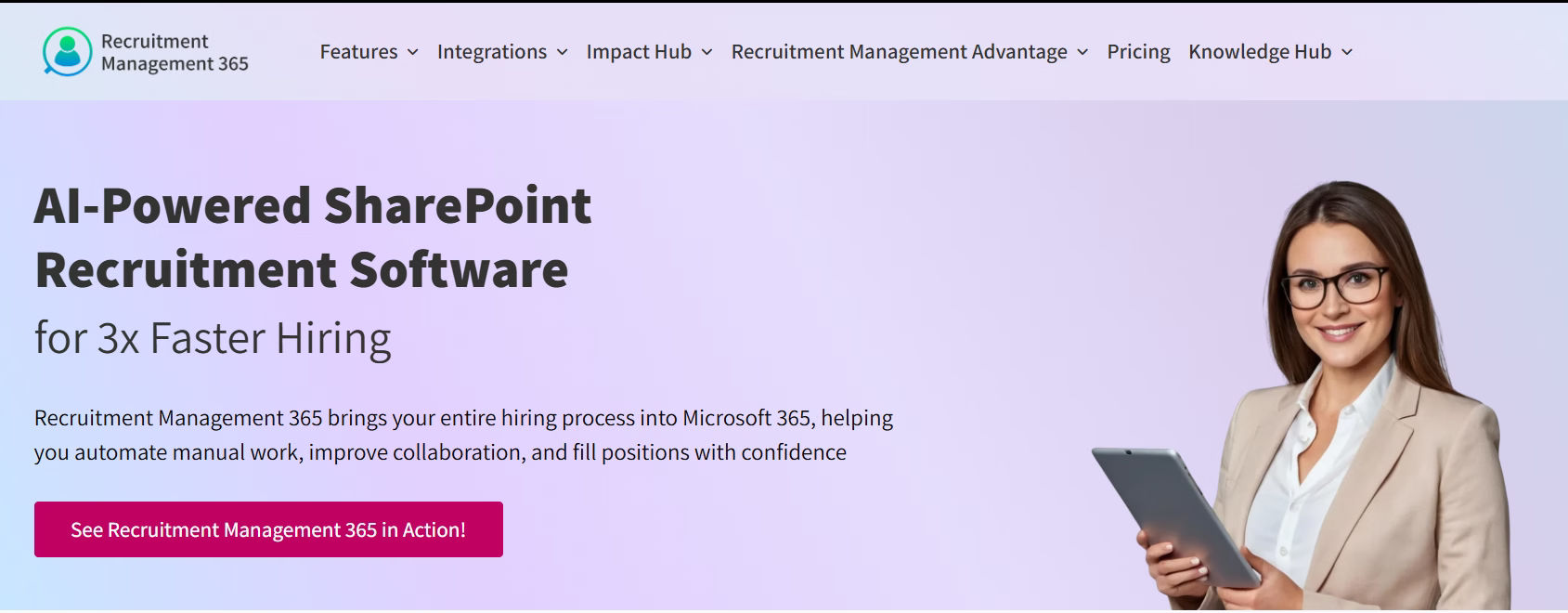
Great intro: Recruitment Management 365 (RM365) by Apps365 is a Microsoft 365-native applicant tracking and hiring platform built for organizations that already run their business inside Teams, Outlook, and SharePoint. Instead of asking recruiters and hiring managers to log into a separate tool, RM365 lives directly in the Microsoft environment your team uses every day — job requisitions, approvals, interview scheduling,
workflow Process and candidate collaboration all happen without a second login.
8 Key Features:
- Native integration with Microsoft Teams, Outlook, and SharePoint — no separate login required
- Power Automate-driven approval workflows for job requisitions and hiring stages
- Copilot AI support for resume screening, candidate matching, and interview summaries
- SharePoint-based secure document storage for compliance and audit trails
- Power BI-connected dashboards for customizable hiring analytics
- Multi-level, role-based approval routing for Finance, HR, and leadership sign-off
- Mobile-optimized candidate and recruiter access
- GCC and GCC High compliance support for regulated and federal environments
Why Choose Recruitment Management 365 (RM365) as a Workable Alternative: If your organization already runs on Microsoft 365, RM365 removes the friction of adopting a standalone ATS. Hiring managers approve requisitions from Outlook, recruiters coordinate interviews directly in Teams, and IT doesn’t need to manage a separate identity system or data residency exception. For companies where security, compliance, and Microsoft-ecosystem alignment matter as much as recruiting features, RM365 offers a level of native integration that standalone tools like Workable can’t match without third-party connectors.
Ratings:
- G2: 4.8/5
2. Zoho Recruit
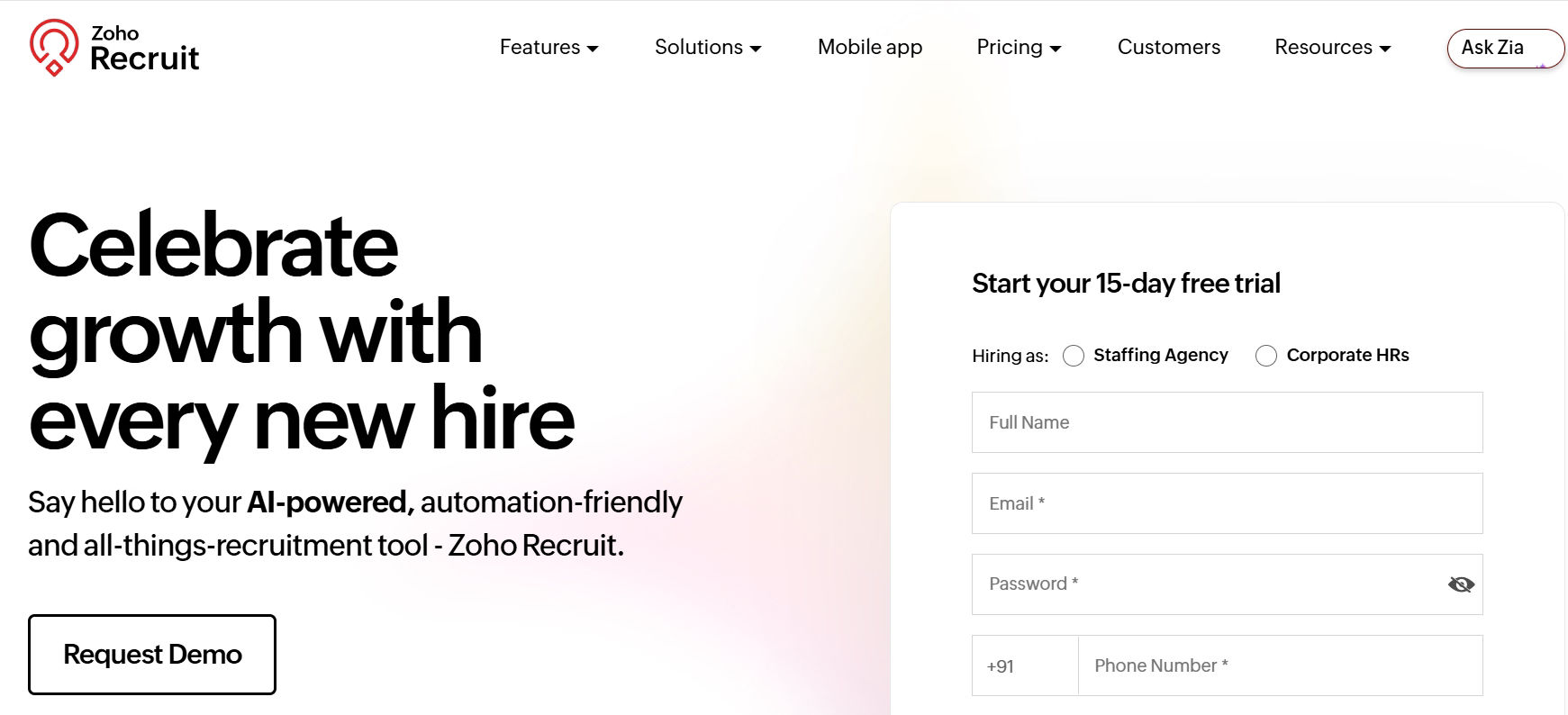
Great intro: Zoho Recruit is a cloud-based ATS and recruiting CRM that combines applicant tracking with candidate relationship management. It’s especially popular with staffing agencies and corporate HR teams already using other Zoho products, thanks to native integrations across the Zoho suite.
8 Key Features:
- Combined ATS and CRM in a single platform
- Blueprint — a visual workflow builder for custom hiring stages
- AI-powered resume parsing and candidate matching
- Multi-channel job posting to major job boards
- Built-in video interview scheduling and e-signatures
- Customizable career pages and candidate portals
- 45+ native integrations across the broader Zoho ecosystem
- Separate Corporate HR and Staffing Agency editions with tailored feature sets
Why Choose Zoho Recruit as a Workable Alternative: Zoho Recruit is a strong fit for budget-conscious teams that want ATS and CRM functionality bundled together, especially if they’re already inside the Zoho ecosystem for CRM, Books, or People. Its pricing is generally lower than Workable’s at comparable feature tiers, though the interface trades some polish for that value.
Ratings:
- G2: 4.4/5
3. JazzHR
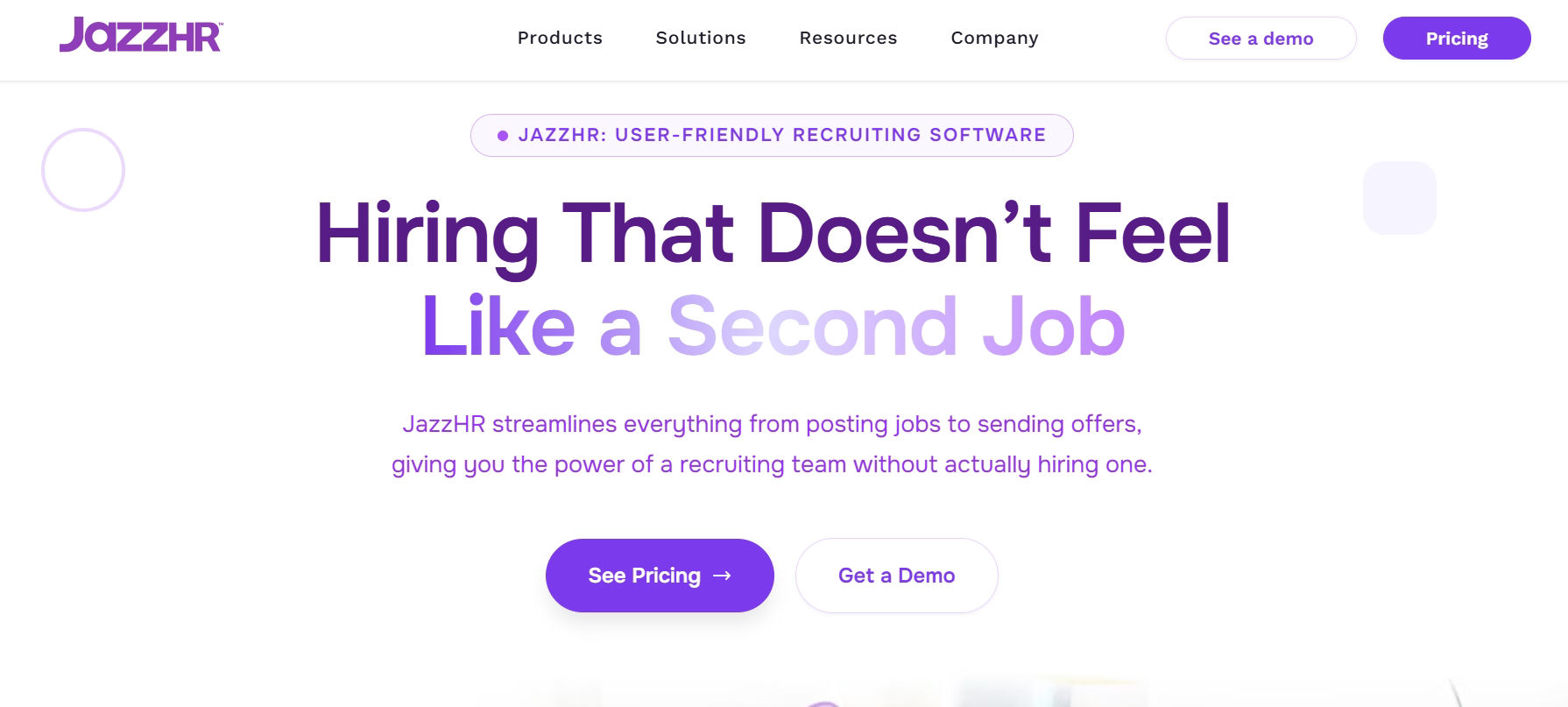
Great intro: JazzHR (formerly The Resumator) is a recruiting-focused ATS built specifically for small-to-mid-sized businesses that need affordable, flat-rate pricing without sacrificing core hiring functionality.
8 Key Features:
- Flat-rate, predictable subscription pricing
- Customizable hiring workflows and candidate scorecards
- One-click job board syndication (Indeed, LinkedIn, and more)
- Built-in offer letter and e-signature tools
- Interview scheduling with calendar sync
- Candidate source tracking and reporting
- Integrations with BambooHR, ADP Workforce Now, and Criteria assessments
- Team-based job visibility controls for larger hiring teams
Why Choose JazzHR as a Workable Alternative: JazzHR appeals to teams that want a dedicated, no-frills recruiting tool with pricing that doesn’t move based on how many jobs are open at once. It’s a good fit for startups and SMBs that find Workable’s per-job pricing model unpredictable at scale.
Ratings:
- G2: 4.4/5
4. BambooHR
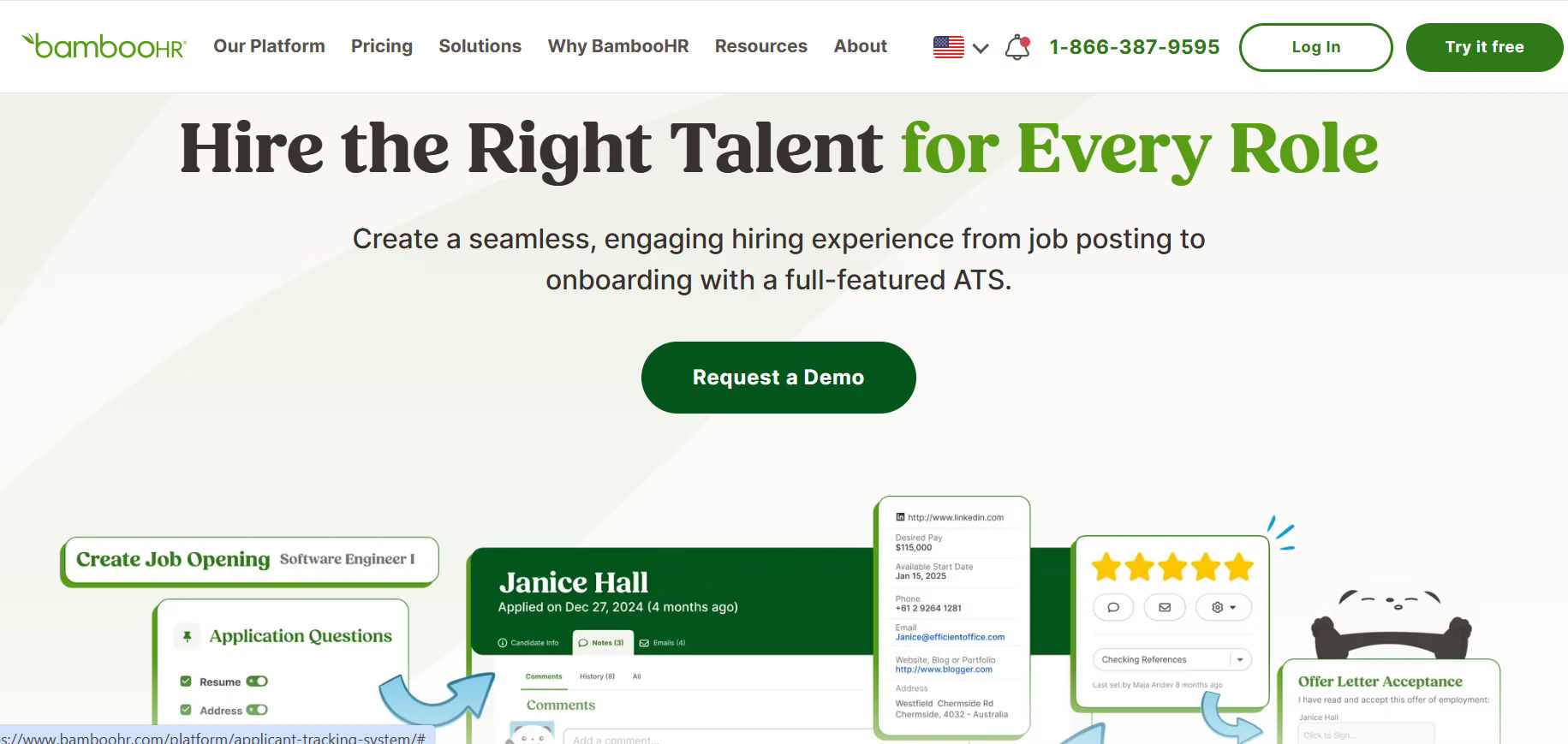
Great intro: BambooHR is an all-in-one HR platform with a built-in applicant tracking module, designed for small and mid-sized businesses that want to manage recruiting and the full employee lifecycle — onboarding, time-off, performance — in one system.
8 Key Features:
- Integrated ATS plus core HRIS in one platform
- Employee self-service portal for time-off, documents, and profile updates
- Customizable onboarding workflows with e-signatures
- Visual, intuitive hiring pipeline
- Time tracking and PTO management
- Performance management and review cycles
- Role-based permissions and security profiles
- 100+ integrations, including Slack, Okta, and Google Calendar
Why Choose BambooHR as a Workable Alternative: If recruiting is just one piece of a broader HR need — not the whole picture — BambooHR consolidates hiring with onboarding and people management, reducing the number of separate systems your HR team has to maintain.
Ratings:
- G2: 4.4/5
5. Breezy HR
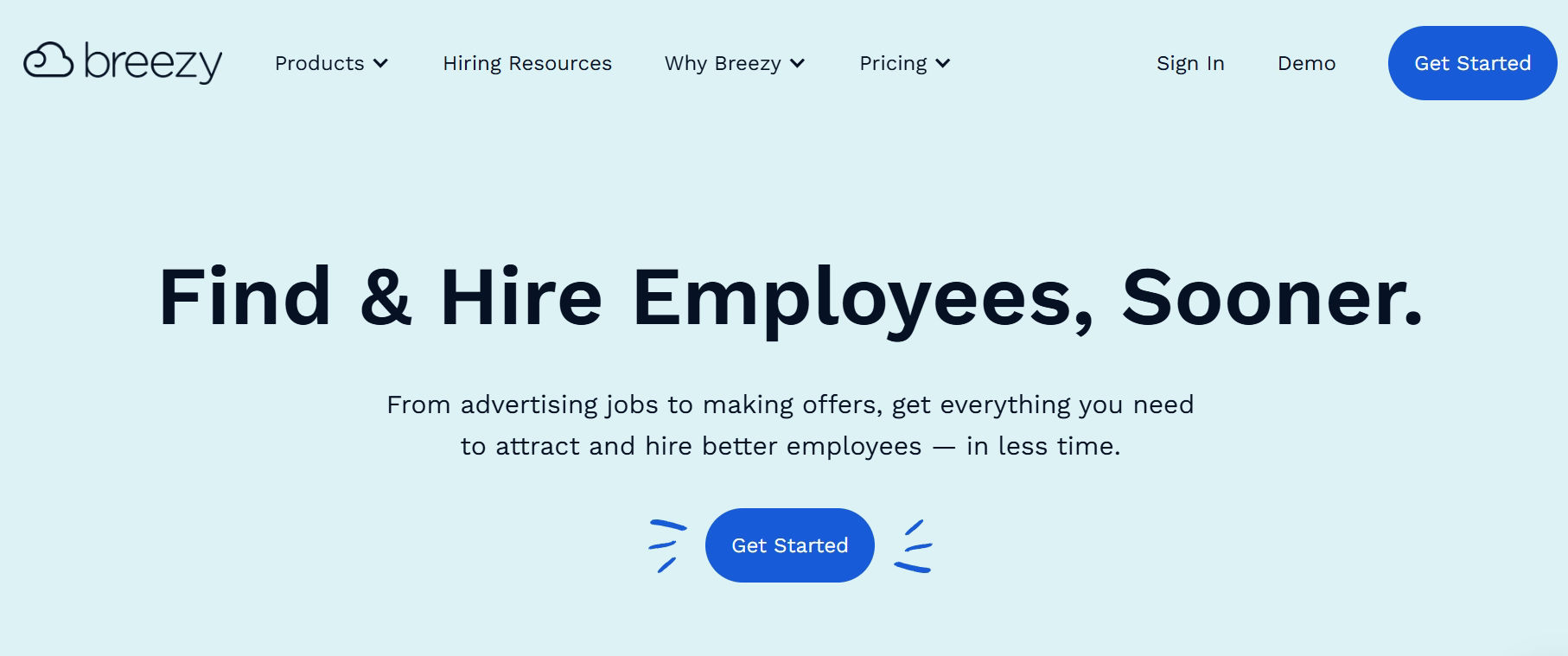
Great intro: Breezy HR is a visual, drag-and-drop ATS built for small businesses that want an easy-to-learn hiring tool without a steep setup process. It’s frequently mentioned alongside Workable and JazzHR as a budget-friendly SMB option.
8 Key Features:
- Drag-and-drop Kanban-style candidate pipeline
- Built-in video interviewing tools
- Automated candidate scorecards and team voting
- Branded, customizable career pages
- One-click job posting to multiple free and paid boards
- Candidate self-scheduling for interviews
- Email and SMS automation for candidate communication
- Free-tier availability for very small teams
Why Choose Breezy HR as a Workable Alternative: Breezy HR is a natural fit for small teams that want visual pipeline management and built-in video interviews without paying for enterprise-level features they won’t use.
Ratings:
- G2: 4.4/5
6. Greenhouse
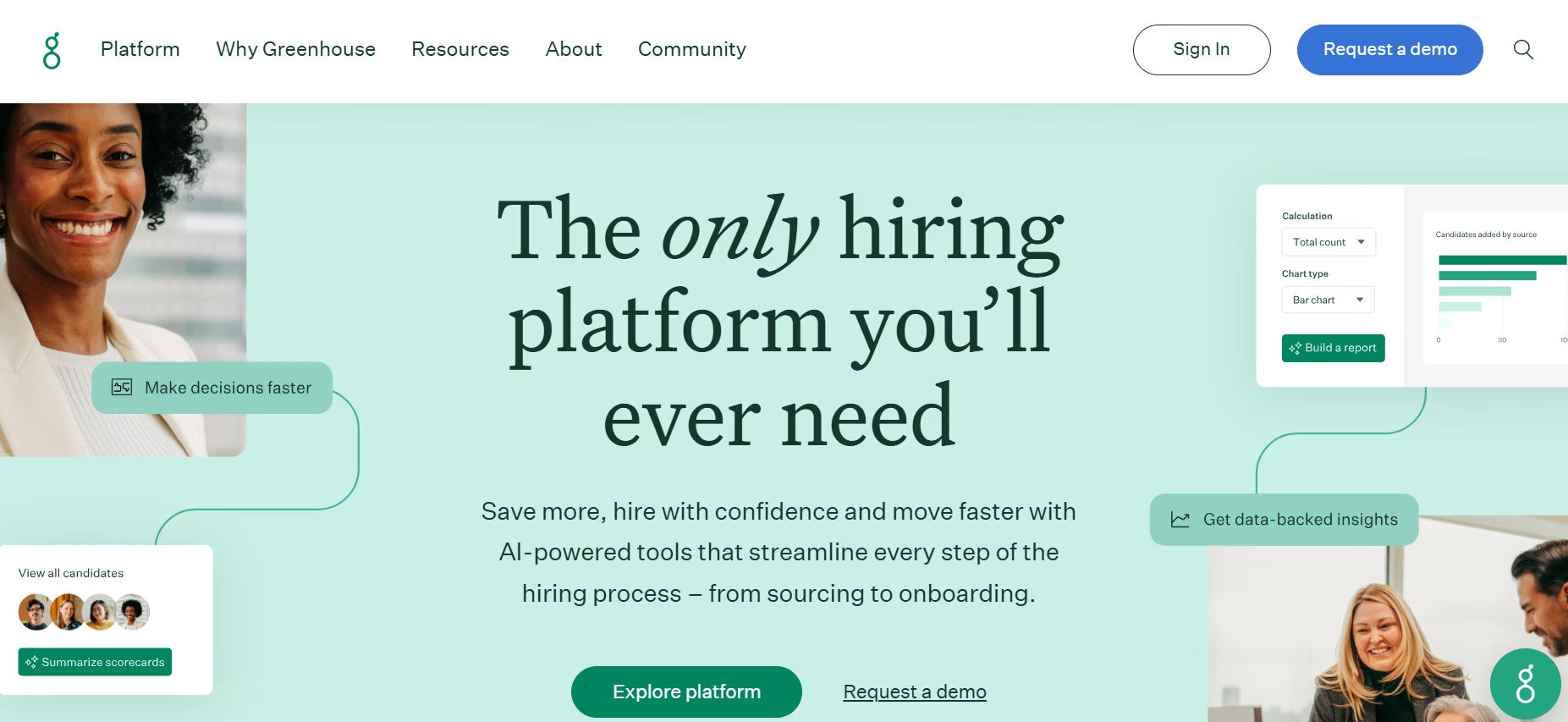
Great intro: Greenhouse is a structured-hiring ATS built for mid-market and enterprise teams that prioritize consistency, DE&I reporting, and data-driven recruiting decisions. It’s widely regarded as the category leader for teams that have outgrown SMB-focused tools.
8 Key Features:
- Structured hiring methodology with standardized scorecards
- Deep analytics and DE&I-specific reporting
- Extensive integration marketplace (1,000+ tools)
- AI-powered candidate matching and scorecard summaries
- Customizable interview kits and calibration tools
- Employee referral program management
- Onboarding workflows that bridge recruiting to HR
- Enterprise-grade permissions and compliance controls
Why Choose Greenhouse as a Workable Alternative: Teams that outgrow Workable’s reporting depth often land on Greenhouse. It’s built for organizations that need repeatable, auditable hiring processes across multiple departments and locations, even though implementation takes longer and pricing isn’t publicly listed.
Ratings:
- G2: 4.4/5
7. Lever
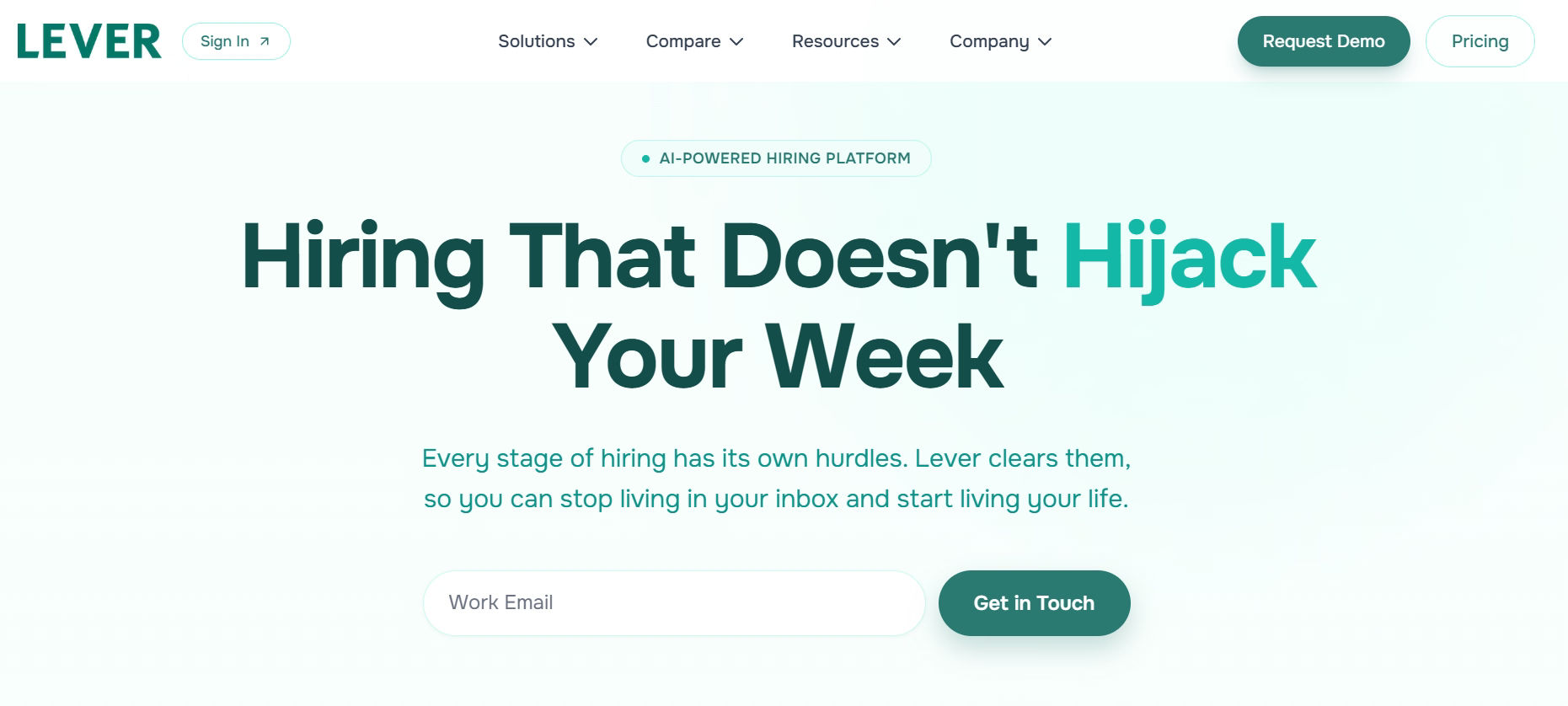
Great intro: Lever is an ATS and CRM hybrid built for companies that want strong candidate relationship management alongside applicant tracking — useful for teams building long-term talent pipelines, not just filling open roles.
8 Key Features:
- Combined ATS and talent CRM
- Visual pipeline with drag-and-drop candidate stages
- Automated nurture campaigns for passive candidates
- Built-in analytics and hiring velocity reporting
- Collaborative hiring tools for interviewer feedback
- Diversity and inclusion tracking
- Integrations with major HRIS and sourcing tools
- Faster implementation timeline than most enterprise ATS platforms
Why Choose Lever as a Workable Alternative: Lever is frequently chosen by small-to-mid-sized companies that want CRM-style candidate nurturing without the multi-month implementation that platforms like Greenhouse often require.
Ratings:
- G2: 4.3/5
8. iCIMS
Great intro: iCIMS is an enterprise-grade talent acquisition suite built for high-volume hiring at scale, commonly used by large organizations with complex, multi-location recruiting operations.
8 Key Features:
- High-volume, bulk candidate screening automation
- Configurable multi-location, multi-brand career sites
- AI-enhanced candidate matching and recommendations
- Deep customization for enterprise hiring workflows
- Compliance and reporting tools built for regulated industries
- Candidate relationship management for large talent pools
- Broad integration ecosystem with major HRIS platforms
- Advanced permissioning for large, distributed recruiting teams
Why Choose iCIMS as a Workable Alternative: iCIMS fits organizations that have scaled well past what SMB-focused ATS platforms can handle — think thousands of hires a year across multiple regions — where customization and configurability matter more than fast setup.
Ratings:
- G2: 4.2/5
9. Workday Recruiting
Great intro: Workday Recruiting is the applicant tracking module inside Workday’s broader HCM (Human Capital Management) suite, designed for large enterprises that want recruiting fully unified with payroll, benefits, and workforce planning.
8 Key Features:
- Full integration with Workday HCM, payroll, and benefits modules
- End-to-end requisition approval workflows
- Configurable interview and offer processes
- Enterprise-grade security and access controls
- Global multi-language and multi-currency support
- Unified employee data from candidate through tenure
- Custom reporting across the full HR data set
- AI-assisted screening (following recent Paradox integration)
Why Choose Workday Recruiting as a Workable Alternative: For enterprises already running Workday for HR and finance, keeping recruiting in the same system avoids data silos between hiring and workforce planning — even though standalone recruiting-focused tools often score higher on ease of use.
Ratings:
- G2: 3.7/5
Best Practices to Choose an Alternative for Workable
Picking the right workable alternative isn’t about finding the “best” tool in the abstract — it’s about matching a platform to your actual hiring volume, team structure, and existing tech stack. A few practical guidelines:
- Match the tool to your hiring volume, not your company size. A 50-person company hiring for 15 roles at once has different needs than a 500-person company hiring three roles a year.
- Check your existing ecosystem first. If you already live inside Microsoft 365, Zoho, or Workday for other functions, an ATS that integrates natively will save your IT and HR teams real setup time.
- Separate “nice to have” from “must have.” AI sourcing, video interviewing, and DE&I reporting sound good in a demo, but only matter if your team will actually use them week to week.
- Ask about pricing at your projected scale, not just today’s headcount. Per-job and per-seat pricing models can look identical at low volume and diverge sharply as you grow.
- Involve hiring managers in the trial, not just recruiters. Adoption fails when the people approving candidates find the tool clunky, even if recruiters love it.
- Review data migration scope before committing. Moving historical candidate records, scorecards, and notes between systems is rarely a clean, one-click process — get specifics in writing.
- Revisit the decision periodically. The right ATS at 20 employees may not be the right one at 200. Building in a review point — annually, or at a defined headcount milestone — keeps the tool aligned with the business.
Conclusion
Workable remains a solid choice for growing SMBs that want fast setup and transparent pricing. But as hiring needs shift — more volume, deeper reporting, tighter ecosystem integration, or agency-specific workflows — the right fit changes too. Whether that means RM365 for Microsoft-native teams, Greenhouse or iCIMS for structured enterprise hiring, Recruit CRM for agency work, or Zoho Recruit and JazzHR for budget-conscious SMBs, the best of these workable alternatives is the one that matches where your hiring process is headed, not just where it is today.
Frequently Asked Questions
What is the best overall alternative to Workable?
There isn’t a single universal answer — it depends on your hiring volume and existing tools. Microsoft 365-native teams often prefer Recruitment Management 365, mid-market and enterprise teams frequently move to Greenhouse, and agencies typically choose Recruit CRM.
Why do companies look for Workable alternatives?
The most common reasons are per-job pricing that scales unpredictably at higher hiring volume, limited custom reporting, and a need for deeper CRM or ecosystem integration than Workable currently offers.
Is there a free or low-cost alternative to Workable?
Zoho Recruit and Breezy HR both offer free or lower-cost entry tiers that work well for very small teams with limited hiring volume, though features are capped compared to paid plans.
Which alternative is best for recruitment agencies rather than internal hiring teams?
Recruit CRM is purpose-built for agency and executive search workflows, with client-facing CRM features that platforms designed for internal corporate hiring — including Workable — don’t offer.


_JiluXJRGNl.svg)























