

A Scrum Master is a team coach who helps people follow Scrum, remove work barriers, and deliver valuable results through teamwork. This role matters because unclear priorities, missed deadlines, and poor communication can quickly turn manageable projects into costly problems.
- What is Scrum Master? A Scrum Master is an Agile team coach who helps teams follow Scrum, remove obstacles, and improve collaboration.
- Key responsibilities: Scrum Masters support Sprint Planning, Daily Scrums, Sprint Reviews, and Retrospectives while helping teams stay focused on shared goals.
- Business benefits: Effective Scrum practices improve task visibility, team accountability, communication, and delivery predictability.
- Scrum Master vs. Project Manager: A Scrum Master focuses on team effectiveness and Scrum practices, while a project manager typically oversees schedules, budgets, and resources.
- Technology support: Task management tools like Task 365 help Microsoft 365 teams organize assignments, track deadlines, monitor project progress, and improve coordination.
What Is Scrum Master?
- A Scrum Master is responsible for helping a team understand and apply the Scrum framework, an Agile approach used to manage complex work.
- According to the Scrum Guide, the Scrum Master is accountable for establishing Scrum and improving the Scrum Team’s effectiveness.
- Unlike a traditional project manager, this person does not assign every task or control every decision. Instead, they help team members collaborate, solve problems, and improve how work gets completed.
Scrum teams typically include three accountabilities:
- Product Owner: Manages product value and orders the Product Backlog.
- Scrum Master: Supports Scrum practices and team effectiveness.
- Developers: Create usable results during each Sprint.
A Sprint is a fixed period of one month or less when the team works toward a defined goal. For department heads and project leaders, understanding what is scrum master helps clarify ownership, reduce confusion, and create healthier delivery habits.
Why Is Scrum Master Important?
Projects rarely fail because employees lack effort. Problems often begin when priorities change without warning, approvals take too long, or teams cannot identify who owns a decision. A Scrum Master makes these problems visible and helps the organization address them.
The role supports five important outcomes:
- Clear goals: Teams understand what they should achieve during each Sprint.
- Better communication: Stakeholders receive useful updates without unnecessary meetings.
- Faster problem resolution: Teams identify blockers before they cause major delays.
- Continuous improvement: Regular reflection helps employees improve their working methods.
- Stronger accountability: Everyone understands their responsibilities and commitments.
The Scrum Guide explains that Scrum uses transparency, inspection, and adaptation to manage complex work. These principles help teams respond to changing needs without losing sight of business goals. A Scrum Master does not guarantee faster delivery. However, effective coaching can help teams discover why progress slows and decide what needs improvement.
Common Challenges Teams Face Without a Scrum Master
Unclear Task Ownership
- Imagine a marketing department preparing a product launch.
- The design team believes content approval belongs to marketing. Marketing assumes the product manager owns it. Nobody makes the final decision.
- The launch date approaches, but essential work remains unfinished. A Scrum Master helps clarify responsibilities and encourages direct conversations between decision makers.
Too Many Unplanned Requests
- An IT team begins a two week Sprint with a clear objective.
- Three days later, managers introduce urgent requests without discussing their impact.
- Employees switch between tasks, unfinished work grows, and the original goal becomes difficult to achieve.
- The Scrum Master helps stakeholders understand Sprint commitments and supports productive discussions about changing priorities.
Meetings Without Decisions
- Daily meetings become lengthy status reports.
- Team members describe yesterday’s activities, but nobody discusses what prevents progress.
- The Daily Scrum should help Developers inspect progress toward the Sprint Goal and adapt their plan.
Limited Progress Visibility
- Department heads cannot easily identify delayed tasks, outstanding approvals, or upcoming deadlines.
- This creates repeated follow ups and last minute surprises.
- A shared task management system can make responsibilities, progress, and dependencies easier to understand.
Struggling With Missed Deadlines and Unclear Task Ownership?
Key Responsibilities and Skills of a Scrum Master
Understanding what is scrum master also means knowing what the role involves during everyday work.
1. Coaching Team Members
A Scrum Master teaches Scrum principles and encourages self management.
Instead of telling employees exactly how to complete tasks, they help the team make informed decisions.
2. Helping Remove Impediments
An impediment is anything that prevents progress.
Examples include missing software access, unclear requirements, delayed approvals, and unresolved dependencies.
The Scrum Master helps the team address these obstacles and works with other departments when necessary.
3. Supporting Scrum Events
Scrum includes five formal events:
- The Sprint
- Sprint Planning
- Daily Scrum
- Sprint Review
- Sprint Retrospective
The Scrum Master helps ensure these events are productive, purposeful, and conducted within their timeboxes.
4. Supporting the Product Owner
Product Owners need clear goals and an understandable Product Backlog.
The Scrum Master helps teams use effective backlog management practices and supports collaboration with stakeholders.
5. Encouraging Continuous Improvement
After each Sprint, teams review their working methods.
They identify successful practices, recurring problems, and practical changes for the next Sprint.
Essential Scrum Master Skills
- Successful professionals usually demonstrate strong communication, facilitation, conflict resolution, coaching, adaptability, and problem solving skills.
- Technical knowledge can help, but the role primarily requires an understanding of teamwork and organizational behavior.
Benefits of Having a Scrum Master
Better Team Collaboration
- A Scrum Master encourages open communication between developers, managers, and stakeholders.
- This reduces misunderstandings and helps employees raise concerns before they become serious problems.
Improved Delivery Predictability
- Clear Sprint Goals and regular reviews help teams understand their progress.
- Managers can identify risks earlier and make better decisions about upcoming work.
Reduced Work Delays
- When blockers become visible, teams can address them sooner.
- For example, an operations department may discover that purchasing approvals repeatedly delay equipment deployment.
- Rather than treating each delay separately, the team can improve the approval process.
Higher Employee Ownership
- Self managing teams decide how to complete their work.
- This encourages responsibility while reducing dependence on constant managerial instructions.
Stronger Business Alignment
- Sprint Reviews create opportunities for stakeholders to inspect results and discuss future priorities.
- The organization can adjust its plans based on actual progress and feedback. These benefits depend on leadership support, realistic workloads, and consistent team participation.
A Scrum Master helps improve collaboration, but your team also needs a reliable way to organize daily work. Task 365 brings task assignments, priorities, deadlines, and project updates into one Microsoft 365-based workspace.
How to Implement Scrum: Step-by-Step Guide
Organizations can introduce Scrum without changing every process immediately. Start with one team, establish clear responsibilities, and improve through experience.
Step 1: Define Your Product Goal
- Identify the business outcome your team wants to achieve.
- For example, a customer support team might aim to reduce repeated customer complaints by improving its knowledge base.
Step 2: Establish Scrum Accountabilities
- Identify the Product Owner, Scrum Master, and Developers.
- Make responsibilities clear so employees understand who manages priorities, supports collaboration, and completes the work.
Step 3: Create a Product Backlog
- List important work items, requirements, and improvements.
- The Product Owner orders these items according to value, risk, and business needs.
Step 4: Plan Your First Sprint
- Choose a reasonable Sprint length and define a Sprint Goal.
- Developers select work they believe they can complete and create their delivery plan.
Step 5: Track Daily Progress
- Hold a Daily Scrum to inspect progress and adjust the plan.
- Use a shared task board to monitor assignments, blockers, and completion status.
Step 6: Review and Improve
- Present completed results during the Sprint Review.
- Then conduct a Sprint Retrospective to identify improvements.
- Repeat the process, measuring whether each change produces better outcomes.
Real-World Scrum Master Examples
Example 1: Software Development Team
- A software company plans to release a customer portal.
- During its Sprint, developers discover that another department has not provided required API access.
- The Scrum Master helps coordinate the dependency while the team adjusts its work plan.
- The result is clearer communication and earlier identification of delivery risks.
Example 2: Marketing Operations
- A marketing department manages website updates, campaign content, and design requests.
- Employees frequently receive conflicting priorities.
- A Scrum Master coaches the team on backlog visibility and helps stakeholders discuss tradeoffs.
- The Product Owner maintains the work order, while team members decide how to complete selected items.
Example 3: Internal IT Department
- An IT department develops an employee onboarding portal.
- Security approvals repeatedly delay testing.
- The Scrum Master brings security representatives into planning discussions and helps address recurring approval barriers.
- The team can then make more realistic Sprint commitments.
These examples illustrate possible applications rather than documented customer results.
Scrum Master Best Practices
Effective Scrum Masters focus on improving team behavior instead of simply enforcing meeting schedules. Follow these practices:
- Protect the Sprint Goal while supporting necessary discussions about changing requirements.
- Encourage team members to raise blockers early.
- Keep meetings focused on decisions and improvement.
- Make work visible without creating excessive reporting.
- Respect the Product Owner’s authority over backlog ordering.
- Help employees develop independent problem solving skills.
- Measure delivered value rather than individual activity.
The official Scrum Guide recommends Scrum Teams of 10 or fewer people, generally, to support effective communication. Small teams can still face complex dependencies, making consistent coordination essential.
Common Scrum Master Mistakes to Avoid
Acting Like a Traditional Manager
Scrum Masters should not control every assignment or approve every technical decision.
Doing so reduces team ownership.
Measuring Only Sprint Velocity
Velocity can support internal forecasting, but it does not directly measure customer value.
Review outcomes, quality, and stakeholder feedback alongside delivery trends.
Ignoring Team Feedback
A retrospective becomes meaningless when employees identify problems but nobody acts.
Select practical improvements and review their impact during later Sprints.
Treating Every Request as Urgent
Constant interruptions create unfinished work.
Encourage stakeholders to discuss priorities with the Product Owner instead of bypassing the agreed process.
Role of AI and Technology in Scrum Management
- Scrum Masters need reliable information to identify risks, understand dependencies, and support better decisions.
- Digital task management tools help teams organize work, monitor progress, and share updates.
- AI can support these activities by summarizing information, highlighting overdue tasks, and suggesting priorities.
- However, AI cannot replace the human judgment needed for coaching, conflict resolution, or stakeholder relationships.
How Task 365 Supports Scrum Teams
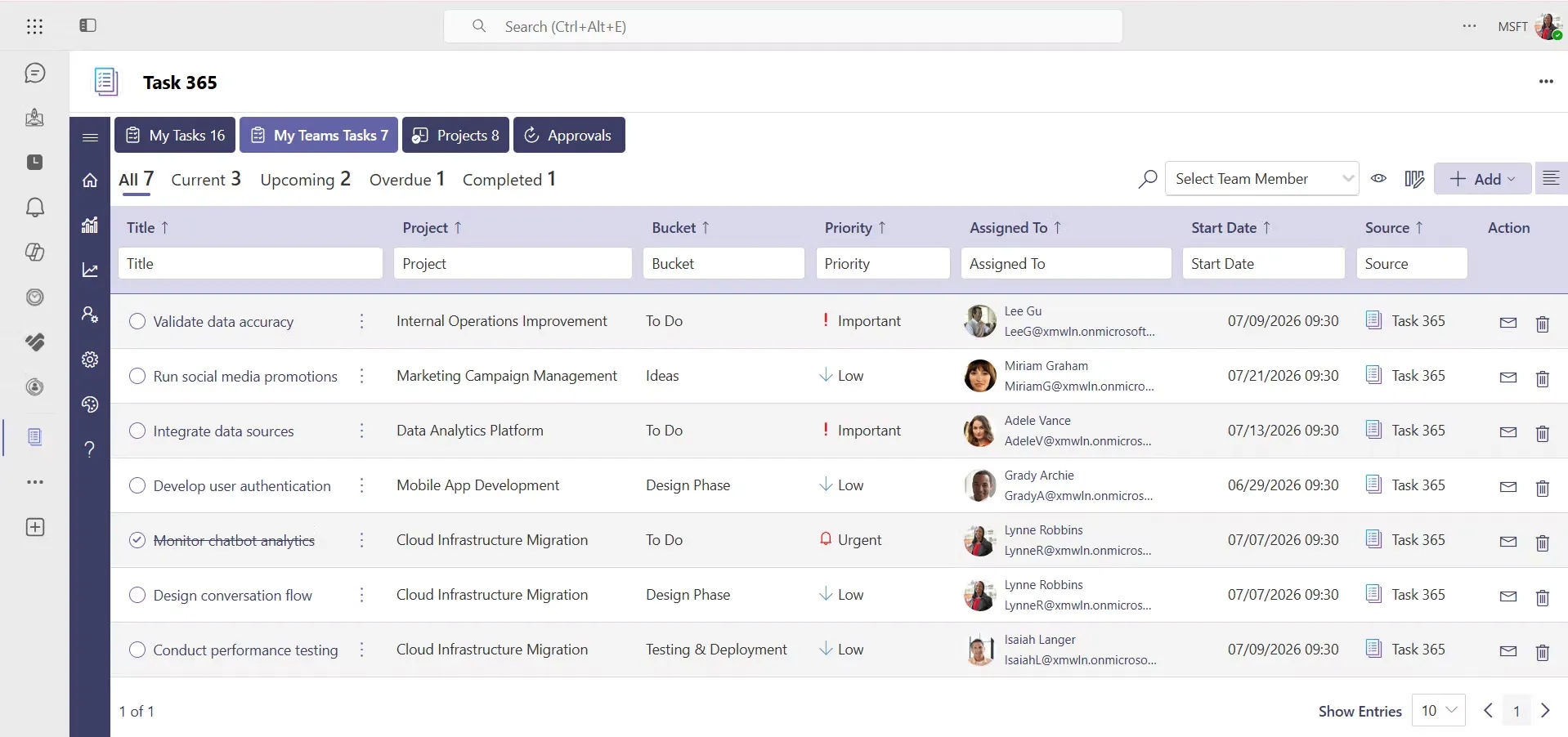
For organizations using Microsoft 365, Task 365 provides a connected environment for organizing assignments and monitoring project work.
Its capabilities include:
- Task assignment and priority management.
- Board, List, Calendar, and Timeline views.
- Multi-project tracking and progress dashboards.
- Microsoft Teams, SharePoint, Outlook, and Planner integration.
- AI-supported summaries and task organization.
These features can support Sprint visibility and daily coordination. Task 365 is a task management solution, not a replacement for Scrum accountabilities or coaching.
How to Choose the Right Scrum Task Management Solution
Choosing software requires more than comparing feature lists. A suitable platform should support how employees actually work.
Scrum Master vs Project Manager
- A Scrum Master focuses on Scrum adoption, team effectiveness, and removing impediments.
- A project manager typically coordinates schedules, budgets, resources, and broader delivery responsibilities.
- Organizations may need both roles depending on project complexity and operating structure.
Important Software Selection Criteria
Evaluate these capabilities before purchasing:
- Clear task ownership and priority tracking.
- Flexible boards and scheduling views.
- Visibility across projects and departments.
- Integration with existing workplace applications.
- Useful reporting and access controls.
- Practical onboarding and support.
For Microsoft 365 users, Task 365 is worth evaluating when disconnected task records make collaboration difficult. Request a demonstration using your team’s actual workflow before making a purchasing decision.
Ready to Improve Task Management Across Your Team?
Stop losing track of assignments, deadlines, and project updates. With Task 365, your team can manage tasks, monitor progress, and stay organized within Microsoft 365.
Conclusion
Understanding what is scrum master helps leaders recognize why effective teamwork requires more than task assignments and deadlines. Scrum Masters support collaboration, remove barriers, and encourage continuous improvement. Their success depends on clear responsibilities, leadership support, and honest communication.
Technology strengthens these practices by making important work easier to track. For organizations already using Microsoft 365, Task 365 can help connect assignments, priorities, deadlines, and project updates.
Ready to improve team visibility and task coordination?
Book a Free Task Demo and discover how your team can organize work more effectively.
Frequently Asked Questions
What does a Scrum Master do every day?
A Scrum Master coaches employees, supports Scrum events, helps remove obstacles, and works with stakeholders to improve team effectiveness. Daily responsibilities vary according to team needs.
Is a Scrum Master the same as a project manager?
No. Scrum Masters support the Scrum framework and team effectiveness. Project managers usually handle broader delivery coordination, including schedules, budgets, and resources.
Does a Scrum Master need coding skills?
No. Coding knowledge can help when supporting software teams, but communication, facilitation, coaching, and Scrum knowledge are more important.
Can a team leader become a Scrum Master?
Yes. Team leaders can learn Scrum and develop coaching skills. They must understand the difference between directing employees and supporting self management.


























