

SaaS subscription management becomes more complex as SaaS companies scale and take on a growing base of customers across different plans, pricing tiers, and billing cycles. Each customer follows their own subscription timeline, whether it’s a renewal date an upgrade request, or a cancellation, and tracking all of this by hand gets harder and riskier as the customer count climbs.
- SaaS subscription management helps businesses track billing, renewals, upgrades, and cancellations in one place, replacing error-prone manual tracking.
- It gives real-time visibility into recurring revenue, active users, and payment status, supporting more accurate forecasting and decision-making.
- Key features to look for include multi-currency support, automated invoicing, real-time reporting, and complete transaction tracking for compliance.
- Strong renewal practices and timely payment recovery directly reduce churn and protect long-term recurring revenue
A report from Grand View Research projects that the subscription billing management market will reach $17.95 billion by 2030, growing at an impressive CAGR of 16.9% between 2025 and 2030.
This is the reason why SaaS companies require an effective and organized method of managing user subscriptions, monitoring payments, and the entire subscription process effectively.
What Is SaaS Subscription Management?
SaaS subscription management is the process of overseeing every stage of a customer’s subscription lifecycle billing, renewals, upgrades, downgrades, and cancellations. It gives businesses a reliable way to track active users, process payments accurately, and keep subscription records up to date, without relying on manual tracking that becomes harder to manage as the customer base grows.
Beyond day-to-day billing, it gives companies a clear view of recurring revenue and customer behavior, making it easier to track performance and spot growth opportunities. For example, a SaaS company with 2,000 active users paying $50 a month generates $100,000 in monthly recurring revenue.
How Does SaaS Subscription Management Work?
SaaS subscription management manages the complete subscription lifecycle of a customer, including signup, renewal or cancellation. It assists SaaS businesses in billing, user access control, and tracking of recurring revenue.
Step 1: Customer Chooses a Plan
The process begins when a customer selects a subscription plan, such as monthly or annual billing. To start the subscription, they create an account and provide their payment information.
Step 2: Subscription Gets Activated
Once payment is made or a free trial begins, the subscription is activated and the customer gets access to the product based on the plan they chose.
Step 3: Billing, Invoicing, and Payment Recovery
The SaaS invoicing system bills the customer according to their billing cycle and generates invoices automatically, adjusting the amount if the customer upgrades or downgrades. If a payment fails, the system retries the charge or prompts the customer to update their payment details, helping businesses recover revenue and avoid disruption.
Step 4: Renewal Alerts and Payment Notifications
The system sends timely reminders ahead of renewal dates and notifies customers of successful or failed payments, keeping them informed about the status of their subscription at all times.
Step 5: Plan Upgrade, Downgrade, or Cancellation
Customers can change their plan or cancel their subscription whenever needed. The system automatically updates their access level and billing to reflect the new plan.
Step 6: Reports and Revenue Insights
Businesses get access to subscription analytics covering monthly revenue, renewals, and cancellations, giving SaaS firms a clear picture of subscription performance to guide better business decisions.
Why is Subscription Management Vital for Businesses?
B2B SaaS subscription management has a significant role in assisting businesses to run their daily operations, maintain good customer relations, and have a steady recurring revenue. This is how it assists businesses to remain organized and expand.
Clear and Predictable Revenue Tracking
Most companies now rely on subscriptions 80 percent use at least one SaaS product, and that number keeps rising. A subscription management system gives businesses a real-time view of monthly revenue, showing active subscriptions, upcoming renewals, and payment status in one place.
Clear and Predictable Revenue Tracking
Most companies now rely on subscriptions 80 percent use at least one SaaS product, and that number keeps rising. A subscription management system gives businesses a real-time view of monthly revenue, showing active subscriptions, upcoming renewals, and payment status in one place.
Easy Plan Upgrades and Downgrades
Customer needs shift over time some move to a higher tier for more features, others scale down to save costs. A subscription management system records these changes instantly, automatically updating billing and access.
Builds Customer Trust with Clear Billing
Transparent billing helps customers understand exactly what they’re paying for and why. A subscription system generates invoices that clearly break down plan costs, taxes, and renewal dates.
Reduces Payment Issues and Supports Renewals
Failed payments, expired cards, and missed renewals are common causes of revenue loss. A subscription management system tracks payment status, sends renewal reminders, and keeps a complete transaction history.
Creates More Opportunities for Revenue Growth
Subscription data shows exactly how customers use your product, helping businesses introduce new plans or add-on features at the right time. For instance, customers nearing a usage limit can be offered a premium upgrade.
Saves Time Through Automation
Managing subscriptions manually becomes time-consuming and error-prone as the customer base grows. A subscription management system automates billing, renewals, payment tracking, and notifications, freeing teams to focus on product and customer support.
Take control of SaaS subscriptions with ease
Difference Between Manual and Automated Subscription Management
| Aspect | Manual Process | Automated SaaS subscription management |
| Process | Managed through spreadsheets, emails, and human tracking | Managed using dedicated SaaS management tools and software |
| Accuracy | Prone to human errors and missed renewals | Highly accurate with real-time tracking and alerts |
| Time Consumption | Time-intensive and repetitive tasks | Saves time through automation and centralized control |
| Visibility | Limited visibility across subscriptions | Complete visibility with dashboards and reporting |
| Cost Control | Difficult to identify unused or duplicate subscriptions | Easily detects waste and optimizes spending |
| Scalability | Hard to manage as the business grows | Scales easily with increasing number of tools |
| Renewal Management | Risk of missing renewal dates | Automated reminders and renewal tracking |
Feature of SaaS Subscription Management
SaaS subscription management assists companies in the management of subscriptions, billing, and revenue. These are some of the main features to be considered.
Multi-Currency Support
Multi-currency invoicing lets SaaS companies bill clients in their local currency, which matters for businesses serving customers across different countries and regions. The system automatically handles currency conversion and applies the correct billing amount for each customer.
Manage global clients with multi-currency invoicing
Automated Invoicing and Approval Workflows
The system automatically generates subscription invoices based on each customer’s billing plan, whether monthly or annual, cutting down manual invoicing work. Businesses can also set up invoice approval workflows so managers or finance teams review invoices before they go out, keeping billing accurate and organized.
Real-Time Financial Visibility
Businesses get real-time insight into subscription revenue, active users, and payment status, all from a single system. This SaaS reporting feature helps teams track financial performance and growth trends to make faster, better-informed decisions.
Easy Plan Upgrades and Downgrades
Customers can upgrade or downgrade their subscription plan based on current needs. When a change happens, the system automatically updates billing, access permissions, and subscription records, keeping data accurate without manual work.
Fast and Accurate Quote Creation
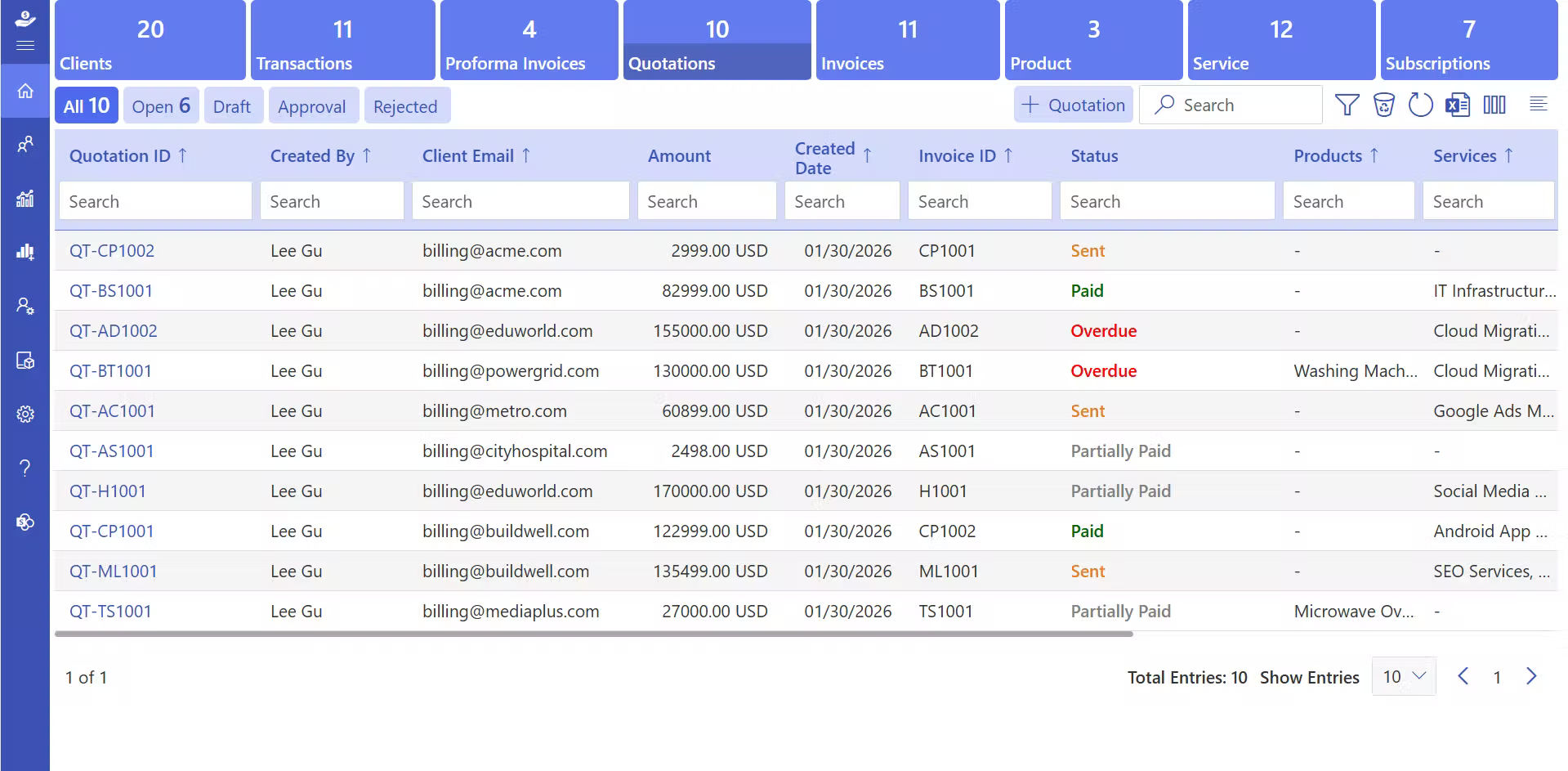
SaaS subscription management enables the customers to upgrade or downgrade their subscription plans according to their present requirements. In case of a plan change, the system automatically changes the billing, access permissions, and subscription records. This helps the customers to modify their plans and stay on the service and the businesses have the right billing information.
Recommended Reading: What Is Quotation Management and Best Practices to Implement
Common Mistakes Businesses Make in Managing Saas Subscription Management
Small gaps in subscription management can quietly hurt revenue and customer experience over time. Here are a few areas that often don’t get enough attention.
Limited Visibility into the Subscription Lifecycle
Many SaaS companies keep subscription data spread across business billing software, spreadsheets, and internal databases. This makes it hard to see the full picture who’s on a trial, who renewed, and who cancelled.
Renewals Don’t Always Get Timely Attention
Renewals are key to keeping recurring revenue steady, but renewal schedules and customer alerts aren’t always followed consistently. According to PwC, 73 percent of buyers say customer experience strongly influences their purchase decisions. Delayed renewal reminders or notifications can quietly damage that experience.
Plan Changes Aren’t Always Reflected Accurately
Customers often upgrade, downgrade, or switch plans as their needs change. But sometimes these changes don’t update right away in billing, access, or internal records, creating a mismatch between what the customer is actually on and what the system shows.
Payment and Billing Records Live in Multiple Places
SaaS billing details, invoices, and payment history often end up scattered across different platforms. Without everything in one place, reviewing payment history or verifying charges takes longer, and it makes it harder for finance teams to keep track of recurring revenue.
Build custom billing that matches your business needs
How Revenue 365 Improves SaaS Subscription Management?
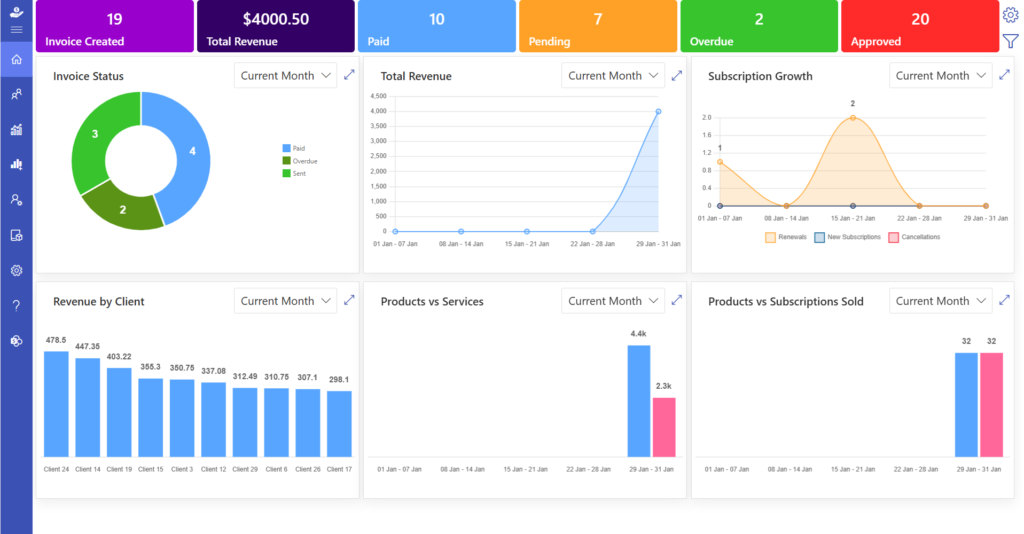
Revenue365 is built on the trusted, certified Microsoft ecosystem, giving businesses enterprise-level data protection and reliability. It integrates directly with Microsoft tools like SharePoint, MS Teams, Outlook, Power BI, and Power Automate, so teams can manage subscriptions without leaving the environment they already work in.
Whether you’re an SMB or a large enterprise, Revenue365 brings billing, revenue tracking, and subscription management together on a single platform. This gives teams clear visibility into subscription activity, accurate records at all times, and better overall control over recurring revenu
How to Deploy Revenue365
Getting Revenue365 up and running takes just a few steps through the SharePoint Admin Center:
- Go to the SharePoint Admin Center.
- Navigate to More Features.
- Click Apps to open the SharePoint App Catalog.
- Switch to the Classic Experience.
- Click Upload.
- Select the SPPKG (SharePoint Package) file from your system.
- Check the box for “Make this solution available to all sites in the organization.”
- Wait for the package to finish uploading.
- When prompted, click Deploy to complete the setup.
Conclusion
SaaS subscription management gives businesses the visibility and control needed to handle billing, renewals, upgrades, and cancellations without relying on manual tracking. As customer bases grow across different plans and billing cycles, having a system in place to monitor recurring revenue, automate routine tasks, and maintain accurate records becomes essential for staying organized and reducing revenue loss.
Beyond day-to-day operations, subscription data helps businesses understand customer behavior, identify upgrade opportunities, and make informed decisions about pricing and plans. Combined with strong renewal practices and secure handling of payment information, a well-managed subscription system supports steady, predictable growth while keeping the customer experience smooth and reliable
Join Our Creative Community
Frequently Asked Questions
SaaS subscription management is the process of handling a customer’s subscription lifecycle, including billing, renewals, upgrades, downgrades, and cancellations, while giving businesses visibility into recurring revenue.
It helps businesses track recurring revenue accurately, reduce payment failures and churn, maintain billing transparency, and free up time by automating repetitive tasks like invoicing and renewal reminders.
Look for multi-currency support, automated invoicing, real-time financial reporting, easy plan upgrades and downgrades, quote creation, and complete transaction tracking for compliance.
It tracks payment status in real time, flags failed payments or expired cards, and sends renewal reminders, helping businesses recover missed payments before they turn into churn.
Yes. It allows businesses to introduce new pricing tiers, run discounts, or update existing plans while keeping billing records accurate and consistent across all customers.


_JiluXJRGNl.svg)























