

Travel Expense Report Software: Manage Every Corporate Travel Spend

As travel volumes rise, so does the pressure on finance teams to manage, track, and report every dollar spent on the road. That’s where travel expense report software becomes a critical part of your finance stack not just a convenience, but a necessity.
What Are Travel Expenses?
Travel expenses refer to the amount of money that a business pays when its employees travel on work related grounds. Most of travel expense policy usually cover airfare, hotel, ground transportation (taxis, ride-shares, car rentals), meals, parking, visa fees and incidentals like baggage fees or telecommunications expenses on the trip.
Accounting wise, the travel costs are considered as operating costs and in most cases, the expenses can be compensated by the VAT/GST reclaims, depending on the country and the type of trip. Travel costs are often the most significant and complicated discretionary expenditure category to companies with distributed teams or client-facing roles.
When Is It Actually Business Travel?
Not every trip that an employee takes qualifies as business travel. The distinction matters for tax purposes, reimbursement eligibility, and policy compliance. Here are the primary categories that organisations typically recognise:
Direct client engagement: This includes visits where revenue relationships are involved, sales presentations, product demonstrations, contract negotiation, account renewal and periodic business review visits.
Delivery and on-site execution: The travel cost is a direct project expense when your team must be on site to do the work – running equipment installations, site inspection, or on-site training at client facilities.
Industry conferences and trade events: Companies can use representatives to exhibit, speak, sponsor, or collect competitive intelligence at trade show and industry conferences.
Internal off-site meetings: Strategy, leadership summits, team kickoffs, quarterly planning workshops, product sprints, etc. are often most effective when a neutral, off-site setting is used.
Vendor and partner visits: Sourcing visits, factory and warehouse visits, distributor onboarding meetings and supplier negotiations all qualify as this category.
Regulatory and government-related travel: This involves attending certification hearings, taking part in compliance reviews, or dealing with government agencies – as is typical of regulated industries like pharmaceuticals, finance, and manufacturing.
What Job Roles Demand the Most Business Travel?
The travel and expense is not uniformly spread in an organisation. There are always departments and seniority levels that have a disproportionate amount of travel budgets.
1. Sales and Business Development
The most common business traveller in most organisations is the sales teams. It is common to be in the room to build and maintain client relationships, conduct face-to-face demos, and seal deals. Travel is a cost of revenue, directly related to the results of the pipeline.
2. Executive and Senior Leadership
Senior-level decision-makers cost an average of $1,986 per trip, partly due to tighter schedules that allow less flexibility in booking. They are also less likely to take the benefits of advance booking discounts or indirect routing, which causes their average trip cost to be far above the company average.
3. Operations and Project Delivery
The field engineers, project managers and implementation teams travel frequently to the client sites or areas of operation. Their visits are lengthier and more diverse in price basing on the geography.
4. Finance and Procurement
Finance leaders travel for audits, board meetings, investor relations, and supplier negotiations. Procurement teams frequently visit vendor facilities, especially in managing finance for supply chain-heavy industries. Decision-makers spend 12% more on trips than other business travellers This is a meaningful number for finance teams setting tiered travel policies.
Which Industry Travels the Most?
There are other industries that are inherently reliant on face-to-face interaction. The following are the industries that are always top in business travel expenditure.
Professional Services and Consulting: It is mostly a face-to-face delivery. The consultants, auditors and advisors spend much of their time at the client locations.
Technology: Sales cycles are lengthy and complicated. Tech founder spend a lot of money on traveling to pre-sales, implementation, and customer success.
Financial Services: Banking, investment management, and insurance all involve a lot of traveling to meet clients, engage in regulatory activities and deal activities.
Manufacturing and Industrial: Supply chain complexity implies frequent visits to the factory, supplier audits, and meetings with distribution partners in various geographies.
Pharmaceuticals and Life Sciences: Medical affairs, clinical operations, and regulatory affairs teams travel extensively for trials, submissions, and healthcare professional engagement.
Mid-market companies are the most growth-oriented when it comes to travel investment. According to Atlys, 51% of mid-market businesses expect to increase their travel investment — the highest proportion across all company size segments. This signals that travel spend is actively growing in a segment that is scaling quickly and competing for clients in an increasingly in-person-driven environment.
How Much Does the Average Business Trip Cost?
As per Booking.com, the average business trip cost for US-based companies is $1,771 for business travellers and $1,986 for decision-makers. The gap between domestic and international spending reflects the compounding effect of long-haul airfare, multi-night hotel stays, ground transport in unfamiliar cities, currency conversion costs, and potential visa or health documentation fees.
The difference between domestic and international expenditure is the compounding effect of long-haul airfare, multi-night hotel accommodation, ground transportation in new cities, currency exchange expenses, and possible for AMEX corporate card reviews.
When you multiply these averages across a mid-sized organisation with active travel programmes, the total annual spend becomes significant and managing it manually becomes increasingly difficult.
Common Challenges in Managing Travel Expenses
It seems to be an easy task to manage the costs of business travel, but most of the finance and operations departments are aware that it involves much more. These are five areas where things are likely to get complicated.
- Receipt collection and documentation
Employees often travel back-to-back across multiple cities. By the time a trip wraps up, photographed inconsistently, or gone missing altogether. Managing a receipt at the end of the week can be much longer than it needs to be both to the traveller and the person looking at it. - Policy adherence at the point of booking
Most companies have travel policies, yet employees do not consult them when making a booking. The choice of airfare classes, hotel rates, and preferred vendor requirements are easy to forget, particularly when one is doing a last-minute booking before a very early flight. It is upon the finance teams to then have to find these variances, which is a time-consuming and sometimes uncomfortable task. - Reimbursement delays
When the expense reports are filled in on paper or using disconnected tools, the process of approval takes time. Reports wait in inboxes. Finance departments have deadlines at the end of the month. The wait can be frustrating to the employees, especially those who have paid out of pocket, and this can influence trust in the process. - Visibility into forward-looking spend:
Most organizations are aware of what they have spent in the previous quarter on travelling. There are less who have a sound perspective on what they are about to spend. Lacking real-time information on the bookings made and travel approval pending, finance departments tend to predict using incomplete details. - Audit and compliance readiness
In case of an audit, internal or external, the volume of travel transactions in a enterprise company can be labor-intensive in terms of expense substantiation. Unfinished records, irregular categorization, and lack of supporting documentation are all risk factors that raise the audit risk and time to respond.
How Companies Plan and Approve Business Travel?
A business trip is hardly a one-time decision to approve. A multi-layered assessment is done by most organizations prior to the green light. Below is a breakdown of the key considerations that go into a well-structured travel approval process.
- Purpose and return on investment
The point of departure is always the why. Does the trip have a definite purpose with a quantifiable result attached to it? Would a video call or a local alternative yield a similar outcome? Determining what success will look like prior to the trip being booked will rationalize the expenditure and will make the results accountable. - Policy alignment and budget fit
The mode of travel suggested must fit within the travel policy of the company, including preferred booking windows, airline class limits, hotel rate limits, and approved vendors. Proper identification of the cost centre and evaluation of the overall budget impact should be done prior to its approval. - Who needs to travel
Sending a team of five when two can do the work is costly to the company and it cuts down the time of the employees on other more important issues. Another significant aspect of trip planning is to determine what is the minimum viable team size based on skills needed and seniority needed. - Total cost and routing efficiency
The total price of a journey is far more than the airfare. There are ground transport, hotel, meals, telecom, baggage, and travel insurance. Routing is also important, a longer route via a hub city may be cheaper on airfare but more costly once you include the extra hotel night. The companies must also be sensitive to price spikes during major trade shows or high season periods. - Entry requirements and documentation
Before the trip is approved, the validity of the passport, the visa requirements, the work permit requirements and the health documentation (where applicable) must be verified. International travelling companies must also be informed of the fact that the costs of the trip will be subject to the reclaim of VAT or GST.
- Client and commercial timing
In client-facing travel, timing in relation to contract milestones, renewal windows or other important negotiation periods are important. The visit at the right time can make a difference in the win or save a threatened account. The approval conversation should include the commercial logic of the trip. - Sustainability considerations
When two routing options have the same result, the less carbon-intensive one should be selected. Bringing together several meetings into one trip, using rail instead of short-haul flights where possible and reporting on the emissions per trip are becoming a part of corporate travel governance.
Why Using Travel Expense Report Software Is Worth It?
Manual processes can be handled when the volumes of travel are low. The difference between the scope of what manual tracking can address and what finance departments require is a real operational issue. Here is how it benefits users.
1. Full spend visibility in one place
Finance teams can see all travel spend past, present and pending in one location, instead of having to combine data in emails, spreadsheets and scanned receipts. This greatly simplifies real time tracking against budget and identification of areas of spend that are trending the wrong way.
2. Faster reimbursement cycles
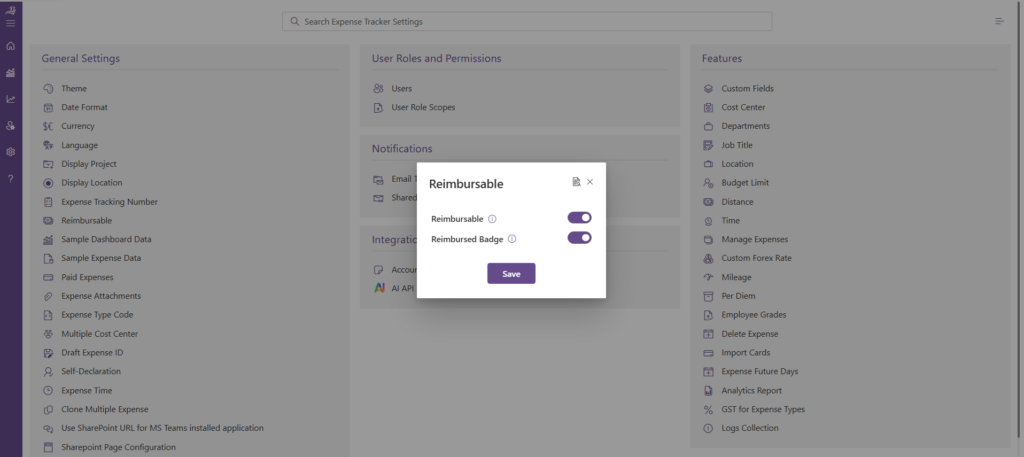
Once employees are aware that their expense reports will be checked and processed promptly, they will have a higher chance of uploading them in time and in the appropriate format. The presence of travel and expense reporting software that has automated approval workflow implies that there are fewer bottlenecks and the employee reimbursement cycle is more predictable to all.
3. Policy enforcement at the point of submission
The software will indicate a problem when a report is submitted or even prior to a booking, instead of re-examining expenses after the fact and having troublesome discussions about out-of-policy bookings. This minimizes the number of exceptions that get to finance to be reviewed manually.
4. Helps During International Business Trips
International business travel costs can exceed $2,000 per trip, compared to domestic trips which average around $500. For companies with global travel programmes, the ability to manage multi-currency expenses, handle corporate expenses, apply country-specific policies, and capture VAT-eligible receipts accurately has a direct impact on cost recovery and financial accuracy.
5. Audit readiness without the scramble
All the transactions within good travel and expense report management software are time stamped, classified, and associated with a receipt or other supporting document. In the case of an audit, finance departments can retrieve entire records in a short period of time. Teams do not have to rely on employees to recall what they used eight months ago.
6. Better budget forecasting
Finance departments can create more precise travel budgets and minimize challenges with historical spend data and real-time visibility of open bookings. Departmental, trip, and geographical trend reporting assists the leadership to make more informed decisions on where to invest – and where to reduce.
7. Reduced administrative load for employees
Travellers spend less time on expense admin when the process is well-designed. The fact that mobile receipt capture, auto-categorisation and basic approval workflows allow the post-trip paperwork to be completed in minutes.
Key Features of Travel Expense Report Software
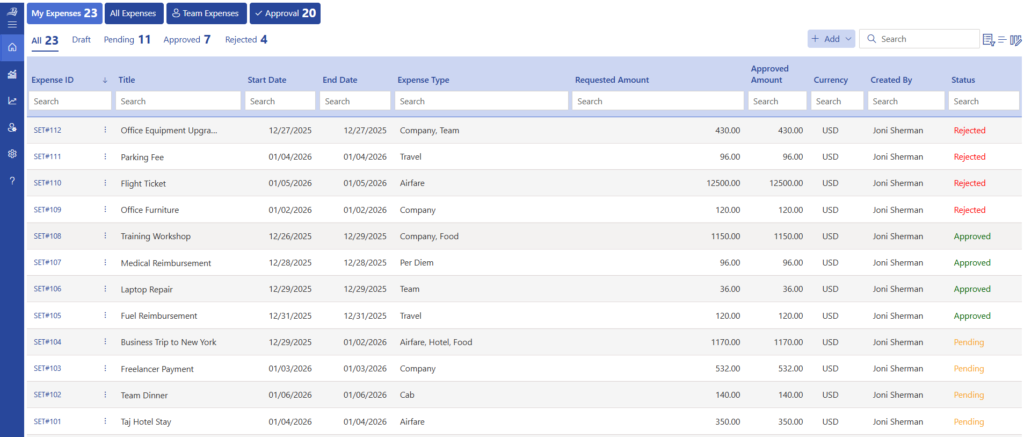
The quality of the travel expense reporting software depends on the features it offers and how well those features fit into the way your finance and operations teams work. Here’s what to look for:
- AI Receipt Scanning
The travel expense report software operates on AI to scan receipts immediately after they are scanned by the software – merchant name, amount, date, currency, and category. The employees take a picture of a receipt/bills on their phone and the system takes care of the rest. AI expense management reduces the manual data entry in the process and minimizes the chances of transcription errors that cause claims to be rejected. - Automated Expense Approval Workflow
The travel and expense report management software forwards submitted expense reports to the appropriate approvers depending on the pre-established rules. The approvers are notified, review reports and approve or query on the platform with expense automation feature. No chasing. No inbox forwarding. Auditing Logging of decisions made.
- Mileage Tracker
The mileage tracker is used by employees who travel by personal vehicles and use them to travel to work or other business locations. The distance will be automatically recorded with the help of GPS or map integration and reimbursement will be calculated according to the per-mile or per-kilometers rate of your company. This reduces the necessity of employees having to keep manual records of the mileage. - Corporate Card Management
Employees can upload their digital card statement into the travel report software and every transaction is automatically sent to the relevant approver depending on the expense policy. This eliminates the necessity of different reconciliation processes and maintains consistency. The corporate card management helps regardless of whether an employee is paying using a corporate or a personal card. - Employee Reimbursement
An expense report can be approved and the reimbursement initiated directly on the platform. Both the employee and the finance team can see payment timelines and this will minimize back and forth queries on when payment will be made. - Compliance Control
The expense report software will automatically enforce your expense policy, including identifying submissions that exceed per diem limits. A best travel and expense report software will reduces the compliance load on the finance reviewers and also make sure that policy is implemented uniformly across all departments and geographies. - Expense Audits
In-built audit applications enable finance departments to conduct automatic audits on all expenses submitted to the system – detecting duplicates, statistical outliers, and trends that might be worth a second look. This is much quicker than spot-checking manually and it can be used to ensure the integrity of your expense data over time. - Reporting and Analytics: Finance leaders and department heads can access dashboards that break down travel spend by category, employee, department, project, or period. Custom reports support budget reviews, board presentations, and supplier negotiations giving decision-makers the data they need without requiring manual data extraction from multiple sources.
How Expense 365 Helps During the Process?
Expense 365, also known as Expense Tracker 365, helps organizations manage business travel expenses in a clear and organized way. The platform includes a mobile application that allows employees to capture travel receipts, log expenses, and submit travel reports from anywhere, making the reporting process faster and more convenient during trips.
It works smoothly with Microsoft applications such as Microsoft Teams, Microsoft Outlook, and Microsoft SharePoint, making it a practical choice for organizations already operating within the Microsoft ecosystem, especially for coordinating travel approvals and communication. The expense tracking software also integrates with QuickBooks and Xero.
Travel expense data can be exported in CSV format, allowing businesses to integrate it with their existing accounting systems and financial processes.
Expense 365 supports transparency in business travel expense management while allowing organizations to continue using their existing financial workflows.
Conclusion
Whether you’re managing a domestic team or a globally distributed workforce, the right travel and expense reporting software reduces administrative friction, improves policy compliance, and gives finance leadership the visibility they need to make confident budget decisions.
Business travel is a big expenditure – and it is increasing. To finance and operations teams, it is a good investment to manage well, which implies the presence of the right system.
Book a 14-day free trial with Expense 365. A simplified way to get your travel expenses reimbursed.
Join Our Creative Community
Frequently Asked Questions
What expenses are typically covered by travel expense report software?
Airfare, hotel accommodation, ground transport (taxis, car rentals, ride-shares), meals, parking, conference fees, visa and passport costs
How does corporate card reconciliation work within expense software?
Employees upload their digital card statement to the platform. The software matches card transactions to submitted expenses where possible, and routes unmatched or out-of-policy items to the appropriate approver for review.
How does travel expense software support VAT or GST reclaim?
The software collects clear receipts and invoices in the right format for tax claims. It sorts expenses based on what can be claimed and creates simple reports for submission. This is very helpful for companies with a lot of travel, as getting VAT or GST back can help reduce overall costs.
How does travel expense report software apply different mileage reimbursement rates?
Travel expense report software assigns different mileage reimbursement rates based on employee grades. When a travel expense is submitted, the system automatically applies the correct rate according to the employee’s grade, removing the need for manual selection.
What do business travellers mainly spend on?
Business travellers mainly spend on lodging and accommodation, air fare, food and beverages, ground transport, and other related travel expenses.


_JiluXJRGNl.svg)























