
Technology Contracts: Types, Key Clauses, and How To Manage Them

A business invests in new software to improve daily work. Months later, the system fails to meet expectations, customer information becomes exposed, or the vendor increases its fees without warning. What started as a useful investment can quickly turn into a costly problem.
Technology contracts help businesses avoid such situations by setting clear contractual obligations before they purchase software, hire IT service providers, or share sensitive information.
- Clearly describe the technology being provided, its functions, support coverage, and performance standards to avoid confusion.
- Set rules for access, ownership, privacy, and incident reporting before sharing sensitive records with a provider.
- Review pricing changes, renewal conditions, cancellation charges, and service limits before signing.
- Use a central system to track vendor commitments, key dates, document changes, and service performance throughout the business relationship.
As businesses depend more on cloud platforms, artificial intelligence, and outside IT providers, poorly written agreements can expose them to financial losses and service interruptions.
In this blog, we will explore the different types of technology contracts, their key clauses, common risks, and practical steps and manage them.
What are Technology Contracts?
Technology contracts are legally binding agreements between businesses and technology providers that explain how software, hardware, digital services, or IT solutions will be supplied and used.
They define what each party must provide, how payments work, who owns created materials, and what happens when a service does not meet expectations.
For example, when a company purchases cloud storage, the agreement may explain how much space it receives, who can access stored files, and how the provider handles system failures.
Why are Technology Contracts Important?
Businesses rely on digital tools to manage customer records, payments, communication, and daily operations. Technology contracts create a written foundation for managing these relationships.
1. Protect Sensitive Business Information
Technology providers may access employee details, financial records, customer databases, and internal systems. Written privacy conditions explain how providers can collect, store, share, and delete this information. They also describe what happens when unauthorized access occurs.
2. Set Clear Service Expectations
A company purchasing an IT solution needs to know what it will receive. The agreement can define system availability, response times, technical support, and quality standards. These details give businesses a way to measure contract performance.
3. Control Technology Spending
Software subscriptions and IT projects can include unexpected expenses. Clear pricing rules help companies understand setup fees, usage charges, maintenance costs, and future increases before committing funds.
4. Reduce Legal and Financial Exposure
When a provider fails to meet its commitments, unclear language can make it difficult to determine who must address the problem. A well-drafted contract explains available remedies, financial limits, and the steps both parties should follow when something goes wrong.
5. Support Long-Term Vendor Relationships
Business technology needs change over time. Well-planned agreements allow companies to review service quality, request updates, and make informed decisions about continuing or ending a partnership.
Types of Technology Contracts
Different technology purchases require different legal arrangements. Choosing the correct type helps businesses address the needs of each project.
1. Software Licensing Agreements
A software licensing agreement allows a business to use a software product under specific conditions without purchasing ownership of the underlying code. It may limit the number of users, permitted devices, locations, or ways the application can be used.
2. Software as a Service (SaaS) Agreements
SaaS agreements cover applications that customers access online, usually through monthly or annual subscriptions. They explain payment plans, account access, service availability, customer information handling, and cancellation procedures.
3. IT Service Agreements
These agreements cover ongoing technical work such as network monitoring, system maintenance, troubleshooting, and help desk support. They often include response schedules, support hours, and methods for reporting technical problems.
4. Software Development Agreements
A software development agreement applies when a company hires an outside team to create a custom application or digital product. It identifies project requirements, development stages, testing methods, payment milestones, and contract ownership of completed work.
5. Cloud Computing Agreements
Cloud agreements govern services such as online storage, virtual servers, computing resources, and hosted databases. They address system access, backup methods, service availability, and how customers can retrieve their information when leaving the platform.
6. Hardware Purchase and Maintenance Agreements
These cover the purchase, installation, repair, and upkeep of physical IT equipment. Businesses commonly use them for servers, networking devices, computers, and office technology.
7. Non-Disclosure Agreements (NDAs)
NDAs protect confidential information shared with vendors, contractors, and business partners. They define how sensitive data, source code, and proprietary information can be accessed and used.
8. Master Service Agreements (MSAs)
MSAs establish the general terms of an ongoing business relationship, covering payment, responsibilities, liability, and intellectual property. Separate statements of work define the scope and deliverables of individual projects.
Difference Between Technology Contracts vs SaaS Agreements
Although these two agreements share some features, they serve different purposes. Technology contracts cover a wide range of digital products and services, while SaaS contracts focus specifically on software delivered through the internet.
Aspect | Technology Contracts | SaaS Agreements |
Scope | Cover software, hardware, development, consulting, and IT services. | Focus on cloud-based software subscriptions. |
Delivery model | May involve physical equipment, installed applications, or online services. | Usually provides access through a browser or connected application. |
Payment structure | May use fixed fees, milestone payments, or recurring charges. | Commonly uses monthly, annual, or usage-based pricing. |
Ownership | Depends on the product and work being purchased. | The provider usually retains ownership of the software. |
Maintenance | May fall to the customer, vendor, or both. | The provider typically manages platform updates and maintenance. |
Customization | Can include fully customized development projects. | Usually offers built-in settings, integrations, and limited custom features. |
Ending the relationship | May involve equipment returns, final project payments, or license changes. | Often involves subscription cancellation and exporting customer information. |
Looking for a reliable system to manage your technology contracts?
CLM 365 helps you manage the entire contract lifecycle, from creation and approvals to tracking and renewals, all within Microsoft 365 environment.
Key Clauses in Technology Contracts
A well-written agreement should explain how the business relationship will work from beginning to end. The following clauses help companies avoid confusion and protect their investments.
- Scope of Work: This clause describes what the provider will supply, including product features, project tasks, and expected results. For custom development, the scope of work should also explain testing requirements and how the customer will accept the finished product.
- Service Level Agreement (SLA): An SLA defines measurable service standards, such as uptime, technical support availability, and response times.
- Data Protection and Privacy: This section explains how the vendor must protect business and customer information. It may cover encryption, access limits, storage locations, incident reporting, and applicable privacy laws.
- Intellectual Property Ownership: Businesses should establish who owns newly developed software, source code, designs, and related materials.
- Payment and Pricing: This clause explains the agreed fees, billing frequency, payment dates, and charges for additional work. Technology contracts should also describe when prices can change and whether the vendor must provide advance notice.
- Termination and Exit: The exit clause explains when either party can terminate the contract and what steps follow. It should cover notice periods, final payments, access removal, information transfers, and assistance during the move to another provider.
- Liability and Indemnification: These provisions describe how financial losses and third-party claims will be handled if problems arise. Businesses should review any payment limits, excluded losses, and exceptions for serious failures before signing.
Common Risks and Red Flags in Technology Contracts
Even a well-known provider can present risks when an agreement contains unclear or one-sided conditions. Companies should identify these warning signs before making a commitment.
1. Hidden Charges and Unexpected Price Increases
Some technology vendors offer attractive starting prices but charge extra for storage, technical support, integrations, or additional users. Without clear pricing contract terms, businesses may face unexpected expenses as their needs grow or the agreement progresses.
2. Weak Security Commitments
Technology contracts that lack specific security requirements can leave businesses vulnerable to data breaches and unauthorized access. Without clear procedures for incident reporting, investigation, and recovery, companies may struggle to respond effectively.
3. Unclear Ownership of Custom Work
Businesses that hire developers to build custom software may face contract disputes if the contract does not clearly establish intellectual property ownership. Unclear terms around source code, licensing rights, and future modifications can restrict how customers use or modify.
4. Automatic Renewals and Missed Deadlines
Many technology agreements automatically renew unless customers cancel within a specified notice period. When contract renewal process terms are unclear or deadlines go untracked, businesses may become locked into another contract period or incur expenses for services they no longer need.
5. Limited Data Access After Termination
Switching technology providers can become difficult when a contract does not clearly explain how businesses can retrieve their data after termination. Restrictions on export formats, additional retrieval fees, and short access windows can complicate migration.
Best Practices for Managing Tech Contracts
Companies lose an average of 11% of contract value post-signature. The following best practices help protect business interests and support long-term vendor relationships.
- Define Business Requirements: Consult IT, finance, procurement, and business teams to establish required features, service expectations, budgets, and priorities before negotiating with vendors.
- Evaluate Total Contract Costs: Review licensing fees, implementation costs, support charges, renewal increases, and termination fees to understand the full financial commitment.
- Establish Measurable Service Commitments: Define uptime targets, response times, issue resolution periods, and remedies for failing to meet service-level agreements (SLAs).
- Negotiate Renewal and Termination Terms: Review automatic renewals, cancellation contract finalization, price adjustments, and exit provisions to avoid unwanted commitments and unexpected expenses.
- Protect Data and Intellectual Property: Clarify ownership rights, security obligations, breach of notification procedures, and data retrieval requirements when the agreement ends.
- Involve Relevant Departments: Assign legal, IT, finance, and procurement teams to review contractual, technical, financial, and operational risks before approval.
- Maintain Contract Records: Store signed agreements, amendments, and supporting documents centrally, with clear approval of records and access to the latest version.
- Monitor Performance Regularly: Track vendor performance, invoices, deliverables, compliance obligations, and renewal dates through periodic reviews with relevant stakeholders.
Steps to Consider While Drafting Tech Contracts
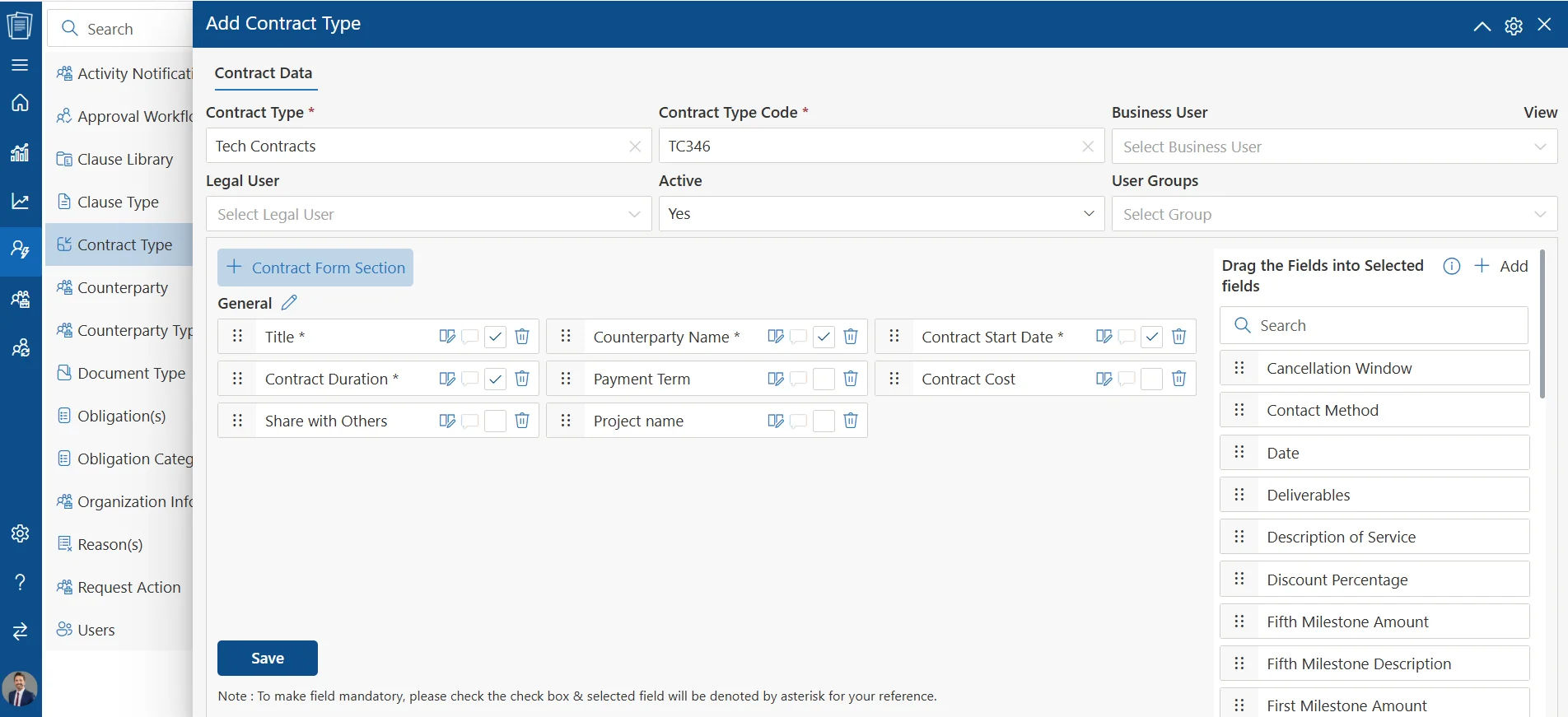
Drafting tech contracts requires a clear understanding of the product, business goals, and possible risks. Following a structured process helps companies prepare documents that support both parties.
- Start With the Business Goal: Understand what the company expects from the technology and translate those expectations into clear deliverables and outcomes.
- Make Responsibilities Clear: Define what the vendor and your company must do, from implementation and testing to ongoing support and maintenance.
- Identify Dependencies Early: Check whether delivery depends on third-party tools, internal teams, data access, or other systems, and document these requirements in the agreement.
- Plan for Changes: Agree on how changes to project scope, timelines, or costs will be reviewed, approved, and recorded.
- Decide Who Bears the Risk: Discuss who is responsible if a service fails, data is lost, or an intellectual property dispute arises.
- Think About the Exit Before Signing: Establish how the company will retrieve its data, migrate to another provider, and receive transition support when the tech agreement ends.
- Get the Right Approvals: Have the relevant legal, finance, IT, and business teams review the terms, resolve concerns, and approve the final agreement before signing.
Simplify Technology Contract with Smarter Tools
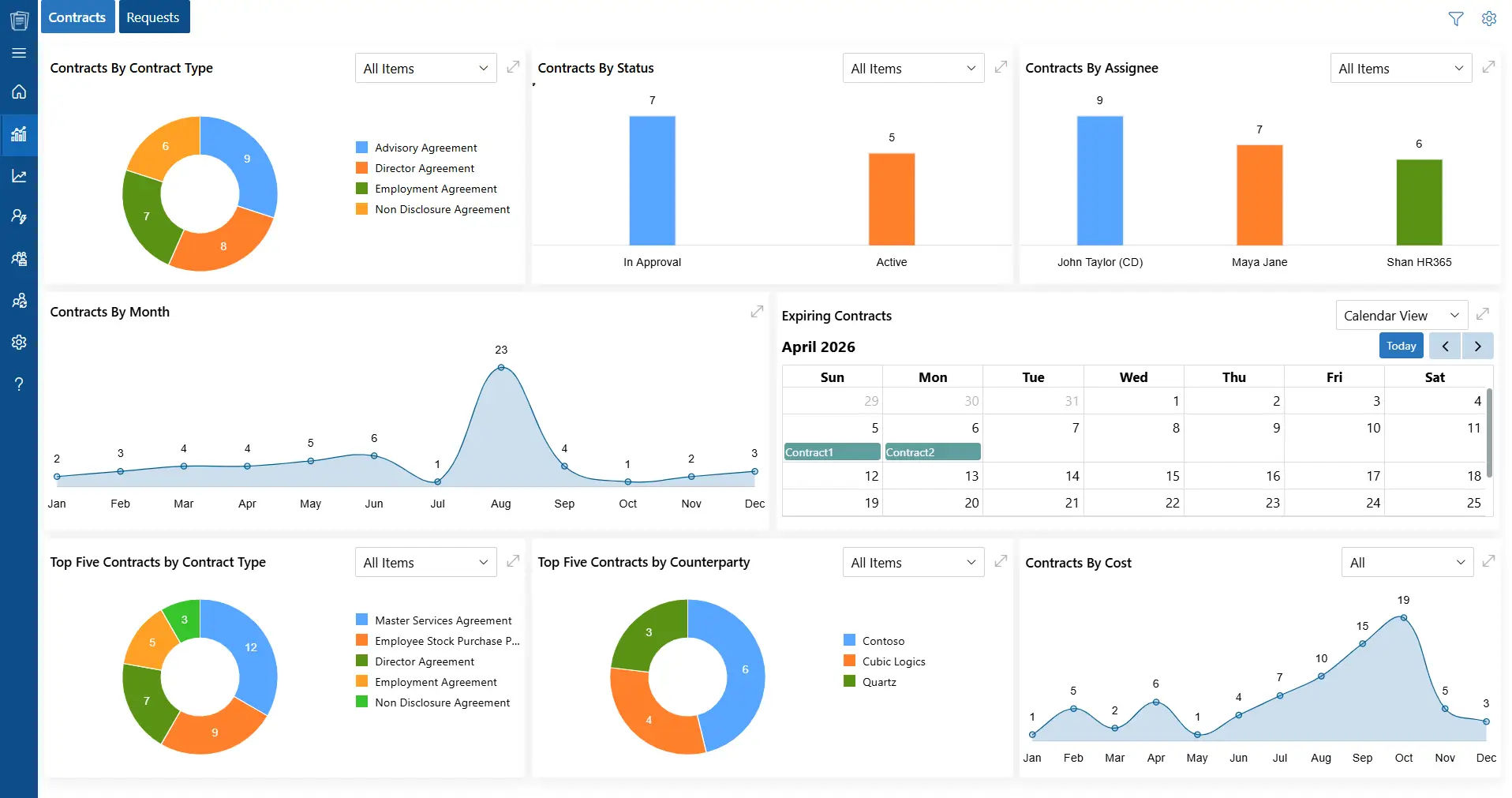
Managing multiple technology contracts through spreadsheets and email can make it difficult to track renewal dates, payment commitments, and document updates.
CLM 365, a SharePoint contract management tool, helps businesses manage technology contracts from creation and review to signing, renewal, and closure in one central platform.
- Teams can store technology agreements in a shared location and find important information without searching through email conversations.
- Automated reminders help employees stay informed about upcoming expiration dates and planned reviews.
- With it’s AI-native capabilities it helps team to understand legal clauses in simple words and provides alternative clauses.
- The platform also supports approval workflows, document version tracking, and access controls, making it easier for legal, IT, and finance teams to work together.
Built around SOC 2 compliance, Microsoft certification, and Microsoft Solutions Partner credentials to support secure and reliable contract management.
Compatible with GCC and GCC High environments, supporting strict security and data protection requirements for government organizations and regulated industries.
Conclusion
Technology contracts help businesses manage vendor relationships, control costs, and protect their digital assets. Clear terms and effective contract management reduce risks and support better business decisions.
Simplify contract management with CLM 365. Centralize your contracts, track key dates, and manage approvals in Microsoft 365 with greater visibility and control.
Frequently Asked Questions
How often should technology contracts be reviewed and updated?
Review at least annually and whenever pricing, services, regulations, or business requirements change. High-risk contracts may require more frequent reviews.
What should a technology contract include beyond pricing and service terms?
It should address deliverables, intellectual property ownership, data protection, service levels, liability, termination rights, and dispute resolution. It should also explain how changes to the original agreement will be approved and documented.
Can a technology contract cover multiple products or services?
Yes. An agreement can cover multiple products, subscriptions, or services if its scope clearly identifies each offering, applicable pricing, service levels, and responsibilities.
How can businesses identify hidden risks in technology contracts?
Businesses can use AI-powered tools to flag risky clauses, hidden fees, and unfavorable terms before signing.
Which performance metrics should businesses track after signing a technology contract?
Track vendor SLA compliance, service uptime, issue resolution time, delivery milestones, contract costs, obligation completion rates, and renewal deadlines to evaluate performance and identify potential issues.


























