
Compare the Best Namely Alternatives & Choose the Right HR Platform

Namely is a well-known HR platform used by many mid-sized businesses to manage employee information, talent management, onboarding, time tracking, and other day-to-day HR activities. While the platform offers a comprehensive set of HR features, every organization has unique requirements. As businesses grow, expand into new locations, adopt different technologies, or seek additional functionality, they often begin evaluating alternative HR solutions that better align with their operational goals.
Many organizations using Namely begin exploring alternative HR platforms as their business needs evolve and new requirements emerge. While Namely offers a range of HR management capabilities, some organizations look for solutions with stronger integration options, broader functionality, greater flexibility, or a platform that aligns more closely with their existing technology environment.
When comparing Namely alternatives, it is important to look beyond feature lists and evaluate factors such as scalability, user experience, customization, reporting capabilities, and long-term business fit. Platforms like HR365 HRMS help organizations centralize recruitment, onboarding, employee management, attendance, performance tracking, learning, and other HR activities within a single system, making it easier to support both current operations and future growth.
Today’s HR software market offers a wide variety of platforms designed to support different business sizes, industries, and workforce structures. Some organizations prioritize seamless Microsoft 365 integration, while others focus on employee experience, workforce management, reporting capabilities, customization, or scalability. The right solution depends on factors such as company size, existing technology investments, HR processes, and long-term growth plans.
This guide examines each platform’s key capabilities, strengths, and ideal use cases, helping you identify the HR solution that best supports your organization’s current and future needs.
What is Namely?
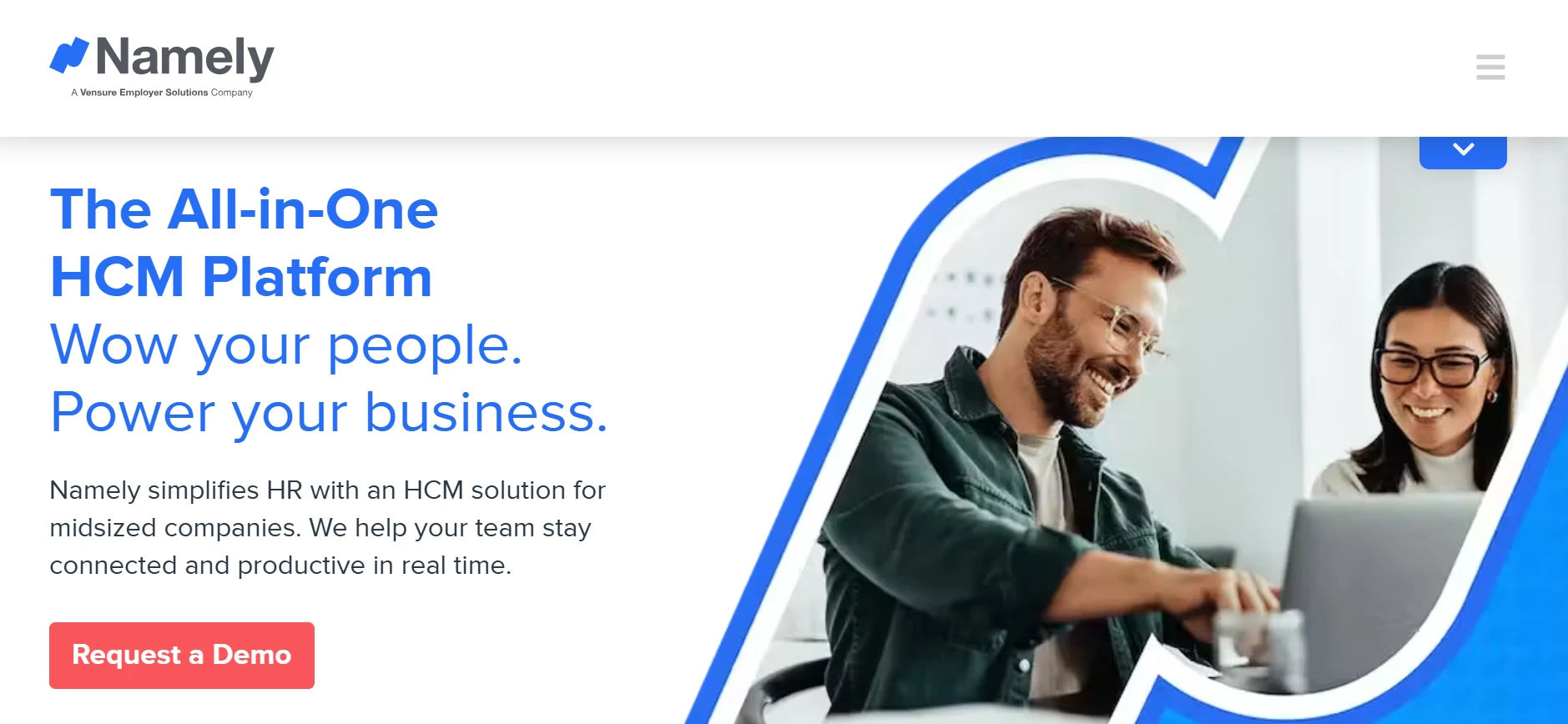
Namely is a cloud-based Human Capital Management (HCM) platform designed for small and mid-sized businesses. It brings together HR management, employee onboarding, time and attendance tracking, performance management, benefits administration, reporting, and employee self-service tools within a single system. Organizations use Namely to manage employee information, support HR processes, track performance, and maintain centralized personnel records throughout the employee lifecycle.
What Are the Strengths of Namely?
- Centralized Platform for HR Operations
- Comprehensive HR, Payroll, and Benefits Management
- Covers Multiple Stages of the Employee Lifecycle
- Mobile Apps for iOS and Android Users
- Easy Access to Employee Profiles and Time-Off Requests
- Payroll Processing and Management Capabilities
- Support for Timesheets, Scheduling, and Expense Tracking
- Suitable for Businesses Seeking an All-in-One HR Solution
What Challenges Do Businesses Face With Namely?
- Onboarding Process Requires More Manual Effort
- Lack of Built-In Onboarding Checklists
- No Employee Handbook Integration During Onboarding
- Performance Review Setup May Require Additional Training
- Fewer Employee Engagement Features
- May Not Meet the Needs of Culture-Focused Organizations
Namely offers a wide range of HR, payroll, and benefits management capabilities, but it may not be the right fit for every organization. As business needs evolve, some companies begin looking for alternatives that offer different features, easier implementation, greater flexibility, or a user experience that better aligns with their day-to-day HR operations. Below are some common reasons businesses explore alternatives to Namely.
Why Businesses Look for Namely Alternatives
As businesses grow and HR requirements evolve, some companies begin exploring alternatives that offer a different user experience, implementation process, feature set, or pricing structure.
- Some organizations look for more cost-effective HR software that aligns better with their budget and business requirements.
- Businesses may prefer a platform with a simpler and more intuitive interface that requires less training for HR teams and end users.
- Companies often seek solutions that can be implemented more quickly, allowing them to start managing HR operations without lengthy setup processes.
- Organizations may want a more structured onboarding experience with automated workflows and better visibility into onboarding tasks.
- Some businesses prioritize employee engagement features such as surveys, feedback collection, recognition tools, and internal communication capabilities.
- Growing companies may require greater flexibility to adapt HR processes, workflows, and reporting to their specific operational needs.
- Businesses often value software providers that regularly introduce product enhancements and usability improvements.
- Expanding organizations may look for solutions that can better support larger teams and evolving HR requirements.
- Some companies prefer HR software designed to address the needs of a particular industry, region, or business model.
- Organizations may also explore alternatives that place greater emphasis on areas such as recruitment, performance management, onboarding, analytics, or employee experience.
The right HR software depends on an organization’s unique requirements, team size, and operational priorities. Evaluating alternatives to Namely can help businesses identify a solution that delivers the functionality, user experience, and scalability needed to support their future growth.
What Should Businesses Evaluate When Comparing Namely Alternatives?
Choosing the right alternative to Namely involves more than comparing feature lists. Businesses should evaluate how well a platform supports their HR processes, user experience expectations, growth plans, and day-to-day operational requirements. A solution that works well for one organization may not be the best fit for another, making it important to assess multiple factors before making a decision.
- Core HR Functionality: Review the platform’s ability to manage employee records, onboarding, attendance, leave requests, organizational structures, and other essential HR activities. A centralized system can help reduce administrative effort and improve access to information.
- Ease of Use: The software should be intuitive for both HR administrators and team members. A user-friendly interface can reduce training requirements and encourage higher adoption across the organization.
- Onboarding Experience: Evaluate how the platform handles new hire onboarding. Features such as automated workflows, task tracking, document management, and guided onboarding can help create a more organized experience.
- Recruitment and Talent Management: If hiring is a priority, consider recruitment capabilities such as job posting management, candidate tracking, interview coordination, and onboarding integration. Performance management and goal tracking tools may also be important.
- Reporting and Analytics: Access to accurate HR data can support better decision-making. Look for customizable reports, dashboards, and analytics that provide insights into attendance, hiring, performance, and workforce trends.
- Scalability and Flexibility: The platform should be able to support future growth. Consider whether it can accommodate larger teams, additional locations, evolving HR processes, and changing business requirements.
- Employee Experience: Self-service features, mobile accessibility, communication tools, and employee engagement capabilities can contribute to a better experience for both HR teams and employees.
- Implementation and Support: Assess the implementation process, available training resources, customer support quality, and ongoing assistance provided by the vendor.
By evaluating these factors, businesses can identify a Namely alternative that aligns with their operational goals, supports their people management strategy, and delivers long-term value as the organization grows.
10 Best Namely Alternatives & Competitors in 2026
1. HR365 HRMS
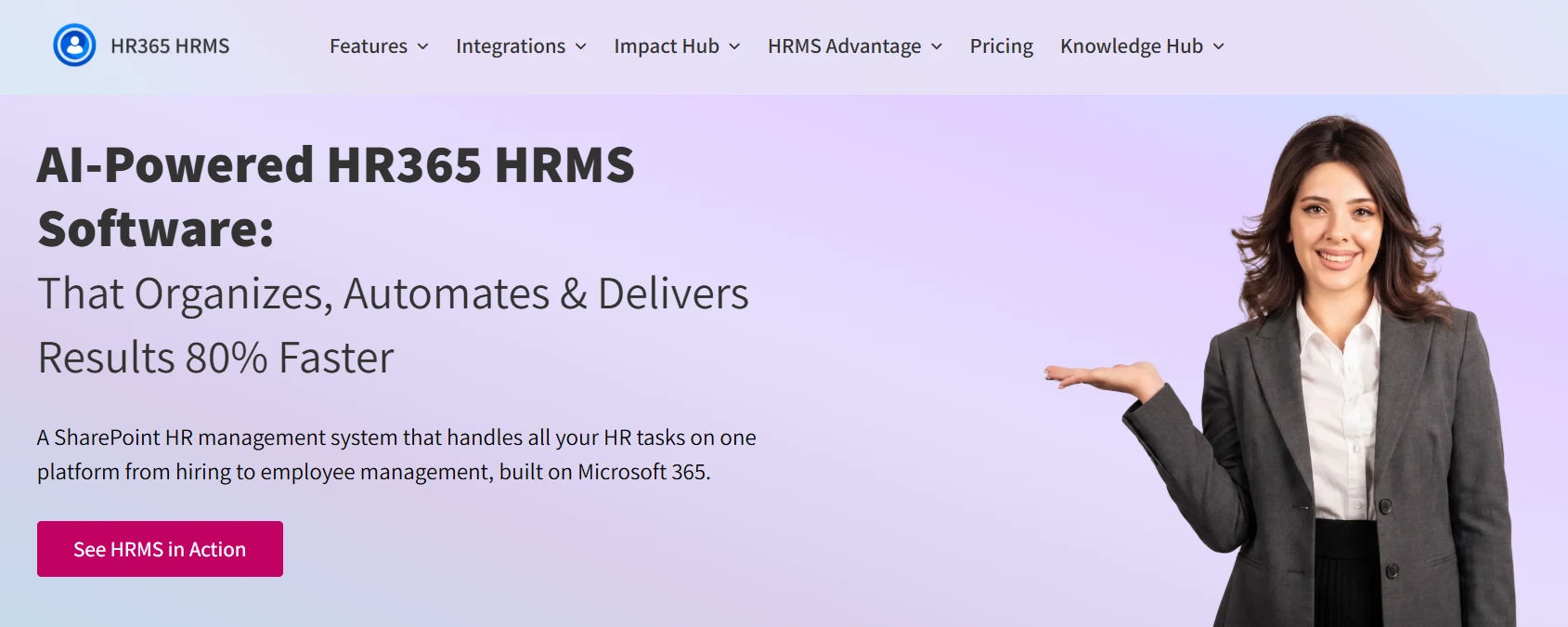
HR365 HRMS is a Microsoft 365-based HR platform that helps organizations manage key people operations from a single system. The solution covers recruitment, onboarding, employee records, attendance, leave management, performance tracking, learning, expense management, and other essential HR activities while integrating directly with Microsoft Teams, SharePoint, and Outlook.
Key Strengths
- Built natively for Microsoft 365, including Teams, SharePoint, and Outlook integration.
- Centralized employee directory and employee record management.
- Recruitment management with AI-assisted resume screening and candidate tracking.
- Digital onboarding with document management, task assignment, and guided onboarding workflows.
- Leave and attendance management with reporting and Microsoft Teams calendar integration.
- Expense management with customizable approval workflows and reimbursement tracking.
- Performance management with goal alignment, progress tracking, and performance summaries.
- Learning and training capabilities to support employee development and skill growth.
- Timesheet and task management to track work hours, projects, and daily activities.
- Role-based access controls, data security, and Azure-based infrastructure.
- Available across desktop and mobile devices for remote and on-the-go HR management.
HR365 HRMS is ideal for businesses that want to bring multiple HR processes together within their existing Microsoft 365 environment. By combining people management, hiring, time tracking, training, and operational workflows in one platform, HR365 HRMS helps organizations improve visibility, reduce administrative effort, and eliminate the need for multiple standalone HR applications.
2. BambooHR
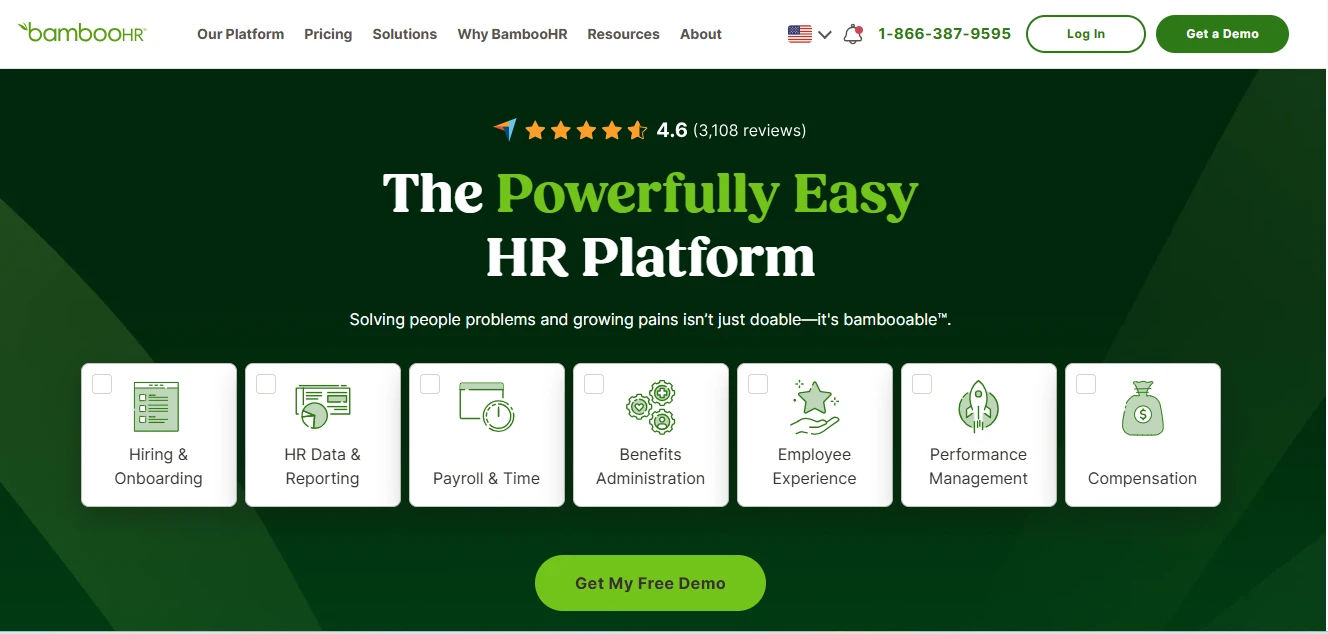
BambooHR is a cloud-based HR software platform designed primarily for small and mid-sized businesses. The platform combines core HR management, hiring, onboarding, employee records, time tracking, performance management, reporting, and employee experience tools in a single system. BambooHR focuses on ease of use, employee self-service, and centralized HR data management.
Key Strengths
- Centralized employee database for managing employee records and HR information.
- Built-in applicant tracking system (ATS) for recruitment and candidate management.
- Automated onboarding workflows and onboarding task management.
- Performance management with goal setting, assessments, 360-degree feedback, and performance reviews.
- Employee self-service capabilities for profile updates, requests, and information access.
- Time-off tracking, attendance management, and timesheet approvals.
- HR reporting, dashboards, analytics, and custom report builder.
- Employee engagement and feedback tools to support employee experience initiatives.
- Extensive integration ecosystem with numerous third-party applications and partners.
- User-friendly interface with a relatively short learning curve for HR teams and managers.
- Mobile access for managing HR tasks on the go.
BambooHR is a good fit for small and mid-sized organizations seeking a user-friendly HR platform to manage hiring, onboarding, employee information, time-off requests, performance reviews, and day-to-day HR activities from one location. Known for its intuitive design and employee self-service capabilities, the platform helps businesses move away from spreadsheets and disconnected systems while creating a more organized approach to managing HR operations and supporting company growth.
3. Rippling
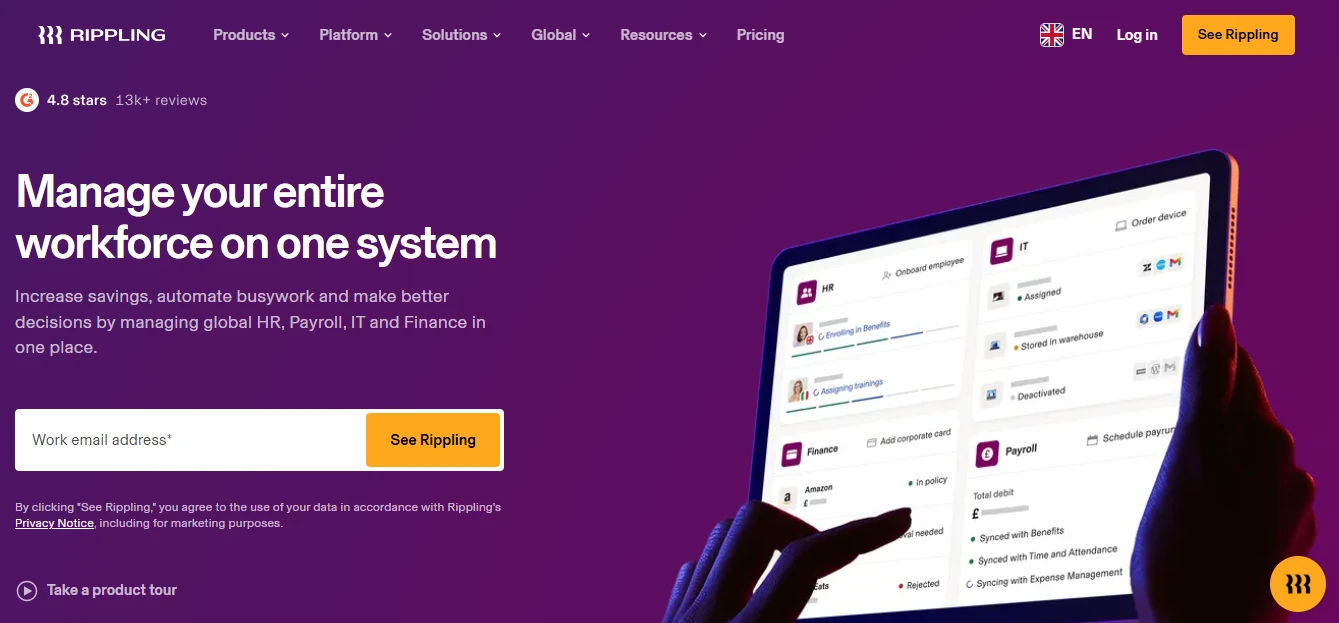
Rippling is a workforce management platform that combines HR, IT, and finance operations within a single system. The platform helps businesses manage employee information, hiring, onboarding, time and attendance, performance management, device management, app provisioning, and workforce administration through a centralized interface. Rippling is known for connecting people, systems, and business processes across multiple departments.
Key Strengths
- Centralized employee data management with a unified system for people information.
- Automated onboarding and offboarding processes across HR and IT functions.
- Recruitment and applicant tracking tools for managing hiring activities.
- Time tracking, attendance monitoring, and workforce scheduling capabilities.
- Leave and absence management with configurable policies and approval workflows.
- Performance management features for reviews, feedback, and goal tracking.
- Employee self-service portal for updating information and submitting requests.
- Workflow automation to reduce manual administrative work.
- IT management capabilities for device provisioning and software access control.
- Workforce analytics, dashboards, and customizable reporting tools.
- Global workforce management support for multi-location organizations.
- Extensive integration options with business, productivity, and finance applications.
- Role-based access controls and user permission management.
- Mobile accessibility for managing tasks and approvals from anywhere.
- Scalable platform designed to support business growth and changing operational needs.
Rippling is a strong option for organizations looking to manage HR operations alongside IT and workforce administration from a unified platform. Its broad functionality, automation capabilities, and cross-departmental approach make it well suited for businesses seeking greater operational efficiency and better control over employee-related processes throughout the organization.
4. HiBob
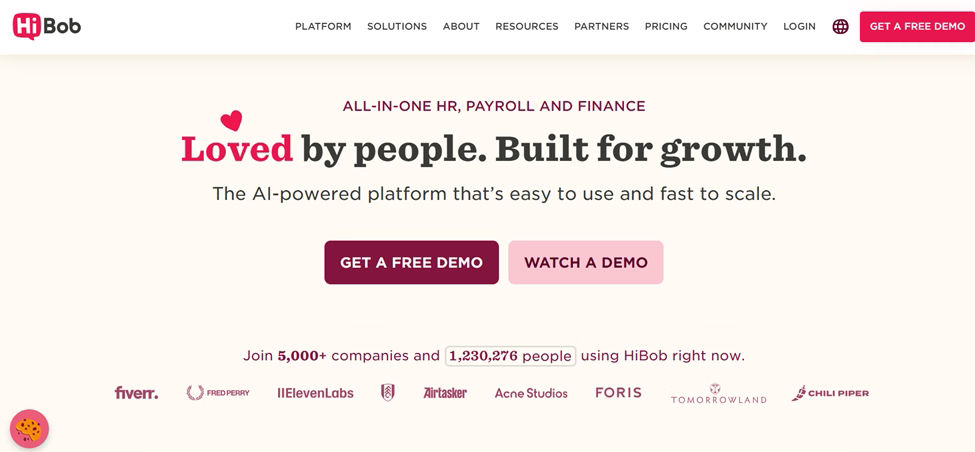
HiBob is a modern HR platform designed for growing and mid-sized businesses that need a flexible system for managing people operations. The platform brings together employee data management, onboarding, time-off management, performance reviews, engagement initiatives, compensation processes, and workforce analytics within a single solution. HiBob is particularly known for supporting dynamic, hybrid, and distributed teams through customizable workflows and employee-focused experiences.
Key Strengths
- Centralized employee data management with customizable employee profiles.
- Structured onboarding workflows to support new hires from day one.
- Performance management tools for goal setting, feedback, and review cycles.
- Employee engagement features including surveys, recognition, and communication tools.
- Time-off and absence management with configurable leave policies.
- Compensation management to support salary reviews and reward planning.
- Workforce analytics and reporting dashboards for HR insights and decision-making.
- Customizable workflows and automation for HR processes and approvals.
- Employee self-service capabilities for updating personal information and submitting requests.
- Support for hybrid, remote, and global teams through flexible configuration options.
- Organization charts and people directories to improve visibility across teams.
- Integration capabilities with business applications for a connected HR ecosystem.
- Mobile access for managing HR tasks and employee information from anywhere.
- Culture-focused features designed to strengthen employee experience and engagement.
- Scalable platform suitable for growing organizations with evolving HR requirements.
HiBob is well suited for organizations looking to build stronger workplace culture while maintaining visibility into key HR activities and business metrics. Its combination of configurable processes, employee engagement tools, talent management capabilities, and reporting features makes it a popular choice for companies seeking a people-centric HR platform that can adapt as the organization grows.
5. Lanteria HR
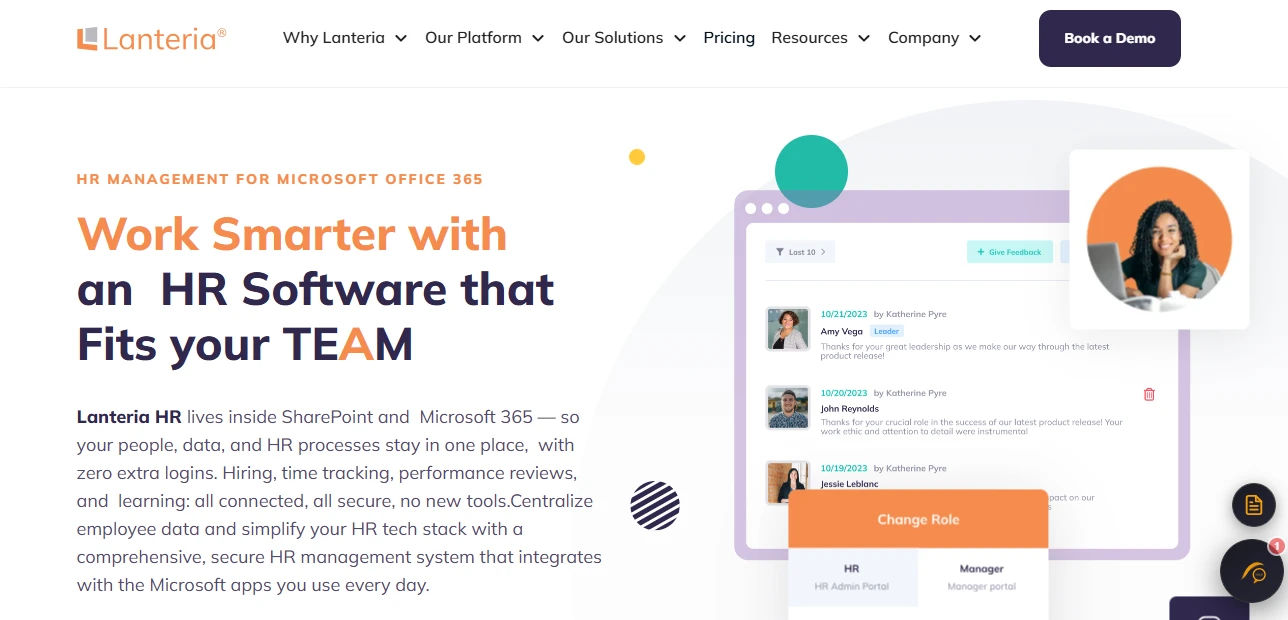
Lanteria HR is a human resource management platform built on Microsoft technologies and designed to support a wide range of HR processes from a single system. The platform offers tools for employee data management, recruitment, onboarding, performance reviews, learning and development, time tracking, leave administration, and workforce planning. Lanteria HR is particularly popular among organizations that want to extend their Microsoft ecosystem with dedicated HR capabilities.
Key Strengths
- Centralized employee records and personnel information management.
- Recruitment and applicant tracking tools for managing hiring processes.
- Digital onboarding workflows for new hires.
- Performance management with goal setting, appraisals, and feedback tracking.
- Learning and development features for training management and skill growth.
- Leave and absence management with configurable policies and approvals.
- Time tracking and attendance monitoring capabilities.
- Employee self-service portal for HR requests and profile updates.
- Workforce planning and organizational structure management.
- HR analytics, dashboards, and customizable reporting tools.
- Document management for employee-related records and files.
- Workflow automation to support HR processes and approvals.
- Microsoft 365 and SharePoint integration for connected HR operations.
- Role-based security controls and access management.
- Scalable solution suitable for mid-sized and enterprise organizations.
Lanteria HR is a strong choice for organizations that rely on Microsoft technologies and want a dedicated platform to manage talent, development, attendance, and day-to-day HR activities. Its combination of HR functionality, reporting capabilities, learning management features, and Microsoft integration makes it well suited for businesses seeking a comprehensive solution for managing people operations.
6. Zoho
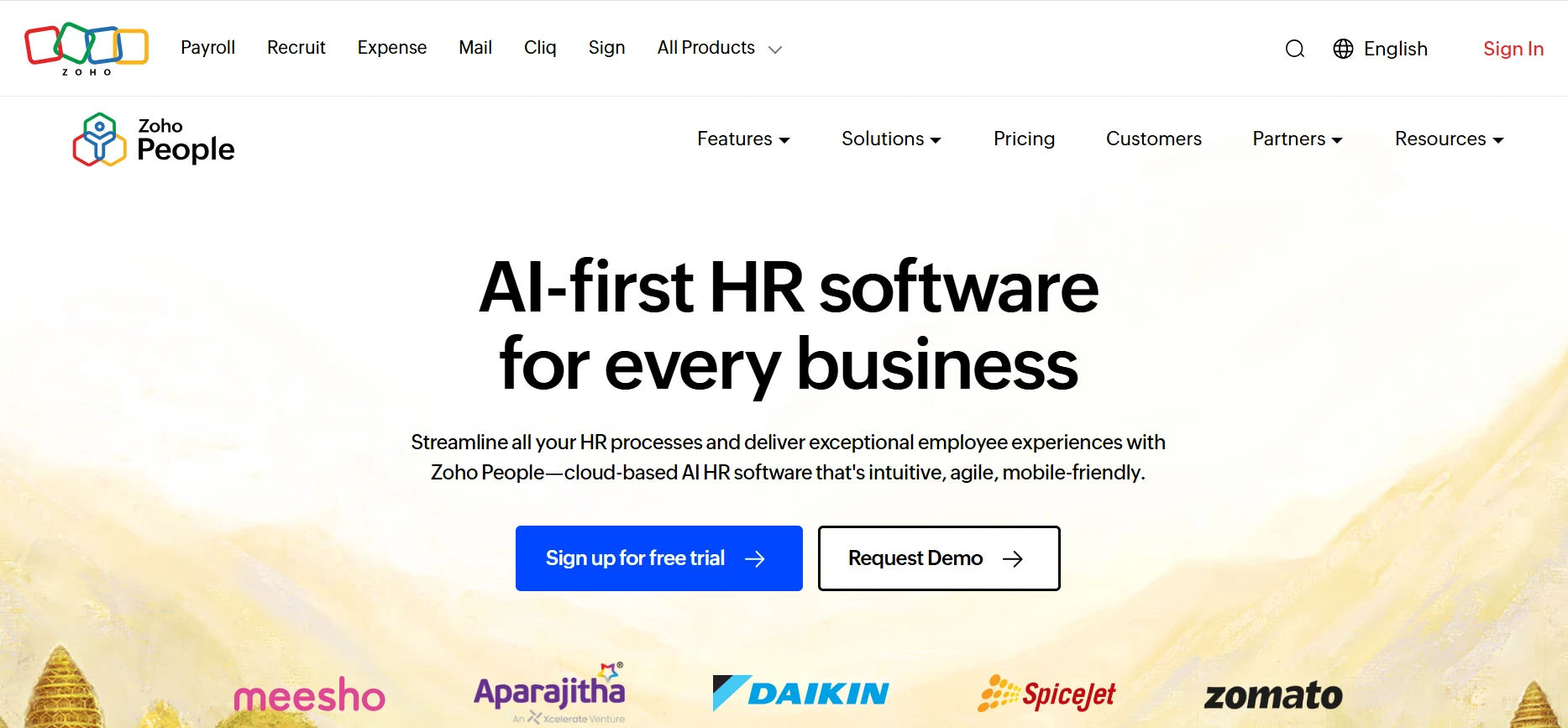
Zoho People is a cloud-based HR management platform designed to help businesses manage employee information, attendance, leave requests, performance reviews, onboarding, and HR workflows from a centralized system. The platform is part of the broader Zoho ecosystem and offers integration with other Zoho business applications.
Key Strengths
- Centralized employee database with customizable records, employee profiles, and document storage.
- Employee self-service portal for HR requests, profile updates, and personal information management.
- Leave management with configurable policies, approval workflows, and leave tracking.
- Attendance tracking with web and mobile check-in options, timesheets, and work-hour monitoring.
- Performance management for goal setting, continuous feedback, appraisals, and review cycles.
- Employee onboarding and lifecycle management tools to support transitions throughout the employee journey.
- HR workflow automation with customizable approvals, notifications, and task assignments.
- Custom forms, reports, analytics dashboards, and workforce insights for informed decision-making.
- Integration with Zoho applications and third-party business tools to support connected operations.
- Mobile app support for managing HR tasks, attendance, leave requests, and approvals remotely.
Zoho People is well suited for small and mid-sized organizations seeking a flexible HR solution that can adapt to different business processes. Its customization capabilities, workflow automation features, and integration within the Zoho ecosystem make it a popular choice for companies looking to manage HR operations through a connected platform.
7. UKG
UKG is a human capital management platform designed for organizations that need comprehensive solutions for people management, workforce operations, talent development, and employee engagement. The platform serves businesses of various sizes and is particularly known for its workforce management and scheduling capabilities.
Key Strengths
- Comprehensive employee management with centralized records, organizational data, and workforce information.
- Advanced workforce scheduling, shift planning, and labor management capabilities.
- Time and attendance tracking with automated calculations, approvals, and reporting.
- Recruitment and talent acquisition tools for candidate sourcing, hiring, and onboarding.
- Performance management features including goal tracking, feedback, reviews, and career development planning.
- Employee engagement solutions with surveys, communication tools, and workplace sentiment insights.
- Workforce analytics, reporting, dashboards, and business intelligence capabilities for strategic planning.
- Leave, absence, and workforce planning tools to manage staffing requirements effectively.
- Employee and manager self-service functionality for requests, approvals, and information access.
- Mobile access that supports scheduling, attendance management, approvals, and workforce communication from anywhere.
UKG is a strong choice for organizations that require advanced workforce management alongside core HR functionality. Its combination of scheduling, talent management, employee engagement, and analytics capabilities makes it particularly valuable for businesses seeking greater visibility into workforce operations and long-term talent strategies.
8. Gusto
Gusto is a cloud-based people platform designed for small and growing businesses to manage HR, hiring, onboarding, employee records, time tracking, benefits administration, and team management from a single system. The platform focuses on simplifying day-to-day people operations while providing tools that support the entire employee lifecycle.
Key Strengths
- Centralized employee records with secure document storage and profile management.
- Employee onboarding tools with digital paperwork, task tracking, and new hire workflows.
- Hiring and candidate management features to support recruitment activities.
- Time tracking, attendance monitoring, and work-hour management capabilities.
- Leave and time-off management with customizable policies and approval processes.
- Employee self-service portal for accessing information, submitting requests, and updating personal details.
- Performance management tools for feedback, reviews, and employee development discussions.
- Benefits administration capabilities to manage employee benefit programs and enrollment.
- Reporting and workforce insights for tracking HR activities and organizational trends.
- Integration with a variety of business, accounting, productivity, and workplace applications.
- Mobile accessibility for employees and managers to complete HR tasks from anywhere.
- User-friendly interface designed for small and mid-sized businesses with limited HR resources.
Gusto is a strong option for small and growing businesses looking for an easy-to-use platform to manage hiring, onboarding, employee information, time tracking, benefits administration, and everyday HR activities. Its intuitive design, employee-focused experience, and broad range of people management features make it a popular choice for organizations seeking a modern solution that supports business growth and day-to-day team management.
9. Workday
Workday is a cloud-based human capital management platform designed for mid-sized and large organizations that need advanced tools for managing people, talent, workforce planning, and organizational operations. The platform combines employee management, recruitment, onboarding, performance tracking, learning, analytics, and workforce planning within a unified system, helping businesses gain greater visibility into their people and organizational data.
Key Strengths
- Centralized employee records with a unified source of people and organizational data.
- Talent acquisition tools for recruiting, candidate management, and hiring processes.
- Digital onboarding workflows that support new hire transitions and task management.
- Performance management features including goal setting, feedback, and review processes.
- Learning and development tools for training management, skill growth, and career development.
- Workforce planning capabilities to support organizational growth and resource allocation.
- Employee self-service and manager self-service functionality for everyday HR activities.
- Advanced analytics, dashboards, and reporting tools for workforce insights and decision-making.
- Organizational charting and workforce visibility across departments and locations.
- Workflow automation and configurable business processes to reduce administrative effort.
- Mobile accessibility for managing HR tasks, approvals, and workforce information on the go.
- Global workforce support with tools designed for large, multi-location organizations.
- Integration capabilities with enterprise applications and business systems.
- Scalable architecture that supports complex organizational structures and growing business needs.
Workday is a strong choice for organizations seeking a comprehensive platform to manage talent, employee development, workforce planning, and day-to-day HR operations from a single system. Its advanced reporting capabilities, broad HR functionality, and enterprise-grade scalability make it particularly well suited for businesses that require deeper workforce insights and a platform capable of supporting long-term organizational growth.
10. ADP Workforce
ADP Workforce is a cloud-based human capital management platform designed to help mid-sized and large organizations manage HR, workforce administration, talent management, employee engagement, and business operations through a unified system. The platform brings together employee data, hiring, onboarding, time management, reporting, and workforce insights, giving organizations a centralized solution for managing people throughout the employee lifecycle.
Key Strengths
- Centralized employee records with a unified system for managing people and organizational data.
- Recruitment and talent acquisition tools for sourcing, hiring, and onboarding new hires.
- Digital onboarding workflows with document management, electronic forms, and task tracking.
- Time and attendance management with scheduling, labor tracking, and workforce visibility.
- Employee self-service and manager self-service capabilities through web and mobile access.
- Performance management, talent development, and employee growth tools.
- Employee engagement features including communication, recognition, feedback, and surveys.
- Advanced workforce analytics, dashboards, benchmarking, and customizable reporting.
- Workflow automation, approvals, notifications, and HR process management.
- Mobile accessibility for managing workforce activities, approvals, and employee information from anywhere.
- Global workforce support with multi-country workforce management capabilities.
- Scalable platform designed to support growing and complex organizations.
ADP Workforce is well suited for organizations that need a comprehensive platform to manage people operations, workforce administration, talent development, and employee engagement from a single system. Its extensive HR capabilities, workforce management tools, analytics features, and scalability make it a strong choice for businesses looking to improve visibility, reduce administrative complexity, and support long-term organizational growth.
HR365 HRMS vs Namely: Quick Comparison
| Criteria | HR365 HRMS | Namely |
| Best For | Organizations using Microsoft 365 that want HR, recruitment, onboarding, attendance, performance, learning, and expense management in one platform | Mid-sized businesses looking for HR, payroll, benefits administration, and talent management in a single HCM solution |
| Key Advantage | Native Microsoft 365, Teams, SharePoint, and Outlook integration with centralized HR operations | Strong payroll and benefits administration capabilities combined with core HR management |
| Designed For | Managing HR processes throughout the employee lifecycle | Managing HR, payroll, and benefits from a unified platform |
| Employee Management | ✓ Centralized employee directory and organizational structure | ✓ Centralized employee records and HR management |
| Employee Onboarding | ✓ Digital onboarding with task management and document handling | ✓ Employee onboarding workflows |
| Recruitment Management | ✓ Recruitment tracking with AI-assisted resume screening | ✓ Applicant tracking and recruiting tools |
| Leave & Attendance Management | ✓ Leave management, attendance tracking, Teams calendar integration | ✓ Time-off tracking and attendance management |
| Performance Management | ✓ Goal tracking, KRAs, self-assessments, performance reviews | ✓ Performance reviews, feedback, and goal management |
| Learning & Training | ✓ Built-in learning and development capabilities | Limited focus compared to HR365 HRMS |
| Expense Management | ✓ Integrated expense tracking and reimbursement management | Not a primary platform focus |
| Payroll Management | Limited platform emphasis | ✓ Core payroll management capability |
| Microsoft 365 Integration | ✓ Native integration with Teams, SharePoint, Outlook, and Microsoft 365 | Not Microsoft 365-native |
| Mobile Access | ✓ Mobile accessibility | ✓ Mobile app for employees and managers |
| Reporting & Analytics | ✓ HR reporting and workforce insights | ✓ Reporting and workforce analytics |
Why HR365 HRMS is a Strong Alternative to Namely
Organizations exploring alternatives to Namely often look for a solution that combines flexibility, ease of use, and the ability to support evolving business needs. HR365 HRMS is designed to help businesses manage HR operations through a centralized platform while providing the tools needed to support growth and improve day-to-day efficiency.
- Comprehensive HR Management: HR365 HRMS brings together key HR functions such as employee records management, onboarding, leave management, attendance tracking, performance management, recruitment, learning and training, and expense management within a single system.
- User-Friendly Experience: The platform is designed to simplify everyday HR tasks, making it easier for HR teams, managers, and employees to access information and complete routine activities with minimal effort.
- Employee Self-Service Capabilities: Employees can manage personal information, submit leave requests, access HR documents, track attendance records, and stay connected with important workplace updates through self-service features.
- Recruitment and Onboarding Tools: HR365 HRMS supports hiring and onboarding processes by helping organizations manage candidate information, onboarding activities, and new hire experiences from one platform.
- Performance and Development Management: Organizations can track goals, manage performance reviews, monitor progress, and support continuous development through structured performance management tools.
- Attendance, Leave, and Time Tracking: The platform helps businesses maintain accurate attendance records, manage leave requests, track working hours, and gain visibility into team availability.
- Reporting and Workforce Insights: Built-in dashboards and reporting capabilities provide HR teams and business leaders with access to important workforce data and operational insights.
- Scalable for Growing Organizations: Whether supporting a small team or a growing organization, HR365 HRMS can adapt to changing business requirements and support HR processes across multiple departments and locations.
For organizations seeking an alternative to Namely, HR365 HRMS offers a broad range of HR capabilities in a centralized platform, helping businesses manage people, processes, and day-to-day HR operations more effectively.
Conclusion
Namely is a well-established HR platform that combines human resources, payroll, benefits administration, and talent management capabilities within a single system. It can be a suitable choice for organizations seeking an all-in-one HCM solution, particularly those that place a strong emphasis on payroll processing and benefits management alongside their HR operations.
For businesses looking for a broader HR operations platform, HR365 HRMS offers a compelling alternative. With capabilities that support employee lifecycle management, recruitment, onboarding, attendance tracking, performance management, learning and training, and expense management, HR365 HRMS helps organizations manage day-to-day HR activities from a centralized platform. Companies already using Microsoft 365 may also benefit from its integration with tools such as Teams, SharePoint, and Outlook.
Ready to Transform Your HR Operations with HR365 HRMS?
Discover how HR365 HRMS helps organizations manage people, automate daily HR tasks, and bring essential HR processes into one centralized platform.
Frequently Asked Questions
What are the best Namely alternatives in 2026?
Some of the leading Namely alternatives include HR365 HRMS, BambooHR, HiBob, Rippling, UKG, Workday, ADP Workforce Now, Zoho People, Lanteria HR, and Gusto. Each platform offers different strengths depending on company size, business requirements, and preferred technology ecosystem.
Why do companies look for alternatives to Namely?
Organizations often explore alternatives when they need broader HR functionality, stronger Microsoft 365 integration, more flexible workflows, advanced reporting capabilities, improved user experience, or a platform that better aligns with their business growth plans.
What should businesses consider when choosing a Namely alternative?
Key factors include employee management capabilities, recruitment tools, onboarding features, performance management, attendance tracking, reporting, integrations, scalability, ease of use, implementation requirements, and long-term business needs.
What is the best Namely alternative for small and mid-sized businesses?
The best choice depends on business needs. HR365 HRMS, BambooHR, Zoho People, Gusto, and HiBob are commonly evaluated by small and mid-sized organizations looking for a balance of HR functionality, usability, and scalability.


_JiluXJRGNl.svg)























