
The Best iCIMS Alternative: Why Modern Teams Are Switching to RM365

You’ve probably already outgrown manual candidate tracking and disconnected hiring spreadsheets. But most teams comparing iCIMS vs Recruitment Management 365 still aren’t sure which platform fits their scale, budget, and existing tech stack. In this guide, we break down both platforms across features, AI capabilities, integrations, pricing, and G2 ratings so you can make a confident, informed decision.
- iCIMS is an enterprise talent cloud combining applicant tracking, CRM, recruitment marketing, and onboarding, built for high-volume, global hiring.
- Recruitment Management 365 is a Microsoft 365-native hiring platform that runs inside SharePoint, Teams, and Outlook, letting recruiters work in tools they already use daily.
- iCIMS is purpose-built for mid-size to large enterprises with complex, multi-country hiring and OFCCP/EEO compliance needs.
- Recruitment Management 365 is designed for rapid deployment and transparent pricing, making it a strong fit for SMBs and Microsoft-first organizations.
- The right choice depends on your hiring volume, compliance requirements, existing tech stack, and how much implementation time your team can invest.
What Is Recruitment Management 365?
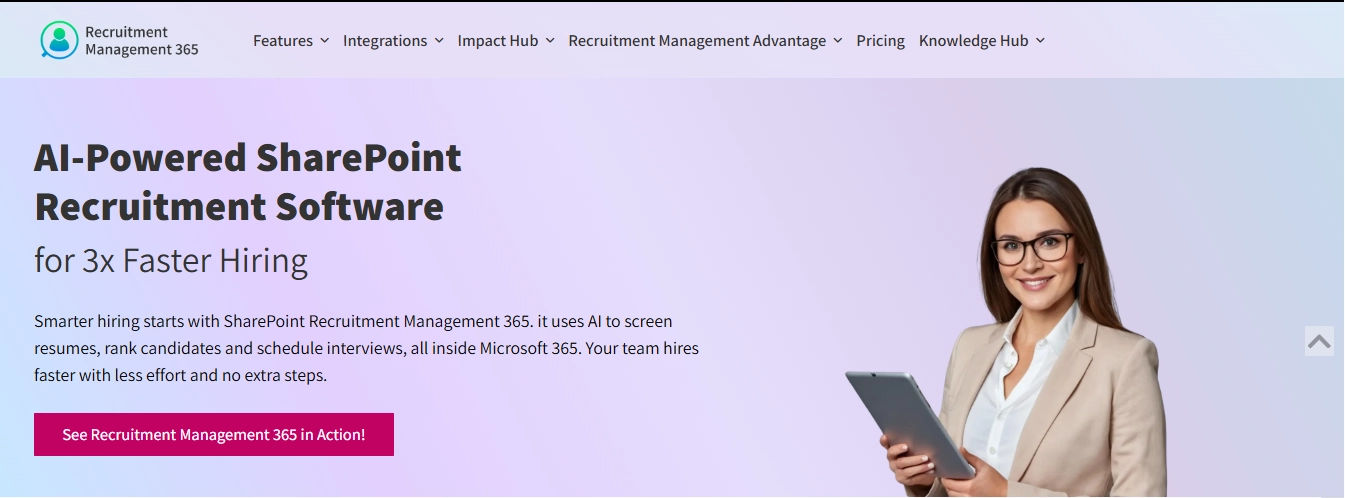
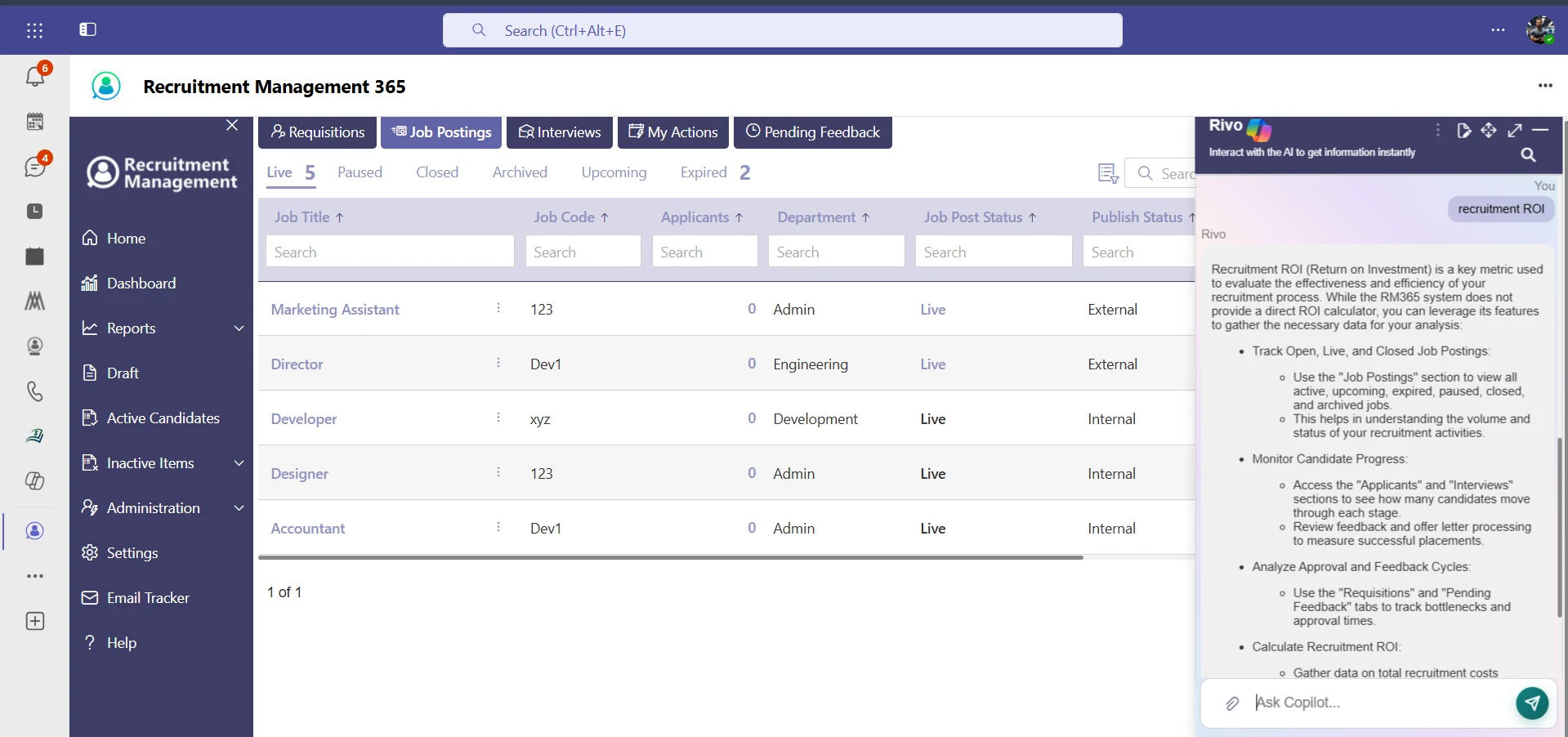
Recruitment Management 365 is a hiring platform built natively within the Microsoft 365 ecosystem, integrating directly with SharePoint, Microsoft Teams, and Outlook. It centralizes job postings, applications, interview scheduling, and approvals inside the same environment your HR and hiring teams already use every day.
Recruitment Management 365 automates repetitive recruiting tasks — resume parsing, candidate screening, interview reminders, and status notifications — so recruiters spend less time on admin work. For example, a mid-sized company with 200 open roles can set up custom application forms and role-based access without writing a single line of code.
Best for: SMBs and growing organizations that already run on Microsoft 365 and want a fast, low-friction hiring system.
★★★★★ 4.8/5 (HR365).
What Is iCIMS?
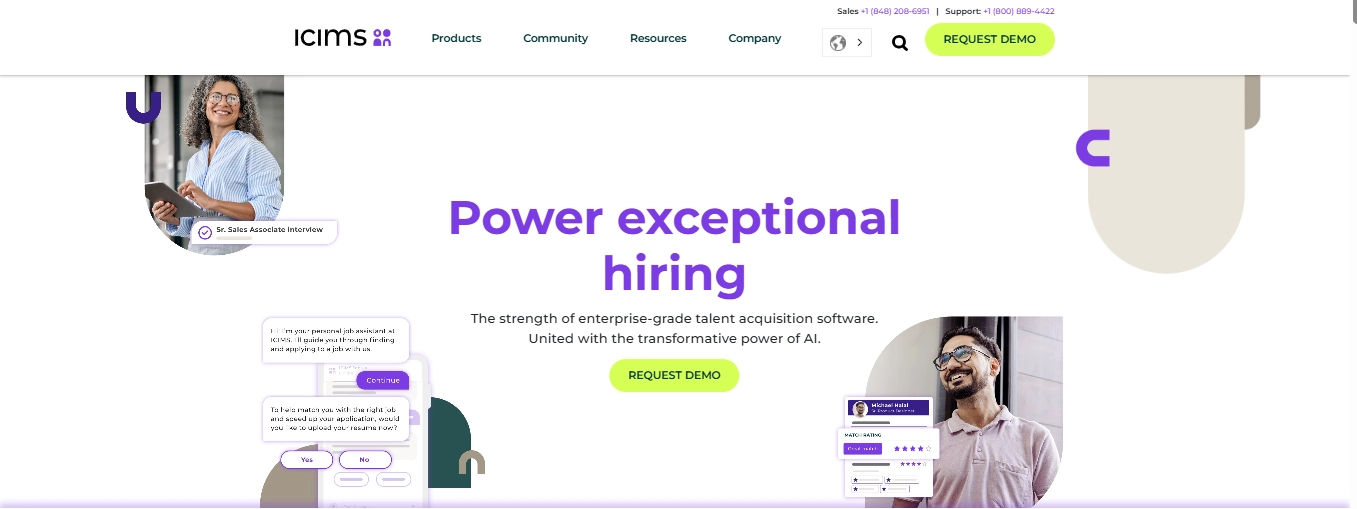
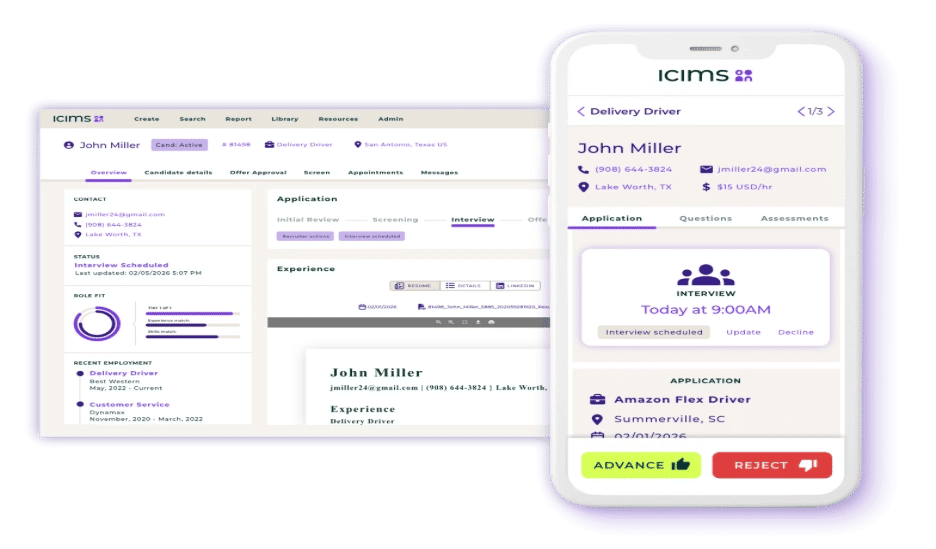
iCIMS is an enterprise talent cloud that combines an applicant tracking system (ATS), a candidate relationship management (CRM) tool called iCIMS Engage, AI-driven high-volume hiring through Frontline AI, and employer branding tools for career sites. It’s built for organizations that hire at scale across multiple brands, regions, or countries.
For example, a global retailer processing 15,000+ annual hires across 30 countries can rely on iCIMS to manage complex, multi-jurisdictional compliance requirements like OFCCP and EEO reporting, alongside thousands of concurrent requisitions. This depth makes iCIMS a common choice among large enterprises, though it typically requires professional services support and a longer implementation runway to configure.
Best for: Mid-size to large enterprises (500 to 100,000+ employees) with high-volume, compliance-heavy, or multi-country hiring needs.
★★★★☆ 4.2/5.
Why Does Choosing the Right ATS Matter?
Choosing the best iCIMS alternatives and Recruitment Management 365 matters because the wrong fit slows hiring, frustrates hiring managers, and drives up total cost of ownership. According to Gartner, 72% of candidates now expect faster hiring decisions, and delays at any stage increase the risk of losing top talent to a competing offer — Source: Gartner, 2026.
At the same time, McKinsey reports that companies using strong hiring automation can improve hiring speed by up to 40% — Source: McKinsey, 2026. A mismatched ATS also creates hidden costs: an enterprise platform can be overkill and overpriced for a small team, while an SMB-focused tool may not scale to handle thousands of concurrent requisitions. Teams facing common recruitment challenges around clunky, hard-to-adopt software often quietly revert to manual workarounds.
iCIMS vs Recruitment Management 365: Quick Comparison
Feature | iCIMS | Recruitment Management 365 |
Deployment environment | Standalone enterprise talent cloud | Native Microsoft 365, SharePoint, Teams |
Setup speed | Weeks to months, professional services often needed | Days, using pre-built workflows |
AI capabilities | Frontline AI for high-volume hiring, responsible AI in workflows | Resume parsing, job description writer, candidate matching |
Integrations | 750+ partner integrations | Microsoft 365 apps (Power BI, Power Automate, Copilot) |
Compliance | OFCCP, EEO, multi-country regulatory support | GCC and GCC High support, native Microsoft governance |
Pricing model | Custom quote, scales with organization size | Transparent, per-user |
G2 rating | 4.2/5 | 4.8/5 (HR365 suite) |
Best team size | Large enterprise (500–100,000+ employees) | SMB to mid-size |
How Do iCIMS and Recruitment Management 365 Compare on Core Capabilities?
User Experience and Adoption
User experience determines whether a recruiting platform actually gets used.
Aspect | Recruitment Management 365 | iCIMS |
Interface | Runs inside familiar Microsoft Teams and SharePoint screens | Purpose-built ATS dashboard; praised as user-friendly by many reviewers |
Training time | Low — hiring managers already know the environment | Moderate to high — customization often needs admin expertise |
Best fit | Teams already using SharePoint-based recruitment software | Enterprises with a dedicated recruiting operations team |
G2 feedback | Praised for ease of use and responsive support | Praised interface, but some reviewers note “I need a background in programming to really use it” |
Speed of Deployment
Deployment speed measures how quickly a hiring team can go from signup to actively recruiting.
Aspect | Recruitment Management 365 | iCIMS |
Typical setup time | Days, using pre-built workflows | Weeks to months; enterprise setups often need professional services |
Onboarding style | Self-serve, minimal infrastructure setup | Consultative, with longer ramp-up for complex configurations |
Best fit | Teams that want to start hiring fast, similar to other online recruitment management systems | Large organizations with multi-region rollout plans |
AI and Automation
AI in recruiting software automates repetitive screening and communication tasks so recruiters can focus on evaluation.
Aspect | Recruitment Management 365 | iCIMS |
Core AI features | Resume parsing, job description writer, candidate matching | Frontline AI for high-volume roles, responsible AI woven into workflows |
Focus | Streamlining day-to-day recruiter workflows inside Microsoft 365 | Scaling AI decisions across thousands of concurrent requisitions |
Best fit | Teams that want AI-powered recruitment tools without a separate platform, a trend covered in AI in recruitment | High-volume, frontline hiring at enterprise scale |
Integrations and Ecosystem
Integration depth determines how well a recruiting platform connects to your broader tech stack.
Aspect | iCIMS | Recruitment Management 365 |
Native integrations | 750+ partner integrations (HCM providers, background checks, assessments, job boards) | Power Automate, Power BI, Microsoft Copilot, Teams, Outlook |
Ecosystem depth | Very broad, vendor-agnostic | Deep within Microsoft, limited outside it |
Best fit | Enterprises with a complex, multi-vendor HR tech stack | Organizations standardized on Microsoft, see Microsoft for Recruitment Software |
Security and Compliance
Security and compliance features protect candidate data and support audit requirements.
Aspect | Recruitment Management 365 | iCIMS |
Regulatory support | GCC and GCC High support for regulated industries | OFCCP, EEO, and multi-country compliance built for global operations |
Data handling | Stored inside your own Microsoft 365 tenant | Enterprise-grade cloud infrastructure with configurable governance |
Best fit | Organizations that want compliance managed within their existing Microsoft governance model | Regulated industries or global employers with complex reporting needs |
Reporting and Analytics
Reporting tools turn raw hiring data into decisions leadership can act on.
Aspect | Recruitment Management 365 | iCIMS |
Built-in dashboards | Job status, pipeline stage, time-to-hire tracking | Detailed pipeline and recruitment-strategy insights across regions |
Advanced analytics | Extended via Power BI, plus native recruitment analytics | Deep reporting suited to large, multi-brand hiring operations |
G2 feedback | Users highlight centralized, easy-to-read dashboards | Users highlight strong reporting depth for analyzing recruitment strategy |
When Should You Choose iCIMS vs Recruitment Management 365?
Choose Recruitment Management 365 if:
- Your organization already runs on Microsoft 365 and wants recruiting inside the same environment.
- You need to deploy quickly without a lengthy implementation project.
- You’re comparing platforms for a small business recruitment use case and want transparent, per-user pricing.
- You want recruitment data to flow directly into onboarding and HR systems.
Choose iCIMS if:
- You’re a large or global enterprise hiring at high volume across multiple countries or brands.
- You need dedicated OFCCP, EEO, or other complex regulatory compliance support.
- Your organization can invest in a longer implementation timeline and admin training.
- You want a broad, vendor-agnostic integration ecosystem of 750+ partners.
Tools and Practical Applications
For Recruitment Management 365 users, pairing the platform with Microsoft Power BI extends reporting into custom leadership dashboards, and pairing it with a resume parsing tool speeds up initial screening.
For iCIMS users, pairing the platform with AI screening add-ons and background-check integrations from its 750+ partner marketplace extends its core ATS functionality for high-volume roles.
What's Next: How to Evaluate These Platforms for Your Team
Start by mapping your hiring workflow end-to-end and identifying where a recruitment management template could remove manual handoffs. Then request a trial or demo of both platforms and run a small pilot with one open role, tracking your job requisition process from posting to offer.
If you want to explore Recruitment Management 365’s Microsoft-native workflow directly
Conclusion
Both iCIMS (★★★★☆ 4.2/5 on G2) and Recruitment Management 365 (★★★★★ 4.8/5 on G2) solve the same core problem — disorganized, slow hiring — from very different starting points. iCIMS leans into scale, compliance, and a vast integration ecosystem for large, global enterprises, while Recruitment Management 365 leans into speed and simplicity by living inside Microsoft 365. Ultimately, the two platforms serve different stages of company growth more than they compete head-to-head — the right one depends on your hiring volume, compliance needs, and existing tech stack.
Frequently Asked Questions
Is iCIMS suitable for small or mid-sized businesses?
iCIMS is purpose-built for mid-size to large enterprises with 500 to 100,000+ employees, and its pricing and implementation complexity generally reflect that scale. Smaller teams often find the cost and setup effort harder to justify compared to a platform like Recruitment Management 365.
Which platform offers better compliance support?
iCIMS is built for complex, multi-country compliance needs, including OFCCP and EEO reporting, making it a strong fit for global or regulated enterprises. Recruitment Management 365 supports GCC and GCC High environments, which works well for organizations already governed under Microsoft’s compliance framework.
Does Recruitment Management 365 integrate with other HR systems?
Yes, Recruitment Management 365 integrates natively with Microsoft 365 tools like Power Automate, Power BI, and Copilot, and connects directly to onboarding workflows. It doesn’t match iCIMS’ 750+ partner marketplace, but it covers most needs for Microsoft-first organizations.
Which platform has better G2 ratings?
iCIMS holds a 4.2/5 rating on G2 from 988 reviews. Recruitment Management 365 is rated as part of the broader HR365 suite by CubicLogics, which holds a 4.8/5 rating from 343 reviews.
Can iCIMS and Recruitment Management 365 both handle high-volume hiring?
Yes, though they approach it differently. iCIMS is designed specifically for high-volume, multi-brand, multi-country hiring through Frontline AI, while Recruitment Management 365 automates high-volume workflows within the more contained scope of a single Microsoft 365 tenant.
Is Recruitment Management 365 only useful for companies already using Microsoft 365?
Recruitment Management 365 is built specifically to run inside the Microsoft 365 ecosystem, so organizations get the most value if they already use SharePoint, Teams, and Outlook. Companies outside that ecosystem would need to adopt Microsoft 365 first to benefit fully.


_JiluXJRGNl.svg)























