
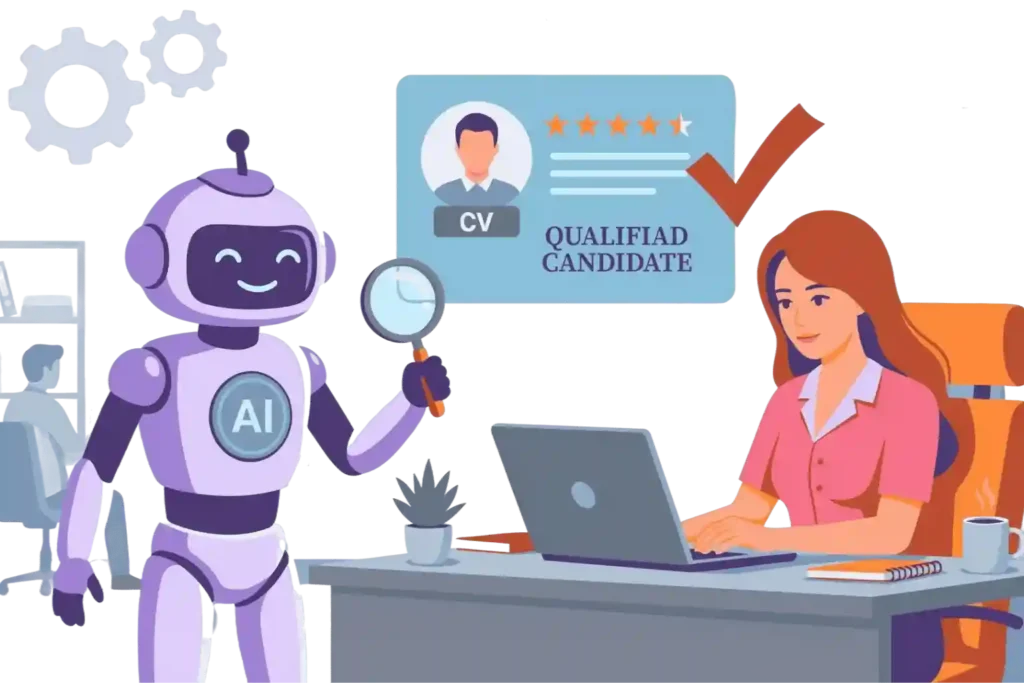
The Ultimate Guide to AI in Recruitment: Unlock Smarter Hiring in 2026

- AI in recruitment helps organizations automate repetitive hiring tasks and improve candidate screening
- AI-powered recruitment tools support better hiring decisions by analyzing candidate skills and improving matching accuracy.
- Modern AI recruitment platforms improve candidate experience through automated scheduling, and smoother hiring workflows.
- AI and human expertise together enable more efficient, secure, and data-driven recruitment.
In the highly competitive hiring market of 2026, companies are competing for talent based on speed, accuracy, and candidate experience. Organizations that still depend on manual resume reviews, long email chains, and spreadsheets risk losing skilled candidates to companies with faster hiring processes.
This is where using reliable AI recruitment software can provide a major advantage. AI is becoming an important part of modern recruitment for organizations that want to hire faster and manage growing hiring needs. By moving from manual hiring to AI-supported recruitment, HR teams can reduce time-to-hire, limit bias, and discover qualified candidates who may be missed through traditional methods.
In this guide, we explain how AI-powered recruitment works, the business value it provides, and the steps organizations can follow to build a stronger talent acquisition strategy.
What Is AI in Recruitment?
AI in recruitment refers to the use of Artificial Intelligence technologies such as machine learning, natural language processing, and data analytics to support and automate different stages of the hiring process.
AI recruitment tools help organizations find suitable candidates, screen resumes, schedule interviews, analyze candidate information, and improve hiring decisions. Instead of replacing recruiters, AI works as a support system that reduces manual tasks and allows HR teams to focus on candidate engagement, relationship building, and strategic hiring activities.
Modern AI-powered recruitment platforms, such as Recruitment Management 365, can analyze large amounts of candidate data, identify relevant skills, match applicants with job requirements, and provide insights that help recruiters make more informed decisions. By combining automation with human judgment, AI helps organizations create a faster, more consistent, and efficient recruitment process.
Challenges of Traditional Hiring Processes
Traditional hiring processes often rely on manual work, disconnected tools, and slow communication. These challenges can make it harder for organizations to attract, evaluate, and hire the right candidates.
- Slow Resume Screening: Recruiters may spend hours reviewing resumes manually. This delays the hiring process and increases the risk of missing qualified candidates.
- Long Hiring Timelines: Multiple emails, approvals, interviews, and scheduling tasks can slow down recruitment. Strong candidates may accept offers from faster-moving companies.
- Poor Candidate Experience: Candidates may receive limited updates, face complicated application steps, or wait too long for interview feedback. This can lead to frustration and application drop-off.
- Unconscious Hiring Bias: Human decisions can be influenced by factors such as a candidate’s name, background, education, or previous employer. This may prevent qualified applicants from receiving fair consideration.
- Disconnected Recruitment Data: When teams use spreadsheets, email, and separate systems, candidate information can become scattered or duplicated. This makes it harder to track progress and share accurate updates.
- Higher Hiring Costs: Manual administration, repeated follow-ups, delayed decisions, and open positions can increase recruitment costs. These inefficiencies also place extra pressure on HR teams and hiring managers.
How AI-Powered Recruitment Tools Work
AI in recruitment tools helps organizations manage hiring tasks faster, improve candidate experiences, and make better use of recruitment data. Instead of relying only on manual resume reviews, emails, spreadsheets, and calendar updates, HR teams can use AI to automate repetitive work and support more consistent hiring decisions.
Recruitment Management 365 helps bring these capabilities together in one structured recruitment environment. It can help organizations manage candidate information, hiring workflows, communication, interview coordination, and recruitment reporting more efficiently.
1. AI Finds and Matches Suitable Candidates
AI recruitment tools review candidate profiles, resumes, applications, and job descriptions to identify relevant skills, qualifications, and experience. They can compare candidate information with role requirements and help recruiters prioritize applicants who are a closer match.
This allows recruiters to spend less time searching through applications and more time engaging with qualified candidates. AI can also help identify passive candidates who may not have applied directly but have the skills needed for an open position.
2. AI Automates Resume Screening
Manual resume screening can take many hours, especially when organizations receive a large number of applications. AI tools can scan resumes quickly and identify important information such as work experience, certifications, technical skills, education, and previous responsibilities.
The system can then organize or rank candidates based on predefined job requirements. This does not remove the need for human review, but it helps recruiters create a shorter and more relevant candidate list.
3. AI Improves Candidate Communication
Candidates expect timely updates throughout the hiring process. AI recruitment tools can send application confirmations, interview reminders, status updates, and follow-up messages automatically.
Chatbots and virtual assistants can also answer common questions about job roles, application steps, interview schedules, and required documents. This helps candidates receive faster support while reducing the number of repetitive questions handled manually by recruiters.
4. AI Simplifies Interview Scheduling
Interview coordination often involves several people, calendars, time zones, and approval steps. AI-powered recruitment tools can connect with calendar systems to identify available time slots and suggest suitable interview schedules.
Once a time is confirmed, the system can send meeting invitations, reminders, and updates automatically. Recruitment Management 365 can help organize these activities within a connected recruitment workflow, reducing delays between candidate screening and interviews.
5. AI Supports More Consistent Candidate Evaluation
AI tools can help recruiters evaluate candidates against the same job-related criteria. They may compare skills, experience, qualifications, assessment results, and interview information using structured rules.
This can reduce the risk of inconsistent evaluation caused by different reviewers using different standards. However, recruiters and hiring managers should still review AI recommendations and make final decisions using human judgment.
6. AI Helps Reduce Recruitment Bias
When designed and monitored responsibly, AI recruitment tools can focus more on job-related skills and experience instead of personal details that may influence decisions unfairly.
Some systems can support blind screening by hiding information such as names, age, gender, or location during the early stages of recruitment. Organizations should regularly review AI results to identify possible bias and ensure that the system is not repeating unfair patterns from historical hiring data.
7. AI Connects Hiring With Onboarding
AI recruitment tools can continue supporting the process after a candidate accepts an offer. They can trigger onboarding tasks, collect required documents, notify internal teams, assign training, and prepare new employees for their first day.
This creates a smoother transition from candidate to employee. By connecting recruitment and onboarding activities, Recruitment Management 365 can help HR teams reduce manual follow-ups and ensure that important tasks are completed on time.
Why Companies Need AI in Recruitment
Companies need AI in recruitment to make hiring faster, more accurate, and easier to manage. Here are five key reasons:
1. Faster Candidate Screening: AI can review resumes, compare skills, and identify suitable candidates quickly. Recruitment Management 365 helps recruiters reduce manual screening time and focus on the most qualified applicants.
2. Better Hiring Decisions: AI analyzes candidate information and matches skills, experience, and qualifications with job requirements. With Recruitment Management 365, hiring teams can use organized data to make more consistent and informed decisions.
3. Improved Candidate Experience: AI can automate application updates, interview scheduling, and candidate communication. Recruitment Management 365 helps companies keep applicants informed and create a smoother hiring journey.
4. Reduced Hiring Bias: AI can support structured, skills-based evaluations and reduce the influence of personal preferences. Companies should still review AI recommendations regularly to identify errors or possible bias.
5. Stronger Data Privacy: Modern AI recruitment systems should provide secure data storage, access controls, clear recommendations, data location options, and deletion workflows. Recruitment Management 365 can help organizations manage recruitment information responsibly while supporting privacy and compliance requirements.
What Should a Modern Hiring Platform Include?
- Evaluate More Than Features
When choosing recruitment technology, look at how the platform manages data, connects with existing tools, and supports security. A system should fit your organization’s wider hiring needs.
- Avoid Disconnected Recruitment Tools
Using several separate tools can spread candidate information across different systems. This may lead to duplicate records, missing data, security risks, and extra administrative work.
- Centralize Candidate Information
A centralized candidate management system keeps candidate profiles, interview feedback, communication history, hiring stages, and documents in one place.
- Improve Team Collaboration
When recruitment data is stored centrally, recruiters and hiring managers can access the same up-to-date information. This helps teams communicate more clearly and make faster hiring decisions.
- Choose a Scalable Recruitment Platform
The right recruitment platform should support current hiring needs and grow with your organization. It should make recruitment easier to manage while improving data accuracy, security, and efficiency.
AI in Recruitment – The Future of Hiring
AI is changing recruitment by helping organizations find, evaluate, and hire talent more efficiently. Here are six key ways AI will shape the future of hiring:
1. Smarter Candidate Sourcing
AI can search job platforms, professional networks, talent databases, and internal records to identify candidates whose skills match open roles, including passive candidates who are not actively applying.
2. Automated Candidate Screening
AI can review resumes and applications, compare skills with job requirements, and rank candidates based on relevant experience. This helps recruiters reduce manual screening time and focus on the most suitable applicants.
3. Personalized Candidate Communication
AI tools can create personalized messages, answer common candidate questions, provide application updates, and maintain communication throughout the hiring process. This can improve the candidate experience and reduce drop-offs.
4. Agentic AI for Recruitment Tasks
Future AI agents may manage connected recruitment activities, such as finding candidates, sending outreach messages, understanding responses, arranging interviews, and updating hiring records with limited recruiter involvement.
5. Growth of Skills-Based Hiring
Employers are increasingly focusing on what candidates can do rather than relying only on degrees, job titles, or previous employers. AI can identify skills, certifications, project experience, and other evidence of ability to support fairer and more flexible hiring.
6. Better Hiring Decisions Through Data
AI can analyze recruitment data to identify trends, measure hiring performance, and support workforce planning. However, recruiters should continue to review AI recommendations and use human judgment for final hiring decisions.
Why Choose Recruitment Management 365 for Your Organizations?
Recruitment Management 365 is a solution designed to help organizations manage the complete hiring process in one secure and familiar environment.
- Centralized recruitment management: Manage job requisitions, candidate profiles, applications, interviews, feedback, offers, and onboarding activities from one platform.
- Microsoft 365 integration: Work with familiar tools such as SharePoint, Microsoft Teams, Outlook, Power Automate, and Power BI to support collaboration, communication, automation, and reporting.
- Streamlined hiring workflows: Automate repetitive recruitment tasks, approval processes, interview scheduling, candidate communication, and status updates to reduce manual work.
- Improved collaboration: Give recruiters, hiring managers, interviewers, and HR teams access to the information they need while maintaining appropriate permissions and visibility.
- Secure candidate data: Store and manage recruitment information within the Microsoft 365 environment, with access controls and governance features that support organizational security and compliance requirements.
- Customizable recruitment processes: Adapt forms, workflows, hiring stages, notifications, and approval rules to match your organization’s recruitment policies.
- Powerful recruitment reporting: Use dashboards and analytics to monitor vacancies, candidate progress, hiring performance, time-to-hire, and other important recruitment metrics.
- Better candidate experience: Provide a more organized application process with timely communication, clear status updates, and consistent engagement throughout the hiring journey.
Conclusion
AI is changing the way organizations approach recruitment by making hiring faster, more data-driven, and more candidate-focused. By automating repetitive tasks, improving candidate matching, and supporting better hiring decisions, AI recruitment tools help HR teams build stronger talent strategies.
The future of recruitment is not about replacing recruiters but empowering them with smarter technology. With solutions like Recruitment Management 365, organizations can combine AI capabilities with human expertise to create a more efficient, secure, and effective hiring process in 2026 and beyond.
Frequently Asked Questions
What Is AI in Recruitment?
AI in recruitment refers to the use of Artificial Intelligence technologies such as machine learning and data analytics to automate and improve different stages of the hiring process. It helps recruiters find suitable candidates, screen resumes, match skills, schedule interviews, and make data-driven hiring decisions while allowing HR teams to focus more on candidate engagement and strategic activities.
What is the difference between an ATS and AI recruitment software?
A traditional Applicant Tracking System mainly stores candidate information and tracks applicants through different hiring stages. AI recruitment software can also analyze resumes, match candidates with roles, recommend applicants, support decisions, and automate recruitment tasks.
How does AI support candidate data privacy?
Enterprise recruitment platforms can provide encryption, data access controls, retention policies, audit records, and automated deletion workflows. Organizations should choose platforms that support their privacy requirements and understand where candidate data is stored.
Will AI replace human recruiters?
AI is more useful for repetitive tasks such as resume screening, candidate matching, scheduling, communication, and reporting. Human recruiters remain important for building relationships, understanding candidate motivations, interviewing, negotiating offers, and making final hiring decisions.
How long does it take to implement an AI hiring platform?
Implementation time depends on company size, integrations, hiring workflows, data requirements, and customization needs. Microsoft 365-native systems may reduce some integration work for organizations already using the Microsoft ecosystem.
Can AI assess soft skills?
AI tools can analyze structured assessments, written responses, interview transcripts, and other candidate information for signals related to communication or behavior. However, these results should be reviewed carefully and should not replace human evaluation.


_JiluXJRGNl.svg)























