

- Gatekeeper is a contract management platform built for businesses that want better control over contracts and vendors.
- It offers contract storage, workflow automation, approvals, and vendor management in a standalone system.
- Teams can track renewals, obligations, and contract activity from one place.
- For companies looking for a dedicated CLM platform outside Microsoft 365, Gatekeeper is a practical option.
You are comparing contract management tools, which means you are serious about fixing how your organization handles agreements.
That is a smart move. Contracts that slip through the cracks, renew without review, or sit in email threads waiting for approval are not just inconvenient, they cost real money.
Two tools come up repeatedly in this search: Gatekeeper and CLM 365. Both handle contract lifecycle management, but they are built for very different buyers with very different budgets.
This comparison lays out exactly what each platform does, where each one falls short, and which one makes more sense for teams already living inside Microsoft 365.
Why the Tool You Pick for Contract Management Actually Matters
Before getting into the tools, it helps to understand the problem they are both trying to solve. Most organizations manage contracts across a mix of email inboxes, shared drives, spreadsheets, and manual calendar reminders. That approach has real costs.
- 11% of all contracts are lost or misplaced in the average organization. (World Commerce & Contracting)
- Companies lose up to 9% of annual revenue due to poor contract management. (Aberdeen Group)
- The average contract cycle takes 3–4 weeks when managed manually — that same process can be cut to days with the right tool.
- Missed renewal windows and auto-renewals of unwanted vendor agreements drain budgets quietly, year after year.
The right contract management platform closes these gaps. The wrong one creates new ones like a tool that costs more than the money it saves, or one that forces your legal team to learn an entirely new system rather than working inside the apps they already use.
That is the core tension between Gatekeeper and CLM 365.
What Is Gatekeeper?
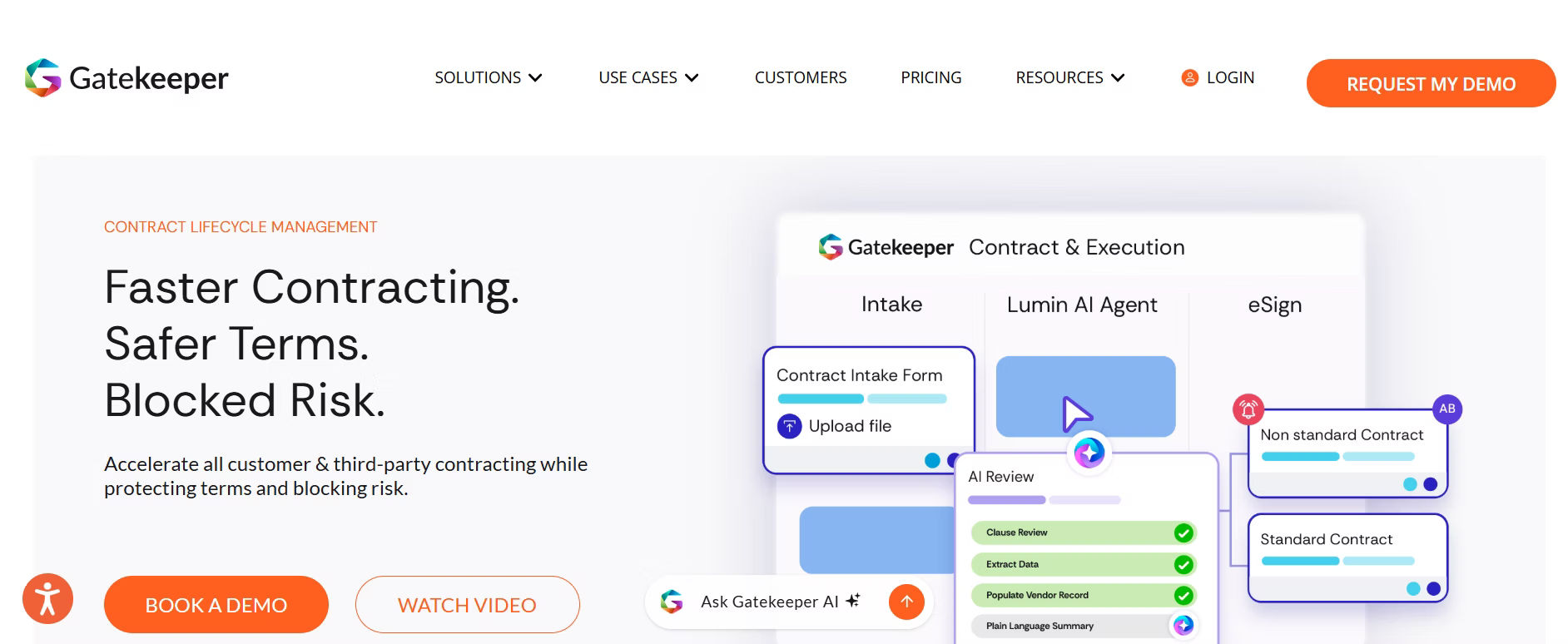
Gatekeeper is a cloud-based contract and vendor management platform built primarily for enterprise procurement, finance, and legal teams. It markets itself as a unified system for contract lifecycle management (CLM), third-party risk management, and spend management. Gatekeeper integrates with many business applications including Salesforce, HubSpot, Xero, and ERP systems.
Who Gatekeeper is built for:
- Mid-to-large enterprises managing 500+ vendor contracts
- Regulated industries finance, healthcare, legal with strict compliance requirements
- Procurement and vendor management teams that need third-party risk scoring alongside contract tracking
- Organizations with dedicated contract operations or legal ops staff
What Is CLM 365?
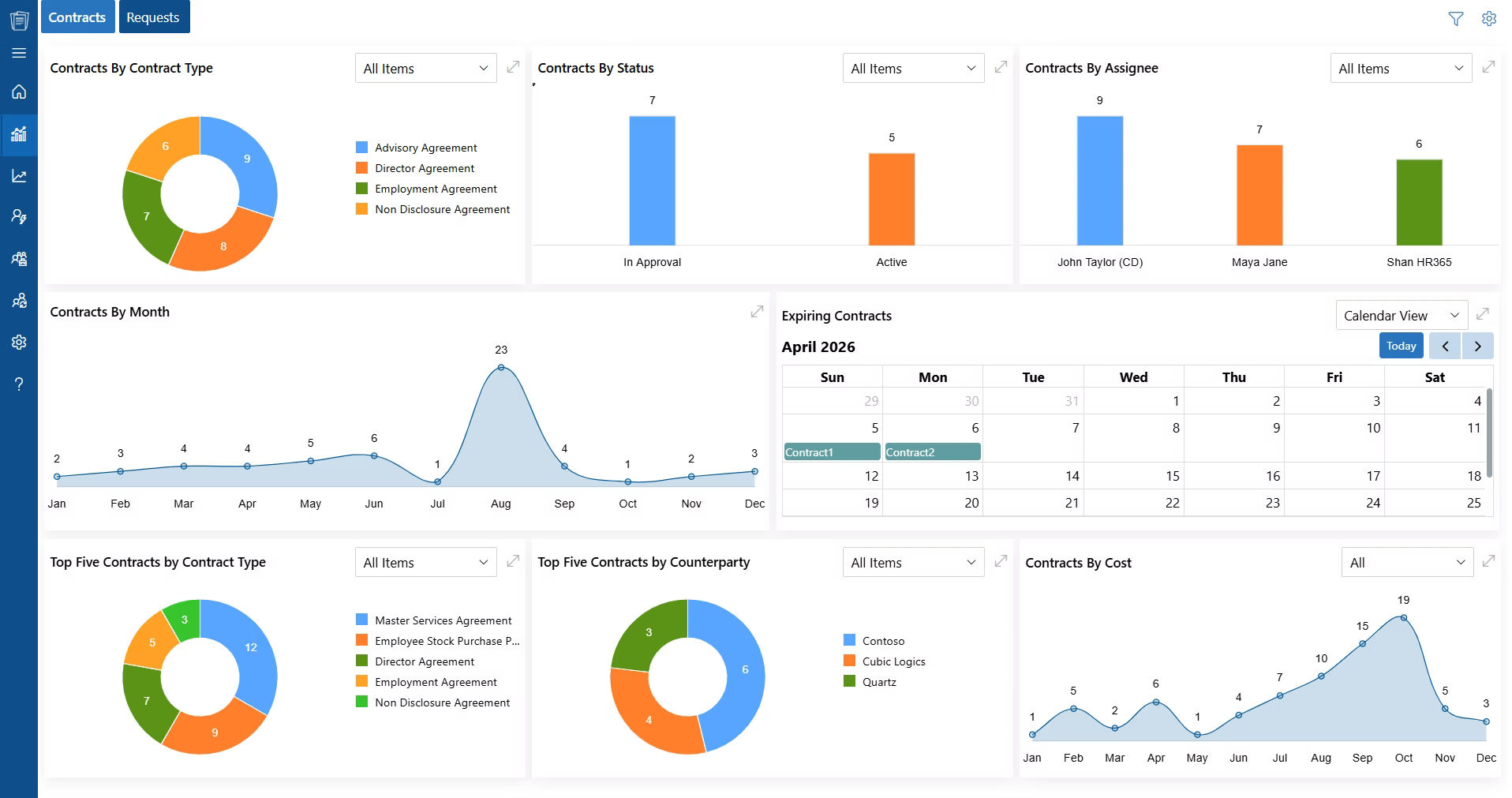
CLM 365 is a contract lifecycle management solution built natively inside the Microsoft 365 ecosystem. It is built within Microsoft 365, it runs directly within SharePoint, MS Teams, MS Copilot, Outlook, and MS Word, meaning your team manages contracts inside the same tools they use for everything else, with no separate login, no third-party data storage, and no new interface to learn.
CLM 365 covers the full contract lifecycle from initial request through authoring, negotiation, multi-level approvals, e-signature, obligation tracking, and renewal management. CLM 365 uses AI to analyze contract language, flag risky clauses, and surface obligations that need attention.
CLM 365 is built for
- Small, mid-size, and enterprise organizations already using Microsoft 365
- Legal, procurement, and business operations teams that want contract management embedded in their existing workflow
- Teams that need strong compliance and audit readiness without enterprise CLM pricing
- Government and public sector organizations (CLM 365 is GCC and GCC High certified)
Looking for a Microsoft 365-native contract management solution?
CLM 365 runs inside your SharePoint tenant, keeping your contracts secure within your Microsoft environment. See how it can simplify contract management.
Gatekeeper vs CLM 365: Head-to-Head Comparison
If you are comparing Gatekeeper and CLM 365, the key difference comes down to platform approach: Gatekeeper is a standalone CLM system, while CLM 365 works natively inside Microsoft 365.
Feature | Gatekeeper | CLM 365 |
Deployment Model | Cloud (standalone SaaS) | Native Microsoft 365 (SharePoint/Teams) |
Data Residency | Gatekeeper’s servers | Your Microsoft 365 tenant |
Microsoft 365 Integration | Via API/connectors | Native — runs inside Teams, SharePoint, Outlook |
AI Contract Analysis | LuminIQ AI agents | AI clause analysis, risk flagging, obligation extraction |
Contract Authoring | Yes | Yes, with Word integration |
Negotiation & Redlining | Yes | Yes, with full audit trail |
Multi-Level Approvals | Yes | Yes, configurable |
E-Signature | Built-in (unlimited) | Built-in |
Obligation & Renewal Tracking | Yes | Yes, with automated alerts |
Vendor/Supplier Risk Management | Core feature | Contract-level, not vendor profiling |
Third-Party Integrations | HubSpot, SAP and Salesforce | Full Microsoft 365 suite |
Compliance | ISO 27001, ISO 9001 | SOC 2, GCC/GCC High, Microsoft certified |
Free Trial | Available | 14 days, no credit card required |
Gatekeeper and CLM 365: Feature-by-Feature Breakdown
To help you compare Gatekeeper and CLM 365 more clearly, here is a feature-by-feature breakdown of how each platform handles contract management, workflows, integrations, and day-to-day usability.
1. Deployment and Data Residency
This is the first question any legal or IT team should ask: Where does your contract data live?
GateKeeper
Gatekeeper is a standalone SaaS platform. Your contracts, vendor data, and compliance records live on Gatekeeper’s servers. That means any time you want to access contract data in another tool your CRM, your ERP, your email you are pulling data across systems.
CLM 365
CLM 365 takes the opposite approach. Because it is built on SharePoint and the Microsoft 365 infrastructure, all contract data stays inside your own Microsoft 365 tenant. Your IT and security teams already control that environment. There is no new vendor to board your data governance framework. Your contracts live where your organization’s data already lives.
For organizations in regulated industries healthcare, financial services, government this is not a minor technical distinction. It is a compliance requirement.
CLM 365 is also GCC and GCC High certified, making it one of the few contract management tools cleared for US Federal cloud environments.
2. Microsoft 365 Integration — Surface-Level vs. Native
Gatekeeper
Gatekeeper integrates with Microsoft 365 apps through APIs and connectors. That means you can pull data from SharePoint or send notifications through Teams, but Gatekeeper itself lives outside the Microsoft ecosystem. Your team switches between Gatekeeper and their daily Microsoft tools.
CLM 365
CLM 365 works across the Microsoft 365 tools your teams already use every day. Contracts can be redlined in MS Word, reviewed and approved in Teams, and tracked through Outlook notifications. Contract data and documents are stored in SharePoint, giving teams a centralized place to manage records and metadata.
The practical result: a legal associate does not need to open a new browser tab to manage a contract. They do it inside Teams the same tool they use for everything from daily standups to document review.
When a tool lives where people already work, adoption goes up. When adoption goes up, contract data becomes more complete. When contract data is complete, nothing gets missed.
3. Contract Authoring and Negotiation
Both platforms support contract creation from templates and handle negotiation workflows with redlining and changing tracking.
Gatekeeper
Gatekeeper offers AI-assisted contract drafting through LuminIQ. The system can suggest clause language, flag risky terms, and help enforce your preferred playbook during negotiations with external counterparties.
CLM 365
CLM 365 integrates directly with Microsoft Word for in-document editing, which means your team uses the editor they have used for years with full redlining, tracked changes, and version history rather than learning a new contract authoring environment. CLM 365’s AI layer analyzes contract language in real time, identifies risky clauses, and highlights key obligations during review.
For counterparty collaboration: CLM 365 gives external parties secure, controlled portal access. The audit trail captures every interaction.
4. Approval Workflows
A strong approval workflow keeps contract reviews organized by routing each agreement to the right stakeholders at the right stage.
Gatekeeper
Gatekeeper supports configurable approval chains and connects approval routing to its workflow engine. Teams can set up sequential or parallel approvals, with contracts automatically routed based on factors such as contract type, value, or risk level.
CLM 365
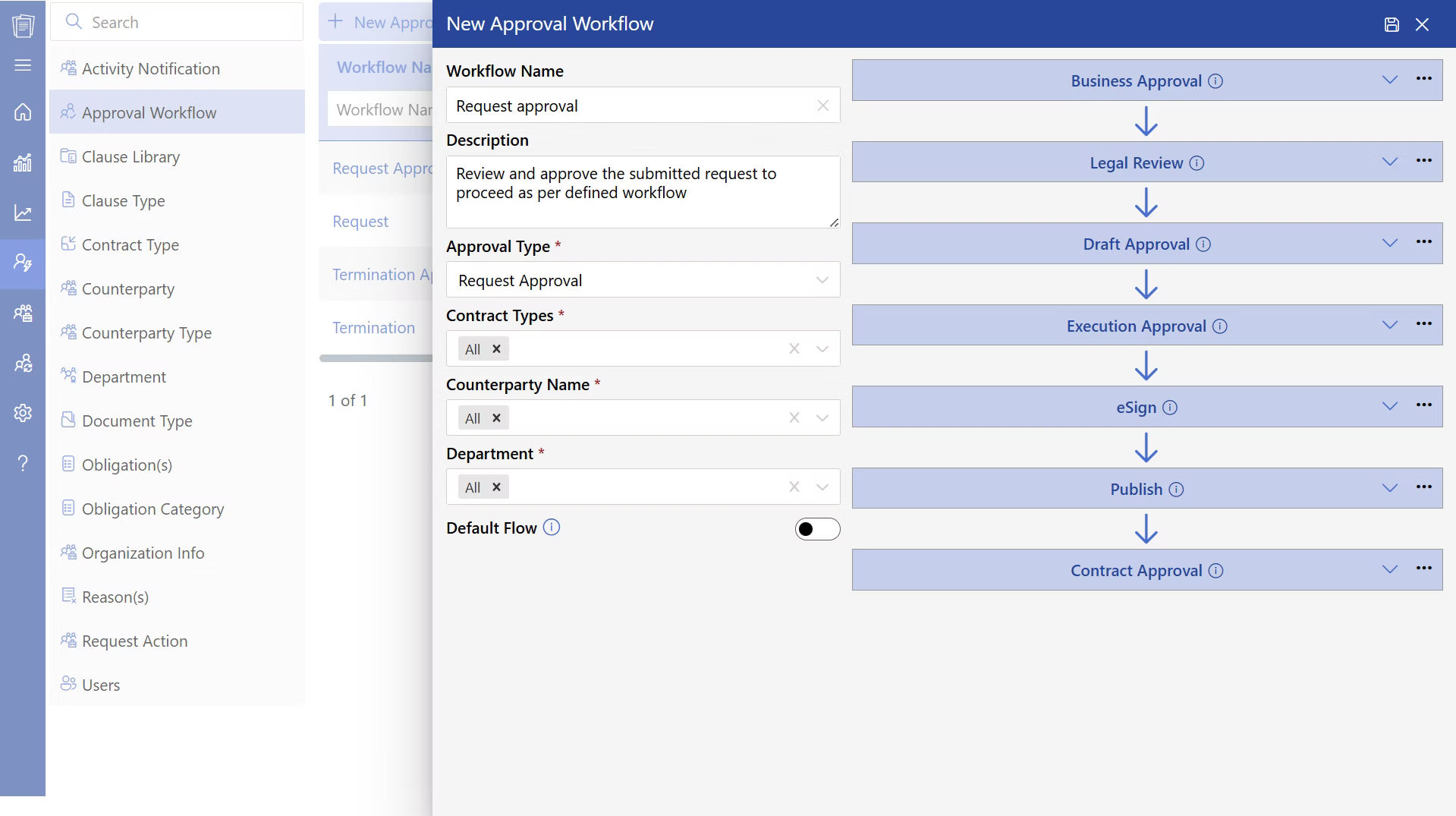
CLM 365 offers multi-level contract approval workflows that can be configured to reflect your organization’s actual structure department head, legal review, finance sign-off, executive approval. Approval notifications appear directly in Microsoft Teams, so approvers do not need to log into a separate portal to act.
Both platforms support delegation when approvers are unavailable, and both maintain a full audit trail of every approval decision — critical for compliance and contract disputes.
5. Obligation Tracking and Renewal Management
Expired contracts that auto-renew. Deliverables that slip past deadlines. Compliance obligations that no one is watching. These are the moments that turn a contract management problem into a business problem.
Gatekeeper
Gatekeeper monitors contracts continuously, with AI agents flagging renewals, tracking obligations, and alerting teams to upcoming deadlines. The platform’s spend module also identifies contracts that are no longer delivering value a useful feature for procurement teams managing large vendor portfolios.
CLM 365
CLM 365 uses AI to help identify and manage contractual obligations, milestones, and deliverables tied to each agreement. Renewal workflows can be automated, so contract owners receive notifications and reminders before key renewal dates.
The difference is that CLM 365’s obligation management works inside tools your team already checks — not inside a separate dashboard that requires a deliberate login.
Stats: 40% of organizations admit they don’t have clear ownership over contract responsibilities.
6. AI Capabilities
AI capabilities help contract teams reduce manual work by automating repetitive tasks, surfacing key contract information, and improving decision-making across the contract lifecycle.
Gatekeeper
Gatekeeper’s LuminIQ AI agents are a genuine differentiator. They function as autonomous digital workers that can screen risk, extract metadata, review clause libraries, and monitor vendor performance, around the clock. For large enterprises with high contract volume and limited legal bandwidth, LuminIQ reduces the manual review burden significantly.
CLM 365
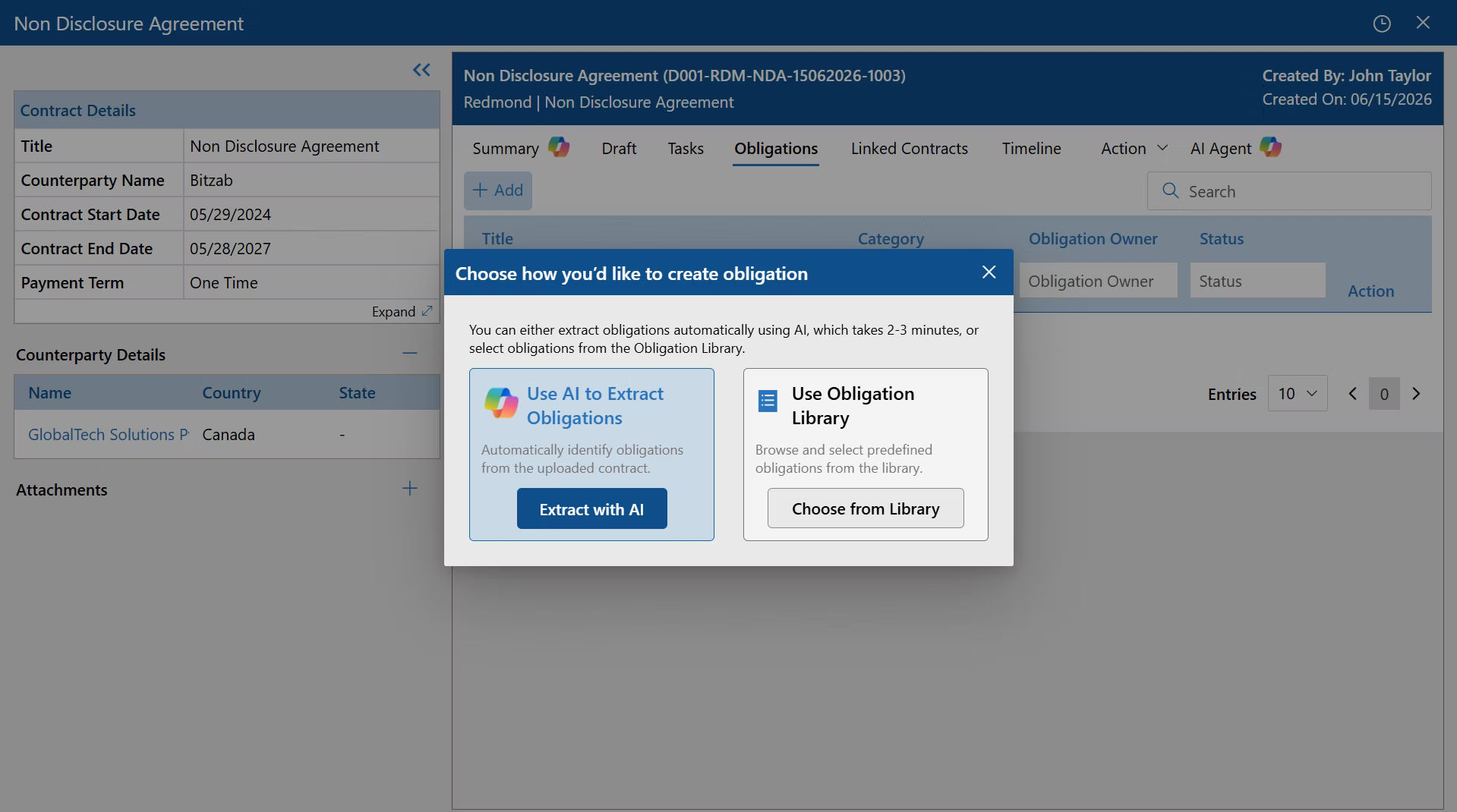
CLM 365’s AI capabilities are growing rapidly. The platform already uses AI to summarize contracts, flag risky language, extract key terms, and identify obligations that require attention. It integrates with Microsoft Copilot, bringing the same generative AI layer that powers the Microsoft 365 ecosystem directly into contract review workflows. CLM 365 uses AI to read uploaded contracts and capture key details automatically, even when the same field appears under different names or wording.
Example: If one contract says “Effective Date” and another says “Start Date,” CLM 365 can recognize both as the same field.
For most small and mid-size teams, CLM 365’s AI layer covers the high-value use cases, faster review, risk identification, and obligation tracking without the complexity of managing autonomous AI agents.
Leverage AI without compromising contract security
CLM 365 does not send your contract data to public AI services such as ChatGPT unless you explicitly configure an approved AI provider. You control which AI service is used, and all AI requests follow your organization’s security and governance policies.
7. Security and Compliance
Security and compliance help protect sensitive contract data while ensuring organizations meet internal policies and regulatory requirements.
Gatekeeper
Gatekeeper holds ISO 27001 and ISO 9001 certifications. Its platform includes granular role-based access controls, audit trail tracking, and data residency configurations for enterprise clients.
CLM 365
CLM 365 is built on Microsoft’s Zero Trust security model. All contract data is stored inside your own Microsoft 365 tenant. CLM 365 itself is SOC 2 compliant, Microsoft certified, and recognized as a Microsoft Solutions Partner.
For organizations already operating within a Microsoft security framework, CLM 365 does not add a new security surface. It works within the security controls you already have.
Who Should Choose Gatekeeper?
Gatekeeper is the right tool for your organization if:
- You are a large enterprise managing hundreds or thousands of active vendor contracts simultaneously
- Third-party risk management and vendor compliance are as important as contract tracking itself
- You have a dedicated legal operations or contract management team with budget and bandwidth to configure and run an enterprise CLM platform
- You need deep spend analytics across vendor relationships, not just contract tracking
Who Should Choose CLM 365?
CLM 365 is the better fit if:
- You want to simplify the entire contract review process with AI-assisted clause summary, automated workflows, and approvals.
- Your team is already inside Microsoft 365, and you want contract management to live there too
- You need the full contract lifecycle from request to renewal without purchasing and managing a separate enterprise platform
- Data security and residency are priorities, and you need all contract data to stay inside your own Microsoft tenant
- You operate in a regulated environment and need GCC, GCC High, or SOC 2 compliance.
- You are a small, mid-size, or enterprise organization that wants powerful contract management at a cost that scales with your team
- You need a platform that legal, finance, procurement, and business operations can all use, not just legal ops specialists.
The Real Cost of Getting This Decision Wrong
Here is something worth thinking about: the cost of choosing the wrong contract management tool is not just the subscription fee.
If your team picks a tool that is too complex, they will not use it. Contracts will continue flowing through email and shared drives. Renewals will still get missed.
If your team picks a tool that is disconnected from where they work, adoption stays low. Approvers do not check separate dashboards. Contract status lives in a system that the rest of the business cannot see.
CLM 365’s native Microsoft 365 architecture solves this at the foundation. When the contract management tool lives inside Teams and SharePoint where your team already is there is no behavior change required. Adoption happens because the tool is already there.
That is not a feature. It is a structural advantage.
Conclusion
Gatekeeper is a strong choice for large enterprises with complex procurement and compliance requirements. However, its pricing and platform complexity may be more than many organizations need.
CLM 365 delivers end-to-end contract lifecycle management inside Microsoft 365, with AI-powered contract review, enterprise-grade security, and pricing that scales with your business. If your organization already uses Microsoft 365, CLM 365 provides a familiar, cost-effective way to manage contracts from request to renewal.
If you are already in Microsoft 365, the question is not whether CLM 365 can handle your contracts. It is how quickly you can get started.
Frequently Asked Questions
Is CLM 365 a better alternative to Gatekeeper for Microsoft 365 users?
Yes, for organizations already using Microsoft 365, CLM 365 can be a strong choice. It works natively within SharePoint, Teams, and Outlook, enabling contract management inside the Microsoft environment your team already uses. While Gatekeeper integrates with Microsoft 365, CLM 365 is designed to operate directly within it.
Does CLM 365 include AI contract analysis?
Yes. CLM 365 uses AI to summarize contract language, flag risky clauses, extract key terms, and identify obligations requiring attention. It also integrates with Microsoft Copilot for generative AI capabilities within the Microsoft 365 environment.
Is CLM 365 suitable for regulated industries?
CLM 365 is SOC 2 compliant, Microsoft certified, and GCC/GCC High certified for US Federal cloud environments. All contract data is stored within your own Microsoft 365 tenant, which means it operates inside your existing compliance and security framework.
Can I try CLM 365 before buying?
Yes. CLM 365 offers a 14-day free trial with full features and no credit card required. You can explore the complete platform inside your own Microsoft 365 tenant before making any purchasing decision.


_JiluXJRGNl.svg)























