
What Is Contract Ratification? 7 Simple Steps to Manage It

A business deal may look complete after contract signing. But what happens when the contract still needs approval from the right person?
- Confirm who has the legal power to commit the business before moving forward. This helps prevent disputes over unauthorized decisions.
- Written confirmation provides clear evidence, while certain actions may also show that a business has accepted an earlier commitment.
- Signing a document and later adopting an unauthorized act serve different purposes. One does not always replace the other.
- Track decision-makers, supporting documents, dates, and final decisions so legal teams can explain how an agreement became binding.
This is where contract ratification becomes important.
According to study by World Commerce & Contracting, poor contract management can cost businesses an average of 9.2% of their annual revenue. While this figure covers wider contract management problems, it shows why businesses need clear steps to check and confirm business commitments.
In this blog, we explain how the process works, its legal importance, the different methods businesses use, and how technology can help legal teams manage each stage.
What Does Contract Ratification Mean?
Contract ratification means officially approving a deal that someone made without permission, after the deal has already been made.
For example, imagine a department manager signs a three-year software agreement worth $150,000. However, company policy allows that manager to commit only $50,000 without further authorization.
A company officer with the required authority may later review the agreement and adopt the manager’s decision. This act may make the earlier commitment binding on the company.
The main purpose is to address a lack of authority at the time of the contract approval process.
What Happens When a Contract Is Ratified?
When an authorized party adopts an earlier act, the law may treat that act as binding from its original date. However, the exact legal effect depends on the situation and applicable law. Ratified contracts can create enforceable duties for the parties involved. They may also affect payment responsibilities, service commitments, and legal rights.
Importance of Contract Ratification
Businesses often rely on managers, employees, and representatives to negotiate and sign agreements. However, not every employee has the same decision-making power.
When a business adopts an earlier unauthorized action, it can become responsible for the contractual obligation created by that action. This gives both parties a clearer understanding of who must fulfill the agreement and who can be held responsible if something goes wrong.
Disagreements can arise when a customer or supplier believes an employee had the power to sign a deal, but the employer disagrees. A documented decision helps clarify whether the company has accepted that contract confirmation. It can also provide useful evidence if a dispute reaches court.
Imagine a supplier begins work based on an agreement signed by a regional manager. Later, the supplier learns that the manager lacked signing authority. Instead of restarting the entire deal, the company may adopt the earlier agreement if the law permits it. This can help preserve the working relationship and avoid unnecessary delays.
Companies often set signing limits based on contract value, business risk, or department responsibility. A review of an unauthorized agreement gives leadership a chance to check whether the commitment fits company policy before adopting it.
Legal teams may need to explain why a company accepted the contract. Keeping written decisions, supporting evidence, and dates makes it easier to answer questions during audits, disputes, or management reviews. These contract confirmation records are especially useful when employees change roles or leave the company.
What Needs to Be in Place Before Ratifying a Contract?
Ratifying a contract requires more than simply agreeing with an earlier decision. Several legal conditions may need to be satisfied before the act can become binding.
- Legal Ability to Enter the Deal: The person or business must have been legally capable of making the agreement when it was first created.
- A Clear Understanding of the Terms: Before approving the deal, the person should understand contract clause, including the costs, duties, and possible risks.
- Approval from the Right Person: The decision must come from someone who has the authority to approve the agreement, such as an authorized manager or board member.
- A Lawful Agreement: The agreement must follow the law. Approving an illegal deal later does not make it legally valid.
- Acceptance of the Full Agreement: The person must accept the entire deal, not just the terms that benefit them.
- A Free and Clear Decision: Approval must be given willingly, without threats, pressure, or deception, and must clearly show the intention to accept the agreement.
What are the Different Types of Contract Ratification?
Businesses can adopt earlier unauthorized actions in two main ways: express and implied ratification. The difference lies in how the organization communicates its decision.
Express ratification occurs when an authorized person clearly states that the organization accepts an earlier unauthorized act.
The decision may be communicated through a signed document, board resolution, written notice, or another legally accepted method.
Example: A sales director signs a $200,000 distribution agreement without the required authority. After reviewing the deal, the company’s board passes a resolution adopting the director’s action.
The written resolution provides evidence that the organization has accepted the earlier commitment.
Express contract offers several practical benefits:
- Creates direct evidence of the organization’s decision.
- Identifies the person or group responsible for accepting the act.
- Helps legal teams maintain a record for future reference.
- Reduces uncertainty about the company’s intentions.
Written documentation is often the safer choice for high-value business transactions.
Implied ratification happens when a person’s or organization’s conduct shows acceptance of an earlier unauthorized action, even without a direct statement.
For example, a manager orders office equipment without the required authority. Company leadership learns about the purchase, accepts the equipment, and knowingly pays the invoice.
Depending on the facts and applicable law, these actions may indicate that the company has adopted the transaction.
However, accepting a benefit does not automatically establish ratification in every situation. The organization must generally have knowledge of the important facts, and its conduct must support an intent to adopt the act.
According to Cornell Law School Legal Information Institute, an agent’s authority can come from the principal’s direct instructions or actions that suggest the agent has permission to act on their behalf. Although authority and ratification are different legal concepts, this distinction helps explain why actions matter when courts examine business decisions.
How Does the Contract Ratification Process Work?
The contract confirmation process usually begins when a business discovers that someone entered into an agreement without the necessary authority. Legal teams must then determine whether the organization can legally adopt the earlier action.
Step 1: Identify the Unauthorized Action
Determine who made the agreement, the limits of their contract authoring, and whether the company has any existing legal obligations.
Step 2: Examine the Terms
Review the payment terms, responsibilities, deadlines, and conditions to understand what the deal involves.
Step 3: Confirm Who Can Approve It
Check company policies and applicable laws to identify the person or governing body authorized to ratify the agreement.
Step 4: Consider the Potential Risks
Assess financial exposure, legal liabilities, and conflicts with existing commitments before proceeding.
Step 5: Record the Approval
Document the decision in writing, referencing the original transaction and any formalities required by law.
Step 6: Communicate the Outcome
Inform relevant employees and the other party about the decision and any next steps.
Step 7: Maintain a Clear Record
Store the contract, approval documents, and related correspondence together for contract audits and future reference.
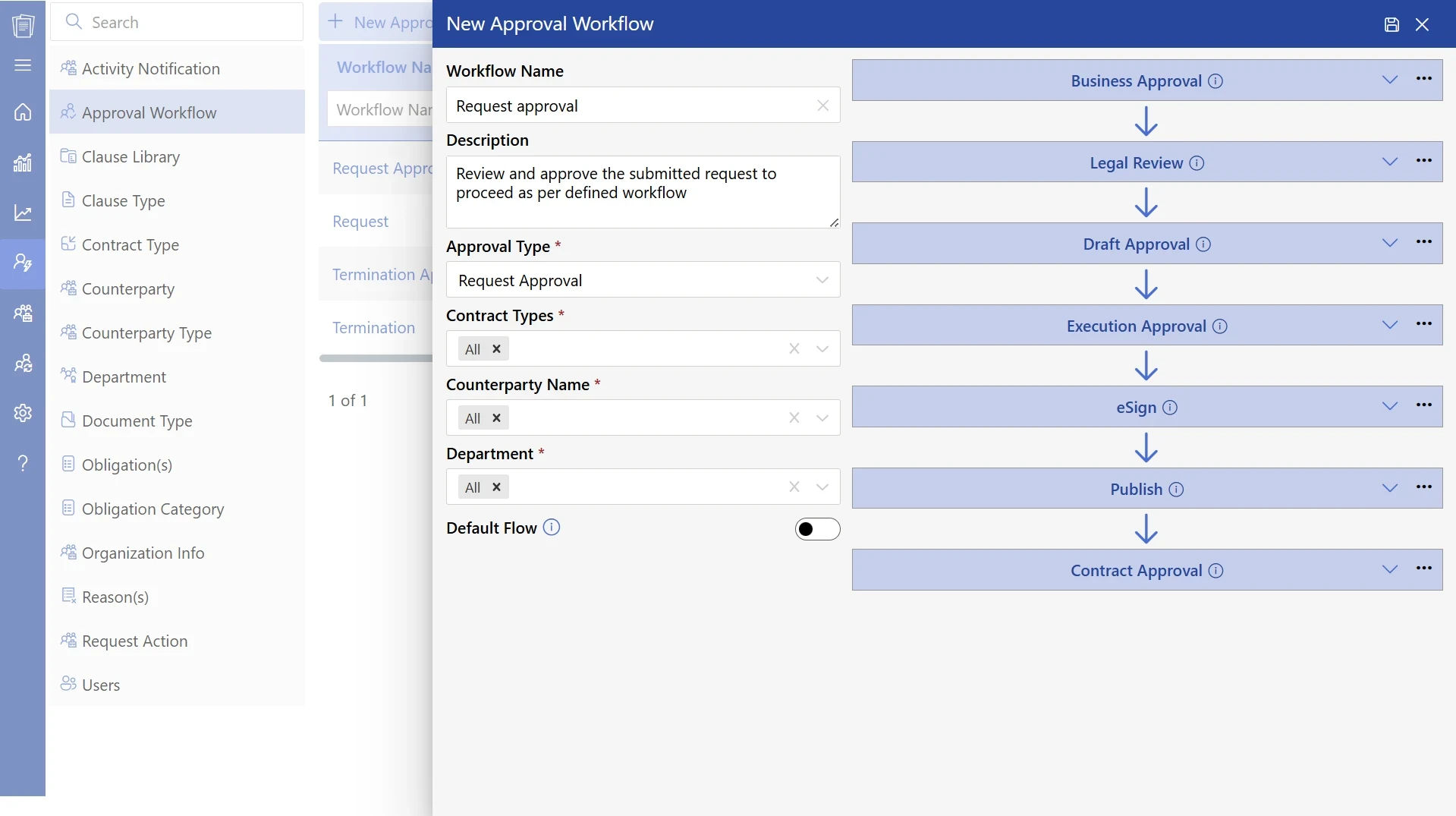
Route Contracts to the Right Department Heads
Automate your approval workflows with predefined rules that route contracts to the right departments, ensuring a organized approval process.
Contract Ratification vs. Contract Execution: What's the Difference?
Contract execution involves signing or formally completing an agreement, while ratification means accepting an earlier action taken without proper authority. Here are seven key differences between the two.
Aspect | Contract Ratification | Contract Execution |
Meaning | Adoption of an earlier unauthorized act. | Formal signing or completion of an agreement. |
Purpose | Addresses a lack of authority in an earlier action. | Completes the required signing steps. |
Timing | Occurs after the original act. | Usually takes place when parties finalize the document. |
Authority | Requires a party with the power to adopt the act. | Requires proper signing authority for a valid binding act. |
Method | May occur through clear statements or conduct. | Usually involves signatures or another required formal act. |
Legal Effect | May make an earlier unauthorized action binding. | May create a binding agreement when all legal requirements are met. |
Documentation | Often uses a written declaration, resolution, or supporting evidence. | Commonly uses a signed paper or electronic document. |
Example of the Difference
A purchasing manager signs a supplier agreement on Monday without proper authority. On Friday, an authorized officer formally approves the earlier agreement. Monday marks the original signing, while Friday marks ratification.
If the manager had proper authority, contract confirmation might not be needed. Likewise, ratification does not always require a new signature; requirements depend on the transaction and applicable law.
What Can Delay the Contract Ratification Process?
Even when a business wants to accept an earlier agreement, several issues can slow the decision. Understanding these problems helps legal teams identify where delays are most likely to occur.
Unclear Approval Limits
When a company hasn’t clearly defined who can approve a deal, employees may not know whom to approach. This can lead to unnecessary back-and-forth before anyone decides.
Missing Contract Details
Sometimes, important details like pricing, attachments, or service terms are missing. Legal teams must track down this information before they can decide whether to accept the agreement.
Different Opinions Across Teams
Legal, finance, and operations teams may have different views on the same deal. Getting everyone on the same page can take time, especially when feedback is spread across emails.
Changing Business Needs
A deal that made sense earlier may no longer fit the company’s needs. Budget cuts, rising costs, or changes in project plans may cause leadership to rethink the agreement.
Contracts Scattered Across Systems
When contracts are saved in different folders, emails, or tools, finding the right contract version becomes difficult. Teams may also overlook important documents needed to plan.
Legal Restrictions
Not every agreement can be ratified. Some require specific legal steps, while others may not be legally valid at all. Legal teams need to check these limits before contract planning.
Delayed Decisions
The process slows down because the right decision-maker is busy or too many people need to sign off. This leaves teams waiting and makes it harder to plan the next steps.
How Faster Contract Ratification Helps Legal Teams Stay on Track?
A faster process is not about skipping legal checks. It is about reducing unnecessary waiting while keeping the right people involved. When legal teams have access to complete information and clear decision paths, they can resolve authority questions more quickly.
Unauthorized agreements may remain unresolved while employees wait for leadership decisions.
A defined workflow helps legal teams identify these cases, assign responsibility, and move each document toward an outcome.
This prevents older requests from being overlooked as new work arrives.
Some projects depend on a company deciding whether to accept an earlier commitment.
For example, a software rollout may be delayed while the business reviews an agreement signed by an employee without sufficient authority.
A timely decision allows the company to proceed, renegotiate, or reject the transaction as legally appropriate.
Legal teams often need information from finance, sales, operations, and company leadership.
A collaborative contract management makes it easier to identify who must provide input and what information is still missing.
This reduces repeated emails and unnecessary meetings.
Legal teams often need information from finance, sales, operations, and company leadership.
A collaborative contract management makes it easier to identify who must provide input and what information is still missing.
This reduces repeated emails and unnecessary meetings.
Tracking each request helps legal managers understand how many cases are pending, where delays occur, and which matters need attention. These insights can guide staffing decisions and improvements to contract workflows.
Best Practices for Routing Contracts for Ratification
After years of managing contracts, one thing becomes clear: approval delays often happen because contracts reach the wrong person or lack the information needed to decide.
Verify the Original Authority
Identify who made the commitment and whether they had the authority to do so. This helps determine what needs ratification.
Consider Risk, Not Just Contract Value
Set routing rules based on liability, payment terms, contract duration, and business impact, not just the deal amount.
Involve the Right Decision-Makers
Route financial matters to finance, data security concerns to IT, and high-risk commitments to authorized leadership. Avoid involving departments that aren’t relevant.
Provide the Necessary Context
Explain why ratification is needed, what happened, and what risks the business would accept. This reduces unnecessary follow-ups.
Assign Ownership and Deadlines
Give each request a clear owner, next step, and deadline. Define an authorized backup approver for cases where the primary decision-maker is unavailable.
Document Every Decision
Record the outcome, approver, date, and supporting documents, including rejections. This creates a reliable audit trail.
Automate Routing, Not Legal Judgment
Use contract management software to route requests based on risk, department, and approval limits. However, an authorized person must still assess whether ratification is legally possible and appropriate.
Role of Automation in Improving Contract Ratification
CLM 365, Sharepoint contract management, integrates with Microsoft 365 apps such as SharePoint, Microsoft Teams, Outlook, and Microsoft Copilot to help businesses manage the entire contract lifecycle in one platform.
With AI-powered features and automated workflows, legal teams can route contracts to the right department heads for review and approval. They can also track contract changes, monitor signing status, and see who is responsible for each agreement.
This makes the ratification process easier to manage, reduces manual follow-ups, and helps teams keep approvals moving without losing track of important contract details.
With proper tools in place, businesses can organize contract records, manage review tasks, and track important actions across the agreement lifecycle. The goal is to reduce manual work while keeping legal decisions with authorized people.
Conclusion
Contract ratification helps businesses formally accept earlier commitments when the legal requirements are met. Clear approval rules, proper documentation, and timely decisions help legal teams manage the process more effectively.
With the right process, businesses can manage contracts in one place, automate approval workflows, and track contract changes and responsibilities across Microsoft 365 apps.
Explore CLM 365 to simplify workflows and keep your approval organized and on track.
Frequently Asked Questions
Who can ratify a contract?
The person or organization with the legal authority to adopt the original action can ratify it. depending on the circumstances, this may be a company director, authorized manager, or governing body.
Is contract ratification the same as executing a contract?
No. Execution generally refers to formally signing or completing a contract. Ratification involves adopting an earlier action, often one taken without proper authority.
How should contracts be routed for ratification?
Route the request to the person or governing body with the appropriate authority. Include the original agreement, an explanation of what happened, and any relevant risks.
How can legal teams track ratification requests?
They can use a centralized system to monitor request status, assigned approvers, outstanding actions, deadlines, and final decisions.
How does automation improve visibility into contract approvals?
Automated workflows can show who currently holds a request, which approvals are outstanding, what changes have been recorded, and whether a decision has been documented.


























