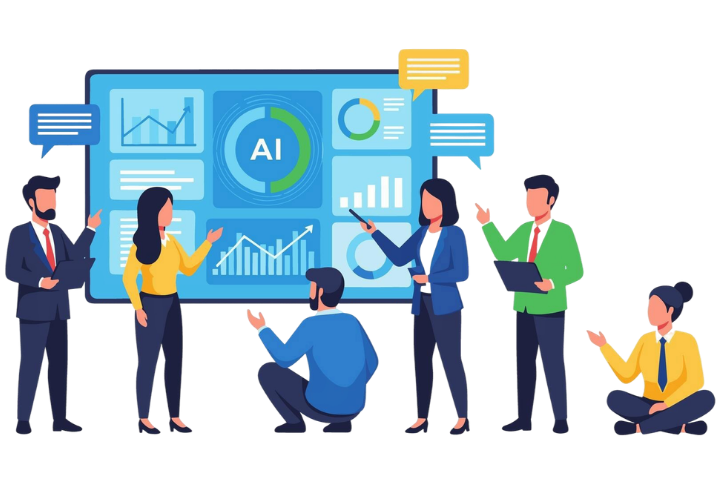
How AI in Corporate Training Is Transforming Employee Learning in 2027

Corporate training is changing as companies look for better ways to develop employee skills and support performance. AI tools can help make training more relevant, accessible, and easier to manage.
- AI in corporate training delivers personalized learning based on employee skills, roles, and development needs.
- AI-powered training automates course creation, assignments, progress tracking, and reporting.
- AI helps identify skill gaps and supports employee upskilling, reskilling, and career development.
AI-driven learning improves training efficiency, employee engagement, and learning outcomes.
In 2027, AI in corporate training is expected to play a larger role in personalized learning, course creation, skills development, and learning analytics.
What Is AI in Corporate Training?
AI in corporate training means using artificial intelligence to design, deliver, and improve workplace learning. It can analyze progress, recommend resources, and support training management.
AI-powered training uses tools such as machine learning, natural language processing, and generative AI to personalize content, answer questions, and help create learning materials.
For example, a support employee may receive product training, while a manager may receive leadership coaching. The aim is to match learning with actual needs.
How AI Is Transforming Corporate Training and Employee Learning
Personalized learning paths for different employees
Recommends training based on job role, existing skills, and career goals.
Adjusts learning paths using assessments and employee progress.
Learning support within everyday work
Provides quick answers through AI chatbots and learning assistants.
Makes job-related resources easier to access during daily work.
Faster course creation and updates
Helps Learning & Development teams draft course outlines, quizzes, and learning summaries.
Reduces preparation time while keeping expert review essential.
More useful learning analytics
Tracks assessment scores, training progress, and learner feedback.
Highlights learning difficulties and opportunities to improve courses.
Key Benefits of AI in Corporate Training
Better learning relevance
Matches training recommendations to employee roles and skill needs.
Makes corporate learning more relevant to day-to-day responsibilities.
Less repetitive administration
Automates course assignments, reminders, and routine reporting.
Gives HR and L&D teams more time to support employees.
Earlier identification of skill gaps
Uses assessment and skills data to identify capability gaps.
Helps plan targeted upskilling and reskilling programs.
More flexible learning experiences
Supports short lessons, varied formats, and adaptive learning paths.
Allows employees to learn at a suitable pace.
Clearer evaluation of training effectiveness
Connects training results with skill development and job performance.
Helps organizations evaluate learning effectiveness beyond completion rates
Top Use Cases of AI in Corporate Training in 2027
Employee onboarding and role-based training
Suggests role-based training, policies, and introductory resources for new hires.
Offers quick answers while employees learn company processes.
Upskilling and reskilling programs
Identifies relevant competencies and recommends training for evolving roles.
Supports employee upskilling, reskilling, and career development.
Compliance and policy learning
Organizes recurring compliance training and policy resources.
Helps employees practice workplace scenarios and review requirements.
Virtual coaching and simulation-based practice
Provides AI-powered role-play for sales, support, and workplace conversations.
Enables repeated practice and feedback before real interactions.
Multilingual learning and accessible content
Helps create translated learning materials, subtitles, and summaries.
Requires human review to preserve accuracy and accessibility.
Knowledge assistance for frontline teams
Delivers short, job-specific answers from approved company resources.
Supports frontline teams with timely knowledge and guidance.
Future Trends of AI in Corporate Training and Employee Development
Adaptive learning will become more practical
Adjusts learning content and assessments based on individual progress.
May help employees spend less time repeating familiar material.
AI learning assistants will support ongoing development
Makes approved learning resources easier to find through natural-language questions.
Could support everyday coaching and employee development plans.
Skills-based learning will influence career development
Maps job requirements to employee competencies and training options.
May strengthen internal mobility and skills-based career planning.
Human-led learning and responsible AI will remain essential
Requires safeguards for privacy, fairness, and AI-generated content quality.
Keeps trainers and subject-matter experts responsible for decisions.
Measuring business impact will receive more attention
Places greater focus on skill improvement and business performance.
Encourages teams to evaluate tools using clear, measurable learning goals.
Conclusion
AI in corporate training can make employee learning more personalized, flexible, and easier to manage. Smart recommendations, training automation, and useful analytics can support employee development.
For 2027, companies should begin with clear training goals, choose suitable tools, protect employee data, and check whether learning improves real skills and performance.
Join Our Creative Community
Frequently Asked Questions
What is the difference between a recurring transaction and a subscription?
A subscription is a business model where customers pay for ongoing access to a product or service. A recurring transaction is the actual payment mechanism that powers a subscription. In practice, the terms are often used interchangeably, but technically, a subscription is the agreement and a recurring transaction is the automated charge that fulfills that agreement each billing cycle.
Can a business charge a different amount each billing cycle?
Yes — this is known as a variable recurring transaction. Utility bills, usage-based SaaS pricing, and metered billing models all use variable recurring charges where the amount changes each cycle based on consumption or usage. The key requirement is that the customer must have authorized variable billing upfront and must be notified of each charge amount before it is processed (depending on local regulations).
What happens if a recurring transaction fails?
Most payment systems have automated retry logic that attempts the charge again after a set number of days. If all retry attempts fail, the merchant’s system typically notifies the customer via email and may suspend or downgrade their account. Businesses with robust workflows recover a significant portion of initially failed recurring payments through automated communication sequences.
How do I stop an unauthorized recurring transaction?
Start by contacting the merchant directly to cancel and request a refund if applicable. If the merchant is unresponsive or continues billing after cancellation, contact your bank or card issuer to initiate a chargeback. For debit cards, you can also request that your bank block future payments to that merchant by issuing a stop payment instruction.