


Imagine logging into one place where every course, training, and resource you need is right there. That’s exactly what a Learning Management System does. It is more than just software it has become the backbone of modern learning for both workplaces and classrooms.
✨
Key Takeaways
- A Learning Management System (LMS) simplifies employee training, onboarding, and skill development in one platform.
- An LMS automates course assignments, tracks learner progress, and improves training efficiency.
- Modern LMS platforms support personalized learning, AI-powered recommendations, and flexible training experiences.
- LMS reporting and analytics help organizations measure learning outcomes and identify skill gaps.
Choosing the right LMS improves employee engagement, compliance training, and continuous professional growth.
Instead of relying on paper manuals or scattered online files, an LMS makes learning easy, organized, and available anytime, anywhere. According to eLearning Industry, over 90% of large companies already use a Learning Management System to train their workforce. By 2025, organizations that adopt LMS will save costs, engage people better, and stay ahead of competitors.
What is a Learning Management System (LMS)?
A Learning Management System (LMS) is a digital hub that allows organizations to design, deliver, monitor, and manage training or educational programs in one place. Instead of depending on outdated paper manuals or scattered tools, schools and businesses now rely on LMS to keep learning structured, secure, and easy to access.
Think of it as a central station for learning where courses, quizzes, resources, and progress reports all connect. Employees can finish their training modules, students can learn anytime from any device, and managers or teachers can instantly track performance without confusion.
As TechTarget highlights, modern LMS platforms include powerful features such as course management, real-time reporting, mobile access, and certification tracking. These capabilities make LMS a key driver of professional growth and education in today’s digital-first world.
Key Characteristics of an LMS
- Course Delivery: Upload and organize training or academic content in one place.
- Tracking & Reporting: Monitor learner progress, completion rates, and knowledge retention.
- User Management: Assign courses, roles, and permissions to different users.
- Accessibility: Anytime, anywhere access via web or mobile devices.
- Engagement Tools: Gamification, quizzes, and discussion forums.
Why LMS 365 is Essential in 2026
As workplaces continue to evolve, organizations need smarter ways to train employees, develop skills, and improve productivity. In 2026, a Learning Management System (LMS) has become an essential tool for businesses looking to simplify employee training and support continuous learning.
With remote and hybrid work becoming common, traditional training methods are no longer sufficient. An LMS provides a centralized platform where employees can access courses, complete assessments, and track their learning progress anytime, anywhere.
Modern learning management systems also use AI-powered recommendations, automated workflows, and real-time analytics to create personalized learning experiences. This helps organizations reduce administrative work, identify skill gaps, and deliver relevant training based on employee needs.
By investing in the right LMS software, businesses can improve employee engagement, maintain compliance, and build a workforce prepared for changing industry demands.
Key Reasons It Matters Today
- Continuous Skill Development: An LMS helps employees develop new skills, stay updated with industry trends, and adapt to changing job requirements.
- Flexible Learning Opportunities: Employees can access online training anytime, making learning easier for remote, hybrid, and global teams.
- AI-Powered Personalized Learning: Modern LMS platforms recommend relevant courses based on employee roles, learning progress, and skill development needs.
- Automated Training Management: Organizations can automate course assignments, reminders, assessments, and certification tracking, reducing manual administrative tasks.
- Improved Employee Engagement: Interactive courses, quizzes, and personalized learning paths encourage employees to participate actively in professional development.
- Better Compliance Management: An LMS helps businesses deliver mandatory training, monitor certification deadlines, and maintain accurate records for audits.
- Data-Driven Learning Insights: Built-in reporting and analytics allow HR teams to measure training effectiveness, monitor completion rates, and identify learning gaps.
- Scalable and Cost-Effective Training: Businesses can deliver consistent training to growing teams while reducing travel expenses, classroom costs, and repetitive training efforts.
A well-implemented LMS goes beyond delivering courses. It helps organizations create a culture of continuous learning, improve workforce capabilities, and support long-term business growth.
Core Features of a Learning Management System
A Learning Management System (LMS) is more than a course platform. It centralizes training, simplifies learning management, and improves engagement. Modern LMS platforms offer interactive tools, progress tracking, and valuable insights, helping organizations deliver structured, measurable, and effective learning experiences.
1. Course Creation & Management
An LMS simplifies course creation using videos, documents, presentations, and interactive modules. Trainers can organize lessons, manage materials, and update content easily, ensuring learners always have access to relevant training resources.
2. User-Friendly Dashboards
An LMS offers intuitive dashboards where learners can easily track courses, progress, deadlines, and achievements. Administrators can quickly monitor learner performance, upcoming sessions, and system updates from one centralized view.
3. Mobile Learning
Mobile-friendly LMS platforms allow employees and students to access training anytime, anywhere, using smartphones or tablets. This flexibility makes learning more convenient, improves course completion rates, and supports continuous skill development.
4. Assessments & Quizzes
An LMS offers built-in quizzes, tests, and assessments to measure knowledge retention. Interactive evaluations provide instant results, highlight learning gaps, and support fair assessments through timed tests and randomized questions.
5. Reports & Analytics
LMS reporting and analytics help managers track course completion, learner performance, and skill gaps. These insights support informed decisions on employee development, training investments, and compliance requirements.
6. Gamification Tools
LMS gamification features like points, badges, and leaderboards make learning more engaging and rewarding. These features motivate learners to complete training, with TalentLMS reporting that 83% of employees feel more motivated through gamified learning.
7. Certification Tracking
An LMS automates compliance training and certification by issuing digital certificates after course completion. These certificates are easy to store, share, and renew, helping organizations stay audit-ready and employees demonstrate their skills.
According to eLearning Industry, organizations that implement these LMS features experience up to 60% faster employee training completion rates, showing how powerful the right features can be.
Benefits of Using a Learning Management System
A Learning Management System (LMS) simplifies training, improves employee engagement, and supports continuous learning. It saves time, boosts productivity, and delivers measurable results while helping organizations manage compliance and employee development effectively.
1. Saves Time & Cuts Costs
An LMS reduces training costs by eliminating travel, classrooms, and printed materials. Automated onboarding, compliance courses, and digital resources save HR time. According to Brandon Hall Group, eLearning can reduce training costs by 40–60%.
2. Boosts Engagement
An LMS improves learner engagement through gamification, interactive quizzes, and real-time feedback. Features like points, badges, and leaderboards motivate learners, improve course completion, and support better knowledge retention.
3. Improves Knowledge Retention
LMS platforms improve knowledge retention through microlearning and spaced learning techniques. Bite-sized lessons and repeated practice help learners remember information better. According to the Research Institute of America, eLearning can boost retention by 25–60%.
4. Enhances Productivity
An LMS simplifies training by allowing employees to learn at their own pace and apply skills on the job. Automated reporting and approvals save managers time, improve productivity, and reduce downtime.
5. Ensures Compliance & Reduces Risk
An LMS simplifies compliance training for industries like healthcare, finance, and manufacturing. Automated reminders, completion tracking, and digital certifications help organizations meet deadlines, reduce compliance risks, and stay audit-ready.
6. Supports Remote & Hybrid Teams
An LMS delivers consistent training across locations and time zones. Mobile-friendly access allows employees to learn anytime, anywhere, supporting flexible learning and equal skill development opportunities for global teams.
According to Deloitte, organizations using digital HR and learning platforms save up to 30% of their HR team’s time, proving the real impact of LMS adoption.
10 Best Learning Management Systems
Choosing the best learning management system in 2026 can be difficult, with so many platforms on the market. Below, we break down the leading options starting with LMS 365 so you can compare features, pricing, and integrations side by side.
1. LMS 365 – All-in-One Learning Platform
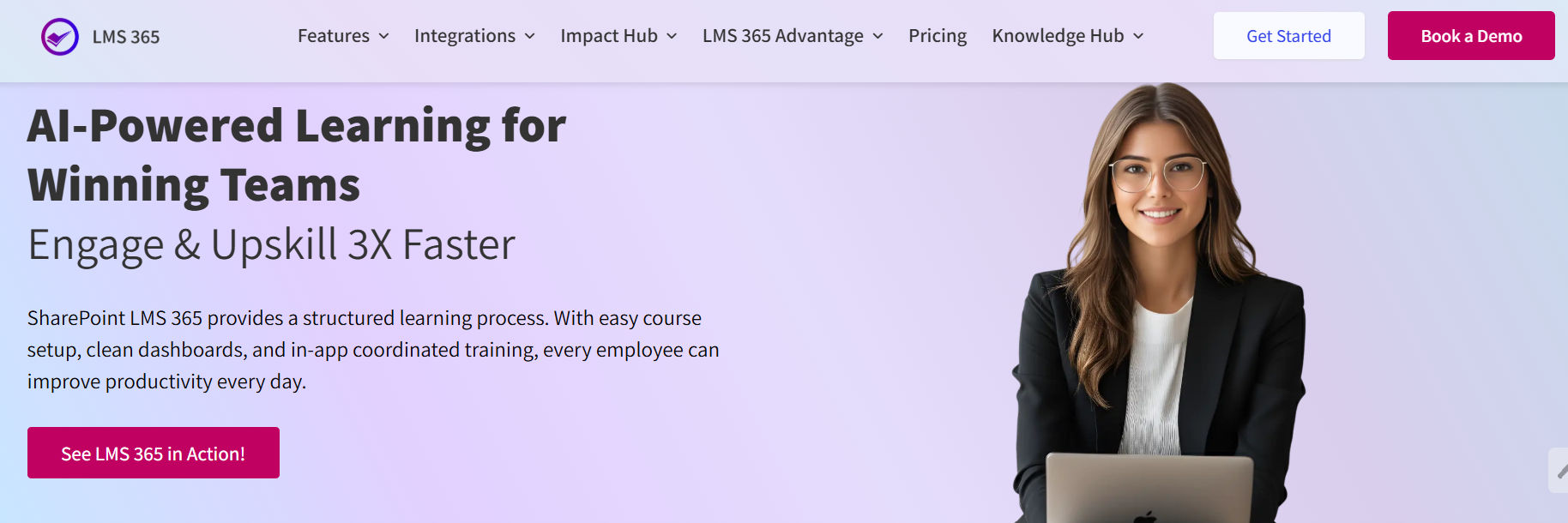
Description: LMS 365 integrates natively with Microsoft Teams and SharePoint, turning training into a seamless part of daily work. Perfect for organizations that want learning tied directly into productivity tools.
Key Features:
- Microsoft 365, Teams, and SharePoint integration
- Multimedia course creation with quizzes
- Mobile-ready platform
- Gamification (leaderboards, badges, points)
- Advanced analytics and reporting
- Certification tracking for compliance
Pricing: Flexible subscription-based pricing, scalable from SMBs to global enterprises.
Integration: Works with Microsoft 365 apps, HR systems, and third-party tools through APIs.
2. Moodle – Open-Source Learning Powerhouse

Description: Moodle is one of the most widely used open-source LMS platforms, especially in academic settings. It offers maximum flexibility with thousands of plugins and a large global community.
Key Features:
- Fully open-source and customizable
- Course creation with SCORM and multimedia support
- Discussion forums and collaboration tools
- Large library of third-party plugins
- Multilingual support
Pricing: Free to use; costs involve hosting, setup, and support services.
Integration: Supports integrations via plugins; works with Google Apps, Zoom, and more.
3. TalentLMS – Affordable and User-Friendly

Description: TalentLMS is cloud-based and designed for simplicity, making it a strong choice for small to mid-sized businesses looking to train employees quickly.
Key Features:
- Easy course creation with drag-and-drop
- Gamification features for engagement
- Custom branding and white-labeling
- Mobile learning support
- Reporting dashboards
Pricing: Free plan for up to 5 users; paid plans start at $69/month for small teams.
Integration: Works with Zoom, Salesforce, Google Workspace, and Slack.
4. Docebo – AI-Powered Enterprise LMS
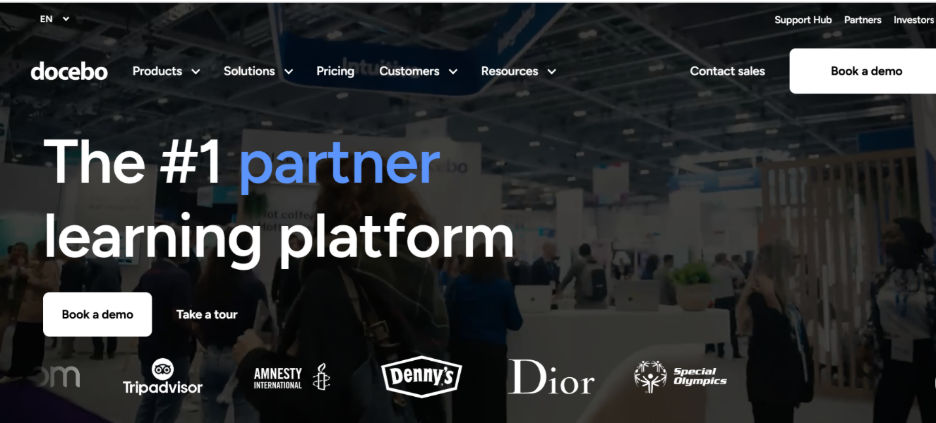
Description: Docebo is an enterprise-grade LMS known for AI-powered personalization and scalability. It’s popular among global corporations.
Key Features:
- AI-driven learning paths
- Extended enterprise training support
- Advanced analytics and dashboards
- eCommerce module for selling courses
- Compliance and certification tracking
Pricing: Custom quote-based pricing for mid to large enterprises.
Integration: Integrates with Salesforce, Workday, Zoom, Microsoft Teams, and Google Workspace.
5. Absorb LMS – Corporate Learning with Analytics
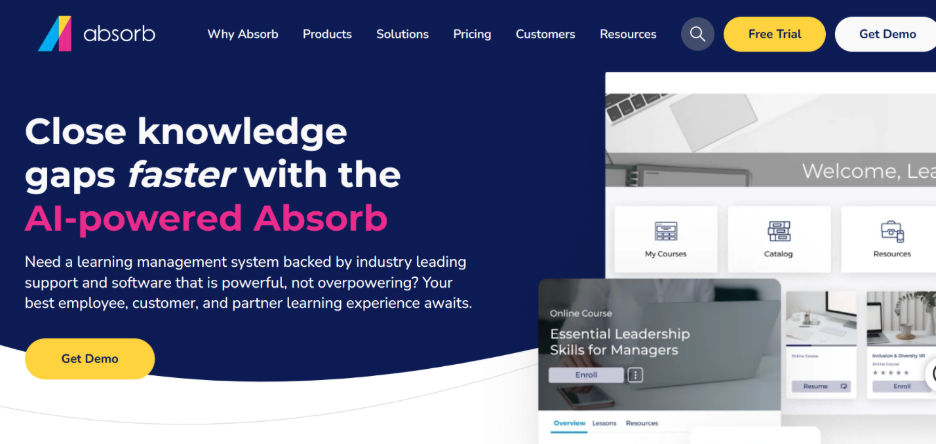
Description: Absorb LMS is designed for corporate training, compliance, and learner engagement, with a focus on powerful reporting.
Key Features:
- Easy course creation and content library access
- Compliance and certification tracking
- Analytics with custom reporting
- Learner engagement tools (surveys, polls)
- Mobile-responsive learning
Pricing: Quote-based, depending on users and features.
Integration: Connects with HRIS, CRM, and productivity apps like Salesforce and Microsoft Teams.
6. LearnUpon – Blended Learning Simplified
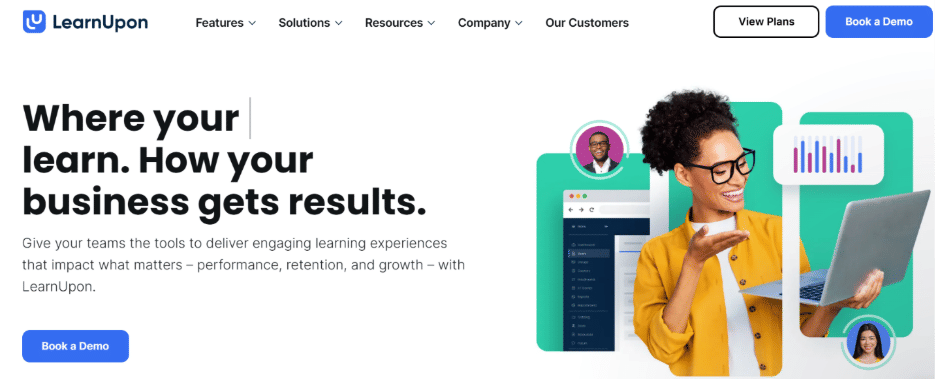
Description: LearnUpon supports both employee and partner training, making it a good fit for companies training multiple audiences.
Key Features:
- Multi-portal setup for different audiences
- Blended learning: combines in-person and online training
- Custom branding and white-labeling
- Reports and analytics dashboard
- SCORM-compliant
Pricing: Quote-based; tiers available for SMBs and enterprises.
Integration: Works with Salesforce, Zoom, HR systems, and Google Workspace.
7. 360Learning – Collaborative Learning LMS
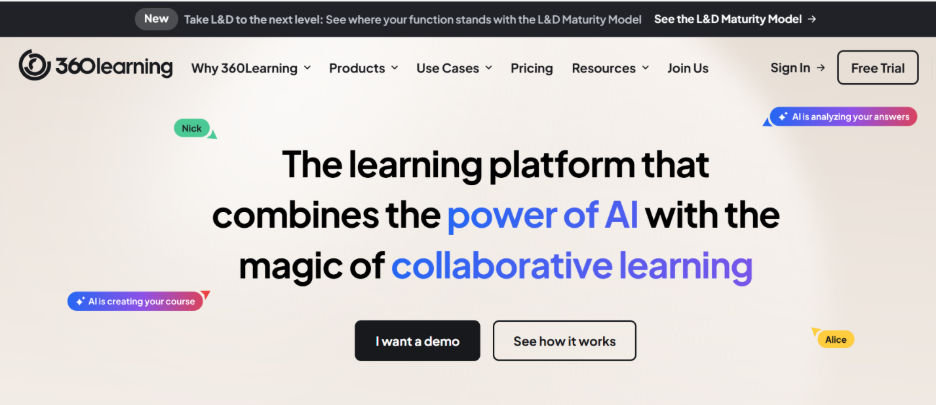
Description: 360Learning blends formal training with social learning, encouraging peer-to-peer course creation and knowledge sharing.
Key Features:
- Collaborative course authoring
- Peer-to-peer learning features
- Discussion boards and social feeds
- Mobile-first design
- Analytics for learner engagement
Pricing: Plans start at $8 per user/month.
Integration: Integrates with Salesforce, Slack, Microsoft Teams, and HR tools.
8. SAP Litmos – Compliance-Focused LMS
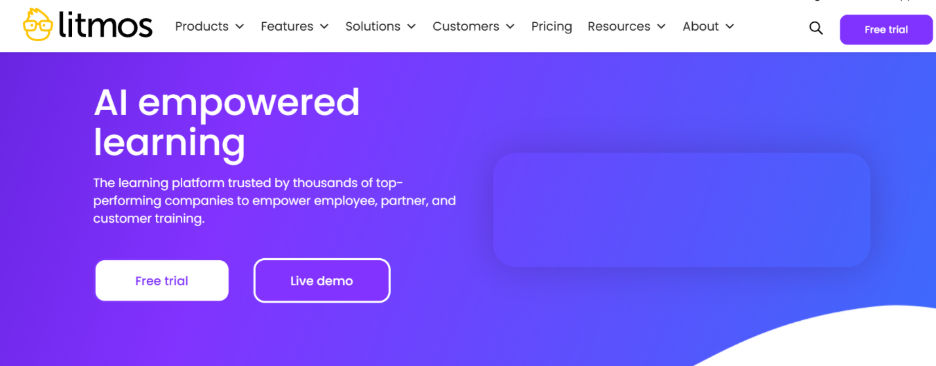
Description: SAP Litmos is designed for enterprise learning with a strong emphasis on compliance and scalability.
Key Features:
- Large content library of ready-made courses
- Compliance training and certification
- Mobile-friendly platform
- Gamification and engagement features
- Enterprise-grade reporting
Pricing: Custom pricing depending on company size and features.
Integration: Integrates with SAP ERP, Salesforce, HR systems, and Microsoft tools.
9. Adobe Learning Manager – Modern Corporate LMS

Description: Adobe Learning Manager (formerly Captivate Prime) is a corporate-focused LMS that delivers engaging, multimedia-driven training experiences. It’s widely adopted by enterprises looking for a sleek, modern interface and strong integration with existing business tools.
Key Features:
- AI-based personalized learning recommendations
- Multimedia course creation with video and interactive content
- Gamification with badges, points, and leaderboards
- In-depth analytics and reporting
- Mobile learning for anytime access
Pricing: Subscription-based; pricing varies depending on active users and features.
Integration: Connects with Adobe Creative Cloud, Microsoft Teams, Salesforce, and other enterprise platforms.
10. Cornerstone OnDemand – Enterprise Learning & Talent Development

Description: Cornerstone OnDemand is an enterprise-grade LMS that combines learning, talent management, and workforce development in one platform. It’s widely used by global organizations for large-scale training and employee growth.
Key Features:
- End-to-end talent and learning management
- Personalized learning recommendations
- Compliance and certification programs
- Performance tracking and employee development tools
- Advanced analytics and reporting
Pricing: Quote-based pricing, tailored for mid to large enterprises.
Integration: Integrates with HRIS, ERP, Microsoft Teams, Salesforce, and other enterprise applications.
LMS for Different Personas
A Learning Management System (LMS) adapts to different roles, making learning easier and growth faster across organizations.
For HR Managers
Simplify onboarding, compliance, and employee engagement with automated workflows that save hours each week. According to LinkedIn Learning, 94% of employees would stay longer at companies that invest in their learning. An LMS also reduces errors by centralizing all HR-related training in one place.
For Corporate Leaders
Get real-time insights into workforce skills, productivity, and ROI. A scalable LMS aligns training with business goals and keeps teams future-ready. Leaders can also use analytics to forecast future skill gaps and plan training investments strategically.
For Educators & Schools
Create interactive lessons, track student progress, and support hybrid or remote classrooms. Students enjoy easy access to resources while teachers save time on grading. An LMS also improves parent-teacher communication by providing clear progress reports.
For Small Businesses
Affordable LMS platforms bring big value at low cost, making it easy for startups and small teams to onboard, train, and grow without stretching budgets. They also help small businesses compete with larger players by giving employees the same high-quality training experience.
SHRM reports that organizations with strong learning cultures are 92% more likely to innovate faster. With the right LMS, every persona gains tools to perform better, learn continuously, and contribute to long-term success.
How to Choose the Best Learning Management System
Selecting the right Learning Management System (LMS) is not just about ticking off a feature list, it’s about finding a solution that supports your organization’s long-term goals. The best LMS will not only simplify training but also enhance engagement, ensure compliance, and provide measurable ROI.
Key factors to consider:
Ease of Use – A user-friendly LMS encourages higher adoption rates. If employees or students find the system confusing, they won’t use it effectively. An intuitive design ensures training becomes part of daily routines without extra frustration.
Scalability – Your business may be small today, but it won’t stay that way forever. The best learning management system should grow with you, handling more users, courses, and locations without performance issues.
Integration – An LMS should connect smoothly with your existing ecosystem, including Microsoft Teams, HR software, CRM systems, or project management tools. This ensures seamless workflows and eliminates duplicate data entry.
Customization – Every business has unique processes. The ability to tailor workflows, create branded portals, and customize course structures ensures the LMS reflects your culture and meets specific needs.
Support & Training – Even the best software requires guidance. Look for vendors that offer structured onboarding, knowledge bases, and 24/7 customer support to keep your teams confident and productive.
Cost vs. Value – Subscription fees matter, but true value comes from ROI. Consider time saved on manual processes, increased productivity, reduced turnover, and improved compliance when evaluating the real cost.
Security & Compliance – Protecting sensitive employee or student data is non-negotiable. Choose an LMS with encryption, audit trails, and compliance with regulations like GDPR, HIPAA, or SOC 2.
Analytics & Reporting – Data is essential for decision-making. A strong LMS should offer detailed analytics on learner progress, engagement rates, and skill gaps. This helps leaders align training with performance outcomes.
Mobile Learning Capability –Look for an LMS that provides a smooth learning experience across smartphones, tablets, and other devices. Mobile accessibility helps employees complete courses on the go, stay connected to training, and develop skills without location restrictions.
The Future of Simple Learning Management System
The best learning management systems of tomorrow will not just deliver training they will shape how organizations innovate, grow, and retain talent. As digital learning evolves, LMS platforms will become smarter, more immersive, and deeply connected to everyday work.
AI-Driven Personalization – Future LMS platforms will use artificial intelligence to tailor courses to each learner’s pace, role, and preferences, creating a personalized journey for maximum impact.
Microlearning Modules – Training will shift to short, bite-sized lessons that fit easily into busy schedules, making learning faster, easier, and more effective.
Gamification & VR Training – Immersive learning experiences using gamification, virtual reality, and augmented reality will make training more interactive, motivating, and practical.
Predictive Analytics – Advanced data analytics will allow organizations to identify skill gaps, forecast workforce needs, and reduce attrition risks before they become problems.
Mobile-First Learning – Learning on smartphones and tablets will dominate, with offline capabilities ensuring access anytime, anywhere even without internet.
Social & Collaborative Learning – Employees will co-create content, share knowledge, and learn from peers, building stronger communities and more engaged teams.
Integration with Workplace Tools – LMS platforms will blend seamlessly with daily productivity apps like Microsoft Teams, Slack, and project management systems, embedding learning into regular workflows.
Learning Experience Platforms (LXP) – The line between LMS and LXP will blur, with systems offering not just structured courses but also curated content such as podcasts, videos, and articles tailored by AI.
Continuous Performance Feedback – Training will connect directly with performance management, giving employees real-time feedback alongside resources to strengthen their skills instantly.
Global Compliance & Localization – As companies expand worldwide, LMS platforms will support multiple languages, regional regulations, and cultural needs, ensuring training remains inclusive and compliant everywhere.
According to Gartner, by 2026, 70% of organizations will use AI-powered LMS platforms to personalize employee learning journeys, proving that the future of training is intelligent, adaptive, and deeply human-centered.
Conclusion
The workplace of 2026 demands smarter, faster, and more engaging training methods. A Learning Management System is not just a digital tool it’s a growth partner. From onboarding to compliance, from schools to enterprises, LMS platforms save time, boost productivity, and keep learners motivated.
Those who act today will lead tomorrow. Those who wait risk falling behind competitors already investing in digital learning transformation. Choosing the best learning management system now means preparing your workforce, students, and business for long-term success.
Book a Demo
Ready to see how a Learning Management System can transform your organization?
Book a demo today and get a personalized walkthrough. Experience the future of learning with a 14-day free trial and discover how the best LMS can help your teams grow smarter, faster, and stronger.
Join Our Creative Community
Frequently Asked Questions
What is a Learning Management System (LMS)?
A Learning Management System is a software platform that delivers, manages, and tracks training or education. It helps organizations reduce errors, cut costs, and create engaging learning experiences.
Which is the Best Learning Management System for small businesses?
The best LMS for small businesses is one that’s affordable, easy to use, and scalable. Popular options include TalentLMS and HRMS-based platforms that simplify onboarding and compliance.
Is an LMS expensive for startups?
Not necessarily. Many providers offer flexible plans starting at just a few dollars per user per month. Cloud-based solutions make LMS affordable while still delivering enterprise-level features.
Why is an LMS important in 2026?
With hybrid workplaces and rapid digital transformation, businesses need consistent, scalable training solutions. An LMS ensures compliance, boosts engagement, and improves retention rates.
How do I choose the Best Learning Management System?
Focus on ease of use, scalability, integration with existing tools, and support services. The best LMS should grow with your business while ensuring security and compliance.
What industries benefit most from LMS platforms?
LMS platforms are widely used in corporate training, healthcare, finance, education, and manufacturing. Any industry that values compliance, continuous learning, and skill growth can benefit.
What makes a Simple Learning Management System ideal for growing teams?
A Simple Learning Management System focuses on ease of use, quick setup, and clear learning paths without unnecessary complexity. It helps growing teams roll out training faster, keep learners engaged, and manage courses without needing technical expertise or dedicated administrators.
Can a Simple Learning Management System support employee growth over time?
Yes, a Simple Learning Management System supports continuous employee growth by organizing learning content, tracking progress, and encouraging skill development in a structured way. As teams grow, it provides consistency in training while remaining flexible enough to adapt to evolving learning needs.
Blog Categories
Power Productivity—Start Today
All Your Work, One Smart Platform
Your Team's New Favorite Workspace
Organize, Collaborate, and Thrive—For Free

























