How Does a Contract Management App Help Handle Obligations?

Signing a contract is not the end of the work. It is the point where dozens of promises, deadlines, payments, service levels, reporting duties, and renewal decisions start becoming real business responsibilities.
- Obligation management tracks what each party must do after signing, including payments, reports, notices, renewals, and service commitments.
- Clear ownership matters because an obligation without an assigned owner can easily become a missed deadline or business risk.
- A contract obligation tracker gives teams one place to track obligations, owners, dates, documents, alerts, and completion status.
- Good obligation management requires more than technology. Teams also need clear processes, regular reviews, useful alerts, and proof that important duties were completed.
Yet many companies still manage these contractual obligation through spreadsheets, emails, calendars, and individual memory.
Estimates commonly cited in contract management research suggest that between 55% and 70% of firms lack efficient contract management systems.
This is why an obligation management system matters beyond storing signed documents. It can help teams turn contract terms into assigned, trackable actions.
What Is Obligation Management?
Obligation management is the process of identifying, assigning, tracking, and completing the commitments outlined in a contract.
These obligations can include:
- Payment and delivery deadlines
- Service-level commitments
- Reporting and compliance requirements
- Data protection and confidentiality
- Renewal and termination notices
- Pricing adjustments
- Performance milestones
- Audit requirements
A structured obligation management process connects each commitment to an owner, contract deliverables, status, and required action. This helps teams stay ahead of important commitments instead of discovering them only when a deadline is missed.
The contract defines what was promised. Obligation management helps ensure those promises are fulfilled.
Why Do Businesses Need Effective Obligation Management?
Negotiating favorable terms is only the beginning. Missed deadlines, unclaimed benefits, or overlooked commitments can reduce the value of a contract. A structured process helps teams track what needs to be done, who owns it, and when it is due.
Contracts contain more important dates than just expiration and renewal dates. Payment deadlines, contract milestones, reporting requirements, pricing reviews, audit windows, and notice periods may all require action.
Keeping track of these manually becomes increasingly difficult as the contract portfolio grows.
Every important commitment needs an owner. Legal, procurement, finance, sales, IT, and operations may each be responsible for different parts of an agreement.
Assigning clear ownership makes it easier to know who needs to act, what needs to be done, and when it needs to happen.
Contract value can be lost through small oversights. Missed rebates, unclaimed service credits, incorrect pricing, or unwanted renewals can gradually add up.
Tracking these commitments helps businesses make sure they receive the benefits they negotiated while avoiding unnecessary costs.
Contracts may include requirements related to data protection, security, insurance, certifications, audits, and contract compliance. Keeping these requirements visible helps teams identify upcoming actions and address them before they become overdue.
Contractual commitments work both ways. Businesses need visibility into what customers, suppliers, and partners owe them, as well as what they have promised in return.
When teams consistently meet their commitments, it can reduce disputes and improve accountability.
When Vendor Expectations Are Clear, Performance Follows
CLM 365 helps teams define vendor commitments, track deliverables, and monitor key milestones in one place.
How Does Obligation Management Work?
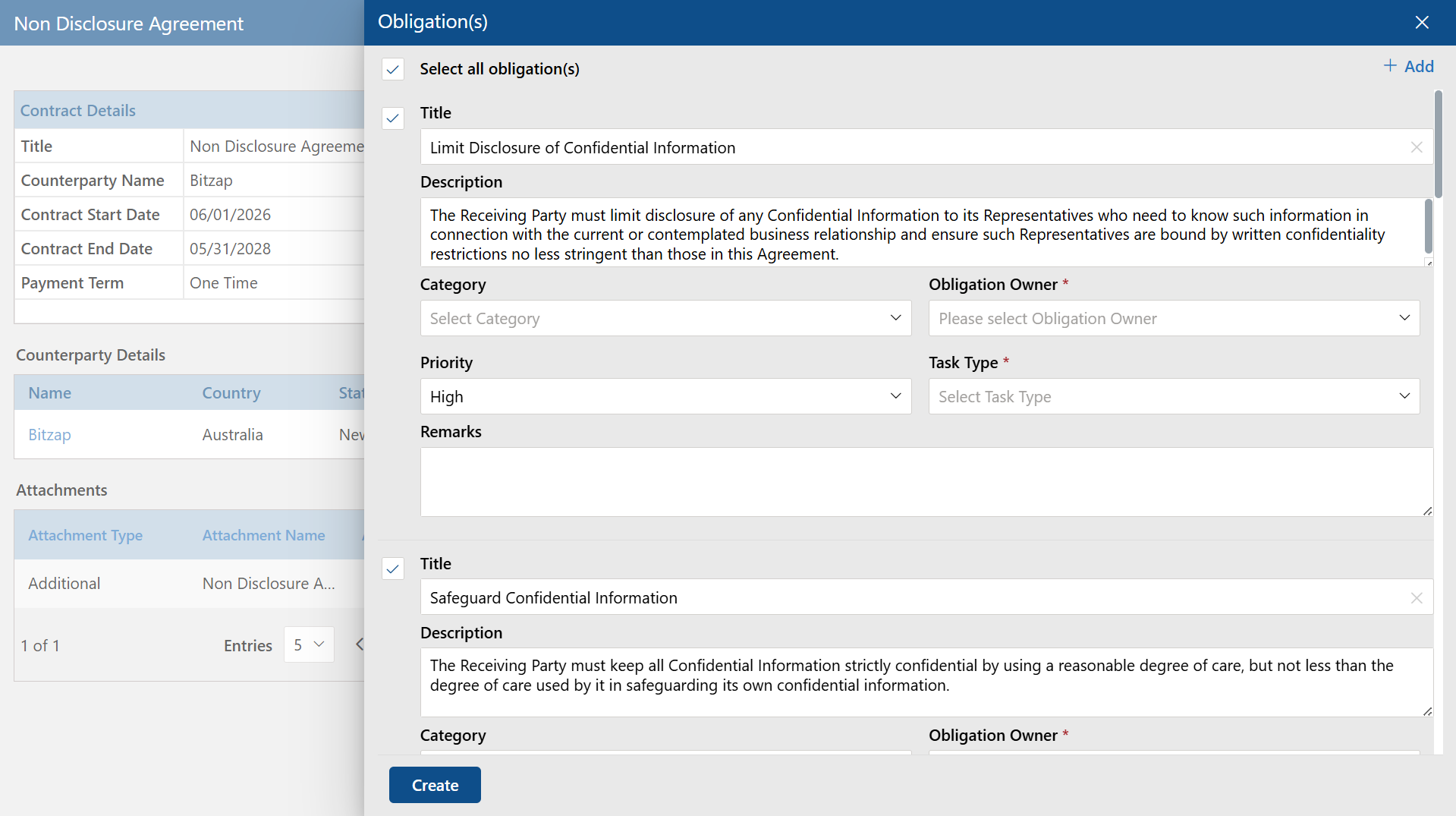
A obligation management software can help connect these actions to the agreement, assign ownership, and provide visibility throughout the contract lifecycle.
Step 1: Identify Obligations
Review the agreement and identify commitments that require action, monitoring, or a decision.
Step 2: Capture Key Details
Record the obligation, responsible party, owner, due date, frequency, priority, related clause, and status.
Step 3: Assign Ownership
Give each important obligation a clear owner so everyone knows who is responsible for acting.
Step 4: Set Deadlines and Alerts
Set due dates and reminders for one-time or recurring obligations, giving owners enough time to act.
Step 5: Track Progress
Monitor obligations through statuses such as upcoming, in progress, completed, or overdue to identify what needs attention.
Step 6: Record Completion
Store supporting evidence such as invoices, reports, approvals, certificates, or delivery records to confirm that commitments were fulfilled.
5 Key Challenges in Managing Obligations
Obligations sound simple when a company manages ten agreements. The problem changes quickly when it manages hundreds or thousands. Here are five challenges teams commonly face.
Important commitments can be spread across agreements, amendments, schedules, and statements of work. Finding and tracking these manually becomes difficult as contract volumes grow. A contract obligation tracker can organize key contract data, making obligations easier to find and track.
An obligation may involve legal, procurement, finance, or a business team. When ownership is unclear, deadlines can easily be missed. Assigning each obligation to a specific owner makes responsibilities clear and helps teams act on time.
Separate spreadsheets, calendars, and email reminders can quickly create conflicting records. A contract obligation tracker provides a more connected way to manage obligations, deadlines, owners, and completion status without relying on multiple trackers.
Amendments can change pricing, deadlines, deliverables, or notice periods. If these changes are not reflected in existing records, teams may continue working with outdated information. Keeping obligations connected to the latest contract version helps maintain accuracy.
Managers should not have to review dozens of contracts to discover missed commitments. A centralized contract dashboard can highlight upcoming, pending, and overdue obligations, helping teams address issues before they become larger problems.
How a Contract Obligation Tracker Improves Obligation Management?
The system gives teams a structured way to manage commitments after an agreement is signed.
AI can help identify and highlight key obligations within contracts, making it easier for teams to spot important deadlines. Instead of manually reviewing lengthy agreements, teams can quickly see the obligations that need attention and track them.
Contracts, obligation details, owners, deadlines, and supporting documents can be kept in one place. This gives teams a reliable source of information and reduces the time spent searching through folders, inboxes, and spreadsheets.
Important requirements can easily get buried inside lengthy contracts. A obligation management system can turn these requirements into trackable actions with an assigned owner, deadline, priority, and status, making commitments easier to manage.
Every important obligation should have a clear owner. Assigning responsibilities to the right person or department makes accountability visible and reduces the risk of tasks being overlooked.
Contract reminders help teams act before deadlines become urgent. For example, if an agreement requires 90 days’ notice before termination, teams can receive alerts well in advance to review performance and decide on the next step.
Some obligations occur throughout the contract rather than just once. These can include:
- Monthly payments
- Quarterly reports
- Annual certificates
- Periodic audits
- Service reviews
- Compliance checks
Keeping a record of completed actions and supporting evidence can be valuable during audits, disputes, and internal reviews. Teams can see who completed an obligation, when it was completed, and what documents support it.
7 Best Practices for Effective Obligation Management
Clear ownership, consistent tracking, and timely follow-ups can help teams manage contractual commitments and avoid missed obligations.
-
Give every important obligation a clear owner. Assign a specific person rather than leaving responsibility with a department. Clear ownership makes it easier to know who needs to take action.
-
Plan ahead of every deadline. Don’t wait until the due date to start. If a notice requires 60 days and internal approval takes three weeks, give the team enough time to prepare.
-
Prioritize high-risk obligations. Not every task needs the same level of attention. Give extra focus to regulatory requirements, major renewals, termination notices, and commitments with significant financial or operational impact.
-
Review amendments carefully. Contract changes can affect dates, pricing, responsibilities, service levels, and notice periods. Update the relevant records whenever an agreement changes.
-
Keep proof when it matters. Save certificates, notices, payment records, approvals, and other supporting documents when an obligation is completed. These records can be valuable during audits or disputes.
-
Review upcoming obligations regularly. A weekly or monthly review can help teams see what is due in the next 30, 60, or 90 days and give them enough time to act.
- Keep obligations connected to the contract. Use your contract obligation tracker as the central place for owners, dates, changes, evidence, and status. When the contract changes, the related obligation records should stay up to date.
CLM 365: A Smarter Way to Manage Obligations
As contract volumes grow, keeping track of agreements, deadlines, owners, and commitments becomes harder. CLM 365 brings these activities into a connected environment built around Microsoft 365, giving teams a more structured way to manage contracts throughout their lifecycle.
-
Keeps Contracts Organized: Keeps agreements and related information in one central environment, making it easier to find the right contract when needed.
-
Tracks Key Contract Dates: Tracks renewals, expirations, notice periods, and review dates so teams can plan ahead and avoid missed deadlines.
-
Sends Timely Alerts: Sends notifications for important contract events, giving responsible teams enough time to take action.
-
Shows Ownership Clearly: Shows who is responsible for specific contract activities, making follow-ups easier and responsibilities clearer.
-
Works With Microsoft 365: Works within the Microsoft ecosystem, giving teams access to contract information alongside the tools they already use.
-
Shows a Clear Contract View: Shows active contracts, upcoming renewals, pending actions, and important deadlines in one place.
Reduces Manual Tracking: Helps reduce reliance on scattered files and email reminders by giving teams a structured way to monitor contracts and commitments.
Conclusion
A contract does not manage itself after signing. Payments, reports, service levels, compliance requirements, notices, and renewals still need attention.
An obligation management system connects these commitments with owners, deadlines, alerts, and status, giving teams better visibility into what needs to happen and when.
Technology works best with clear ownership, regular reviews, accurate records, and timely follow-ups. CLM 365 brings this structure into Microsoft 365, helping teams track contracts and the work that follows every agreement.
Frequently Asked Questions
How can legal teams make sure critical contract obligations are not missed after signing?
Centralize key obligations, assign owners and deadlines, and use reminders to track commitments without repeatedly reviewing contracts.
Can I receive a reminder before an obligation becomes overdue?
Yes. Reminder schedules can be configured based on the obligation deadline so the responsible owner receives advance notifications rather than only an alert after the requirement has been missed.
How do I know who is responsible for each contract obligation?
Each obligation should have a clearly assigned owner rather than being assigned only to a department. Ownership makes accountability clear and helps prevent obligations from being overlooked.
How do I know which version of a contract an obligation relates to?
Obligations should be associated with the applicable contract version or amendment. This provides context when multiple versions contain different requirements.
Can I compare obligations before and after a contract amendment?
If the system maintains obligation history and contract versions, users can compare previous requirements with the current obligations and identify changes in deadlines, owners, or responsibilities.