

Contract Playbook: 8 Simple Steps Modern Teams Can Follow

A sales rep needs a deal signed by Friday, but the customer requests a payment clause change. Without a contract playbook, who decides, and how far can they negotiate?
- It is a written set of negotiation positions, fallback options, and approval paths that helps everyone handle agreements the same way.
- Building one before deals pile up shortens review time, lowers risk, and protects value that often slips away after signing.
- A useful version includes approved clauses, backup language, escalation steps, and plain explanations, not just dense legal text.
- Tracking cycle time, escalation rates, and adoption shows whether the document works and where it needs updates.
This happens in companies every day. A GlobeNewswire report found that only 39% of legal and contract professionals believe their contracts achieve their intended business outcomes.
A contract guide gives your team a shared answer key. It spells out contracts to accept, what to push back on, and when to call in a lawyer.
In this blog, you will learn what a contract playbook is, why you need one before the next deal lands, how to build and structure it, and how digital tools keep it current.
What Is a Contract Playbook?
A contract playbook is a reference document that shows your team how to draft, review, and negotiate agreements. Think of it as a contract guide built from your company’s own experience. It lists your preferred clause wording, the backup positions you can live with, and the red lines you will never cross.
Example: A software company sells yearly subscriptions. Its playbook sets the preferred liability cap at 12 months of fees. If a customer pushes back, a reviewer can offer up to 18 months without extra approval.
Any request beyond that goes to the general counsel. With this guidance, a junior reviewer can close most deals alone, and only true edge cases reach senior attorneys.
Why Is It Important to Have a Contract Playbook in Advance?
According to World Commerce & Contracting, poor contract management costs businesses close to 9% of annual revenue. It is prepared ahead of time helps you hold on to that money. Here is what it delivers.
- Faster reviews: Reviewers check the document instead of waiting days for a lawyer to answer routine clause questions.
- Consistent outcomes: Every agreement meets the same standards, no matter who handles it.
- Lower risk: Clear red lines stop people from accepting language that exposes the business to lawsuits or penalties.
- Lighter legal workload: With common questions answered in writing, attorneys can spend time on complex, high-value matters.
- Confident negotiators: Teams walk into talks knowing how far they can bend.
- Fewer disputes later: Approved, well-drafted language leaves less room for confusion after signing.
Key Components of a Contract Playbook
It outlines the guidelines, rules, and processes teams follow when reviewing contracts, negotiating, and managing contracts. Here are its key components.
- Clause library: Approved wording for common sections such as payment, liability, confidentiality, and termination.
- Preferred and fallback positions: Your ideal stance, plus one or two alternatives you can accept.
- Red lines: Points the business will not agree to under any circumstances.
- Approval matrix: Who signs off when a request falls outside the standard, and how fast they should respond.
- Plain-language notes: Short explanations of why each clause matters, so non-lawyers understand the reasoning.
- Risk ratings: A simple high, medium, or low label for each possible deviation.
- Negotiation tips: Common counterparty pushback and suggested replies.
- Ownership and version history: The person who maintains the document and the date of its last update.
Types of Contract Playbooks
Not every deal carries the same risk, so most companies build more than one handbook. Large organizations often group them under a single contract handbook so staff can quickly find the version they need.
Sell-side playbooks cover customer agreements. They focus on protecting revenue, limiting liability, and setting payment schedules.
Buy-side playbooks cover vendor and supplier deals. They focus on pricing protection, service levels, and data security.
Agreement-specific playbooks target one document type, such as NDAs, master service agreements, or statements of work with defined deliverables.
Region-specific playbooks address local laws, such as privacy rules in the European Union or state labor regulations in the U.S.
Industry-specific playbooks reflect sector rules, such as HIPAA in healthcare or banking compliance in financial services.
Difference Between Contract Playbooks, Templates, and Policies
Contract guides, templates, and policies serve different purposes in contract management. Understanding their differences helps teams know when and how to use each.
Factor | Contract Playbook | Templates | Policies |
Main purpose | Guides negotiation and review decisions | Gives a ready-made starting draft | Sets company-wide rules and limits |
What it holds | Preferred, fallback, and red-line positions plus approval paths | Pre-written clauses and blank fields | High-level principles and requirements |
Who uses it | Legal, sales, procurement, and contract managers | Anyone drafting a new agreement | All employees |
When people use it | During redlining and negotiation | At the drafting stage | Before and during any business activity |
Flexibility | Allows set ranges of compromise | Fixed text, edited case by case | Rarely changes |
Example | “Accept a 12-month liability cap; escalate anything above 18 months” | A standard NDA form | “All contracts above $50,000 need CFO approval” |
Together, these three resources help businesses establish clear contract guidelines, maintain standardization, and manage agreements with greater consistency.
How to Structure a Contract Handbook for Everyday Use?
It only works if people open it daily. This simple setup makes it easy to use.
k only works if people open it daily. This simple setup makes it easy to use.
Step 1: Organize by agreement type and clause. Create a section for each document type, then list clauses in the order they appear in your contract templates. Readers can jump straight to the part they need.
Step 2: Use the same layout for every clause. Give each entry five parts: preferred language, fallback options, red line, approver, and a one-line reason. A predictable format makes scanning quick.
Step 3: Keep it searchable and short. Add a clickable table of contents, tags, and links to related templates. Fit each clause entry on a single screen when possible. If a section grows too long, move it into a separate contract resource guide.
8 Simple Steps to Create a Contract Playbook
Creating a contract handbook requires a clear understanding of your business needs, contract stages, and team responsibilities. Follow these eight steps to build a practical playbook your teams can use.
- Set goals and scope. Decide which agreements to cover first. Start with the type your team handles most often, such as NDAs or sales contracts.
- Bring the key people together. Invite legal, sales, procurement, and finance. Each group sees different risks and priorities.
- Study past agreements. Review recent deals to spot which clauses get negotiated most and where talks usually stall.
- Define your positions. For each contract clause, write the ideal stance, one or two fallbacks, and the hard limit.
- Map the approval path. Name who can approve each type of deviation and set response timelines.
- Write in plain English. Swap legal jargon for clear, short sentences. Add a brief “why it matters” note under each clause.
- Test it on live deals. Run a pilot with a small group for a few weeks. Collect feedback on gaps and confusing sections.
- Launch, train, and refresh. Roll it out with a short training session. Review it every quarter or whenever laws, pricing, or business goals change.
Common Mistakes to Avoid When Creating a Contract Handbook
Creating a contract handbook requires careful planning. Avoiding these common mistakes helps make it practical, clear, and useful for every team.
- Packing it with jargon: If sales reps cannot understand it, they will not use it.
- Trying to cover everything at once: Start with your highest-volume agreements and expand over time.
- Leaving out business teams: A document written only by lawyers may ignore real deal pressures.
- Treating it as a one-time task: Laws, markets, and products change. An outdated playbook can cause more harm than having none at all.
- Hiding it in a forgotten folder: If people need five clicks to find it, they will email legal instead.
- Skipping a clear owner: Without one person in charge, updates fall through the cracks.
- Listing no fallback options: Ideal positions alone give negotiators nowhere to go when the other side pushes back.
How to Measure the Effectiveness of a Contract Playbook
Track a few clear metrics before and after you launch your guide so you can compare results.
- Contract cycle time: How many days pass from first draft to signature? A drop signals faster reviews.
- Escalation rate: What share of deals still go to senior counsel? Fewer escalations mean the guidance answers most questions.
- Deviation rate: How often do signed agreements stray from approved positions? A lower number shows better consistency.
- Usage and adoption: How many people open the document each month? Low usage points to a findability or clarity problem.
- Post-signature value: Are you capturing more revenue, fulfilling contractual obligations, and avoiding penalty fees? Compare performance against your previous results to identify improvements.
- User feedback: Run a short survey each quarter and ask what is missing or unclear.
How Does a Contract Playbook Help During Employee Transitions?
Imagine a new employee joins the procurement team and receives a vendor agreement with changes to key clauses. Instead of relying on senior colleagues for every decision, they can refer to the handbook to understand approved terms, negotiation limits, and approval requirements.
- Shorter learning curve: New staff learn company standards in days instead of months.
- Confidence from day one: Clear guidance lets them make decisions without constant second-guessing.
- Less pressure on senior staff: Experienced colleagues spend less time answering basic questions.
- Built-in context: Plain-language notes explain the reasoning behind each position, which builds real understanding.
- Consistent quality: A first-week hire follows the same standards as a ten-year veteran.
Role of Digital Tools in Contract Playbook Management
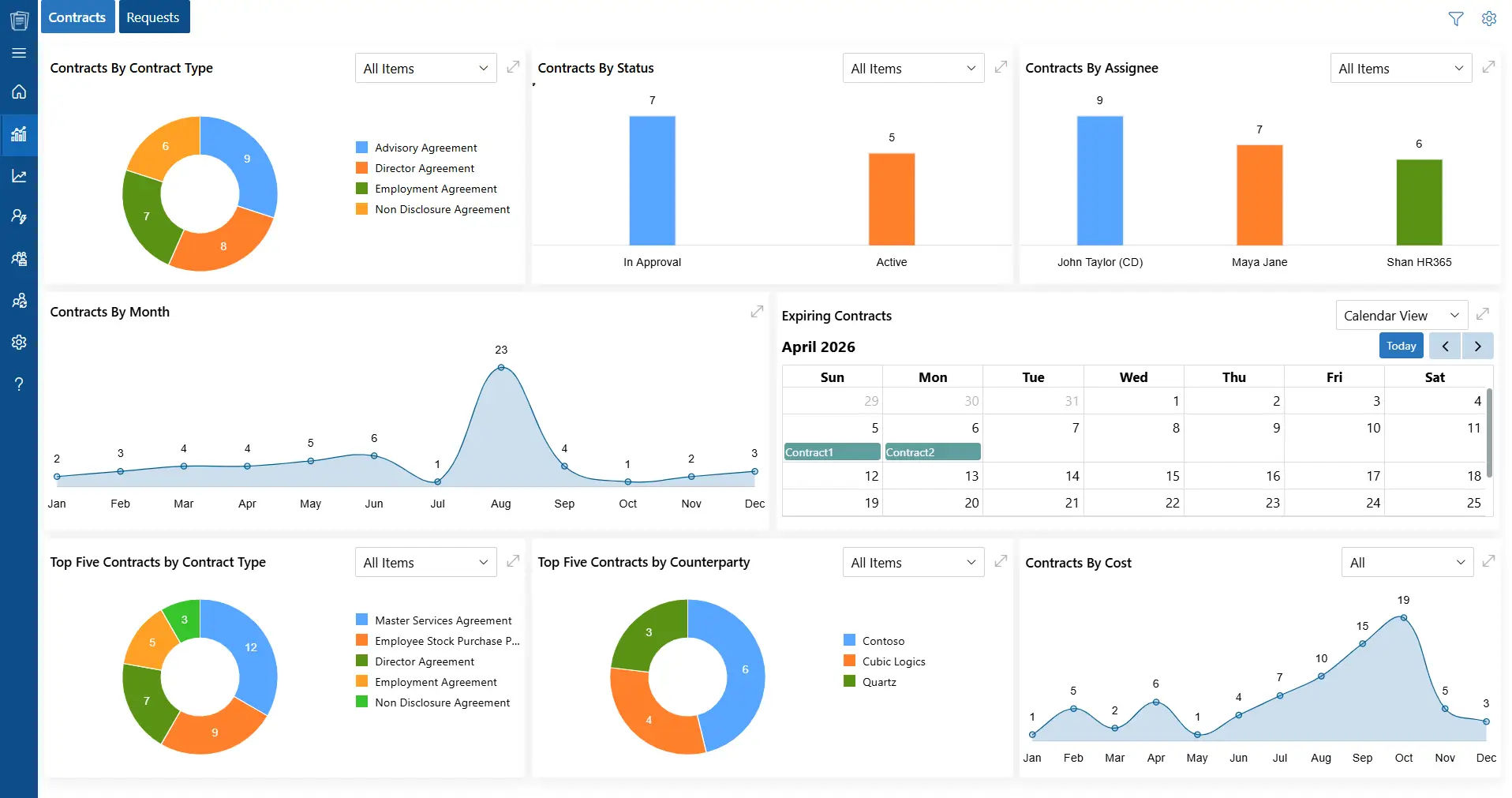
A playbook stored in a static Word file falls out of date fast. Digital tools turn it into a living contract resource guide that sits inside your daily workflow.
CLM 365, a SharePoint-based contract platform, brings the contract process straight into Microsoft 365, so your team works in the apps it already knows. Key features include.
- Central repository: Store every agreement, template, and playbook in one secure, searchable place.
- Clause and template library: Pull approved language into new drafts with a few clicks.
- AI-Native review: Compare incoming drafts against your playbook positions and flag risky changes.
- Automated approval workflows: Route each deviation to the correct approver based on your escalation rules.
- Obligation tracking and alerts: Get reminders for renewals, payments, and key dates so value does not slip away after signature.
- Version control and audit trail: See who changed what and when.
- Reports and dashboards: Monitor cycle times, escalations, and contract value in real time.
Ready to turn your contractual playbook into a tool your team uses? See how CLM 365 can help you close deals faster, cut risk, and protect contract value.
Frequently Asked Questions
Who is responsible for creating a contract playbook?
The legal team typically leads playbook creation, with input from procurement, sales, finance, and compliance teams. Each department contributes its requirements, while business leaders review and approve the guidelines.
How to measure the effectiveness of a contract reference?
Track contract evaluation time, negotiation cycles, approval turnaround, clause deviations, and team adoption. These metrics help identify improvements in contract management and risk reduction.
How often should a contract handbook be updated?
It should be reviewed periodically and updated whenever legal requirements, business policies, negotiation strategies, or standard terms change.
Can a contract reference guide help employees negotiate without legal assistance?
Yes. It allows employees to handle routine negotiations within approved boundaries. However, complex legal issues and exceptions should still be reviewed by qualified legal professionals.
When should a business create a contract handbook?
A business should create one when negotiations become frequent, multiple departments handle agreements, or inconsistent contract practices start creating risks.


























