Fixed Price Contract: Everything You Need to Know in 2027

A fixed price contract sets an agreed budget, but what happens when work takes longer than expected or new requests increase costs? These changes can affect profits, planning, and vendor relationships.
- A fixed amount gives businesses a clear spending target, making it easier to approve budgets and compare vendor offers.
- Clear work details, payment stages, and acceptance standards help prevent unexpected charges and confusion.
- Firm, incentive-based, and adjustable pricing structures serve different business needs based on cost risk and project complexity.
- Written change requests, milestone tracking, and reliable software help teams control expenses and monitor progress.
It helps companies control spending by setting an agreed amount before work begins.
Research on contractor pricing practices found that high-volume contractors handling 10 or more projects each year use fixed-price pricing about 84.8% of the time. This shows how common this payment model is among experienced service providers.
Understanding how these arrangements work helps buyers and service providers plan budgets, set clear contractual obligation, and handle changes without affecting business relationships.
What are Fixed-Price Contracts?
A fixed price contract is a legal agreement in which a buyer agrees to pay a predetermined amount for specific work, products, or services. The seller commits to completing the agreed tasks for that amount, subject to any permitted price adjustments.
Unlike arrangements that charge for actual labor hours or materials used, this model focuses on an established payment amount.
For example, a company hires a web development agency to build a business website for $20,000. Both parties agree on the number of pages, design requirements, and expected features.
Why Do Businesses Choose Fixed-Price Agreements?
Businesses prefer predictable spending when planning projects, working with outside vendors, or managing limited budgets. Here are the main benefits of this pricing approach.
1. Better Budget Planning
Companies know the expected project cost before work begins. Finance teams can allocate funds without constantly adjusting estimates based on hours worked.
2. Lower Risk of Cost Overruns
Under a firm fixed-price agrrement model, the seller generally bears the cost of completing the scope of work if expenses exceed estimates. This protects the buyer from many unexpected labor or material charges.
3. Easier Vendor Comparison
Buyers can compare proposals using the quoted amount, included services, quality standards, and completion schedule.
4. Clear Payment Expectations
Both parties understand how much the buyer must pay and what work the seller must complete in return.
5. Stronger Focus on Results
Since payment does not automatically increase with additional work hours, service providers have a reason to manage resources carefully and complete tasks efficiently.
These benefits depend on clear contract deliverables and a fair process for handling unexpected changes.
When Is a Fixed-Price Contract the Right Choice?
It works best when the scope of work, deliverables, quality standards, and completion requirements are clearly defined before the project begins. Here are some examples of how fixed-price agreements can work across different industries.
- Manufacturing: Producing a specified quantity of components, assembling equipment to agreed specifications, or manufacturing custom parts at a predetermined price.
- Healthcare: Installing medical equipment, implementing a hospital management system, or completing a defined healthcare facility upgrade for an agreed amount.
- Retail: Developing an e-commerce website, installing point-of-sale systems across a set number of stores, or designing and producing a specific quantity of retail displays.
- Legal: Preparing a standard set of contracts, conducting a defined document review, or providing a legal compliance assessment for an agreed fee, where the scope is predictable.
- Oil and Gas: Fabricating equipment, installing a specified pipeline section, or completing a clearly scoped maintenance or inspection project at a fixed price.
- Energy: Installing solar panels for a defined site, upgrading electrical equipment, or carrying out a specified energy-efficiency improvement project for an agreed amount.
For example, a manufacturing company might hire a supplier to produce 5,000 metal components to approved specifications for $25,000. Since the quantity, materials, tolerances, and delivery requirements are agreed upon in advance, both parties know the expected cost before production begins.
Types of Fixed Price Contract
Not every fixed-price arrangement follows the same payment structure. Businesses can choose different models based on project risk, performance goals, and changing market conditions.
1. Firm Fixed-Price Contract (FFP)
A firm fixed-price contract sets one amount that generally remains unchanged unless the parties agree to modify the contract or another contract provision allows an adjustment.
Example: A company hires a vendor to install 100 office workstations for $30,000. The vendor receives the agreed amount for completing the original assignment, even if installation labor costs more than expected.
2. Fixed-Price Incentive Contract (FPIF)
A fixed-price incentive contract connects the final payment to agreed performance or cost targets. The buyer and seller establish a target cost, target profit, and rules for sharing savings or overruns, usually with a maximum payment limit. This approach encourages better cost control and performance.
3. Fixed-Price Contract with Economic Price Adjustment (FPEPA)
This model allows the payment amount to change under specific conditions, such as changes in labor rates, commodity prices, or published market indexes. Businesses use this structure when external contract planning may change significantly.
4. Fixed-Price Level-of-Effort Contract
This arrangement pays a set amount for a defined level of work over an agreed period rather than promising a specific outcome. This model is more common in certain government and research settings where the required effort can be defined but the outcome remains uncertain.
Contracts shouldn’t mean endless admin work.
CLM 365 helps you automate workflows and use AI to review contract clauses, so your team can spend less time on manual tasks and more time getting work done.
Fixed-Price Contracts vs. Other Contract Types: Key Differences
Different pricing models divide financial risk between buyers and sellers in different ways.
Aspect | Fixed Price Contracts | Other Contracts |
Pricing structure | Agreed amount for defined work | Based on actual costs, hours, or units |
Budget planning | More predictable for the original scope | Final spending may vary |
Cost overrun risk | Usually falls mainly on the seller under a firm model | May fall more heavily on the buyer |
Project flexibility | Changes often require a price revision | Can better support changing requirements |
Payment method | Set amount or agreed milestones | Labor hours, expenses, or reimbursed costs |
Best suited for | Clearly defined projects | Work with uncertain requirements |
Vendor motivation | Control expenses while meeting standards | Depends on the pricing and incentive structure |
Buyer monitoring | Focus on progress and completed work | Often requires detailed cost and time reviews |
A fixed-price arrangement provides stronger cost predictability, while time-and-materials or cost-reimbursement models may be more suitable when the amount of work is difficult to estimate.
Common Challenges in Fixed Price Contracts
Although this pricing structure helps businesses plan spending, several problems can arise when project details are incomplete.
- Risk of Cost Overruns: Sellers must usually cover unexpected expenses, such as rising material prices or higher labour costs, even when these push costs beyond the agreed budget.
- Limited Flexibility: Changes to project requirements can be difficult to accommodate without renegotiating the price or updating the contract.
- Unclear Project Scope: If deliverables and expectations are not clearly defined upfront, disagreements may arise over what contract is assigned in the agreed price.
- Unexpected Delays: Supply chain disruptions, labour shortages, or unforeseen project issues can extend timelines and increase the seller’s costs.
- Expensive Change Orders: Additional work outside the original scope may require separate approvals and fees, increasing the buyer’s overall cost.
- Higher Initial Pricing: Sellers may include a contingency margin in their quotes to protect against potential risks, meaning buyers could pay more for budget certainty.
- Risk of Reduced Quality: When costs exceed estimates, sellers may feel pressure to cut expenses, potentially affecting quality or limiting what can be delivered within the agreed price.
BayTech Consulting reports that 90% of projects require scope changes during development. This highlights why businesses should prepare a written change process before work starts, especially for software projects.
How to Draft a Fixed-Price Contract: Essential Elements
A well drafted contract should explain the work, pricing, and responsibilities in language both parties can understand. Include the following elements when preparing the document:
- Parties involved: Record the legal names, business addresses, and contact information of the buyer and seller.
- Statement of work: Describe the services, products, specifications, and expected results in detail.
- Total contract value: State the agreed amount, contract value, and whether applicable taxes are included.
- Payment schedule: Explain when invoices can be submitted and how payments connect to completed milestones.
- Project timeline: Include the start date, key checkpoints, and planned completion date.
- Quality standards: Describe how the buyer will inspect and accept the finished work.
- Change request procedure: Explain how either party can propose additional work and how pricing revisions will be authorized.
- Responsibilities of each party: Identify who supplies materials, information, access, equipment, or other resources.
- Termination conditions: Explain when either party may end the arrangement and how completed work will be paid for.
- Legal protections: Address confidentiality, intellectual property ownership, liability limits, and applicable law.
For example, a software development document should explain whether bug fixes, testing, and post-launch support are included in the original quote. A detailed written record reduces confusion and gives both parties a shared reference throughout the process.
Upload your contract. Draft contracts in minutes with AI.
What Hidden Costs Should You Watch for in a Fixed-Price Contract?
A fixed-price agreement does not always cover every project expense. Businesses should check whether the quoted price includes additional charges for change requests, taxes, travel, software licenses, third-party services, maintenance, and extra testing. Vendors may also charge separately for work outside the original specifications or support required after project completion.
Confirm the agreed price and terms in writing to avoid disputes over an implied contract. Clarify how additional work will be charged and whether any extra fees may apply. This helps you understand the total cost upfront and avoid unexpected expenses later.
Simple Steps for Managing Fixed-Price Contracts
Effective process requires clear documentation, regular monitoring, and firm control over costs and scope. Follow these steps to keep the contract on track and reduce the risk of disputes or unexpected expenses.
Step 1: Centralize Documentation: Store the signed agreement, cost breakdown, technical specifications, and supplier details in a single location.
Step 2: Establish Accountability: Appoint a responsible person to liaise with the supplier, resolve concerns, and keep relevant teams informed.
Step 3: Maintain a Deadline Calendar: Note delivery dates, scheduled payments, review points, and renewal or expiry dates.
Step 4: Assess Deliverables: Check completed work against the agreed acceptance criteria and flag deficiencies before approving delivery.
Step 5: Evaluate Amendments: Determine how proposed changes affect the budget, completion date, and obligations before accepting contracts.
Step 6: Validate Payment Claims: Confirm that invoices align with the agreed payment schedule and that required deliverables have been accepted.
Step 7: Finalize the Agreement: Obtain confirmation of completion, reconcile outstanding amounts, resolve open issues, and archive records for audits or future reference.
These steps also help businesses protect the value of their vendor relationships. Research by Deloitte and World Commerce & Contracting, involving more than 1,200 organizations, found that average contract value erosion was 8.6%, showing how poor management can reduce the benefits companies expect from their commercial arrangements.
Looking for a Better Way to Manage Fixed Price Contracts?
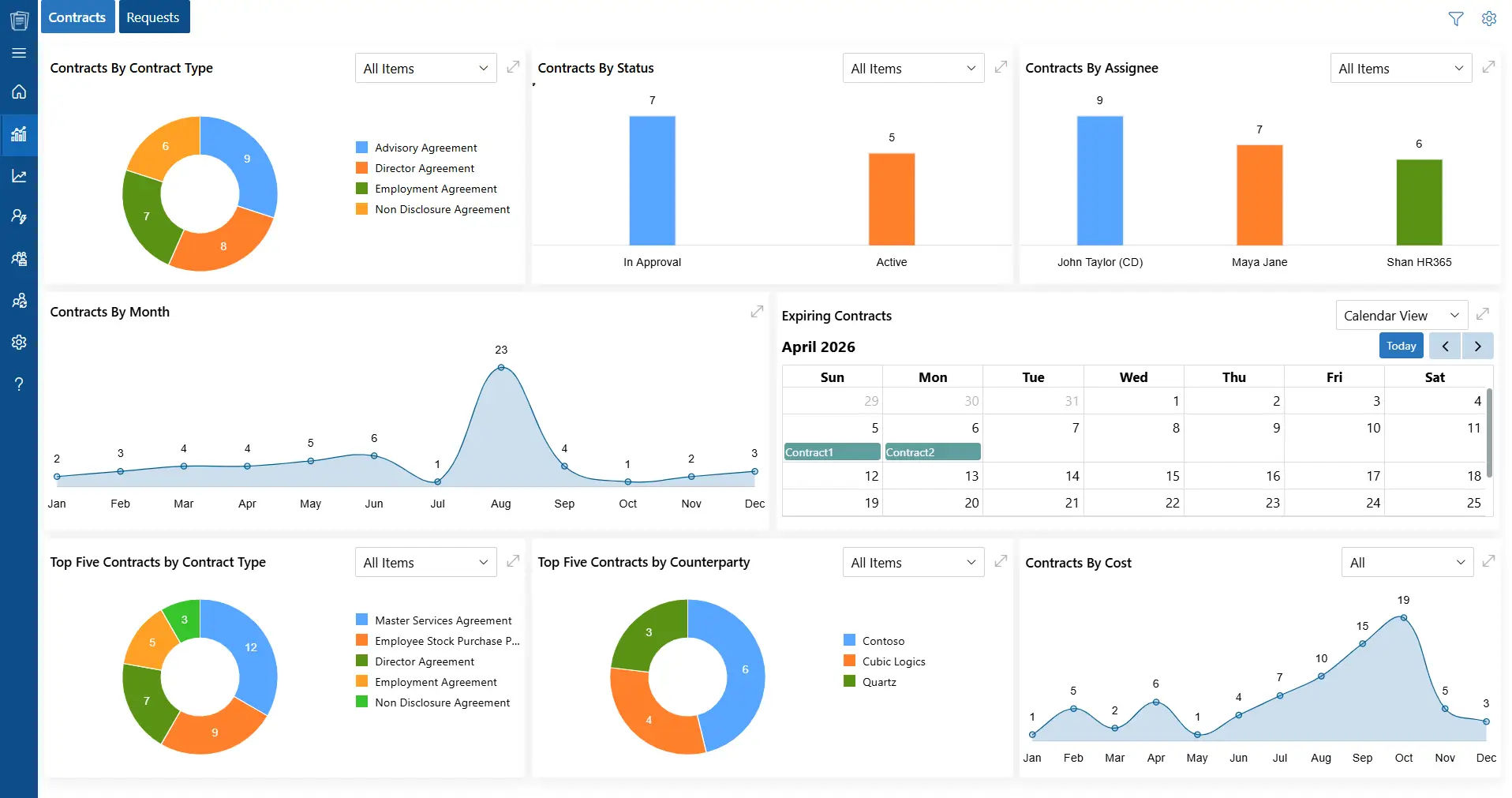
Managing fixed price agremeent manually can lead to missed deadlines, lengthy approval processes, and difficulty understanding complex contract terms. Digital contracting helps businesses streamline these tasks, improve visibility, and keep important information accessible throughout the contract lifecycle.
CLM 365, a SharePoint contract management integrated with Microsoft 365 apps, helps businesses automate contract workflows, simplify document management, and coordinate reviews and approvals more efficiently.
AI-powered contract summarization makes lengthy agreements easier to understand by converting complex legal language into simple English. This helps entire internal teams quickly understand legal jargons, obligation and risks in no time.
With automated workflows, AI-assisted summaries, reminders, and centralized records, CLM 365 helps businesses manage fixed-price contracts with greater clarity and efficiency.
Conclusion
A fixed price agremeent helps businesses plan spending, compare vendor offers, and set clear expectations before work begins. However, the success of this pricing model depends on accurate estimates, detailed project requirements, and proper change management.
Using a like CLM 365 can also help teams maintain visibility into their agreements and manage each stage from creation to completion.
Frequently Asked Questions
Can I change the contract value after the contract is signed?
Yes, if the agreement allows for changes, you can update the contract value through the appropriate amendment process and keep the revised terms documented.
How do I know when a fixed-price contract is about to expire?
You can use contract expiry dates, renewal reminders, and alerts, where supported, to identify contracts that need action before they expire.
Can I track the total value of all my fixed-price contracts in one place?
Yes, a centralized dashboard can help you view contract values and review your portfolio without searching through individual documents.
What alerts can I set up for upcoming contract expirations?
You can use contract expiry reminders and notifications, where supported, to identify contracts that need review or renewal before their end dates.
Can I use an existing template to create a fixed-price contract?
Yes, if templates are supported. You can use an existing approved template to maintain consistency and reduce repetitive drafting.