

A new role opens up. Everyone wants it filled fast, with the right person, and without wasting money. That’s easy to say and hard to do. Most hiring teams focus on the visible parts, like posting a job and running interviews, and miss what happens before and after. The result is a slow, disjointed hiring cycle that costs more than it should.
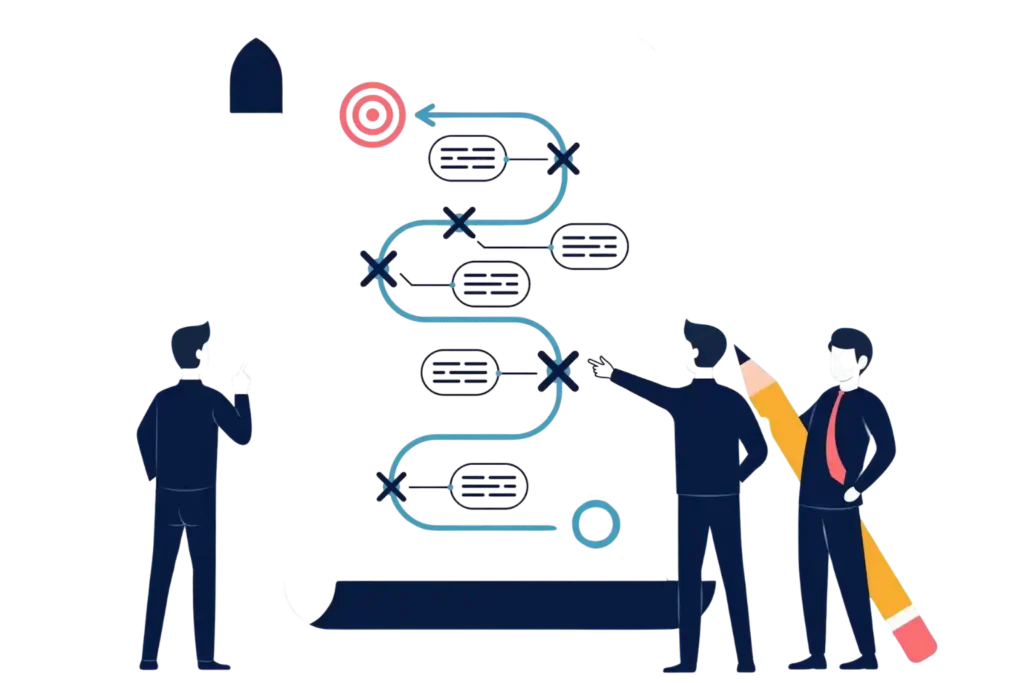
An End to End recruitment process fixes this by treating hiring as one connected system, not a set of separate tasks handled by different people with different tools. It starts the moment a manager realizes a role is needed and ends only after the new hire is trained and productive. Every stage in between, sourcing, screening, interviewing, offering, and onboarding, is linked and tracked.
- Recruitment is a complete lifecycle—from workforce planning and job requisition to onboarding and employee productivity.
- A connected hiring process reduces delays, improves collaboration, and delivers a better candidate experience.
- Automation and centralized recruitment tools streamline tasks like screening, scheduling, approvals, and communication.
- Tracking key recruitment metrics such as time-to-hire, cost-per-hire, quality of hire, and retention helps continuously improve hiring outcomes.
- Recruitment is a complete lifecycle—from workforce planning and job requisition to onboarding and employee productivity.
- A connected hiring process reduces delays, improves collaboration, and delivers a better candidate experience.
- Automation and centralized recruitment tools streamline tasks like screening, scheduling, approvals, and communication.
- Tracking key recruitment metrics such as time-to-hire, cost-per-hire, quality of hire, and retention helps continuously improve hiring outcomes.
What Is End to End Recruitment Process?
An end-to-end recruitment process is the full journey of hiring, from the moment a business identifies the need for a new role to the day that new employee is fully onboarded and working independently. It covers workforce planning, job requisition approval, sourcing, screening, interviews, offers, background checks, and onboarding, all as one connected flow rather than isolated steps.
The word “end-to-end” matters here. Many companies have a hiring process, but it’s really a set of disconnected activities. HR posts a job. A hiring manager reviews resumes on their own schedule. Interviews get set up over email threads that go nowhere. Once an offer is signed, HR and the new hire’s manager rarely talk about what happens next.
An end-to-end hiring process removes those gaps. Every stage feeds into the next with shared data, clear ownership, and a single source of truth. A recruiter, hiring manager, or HR leader can see exactly where any candidate stands, from requisition to their first performance review.
Why Is End-to-End Recruitment Process Important?
Hiring is expensive, and slow hiring is more expensive. The average time to hire in the United States sits at roughly 44 days according to SHRM’s 2026 benchmarking data, and that number has been rising for years as interview stages multiply. Every one of those days carries a real cost: lost productivity from the open seat, overtime for the team covering the gap, and the risk that your strongest candidate accepts a competing offer.
That risk is not theoretical. SHRM research shows 57% of job seekers lose interest in a role if the hiring process feels too long. Top talent does not wait around, and the company that moves with a clear, connected process usually wins the hire.
Cost backs this up too. SHRM’s 2025 benchmarking report puts the average non-executive cost per hire at $5,475 in the US, with executive hires running far higher due to longer searches. A broken, disconnected process burns through recruiter hours, hiring manager time, and job board spend at every extra step.
The upstream side of hiring is often the biggest hidden cost. Roughly 40% of companies report hiring delays caused by poorly managed requisition approvals, with the typical approval chain running through three to five people before a job ever gets posted.
The downstream side matters just as much. Research shows that a lack of structured onboarding directly hurts new hire productivity by around 16%, while companies with a real onboarding program see retention improve by as much as 82%. A recruitment plan that stops at “offer accepted” is only half a plan.
An end-to-end recruitment process connects all of this into one plan hiring teams can run, measure, and improve over time.
Want to see what a fully connected recruitment plan looks like inside the tools your team already uses?
Talk to RM365 about mapping your hiring stages in Microsoft 365.
The 12 Stages of an End-to-End Recruitment Process
1. Workforce Planning and Job Requisition
Hiring starts before a job is posted. A manager identifies a gap, whether it’s new headcount or a replacement, and submits a formal request stating the business reason, budget, and reporting line. Weak requisitions lead to vague job descriptions later, so this step deserves more attention than most teams give it.
2. Job Requisition Approval
The request moves through finance, HR, and department leadership. This is where many hiring processes lose their first days, sometimes their first week. A clear approval chain with defined response times prevents the role from sitting untouched in someone’s inbox.
3. Job Description and Role Definition
Once approved, HR and the hiring manager write the job description together, covering required skills, day-to-day duties, reporting structure, and pay range. A well-written job description filters out weak applicants before they apply, saving screening time later.
4. Sourcing and Job Posting
The role goes live across job boards, the company careers page, social channels, and referral programs. Good sourcing also means reaching out to passive candidates through LinkedIn or a talent pool built from past applicants, rather than waiting for applications to arrive.
5. Resume Screening and Shortlisting
Recruiters review incoming applications against the job requirements and build a shortlist. Manual resume review is one of the slowest parts of the whole process, and it’s where automated keyword matching and resume parsing save the most hours.
6. Candidate Assessment
Skills tests, work samples, or personality assessments help validate that a candidate’s resume matches their actual ability. SHRM reports that 54% of companies now use pre-employment assessments, and 78% of recruiters using them say assessments improved their overall hiring quality.
7. Interview Scheduling
Coordinating interviewers, candidates, and rooms across time zones eats up recruiter hours fast. GoodTime’s 2025 Hiring Insights Report found recruiters spend 35% of their time on interview scheduling alone. This step is one of the clearest signs of whether a hiring process is connected or not.
8. Interviews
Phone screens, panel interviews, technical rounds, or case studies, depending on the role. Every interviewer should have access to the same candidate profile, interview guide, and prior feedback so a candidate isn’t asked the same questions three times.
9. Reference and Background Checks
Verification of employment history, education, and references. Many teams push this to the end of the process, which delays the offer. Checking references earlier, once a candidate reaches the final round, shortens the overall timeline.
10. Offer and Negotiation
HR or the hiring manager extends a formal offer covering pay, start date, and benefits. This step needs speed as much as accuracy. A slow offer letter, or one that requires several rounds of manual edits, gives a competing employer time to swoop in.
11. Pre-boarding
The gap between offer acceptance and day one. This includes paperwork, equipment setup, system access requests, and a welcome message. A candidate who hears nothing for two or three weeks after signing often starts the job with doubts already forming.
12. Onboarding
The formal process of getting a new employee trained, introduced to the team, and set up to do their
job. Research shows structured onboarding programs raise employee retention by up to 82%, making this the stage with the longest-lasting payoff of the entire recruitment plan
Missing a stage or stitching several of these together in spreadsheets and email?
See how RM365 maps all 12 stages inside Microsoft Teams and Outlook.
Common Challenges in the Recruitment Process
Disconnected tools and data: Many HR teams run their ATS, email, spreadsheets, and interview notes as separate systems that don’t talk to each other. A recruiter has to check three places just to know where one candidate stands.
Slow requisition approvals: Close to 40% of companies lose real time here, and it rarely shows up in a time-to-hire report because most dashboards start the clock at job posting, not requisition.
Too many interview rounds: Adding stages to improve quality of hire is common, but each extra round adds days. A Reddit thread among HR professionals tracking their own bottlenecks over six months found that most delays came not from sourcing candidates, but from internal steps: unclear role definitions, too many approval layers, and slow feedback after interviews.
Poor communication with candidates: Candidates who don’t hear back for days assume the worst and take other offers. Recruiters managing dozens of open roles at once often let this slip, not from lack of care but from lack of a system that reminds them.
Weak or missing onboarding: 41% of HR leaders confirm that skipping a structured onboarding program directly hurts the business, yet onboarding is still treated as an afterthought once the offer is signed.
No shared visibility for hiring managers: Hiring managers often have to email or message a recruiter just to find out where a candidate stands. This adds delay at every stage and puts the whole workload on the recruiter.
Measuring the wrong things: Only 20% of organizations track quality of hire, according to SHRM, meaning most companies know how fast they hire but not whether those hires work out.
Best Practices for an End-to-End Hiring Process
Map every stage before you fix anythin:. List all 12 stages, who owns each one, and how long each one currently takes. This becomes the baseline for your recruitment plan.
Set a target timeline for every stage, not just the whole process: A single “time to hire” number hides where the actual delay is. Break it down by stage so you know which one needs work.
Give hiring managers direct visibility: When a hiring manager can check candidate status themselves, in a tool they already use daily like Outlook or Teams, recruiters spend less time answering status questions.
Standardize interview questions and scorecards: This keeps hiring fair, speeds up debriefs, and gives every candidate the same experience regardless of who’s interviewing them.
Move reference checks earlier: Run them once a candidate reaches the final round instead of waiting until after the offer is verbally accepted.
Automate the repetitive parts: Resume screening, interview scheduling, and offer letter generation are the three biggest time drains in a typical hiring process. Automating even one of these frees up hours every week.
Treat onboarding as part of recruitment, not something to figure out later: Build the onboarding plan, including system access, training schedule, and 30-60-90 day check-ins, while the candidate is still in the final interview stage.
Keep everything in one place: An end-to-end hiring process works best when every stage’s data lives somewhere everyone involved can see it, rather than scattered across inboxes and spreadsheets.
Essential Recruitment Metrics to Track
Tracking the right numbers turns a recruitment plan from guesswork into something you can actually improve.
Time to fill: Days from requisition approval to offer acceptance. This is the metric most companies quote, and the one most likely to hide requisition delays if you don’t track earlier stages separately.
Time to hire: Days from a candidate’s first application to offer acceptance. The current US average sits at approximately 44 days, up from 36 days a few years ago.
Cost per hire: Total internal and external hiring costs divided by number of hires. SHRM puts this at $5,475 for non-executive roles, with executive hires averaging far more due to longer searches and agency fees.
Offer acceptance rate: The percentage of extended offers that get accepted. A low rate usually points to slow offers, weak compensation, or a poor candidate experience earlier in the process.
Quality of hire: Typically measured through 90-day performance reviews or manager satisfaction scores. Only 20% of organizations currently track this metric, even though it matters more than speed alone.
Applicant-to-interview ratio: Shows how well your job descriptions and sourcing target the right candidates. A very low ratio often means the posting is unclear or too broad.
Retention at 90 days and one year: Ties directly to onboarding quality. Companies with structured onboarding programs report retention gains of up to 82% compared to those without one.
Source of hire: Where your best candidates actually come from: referrals, job boards, LinkedIn, or your careers page. This tells you where to spend your sourcing budget next.
How Recruitment Management 365 Improves the End-to-End Recruitment Process
Most recruitment challenges come down to one root cause: hiring data is scattered across multiple tools and systems. A recruiter may have candidate details in an inbox, a hiring manager may track updates through calendars and messages, and interview feedback may sit in separate spreadsheets. Without a connected system, it becomes difficult to maintain visibility across the entire hiring journey.
Technology can help solve these gaps by connecting recruitment activities into one streamlined workflow. While AI can improve individual tasks like candidate screening and interview scheduling, a truly effective recruitment process requires a platform that connects every stage—from job requisition and candidate tracking to onboarding.
Recruitment Management 365 helps organizations create this connected hiring experience by bringing recruitment workflows into the Microsoft 365 environment. Built on SharePoint, Teams, and Outlook, RM365 allows hiring managers and recruiters to manage approvals, candidate tracking, interview feedback, scorecards, and offer processes without switching between multiple systems.
By connecting all 12 stages of the recruitment process in one visible pipeline, Recruitment Management 365 helps teams reduce manual work, improve collaboration and create a more efficient hiring experience.
Curious how RM365 would fit your current stack?
Book a short walkthrough and see your hiring stages mapped inside Microsoft 365.
Conclusion
An end-to-end recruitment process is not about adding more steps. It’s about connecting the steps you already have, so nothing falls through the cracks between requisition approval and a new hire’s first productive week on the job. The data backs this up clearly: companies that manage hiring as one connected system fill roles faster, spend less per hire, and keep the people they bring on board.
If your team is still tracking candidates across five different tools and chasing status updates over email, that’s the first thing worth fixing. Start by mapping your own 12 stages, find where candidates or requisitions get stuck, and look for a recruitment plan and platform that closes those gaps rather than adding new ones.
Ready to see your own hiring process mapped out stage by stage?
Request a demo of Recruitment Management 365 and find out where your recruitment plan is losing time.
Frequently Asked Questions
We're a 40-person company with no real ATS. Where do we start building an end-to-end process?
Start with the requisition and approval stage. Write down who approves a new role and how long that should take. Most small companies lose the most time right there, before a job is even posted. Once that’s fixed, move to standardizing job descriptions and interview scorecards.
What's the actual difference between time to hire and time to fill?
Time to hire counts from when a candidate applies to when they accept an offer. Time to fill counts from when the requisition is approved to offer acceptance, so it includes the sourcing and posting time that time to hire skips. If you only track time to hire, you’re missing the requisition delays that happen before any candidate shows up.
Our hiring managers keep messaging me every two days asking where a candidate is. How do other teams handle this?
Give them direct visibility instead of answering the same question repeatedly. A shared dashboard or status view inside a tool they already check daily, like Outlook or Teams, cuts most of these messages down on its own.
Is a skills assessment step worth it, or does that just slow things down more?
It depends on the role, but the data suggests it’s worth it. Most recruiters who use assessments report better hiring quality, and some see it shorten time-to-fill because it filters out weak candidates before the interview stage instead of during it.
How many interview rounds is too many?
There’s no universal number, but if a candidate goes through more than three or four rounds for a non-executive role, you’re likely losing them to companies that move faster. Each added round tends to add days, and top candidates are usually only on the market for a short window.
We just had a new hire quit after five weeks. Is that an onboarding problem or a hiring problem?
Check onboarding first. A weak first month, no clear point of contact, no structured plan, is one of the most common reasons new hires leave early. Structured onboarding is linked to meaningfully higher retention.
Do I need separate software for recruiting and onboarding, or should they be the same system?
They work best as one connected system. When recruiting and onboarding live in separate tools, candidate information, like interview notes, salary discussions, and start date logistics, doesn’t carry over, and the new hire’s manager starts from zero.


_JiluXJRGNl.svg)























