


- Explore top Rydoo alternatives like Expense 365, Ramp, Zoho Expense, and Expensify for managing employee expenses, reimbursements, and approvals.
- Compare platforms such as Sage, Rippling, and Navan based on accounting support, workforce management, travel expenses, and finance visibility.
- Learn how different Rydoo competitors support businesses with automation, reporting, policy controls and mobile expense tracking.
- Understand which Rydoo alternative fits your business requirements based on company size, operational goals and scalability needs.
Managing employee expenses, reimbursements, travel spending, and approvals has become a major operational priority for businesses of all sizes.
Companies today need better visibility into spending patterns, faster approval systems, and stronger policy control across teams and departments
This is where choosing the right expense management software becomes important.
In this guide, we will explore the top Rydoo alternatives available today, including platforms designed for startups, mid-sized businesses, enterprises, and global teams.
Why Businesses Look for Rydoo Alternatives?
Rydoo offers expense tracking, receipt capture, reimbursement management, and travel expense capabilities for businesses that want more control over spending.
The platform is widely used by companies that want to digitize expense reporting and reduce manual financial tasks. It also supports mobile expense management, automated receipt scanning, and approval workflows.
However, business requirements often change over time. A platform that works well for one organization may not fully support another company’s operational goals or integration requirements.
Some businesses start searching for a Rydoo alternative because they want:
- More advanced receipt scanning feature
- Broader accounting integrations
- Better HR and payroll connectivity
- Stronger travel management features
- Expanded automation options
- Enterprise-grade analytics
- Multi-country financial support
- Flexible approval structures
- Better scalability for growing teams
Pros of Rydoo
Rydoo offers useful expense management capabilities for businesses looking to digitize employee expense reporting.
- Easy-to-use interface for expense submissions
- Mobile expense tracking for traveling employees
- Structured approval workflows
- Travel expense management support
- Policy-based expense controls
Cons of Rydoo
While works well for many businesses, some organizations may explore alternatives as their operational needs grow.
- Some businesses may require broader integrations
- Global companies may seek wider localization support
- Certain organizations may prefer stronger reporting capabilities
7 Best Alternatives for Rydoo
Businesses exploring alternatives for Rydoo often compare platforms based on expense tracking, reimbursement management, approvals and scalability for growing operations. Here are some reliable platforms to explore.
1. Expense 365
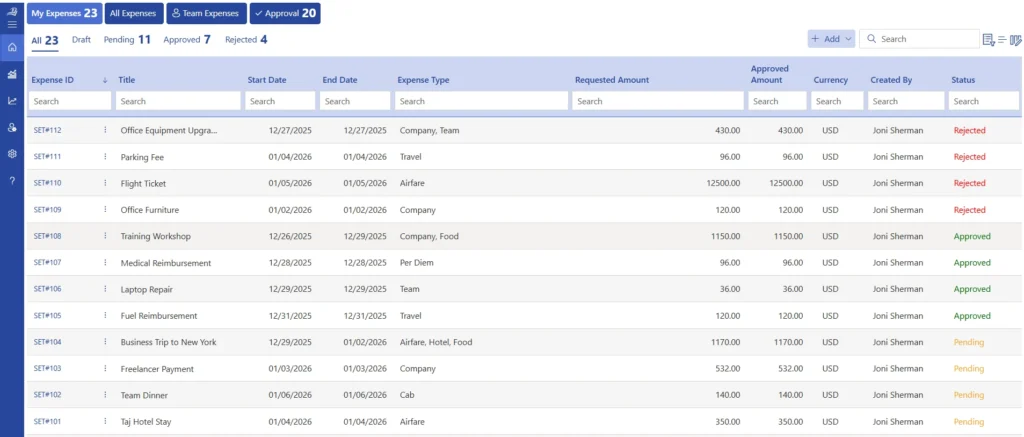
Expense 365 is an good alternatives for Rydoo designed to help businesses manage employee expenses, reimbursements, travel claims, and approvals from one place. It supports businesses looking for better visibility into spending while reducing manual finance tasks through automation.
The platform includes AI powered receipt scanning, multi-level approval workflows, receipt scanning, mileage tracking, and policy-based controls. Its Microsoft 365 integration is particularly useful for companies already working within the Microsoft ecosystem.
Unlike card-focused platforms, Expense 365 supports multiple payment methods including reimbursements, cash expenses, travel claims, and company card transactions. This makes it a practical option for organisations with varied expense processes.
Ideal for:
Businesses looking for a flexible expense management solution with approval automation, reimbursement tracking, and Microsoft 365 integration.
Standout features
- Multi-level expense approval workflows
- Receipt scanning and automated expense capture
- Corporate card management
- Automated approval workflows
- Per diem management
- Advanced expense reporting
- Expense audits
- Integrates with accounting platform like QuickBooks and Xero
- Mileage and travel expense tracking
- Microsoft 365 and accounting software integrations
- Multi-entity and multi-currency support
Pros:
✔️Supports different expense types and payment workflows
✔️ Good fit for businesses using Microsoft tools
✔️ Flexible approval controls for growing teams
Cons:
Some advanced finance features may require custom setup
Hear From Our Delighted Clients – G2 Platform
“Expense Tracker 365 is a great app with excellent support. The advanced features make it a complete tool & has really improved our expense tracking and reporting workflow.”
2. Zoho Expense
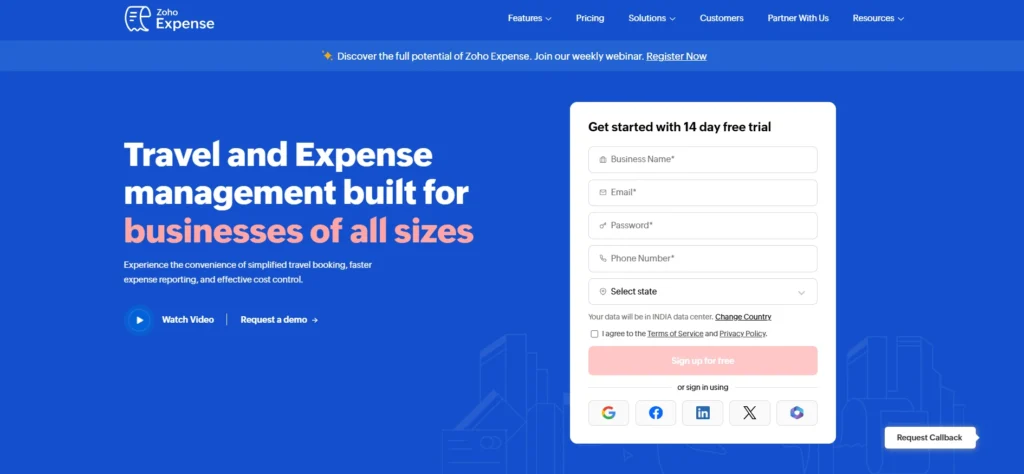
Zoho Expense offers as part of its broader business software ecosystem. The platform helps businesses manage employee expenses, travel expense claims, approvals, and reimbursements with automated workflows and policy controls.
Zoho Expense is widely used by small and mid-sized businesses because of its integration with other Zoho applications.
The platform works particularly well for companies already using Zoho products such as Zoho Books or Zoho CRM. However, businesses outside the Zoho ecosystem may find some integrations and customisations more limited compared to enterprise-focused platforms.
Ideal for:
Small and mid-sized businesses looking for affordable expense management software with strong automation and Zoho ecosystem integration.
Standout features
- Automated receipt scanning and expense creation
- Multi-level approval workflows
- Corporate card reconciliation
- Mileage and travel expense tracking
- Integration with Zoho Books, QuickBooks, and Xero
Pros
✔️ Affordable pricing for growing businesses
✔️ Strong automation for daily expense tasks
✔️ Good mobile app experience
Cons:
Best experience often depends on using other Zoho products
3. Ramp
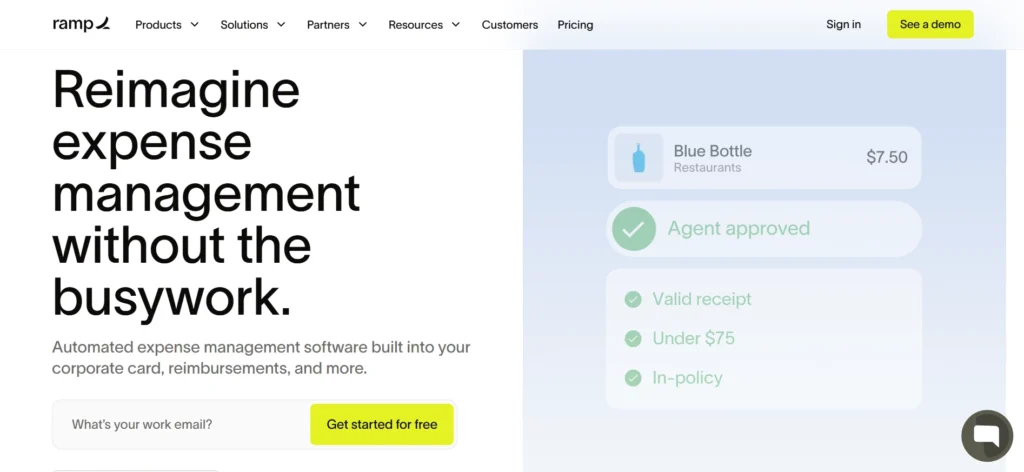
Ramp is a finance automation platform best known for its corporate card offering, but it also includes expense management tools aimed at helping companies gain better visibility into company spending through automation. It’s primarily built for mid-market businesses in the US, particularly fast-growing teams that want stronger policy controls while simplifying approvals.
Ramp combines real-time expense tracking with built-in controls and expense approval workflows, along with AI-powered insights that identify duplicate or non-compliant expenses.
It works well for finance teams that want card spend and expense policies managed within a single platform.
Ideal for
US-based startups and tech companies looking for a corporate card and expense platform with strong automation and policy controls.
Standout features
- Corporate cards with spend limits and merchant-level controls
- AI-powered savings insights and duplicate expense detection
- Automated approval workflows and real-time spend visibility
- Integrations with QuickBooks, NetSuite, Xero, and more
- Receipt capture and automatic expense matching
Pros:
✔️ Strong connection between corporate cards and expense tracking
✔️ AI-powered alerts for unusual or duplicate expenses
✔️ Modern interface with an easy-to-use mobile app
Cons:
Card-focused setup may not work well for businesses using mixed payment methods
4. Expensify
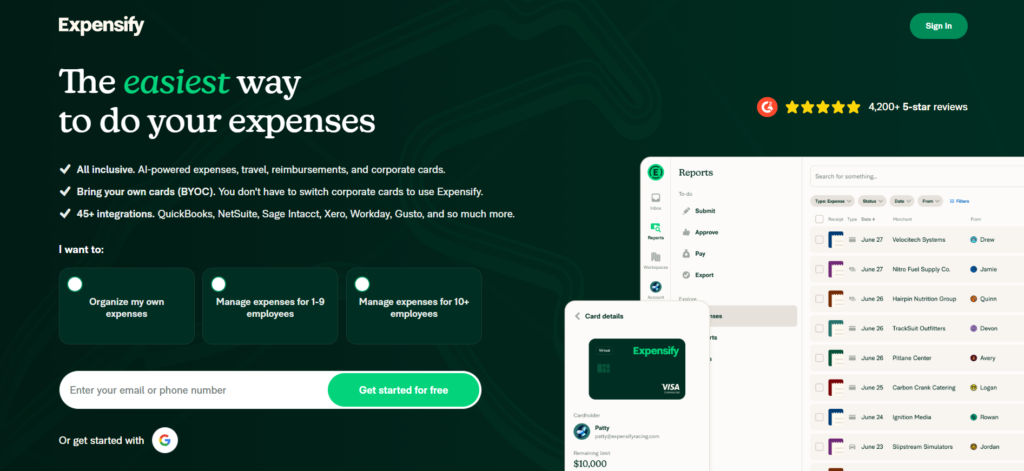
Expensify is a cloud-based expense management platform known for its receipt scanning and automated expense reporting features. It helps businesses manage employee expenses, reimbursements, approvals, and company card transactions from a single platform.
The platform is especially popular among small and mid-sized businesses because of its user-friendly interface and quick expense submission process.
Expensify includes SmartScan receipt capture, approval workflows, mileage tracking, travel booking, and accounting integrations.
Ideal for
Small and mid-sized businesses looking for simple expense reporting and automated receipt management.
Standout features:
- Smart Scan receipt capture technology
- Automated expense report creation
- Mileage and travel expense tracking
- Corporate card reconciliation
- Integrations with QuickBooks, Xero, NetSuite, and more
Pros:
✔️ Easy expense submission process for employees
✔️ Strong mobile app functionality
✔️ Fast receipt scanning and categorisation
Cons:
Advanced reporting options are more limited for enterprise finance teams
5. Sage Expense (Formerly Fyle)
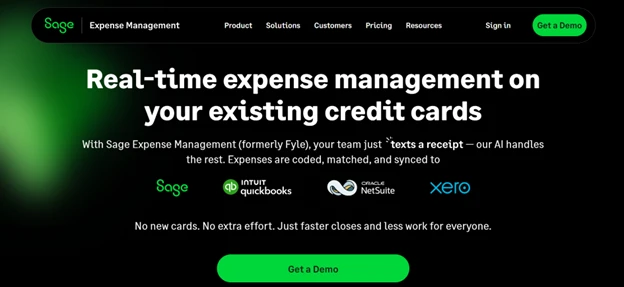
Sage provides expense management capabilities as part of its wider finance and accounting software ecosystem. Sage Expense helps businesses manage employee claims, approvals, reimbursements, and spending policies with automated finance workflows.
The platform is commonly used by businesses already working with Sage accounting products. It supports receipt capture, mileage tracking, approval routing, and spend visibility across departments. Sage also offers reporting tools that help finance teams monitor spending trends and policy compliance.
However, businesses outside the Sage ecosystem may experience fewer integration advantages compared to users already connected with Sage accounting solutions.
Ideal for
Businesses already using Sage accounting software and looking for connected expense management tools.
Standout features
- Expense reporting and reimbursement management
- Receipt capture and mileage tracking
- Approval workflow automation
- Integration with Sage accounting products
- Spend analytics and reporting tools
Pros:
✔️ Good fit for businesses already using Sage products
✔️ Helpful finance reporting capabilities
✔️ Supports policy-based expense approvals
Cons:
Stronger value mainly comes within the Sage ecosystem
6. Rippling
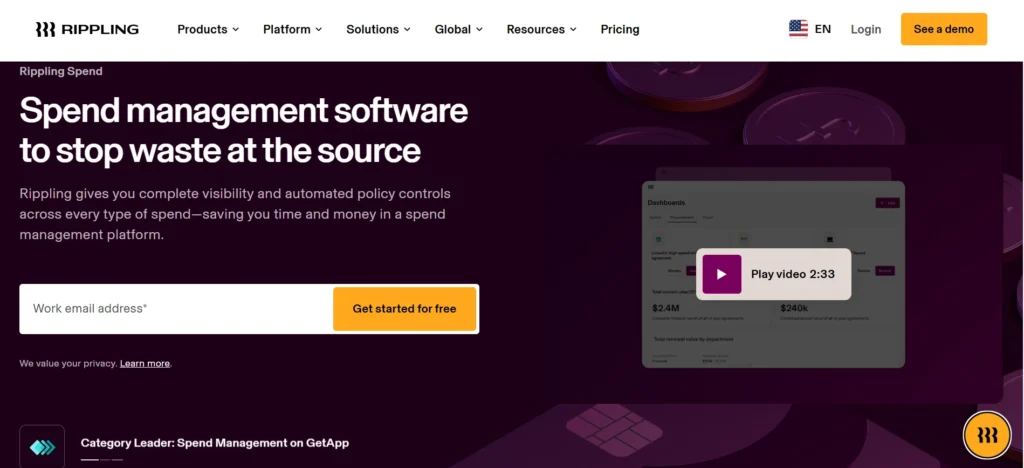
Rippling is primarily known as an HR and workforce management platform, but it also offers expense management and corporate card features for businesses looking to manage employee operations and spending from one system.
Rippling combines expense tracking with payroll, HR, device management, and employee onboarding tools. Businesses can manage approvals, reimbursements, expense policy controls, and corporate card spending while connecting expense data directly with payroll and finance operations.
However, businesses looking for highly specialised expense-only software may find some advanced finance capabilities less detailed compared to dedicated expense management platforms.
Ideal for
Businesses wanting HR, payroll, and expense management combined within a single platform.
Standout features
- Corporate cards with spending controls
- Expense approvals and reimbursement tracking
- Payroll and HR integration
- Automated employee policy management
- Multi-system workflow automation
Pros:
✔️ Combines HR, payroll, and expense management together
✔️ Strong automation across employee operations
✔️ Good visibility into employee-related spending
Cons:
Some features may require broader Rippling product adoption
7. Navan
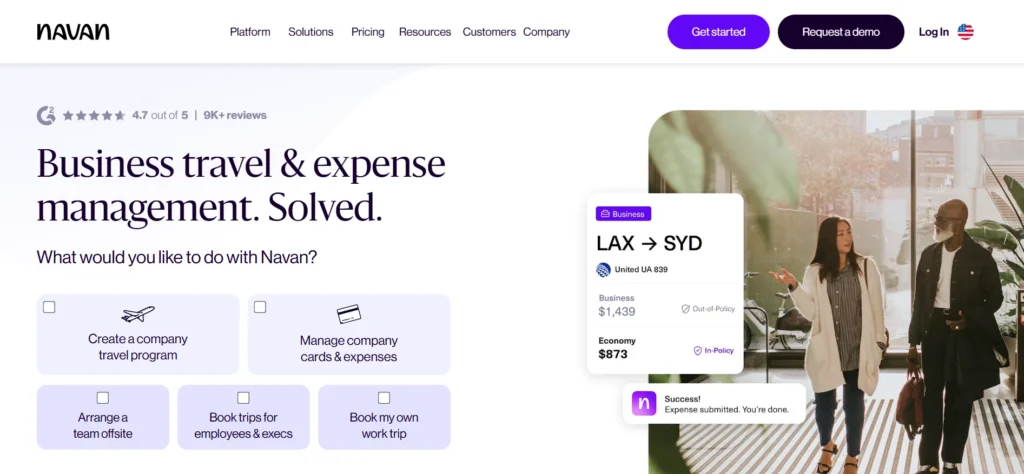
Navan, formerly known as Trip Actions, is a travel and expense management platform built for businesses that want company travel booking and expense tracking managed together.
Navan combines travel booking, expense reporting, reimbursements, and corporate card management within one platform. Employees can book flights, hotels, and transportation while finance teams can track travel expense and policy compliance in real time.
The platform is especially useful for companies with frequent business travel needs. However, organisations with minimal travel requirements may not fully benefit from Navan’s travel-focused capabilities.
Ideal for
Businesses looking to manage corporate travel and employee expenses within one connected platform.
Standout features
- Corporate travel booking and expense management
- Real-time spend visibility and policy controls
- Automated receipt matching
- Corporate cards and reimbursement tracking
- Travel policy management and reporting
Pros
✔️ Strong travel and expense management combination
✔️ Helpful for businesses with regular employee travel
✔️ Real-time visibility into travel spending
Cons
Some advanced features are more valuable for larger organisations
Best Practices to Choose Alternative for Rydoo
Selecting the right expense management platform requires evaluating your operational structure, finance processes, and future business goals. Here are some important factors businesses should consider before choosing a Rydoo alternative.
- Identify your company’s biggest expense management challenges before selecting a Rydoo alternative.
- Choose a platform that supports your reimbursement, travel expense, and approval workflow requirements.
- Check whether the software integrates with your accounting, payroll, ERP, and HR systems.
- Look for platforms that provide real-time reporting, expense visibility, and budget tracking.
- Consider scalability if your business plans to expand across teams, departments, or locations.
- Evaluate mobile accessibility for employees who frequently travel or submit expenses remotely.
- Review user experience to make expense submissions and approvals easier for employees and managers.
- Analyse security, compliance controls, audit trails, and role-based permissions before finalizing a platform.
Conclusion
Choosing the right Rydoo alternative depends on your business requirements, finance workflows, reporting needs, and operational goals.
While offers useful expense management capabilities, many businesses explore alternatives for broader integrations, automation, travel management, HR connectivity, and scalability.
The right choice ultimately depends on how well the platform supports your company’s expense policies, employee workflows, finance operations, and future business growth.
Frequently Asked Questions
What are the best Rydoo alternatives for businesses
Some of the best Rydoo alternatives include Expense 365, Zoho Expense, Ramp, Expensify, Sage, Rippling, and Navan. Each platform offers different expense management capabilities depending on business size and operational needs
Which Rydoo alternative is best for small businesses?
Zoho Expense and Expensify are commonly preferred by small and growing businesses because of their user-friendly expense management capabilities and accounting integrations.
Which Rydoo competitor is suitable for travel expense management?
Navan is widely used by businesses that manage frequent employee travel because it combines travel booking and expense management within one platform
What should businesses consider before choosing a Rydoo alternative?
Businesses should evaluate integration support, scalability, reporting capabilities, approval workflows, mobile accessibility, reimbursement management, and finance system compatibility before selecting an expense management platform.
Which Rydoo alternatives provide better receipt scanning options?
Platforms like Expense 365, Zoho Expense, and Sage provide strong receipt scanning capabilities for faster expense submissions and tracking.


_JiluXJRGNl.svg)























