
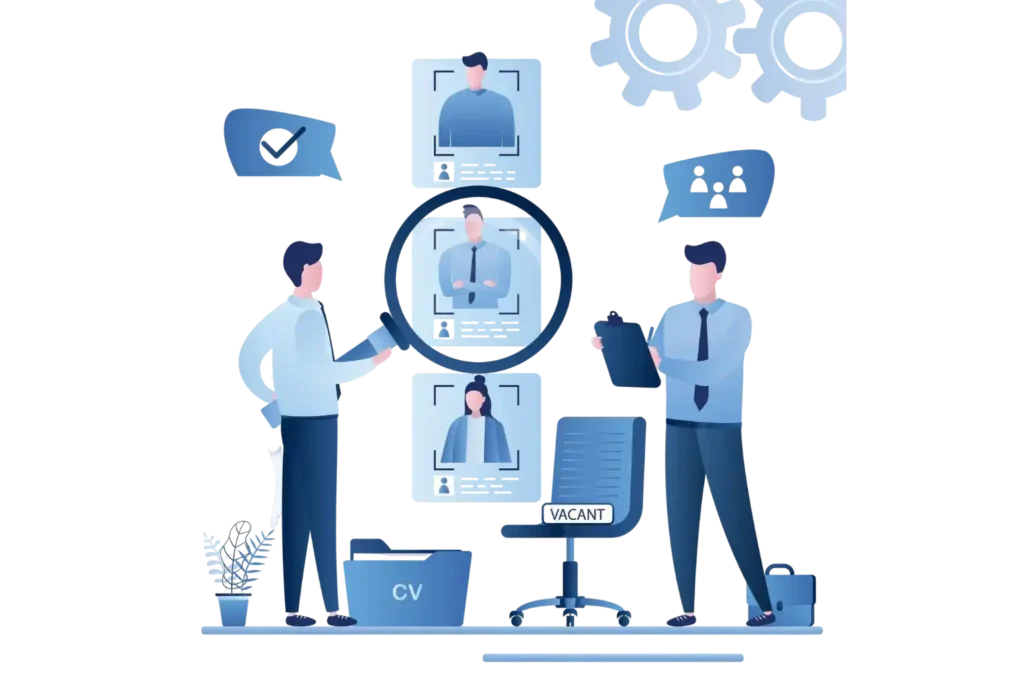

Every day, recruiters open inboxes flooded with hundreds of resumes. Most are irrelevant. Some are perfect matches that get buried. And your best candidates accept offers from competitors while your team is still sorting spreadsheets.
That is not just frustrating. It costs real money.
- What it is: Recruitment pipeline management is the process of organizing, tracking, and improving candidates at every stage of hiring, from job requisition to onboarding.
- Why it matters: Teams that manage their pipeline well hire faster, spend less per hire, and give candidates an experience that protects the employer brand.
- The proof: Gartner finds that digital recruitment platforms cut time-to-hire by 30% or more, and Deloitte reports that 88% of HR leaders say their current hiring tools cannot keep pace with today’s workforce.
- The fix: Recruitment software built into Microsoft 365 turns a scattered process into one connected system that HR teams, recruiters and hiring managers can run from Teams, Outlook, and SharePoint.
Hiring today feels like running two jobs at once. You need to fill open roles fast, and you need every one of those hires to be right. Miss either goal and the cost shows up quickly — in overworked teams, stalled projects, and candidates who accept an offer somewhere else while your process is still “getting back to them.”
Most HR teams don’t lose good candidates because talent is scarce. They lose them because the hiring process is scattered — a resume in one inbox, interview notes in another, feedback buried in a chat thread nobody reopens. By the time someone remembers to follow up, the candidate already signed with a company that moved faster.
Recruitment pipeline management solves that problem. It turns hiring from a pile of loose tasks into a visible, structured system, where every candidate sits in a clear stage, every stage has an owner, and every delay has a reason your team can actually see and fix.
This guide covers what recruitment pipeline management really means, why it matters more in 2026 than ever, the stages every pipeline should include, the metrics worth tracking, and how the right recruitment software turns pipeline management from a manual chore into a repeatable habit your whole team can rely on.
What Is Recruiting Pipeline Management?
Recruitment pipeline management is the practice of organizing, tracking, and improving how candidates move through every stage of hiring — from the moment a role opens to the day a new hire signs on. Picture it as a live map of your open jobs: who applied, where each person stands, what happens next, and who owns that next step.
A recruitment pipeline is the structure itself — the ordered stages a candidate moves through, such as sourcing, screening, interviews, and offer. Recruitment pipeline management is the ongoing work of running that structure: updating candidate status, spotting where people get stuck, and adjusting the process based on what the data shows.
That is different from simply “tracking applicants.” An applicant tracker logs who applied. Pipeline management asks a harder question: is this pipeline actually working? Is screening too slow? Are strong candidates dropping off after the first interview? Without active management, even a well-designed hiring process can quietly turn into a black box.
Every HR team benefits from a structured pipeline, whether you hire five people a year or five hundred. It replaces guesswork with visibility, and it gives recruiters, hiring managers, and leadership one shared, honest picture of where hiring actually stands — not where a status update says it stands.
Teams already running on Microsoft 365 can build this structure directly on top of the tools they use every day — see how SharePoint recruitment management brings the pipeline into Teams, Outlook, and SharePoint without adding a separate system.
Centralise Your Recruitment Pipeline
Manage candidates, collaborate with your team, and keep every stage of hiring organized in one place.
Why Is Recruitment Pipeline Management Important?
A structured recruitment pipeline matters because it directly shapes how fast you hire, how much you spend, and how good your final hires turn out to be. Companies that manage their pipeline with intention consistently outperform those running hiring off memory and email.
- Faster hiring decisions: A visible pipeline shows exactly where each candidate is stuck, so recruiters can act instead of guessing.
- Better candidate experience: Clear stages and timely updates keep candidates engaged instead of wondering if they’ve been forgotten.
- Improved recruiter productivity: Less time spent searching for status updates means more time spent on sourcing and interviewing.
- Stronger hiring manager collaboration: Shared visibility keeps recruiters and hiring managers aligned on the same candidates and timeline.
- Lower recruitment costs: Fewer delays and re-started searches mean lower cost-per-hire over time.
- Higher-quality hires: A structured process leaves room for proper evaluation instead of rushed, panic-driven decisions.
- Full hiring visibility: Leadership can see pipeline health across every open role, not just isolated updates.
- Data-driven decisions: Pipeline metrics reveal exactly where to fix the process instead of relying on gut feel.
Digital recruitment platforms reduce time-to-hire by 30% or more. — Source: Gartner
Recruiting Pipeline vs. Recruitment Process vs. Talent Pipeline
These three terms get used interchangeably, but they describe different things. Knowing the difference helps you choose the right tools and set the right expectations with leadership.
Term | What It Means | Best Used For |
Recruitment Pipeline | The visual structure of stages a candidate moves through for one specific open role. | Tracking active candidates in real time. |
Recruitment Process | The full set of policies, approvals, and steps a company follows to fill any role. | Standardizing how hiring works across teams. |
Talent Pipeline | A pool of pre-qualified candidates for roles that may open in the future. | Cutting time-to-fill for recurring or hard-to-fill roles. |
A recruitment pipeline lives inside a recruitment process, and a talent pipeline feeds new candidates into both. Mixing them up is harmless in conversation, but it causes real problems when you’re evaluating software, since each term points to a different feature set.
How Recruitment Pipeline Management Works
person or fifty. Each step moves a candidate closer to becoming a new hire, and each step needs its own owner and timeline.
- Define Hiring Requirements — Confirm the role, must-have skills, budget, and approval chain before you post anything.
- Source Candidates — Pull from job boards, referrals, your talent pool, and outbound outreach.
- Screen Applications — Filter resumes against the role’s core requirements.
- Shortlist Candidates — Narrow the pool down to the people worth a recruiter’s time.
- Conduct Interviews — Run structured conversations with recruiters and hiring managers.
- Evaluate Candidates — Compare interview feedback and assessment results side by side.
- Extend the Job Offer — Move quickly once you’ve picked a finalist.
- Onboard the New Hire — Carry candidate data straight into onboarding, with no re-entry.
Simplify Every Stage of Your Recruitment Workflow
From sourcing candidates to onboarding new hires, recruitment management software can automate repetitive tasks, improve collaboration, and give your HR team full visibility into every stage of the hiring process.
The Key Stages of Recruitment Pipeline Management
Each stage of the pipeline has its own purpose, its own best practices, and its own way of stalling if nobody’s watching. Here’s what to focus on at every stage.
Stage | Purpose | Best Practice | Watch Out For |
Job Requisition | Confirm the business case and approval for a new hire. | Use a standard requisition form with budget sign-off built in. | Vague job scope that leads to the wrong candidates applying. |
Candidate Sourcing | Build a strong pool of qualified applicants. | Mix job boards, referrals, and your existing talent pool. | Relying on one channel and running out of candidates. |
Resume Screening | Filter for candidates who meet core requirements. | Score resumes against a fixed rubric, not gut feel. | Manual screening that buries good candidates in volume. |
Candidate Shortlisting | Narrow the pool to interview-ready candidates. | Cap the shortlist so interviewers stay focused. | Shortlists that grow too large to move quickly. |
Initial Interview | Confirm fit and interest on both sides. | Use structured questions so every candidate is judged the same way. | Unstructured chats that make comparison difficult. |
Skills Assessment | Test real ability, not just resume claims. | Match the assessment to actual day-one tasks. | Generic tests that don’t predict job performance. |
Final Interview | Confirm the hire with senior stakeholders. | Loop in hiring managers early so this stage doesn’t stall. | Scheduling delays that cost you the candidate. |
Reference & Background Check | Verify history and reduce hiring risk. | Start checks in parallel with final interviews. | Waiting until the end and adding weeks to the timeline. |
Job Offer | Convert a finalist into a signed hire. | Move fast — the best candidates have other offers too. | Slow approval chains that lose candidates to competitors. |
Hiring & Onboarding | Turn a new hire into a productive employee. | Carry candidate data straight into onboarding automatically. | Re-entering the same data manually and losing momentum. |
Go deeper on any single stage: job requisition management, AI resume screening, automated interview scheduling or employee onboarding.
Benefits of Effective Recruitment Pipeline Management
- Reduced time-to-hire: Fewer bottlenecks mean roles get filled before top candidates walk away.
- Improved quality of hire: A structured, unhurried process leaves room for proper evaluation.
- Better candidate experience: Timely updates build trust, even with candidates you don’t hire.
- Increased recruiter productivity: Less time on manual status checks means more time on sourcing and relationship-building.
- Better hiring collaboration: Recruiters and hiring managers work from the same live data, not conflicting spreadsheets.
- Lower recruitment costs: Fewer restarted searches and less time-to-fill translate directly into savings.
- Stronger employer brand: Candidates talk. A respectful, organized process becomes a recruiting asset on its own.
- A scalable hiring process: A pipeline built to handle five hires can grow to handle five hundred without falling apart.
Common Recruiting Pipeline Challenges
Most hiring delays trace back to a small set of recurring problems. Naming them is the first step to fixing them.
Challenge | Why It Happens | Business Impact | Recommended Solution |
Talent shortages | Demand for skilled candidates outpaces supply in many fields. | Roles stay open longer and hiring managers settle for weaker fits. | Build talent pools ahead of need instead of sourcing cold. |
Candidate drop-off | Slow responses and unclear next steps push candidates elsewhere. | You lose strong candidates mid-process, often to a faster competitor. | Automate status updates so no candidate is left waiting. |
Slow hiring decisions | Feedback is scattered and approvals sit in someone’s inbox. | Time-to-hire stretches, and costs climb with every extra week. | Centralize feedback and set clear decision deadlines. |
Manual processes | Teams rely on spreadsheets, email, and disconnected tools. | Data gets lost, and recruiters spend hours on administrative work. | Move core workflows into recruitment software with automation. |
Poor communication | Recruiters, hiring managers, and candidates aren’t on one shared thread. | Candidates feel ignored, and internal teams duplicate effort. | Use one platform for updates so everyone sees the same status. |
Interview scheduling delays | Coordinating calendars across multiple interviewers takes days. | Candidates lose interest or accept another offer while waiting. | Schedule interviews directly through Microsoft Teams integration. |
Lack of recruitment analytics | Teams don’t track metrics beyond headcount filled. | Problems in the pipeline go unnoticed until they’re expensive. | Track core metrics like time-to-hire and drop-off rate weekly. |
Ineffective sourcing strategies | Teams lean on one channel instead of a mixed approach. | Pipelines run dry, and quality of applicants declines. | Diversify sourcing across boards, referrals, and talent pools. |
Eliminate Recruitment Bottlenecks
Delayed hiring, candidate drop-offs, and manual tasks can slow your team down. Recruitment management software helps automate workflows, improve collaboration, and keep your hiring process moving efficiently.
Best Practices for Recruitment Pipeline Management
These habits separate hiring teams that consistently fill roles on time from teams that are always behind.
- Standardize hiring stages: Use the same pipeline structure across every role so reporting stays consistent.
- Build talent pools: Keep past applicants and passive candidates warm for future openings.
- Improve candidate communication: Set a standard for how fast every candidate gets a response.
- Use structured interviews: Ask every candidate for a role the same core questions.
- Automate repetitive tasks: Let software handle scheduling, status updates, and resume routing.
- Monitor recruitment metrics: Review time-to-hire, drop-off rate, and source performance regularly.
- Collaborate with hiring managers: Loop them in early instead of only at the final interview.
- Review pipeline performance: Audit stalled roles monthly to catch problems before they compound.
- Keep optimizing the workflow: Treat your recruitment process as something to improve, not a fixed system.
Recruitment Pipeline Metrics Every HR Team Should Track
| Metric | Why It Matters | How to Improve It |
| Time-to-Hire | Shows how fast candidates move from first contact to signed offer. | Cut approval delays and automate scheduling. |
| Time-to-Fill | Measures the full cycle from requisition to accepted offer. | Speed up requisition approval and sourcing. |
| Cost-per-Hire | Tracks total spend against each successful hire. | Reduce reliance on paid job boards and agency fees. |
| Source of Hire | Identifies which channels deliver your best candidates. | Shift budget toward your highest-performing sources. |
| Offer Acceptance Rate | Reflects how competitive your offers really are. | Benchmark pay and speed up the offer stage. |
| Interview-to-Offer Ratio | Shows how efficient your interview stage is. | Tighten shortlisting criteria before interviews start. |
| Candidate Drop-off Rate | Flags where candidates lose interest and exit. | Add updates and shorten wait times at that stage. |
| Quality of Hire | Measures how well new hires perform after joining. | Compare early performance data against hiring criteria. |
| Recruitment Funnel Conversion | Tracks candidate movement from application to hire. | Identify and fix the stage with the steepest drop. |
| Hiring Manager Satisfaction | Captures how hiring managers rate the process itself. | Survey managers after each closed role. |
How Recruitment Management 365 Improves Recruitment Pipeline Management
Technology doesn’t replace recruiters — it removes the manual work that keeps them from doing their best work. The right stack covers these core capabilities:
- Applicant Tracking Systems (ATS) to manage every candidate in one place
- Recruitment CRM to nurture passive candidates and talent pools
- AI-powered candidate screening to rank applicants against role requirements
- Interview scheduling built into tools recruiters already use
- Workflow automation for approvals, reminders, and status updates
- Recruitment analytics for real-time pipeline health
- Team collaboration so recruiters and hiring managers work from one record
- Mobile recruitment for candidates and interviewers on the go
- Reporting dashboards that turn pipeline data into decisions
Choosing the Right Recruitment Pipeline Management Software
- Candidate tracking across the full pipeline
- Custom recruitment pipelines by role or department
- Resume parsing and structured candidate data
- Built-in interview scheduling
- Workflow automation for repetitive tasks
- Recruitment analytics and dashboards
- AI-powered hiring assistance
- Team collaboration tools
- Integrations with the systems you already use
- Security and compliance certifications
- Mobile accessibility
- Room to scale as your hiring volume grows
Conclusion
Recruitment pipeline management is more than moving candidates through a set of hiring stages. It is the difference between a hiring process you can see and control, and one that runs on guesswork until a good candidate is already gone.
Teams that build clear workflows, watch the right metrics, and keep improving their process hire faster, spend less, and build stronger teams as a result. The data backs this up: organizations with structured, technology-supported pipelines consistently outperform those still running hiring through email and spreadsheets.
The last piece is choosing the right technology to run it on. A platform built natively inside Microsoft 365 means your recruiters, hiring managers, and candidates never have to leave the tools they already use every day — which is exactly where Recruitment Management 365 fits in.
Ready to Optimize Your Recruitment Pipeline?
Discover how Recruitment Management 365 can help your HR team centralize candidate tracking, automate hiring workflows, improve collaboration, and gain complete visibility into every stage of the recruitment lifecycle.
Frequently Asked Questions
What is recruitment pipeline management?
Recruitment pipeline management is the process of organizing, tracking, and improving candidates as they move through every stage of hiring, from job requisition to onboarding. It gives HR teams a live, visual picture of where each candidate stands.
What is the difference between a recruitment pipeline and a recruitment process?
A recruitment pipeline is the specific set of stages one open role moves through. A recruitment process is the broader set of policies and approvals that govern how any role gets filled across the company.
How many stages should a recruitment pipeline have?
Most effective pipelines use between six and ten stages, covering requisition, sourcing, screening, interviews, assessment, offer, and onboarding. The right number depends on role complexity and company size.
How does AI improveWhat are the biggest recruitment pipeline challenges? applicant tracking system resume screening?
The most common challenges are talent shortages, candidate drop-off, slow decision-making, manual processes, poor communication, and a lack of recruitment analytics to catch problems early.
Can small businesses benefit from recruitment pipeline management?
Yes. Even a team hiring a handful of people a year benefits from a structured pipeline, since it prevents candidates from falling through the cracks and keeps hiring on schedul
What software is used for recruitment pipeline management?
Applicant tracking systems and recruitment CRMs are the core tools, often paired with AI screening, interview scheduling, and analytics. Recruitment Management 365 combines all of these inside Microsoft 365.
How does AI improve recruitment pipeline management?
AI speeds up resume screening, ranks candidates against role requirements, and flags pipeline bottlenecks before they cause delays, freeing recruiters to focus on interviews and relationships.
What is the difference between an ATS and recruitment pipeline management software?
An ATS mainly tracks applications and candidate records. Recruitment pipeline management software goes further, adding automation, analytics, and collaboration tools that actively help teams move candidates forward.


_JiluXJRGNl.svg)























