

Outsourcing Contracts: What to Know, Include, and Best Practices

Outsourcing contracts can open doors to new capabilities and business efficiencies, but how well those partnerships work often comes down to what both parties agree on. According to a Deloitte survey, 80% of executives plan to maintain or increase investment in third-party outsourcing.
- They define service expectations, payment structures, performance standards, and responsibilities between businesses and external vendors.
- Different pricing models, including fixed-price, time and materials, and dedicated team agreements, support different business needs.
- Clear service levels, data protection rules, and exit plans help businesses reduce financial and operational risks.
- Effective outsourcing contract management helps companies track vendor performance, control spending, and maintain visibility throughout the business relationship.
As more companies depend on outside vendors for IT, customer support, finance, and other business activities, managing these relationships becomes increasingly important.
A well-written external service provider agreements sets clear expectations, protects business interests, and helps both parties work toward shared goals.
In this blog, we will explore how outsourcing contracts work, their types, essential components, key clauses, benefits, and best practices for choosing the right outsourcing partner.
What are Outsourcing Contracts?
Outsourcing contracts are legally binding agreements between a business and an external service provider hired to perform specific tasks or services.
These agreements explain what work the vendor will handle, how much the business will pay, and what standards the provider must meet.
For example, a retail company may hire an outside provider to manage customer inquiries. The agreement would describe the support hours, response targets, pricing, and responsibilities of both parties.
How Do Outsourcing Contracts Work?
They follow a series of steps, from identifying business needs to reviewing vendor performance. Each stage helps both parties understand their commitments before and after signing.
Step 1: Identify Business Requirements
The company determines which activities it wants to outsource and why. This includes defining project goals, expected results, budget limits, and the level of support required.
Step 2: Evaluate Potential Vendors
The business compares external providers based on experience, pricing, technical skills, customer references, and past performance. This helps identify a partner capable of meeting its needs.
Step 3: Define the Scope of Work
Both parties agree on the services the vendor will provide. They document project boundaries, expected outcomes, completion schedules, and any resources the company must supply.
Step 4: Negotiate and Finalize the Agreement
The company and vendor discuss payment arrangements, service standards, confidentiality, risk allocation, and conditions for ending the relationship.
Step 5: Sign and Begin Service Delivery
Authorized representatives sign the agreement. The provider then begins the assigned work according to the approved schedule and service requirements.
Step 6: Monitor Vendor Performance
The business regularly checks whether the provider meets agreed targets. Performance reports, service reviews, and financial checks help identify problems that require attention.
Step 7: Renew or Close the Agreement
Before the agreement expires, both parties review the results and decide whether to continue, revise the arrangement, or end the partnership.
What are the Different Types of Outsourcing Contracts?
Businesses choose outsourcing arrangements based on project size, pricing preferences, and the level of flexibility required.
Fixed-Price Contracts: A predetermined fee for clearly defined services or deliverables.
Time and Materials Contracts: Payment based on actual hours worked and resources used.
Dedicated Team Contracts: A provider assigns a dedicated team to handle specific business projects.
Managed Services Contracts: A vendor manages ongoing functions such as IT support, cybersecurity, or infrastructure.
Performance-Based Contracts: Payments are tied to measurable results or agreed performance targets.
Cost-Plus Contracts: The business reimburses project expenses along with an agreed fee or profit margin.
- Staff Augmentation Contracts: External professionals supplement the company’s existing workforce.
Essential Components of an Outsourcing Contract
A complete outsourcing agreement should clearly describe the business relationship and what each party expects from the other. The following components form the foundation of an effective agreement.
Identification of Parties
Include the legal names, business addresses, and contact information of the company and external service provider. This identifies the organizations entering the agreement.
Scope of Services
Describe the activities the vendor will perform, including any limits or exclusions. A detailed scope of work prevents confusion about what is included in the service.
Project Timeline
Specify the starting date, major milestones, and expected completion schedule. For ongoing services, state the initial service period and any options for continuing the arrangement.
Pricing and Payment Structure
Explain the service fees, billing frequency, invoice requirements, and accepted payment methods. Include how additional charges will be approved.
Roles and Responsibilities
Identify the tasks each party must complete. For example, the client may provide system access while the vendor supplies trained personnel and technical resources.
Performance Standards
Set measurable contract management KPIs for service quality, response times, accuracy, and availability. These standards help the business assess whether the provider meets expectations.
Communication and Reporting
State how often both parties will meet, what reports the vendor must submit, and who will handle important decisions.
Approval and Change Procedures
Explain how the company will request modifications to the original scope, evaluate proposed costs, and approve changes before work begins.
Looking to take control of your contract processes?
CLM 365 helps your team create, approve, track, and manage contracts in one place, without losing sight of important details or deadlines.
Key Clauses in an Outsourcing Contract
While essential components explain how the business relationship operates, contract clauses establish legal protections and actions when problems occur. Here are the key clauses businesses should consider.
Service Level Agreement (SLA) Clause
Defines expected service standards, including system uptime, response times, delivery schedules, and issue resolution. It may also specify service credits or penalties when the provider fails to meet agreed targets.
Confidentiality Clause
Protects sensitive business information shared with the outsourcing provider. It outlines how confidential data, customer records, and internal documents can be accessed, used, stored, and disclosed.
Data Protection Clause
Establishes requirements for handling personal and sensitive information. It covers security measures, data access restrictions, breach notifications, and compliance with applicable data protection laws.
Intellectual Property Clause
Clarifies who owns the licensing contracts created during the outsourcing arrangement, including software, designs, documents, and other deliverables. It also defines how pre-existing intellectual property can be used.
Liability and Indemnification Clause
Defines each party’s financial responsibility for losses, damages, or third-party claims arising from specific contractual breaches or failures. It may also establish limits on liability.
Termination Clause
Specifies the circumstances under which either party can end the agreement, including breach of contract, non-performance, or convenience. It also outlines notice periods and obligations following termination.
Governing Law and Dispute Resolution Clause
Identifies the laws governing the agreement and the jurisdiction where disputes will be handled. It also establishes procedures such as negotiation, mediation, arbitration, or litigation to resolve disagreements.
Benefits of Outsourcing Contracts
Well-structured agreements help businesses gain value from external partnerships while maintaining control over important activities.
Businesses can establish service fees, payment schedules, and spending limits before work begins. This helps prevent unexpected expenses, manage budgets, and maintain financial clarity throughout the outsourcing arrangement.
Outsourcing gives businesses access to professionals with skills that may not be available internally. Whether it’s cybersecurity, legal support, software development, or accounting, companies can benefit from external expertise without building an entire in-house team.
Clearly defined deliverables, performance targets, and service-level agreements make it easier to evaluate vendor performance. Businesses can track whether providers meet expectations and address service gaps through agreed improvement measures.
Delegating selected activities to external providers allows internal teams to focus on strategic priorities such as product development, customer relationships, and business expansion. This can also reduce the administrative workload on employees.
Businesses can adjust outsourced services based on changing workloads, project requirements, and business demands. For example, an e-commerce company can increase customer support resources during peak shopping seasons without permanently expanding its workforce.
What are the Common Challenges of Outsourcing Contracts?
According to a WCC study, the commercial contracting field found that 48% of respondents reported a lack of clarity about who was accountable for the quality and integrity of the contracting or commercial process. This shows why companies need clear ownership and regular oversight.
Unclear Service Expectations
Vague descriptions can lead to disagreements about the work the provider must complete. Businesses should define measurable outcomes before contract signing.
Hidden or Unexpected Costs
Additional service requests, changes in project requirements, and unclear billing arrangements can increase expenses beyond the original budget.
Poor Communication
Differences in time zones, reporting practices, and communication methods may delay decisions and affect project progress.
Data Security Concerns
Sharing sensitive information with third parties increases the number of people and systems that can access company data. Businesses must review vendor security practices and access controls.
Limited Visibility Into Vendor Performance
Without regular reporting, companies may struggle to identify missed targets, recurring service issues, or declining quality.
Dependence on a Single Provider
Relying heavily on one vendor can make it difficult to switch services when costs increase or performance falls.
Difficult Contract Renewals
Businesses may miss notice deadlines or continue agreements that no longer meet their needs when important dates are not tracked.
How to Negotiate an Outsourcing Contract?
According to Sirion, Only 16% of commercial practitioners believe contract negotiations focus on the right topics. Negotiating an outsourcing agreement requires more than comparing vendor prices. Businesses must balance cost, service quality, flexibility, and risk before making a commitment.
Step 1: Set Clear Business Priorities
Identify the results the company expects from the partnership. Decide which requirements are essential and which areas allow flexibility.
Step 2: Research Vendor Pricing
Compare proposals from multiple providers to understand typical charges, included services, and possible additional fees.
Step 3: Agree on Service Expectations
Discuss measurable performance targets and how the vendor will report results. Make sure the proposed standards match actual business needs.
Step 4: Review Financial Conditions
Examine payment schedules, price adjustment rules, additional service charges, and any penalties or credits connected to performance.
Step 5: Address Security and Business Risks
Discuss how the provider will protect confidential information, handle service interruptions, and respond to unexpected incidents.
Step 6: Plan for Future Changes
Agree on how both parties will handle changes in service volume, project requirements, technology, or business priorities.
Step 7: Finalize Exit Arrangements
Discuss notice requirements, information transfers, outstanding payments, and support during a provider change.
Step 8: Complete Internal Review and Approval
Have legal, procurement, finance, and relevant business teams review the final document. Resolve open questions before the authorized representative’s sign.
Best Practices to Choose the Right Outsourcing Partner
Choosing a suitable provider is essential for maintaining service quality and building a productive business relationship. Businesses should consider the following practices before making a final decision.
- Check Industry Experience: Look for vendors with experience supporting companies of similar size or operating in the same industry.
- Review Customer References: Speak with existing or former clients to understand the provider’s reliability, communication, and ability to meet commitments.
- Evaluate Technical Capabilities: Confirm that the vendor has the tools, skilled employees, and resources needed to complete the assigned work.
- Compare Total Service Costs: Consider setup fees, ongoing charges, additional support costs, and possible price increases rather than focusing only on the initial quote.
- Assess Security Practices: Review how the provider protects company information, manages access, and responds to security incidents.
- Plan for Long-Term Support: Consider whether the vendor can maintain service quality as the company grows or its requirements change.
How CLM 365 Provides Control and Visibility Over Outsourced Contracts?
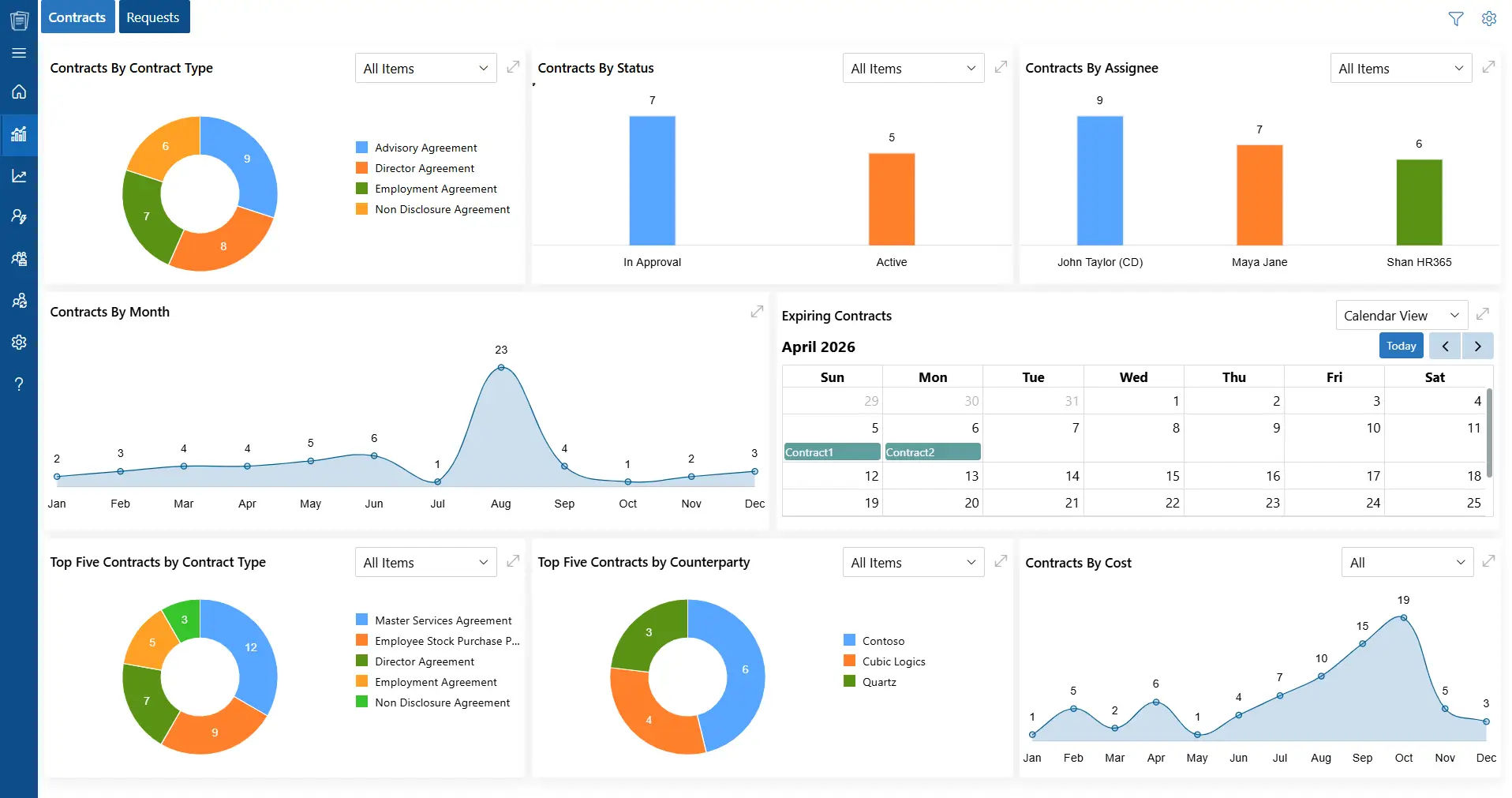
Managing multiple outsourcing contracts can become difficult when agreements are stored across emails, shared folders, and different business systems.
CLM 365, a SharePoint contract management helps businesses organize outsourcing agreements and maintain better control over contract-related activities.
AI-Native Clause Review
Uses AI to identify important clauses, flag unusual terms, and highlight potential contractual gaps, helping teams review vendor agreements more efficiently.
Automated Approval Workflows
Automates approvals across legal, procurement, and finance teams, reducing manual follow-ups and delays.
Automated Renewal Reminders
Tracks contract expiry and renewal dates, helping businesses review vendor agreements before deadlines.
Status Tracking
Provides visibility into contract progress, from creation and review to approval, execution, and renewal.
Reporting and Oversight
Helps teams monitor contract activities, review agreement details, and maintain better oversight of vendor relationships.
Conclusion
Outsourcing contracts help businesses establish clear expectations when working with external service providers. From selecting the right pricing model to defining performance standards and exit procedures, each part of the agreement plays a role in protecting business interests.
However, signing an agreement is only the beginning. Companies must also monitor vendor performance, review service costs, and track important dates throughout the partnership.
With the right outsourcing partner and a structured approach to contract management, businesses can improve accountability, reduce avoidable risks, and build stronger external relationships.
Frequently Asked Questions
What happens when an outsourcing contract is breached?
The affected party can issue a formal notice, request corrective action, claim compensation, or terminate the agreement based on clauses.
What happens when an outsourcing provider exceeds the agreed budget?
Review additional charges, request a cost breakdown, and renegotiate approved expenses. Use spending limits and approval rules to prevent overspending.
What is the purpose of an outsourcing agreements?
It defines the services, responsibilities, costs, timelines, and expectations between a business and an external provider.
Why are confidentiality clauses important in outsourcing?
Confidentiality clauses protect sensitive business information, customer data, financial records, and intellectual property shared with outsourcing providers.
How can businesses maintain good relationships with outsourcing partners?
Clear communication, regular performance reviews, defined responsibilities, timely payments, and transparent reporting help maintain strong vendor relationships.


























