

_eH2jDg7dZ.png)
Growth begins with learning and learning thrives when people do. In every successful company, employees are not just working; they are evolving, improving, and staying ready for what’s next.
The right learning management system (LMS) can turn regular training into continuous professional development. The best Learning Management Systems for corporate training empower organizations to build skilled, confident, and motivated teams that grow together.
✨
Key Takeaways
- The LMS for corporate training centralizes learning, supports personalized training paths, and tracks employee progress through real-time analytics.
- Key LMS features include mobile learning, integrations, compliance tracking, scalability, reporting, and blended learning support.
- Different platforms suit different needs, LMS 365 stands out for Microsoft 365 integration, while other LMS solutions focus on areas such as AI-powered or collaborative learning.
- Organizations should choose an LMS based on their training goals, users, content types, integrations, scalability, security, and budget.
When employees learn consistently, they stay inspired. A report by LinkedIn Learning found that 94% of professionals would stay longer at a company that invests in their growth. That means learning isn’t just a nice-to-have it’s a competitive advantage.
If your current training feels outdated or disconnected, this is your moment to embrace change. A modern LMS can make learning simpler, smarter, and more engaging helping your workforce perform at their best every day.
What is Corporate Training?
Corporate training refers to programs and initiatives that businesses provide to improve their employees’ skills, knowledge, and abilities. The goal of corporate training is to ensure employees are well-equipped to perform their job duties effectively, stay aligned with company goals, and adapt to new challenges or technologies.
Corporate training can cover a wide variety of topics, including:
- Technical skills (e.g., software programs, machinery operation)
- Compliance (e.g., safety regulations, legal requirements)
- Soft skills (e.g., communication, leadership, problem-solving)
- Product knowledge (e.g., training employees on new product features or services)
By investing in training, companies foster an environment of continuous improvement. Training not only helps employees perform their tasks more efficiently, but it also boosts job satisfaction and can reduce turnover rates. When employees feel that they are growing in their roles and gaining valuable knowledge, they are more likely to stay with the company and be engaged in their work.
As technology and industry standards continue to evolve, corporate training plays a key role in keeping employees up to date and improving overall organizational performance. It helps employees meet current challenges while preparing them for future success.
What Makes the LMS Systems for Corporate Training?
Not all learning platforms are created the same. The topLMS systems for corporate training seamlessly combine simplicity, engagement, and powerful analytics to create an intuitive learning experience. Whether you’re onboarding new employees or reskilling your existing team, the right LMS offers control, consistency, and measurable results.
Here’s what sets the LMS apart:
- Easy-to-Use Interface: Employees should be able to navigate the system without confusion or extra training. The best platforms are simple to use, ensuring that learning becomes the focus, not the tool itself.
- Mobile Learning: Learning shouldn’t be limited to the office. A mobile-friendly LMS ensures employees can access training on-the-go, anytime and anywhere, fitting into their busy schedules.
- Gamification & Engagement Tools: The LMS keep learners engaged with fun elements like badges, leaderboards, and rewards. These tools motivate employees to keep progressing and foster a competitive, growth-oriented environment.
- Personalized Learning Paths: Each employee is unique. Tailoring training to individual goals and performance levels ensures that learning is relevant and impactful.
- Advanced Analytics & Reporting: To measure the success of your training programs, the LMS should provide detailed reports on completion rates, learning hours, and performance improvements.
- Seamless Integration: An LMS should integrate with tools employees already use, like Microsoft Teams, Slack, or SharePoint, making it easy to incorporate learning into the daily workflow.
- Compliance Management: For industries with regulatory requirements, the top LMS systems help track certifications and ensure that compliance training is up-to-date.
- Efficient Content Management: Uploading, organizing, and updating learning materials should be quick and easy, allowing HR teams to focus on content quality instead of administrative tasks.
- Scalability: Whether you’re a small team or a global enterprise, your LMS should grow with you, scaling to support thousands of learners without a hitch.
- Support for Blended Learning: The Corporate LMS systems offer a mix of in-person, virtual, and e-learning experiences, ensuring employees can learn in the way that suits them best.
According to eLearning Industry (2024), businesses using advanced LMS platforms see a 42% boost in employee engagement and 34% faster onboarding times.
In the end, the LMS systems for corporate training do more than just deliver content, they inspire continuous performance and turn learning into an ongoing part of your company culture.
Why Corporate Training Needs a Great LMS
Corporate learning isn’t what it used to be. Gone are the days of dull, yearly workshops and static presentations. In a world where skills are constantly evolving, companies need LMS systems for corporate training that are flexible, data-driven, and centered on people.
Why does this matter? Because employees are the heart of your business. A recent LinkedIn Workplace Learning Report (2024) found that 94% of employees would stay longer at a company that invests in their learning. Yet, many organizations still struggle with outdated training methods, low engagement, and scattered tools. The right LMS addresses these challenges by offering a seamless platform where employees can learn at their own pace, whenever and wherever they want.
What Happens When Training Falls Behind?
When companies stick with outdated training methods, the consequences are clear:
- Employees forget 70% of what they learn within a week (Forbes, 2023).
- Managers lose track of employee progress and skill gaps.
- Teams disengage because training feels like a chore, not a growth opportunity.
But imagine a different reality. A modern LMS transforms training into a continuous, dynamic experience that supports employee growth, builds confidence, and encourages collaboration. Your employees logging in every day, not because they have to, but because they want to learn.
What Should the Corporate Learning Management Software Offer?
To truly support your team’s development, an LMS should:
- Centralize all training materials in one easy-to-use platform.
- Personalize learning paths based on roles, skill levels, and career goals.
- Support blended learning methods, combining videos, quizzes, and live sessions for a richer experience.
- Track progress with real-time analytics, helping you spot areas for improvement.
- Integrate with tools employees already use, like Microsoft 365, Teams, or Slack, ensuring training fits into their daily workflow.
When employees see clear paths for growth, they become more engaged, productive, and loyal. It’s a win for your team — and a win for your business.
Top 10 LMS Systems for Corporate Training
Choosing the right LMS helps build a stronger learning culture and improve employee performance. The top LMS systems for corporate training offer scalability, easy use, and useful analytics. Here are 10 options to help you find the best fit for your organization.
1. LMS 365
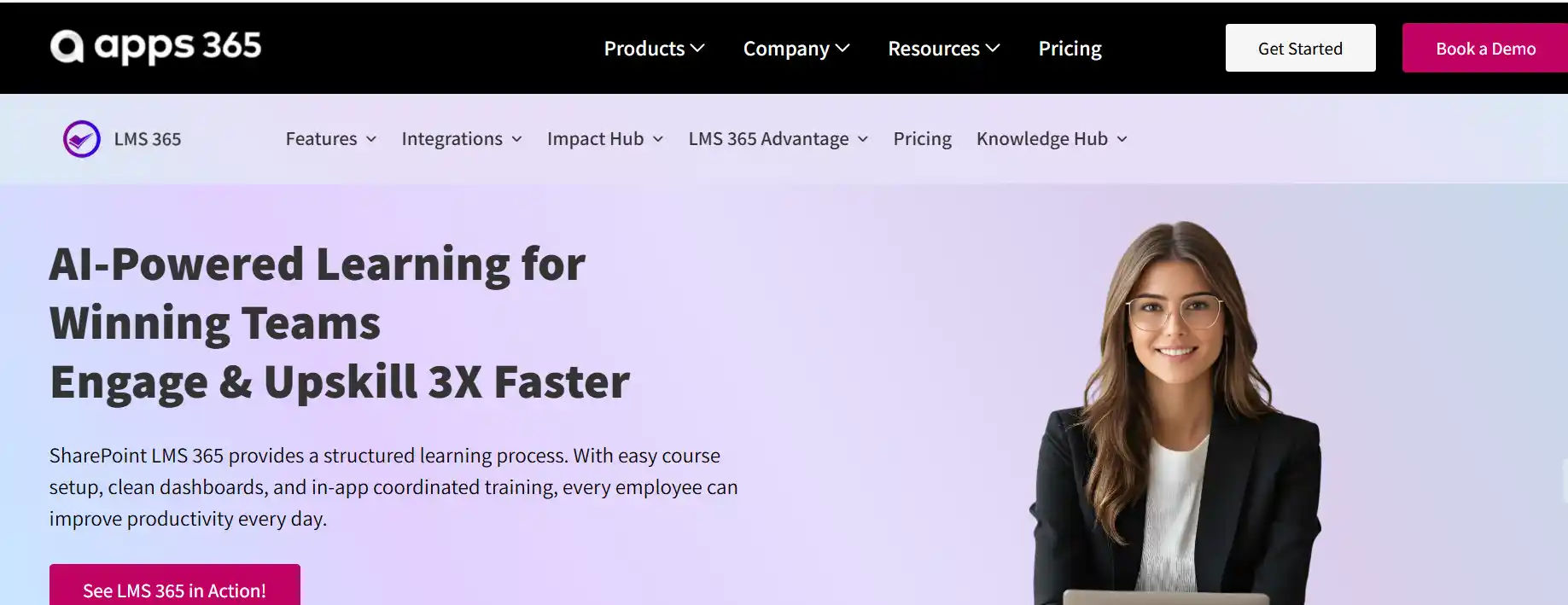
LMS 365 is an integrated learning solution designed specifically for organizations already using Microsoft 365 and SharePoint. This LMS leverages the Microsoft ecosystem, making it easy to incorporate training into employees’ daily routines via tools like Microsoft Teams and Outlook.
Key Highlights:
- Native Integration with Microsoft 365: Seamlessly integrates with Microsoft tools like Teams and SharePoint, making it ideal for companies already in the Microsoft ecosystem.
- Personalized Learning Paths: Tailors learning experiences based on roles and skill levels.
- Mobile-Friendly: Accessible on-the-go, with offline learning capabilities.
- Real-Time Analytics & Dashboards: Provides detailed insights into learning progress, engagement, and skill development.
LMS 365 is perfect for businesses looking for a seamless user experience within Microsoft 365. Its integration, mobile support, and robust analytics make it a powerful solution for companies looking to boost employee engagement and growth.
2. Docebo
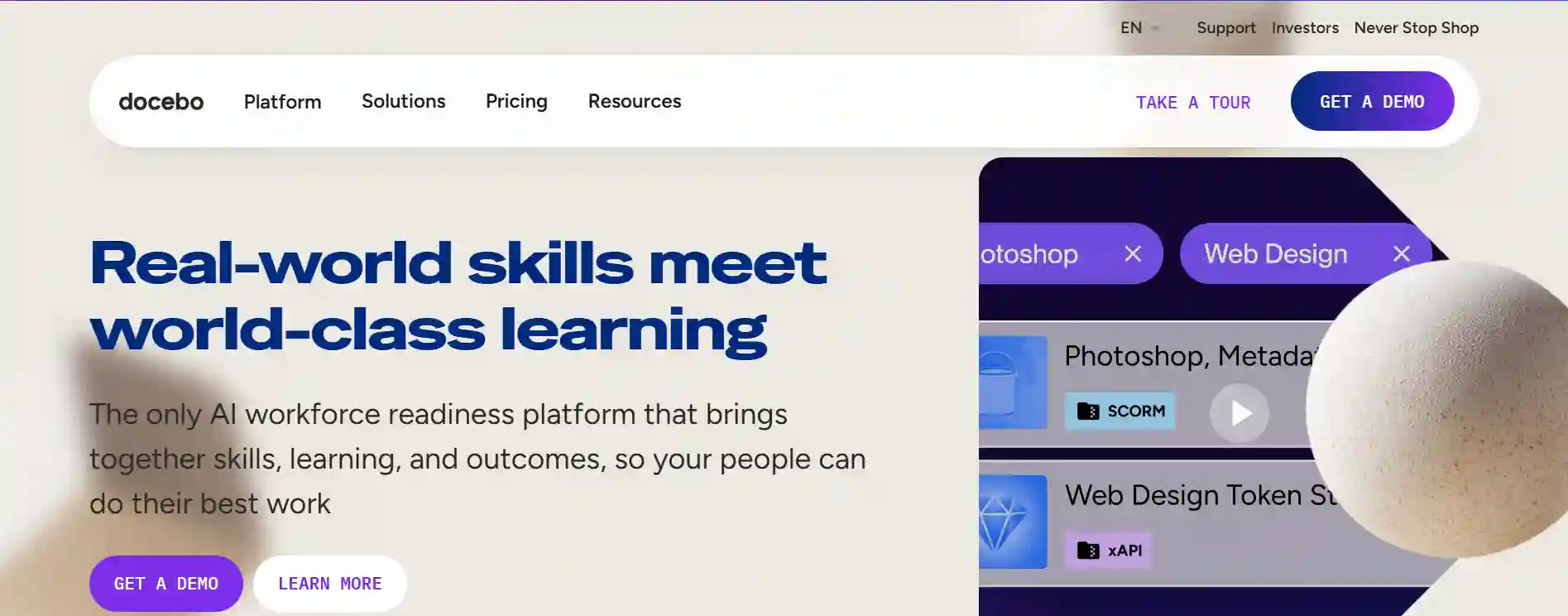
Docebo stands out for its AI-powered learning capabilities, which provide a personalized experience for employees. This system supports various content types and is highly scalable, making it a good fit for companies of all sizes.
Key Highlights:
- AI-Powered Course Recommendations: Learners receive personalized course suggestions based on their past activity.
- Advanced Automation: Automates many aspects of the learning process, freeing up time for managers.
- Cloud-Based Design: Offers flexibility, accessibility, and scalability for global teams.
- Comprehensive Analytics: Provides deep insights into learner performance, engagement, and overall training effectiveness.
Docebo is ideal for organizations seeking a flexible, intelligent LMS solution with cutting-edge personalization and analytics. It’s great for businesses looking to scale their learning programs.
3. Talent LMS
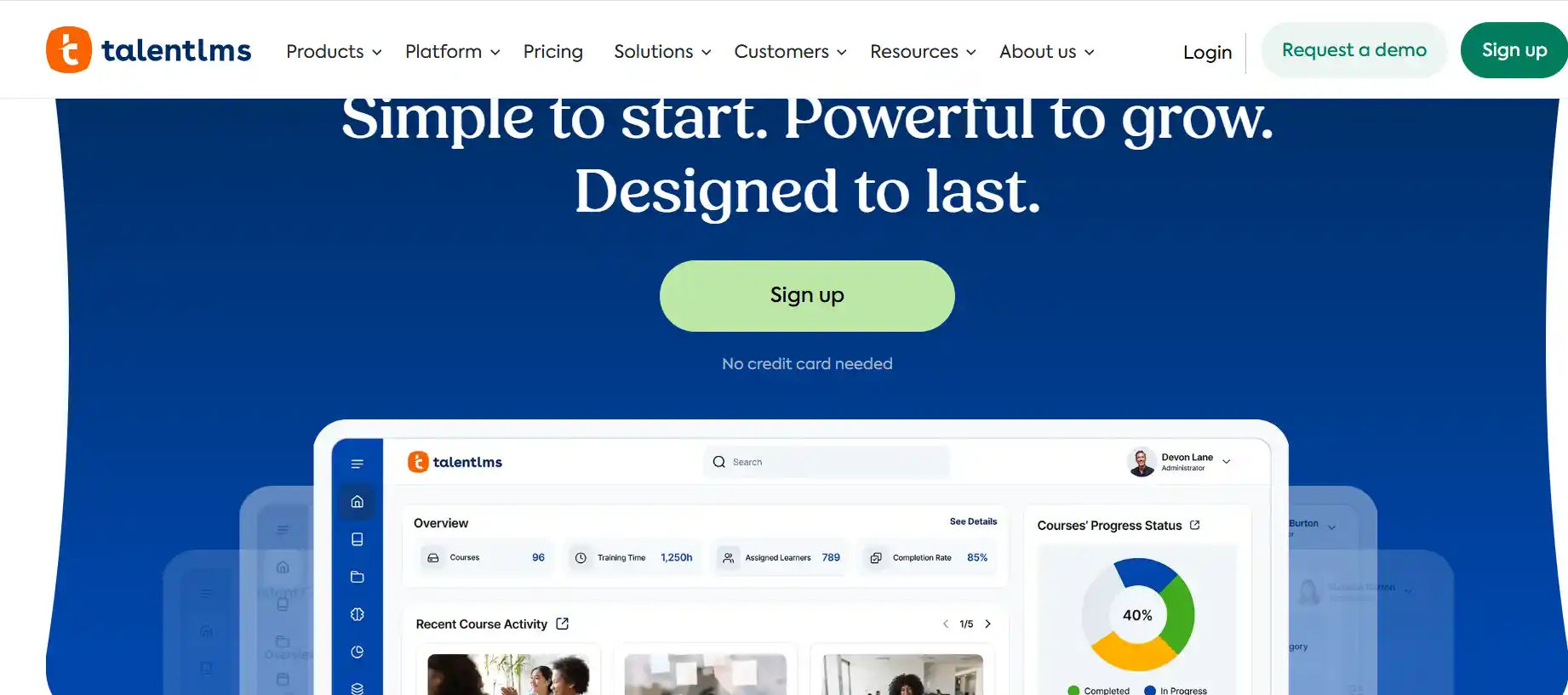
Talent LMS is a highly intuitive LMS designed for businesses that need a user-friendly platform with fast setup and a focus on engagement. It’s lightweight but powerful, making it perfect for companies looking to implement training programs quickly.
Key Highlights:
- User-Friendly Interface: No complicated setup; teams can start training right away.
- Gamified Learning: Keeps learners engaged through badges, points, and leaderboards.
- Custom Branding: Allows for company-specific customization and multilingual support.
- Affordable Pricing: A cost-effective option for small to medium-sized businesses.
TalentLMS is great for businesses just getting started with learning management systems or those with limited budgets. Its simple interface and gamification make it ideal for improving engagement from the get-go.
4. SAP SuccessFactors Learning
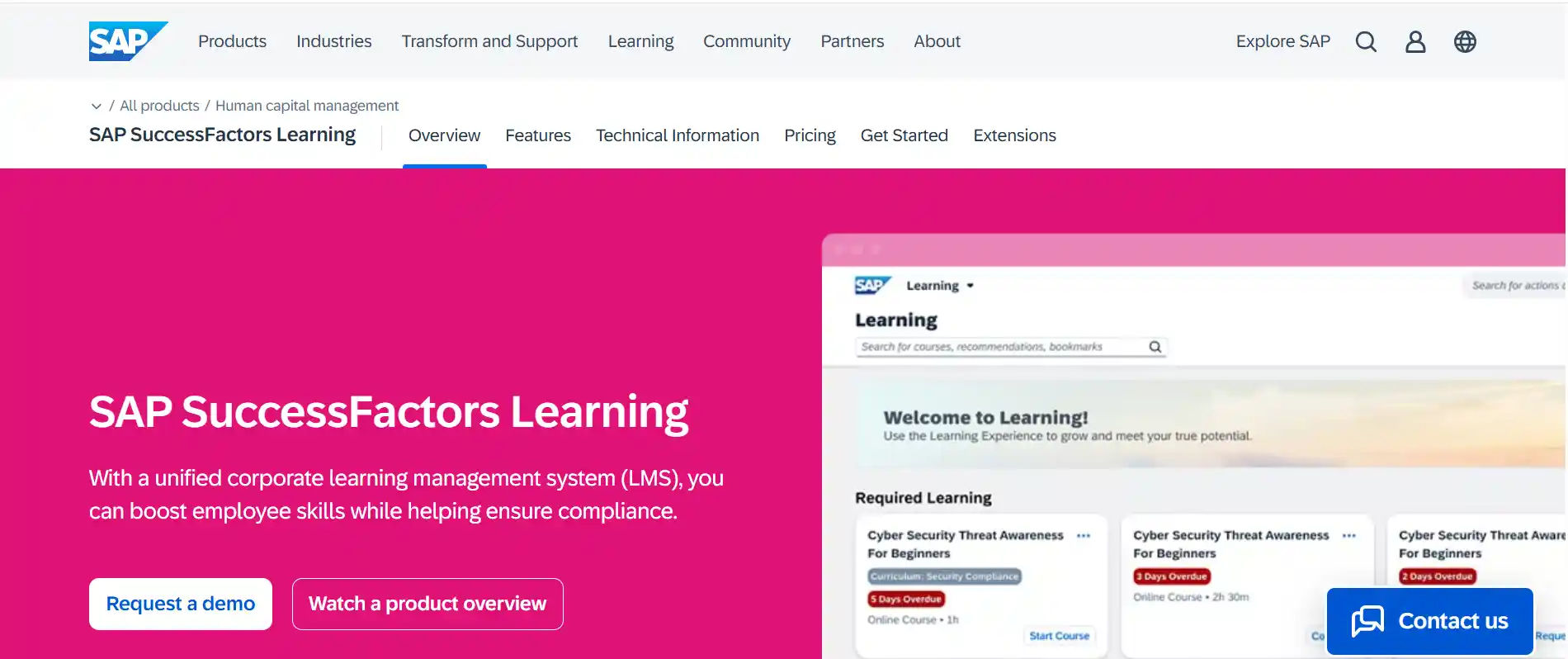
SAP SuccessFactors Learning offers a comprehensive, enterprise-grade solution for corporate training. Integrated within the broader SAP HR suite, it’s tailored for large organizations with complex needs, especially when it comes to compliance and performance management.
Key Highlights:
- Comprehensive Compliance Management: Ensures that employees meet regulatory requirements across different industries.
- Advanced Analytics & Reporting: Provides rich data to track progress, identify gaps, and improve training outcomes.
- Integration with Other SAP Modules: Connects easily with other SAP HR and business systems for a more connected experience.
- Support for Large-Scale Programs: Perfect for multinational corporations with large teams.
For large enterprises that require high-level functionality, compliance tracking, and deep analytics, SAP SuccessFactors Learning is an excellent choice.
5. Absorb LMS
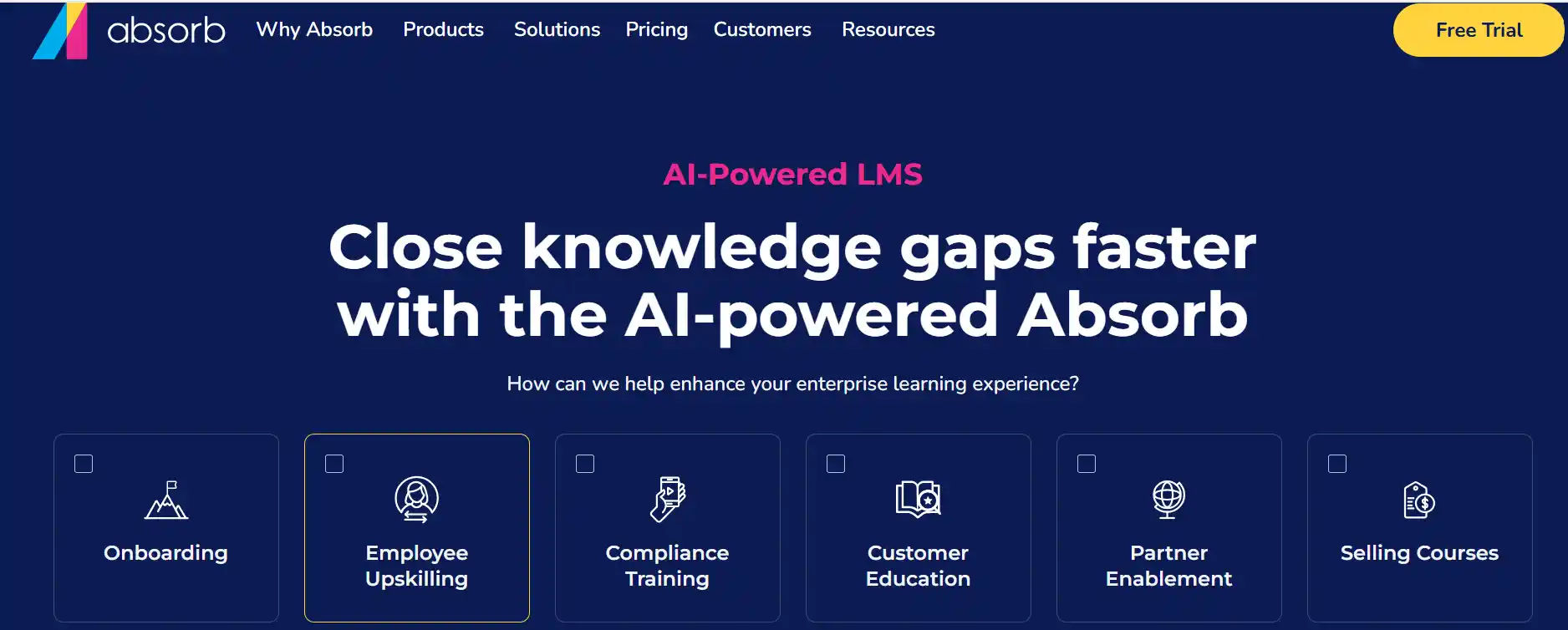
Absorb LMS combines simplicity with power. Its clean, intuitive design makes it easy for admins to manage, while its robust reporting capabilities ensure that companies can track training progress effectively.
Key Highlights:
- AI-Driven Recommendations: Suggests courses based on individual learner behaviors.
- Customizable Reporting: Allows businesses to generate tailored reports that focus on their specific KPIs.
- Secure Cloud-Based Infrastructure: Hosted on a secure cloud, offering scalability and high availability.
- Mobile-Ready: Provides access to courses and training materials from anywhere.
Absorb LMS is a great fit for companies that want an elegant design with powerful analytics and the ability to scale training as the business grows.
6. Cornerstone OnDemand
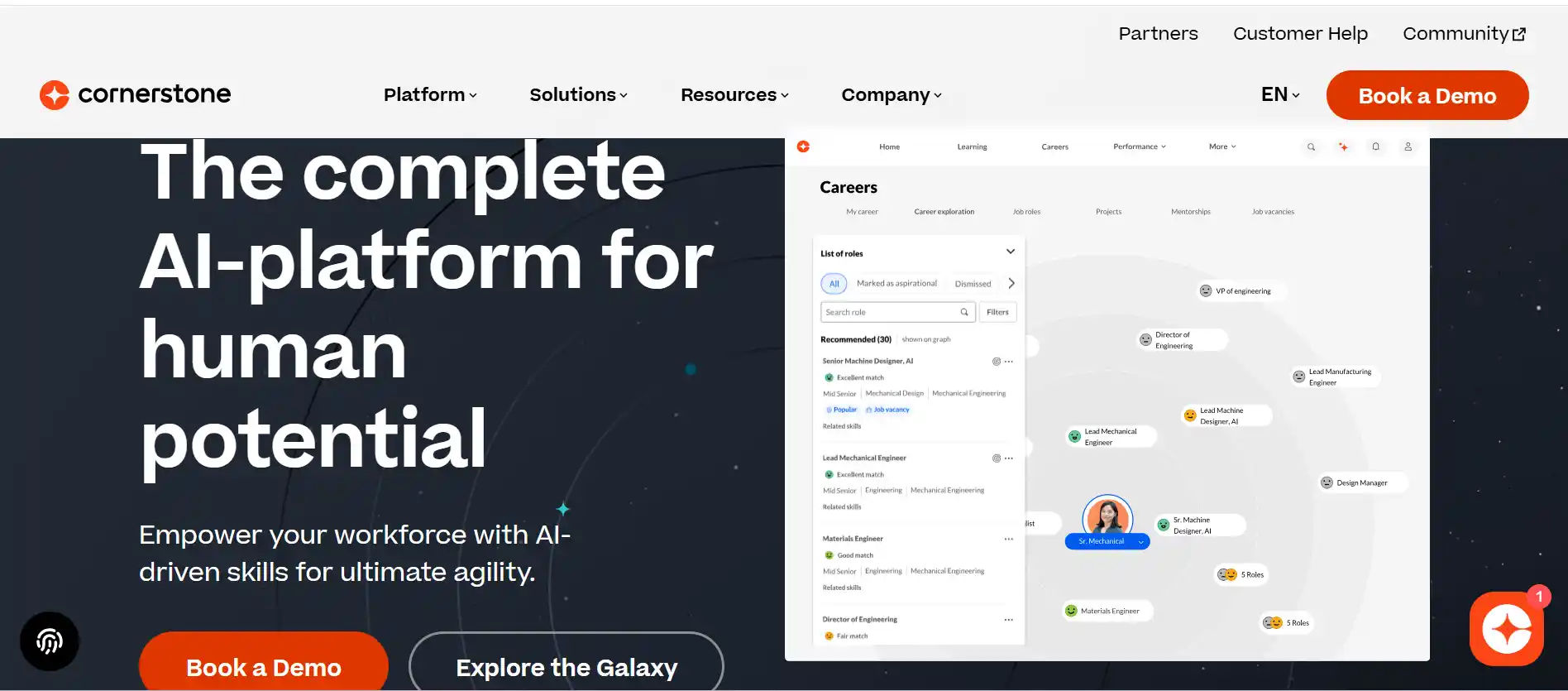
Cornerstone OnDemand is one of the most comprehensive learning management systems available, offering tools for skills development, compliance, and talent management. Its expansive feature set allows for personalization and integration, making it perfect for global enterprises.
Key Highlights:
- Personalized Learning Journeys: Tailors learning to individual employees based on role, skill level, and goals.
- Social & Mobile Learning: Allows employees to collaborate and learn on-the-go with mobile access and social learning features.
- Skill Graph: Tracks employees’ career development and skill progression.
- Integrated Performance Management: Connects learning and development directly with performance reviews.
For large corporations that want to integrate learning with talent management, Cornerstone OnDemand is a powerful choice with broad functionality.
7. 360Learning
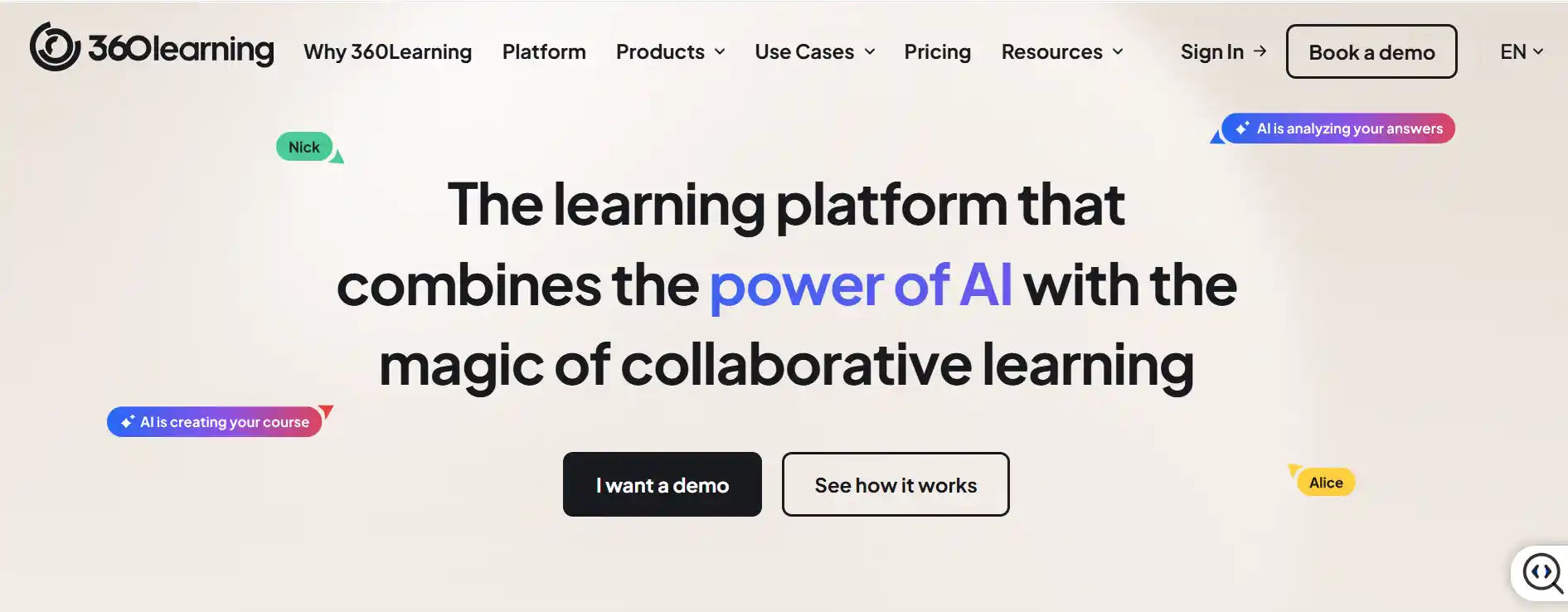
360Learning is designed for companies that want to enable employee collaboration and knowledge-sharing as part of their learning experience. It empowers employees to create and share courses internally, promoting peer-to-peer learning.
Key Highlights:
- Collaborative Learning: Allows teams to create and share content internally, promoting knowledge sharing.
- Real-Time Feedback: Learners can give and receive feedback throughout the course.
- Blended Learning: Supports a combination of instructor-led sessions and eLearning.
- Seamless Integration: Integrates well with existing HR systems and software tools.
360Learning is ideal for companies focusing on collaborative, knowledge-sharing environments, allowing employees to contribute to the learning process.
8. iSpring
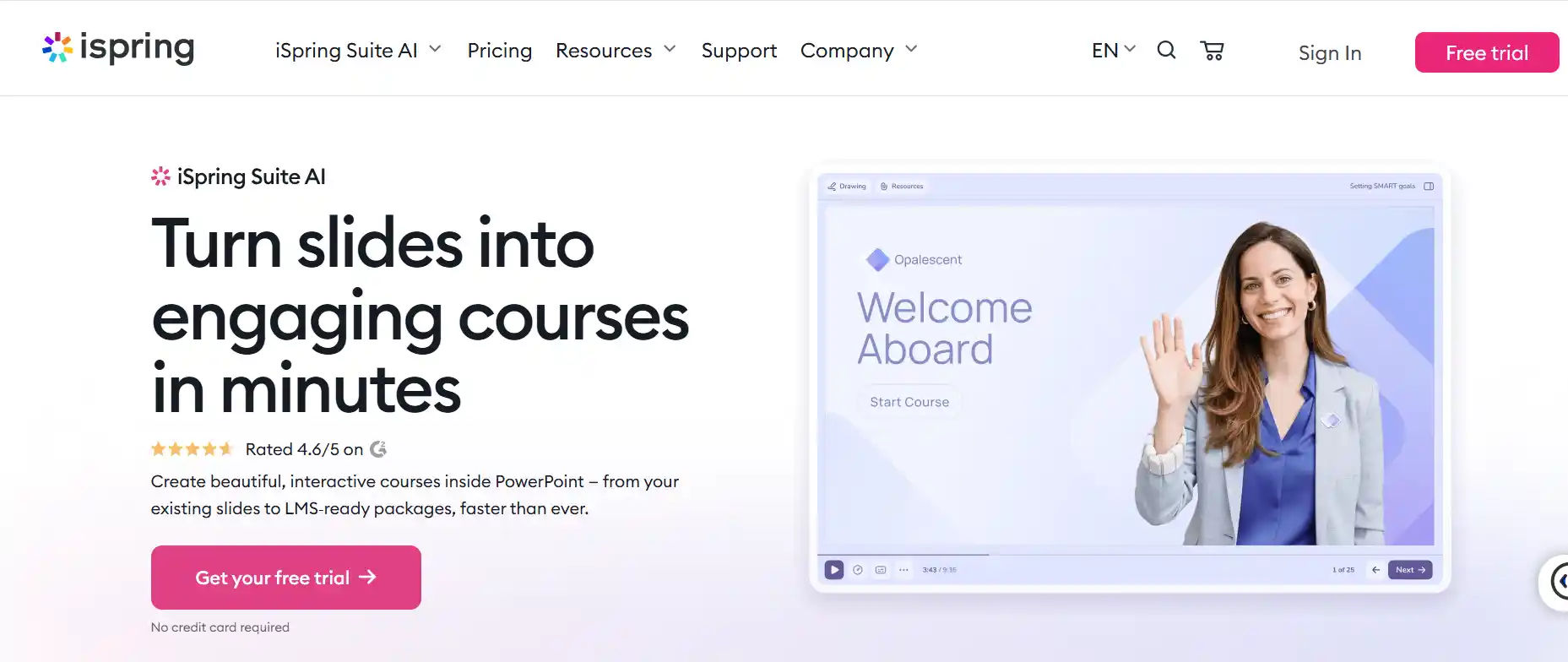
iSpring is known for its simple interface and powerful course creation tools. It’s perfect for organizations that need flexibility in content creation and tracking without overwhelming admins.
Key Highlights:
- Integration with iSpring Suite: Provides a complete solution for creating and managing courses.
- Detailed Reporting: Helps track learner progress, completion rates, and overall performance.
- Multimedia Support: Enables the use of videos, quizzes, and interactive content.
- Simple Interface: Easy for both learners and admins to use.
iSpring is an excellent choice for businesses looking for a flexible, user-friendly LMS with strong content creation and reporting capabilities.
9. LearnUpon
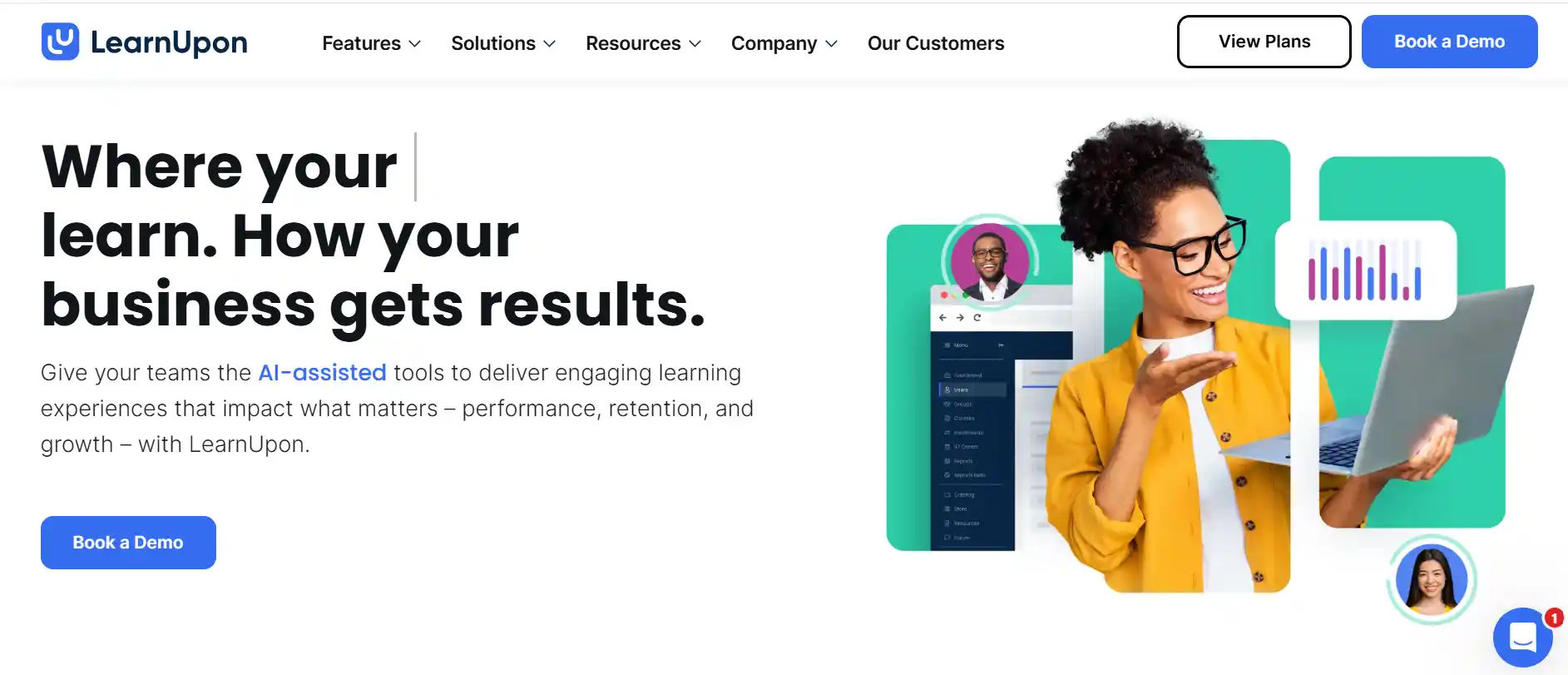
LearnUpon helps organizations train employees, customers, and partners all from one platform. It is highly adaptable and ideal for businesses that need to manage multiple types of learning groups.
Key Highlights:
- Multi-Audience Learning Portals: Allows businesses to create separate training portals for different groups (employees, customers, partners).
- Custom Branding: Fully customizable to fit your company’s branding needs.
- Automation for Course Assignments: Automates course enrollment and reminders.
- Comprehensive Reporting: Tracks training progress and generates insightful reports.
LearnUpon is a solid choice for companies that need to train a wide range of users while maintaining flexibility and custom branding.
10. Tovuti LMS
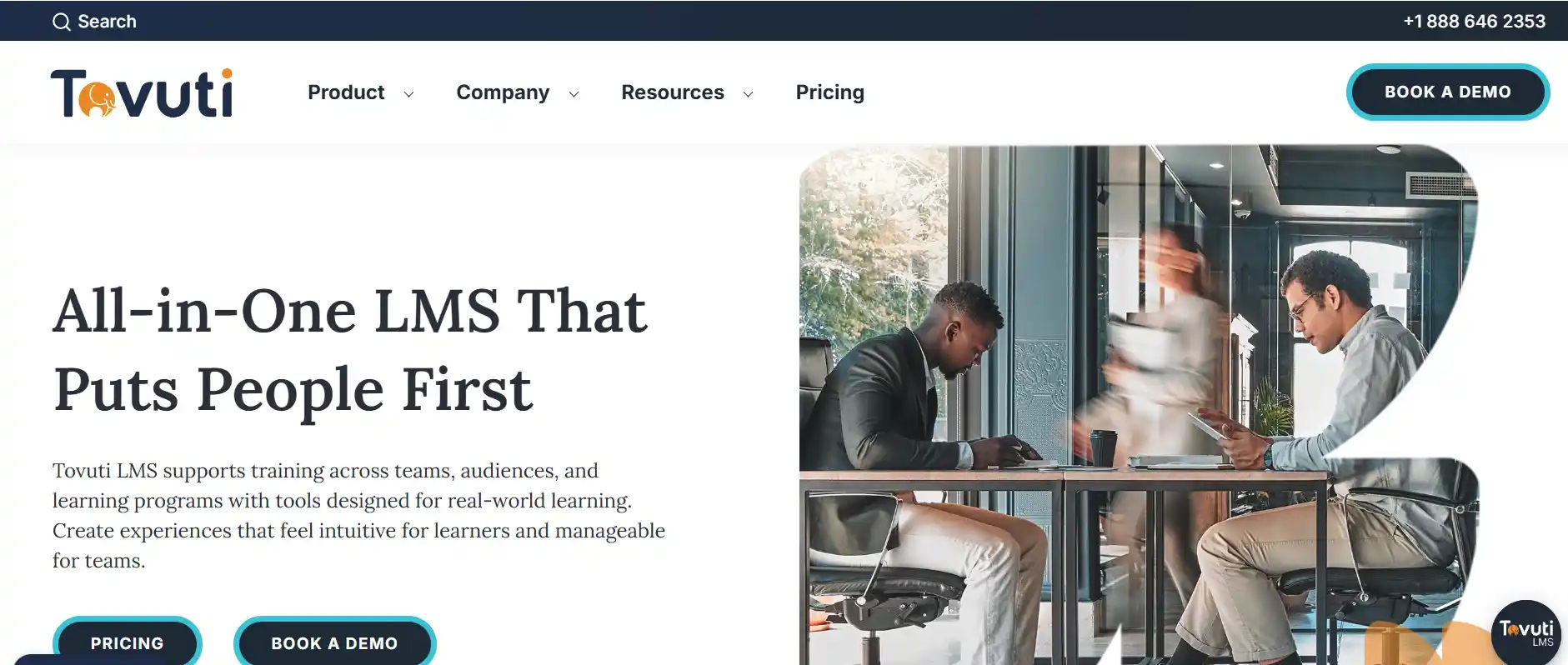
Tovuti LMS combines interactive design with engaging learning tools. Its customizable interface and features like gamification help companies make learning more dynamic and fun.
Key Highlights:
- Built-In Course Authoring Tools: Enables easy creation and management of custom learning content.
- Gamification: Features like badges, leaderboards, and social learning promote engagement.
- Community Engagement: Fosters collaboration among employees through discussion boards and groups.
- Customizable Interface: Offers extensive options for tailoring the platform to your needs.
Tovuti LMS is perfect for companies looking for a highly engaging, interactive learning experience that encourages collaboration and growth.
Key Benefits of Using an LMS for Corporate Training
The top LMS systems for corporate training do more than deliver courses. They improve employee engagement, retention, and performance while turning learning into a driver of business growth.
Consistent Learning Experience – An LMS delivers the same high-quality training across roles, teams, and locations for better alignment.
Increased Employee Engagement – Gamification, rewards, and social learning make training more interactive, motivating, and enjoyable.
Data-Driven Performance Tracking – Real-time analytics help teams monitor progress, identify skill gaps, and improve training programs.
Faster Onboarding – Structured, self-paced learning helps new hires complete training quickly and become productive sooner.
Cost-Effective Training – Digital learning reduces expenses related to travel, printing, instructors, and manual training processes.
Stronger Compliance Management – Automated reminders and training records help employees complete mandatory learning and stay audit-ready.
Career Growth and Retention – Continuous learning supports employee development, builds skills, and encourages long-term retention.
How to Choose the Right LMS for Corporate Training
Choosing the right LMS is about supporting business growth and employee development. Since every organization has different needs, the best corporate LMS system should fit your team size, goals, and training requirements.
The key is finding an LMS that matches your company’s size, culture, and specific training needs.
Before you make your decision, take a moment to ask yourself these questions:
- What are we trying to achieve with training?
Are you looking to onboard employees, improve existing skills, or support ongoing learning and development? - Who will be using the LMS?
Will it be for employees only, or do you need to extend training to customers or business partners as well? - What types of content do we need to deliver?
Will you be sharing videos, PDFs, quizzes, live sessions, or a combination of all? Ensuring your LMS supports your content type is key. - How important is integration with other tools?
Do you need the LMS to integrate seamlessly with tools like Microsoft Teams, Slack, or other business software? - Do we need mobile access for remote teams?
For remote or hybrid teams, mobile access ensures training can happen anytime, anywhere. - What is our budget?
Be realistic about how much you can invest in an LMS annually. Make sure the solution you choose fits within your budget while still meeting your needs.
Key Factors to Consider When Choosing an LMS
As you compare LMS options for corporate training, keep these critical features in mind to ensure a smooth and successful implementation:
- Ease of Use:
The corporate training LMS should be intuitive and easy for employees to navigate without requiring excessive training on how to use it. - Scalability:
The LMS should scale as your business grows, supporting more users, content, and training programs without losing performance. - Reporting and Analytics:
Insights into learner progress, engagement levels, and training effectiveness help you refine your programs and demonstrate ROI. - Customer Support & Updates:
Look for an LMS with reliable customer support and frequent updates to ensure your system stays current and secure. - Customization Options:
The ability to customize the LMS with your company’s branding, workflows, and multilingual options is essential for creating a seamless experience for your users. - Data Security:
Especially important for organizations handling sensitive employee data, your LMS must offer top-tier security features to protect that information.
Conclusion
Choosing the right LMS system for corporate training helps teams learn faster, build skills, and stay ready for change. The best LMS creates a stronger learning culture while improving engagement, performance, and growth.
Ready to empower your workforce?
Book a demo and see how smarter learning can support your teams and business goals.
Join Our Creative Community
Frequently Asked Questions
What is the LMS for corporate training?
The LMS for corporate training is a digital platform that enables companies to plan, deliver, and track employee learning programs effectively. An LMS for corporate training simplifies the management of training processes and provides valuable analytics to measure the success and impact of learning initiatives. These systems help businesses create a consistent, engaging, and efficient learning experience for employees, which ultimately drives improved performance.
How does an LMS for corporate training improve employee performance?
An LMS for corporate training improves employee performance by offering personalized learning paths, continuous feedback, and real-time progress tracking. The best LMS for corporate training enables employees to acquire new skills faster and more effectively, allowing them to apply their learning directly to their roles. With clear goals and measurable outcomes, employees stay motivated and engaged, leading to higher job performance and growth.
Can the corporate learning management systems work for remote or hybrid teams?
Yes, an LMS for corporate training is ideal for remote and hybrid teams. The Corporate LMS is typically cloud-based and mobile-friendly, ensuring that training can be accessed anytime, anywhere, on any device. This flexibility ensures that employees, no matter their location, receive consistent training and learning opportunities, making it easier for companies to maintain a unified learning culture across distributed teams.
What is a Corporate Learning Management System (LMS)?
A Corporate Learning Management System (LMS) is a digital platform that helps organizations manage, deliver, and track employee training and development programs. It centralizes all learning materials, providing employees with easy access to courses and training resources. The best LMS for corporate training offers powerful features like personalized learning paths, real-time analytics, and seamless integration with other tools. It ensures that employees are equipped with the right skills while helping businesses measure the success of their training programs.
Is it safe to use?
Yes. These tools usually come with things like encryption and secure logins. So the documents and personal info stay protected. Plus, it helps companies stay in line with legal rules, which is a nice bonus.
Blog Categories
Power Productivity—Start Today
All Your Work, One Smart Platform
Your Team's New Favorite Workspace
Organize, Collaborate, and Thrive—For Free


_JiluXJRGNl.svg)























