

HiBob vs HR365 HRMS: Which HR Software Is Right for Your Business?

- HiBob is a modern HR platform for employee management, time off, workflows, performance, learning, and analytics.
- HR365 HRMS is ideal for Microsoft 365 organizations using SharePoint, Teams, Outlook, and Power Automate.
- HR365 HRMS manages HR activities within the Microsoft ecosystem.
- Choose HiBob for a dedicated HCM platform or HR365 HRMS for Microsoft 365 integration.
Choosing HR software is not only about comparing features. The right platform should fit your organization’s existing systems and workflows.
HiBob and HR365 HRMS both support core HR functions such as employee records, onboarding, time off, performance, learning, reporting, and workflow management. However, they take different approaches.
HiBob is a dedicated HCM platform with employee management, document management, time off, lifecycle workflows, integrations, analytics, and reporting. Its pricing is customized based on company size, requirements, and selected modules.
Choose HiBob if you want a dedicated HR platform with a modern employee experience. Choose HR365 HRMS if your organization already relies on Microsoft 365 and wants HR activities integrated with the tools employees use every day.
What is HiBob?
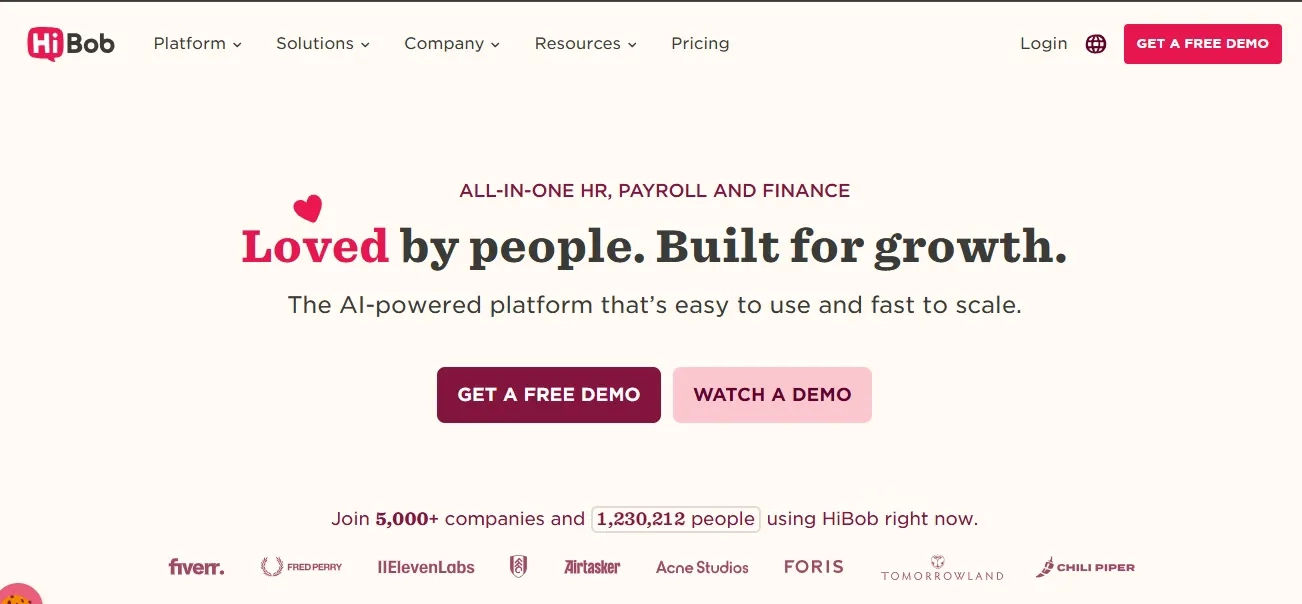
HiBob, commonly known as Bob, is an HR and HCM platform designed around employee management and the employee experience.
Its current platform includes an employee database, document management, time off, lifecycle workflows, integrations, analytics and reporting. HiBob also offers additional capabilities around performance, learning, engagement, hiring, planning, and its Bob AI offering.
G2 Rating: 4.5/5
Where HiBob stands out
HiBob is particularly strong in areas such as:
- Employee data management and centralized HR records
- Employee experience, engagement, and lifecycle management
- Performance management, learning, and development
- HR workflows, analytics, integrations, and AI-assisted activities
What Is HR365 HRMS?
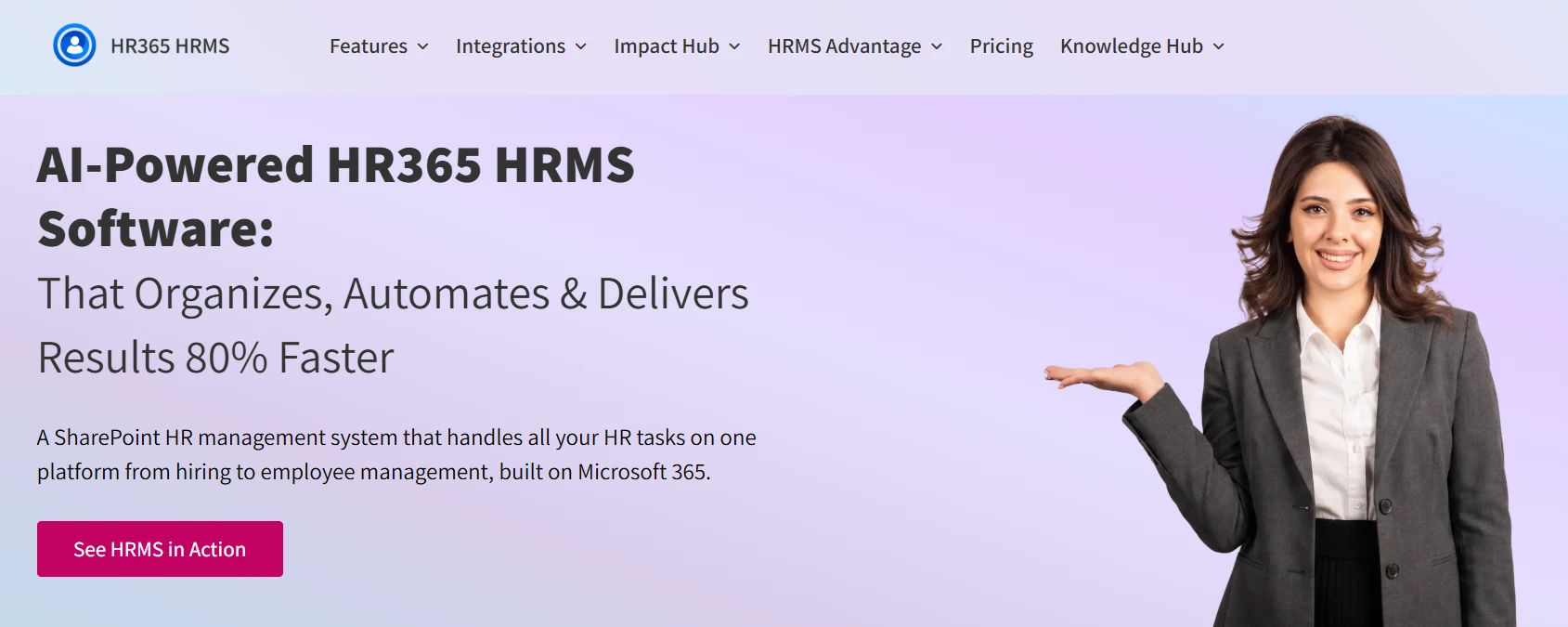
HR365 HRMS is a Microsoft 365-focused HR management platform brings HR activities such as employee management, recruitment, onboarding, leave, attendance, performance, learning, expenses, and task management into a Microsoft-centered environment.
G2 Rating: 4.8/5
Key features of HR365 HRMS
- Works with Microsoft Teams, SharePoint, Outlook, Power Automate, and other Microsoft services.
- Manages HR data and documents through SharePoint.
- Provides access to HR activities through Microsoft Teams.
- Includes AI-powered features for onboarding, recruitment, leave, timesheets, expenses, performance, and routine HR questions.
This makes HR365 HRMS especially relevant to organizations that do not want their HR system separated from the Microsoft environment they already use.
HiBob vs HR365 HRMS: At a Glance
Category | HiBob | HR365 HRMS |
Core HR Functions | ✔ | ✔ |
Expense Management | Available through HR workflows/modules | ✔ |
Task Management | Workflow-based | Built-in task and approval management |
AI and Automation | Bob AI | AI Agent, AI-powered HR features, Microsoft AI ecosystem |
Reporting & Analytics | ✔ | ✔ |
Microsoft Teams | Integration available | Core Microsoft 365 environment |
SharePoint | Integration approach | Native Microsoft ecosystem positioning |
Power BI | Reporting/integration possibilities | Microsoft reporting ecosystem |
Pricing | Custom quote | Starting from $7.99/user/month |
Best suited for | Organizations wanting a dedicated modern HCM platform | Microsoft 365-focused organizations |
The comparison shows the main difference: both products cover HR management, but HR365 HRMS has a stronger Microsoft 365-centered position.
HiBob vs HR365 HRMS: Feature Comparison
Employee Onboarding
Both platforms support employee onboarding, including lifecycle workflows, document collection, task assignments, approvals, communication, and employee transitions.
HR365 HRMS connects onboarding with employee records, tasks, documents, training, and other HR activities for centralized management.
Leave Management
HiBob and HR365 HRMS both support leave management, including requests, approvals, tracking, and employee information.
HR365 HRMS lets employees and managers handle leave activities directly within Microsoft Teams alongside other HR tasks.
Time and Attendance
HiBob includes time and attendance capabilities, including clocking, timesheets, and work cycles.
HR365 HRMS also supports attendance and work-time tracking through its HRMS environment. The platform highlights attendance, working hours, timesheets, and related employee updates.
For organizations that already use Microsoft Teams and SharePoint, HR365 HRMS can keep these activities closer to the existing workplace environment.
Performance Management
HiBob offers performance capabilities as part of its broader HR platform. Its pricing page lists performance among its available modules.
HR365 HRMS includes performance management and AI-powered performance summaries. Its AI features can help create performance summaries from employee activity and support managers during performance processes.
Learning and Training
HiBob offers learning as an available module.
HR365 HRMS includes learning management for courses, training programs, learning materials, progress tracking, and employee development.
The better choice depends on whether learning needs to sit inside a dedicated HCM environment or a Microsoft-centered HR system.
Task Management
HR365 HRMS includes task and approval management, helping managers assign tasks, monitor progress, manage deadlines, and track approvals across onboarding, employee requests, and recurring HR activities.
HiBob emphasizes lifecycle workflows and HR process management. HR365 HRMS may be better for organizations prioritizing task management and Microsoft Teams collaboration.
Microsoft 365 Integration
HiBob integrates with other systems, while HR365 HRMS is built around Microsoft 365, connecting SharePoint, Teams, Outlook, Power Automate, Power BI, and Microsoft AI tools.
For organizations already using Microsoft 365, HR365 HRMS keeps HR management within familiar tools, making it the stronger choice for Microsoft 365 integration.
AI and Automation
HiBob offers Bob AI, while HR365 HRMS provides AI support for recruitment, onboarding, leave, timesheets, expenses, performance, employee questions, and HR information access.
HR365 HRMS also uses Power Automate for approvals, reminders, notifications, and updates, making it stronger for Microsoft ecosystem AI and automation.
Pricing
Pricing is an important part of software comparison, but it should not be the only deciding factor.
Pricing Factor | HiBob | HR365 HRMS |
Pricing | Custom quote | |
Pricing based on needs | Yes | Yes |
Enterprise pricing | Custom | Available |
Trial | Demo / sales-led evaluation | 14-day Trial can be requested |
Microsoft ecosystem value | Depends on existing setup | Strong for Microsoft 365 users |
Customization
Customization is important because HR processes differ across organizations. HiBob offers configurable workflows and modules, while HR365 HRMS uses Microsoft 365 tools like Power Automate to create flexible HR processes.
Choose HiBob for a dedicated HCM platform and modern HR experience. Choose HR365 HRMS for Microsoft 365 integration, SharePoint, Teams collaboration, and greater workflow control.
Which Is Better for Your Business?
There is no single winner for every organization.
The better option depends on your existing technology environment and HR requirements.
Choose HiBob if:
- You want a modern, dedicated HR platform.
- You prioritize a strong employee experience.
- You want HR operations centered around a dedicated HCM application.
- You need employee data, document management, time-off tracking, workflows, analytics, reporting, and integrations.
- You value performance management, learning, and employee engagement.
- You want modern HR workflows to support your organization’s people operations.
Choose HR365 HRMS if:
- Your organization already uses Microsoft 365 as its primary workplace environment.
- Employees regularly work with Microsoft Teams, SharePoint, Outlook, Power Automate, and other Microsoft services.
- HR365 HRMS brings HR activities into the existing Microsoft 365 ecosystem instead of creating a separate HR destination.
- It supports HR management within Microsoft 365, including SharePoint-based employee records and HR activities in Teams.
- It enables Microsoft workflow automation, AI-assisted HR tasks, centralized HR information, and Microsoft-based reporting.
- It provides a broad range of HR modules within one connected platform.
Is HR365 HRMS a Good Alternative to HiBob?
✔ HR365 HRMS is a strong HiBob alternative for organizations that already use Microsoft 365 extensively.
✔ Both platforms cover core HR requirements, so the decision should not be based on feature count alone.
✔ HiBob is a dedicated HCM platform designed to manage HR activities in a standalone system.
✔ This difference can affect implementation, user adoption, integrations, workflows, document management, and daily HR operations.
✔ HR365 HRMS connects HR information and activities with SharePoint, Microsoft Teams, and Outlook.
✔ Organizations that store documents in SharePoint and use Teams for collaboration may find HR365 HRMS easier to adopt.
✔ Businesses that are not heavily invested in Microsoft 365 may find HiBob to be the more natural choice.
Conclusion
HiBob is a strong choice for organizations seeking a modern, dedicated HCM platform with broad HR capabilities, employee-focused features, and a polished user experience. It is well suited to businesses that want to manage HR operations through a standalone platform with tools for employee data, workflows, performance, learning, reporting, and engagement.
HR365 HRMS is the better fit for organizations already using Microsoft 365 and looking to connect HR management with SharePoint, Microsoft Teams, Outlook, Power Automate, and the wider Microsoft ecosystem. The final decision depends on whether you prefer a separate HR platform or an HR solution integrated into your existing Microsoft environment. If Microsoft 365 is central to your daily operations, HR365 HRMS deserves serious consideration as a practical alternative to HiBob.
Frequently Asked Questions
Is HR365 HRMS better than HiBob?
It depends on your technology environment. HR365 HRMS is particularly suited to organizations that use Microsoft 365, SharePoint, and Teams. HiBob is a strong choice for organizations looking for a dedicated HCM platform.
What is the main difference between HiBob and HR365 HRMS?
The main difference is platform positioning. HiBob is a dedicated HCM platform, while HR365 HRMS is built around the Microsoft 365 ecosystem and connects HR activities with tools such as SharePoint and Teams.
Does HR365 HRMS integrate with Microsoft Teams?
Yes. HR365 HRMS is designed to work with Microsoft Teams, where employees and managers can access HR activities such as leave requests, approvals, and other daily HR tasks.
Does HR365 HRMS use SharePoint?
Yes. SharePoint is an important part of the HR365 HRMS architecture. Employee records, HR documents, leave information, attendance data, and other HR information can be managed through the SharePoint environment.
Which is better for a Microsoft 365 organization?
HR365 HRMS is the more natural fit when Microsoft 365 is already central to the organization’s daily work. Its integration with SharePoint, Teams, Outlook, and Microsoft workflow tools is a core part of its positioning.


_JiluXJRGNl.svg)























